Downloaded 98 times
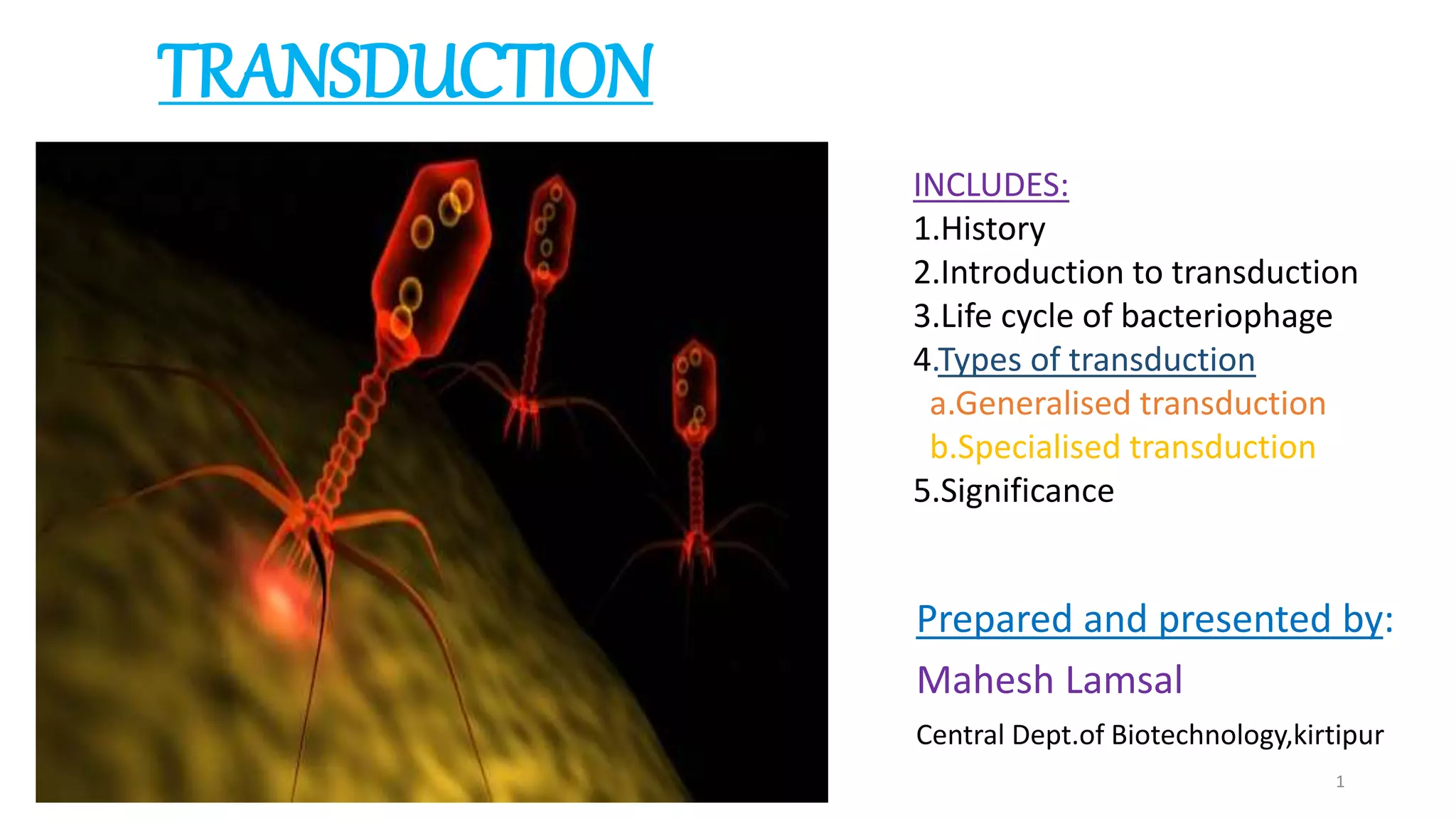
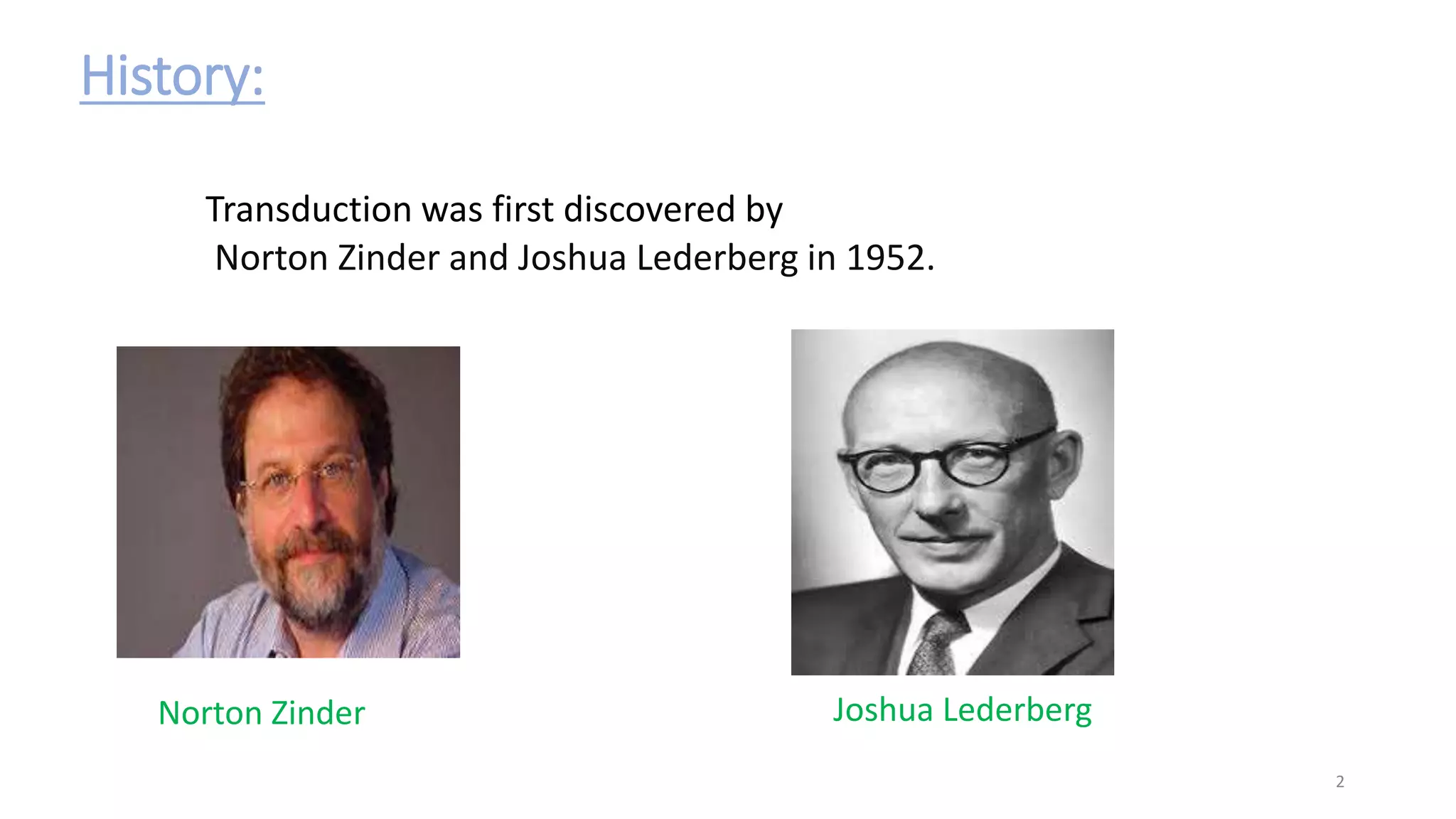
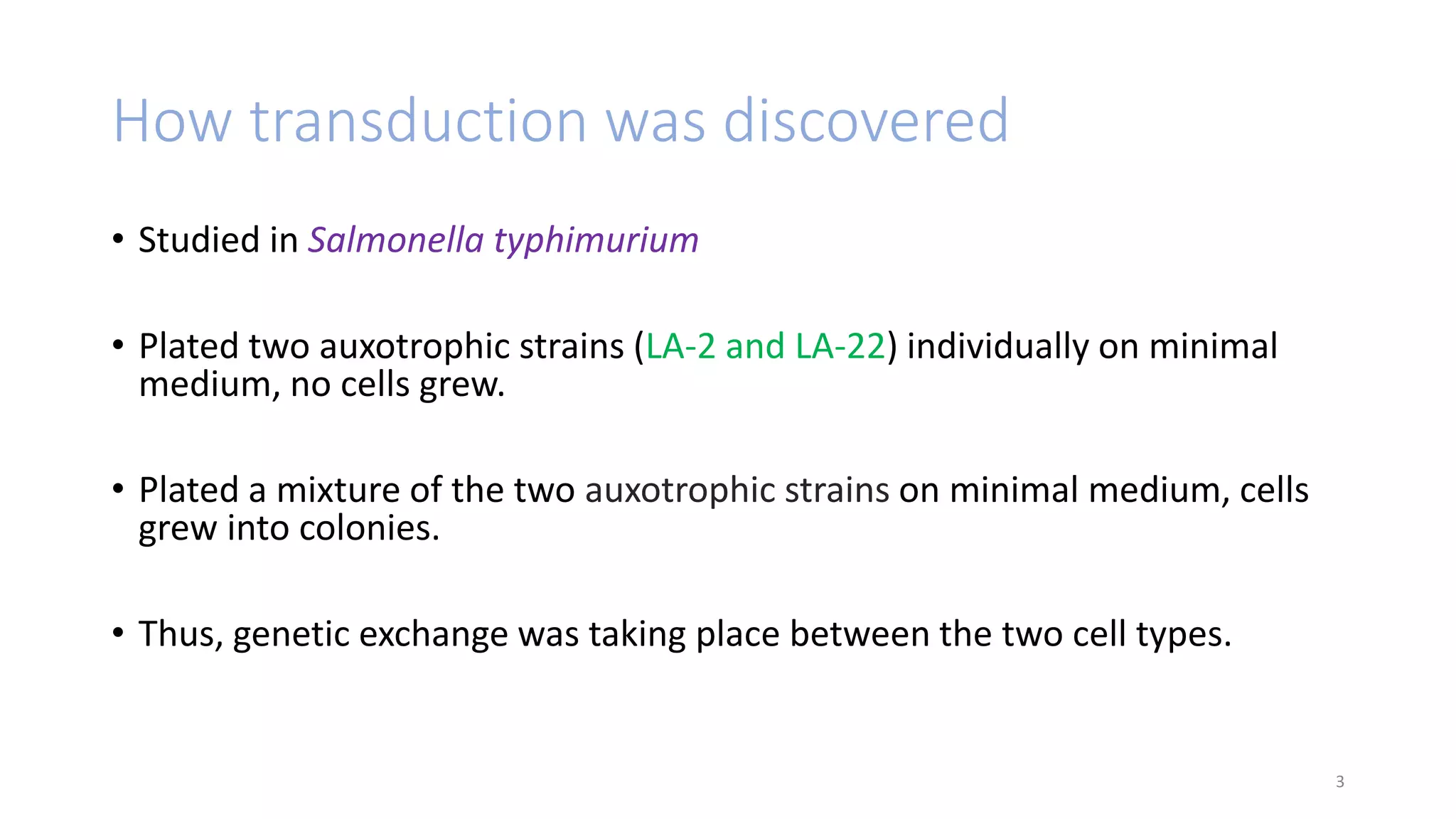
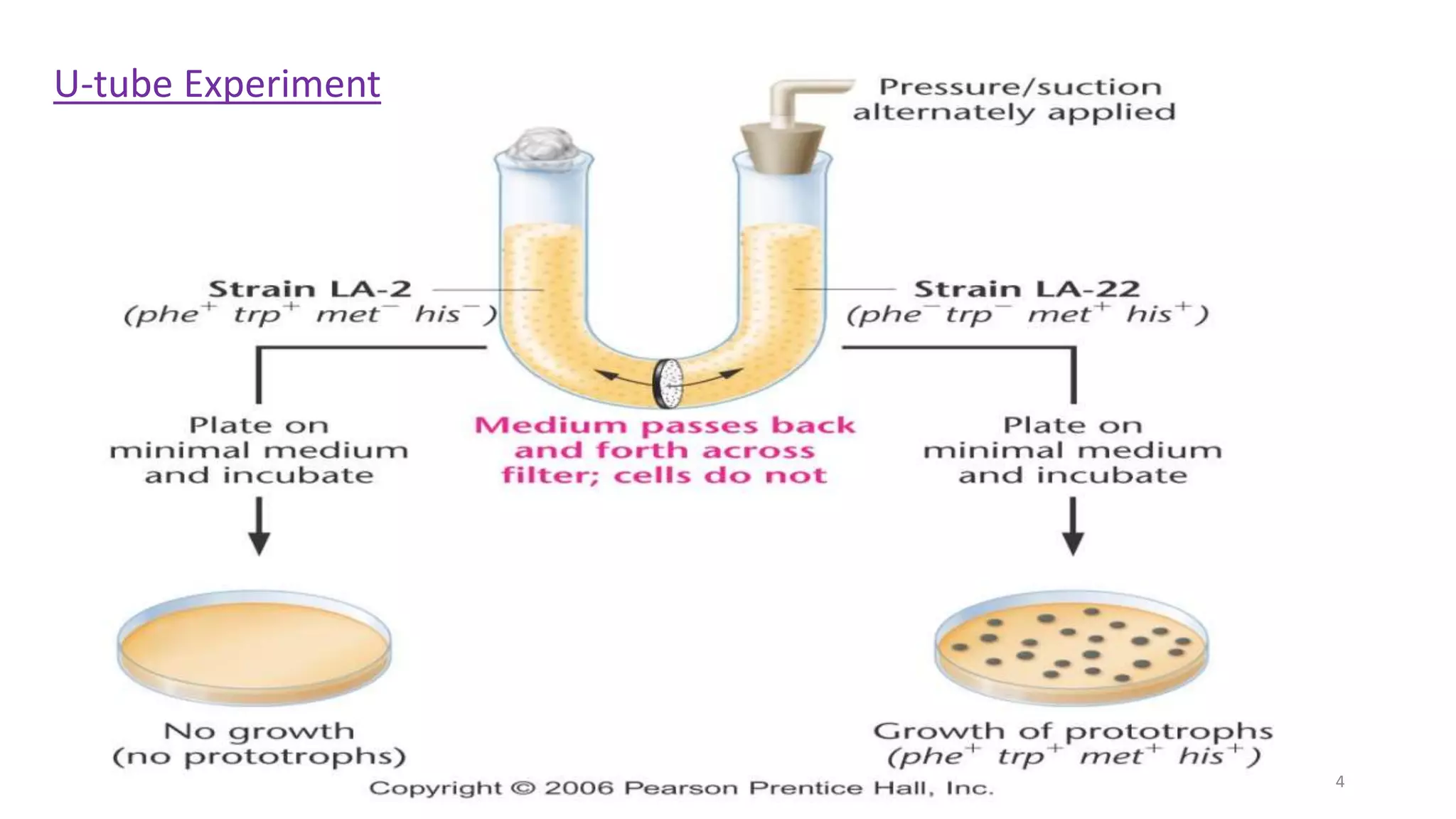
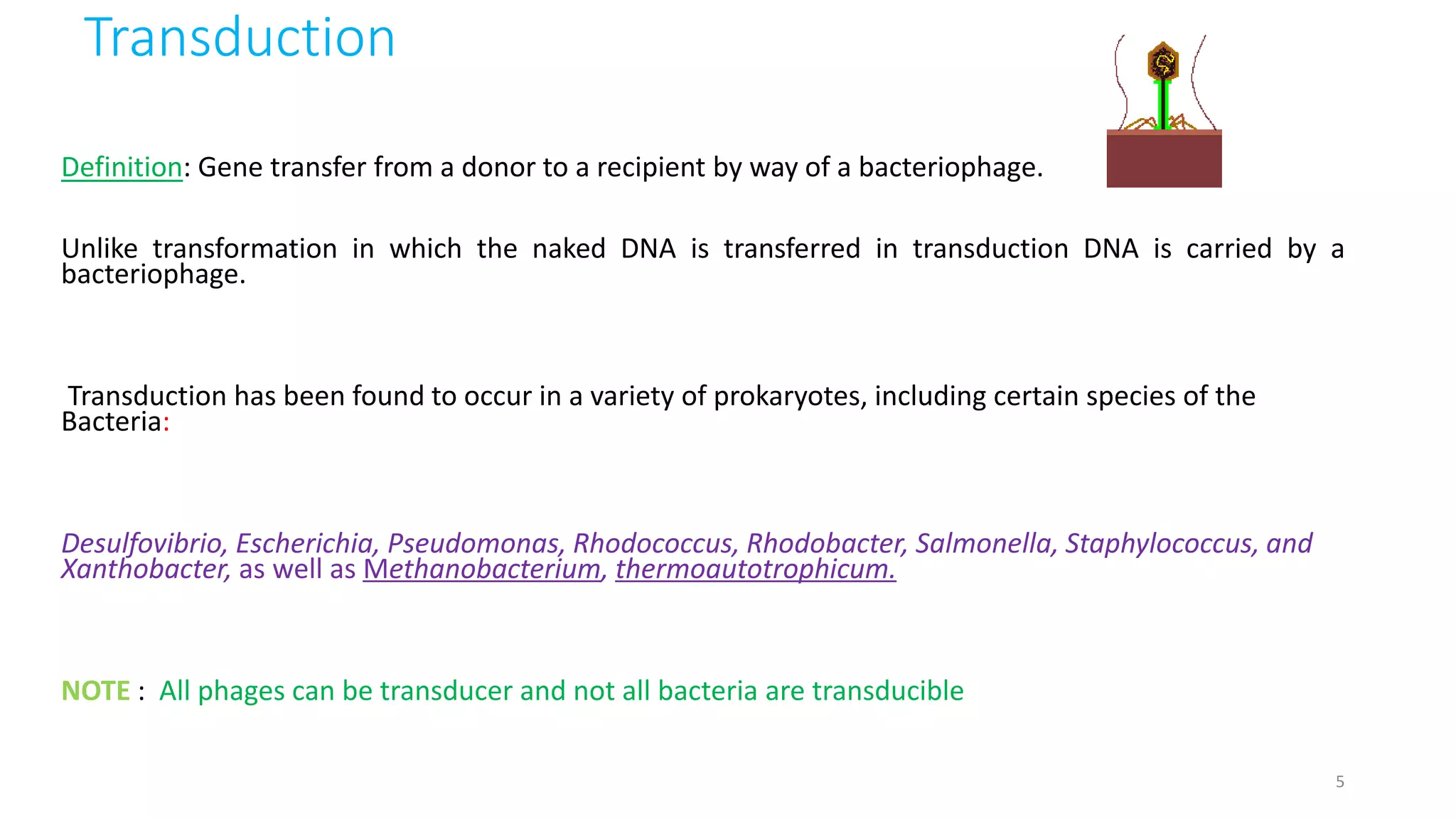
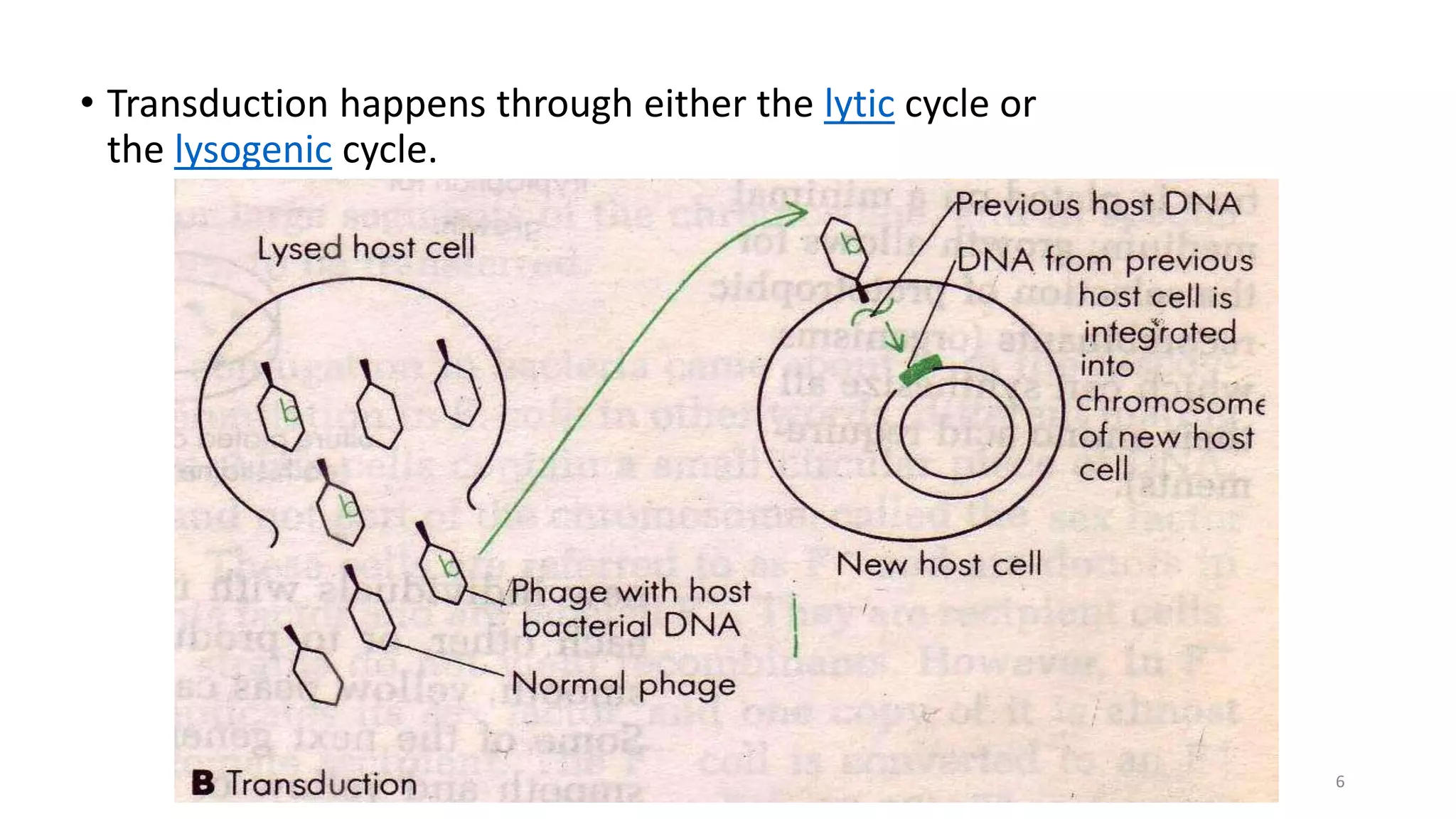
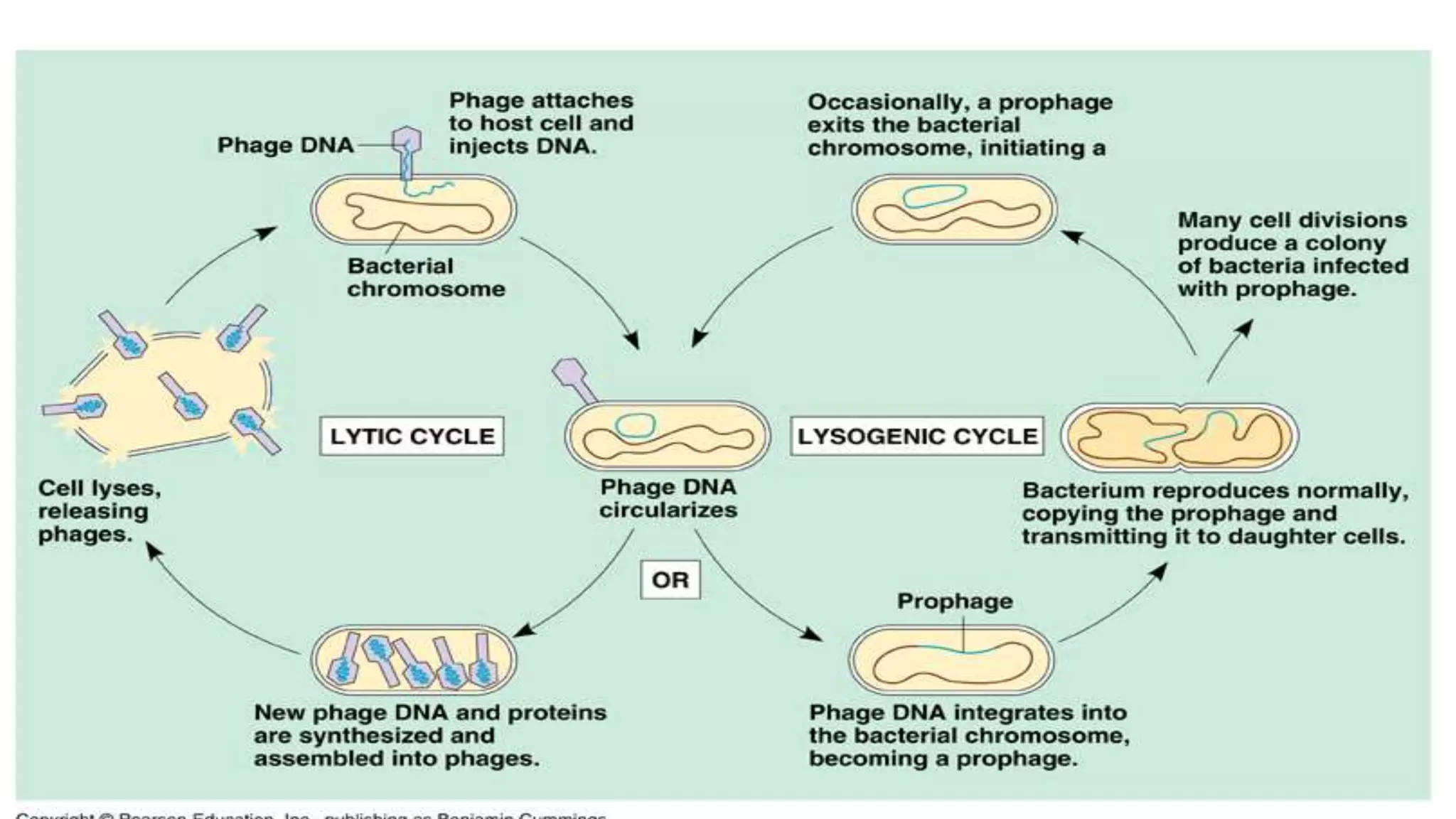
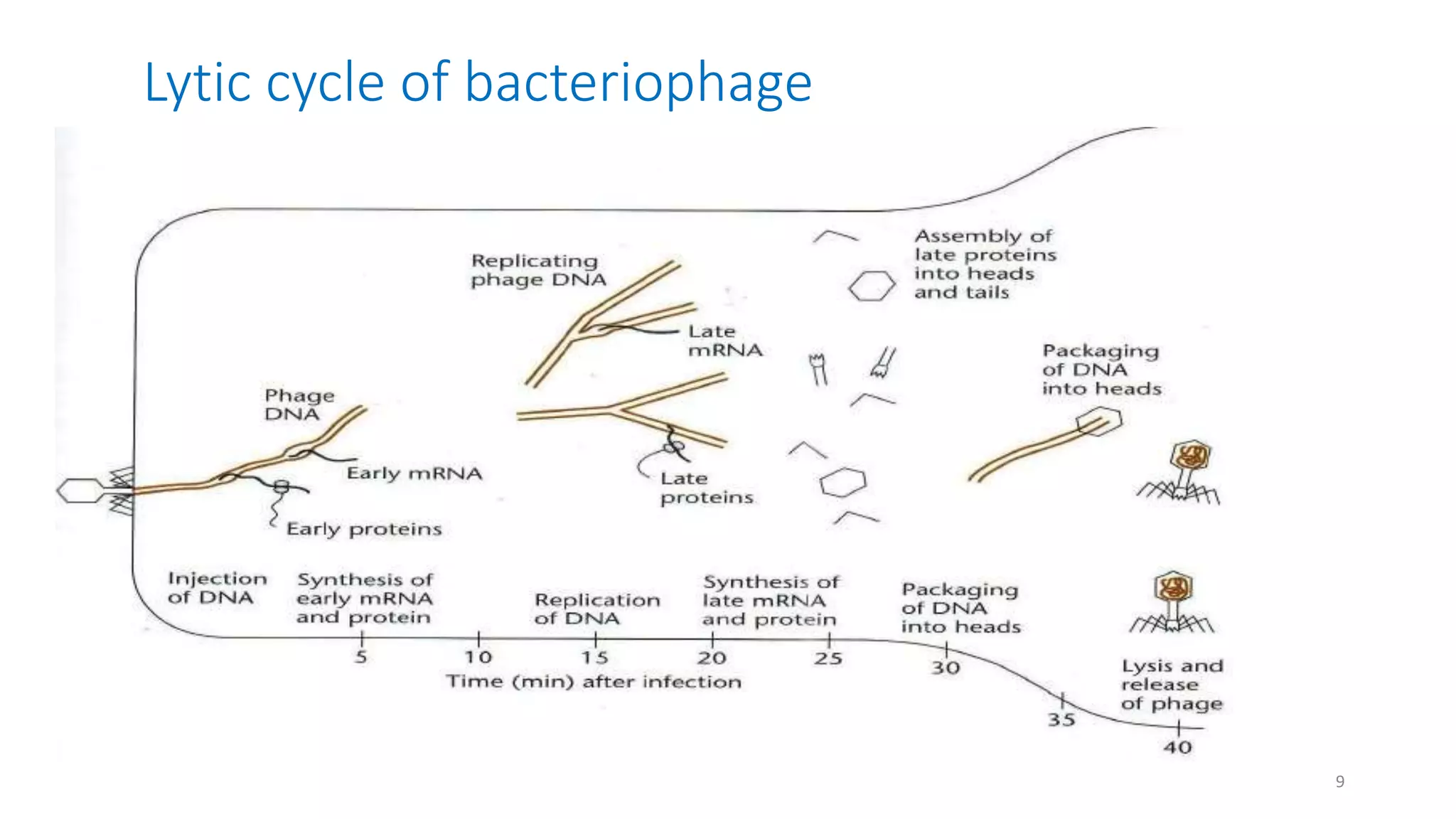
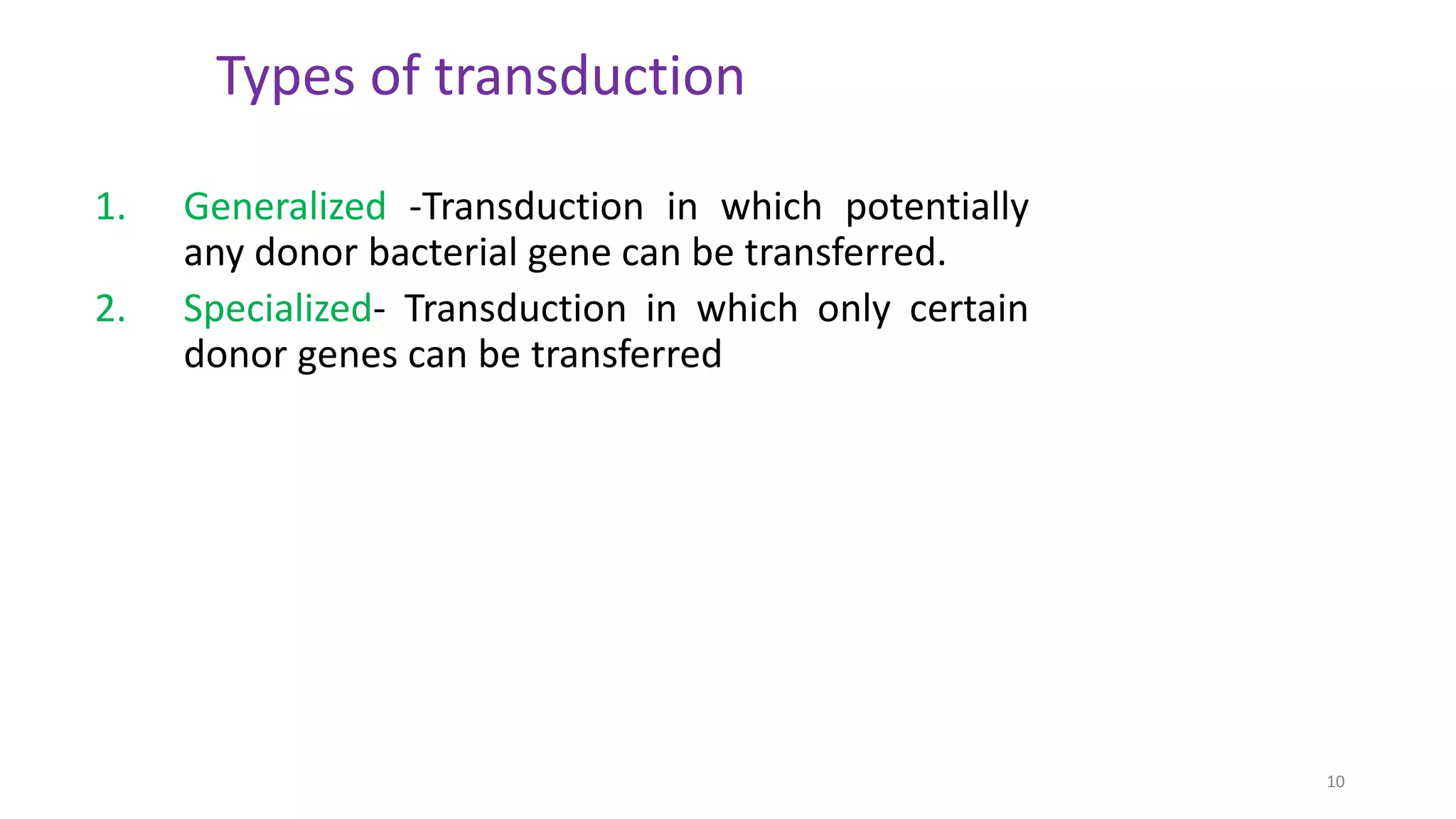
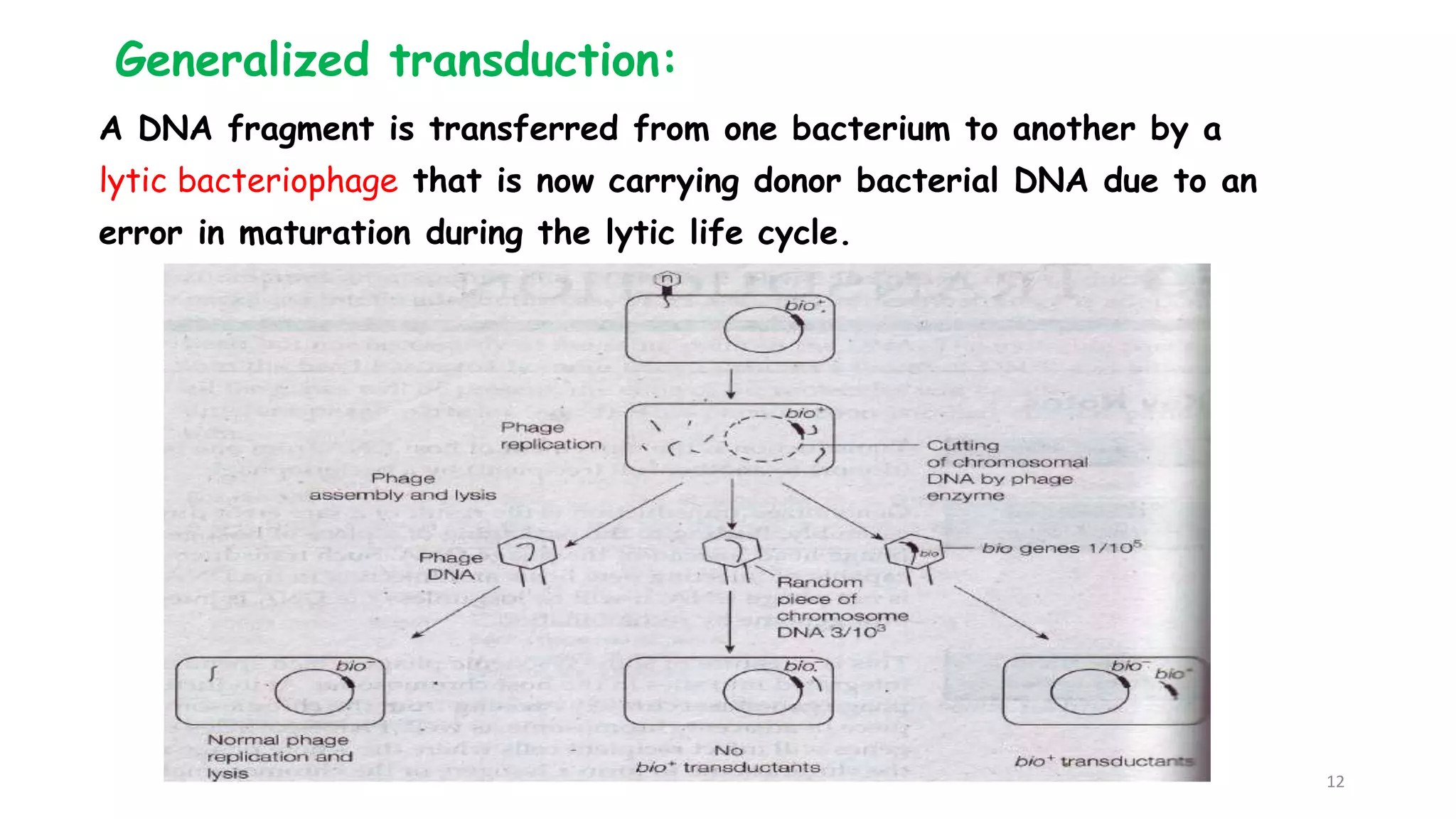
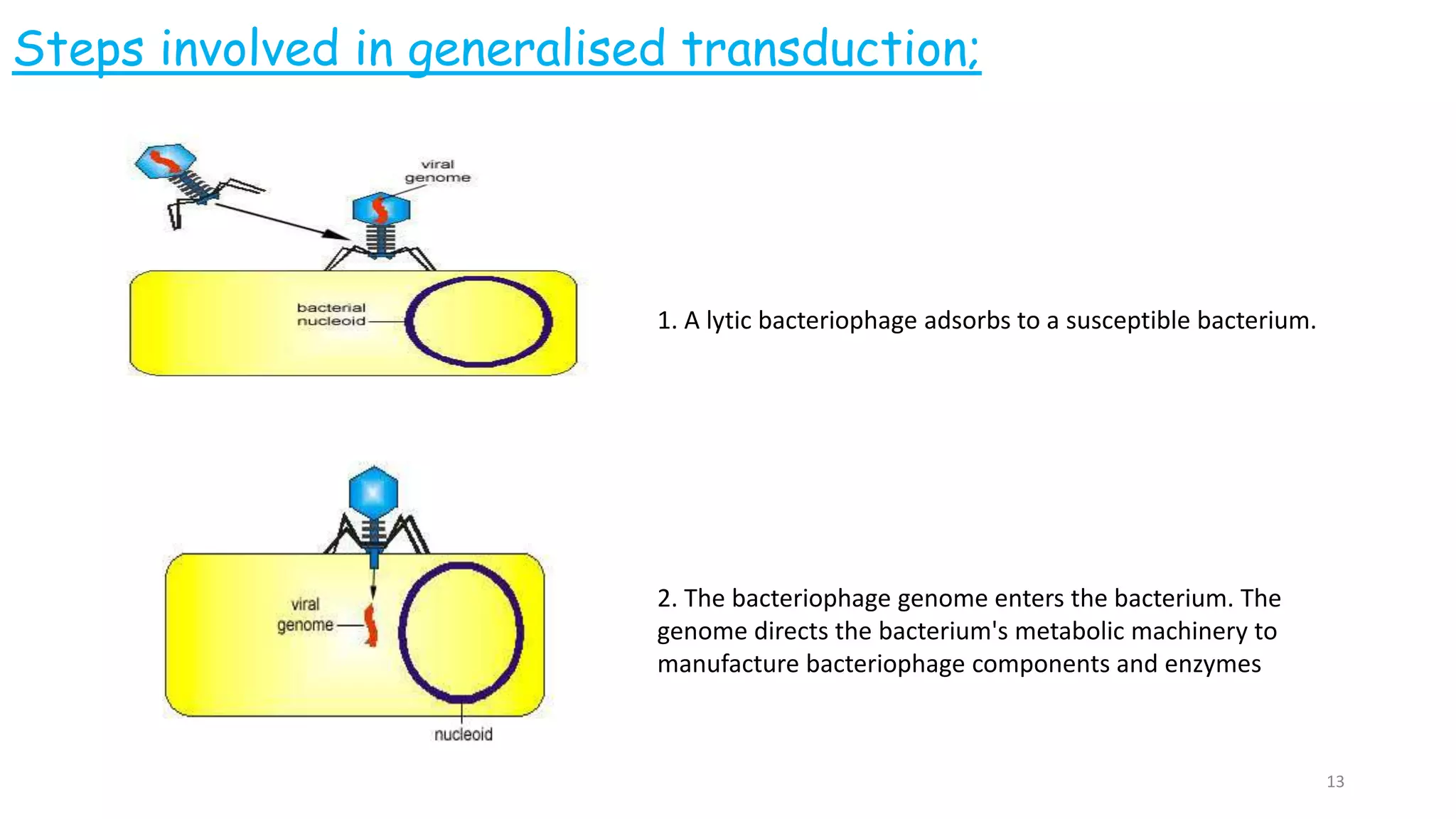
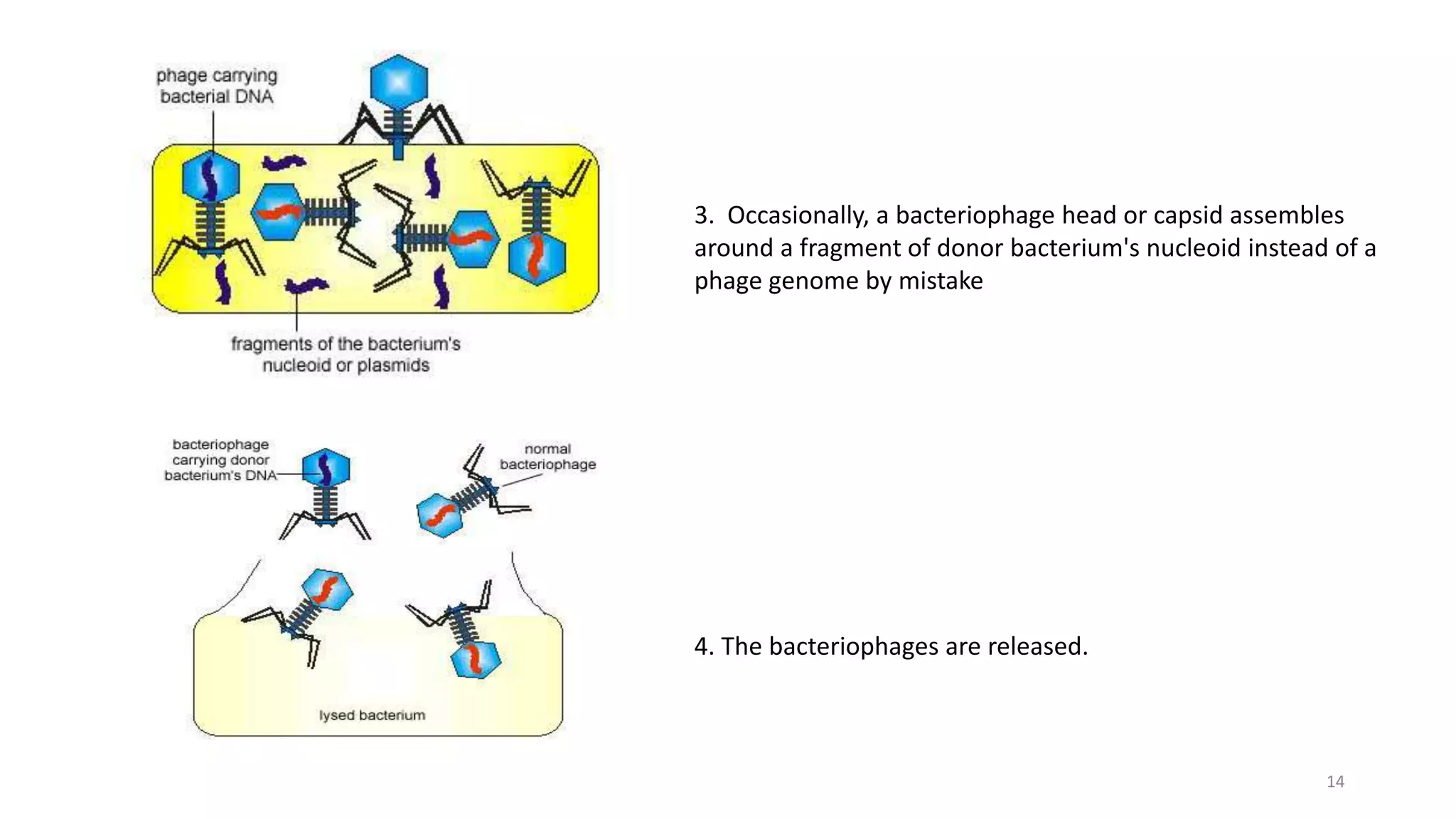
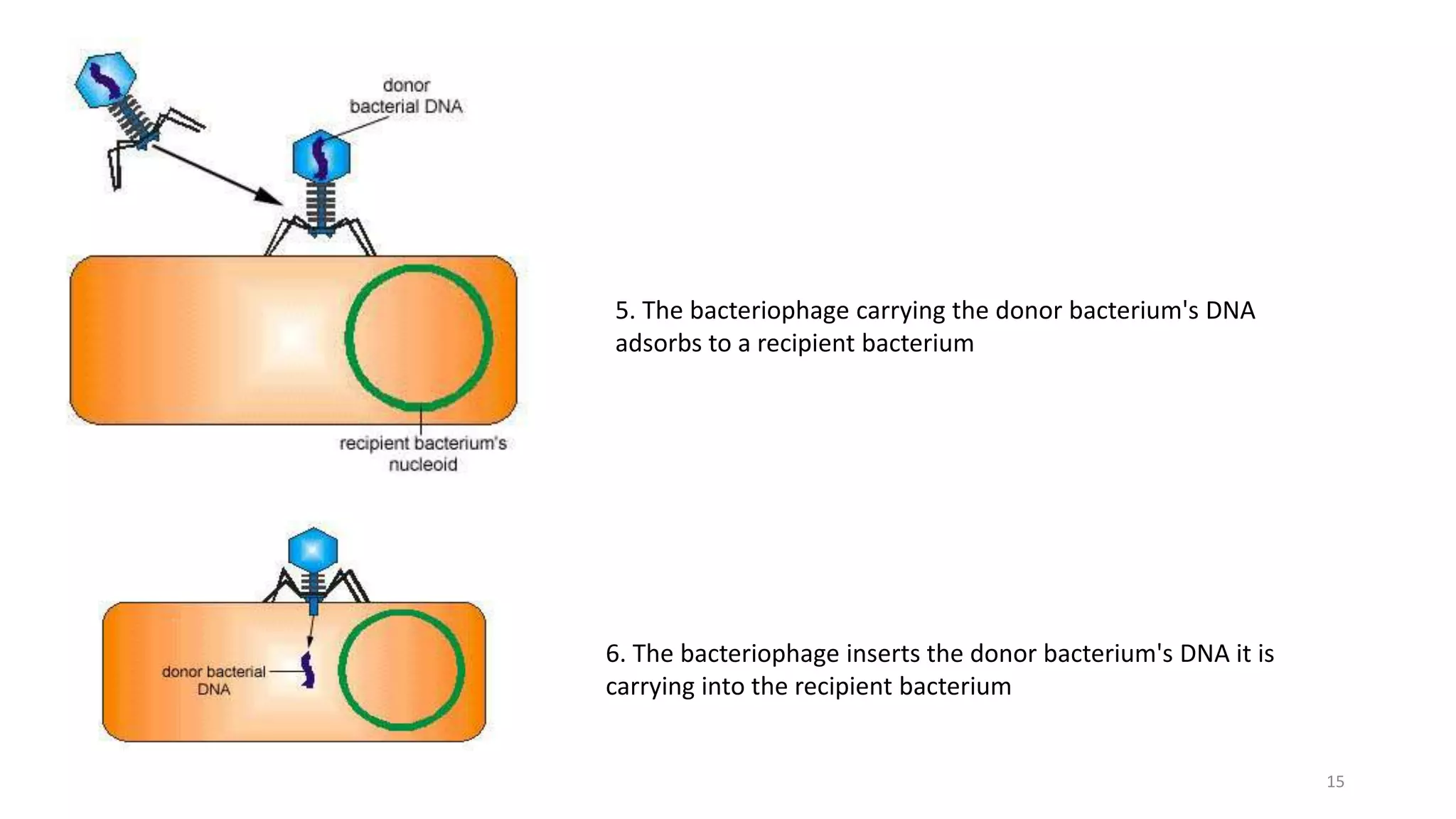
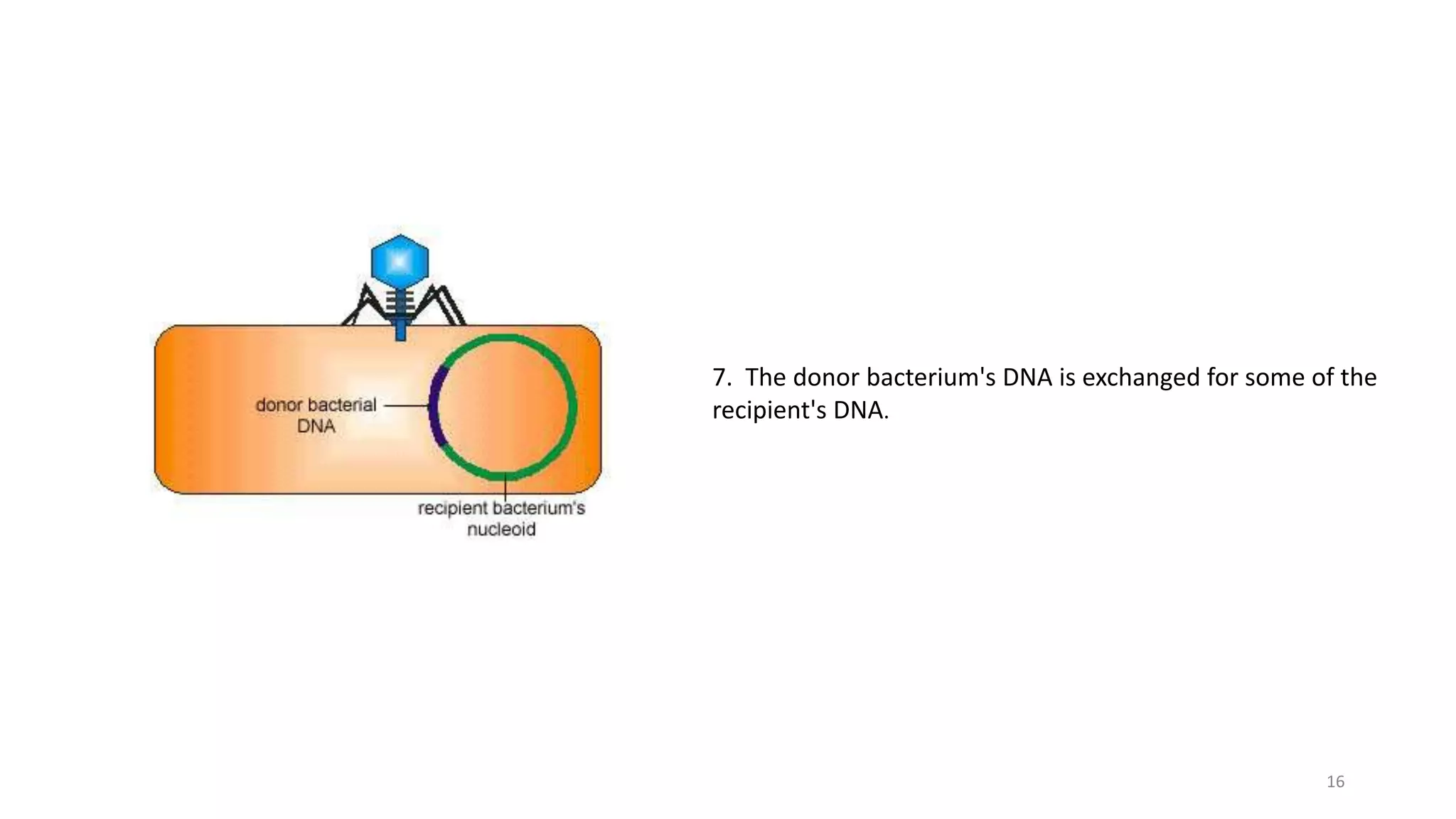
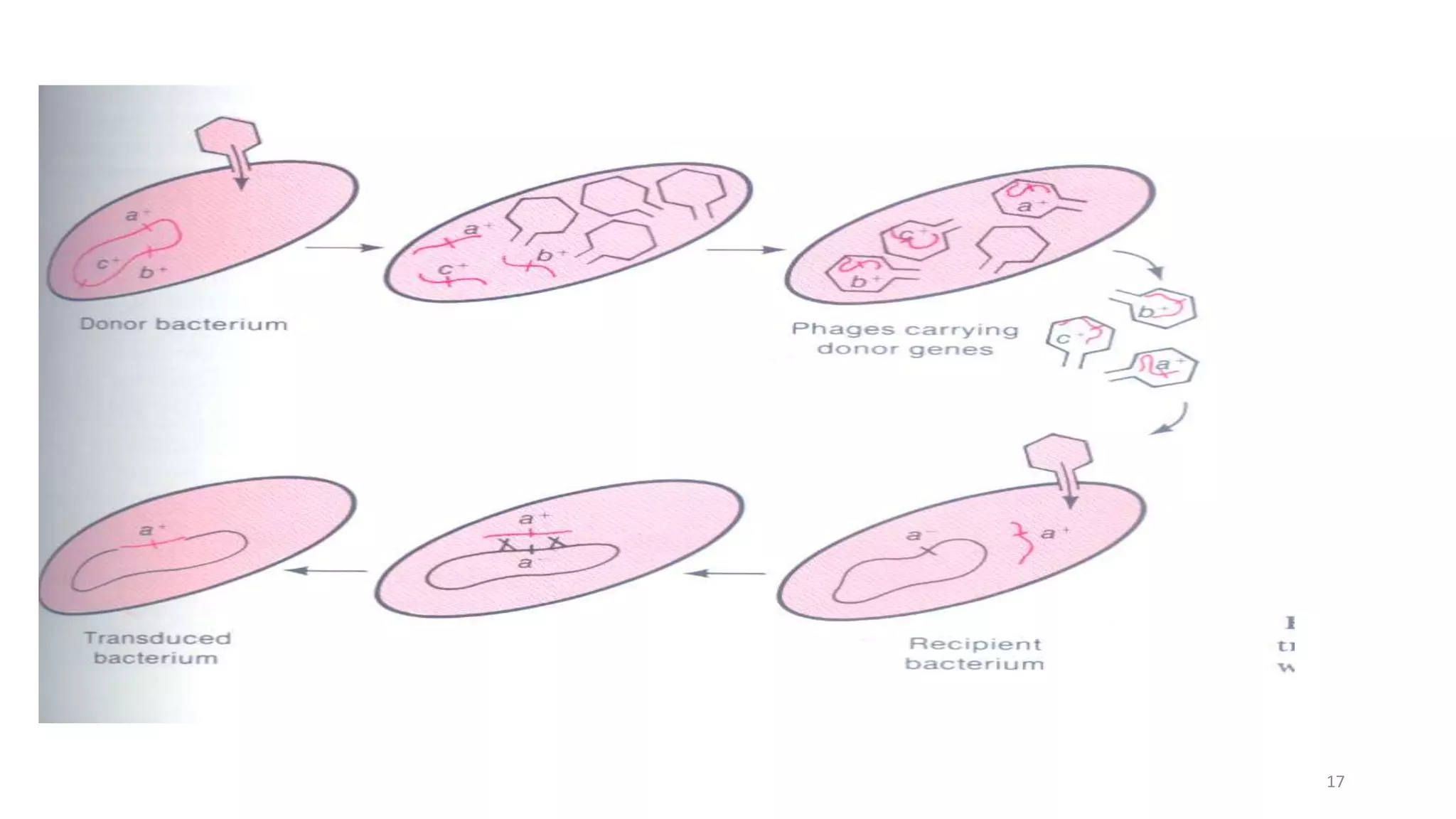
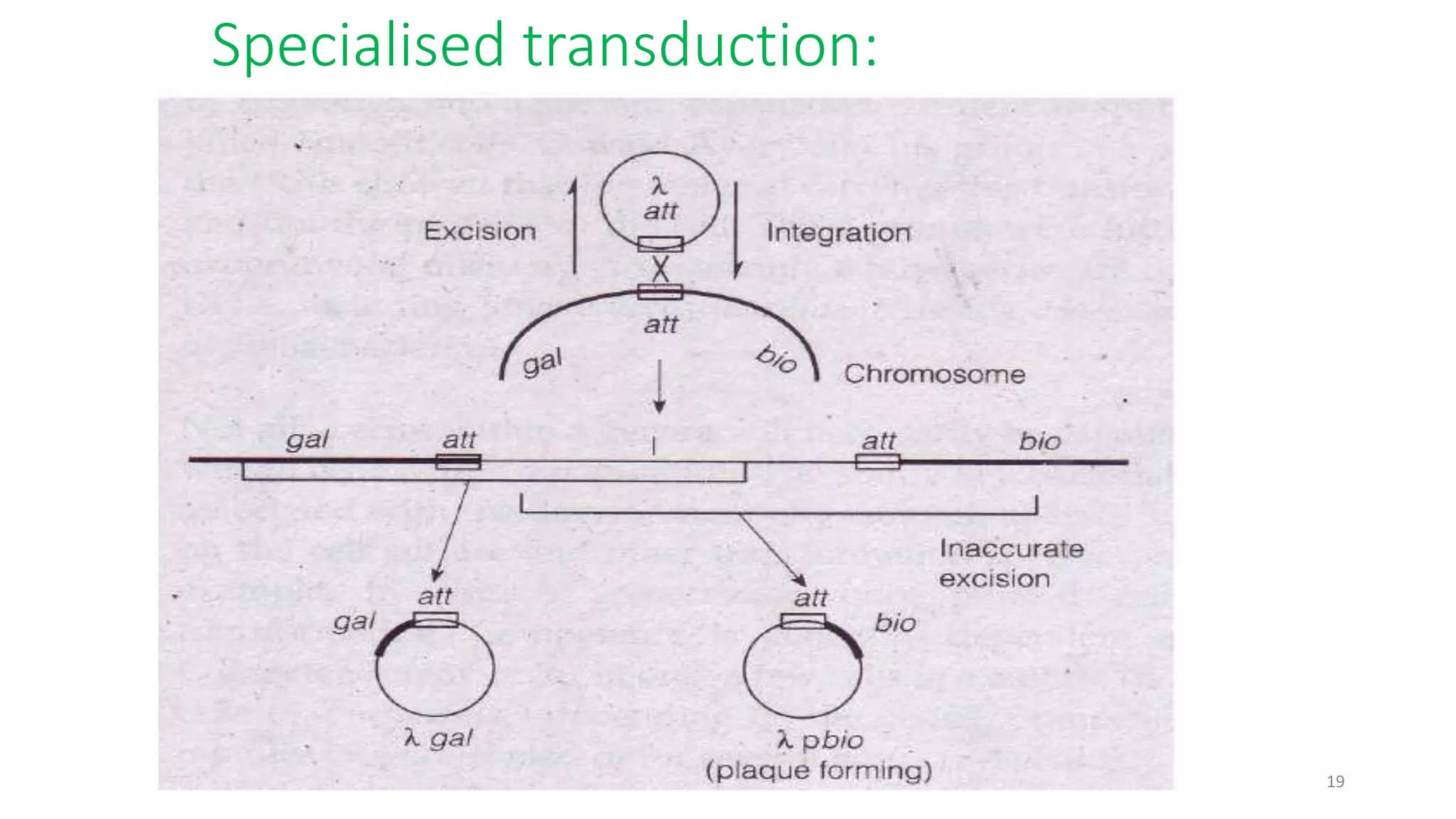
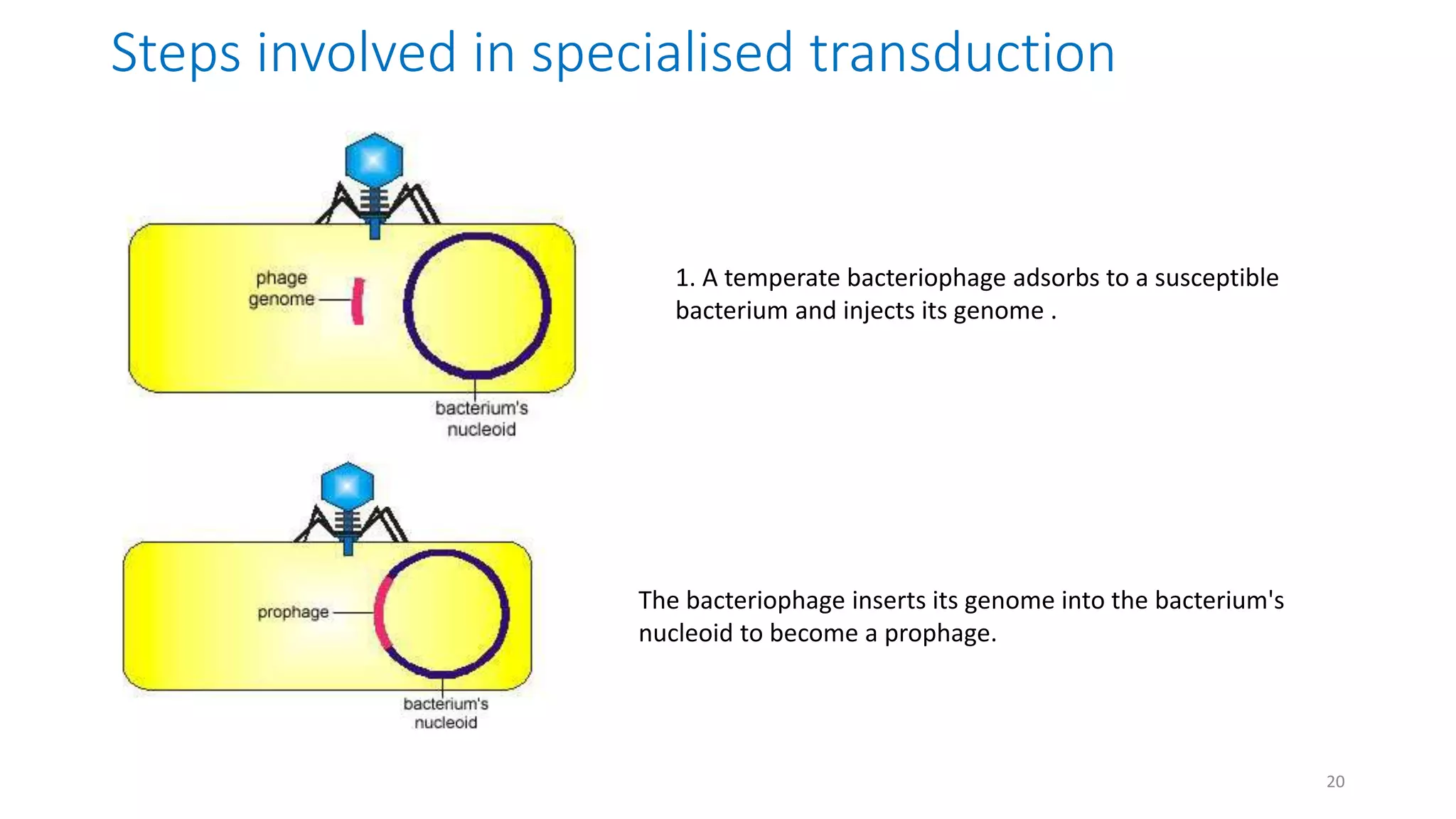
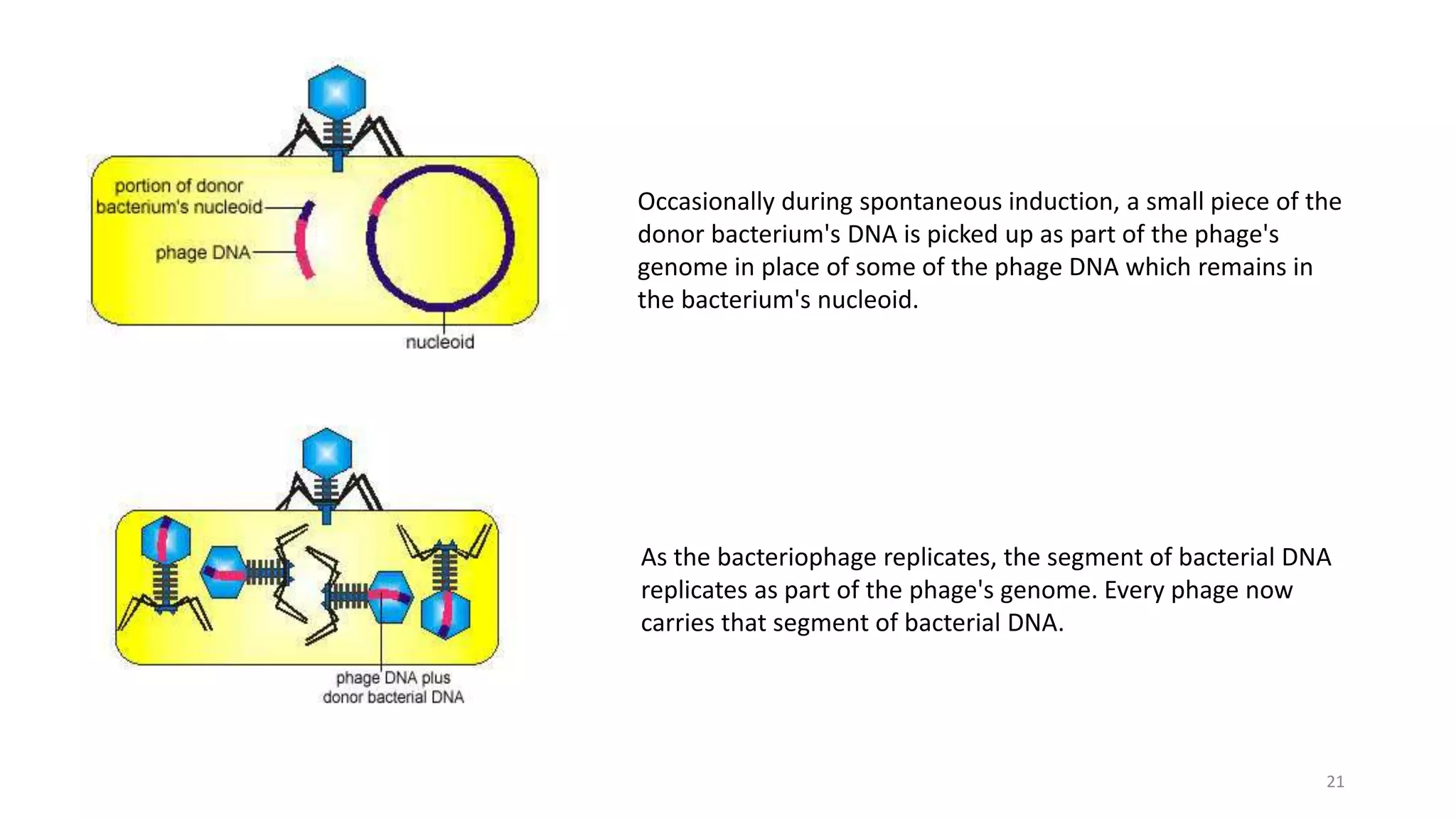
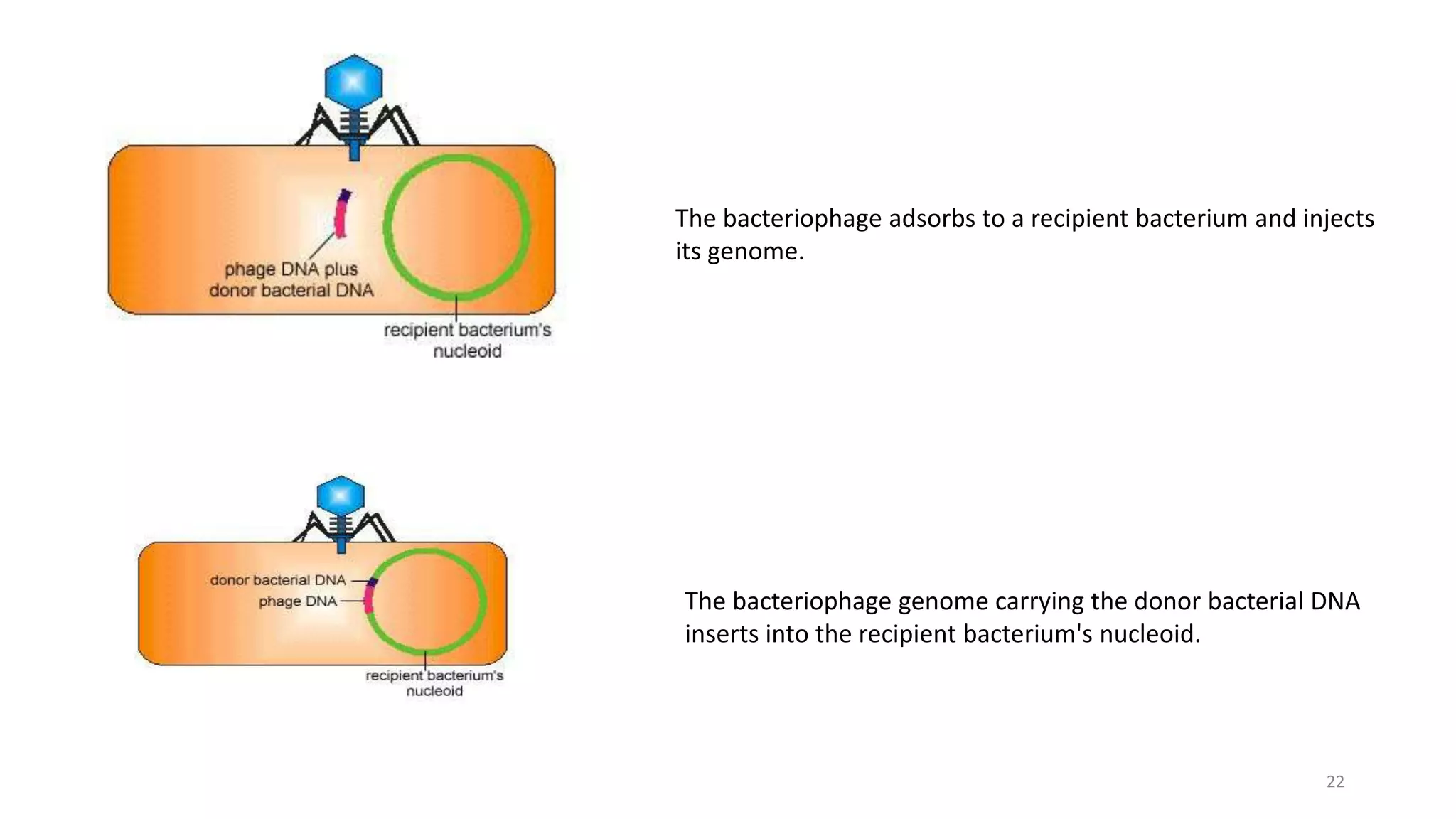

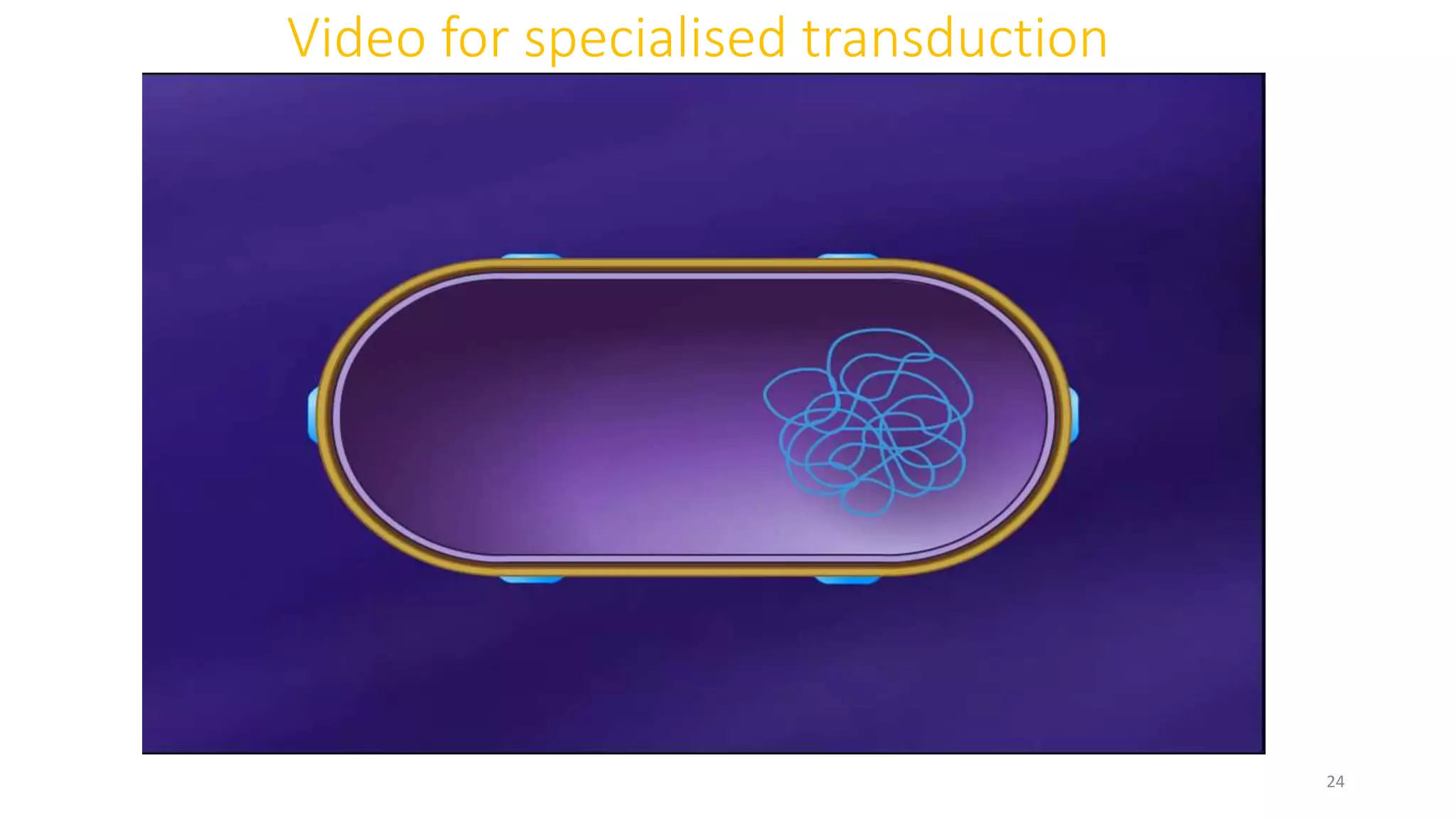


Transduction is the transfer of genes between bacteria through bacteriophages. It was discovered in 1952 by Norton Zinder and Joshua Lederberg through experiments showing genetic exchange between Salmonella strains. Transduction occurs through either the lytic or lysogenic cycle of a bacteriophage. There are two main types of transduction: generalized, where any bacterial gene can be transferred, and specialized, where only certain genes are transferred. Transduction contributes to bacterial evolution and allows for the study of gene linkage.


