Downloaded 10 times
![BACTERIAL
TRANSDUCTION
PRESENTED BY SAIRA FATIMA
ROLL NO:31
MSC 4 [2018-2020]
Department of MicroBiology & Molecular Genetics
University of the Punjab
Lahore, Pakistan](https://image.slidesharecdn.com/bacterialtransduction-200622160045/85/Bacterial-transduction-1-320.jpg)
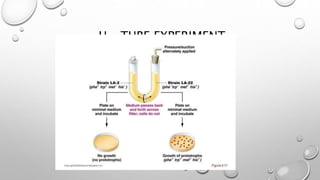
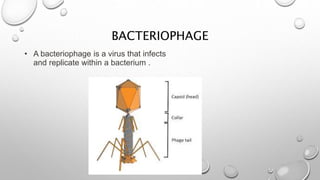
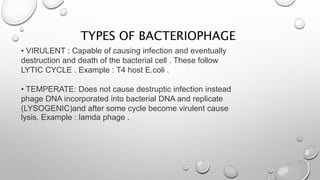
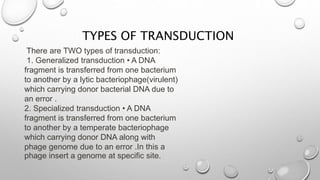
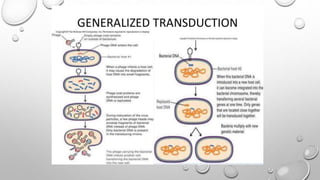

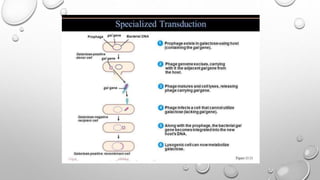


Bacterial transduction is the transfer of genetic material between bacteria via bacteriophages, discovered by Zinder and Lederberg while studying Salmonella. There are two main types of transduction: generalized, where a lytic bacteriophage accidentally carries bacterial DNA, and specialized, involving temperate bacteriophages that incorporate bacterial DNA into their genome. Transduction plays a significant role in genetic variation and evolution among bacteria, with implications for fields such as cancer research.


