Downloaded 1,399 times
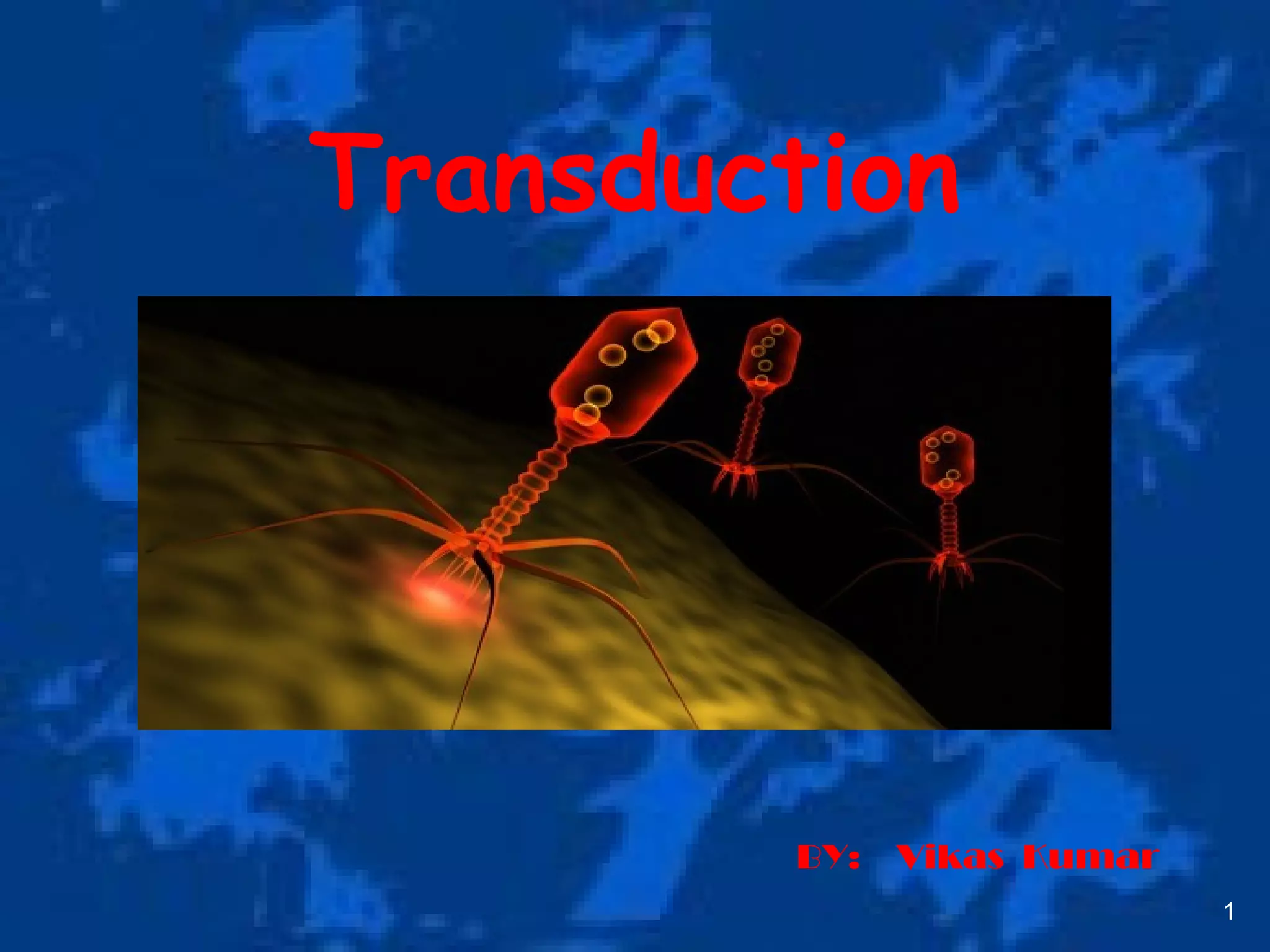

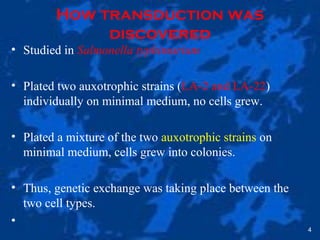
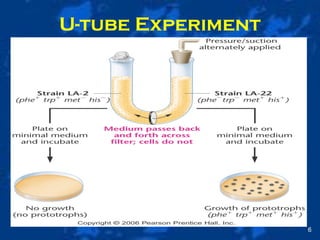
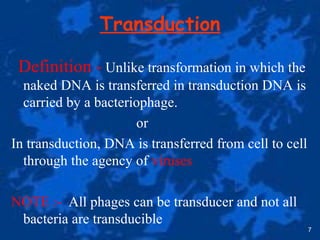
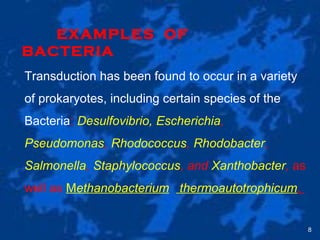
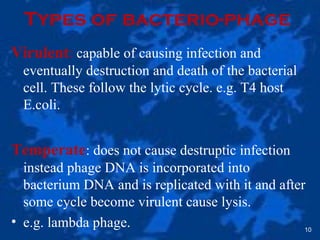
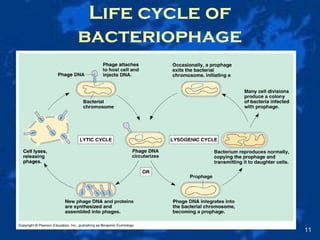
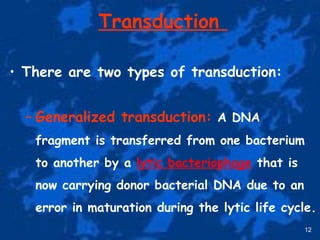
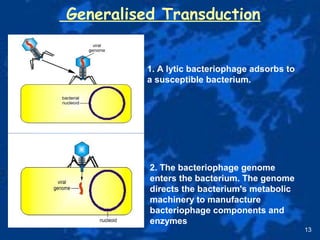
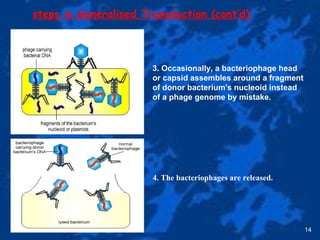
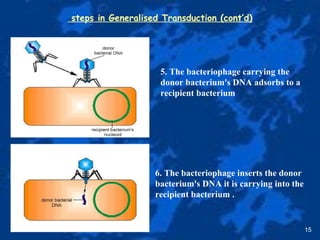
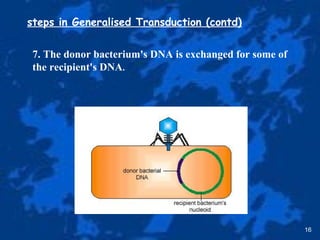
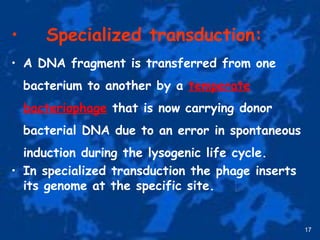
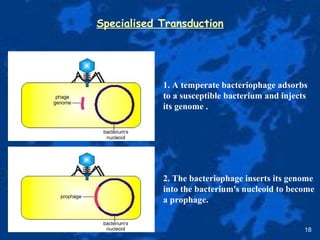
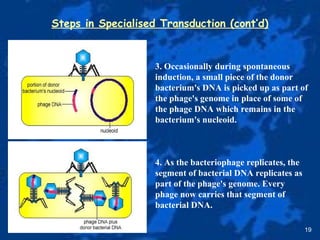
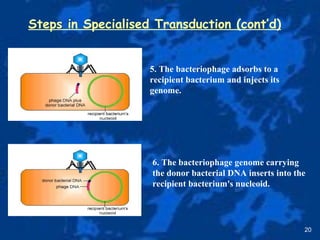


Transduction is the transfer of genetic material between bacteria through bacteriophages. It was discovered in 1952 by Joshua Lederberg and Norton Zinder during their experiments with Salmonella bacteria. There are two types of transduction: generalized transduction, which occurs when a lytic phage picks up bacterial DNA during virus assembly and transfers it to another bacteria; and specialized transduction, which involves the transfer of bacterial DNA adjacent to the phage genome when a temperate phage enters the lysogenic cycle. Transduction contributes to bacterial evolution and genetic diversity by allowing for the lateral transfer of genes between distantly related species.


