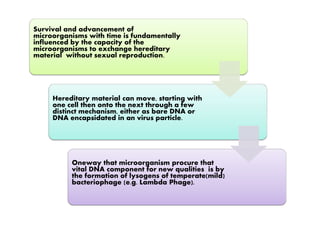
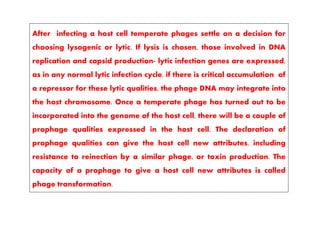
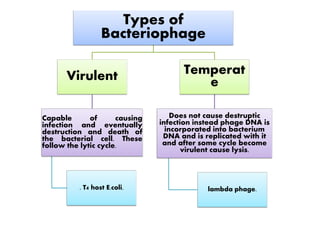
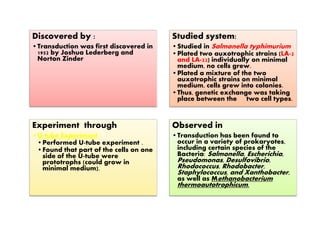
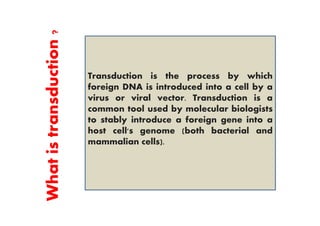
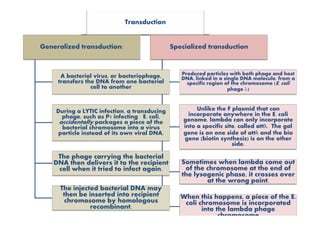
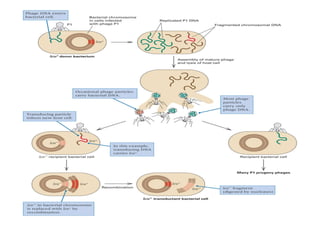
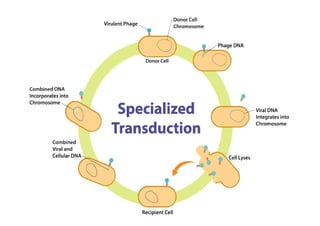
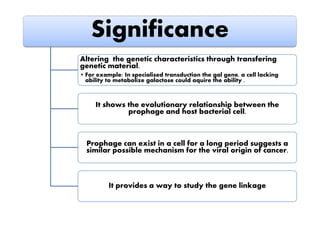

Bacterial transduction is the process by which bacteria can acquire genetic material from other bacteria through viruses. There are two main types: generalized transduction, where any bacterial DNA can be transferred during a lytic viral infection, and specialized transduction, where a specific region of bacterial DNA is incorporated into a temperate phage and transferred. Transduction was first discovered in 1952 by Lederberg and Zinder while studying Salmonella bacteria. It allows for genetic exchange between bacteria and influences bacterial evolution and adaptation over time.


