Gene Transfer Mechanisms
in Bacteria
Prsented by:
Sanjay Kr Vishwakarma
Gene transfer mechanisms in bacteria
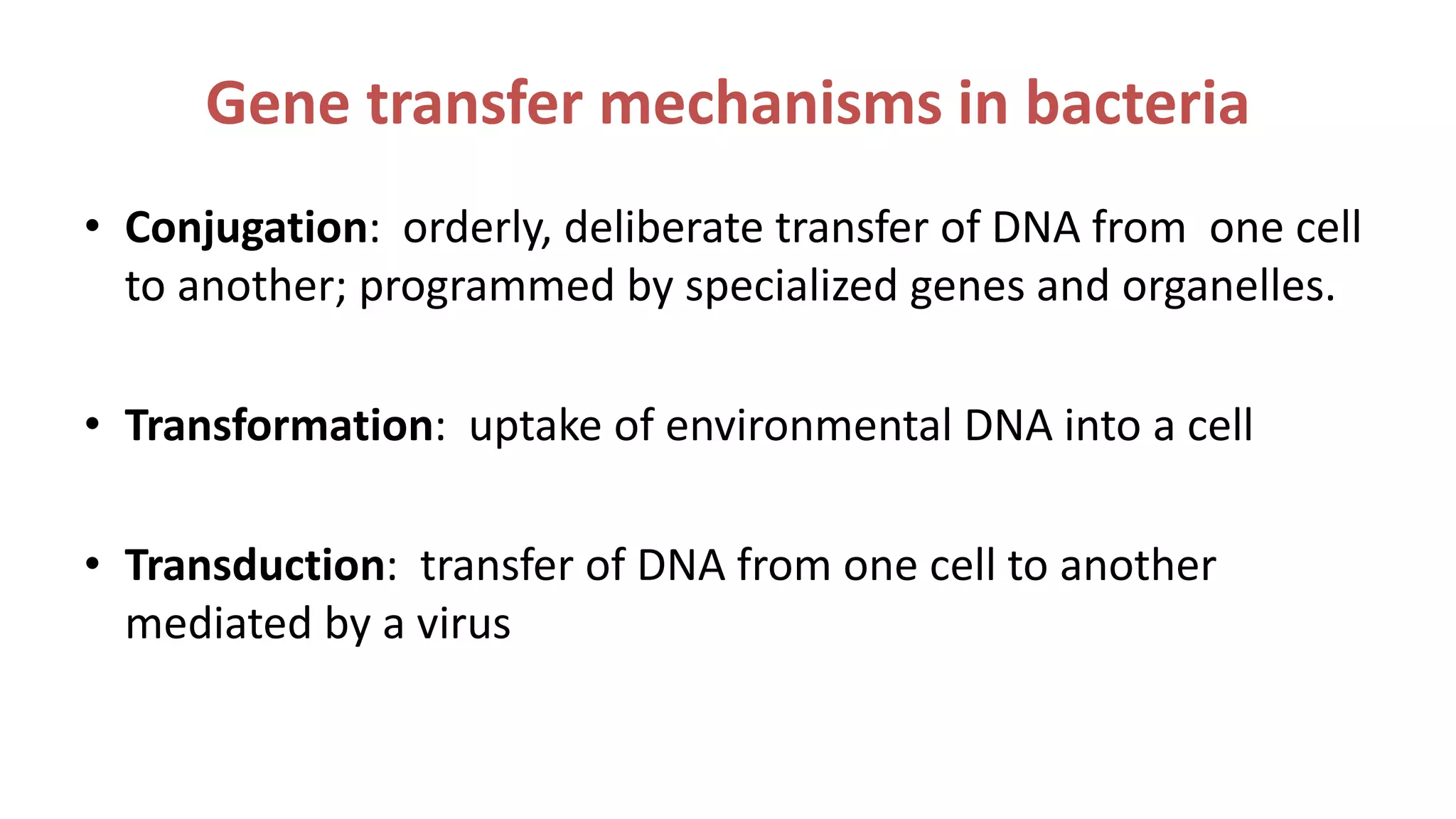
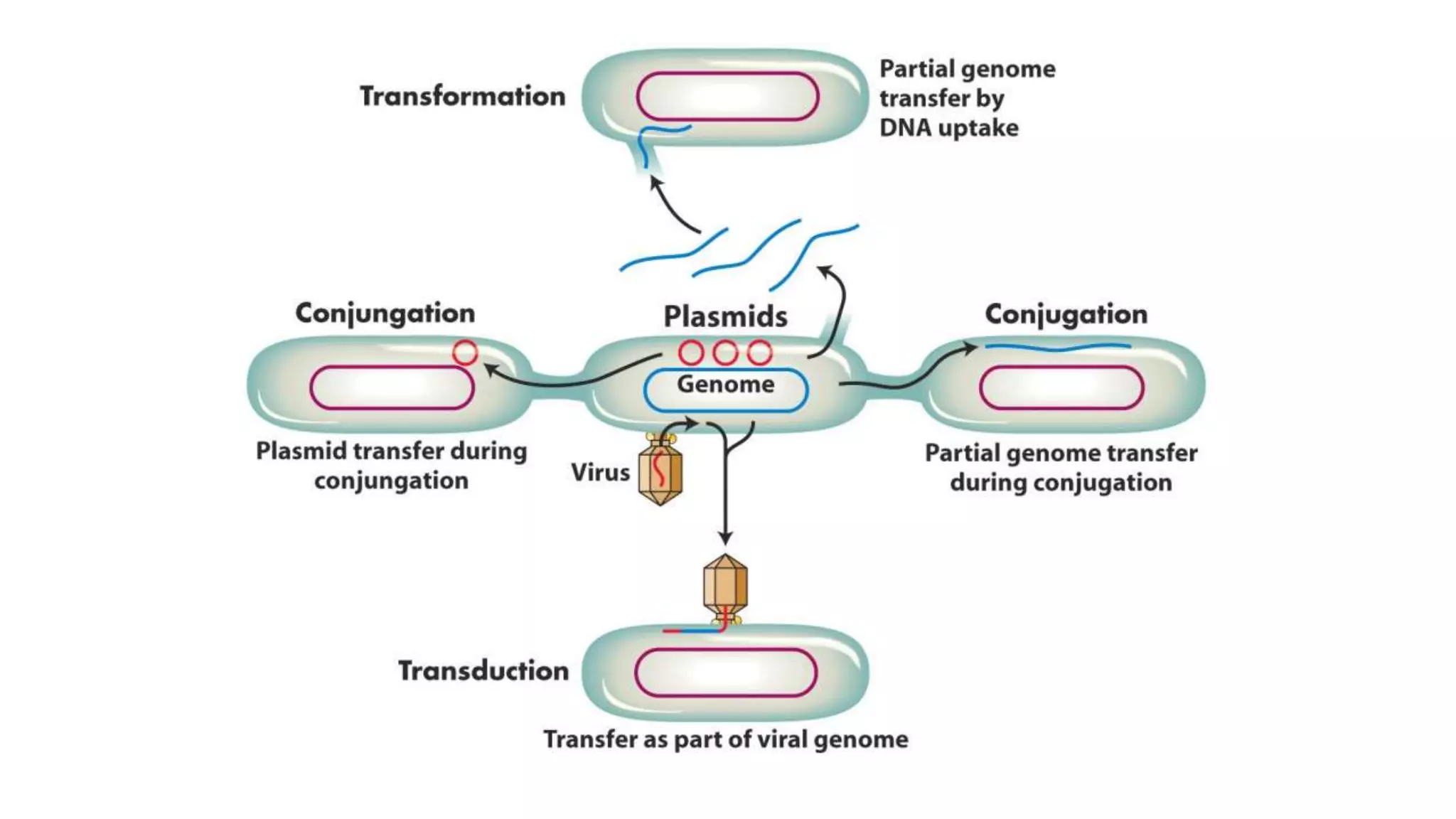
• Conjugation: orderly, deliberate transfer of DNA from one cell
to another; programmed by specialized genes and organelles.
• Transformation: uptake of environmental DNA into a cell
• Transduction: transfer of DNA from one cell to another
mediated by a virus
Properties of gene transfer in bacteria
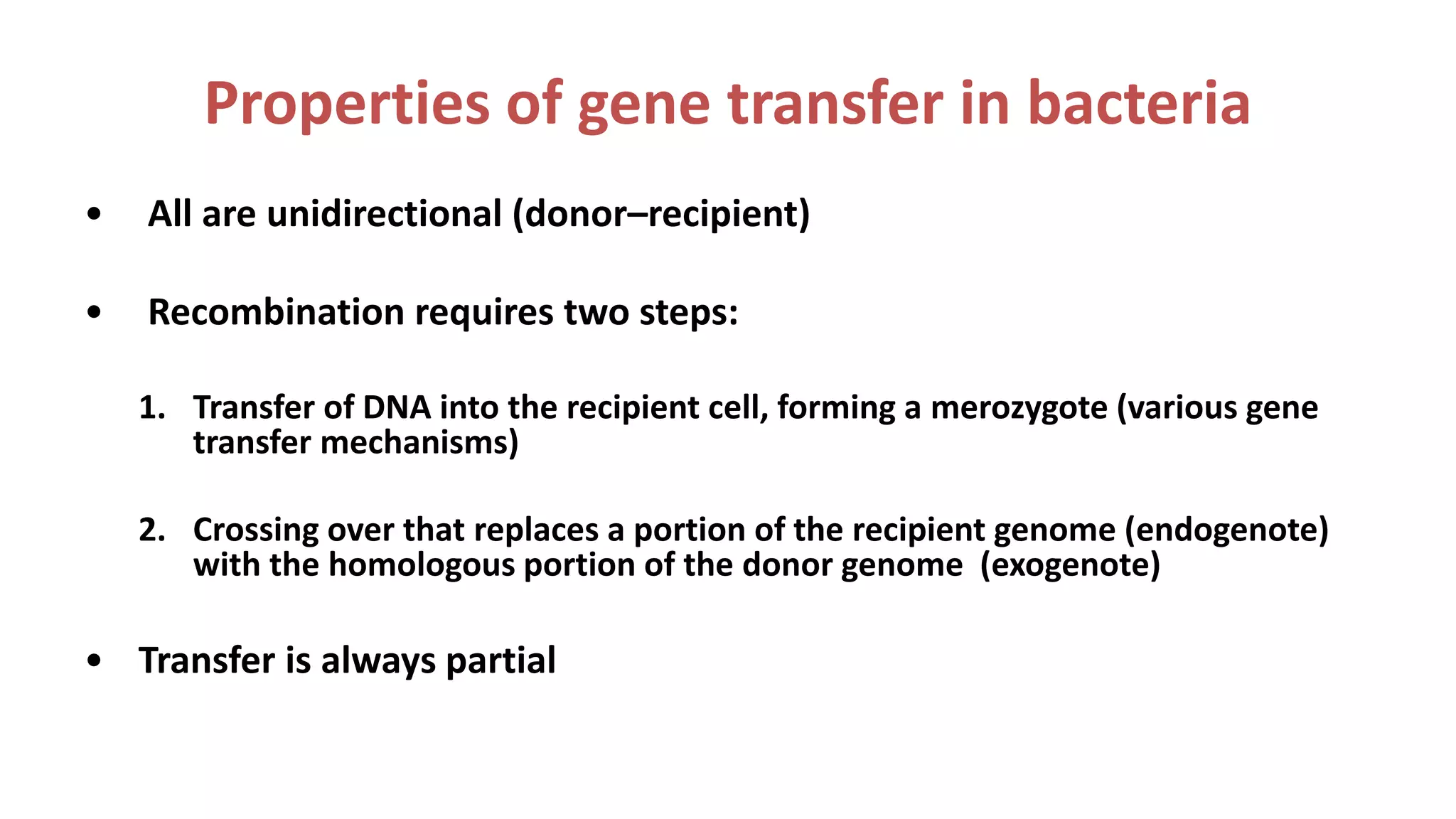
• All are unidirectional (donor–recipient)
• Recombination requires two steps:
1. Transfer of DNA into the recipient cell, forming a merozygote (various gene
transfer mechanisms)
2. Crossing over that replaces a portion of the recipient genome (endogenote)
with the homologous portion of the donor genome (exogenote)
• Transfer is always partial
Conjugation
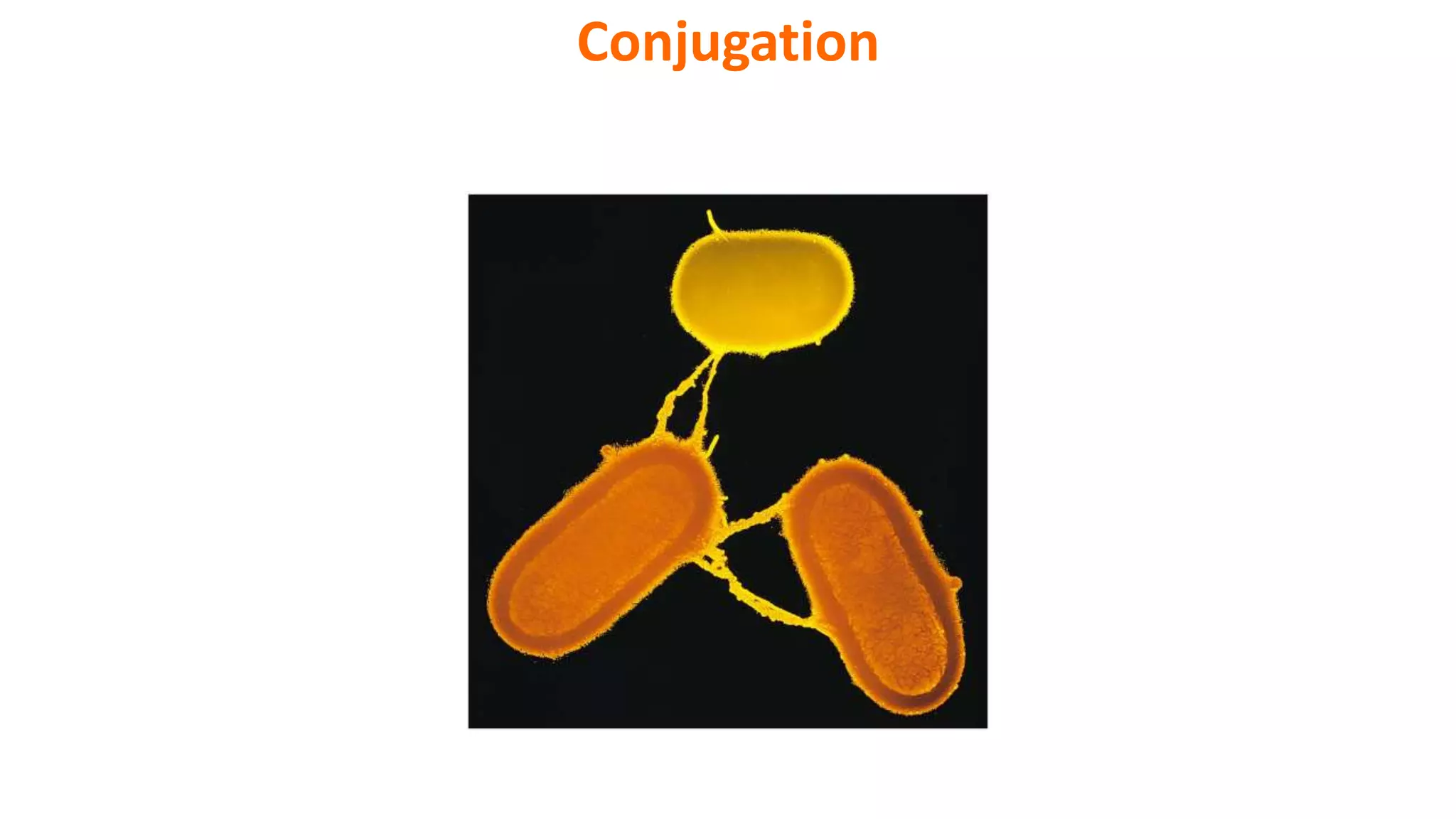
• Direct transfer via connection tube, one-way traffic from donor cells
to recipient cells.
• It is not a reciprocal exchange of genetic information.
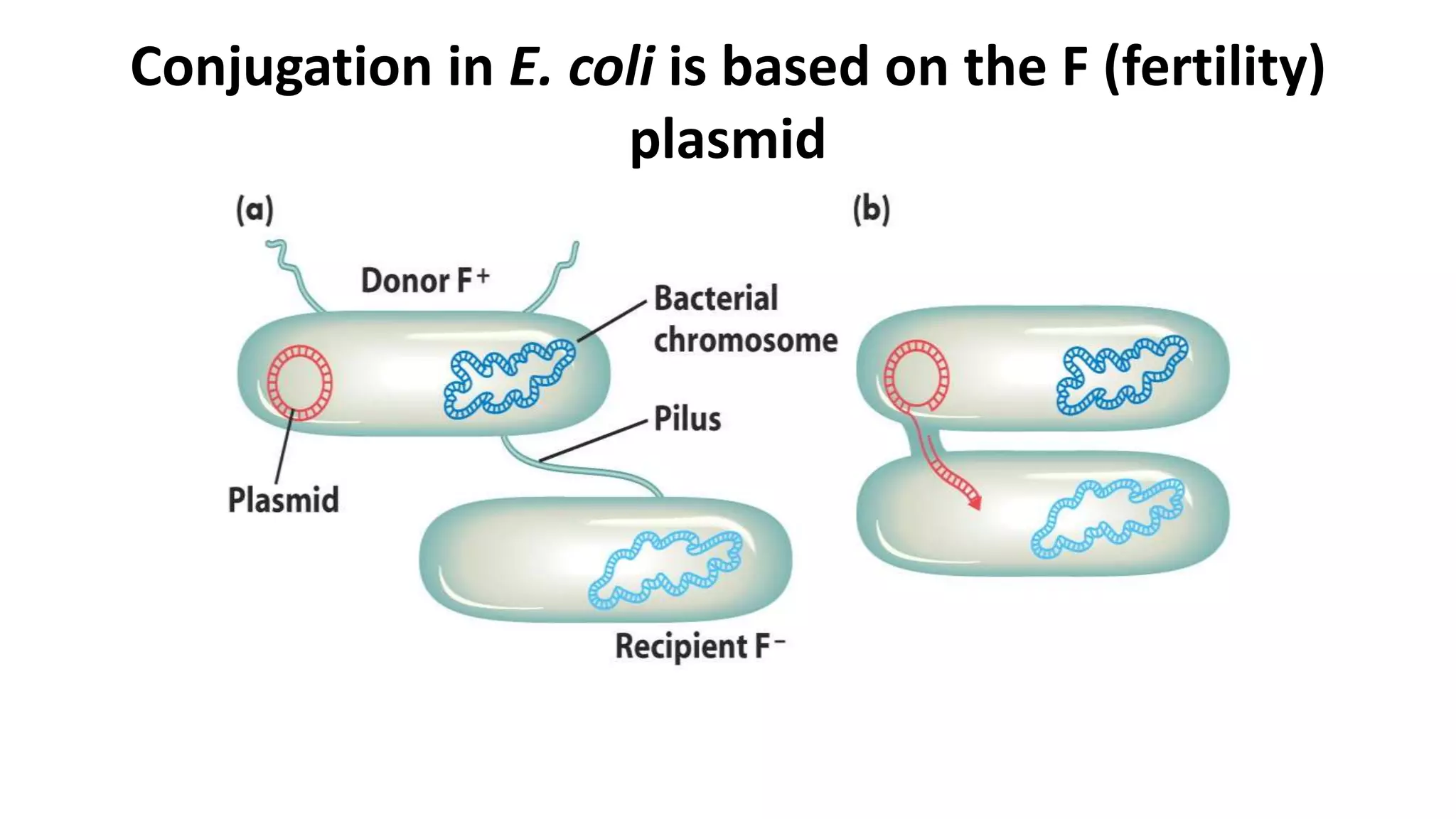
• F+ cells donor cells containing F factor
• F− cells recipient cells lacking F factor
• Sex Pilus – connection tube
Conjugation in E. coli is based on the F (fertility)
plasmid
Transfer of integrated F includes donor
chromosome
Unidirectional
transfer
Recombination
Partial transfer
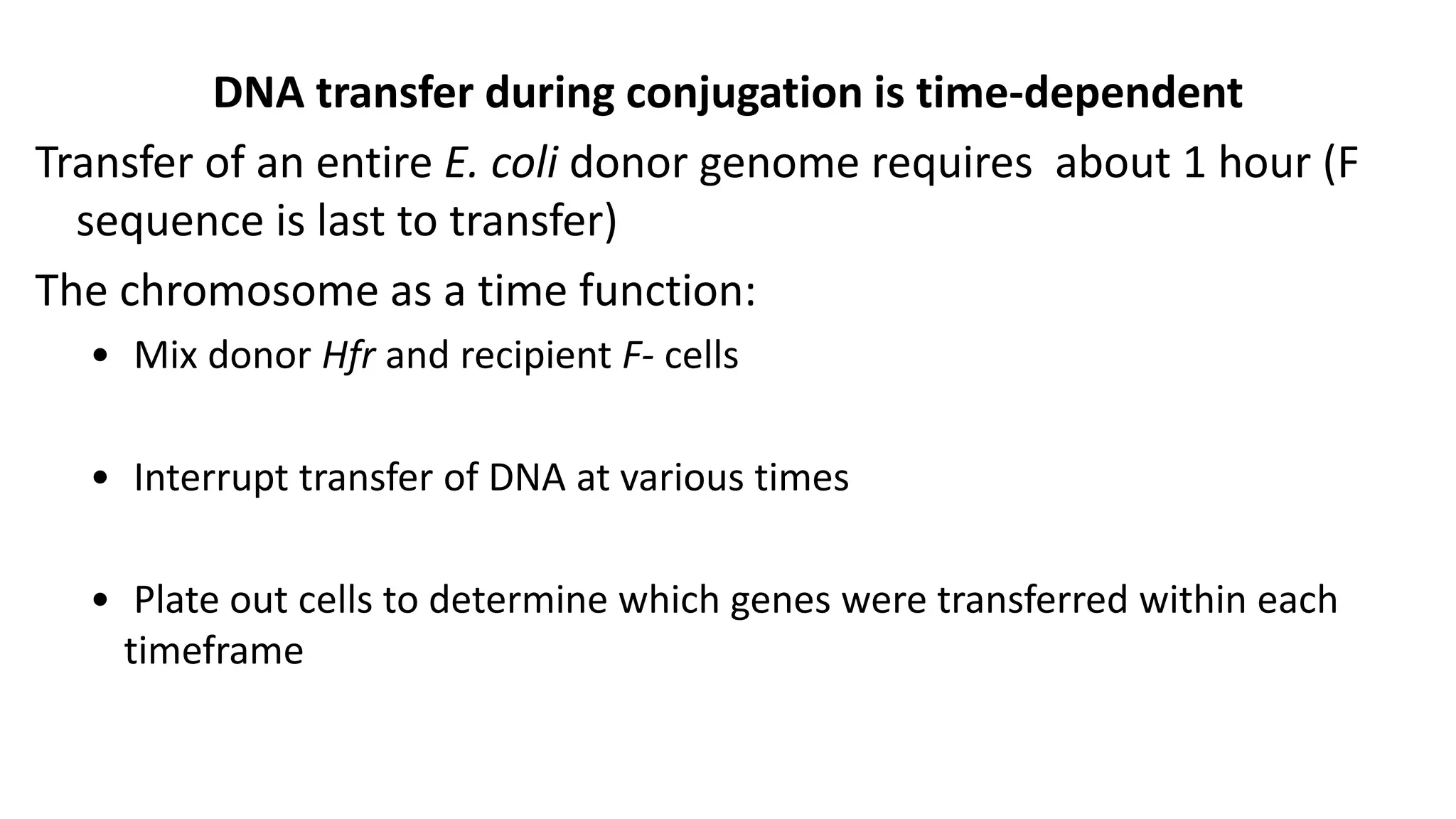
DNA transfer during conjugation is time-dependent
Transfer of an entire E. coli donor genome requires about 1 hour (F
sequence is last to transfer)
The chromosome as a time function:
• Mix donor Hfr and recipient F- cells
• Interrupt transfer of DNA at various times
• Plate out cells to determine which genes were transferred within each
timeframe
Hfr azir tonr lac+ gal+ strs X F- azis tons lac- gal- strr
Transformation
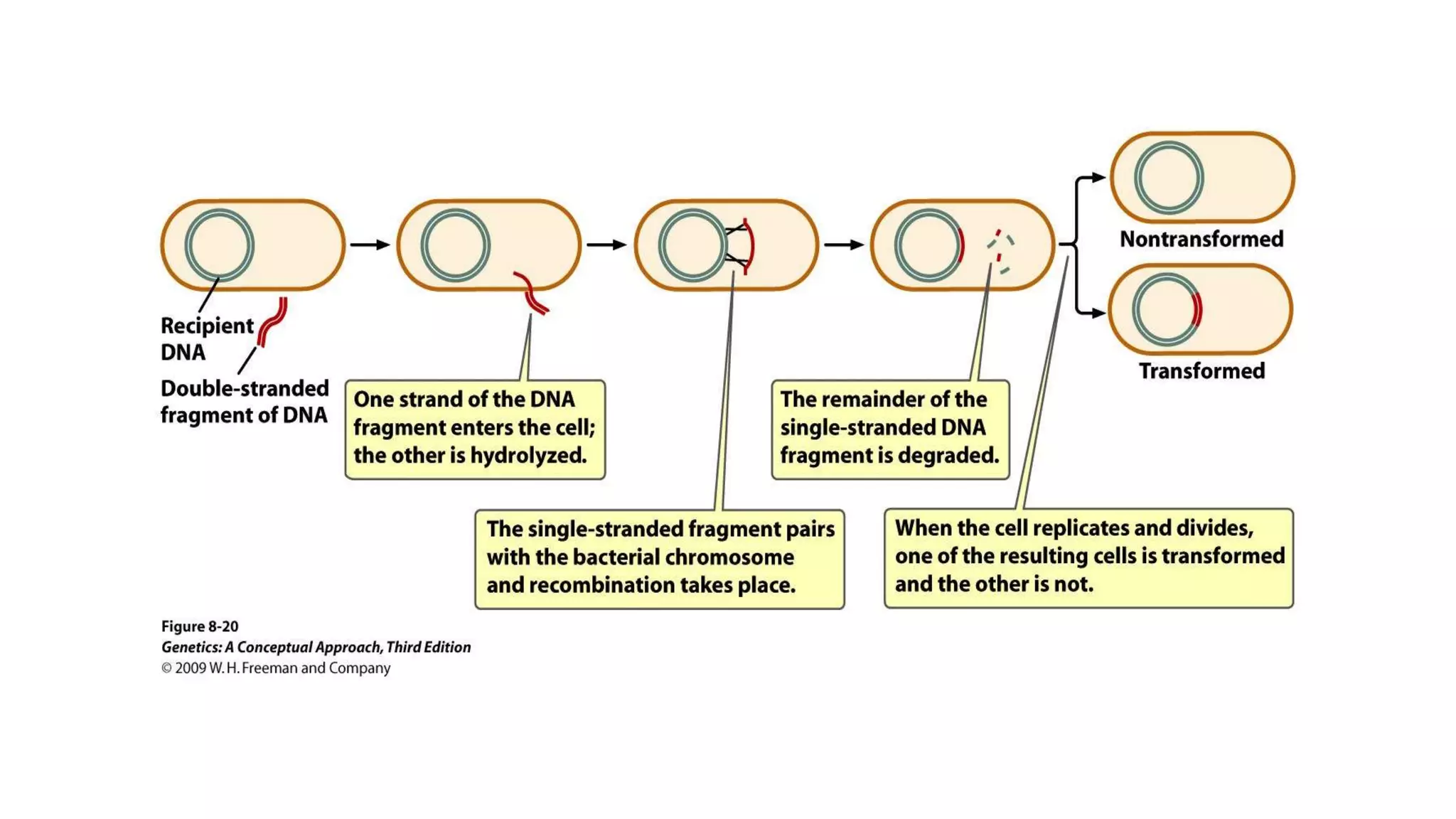
DNA in the environment of a cell is taken into the recipient cell
forming a merozygote; then recombination occurs
• Competent cells: cells that take up DNA
• Transformants: cells that receive genetic material
• Cotransformed: cells that are transformed by two or more genes
Transduction
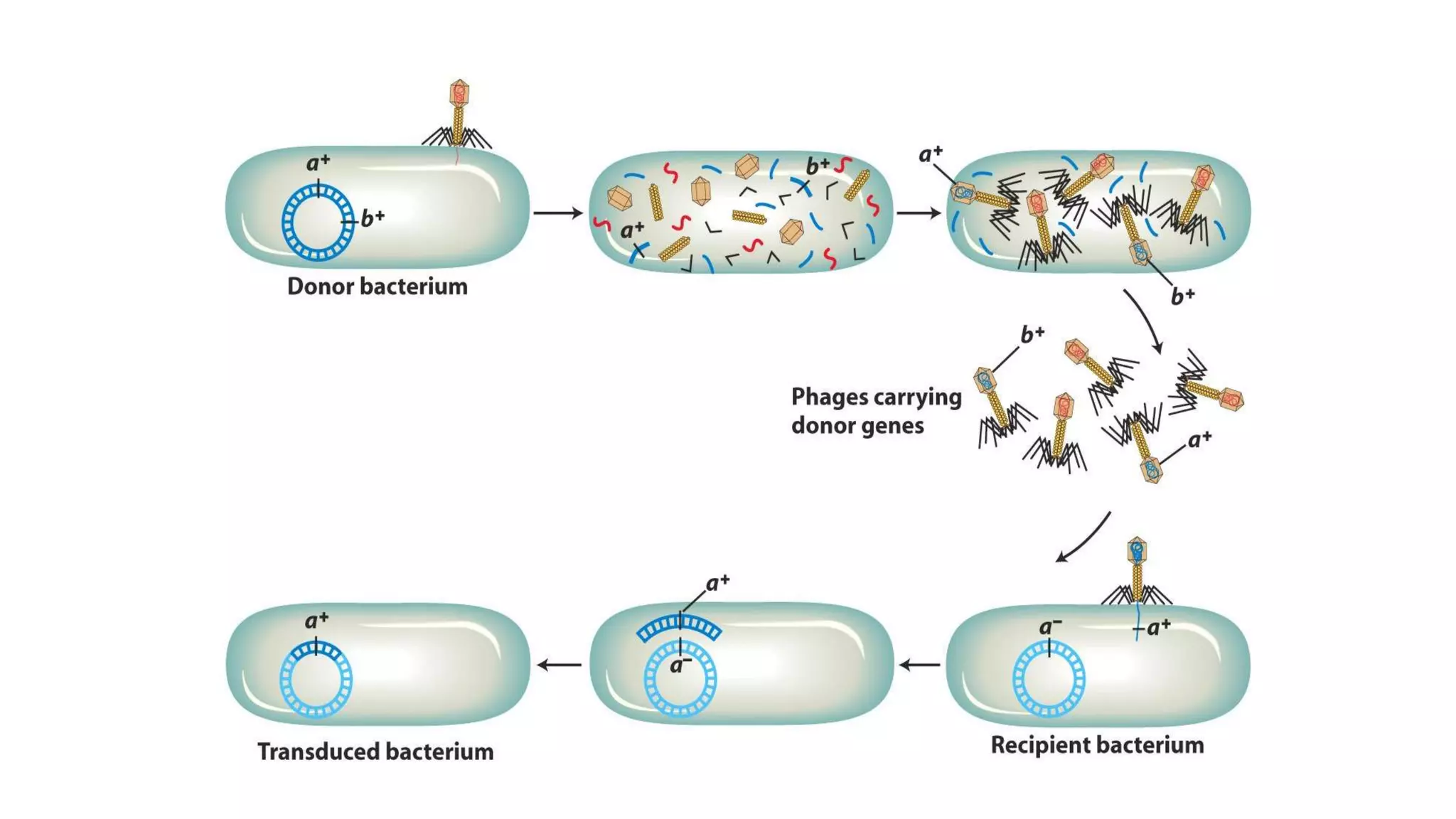
Transduction: Transfer of DNA from one cell to another mediated by
a virus; followed by recombination to integrate the DNA into the
recipient cell.
• General transduction: any genes can be transferred
• Specialized transduction: only a few genes can be transferred
Bacteriophages have two alternative life cycles:
lytic and lysogenic
Multiple Choice Question
1. The Hfr chromosome is transferred to the F— cell in a _____________ fashion.
a) circular
b) coiled
c) dimer
d) linear
1. The Hfr chromosome is transferred to the F— cell in a _____________ fashion.
a) circular
b) coiled
c) dimer
d) linear
Answer: d
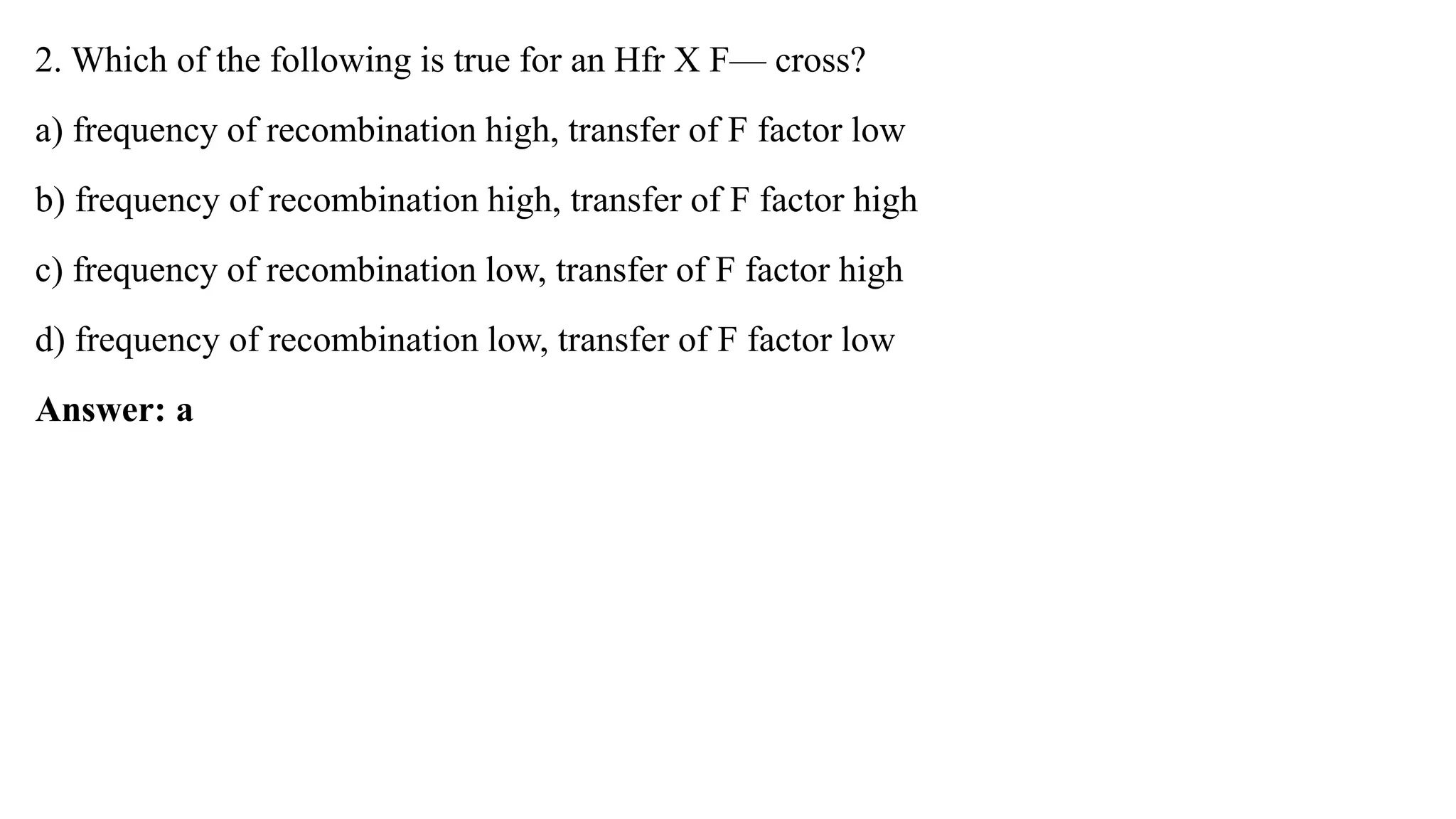
2. Which of the following is true for an Hfr X F— cross?
a) frequency of recombination high, transfer of F factor low
b) frequency of recombination high, transfer of F factor high
c) frequency of recombination low, transfer of F factor high
d) frequency of recombination low, transfer of F factor low
Answer: a
2. Which of the following is true for an Hfr X F— cross?
a) frequency of recombination high, transfer of F factor low
b) frequency of recombination high, transfer of F factor high
c) frequency of recombination low, transfer of F factor high
d) frequency of recombination low, transfer of F factor low
Answer: a
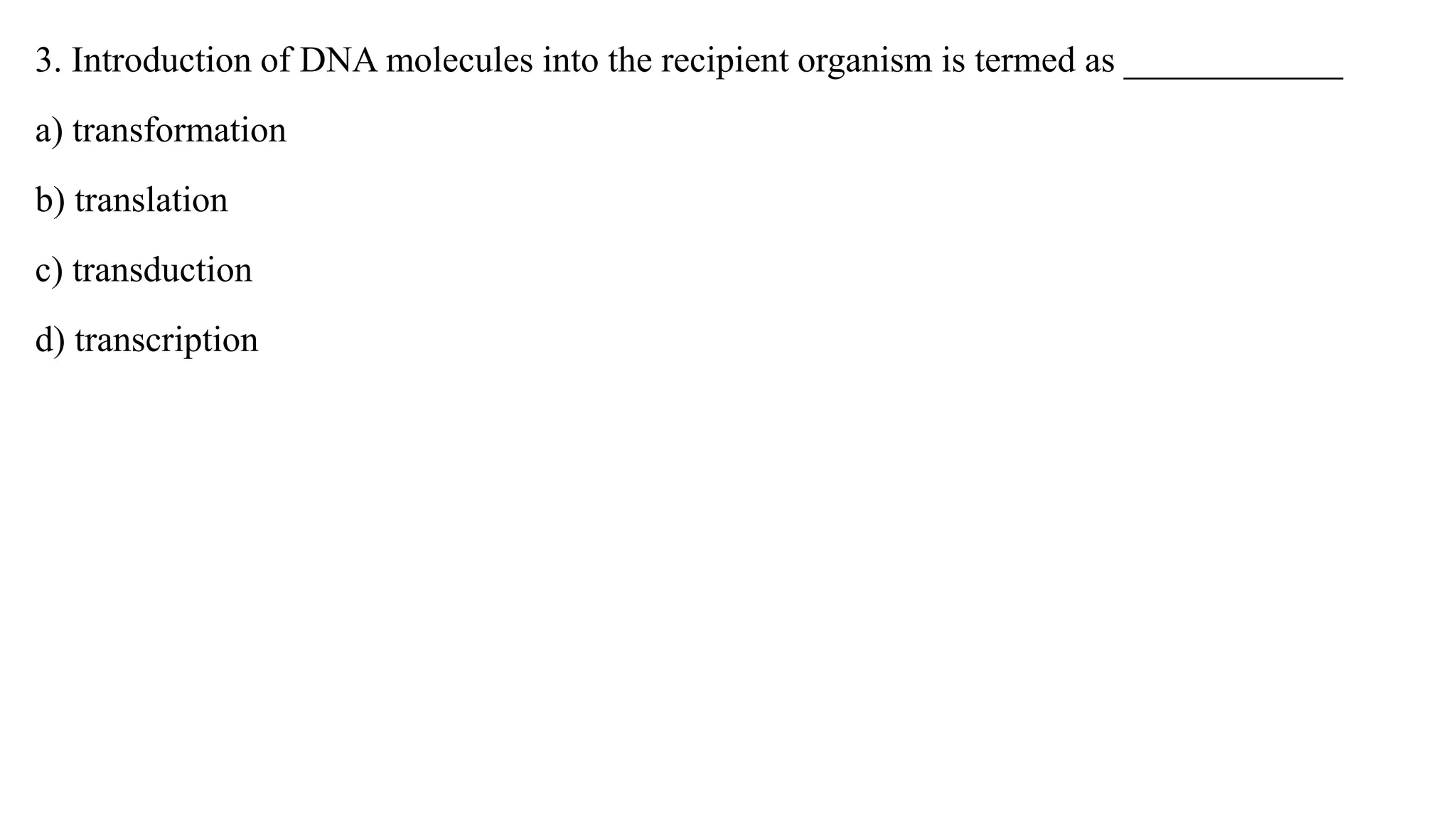
3. Introduction of DNA molecules into the recipient organism is termed as ____________
a) transformation
b) translation
c) transduction
d) transcription
Answer: a
3. Introduction of DNA molecules into the recipient organism is termed as ____________
a) transformation
b) translation
c) transduction
d) transcription
4. Which of the following role is performed by a bacteriophage in transduction?
a) vector
b) donor
c) recipient
d) episome
Answer: a
4. Which of the following role is performed by a bacteriophage in transduction?
a) vector
b) donor
c) recipient
d) episome
Answer key:
1- d
2-a
3-a
4-a
Thank You

Gene transfer mechanisms in bacteria

  • 1.
    Gene Transfer Mechanisms inBacteria Prsented by: Sanjay Kr Vishwakarma
  • 2.
    Gene transfer mechanismsin bacteria • Conjugation: orderly, deliberate transfer of DNA from one cell to another; programmed by specialized genes and organelles. • Transformation: uptake of environmental DNA into a cell • Transduction: transfer of DNA from one cell to another mediated by a virus
  • 4.
    Properties of genetransfer in bacteria • All are unidirectional (donor–recipient) • Recombination requires two steps: 1. Transfer of DNA into the recipient cell, forming a merozygote (various gene transfer mechanisms) 2. Crossing over that replaces a portion of the recipient genome (endogenote) with the homologous portion of the donor genome (exogenote) • Transfer is always partial
  • 5.
  • 6.
    • Direct transfervia connection tube, one-way traffic from donor cells to recipient cells. • It is not a reciprocal exchange of genetic information. • F+ cells donor cells containing F factor • F− cells recipient cells lacking F factor • Sex Pilus – connection tube
  • 7.
    Conjugation in E.coli is based on the F (fertility) plasmid
  • 8.
    Transfer of integratedF includes donor chromosome Unidirectional transfer Recombination Partial transfer
  • 9.
    DNA transfer duringconjugation is time-dependent Transfer of an entire E. coli donor genome requires about 1 hour (F sequence is last to transfer) The chromosome as a time function: • Mix donor Hfr and recipient F- cells • Interrupt transfer of DNA at various times • Plate out cells to determine which genes were transferred within each timeframe
  • 10.
    Hfr azir tonrlac+ gal+ strs X F- azis tons lac- gal- strr
  • 11.
    Transformation DNA in theenvironment of a cell is taken into the recipient cell forming a merozygote; then recombination occurs • Competent cells: cells that take up DNA • Transformants: cells that receive genetic material • Cotransformed: cells that are transformed by two or more genes
  • 13.
    Transduction Transduction: Transfer ofDNA from one cell to another mediated by a virus; followed by recombination to integrate the DNA into the recipient cell. • General transduction: any genes can be transferred • Specialized transduction: only a few genes can be transferred
  • 15.
    Bacteriophages have twoalternative life cycles: lytic and lysogenic
  • 16.
  • 17.
    1. The Hfrchromosome is transferred to the F— cell in a _____________ fashion. a) circular b) coiled c) dimer d) linear
  • 18.
    1. The Hfrchromosome is transferred to the F— cell in a _____________ fashion. a) circular b) coiled c) dimer d) linear Answer: d
  • 19.
    2. Which ofthe following is true for an Hfr X F— cross? a) frequency of recombination high, transfer of F factor low b) frequency of recombination high, transfer of F factor high c) frequency of recombination low, transfer of F factor high d) frequency of recombination low, transfer of F factor low Answer: a
  • 20.
    2. Which ofthe following is true for an Hfr X F— cross? a) frequency of recombination high, transfer of F factor low b) frequency of recombination high, transfer of F factor high c) frequency of recombination low, transfer of F factor high d) frequency of recombination low, transfer of F factor low Answer: a
  • 21.
    3. Introduction ofDNA molecules into the recipient organism is termed as ____________ a) transformation b) translation c) transduction d) transcription Answer: a
  • 22.
    3. Introduction ofDNA molecules into the recipient organism is termed as ____________ a) transformation b) translation c) transduction d) transcription
  • 23.
    4. Which ofthe following role is performed by a bacteriophage in transduction? a) vector b) donor c) recipient d) episome Answer: a
  • 24.
    4. Which ofthe following role is performed by a bacteriophage in transduction? a) vector b) donor c) recipient d) episome
  • 25.
  • 26.