Transduction
Transduction

• Definition: Gene transfer from a donor to a
  recipient by way of a bacteriophage

• Bacteriophage (phage): A virus that infects
  bcteria
Phages as DNA carriers


Bacteriophages are natural vectors that
transduce DNA from one bacterial cell to
another.

A bacteriophage cannot “live” or reproduce
without getting inside a bacterial cell
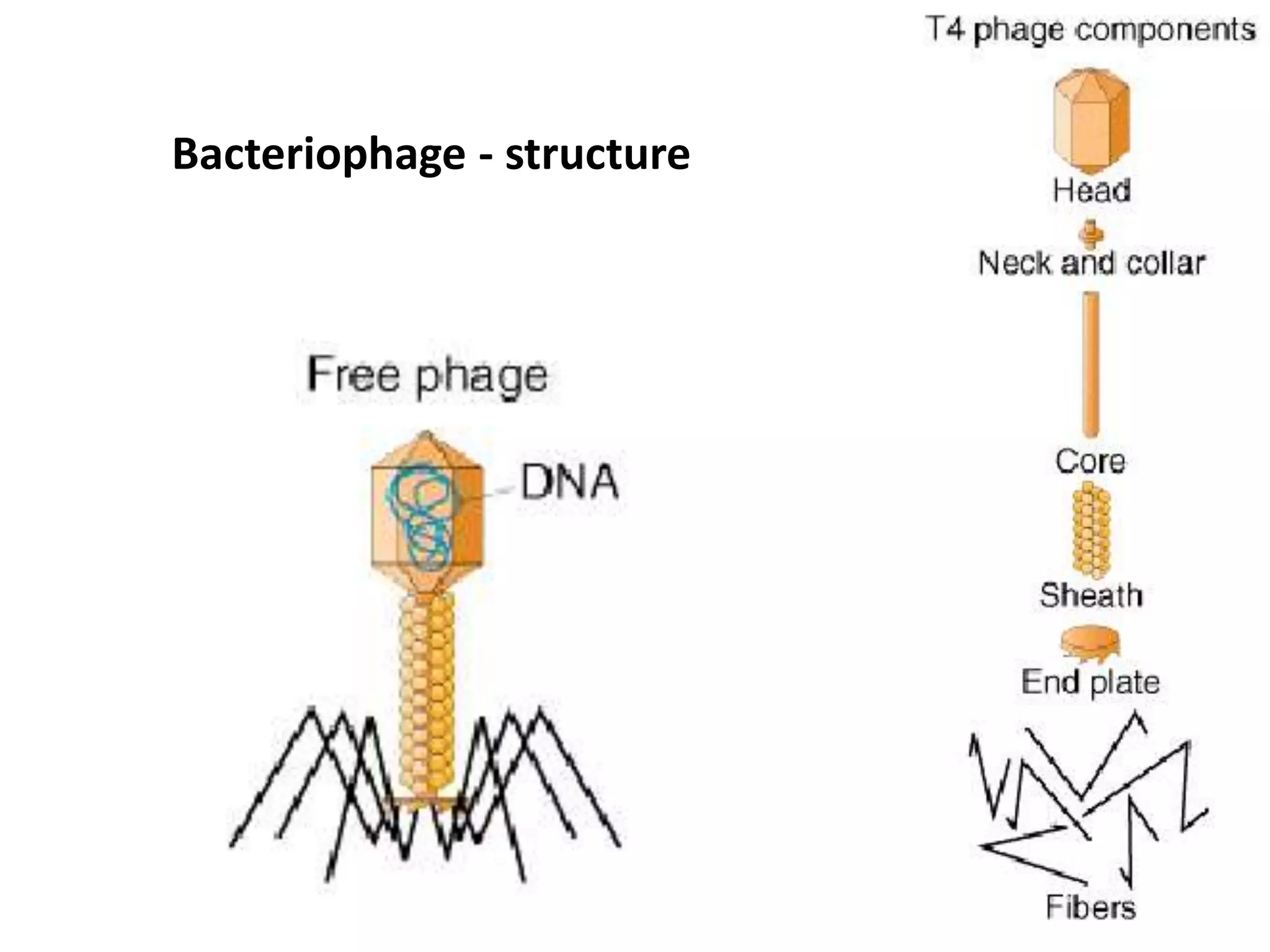
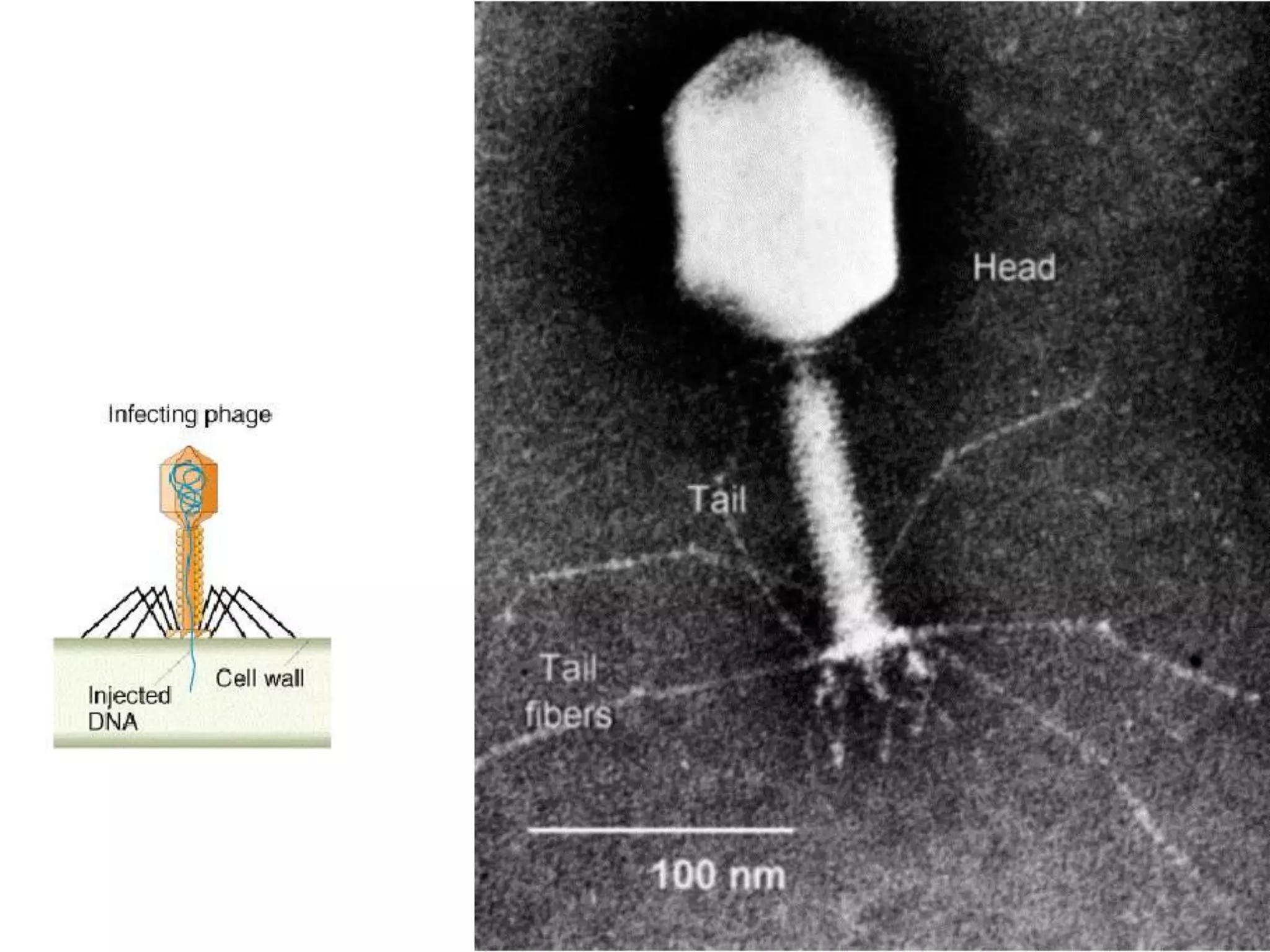
Bacteriophage - structure
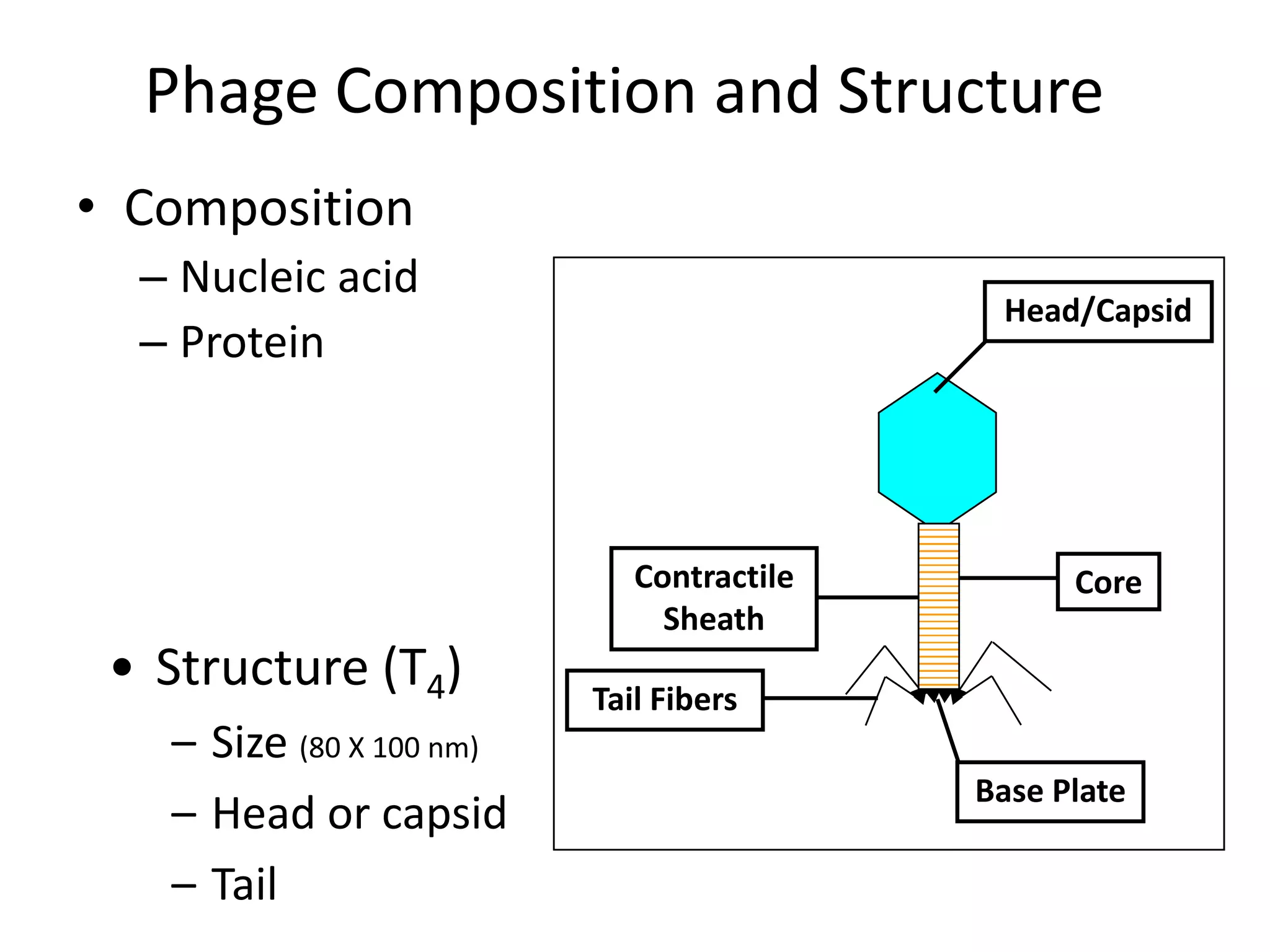
Phage Composition and Structure
• Composition
  – Nucleic acid
                                            Head/Capsid
  – Protein


                             Contractile         Core
                               Sheath
 • Structure (T4)         Tail Fibers
   – Size (80 X 100 nm)
                                           Base Plate
   – Head or capsid
   – Tail
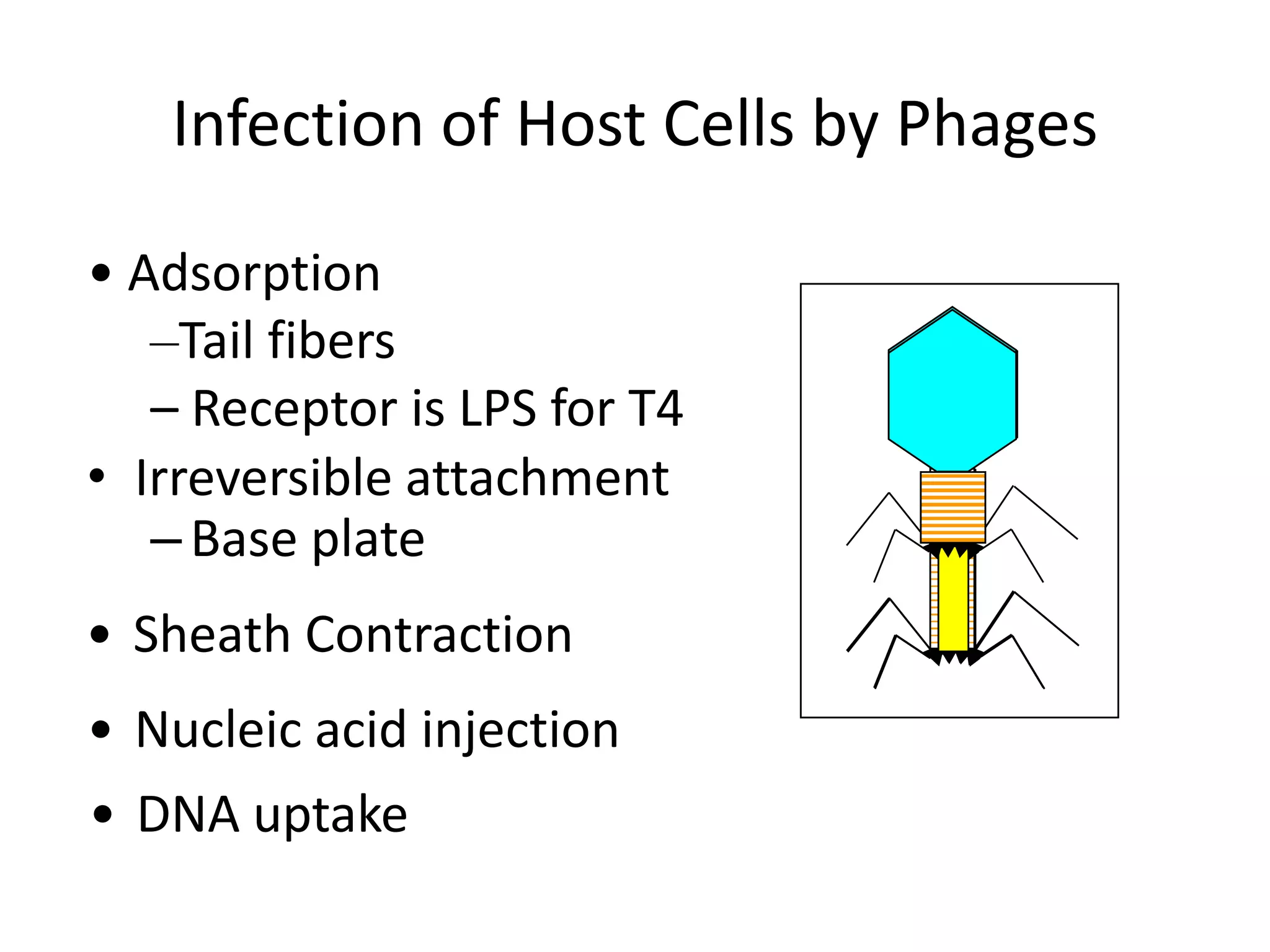
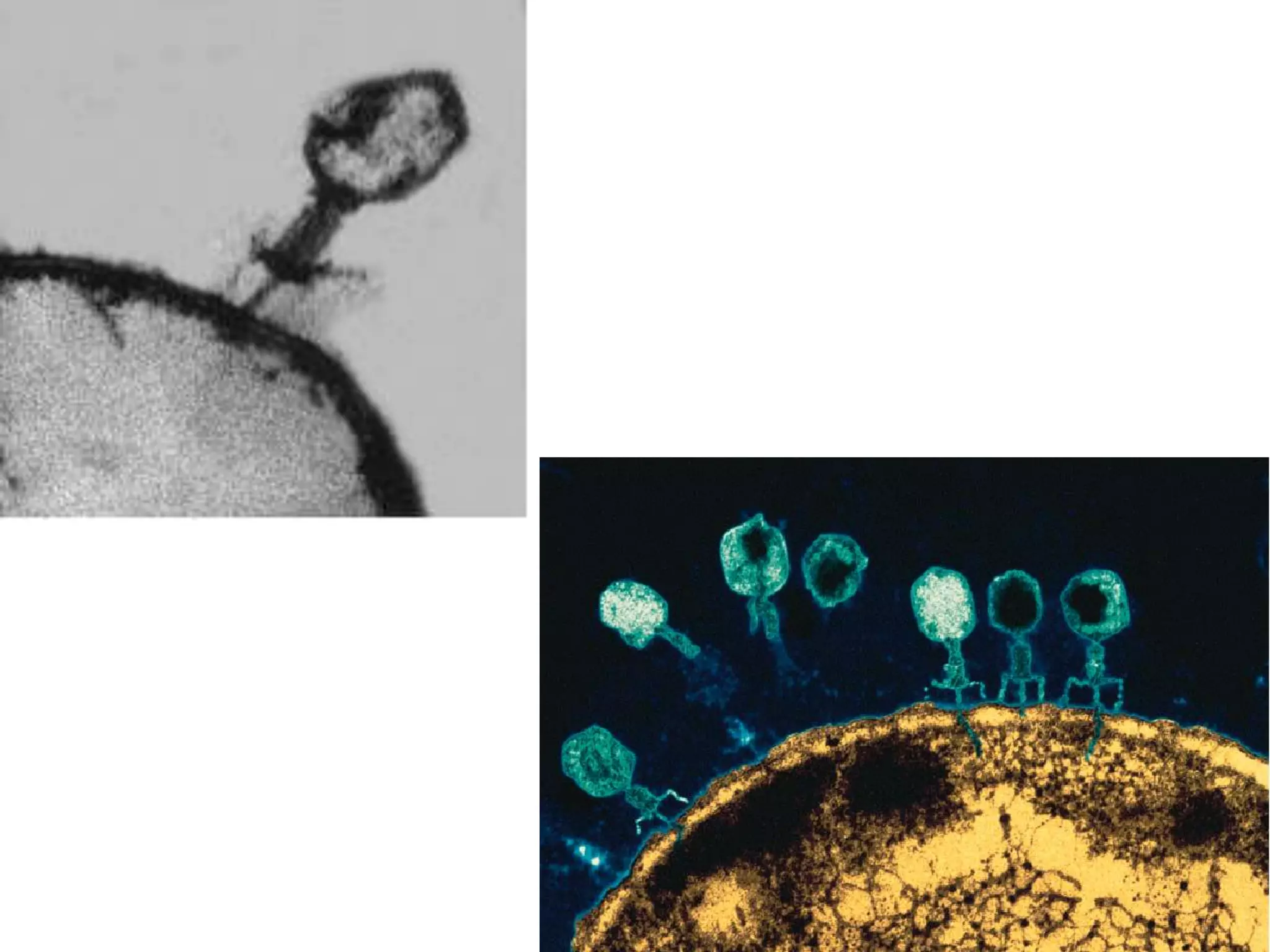
Infection of Host Cells by Phages

• Adsorption
   –Tail fibers
   – Receptor is LPS for T4
• Irreversible attachment
   – Base plate
• Sheath Contraction
• Nucleic acid injection
• DNA uptake
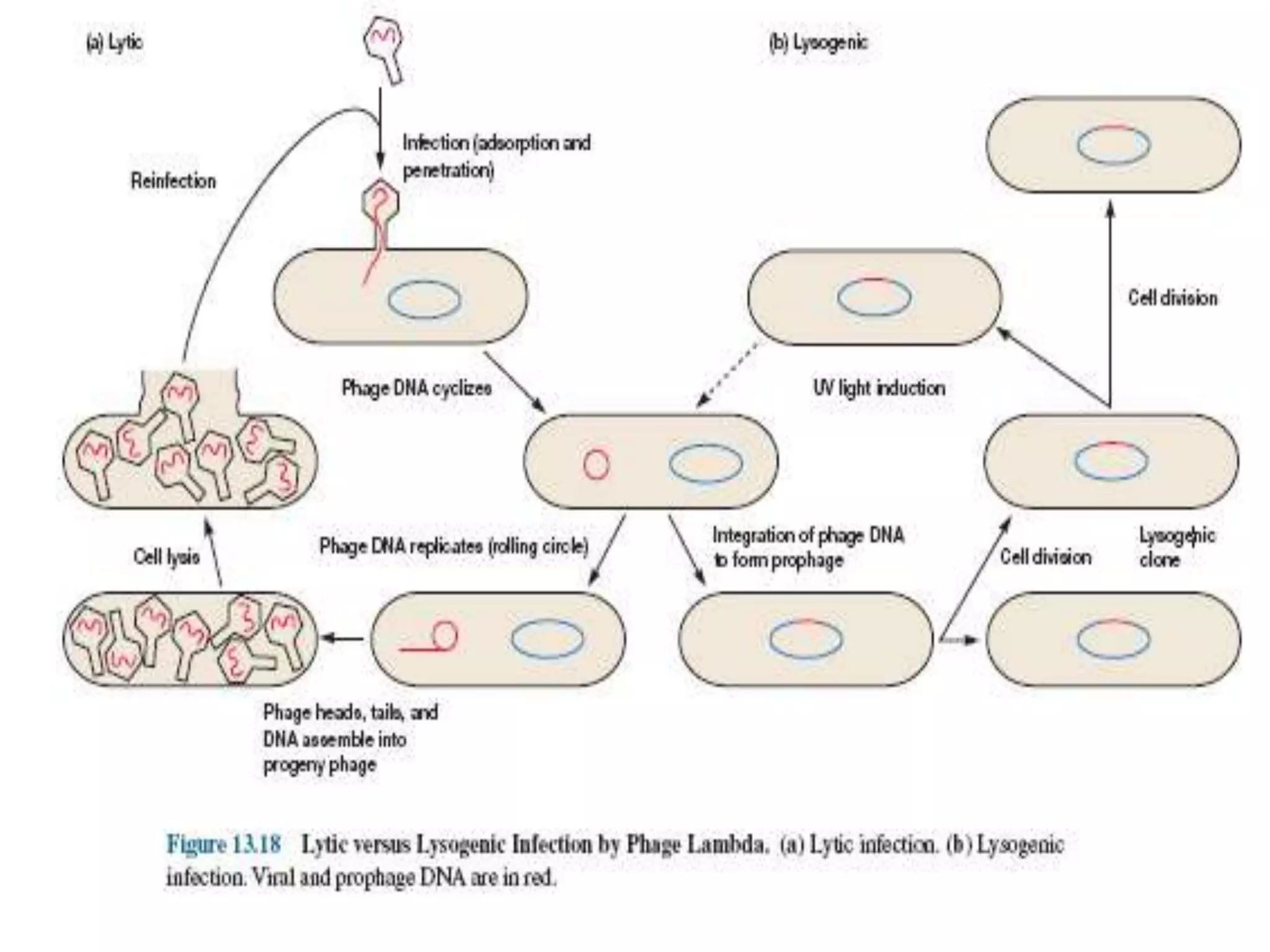
Types of Bacteriophage
• Lytic or virulent – Phage that multiply within the host
  cell, lyse the cell and release progeny phage (e.g. T4)
• Lysogenic or temperate phage: Phage that can either
  multiply via the lytic cycle or enter a quiescent state
  in the bacterial cell.
   – Expression of most phage genes repressed
   – Prophage – Phage DNA in the quiescent state
   – Lysogen – Bacteria harboring a prophage
Transduction

• Definition: Gene transfer from a donor to a
  recipient by way of a bacteriophage
• Lederberg & Zinder – 1951
Transduction

• Types of transduction
   1. Generalized - Transduction in
      which potentially any donor
      bacterial gene can be transferred.
   2. Specialized- Transduction in which
      only certain donor genes can be
      transferred
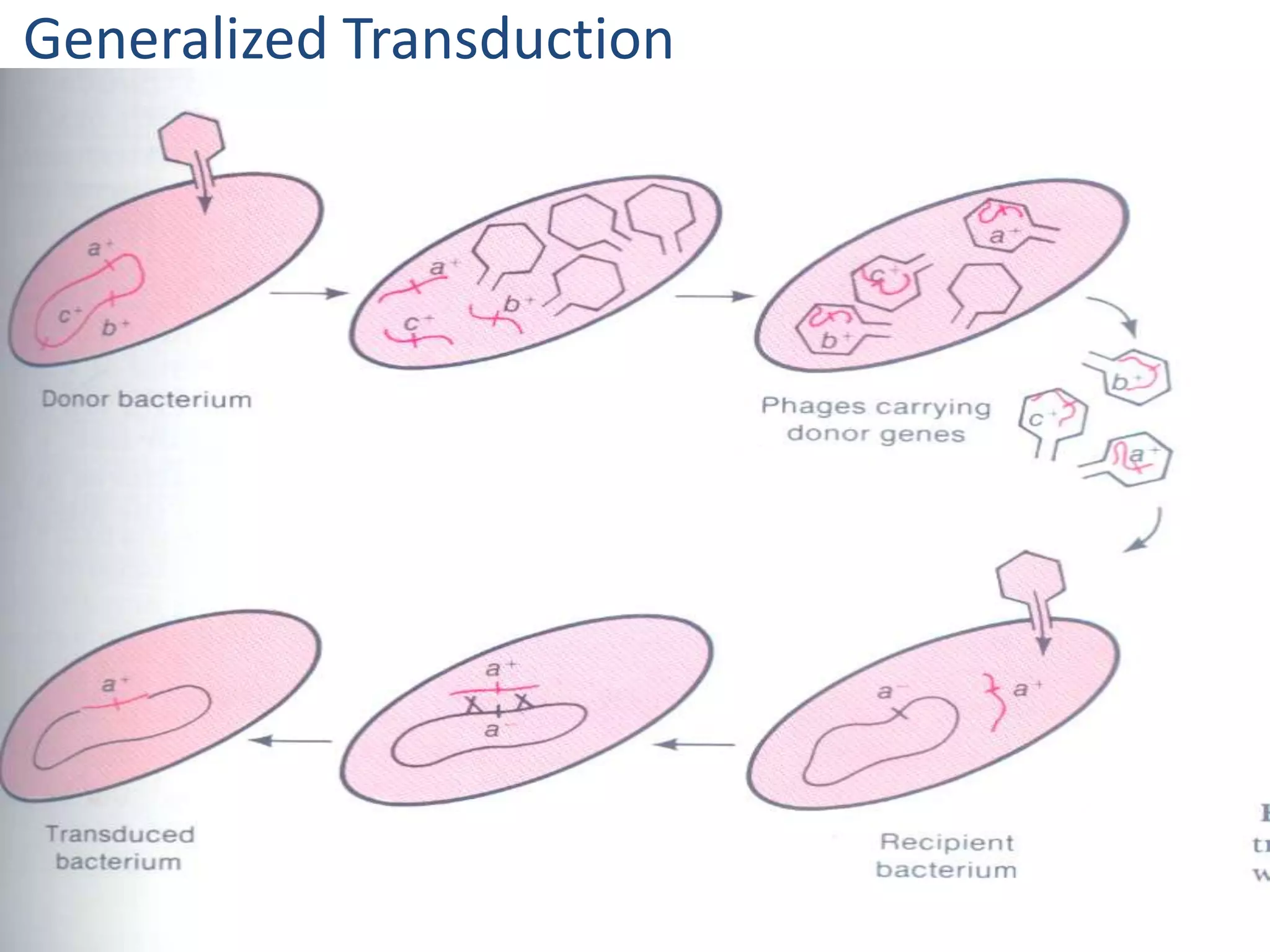
Generalized Transduction

• Infection of Donor
• Phage replication and degradation of host DNA
• Assembly of phages particles
• Release of phage
• Infection of recipient
• Homologous recombination

  Potentially any donor gene can be transferred
Generalized Transduction
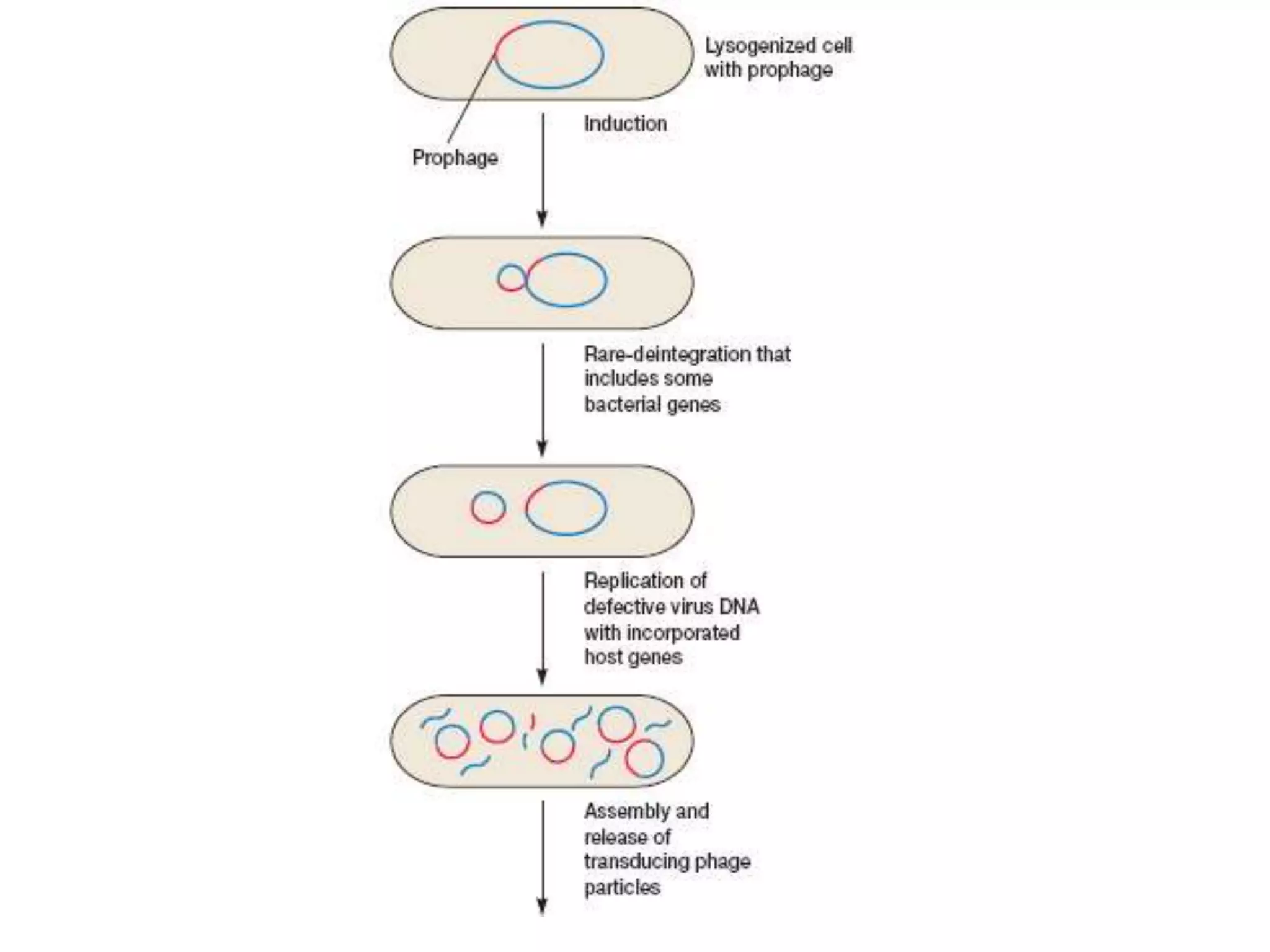
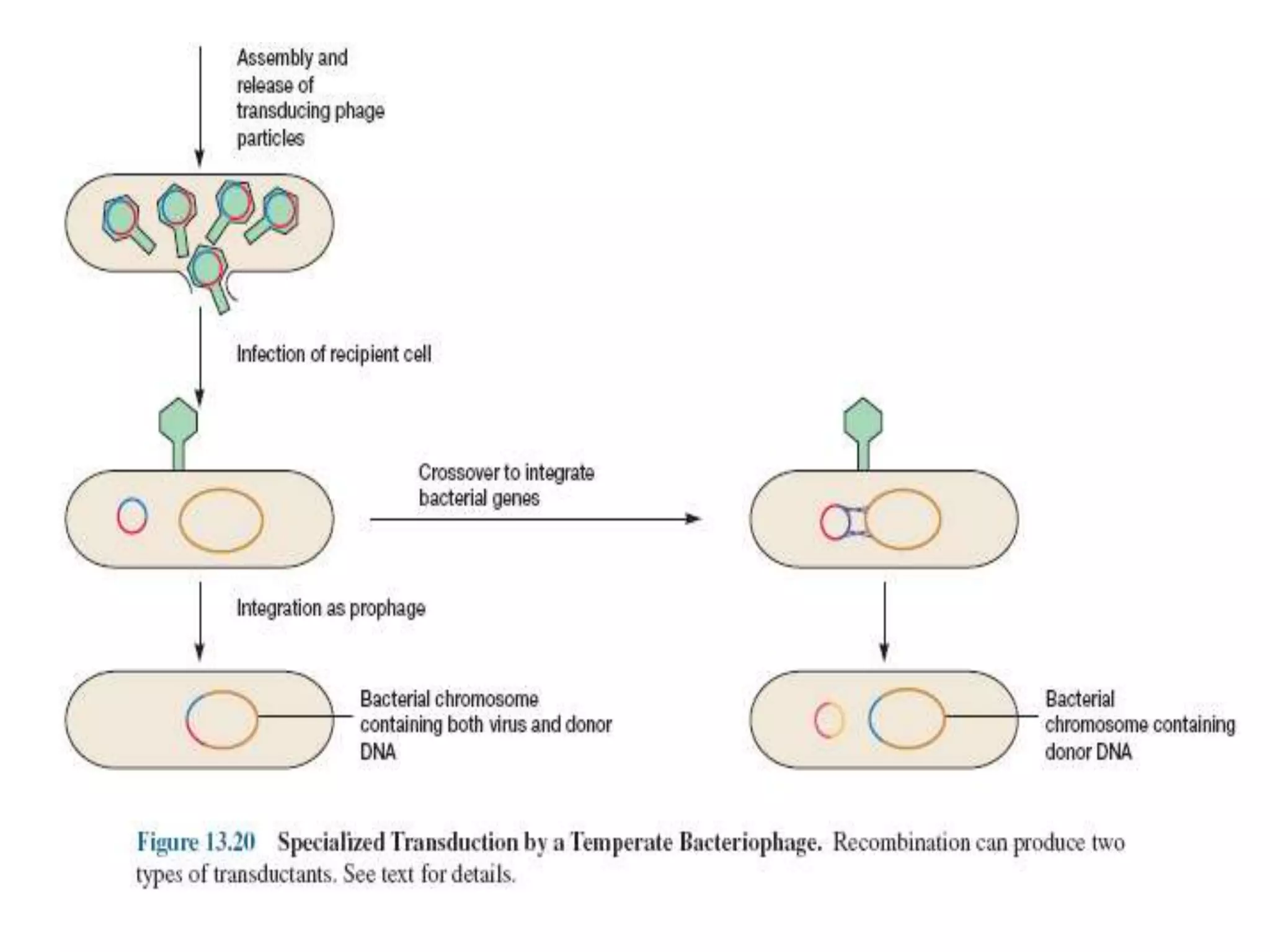
Specialized Transduction
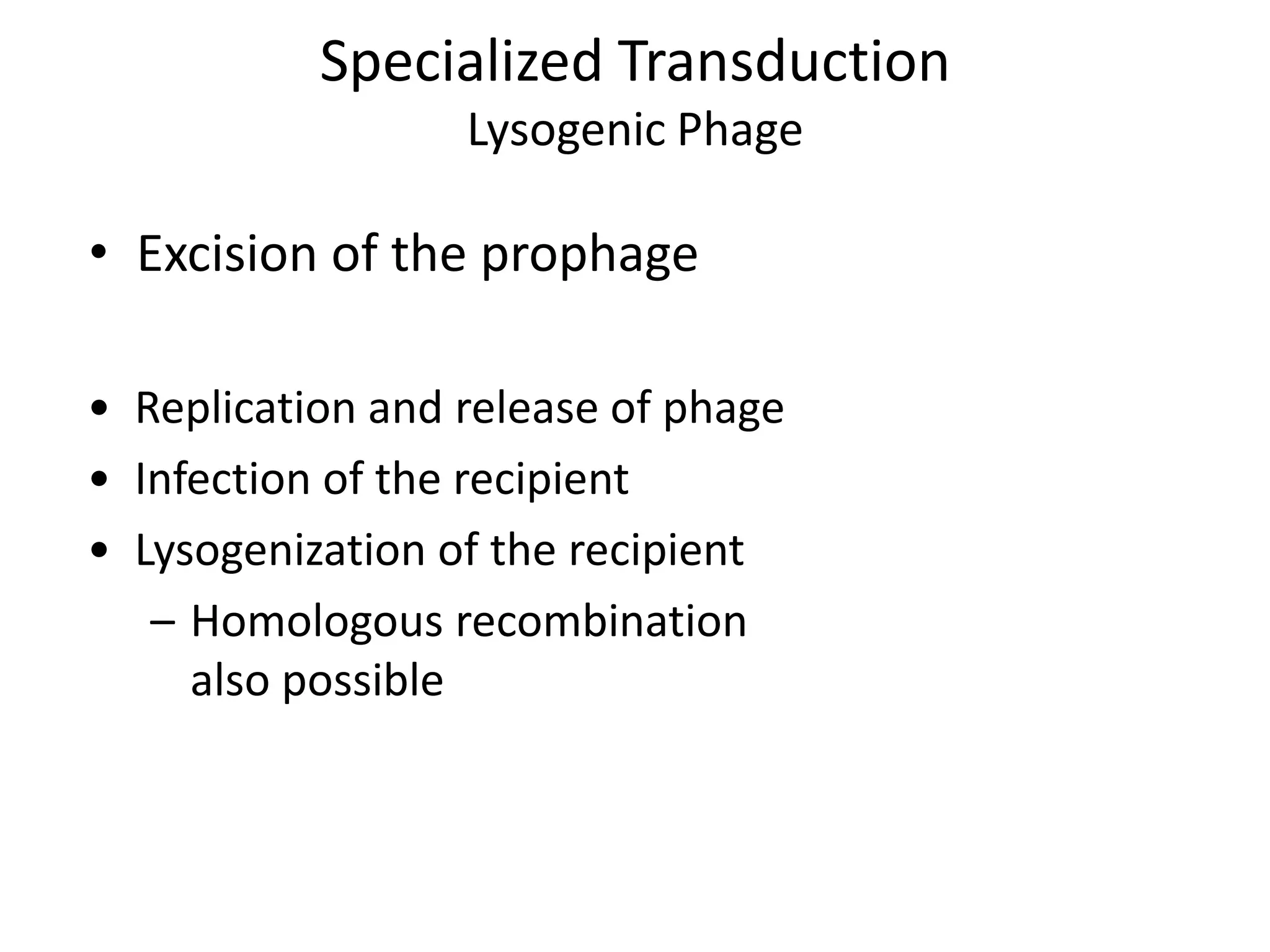
                  Lysogenic Phage

• Excision of the prophage

• Replication and release of phage
• Infection of the recipient
• Lysogenization of the recipient
   – Homologous recombination
     also possible
Specialized Transduction
• In specialized or restricted transduction, the
  transducing particle carries only specific
  portions of the bacterial genome.
• Specialized transduction is made possible by
  an error in the lysogenic life cycle.
• When a prophage is induced to leave the host
  chromosome, excision is sometimes carried out
  improperly.
• The resulting phage genome contains portions of
  the bacterial chromosome (about 5 to 10% of the
  bacterial DNA) next to the integration site.
• A transducing phage genome usually is defective
  and lacks some part of its attachment site. The
  transducing particle will inject bacterial genes
  into another bacterium, even though the
  defective phage cannot reproduce.
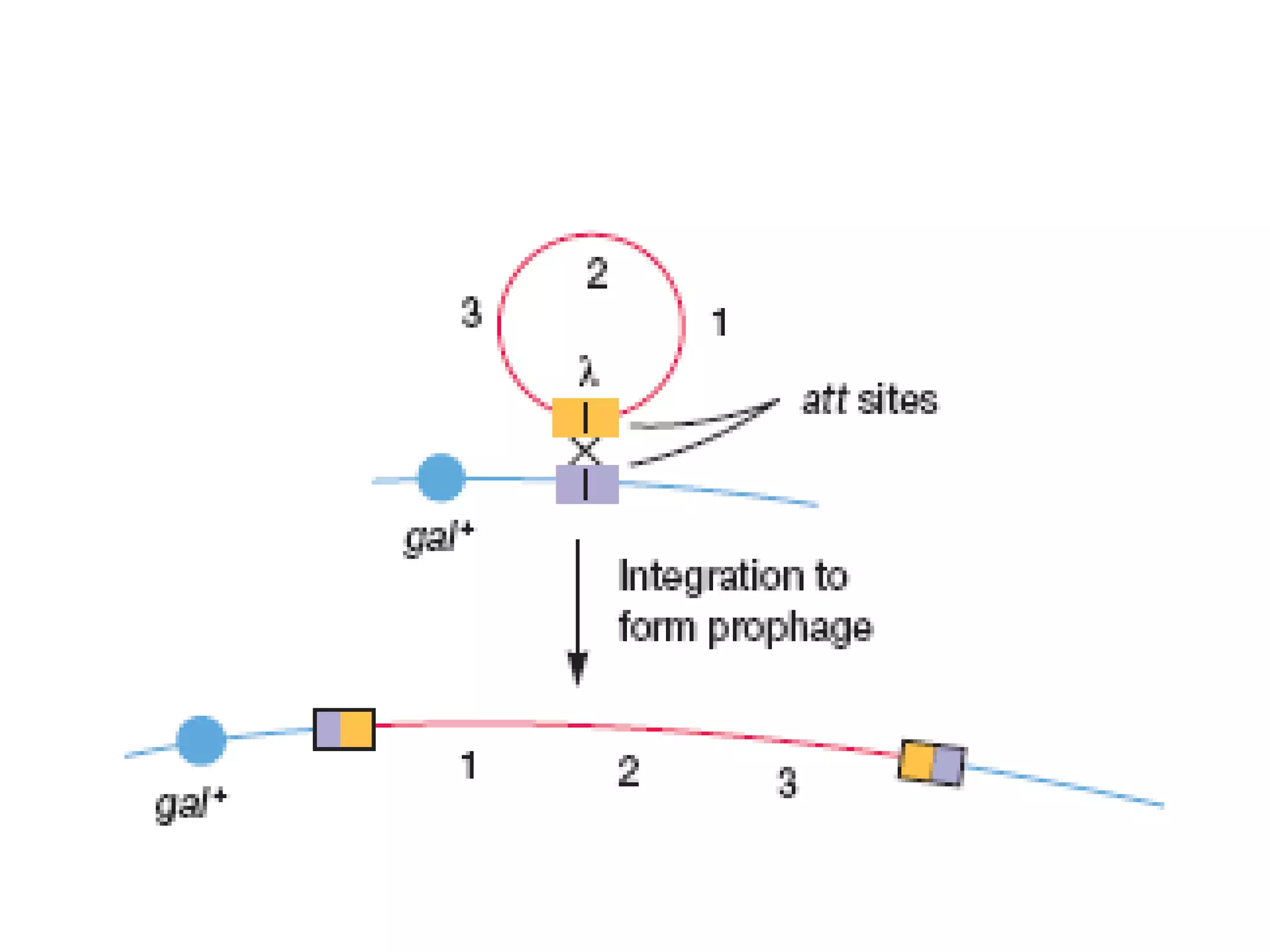
• The best-studied example of specialized
  transduction is the lambda phage. The lambda
  genome inserts into the host chromosome at
  specific locations known as attachment or att
  sites.
• The phage att sites and bacterial att sites are
  similar and can complex with each other.
•   Normal out looping
•   Phage excised out
•   Rare abnormal outlooping
•     dgal
•   Defective in gal,
•   defective in integration site
•   Helper phage – hybrid attachment site

Transduction

  • 1.
  • 2.
    Transduction • Definition: Genetransfer from a donor to a recipient by way of a bacteriophage • Bacteriophage (phage): A virus that infects bcteria
  • 3.
    Phages as DNAcarriers Bacteriophages are natural vectors that transduce DNA from one bacterial cell to another. A bacteriophage cannot “live” or reproduce without getting inside a bacterial cell
  • 4.
  • 5.
    Phage Composition andStructure • Composition – Nucleic acid Head/Capsid – Protein Contractile Core Sheath • Structure (T4) Tail Fibers – Size (80 X 100 nm) Base Plate – Head or capsid – Tail
  • 6.
    Infection of HostCells by Phages • Adsorption –Tail fibers – Receptor is LPS for T4 • Irreversible attachment – Base plate • Sheath Contraction • Nucleic acid injection • DNA uptake
  • 10.
    Types of Bacteriophage •Lytic or virulent – Phage that multiply within the host cell, lyse the cell and release progeny phage (e.g. T4) • Lysogenic or temperate phage: Phage that can either multiply via the lytic cycle or enter a quiescent state in the bacterial cell. – Expression of most phage genes repressed – Prophage – Phage DNA in the quiescent state – Lysogen – Bacteria harboring a prophage
  • 11.
    Transduction • Definition: Genetransfer from a donor to a recipient by way of a bacteriophage • Lederberg & Zinder – 1951
  • 12.
    Transduction • Types oftransduction 1. Generalized - Transduction in which potentially any donor bacterial gene can be transferred. 2. Specialized- Transduction in which only certain donor genes can be transferred
  • 13.
    Generalized Transduction • Infectionof Donor • Phage replication and degradation of host DNA • Assembly of phages particles • Release of phage • Infection of recipient • Homologous recombination Potentially any donor gene can be transferred
  • 14.
  • 16.
    Specialized Transduction Lysogenic Phage • Excision of the prophage • Replication and release of phage • Infection of the recipient • Lysogenization of the recipient – Homologous recombination also possible
  • 17.
    Specialized Transduction • Inspecialized or restricted transduction, the transducing particle carries only specific portions of the bacterial genome. • Specialized transduction is made possible by an error in the lysogenic life cycle.
  • 18.
    • When aprophage is induced to leave the host chromosome, excision is sometimes carried out improperly. • The resulting phage genome contains portions of the bacterial chromosome (about 5 to 10% of the bacterial DNA) next to the integration site. • A transducing phage genome usually is defective and lacks some part of its attachment site. The transducing particle will inject bacterial genes into another bacterium, even though the defective phage cannot reproduce.
  • 19.
    • The best-studiedexample of specialized transduction is the lambda phage. The lambda genome inserts into the host chromosome at specific locations known as attachment or att sites. • The phage att sites and bacterial att sites are similar and can complex with each other.
  • 23.
    • Normal out looping • Phage excised out • Rare abnormal outlooping • dgal • Defective in gal, • defective in integration site • Helper phage – hybrid attachment site