Bacterial Genetics
GURU JAMBHESHWAR UNIVERSITY
OF SCIENCE AND TECHNOLOGY
DEPARTMENT OF BIO & NANO TECHNOLOGY
M.Sc FIRST YEAR
SUBJECT-MICROBIOLOGY
PRESENTED BY-AASTHA PRAJAPATI
TOPIC- BACTERIAL
GENETICS
SUB TOPICS-TRANSFORMATION,
TRANSDUCTION & CONJUGATION
CONJUGATION
 Conjugation is the method of transfer of
genetic material from one bacteria to
another placed in contact. This method
was proposed by Lederberg and Tatum.
They discovered that the F-factor can
move between E.coli cells and proposed
the concept of conjugation.
MECHANISM OF
BACTERIAL
CONJUGATION
Bacterial conjugation involves the following
steps:
1. Pilus Formation
2. Physical Contact between Donor and Recipient
Cell
3. Transfer of F-Plasmid
4. Synthesis of Complementary Strand
1. Pilus Formation
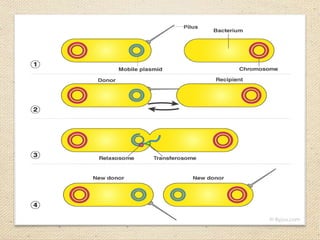
The donor cells (F+ cells) form a sex pilus and begin contact with an
F- recipient cell. 2.
Physical Contact between Donor and Recipient
Cell
The pilus forms a conjugation tube and enables direct contact
between the donor and the recipient cells.
3. Transfer of F-Plasmid
The F-factor opens at the origin of replication. One strand is cut at
the origin of replication, and the 5’ end enters the recipient cell.
4 . Synthesis of Complementary Strand
The donor and the recipient strand both contain a single strand of
the F-plasmid. Thus, a complementary strand is synthesized in both the
recipient and the donor. The recipient cell now contains a copy of F
plasmid and becomes a donor cell.
Bacterial Transduction
 Transduction is the process by which a virus transfers
genetic material from one bacterium to another. Viruses
called bacteriophages are able to infect bacterial cells and
use them as hosts to make more viruses.
 Transduction is of two types:
 Generalized Transduction
 Specialized Transduction
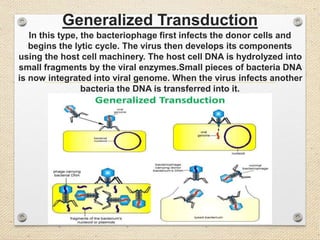
Generalized Transduction
In this type, the bacteriophage first infects the donor cells and
begins the lytic cycle. The virus then develops its components
using the host cell machinery. The host cell DNA is hydrolyzed into
small fragments by the viral enzymes.Small pieces of bacteria DNA
is now integrated into viral genome. When the virus infects another
bacteria the DNA is transferred into it.
Specialized Transduction
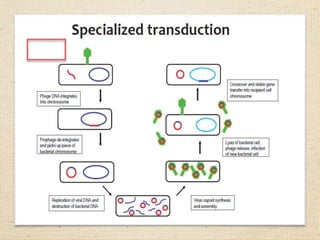
• In this, only a few restricted bacteria are transferred from donor to
recipient bacteria. This is carried out by temperate bacteriophage
which undergoes the lysogenic cycle.
The virus enters the bacteria and integrates its genome within the host
cell DNA. It remains dormant and passes on from generation to
generation. When the lysogenic cell is exposed to some external
stimulus, the lytic cycle begins.
The viral genome is induced in the host cell genome. Due to this, the
phage genome sometimes carries the bacterial genome with it and
integrates it into the genome of the recipient cell. Here, only the
restricted genome has the possibility of entering the recipient cells.
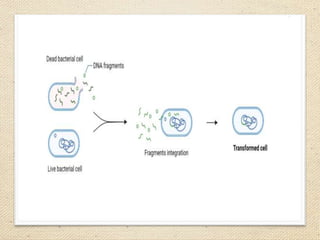
Bacterial Transformation
 Transformation is the process of DNA uptake by the
bacteria from the surrounding environment. The cells
that have the ability to uptake DNA are known as
competent cells. This process was first reported in
Streptococcus pneumonia by Griffith.
Thank You!

111.ppt

  • 1.
  • 2.
    GURU JAMBHESHWAR UNIVERSITY OFSCIENCE AND TECHNOLOGY DEPARTMENT OF BIO & NANO TECHNOLOGY M.Sc FIRST YEAR SUBJECT-MICROBIOLOGY PRESENTED BY-AASTHA PRAJAPATI
  • 3.
  • 4.
    CONJUGATION  Conjugation isthe method of transfer of genetic material from one bacteria to another placed in contact. This method was proposed by Lederberg and Tatum. They discovered that the F-factor can move between E.coli cells and proposed the concept of conjugation.
  • 5.
    MECHANISM OF BACTERIAL CONJUGATION Bacterial conjugationinvolves the following steps: 1. Pilus Formation 2. Physical Contact between Donor and Recipient Cell 3. Transfer of F-Plasmid 4. Synthesis of Complementary Strand
  • 6.
    1. Pilus Formation Thedonor cells (F+ cells) form a sex pilus and begin contact with an F- recipient cell. 2. Physical Contact between Donor and Recipient Cell The pilus forms a conjugation tube and enables direct contact between the donor and the recipient cells. 3. Transfer of F-Plasmid The F-factor opens at the origin of replication. One strand is cut at the origin of replication, and the 5’ end enters the recipient cell. 4 . Synthesis of Complementary Strand The donor and the recipient strand both contain a single strand of the F-plasmid. Thus, a complementary strand is synthesized in both the recipient and the donor. The recipient cell now contains a copy of F plasmid and becomes a donor cell.
  • 8.
    Bacterial Transduction  Transductionis the process by which a virus transfers genetic material from one bacterium to another. Viruses called bacteriophages are able to infect bacterial cells and use them as hosts to make more viruses.  Transduction is of two types:  Generalized Transduction  Specialized Transduction
  • 9.
    Generalized Transduction In thistype, the bacteriophage first infects the donor cells and begins the lytic cycle. The virus then develops its components using the host cell machinery. The host cell DNA is hydrolyzed into small fragments by the viral enzymes.Small pieces of bacteria DNA is now integrated into viral genome. When the virus infects another bacteria the DNA is transferred into it.
  • 10.
    Specialized Transduction • Inthis, only a few restricted bacteria are transferred from donor to recipient bacteria. This is carried out by temperate bacteriophage which undergoes the lysogenic cycle. The virus enters the bacteria and integrates its genome within the host cell DNA. It remains dormant and passes on from generation to generation. When the lysogenic cell is exposed to some external stimulus, the lytic cycle begins. The viral genome is induced in the host cell genome. Due to this, the phage genome sometimes carries the bacterial genome with it and integrates it into the genome of the recipient cell. Here, only the restricted genome has the possibility of entering the recipient cells.
  • 12.
    Bacterial Transformation  Transformationis the process of DNA uptake by the bacteria from the surrounding environment. The cells that have the ability to uptake DNA are known as competent cells. This process was first reported in Streptococcus pneumonia by Griffith.
  • 14.