

TISSUES-II
CHAPTER-6
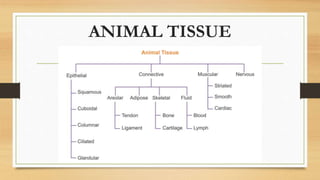
ANIMAL TISSUE
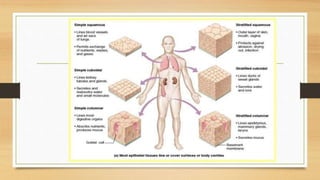
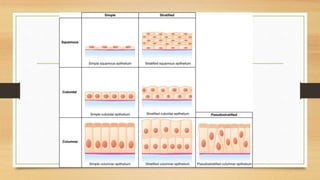
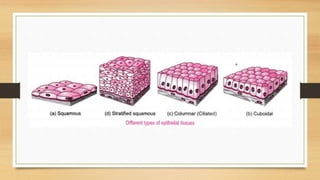
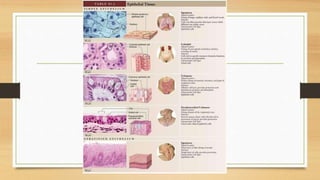
EPITHELIAL TISSUE
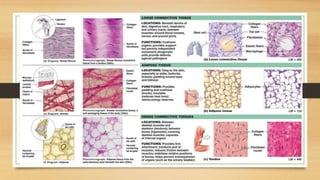
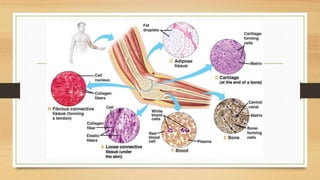
CONNECTIVE TISSUE
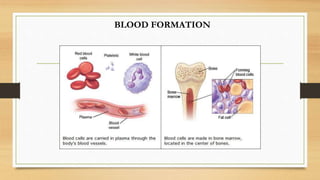
BLOOD FORMATION
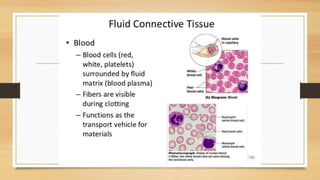
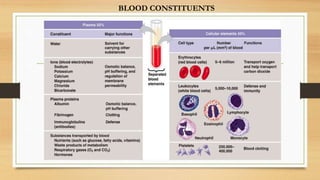
BLOOD CONSTITUENTS
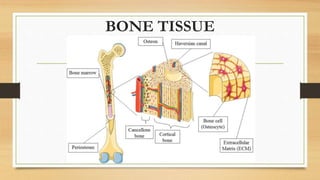
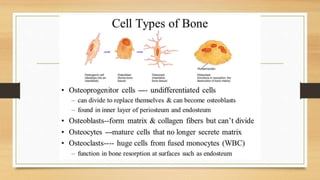
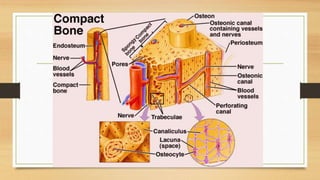
BONE TISSUE
MUSUCLAR TISSUE
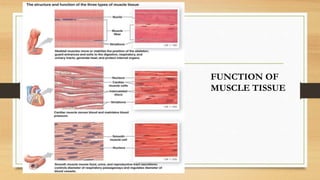
FUNCTION OF
MUSCLE TISSUE
HOW TO DRAW
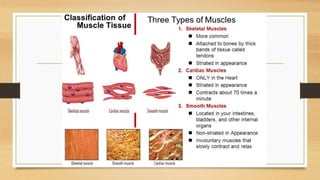
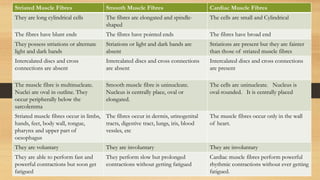
Striated Muscle Fibres Smooth Muscle Fibres Cardiac Muscle Fibres
They are long cylindrical cells The fibres are elongated and spindle-
shaped
The cells are small and Cylindrical
The fibres have blunt ends The fibres have pointed ends The fibres have broad end
They possess striations or alternate
light and dark bands
Striations or light and dark bands are
absent
Striations are present but they are fainter
than those of striated muscle fibres
Intercalated discs and cross
connections are absent
Intercalated discs and cross connections
are absent
Intercalated discs and cross connections
are present
The muscle fibre is multinucleate.
Nuclei are oval in outline. They
occur peripherally below the
sarcolemma
Smooth muscle fibre is uninucleate.
Nucleus is centrally place, oval or
elongated.
The cells are uninucleate. Nucleus is
oval-rounded. It is centrally placed
Striated muscle fibres occur in limbs,
hands, feet, body wall, tongue,
pharynx and upper part of
oesophagus
The fibres occur in dermis, urinogenital
tracts, digestive tract, lungs, iris, blood
vessles, etc
The muscle fibres occur only in the wall
of heart.
They are voluntary They are involuntary They are involuntary
They are able to perform fast and
powerful contractions but soon get
fatigued
They perform slow but prolonged
contractions without getting fatigued
Cardiac muscle fibres perform powerful
rhythmic contractions without ever getting
fatigued.
NERVOUS TISSUE
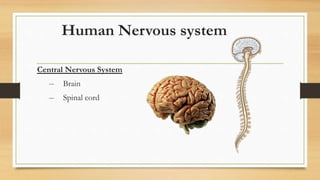
Human Nervous system
Central Nervous System
– Brain
– Spinal cord
NEURONS
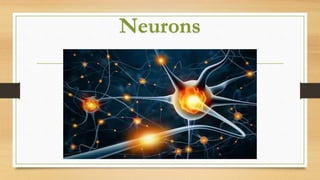
Neurons
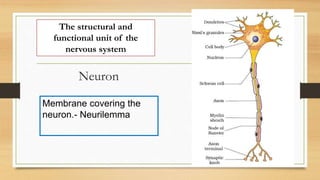
Neuron
The structural and
functional unit of the
nervous system
Membrane covering the
neuron.- Neurilemma
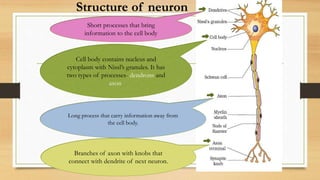
Structure of neuron
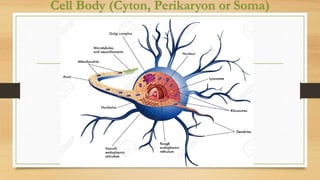
Cell body contains nucleus and
cytoplasm with Nissl’s granules. It has
two types of processes- dendrons and
axon.
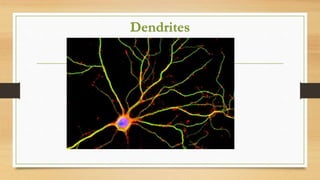
Short processes that bring
information to the cell body
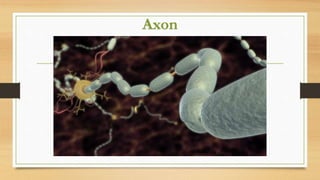
Long process that carry information away from
the cell body.
Branches of axon with knobs that
connect with dendrite of next neuron.
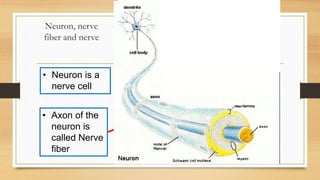
Neuron, nerve
fiber and nerve
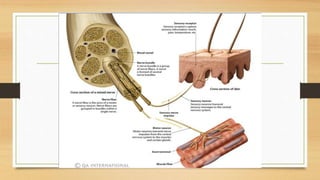
• Many nerve fibers (axon of
neuron) together form a nerve.
• Axon of the
neuron is
called Nerve
fiber
• Neuron is a
nerve cell
Neuron structure
VARIOUS PARTS OF
NEURON
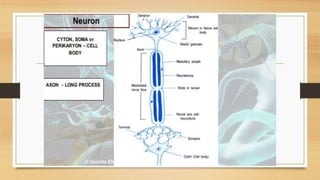
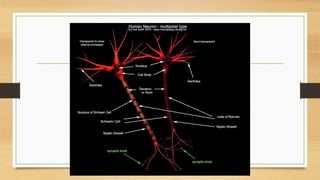
Cell Body (Cyton, Perikaryon or Soma)
Dendrites
Axon
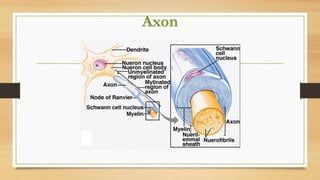
Axon
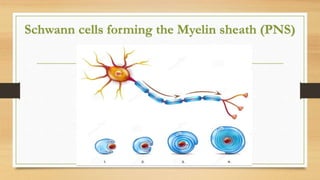
Schwann cells forming the Myelin sheath (PNS)
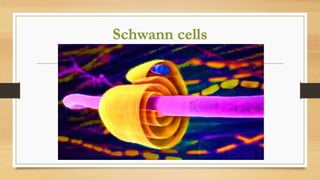
Schwann cells
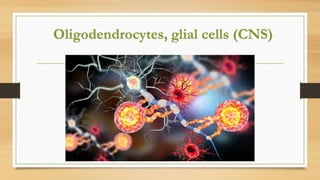
Oligodendrocytes, glial cells (CNS)
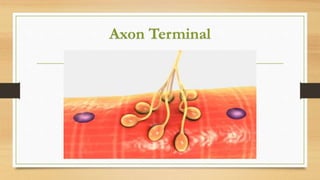
Axon Terminal
THANK YOU

Tissues II

  • 1.
  • 2.
  • 3.
  • 8.
  • 11.
  • 12.
  • 13.
  • 17.
  • 19.
  • 20.
  • 21.
    Striated Muscle FibresSmooth Muscle Fibres Cardiac Muscle Fibres They are long cylindrical cells The fibres are elongated and spindle- shaped The cells are small and Cylindrical The fibres have blunt ends The fibres have pointed ends The fibres have broad end They possess striations or alternate light and dark bands Striations or light and dark bands are absent Striations are present but they are fainter than those of striated muscle fibres Intercalated discs and cross connections are absent Intercalated discs and cross connections are absent Intercalated discs and cross connections are present The muscle fibre is multinucleate. Nuclei are oval in outline. They occur peripherally below the sarcolemma Smooth muscle fibre is uninucleate. Nucleus is centrally place, oval or elongated. The cells are uninucleate. Nucleus is oval-rounded. It is centrally placed Striated muscle fibres occur in limbs, hands, feet, body wall, tongue, pharynx and upper part of oesophagus The fibres occur in dermis, urinogenital tracts, digestive tract, lungs, iris, blood vessles, etc The muscle fibres occur only in the wall of heart. They are voluntary They are involuntary They are involuntary They are able to perform fast and powerful contractions but soon get fatigued They perform slow but prolonged contractions without getting fatigued Cardiac muscle fibres perform powerful rhythmic contractions without ever getting fatigued.
  • 22.
  • 23.
    Human Nervous system CentralNervous System – Brain – Spinal cord
  • 24.
  • 25.
  • 26.
    Neuron The structural and functionalunit of the nervous system Membrane covering the neuron.- Neurilemma
  • 27.
    Structure of neuron Cellbody contains nucleus and cytoplasm with Nissl’s granules. It has two types of processes- dendrons and axon. Short processes that bring information to the cell body Long process that carry information away from the cell body. Branches of axon with knobs that connect with dendrite of next neuron.
  • 29.
    Neuron, nerve fiber andnerve • Many nerve fibers (axon of neuron) together form a nerve. • Axon of the neuron is called Nerve fiber • Neuron is a nerve cell
  • 31.
  • 32.
  • 33.
    Cell Body (Cyton,Perikaryon or Soma)
  • 34.
  • 35.
  • 36.
  • 37.
    Schwann cells formingthe Myelin sheath (PNS)
  • 38.
  • 39.
  • 40.
  • 41.