Diabetes
Dr Chintan Doshi
Diabetes mellitus
• Hyperglycaemia, glycosuria, hyperlipidaemia,
negative nitrogen balance and ketonaemia
• Pathological changes: thickening of capillary
basement membrane, increase in blood vessel
wall matrix, and cellular proliferation
• Consequences: Lumen narrowing,
atherosclerosis, sclerosis of glomerular
capillaries, retinopathy, neuropathy and
peripheral vascula insuffficency
Contd.
• Causes of pathological changes: Enhanced
non-enzymatic glycosylation of tissue proteins
and accumulation of large amounts of sorbitol
• Glycosylated haemoglobin (HbA1c ) – Index of
protein glycosylation
• Discovered by Banting and Best – 1921
• 2 chain Polypeptide – 51 amino acids & MW 6000
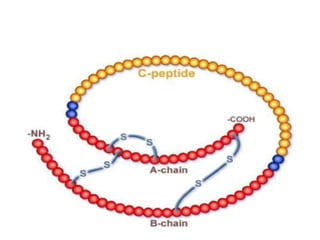
• Chain-A has 21 and Chain-B has 30 amino acids –
connected by two disulfide bonds
• Source: Porcine, Bovine and Human
• Synthesized in β cells of islets of pancreas – single
chain 110 amino acids (Preproinsulin)
• Proinsulin – 86 amino acids
• connecting or ‘C’ peptide (35 AA) is split off by
proteolysis in Golgi apparatus
• Both insulin and C peptide are stored in granules
within the cell
Regulation of Secretion
• Basal condition – 1 U per hour – more after
meals
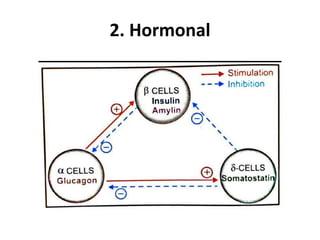
• Regulated by – Chemical, hormonal and
neural mechanisms
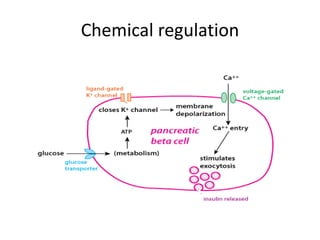
Chemical regulation
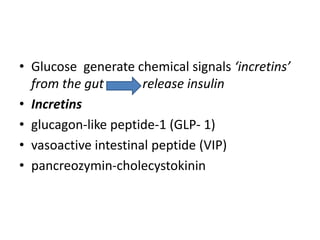
• Glucose generate chemical signals ‘incretins’
from the gut release insulin
• Incretins
• glucagon-like peptide-1 (GLP- 1)
• vasoactive intestinal peptide (VIP)
• pancreozymin-cholecystokinin
2. Hormonal
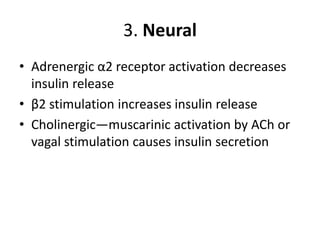
3. Neural
• Adrenergic α2 receptor activation decreases
insulin release
• β2 stimulation increases insulin release
• Cholinergic—muscarinic activation by ACh or
vagal stimulation causes insulin secretion
•Actions
• Meal derived glucose, amino acids, fatty acids
and fuel storage
• Major anabolic hormone – synthesis of
glycogen, lipids and proteins
• Facilitates glucose transport across cell
membrane
– skeletal muscle and fats are highly sensitive
-Liver, brain, RBC, WBC and renal medullary cells are
independent
• Intracellular utilization of glucose is its
phosphorylation to form glucose- 6-
phosphate:
– enhanced by ↑ production of glucokinase
• facilitates glycogen synthesis from glucose in
liver, muscle and fat by stimulating the
enzyme glycogen synthase
• Inhibits glycogen degrading enzyme
phosphorylase → decreased glycogenolysis in
liver
• Inhibits gluconeogenesis from protein,
FFA and glycerol) in liver
• inhibits lipolysis in adipose tissue and favors
triglyceride synthesis
• Insulin deficiency
• increased FFA and glycerol in blood
• taken up by liver to produce acetyl-CoA
• Keton body formation &DKA
• Facilitates amino acid entry and their
synthesis to protein
• Inhibits protein breakdown in muscles and
other cells
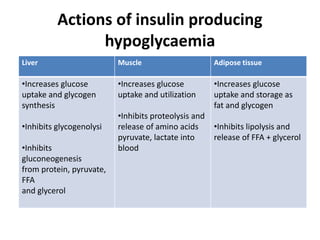
Actions of insulin producing
hypoglycaemia
Liver Muscle Adipose tissue
•Increases glucose
uptake and glycogen
synthesis
•Inhibits glycogenolysi
•Inhibits
gluconeogenesis
from protein, pyruvate,
FFA
and glycerol
•Increases glucose
uptake and utilization
•Inhibits proteolysis and
release of amino acids
pyruvate, lactate into
blood
•Increases glucose
uptake and storage as
fat and glycogen
•Inhibits lipolysis and
release of FFA + glycerol
Mechanism of action
• Tyrosin kinase receptors
Fate of Insulin
• Distributed only extracellularly – given orally
gets degraded in GIT
• Secreted and injected Insulin – metabolized in
liver, kidneys and muscles
• First pass metabolism - 50% of Insulin passing
through portal vein
• Degradation after receptor mediated
internalization
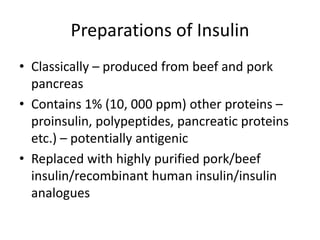
Preparations of Insulin
• Classically – produced from beef and pork
pancreas
• Contains 1% (10, 000 ppm) other proteins –
proinsulin, polypeptides, pancreatic proteins
etc.) – potentially antigenic
• Replaced with highly purified pork/beef
insulin/recombinant human insulin/insulin
analogues
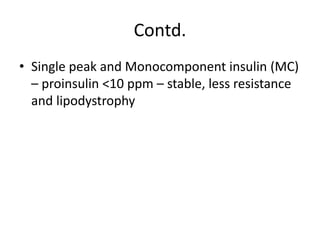
Contd.
• Single peak and Monocomponent insulin (MC)
– proinsulin <10 ppm – stable, less resistance
and lipodystrophy
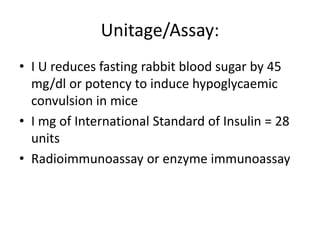
Unitage/Assay:
• I U reduces fasting rabbit blood sugar by 45
mg/dl or potency to induce hypoglycaemic
convulsion in mice
• I mg of International Standard of Insulin = 28
units
• Radioimmunoassay or enzyme immunoassay
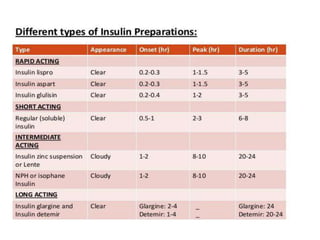
Regular (Soluble) Insulin
• Buffered neutral pH solution unmodified insulin
stabilized by small amount of zinc
• Forms hexamers around zinc ions – released slowly and
gradually by dilution on SC administration
• Peak onset 2- 3 hours and lasts for 6-8 hours
• Drawbacks:
– Before meals – early postprandial hyperglycaemia and late
post prandial hypoglycaemia – injected ½ to 1 hour before
– Do not provide basal level of action – interdigestive period
• To overcome:longacting ‘modified’ or ‘retard’
preparations of insulin used
Human Insulin
• Same amino acid sequence as human insulin -
produced by recombinant DNA technology
• In Es cherichia coli – proinsulin recombinant
bacteria (prb) and in yeast – precursor yeast
recombinant (pyr) or by enzymatic
modification of porcine insulin
• Human actrapid (regular insulin) – 40 U/ml
• HUMAN MIXTARD: Human soluble insulin
(30%) and isophane insulin (70%),
Advantages
• More water soluble and hydrophobic
• more rapid absorption than porcine or bovine
• more defined peak
• shorter duration of action
Insulin analogues
• Using recombinant DNA analogues of insulin
have been produced with modified
pharmacokinetic
• Greater stability and consistency are the other
advantages
Insulin lispro
• Produced by reversing proline and lysine at
the carboxy terminus B 28 and B 29 positions
• injected immediately before or even after the
meal
• lower incidence of late post-prandial
hypoglycaemia
• slightly greater reduction in HbA1c compared
to regular insulin
Insulin aspart
• proline at B 28 of human insulin is replaced by
aspartic acid
• Other properties & advantages are same
Insulin glulisine
• Replacing aspartic acid at B 23 by lysine and
glutamic acid replacing lysine at B 29
• continuous SC insulin infusion (CSII)
Insulin glargine
• Long- acting
• precipitates at neutral pH on SC injection
• depot is created from which monomeric insulin
dissociates slowly to enter the circulation
• Onset:delay
• Duration:24 hrs
• smooth ‘peakless’ effect
• suitable for once daily injection
Contd.
• Advantages:
• Lower incidence of night-time hypoglycaemic
episodes
• Disadvantages
• does not control meal-time glycaemia
• Because of acidic pH, it cannot be mixed with
any other insulin preparation
REACTIONS TO INSULIN
 HYPOGLYCAEMIA:
• More in diabetics
• Causes: Injection of large doses, missing a meal
after injection, vigorous exercise
• Symptoms
– Sweating, anxiety, palpitation, tremor: Sympathetic
stimulation
– dizziness, headache, behavioral changes, visual
disturbances, hunger, fatigue, weakness, muscular
incoordination:glucose deprivation
– Below < 40 mg/dl:seizure and coma
• Treatment: Glucose orally and IV – Glucagon –
0.5 to 1 mg IV
Other side effects
• Local reactions :swelling, erythema and
stinging
• Lypodystrophy
• Allergy:
– due to contaminating proteins
– very rare with human/highly purified insulins
• Edema
Diabetes mellitus
Purpose:
• Restore metabolism to normal
• avoid symptoms due to hyperglycaemia
• prevent complications
Indications:
• Type 1 DM
• Post pancreatectomy diabetes and gestational
diabetes
Contd.
• Type 2 DM:
• Not controlled by diet and exercise,
• failure of oral hypoglycaemics,
• under Weight
• Temporarily to tide over infections, trauma, surgery,
pregnancy
• complication of diabetes, e.g. ketoacidosis, nonketotic
hyperosmolar coma, gangrene of extremities
• Dose:
– type:1: 0.4–0.8 U/kg/day
– Type 2 patients:0.2–1.6 U/kg/day
Regimen
• single daily injection of any
long/intermediate/ short-acting insulin or
mixture
• Either multiple (2-4) injections daily of long
and short acting insulins or a single injection
daily of long-acting insulin supplemented by
oral hypoglycaemics
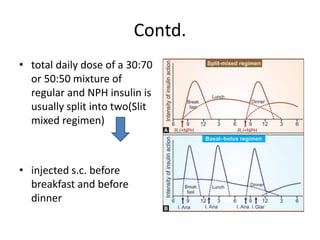
Contd.
• total daily dose of a 30:70
or 50:50 mixture of
regular and NPH insulin is
usually split into two(Slit
mixed regimen)
• injected s.c. before
breakfast and before
dinner
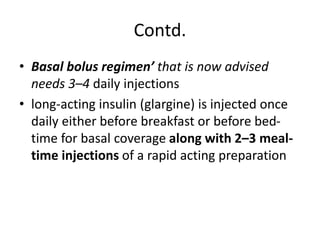
Contd.
• Basal bolus regimen’ that is now advised
needs 3–4 daily injections
• long-acting insulin (glargine) is injected once
daily either before breakfast or before bed-
time for basal coverage along with 2–3 meal-
time injections of a rapid acting preparation
Other uses
• Diabetic ketoacidosis
• Hyperosmolar (nonketotic hyperglycaemic)
• coma
Insulin resistance
• Type 2 DM
• Age
• large body fats
• Pregnancy
• OCPs
• Rare causes:acromegaly, Cushing’s syndrome,
pheochromocytoma
Acute insulin resistance
• Infection, trauma, surgery, emotional stress,
and other hyperglycaemic hormones
• DKA
Newer insulin delivery devices
• Insulin syringes
• Pen devices
• Inhaled insulin
• Insulin pumps:continuous subcutaneous
insulin infusion’ (CSII)
• Implantable pumps
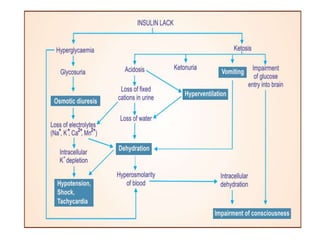
Diabetic ketoacidosis
• Common in type 1 DM
• Infrequent in type 2 DM
• Causes
• Infection
• Trauma
• Stroke
• Pancreatitis
• stressful conditions
• Inadequate doses of insulin
Treatment
• Insulin:
– bolus dose of 0.1–0.2 U/kg i.v. is followed by 0.1
U/kg/hr infusion
– Within 4–6 hours blood glucose reaches 300
mg/dl rate of infusion is reduced to 2–3
U/hr
• Intravenous fluids:Normal saline is infused i.v.,
initially at the rate of 1 L/hr
– blood sugar has reached 300 mg/dl, 5% glucose in
½N saline
• KCl:After 4 hours 10–20 mEq/hr KCl to the i.v.
fluid
• Sodium bicarbonate
• Phosphate
• Antibiotics
• Treatment of precipitating cause
ORAL AND PARENTRAL
HYPOGLYCEMIC AGENTS
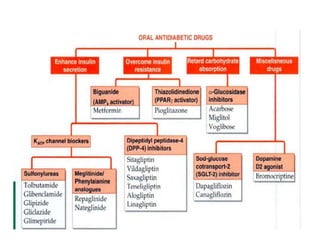
SULFONYLUREAS
• MECHANISM OF ACTION :
1) Main action on β-cells to stimulates insulin
secretion and reduces blood glucose.
• Reduces permeability of K+ by competitively
blocking sulfonylures receptor (SUR1) present
on ATP-sensitive K+ channels
Depolarization
• Enhances Ca +2 influx - degranulation
• Increase the rate of the insulin secretion
2) Suppress glucagon levels – contribute to
hypoglycemic effect
SULFONYLUREAS CONTIN..
3) Bind to Sulfonylurea receptor on the K+
Channels in extra pancreatic cells
• Increase the number of insulin receptors on
target cells particularly in liver
4) 2nd generation SU have an additional effect of
increase sensitivity of peripheral tissue to the
insulin .
SULFONYLUREAS CONTI…
PHARMACOKINETICS
• Well absorbed Orally
• Highly Protein bound – 90-98%
• Low volume of distribution (0.2-0.4 L/kg)
• Onset of action is approximately 1-3 hrs
• Duration of action of second generation is
around 24 hrs
• Metabolized by the liver, and the metabolites
are excreted in the urine.
• second-generation agents are approximately
100 times more potent than first generation.
ADVERSE EFFECT
• Hypoglycemia : most common in elderly patients with
impaired renal and hepatic function with long acting agents
• Increase Weight : due to fluid retention and edma
• Hypersensitivity: photosensitivity,rash,purpura
• Chlorpropamide causes
 cholestatic jaundice
 dilutional hyponatremia
 disulfuram like reaction
MEGLITINIDE ANALOGUES
• Quick and short acting insulin secretion
enhancers
• REPAGLINIDE : Action is similar to SU by
blocking ATP-sensitive potassium channels in
beta cells .
• Should be administered before each major
meal to control postprandial hyperglycemia.
• Dose should be omitted if a meal is missed.
• PK: metabolised by liver and excreted through
kidney .
• AE: hypoglycemia,headache,dyspepsia,arthralgia,
weight gain
• NATEGLINIDE :
• D-phenylalanine derivative.
• Stimulates 1st phase of insulin secretion
• So rapid onset and shorter duration of
hypoglycemic action than repaglinide .
• AE : dizziness, nausea, flu like symptoms,
hypoglycemia(rare)
MEGLITINIDE ANALOGUES
BIGUANIDES
MECHANISM OF ACTION :
Action is mediated by AMP dependent
kinase(AMPK)
Features
• Suppresses hepatic gluconeogenesis and glucose
output from liver
• Enhances insulin-mediated glucose uptake and
disposal in skeletal muscle and fat
– glycogen storage in skeletal muscle
– reduced lipogenesis in adipose tissue and enhanced
fatty acid oxidation
Contd.
• Interferes with mitochondrial respiratory
chain and promotes peripheral glucose
utilization through anaerobic glycolysis
• Other action
• also retards intestinal absorption of glucose,
other hexoses, amino acids and Vit B12
Adverse effects
• Abdominal pain, anorexia, bloating, nausea,
metallic taste,mild diarrhoea and tiredness
• In long term use – decrease absorption of
vitamin B12
Contraindications
• Hypotensive states
• Heart failure
• Severe respiratory, hepatic and renal disease
• Alcoholics:increased risk of lactic acidosis
USES
• Drug of choice of all all type 2 DM patients
Advantages of metformin are
• Nonhypoglycaemic
• weight loss promoting
• potential to prevent macrovascular as well as
microvascular complications of diabetes
• no acceleration of β cell exhaustion/ failure in
type 2 DM
• HbA1c reduction by 0.8–1.2%
Non-diabetic use :
• It is used to treat hirsutism in the patient with
PCOD and enhances the fertility in these
women by decreasing androgen level and
enhancing insulin sensitivity
α- Glucosidase Inhibitor
• MOA: It inhibits α -glucosidase enzyme which
facilitates digestion of complex starches ,
oligosaccharides and disaccharides into
monosaccharides which is important for
absorption .
• So, it reduces postprandial digestion and
absorption of carbohydrates and lowers the
post meal hyperglycemia.
• Pk: mainly excreted through kidney .
Adverse Effect :
• Flatulence ,Diarrhea
• Abdominal pain due to fermentation of
undigested carbohydrates in lower GIT
• Cutaneous hypersensitivity
C/I: Bowel obstruction
Inflammatory Bowel disease
Stage 4 renal failure
α- Glucosidase Inhibitor
THIAZOLIDENEDIONS
MOA :
1) Acts as agonist to a nuclear receptor called
Peroxisome Proliferator Activated Receptor-
gamma(PPAR-γ).
• Which is expressed mainly in adipose tissue,
skeletal muscle and liver.
• Activation of PPAR- γ promotes transcription
of insulin responsive genes which control
glucose and lipid metabolism.
THIAZOLIDENEDIONS
2) Also increase the number of GLUT-4 glucose
transporter in cell membrane of skeletal
muscles and adipose tissue, which promotes
peripheral uptake and utilization of glucose.
3) Also decrease hepatic glucose output by
inhibiting gluconeogenesis.
THIAZOLIDENEDIONS
• Insulin sensitizing action of glitazone takes several
weeks to develop.
Adverse Effect :
• Weight gain due to fluid retention and edma
• Increased deposition of subcutaneous fat and
hemodilution - reduction in Hemoglobin
concentration.
• Increase the risk of heart failure and MI
( Rosiglitazone withdrawl from market oct-2010)
• Hepatotoxicity , reduce bone density
THIAZOLIDENEDIONS
DPP-4 INHIBITORS
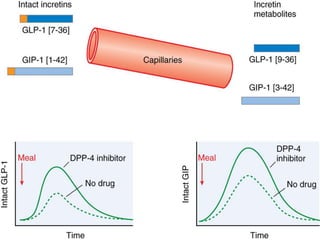
• DPP-4 is a serine protease that is widely
distributed throughout the body .
• They provide nearly complete and long lasting
inhibition of DPP-4 , increase the proportion
of active GLP-1 from 10-20% to nearly 100%.
• Sitagliptin and alogliptin are competitive
inhibitors of DPP-4 whereas vildagliptin and
and saxagliptin bind the enzyme covalently.
DPP-4 INHIBITORS cont…
 Mechanism of Action : Selective inhibition of DPP-4
enzyme which inactivates GLP-1 .
• As a result GLP-1 levels are increased and its actions
prolongs which is responsible for
1) Increase insulin secretion
2) decrease glucagon release
3) delay gastric emptying
4) decreases the appetite by acting at the level of
hypothalamus.
Adverse Effect : Nasopharyngitis (because
substance-p is also a substrate of DPP-4 whose
levels get elevated)
• GIT distress
• Diarrhoea
• Pancreatitis
DPP-4 INHIBITORS cont…
INCRETIN-MIMETICS
• Incretin is a group of hormone that includes
Glucagon like peptide-1 (GLP-1)
Glucose dependent Insulinotropic
polypeptide(GIP) that are released after
meals from GIT and augment glucose
dependent Insulin secretion.
• Among them GLP-1 is the prominent
insulinotropic incretin.
• It is metabolised by DPP-4 enzyme .
Thus GLP-1 agonist
1) Increase insulin secretion
2) decrease glucagon release
3) delay gastric emptying
4) decrease the appetite by acting at the level of
hypothalamus.
INCRETIN-MIMETICS
LIRAGLUTIDE
• It is given as a once daily injection .
• Peak level 8-12 hrs
• Elimination t1/2 is 12-14 hrs.
• Little , renal or intestinal clearance and it is
primarily through the metabolic pathways of
large plasma proteins.
• So, can be given safely in the patient with
renal failure
INCRETIN-MIMETICS
Other drug
• Exentanide
Insulin
Insulin
Insulin

Insulin

  • 1.
  • 2.
    Diabetes mellitus • Hyperglycaemia,glycosuria, hyperlipidaemia, negative nitrogen balance and ketonaemia • Pathological changes: thickening of capillary basement membrane, increase in blood vessel wall matrix, and cellular proliferation • Consequences: Lumen narrowing, atherosclerosis, sclerosis of glomerular capillaries, retinopathy, neuropathy and peripheral vascula insuffficency
  • 3.
    Contd. • Causes ofpathological changes: Enhanced non-enzymatic glycosylation of tissue proteins and accumulation of large amounts of sorbitol • Glycosylated haemoglobin (HbA1c ) – Index of protein glycosylation
  • 10.
    • Discovered byBanting and Best – 1921 • 2 chain Polypeptide – 51 amino acids & MW 6000 • Chain-A has 21 and Chain-B has 30 amino acids – connected by two disulfide bonds • Source: Porcine, Bovine and Human • Synthesized in β cells of islets of pancreas – single chain 110 amino acids (Preproinsulin) • Proinsulin – 86 amino acids • connecting or ‘C’ peptide (35 AA) is split off by proteolysis in Golgi apparatus • Both insulin and C peptide are stored in granules within the cell
  • 12.
    Regulation of Secretion •Basal condition – 1 U per hour – more after meals • Regulated by – Chemical, hormonal and neural mechanisms
  • 13.
  • 14.
    • Glucose generatechemical signals ‘incretins’ from the gut release insulin • Incretins • glucagon-like peptide-1 (GLP- 1) • vasoactive intestinal peptide (VIP) • pancreozymin-cholecystokinin
  • 15.
  • 16.
    3. Neural • Adrenergicα2 receptor activation decreases insulin release • β2 stimulation increases insulin release • Cholinergic—muscarinic activation by ACh or vagal stimulation causes insulin secretion
  • 17.
  • 18.
    • Meal derivedglucose, amino acids, fatty acids and fuel storage • Major anabolic hormone – synthesis of glycogen, lipids and proteins • Facilitates glucose transport across cell membrane – skeletal muscle and fats are highly sensitive -Liver, brain, RBC, WBC and renal medullary cells are independent
  • 19.
    • Intracellular utilizationof glucose is its phosphorylation to form glucose- 6- phosphate: – enhanced by ↑ production of glucokinase • facilitates glycogen synthesis from glucose in liver, muscle and fat by stimulating the enzyme glycogen synthase • Inhibits glycogen degrading enzyme phosphorylase → decreased glycogenolysis in liver • Inhibits gluconeogenesis from protein, FFA and glycerol) in liver
  • 20.
    • inhibits lipolysisin adipose tissue and favors triglyceride synthesis • Insulin deficiency • increased FFA and glycerol in blood • taken up by liver to produce acetyl-CoA • Keton body formation &DKA
  • 21.
    • Facilitates aminoacid entry and their synthesis to protein • Inhibits protein breakdown in muscles and other cells
  • 22.
    Actions of insulinproducing hypoglycaemia Liver Muscle Adipose tissue •Increases glucose uptake and glycogen synthesis •Inhibits glycogenolysi •Inhibits gluconeogenesis from protein, pyruvate, FFA and glycerol •Increases glucose uptake and utilization •Inhibits proteolysis and release of amino acids pyruvate, lactate into blood •Increases glucose uptake and storage as fat and glycogen •Inhibits lipolysis and release of FFA + glycerol
  • 23.
    Mechanism of action •Tyrosin kinase receptors
  • 24.
    Fate of Insulin •Distributed only extracellularly – given orally gets degraded in GIT • Secreted and injected Insulin – metabolized in liver, kidneys and muscles • First pass metabolism - 50% of Insulin passing through portal vein • Degradation after receptor mediated internalization
  • 26.
    Preparations of Insulin •Classically – produced from beef and pork pancreas • Contains 1% (10, 000 ppm) other proteins – proinsulin, polypeptides, pancreatic proteins etc.) – potentially antigenic • Replaced with highly purified pork/beef insulin/recombinant human insulin/insulin analogues
  • 27.
    Contd. • Single peakand Monocomponent insulin (MC) – proinsulin <10 ppm – stable, less resistance and lipodystrophy
  • 28.
    Unitage/Assay: • I Ureduces fasting rabbit blood sugar by 45 mg/dl or potency to induce hypoglycaemic convulsion in mice • I mg of International Standard of Insulin = 28 units • Radioimmunoassay or enzyme immunoassay
  • 29.
    Regular (Soluble) Insulin •Buffered neutral pH solution unmodified insulin stabilized by small amount of zinc • Forms hexamers around zinc ions – released slowly and gradually by dilution on SC administration • Peak onset 2- 3 hours and lasts for 6-8 hours • Drawbacks: – Before meals – early postprandial hyperglycaemia and late post prandial hypoglycaemia – injected ½ to 1 hour before – Do not provide basal level of action – interdigestive period – Do not provide basal level of action – interdigestive period • To overcome:longacting ‘modified’ or ‘retard’ preparations of insulin used
  • 30.
    Human Insulin • Sameamino acid sequence as human insulin - produced by recombinant DNA technology • In Es cherichia coli – proinsulin recombinant bacteria (prb) and in yeast – precursor yeast recombinant (pyr) or by enzymatic modification of porcine insulin • Human actrapid (regular insulin) – 40 U/ml • HUMAN MIXTARD: Human soluble insulin (30%) and isophane insulin (70%),
  • 31.
    Advantages • More watersoluble and hydrophobic • more rapid absorption than porcine or bovine • more defined peak • shorter duration of action
  • 32.
    Insulin analogues • Usingrecombinant DNA analogues of insulin have been produced with modified pharmacokinetic • Greater stability and consistency are the other advantages
  • 33.
    Insulin lispro • Producedby reversing proline and lysine at the carboxy terminus B 28 and B 29 positions • injected immediately before or even after the meal • lower incidence of late post-prandial hypoglycaemia • slightly greater reduction in HbA1c compared to regular insulin
  • 34.
    Insulin aspart • prolineat B 28 of human insulin is replaced by aspartic acid • Other properties & advantages are same
  • 35.
    Insulin glulisine • Replacingaspartic acid at B 23 by lysine and glutamic acid replacing lysine at B 29 • continuous SC insulin infusion (CSII)
  • 36.
    Insulin glargine • Long-acting • precipitates at neutral pH on SC injection • depot is created from which monomeric insulin dissociates slowly to enter the circulation • Onset:delay • Duration:24 hrs • smooth ‘peakless’ effect • suitable for once daily injection
  • 37.
    Contd. • Advantages: • Lowerincidence of night-time hypoglycaemic episodes • Disadvantages • does not control meal-time glycaemia • Because of acidic pH, it cannot be mixed with any other insulin preparation
  • 38.
    REACTIONS TO INSULIN HYPOGLYCAEMIA: • More in diabetics • Causes: Injection of large doses, missing a meal after injection, vigorous exercise • Symptoms – Sweating, anxiety, palpitation, tremor: Sympathetic stimulation – dizziness, headache, behavioral changes, visual disturbances, hunger, fatigue, weakness, muscular incoordination:glucose deprivation – Below < 40 mg/dl:seizure and coma
  • 39.
    • Treatment: Glucoseorally and IV – Glucagon – 0.5 to 1 mg IV
  • 40.
    Other side effects •Local reactions :swelling, erythema and stinging • Lypodystrophy • Allergy: – due to contaminating proteins – very rare with human/highly purified insulins • Edema
  • 41.
    Diabetes mellitus Purpose: • Restoremetabolism to normal • avoid symptoms due to hyperglycaemia • prevent complications Indications: • Type 1 DM • Post pancreatectomy diabetes and gestational diabetes
  • 42.
    Contd. • Type 2DM: • Not controlled by diet and exercise, • failure of oral hypoglycaemics, • under Weight • Temporarily to tide over infections, trauma, surgery, pregnancy • complication of diabetes, e.g. ketoacidosis, nonketotic hyperosmolar coma, gangrene of extremities • Dose: – type:1: 0.4–0.8 U/kg/day – Type 2 patients:0.2–1.6 U/kg/day
  • 43.
    Regimen • single dailyinjection of any long/intermediate/ short-acting insulin or mixture • Either multiple (2-4) injections daily of long and short acting insulins or a single injection daily of long-acting insulin supplemented by oral hypoglycaemics
  • 44.
    Contd. • total dailydose of a 30:70 or 50:50 mixture of regular and NPH insulin is usually split into two(Slit mixed regimen) • injected s.c. before breakfast and before dinner
  • 45.
    Contd. • Basal bolusregimen’ that is now advised needs 3–4 daily injections • long-acting insulin (glargine) is injected once daily either before breakfast or before bed- time for basal coverage along with 2–3 meal- time injections of a rapid acting preparation
  • 46.
    Other uses • Diabeticketoacidosis • Hyperosmolar (nonketotic hyperglycaemic) • coma
  • 47.
    Insulin resistance • Type2 DM • Age • large body fats • Pregnancy • OCPs • Rare causes:acromegaly, Cushing’s syndrome, pheochromocytoma
  • 48.
    Acute insulin resistance •Infection, trauma, surgery, emotional stress, and other hyperglycaemic hormones • DKA
  • 49.
    Newer insulin deliverydevices • Insulin syringes • Pen devices • Inhaled insulin • Insulin pumps:continuous subcutaneous insulin infusion’ (CSII) • Implantable pumps
  • 50.
    Diabetic ketoacidosis • Commonin type 1 DM • Infrequent in type 2 DM • Causes • Infection • Trauma • Stroke • Pancreatitis • stressful conditions • Inadequate doses of insulin
  • 52.
    Treatment • Insulin: – bolusdose of 0.1–0.2 U/kg i.v. is followed by 0.1 U/kg/hr infusion – Within 4–6 hours blood glucose reaches 300 mg/dl rate of infusion is reduced to 2–3 U/hr • Intravenous fluids:Normal saline is infused i.v., initially at the rate of 1 L/hr – blood sugar has reached 300 mg/dl, 5% glucose in ½N saline
  • 53.
    • KCl:After 4hours 10–20 mEq/hr KCl to the i.v. fluid • Sodium bicarbonate • Phosphate • Antibiotics • Treatment of precipitating cause
  • 54.
  • 56.
    SULFONYLUREAS • MECHANISM OFACTION : 1) Main action on β-cells to stimulates insulin secretion and reduces blood glucose. • Reduces permeability of K+ by competitively blocking sulfonylures receptor (SUR1) present on ATP-sensitive K+ channels Depolarization
  • 57.
    • Enhances Ca+2 influx - degranulation • Increase the rate of the insulin secretion 2) Suppress glucagon levels – contribute to hypoglycemic effect SULFONYLUREAS CONTIN..
  • 58.
    3) Bind toSulfonylurea receptor on the K+ Channels in extra pancreatic cells • Increase the number of insulin receptors on target cells particularly in liver 4) 2nd generation SU have an additional effect of increase sensitivity of peripheral tissue to the insulin . SULFONYLUREAS CONTI…
  • 59.
    PHARMACOKINETICS • Well absorbedOrally • Highly Protein bound – 90-98% • Low volume of distribution (0.2-0.4 L/kg) • Onset of action is approximately 1-3 hrs • Duration of action of second generation is around 24 hrs • Metabolized by the liver, and the metabolites are excreted in the urine. • second-generation agents are approximately 100 times more potent than first generation.
  • 60.
    ADVERSE EFFECT • Hypoglycemia: most common in elderly patients with impaired renal and hepatic function with long acting agents • Increase Weight : due to fluid retention and edma • Hypersensitivity: photosensitivity,rash,purpura • Chlorpropamide causes  cholestatic jaundice  dilutional hyponatremia  disulfuram like reaction
  • 61.
    MEGLITINIDE ANALOGUES • Quickand short acting insulin secretion enhancers • REPAGLINIDE : Action is similar to SU by blocking ATP-sensitive potassium channels in beta cells . • Should be administered before each major meal to control postprandial hyperglycemia. • Dose should be omitted if a meal is missed. • PK: metabolised by liver and excreted through kidney .
  • 62.
    • AE: hypoglycemia,headache,dyspepsia,arthralgia, weightgain • NATEGLINIDE : • D-phenylalanine derivative. • Stimulates 1st phase of insulin secretion • So rapid onset and shorter duration of hypoglycemic action than repaglinide . • AE : dizziness, nausea, flu like symptoms, hypoglycemia(rare) MEGLITINIDE ANALOGUES
  • 63.
    BIGUANIDES MECHANISM OF ACTION: Action is mediated by AMP dependent kinase(AMPK) Features • Suppresses hepatic gluconeogenesis and glucose output from liver • Enhances insulin-mediated glucose uptake and disposal in skeletal muscle and fat – glycogen storage in skeletal muscle – reduced lipogenesis in adipose tissue and enhanced fatty acid oxidation
  • 64.
    Contd. • Interferes withmitochondrial respiratory chain and promotes peripheral glucose utilization through anaerobic glycolysis • Other action • also retards intestinal absorption of glucose, other hexoses, amino acids and Vit B12
  • 65.
    Adverse effects • Abdominalpain, anorexia, bloating, nausea, metallic taste,mild diarrhoea and tiredness • In long term use – decrease absorption of vitamin B12
  • 66.
    Contraindications • Hypotensive states •Heart failure • Severe respiratory, hepatic and renal disease • Alcoholics:increased risk of lactic acidosis
  • 67.
    USES • Drug ofchoice of all all type 2 DM patients Advantages of metformin are • Nonhypoglycaemic • weight loss promoting • potential to prevent macrovascular as well as microvascular complications of diabetes • no acceleration of β cell exhaustion/ failure in type 2 DM • HbA1c reduction by 0.8–1.2%
  • 68.
    Non-diabetic use : •It is used to treat hirsutism in the patient with PCOD and enhances the fertility in these women by decreasing androgen level and enhancing insulin sensitivity
  • 69.
    α- Glucosidase Inhibitor •MOA: It inhibits α -glucosidase enzyme which facilitates digestion of complex starches , oligosaccharides and disaccharides into monosaccharides which is important for absorption . • So, it reduces postprandial digestion and absorption of carbohydrates and lowers the post meal hyperglycemia. • Pk: mainly excreted through kidney .
  • 70.
    Adverse Effect : •Flatulence ,Diarrhea • Abdominal pain due to fermentation of undigested carbohydrates in lower GIT • Cutaneous hypersensitivity C/I: Bowel obstruction Inflammatory Bowel disease Stage 4 renal failure α- Glucosidase Inhibitor
  • 71.
    THIAZOLIDENEDIONS MOA : 1) Actsas agonist to a nuclear receptor called Peroxisome Proliferator Activated Receptor- gamma(PPAR-γ). • Which is expressed mainly in adipose tissue, skeletal muscle and liver. • Activation of PPAR- γ promotes transcription of insulin responsive genes which control glucose and lipid metabolism.
  • 72.
    THIAZOLIDENEDIONS 2) Also increasethe number of GLUT-4 glucose transporter in cell membrane of skeletal muscles and adipose tissue, which promotes peripheral uptake and utilization of glucose. 3) Also decrease hepatic glucose output by inhibiting gluconeogenesis. THIAZOLIDENEDIONS
  • 73.
    • Insulin sensitizingaction of glitazone takes several weeks to develop. Adverse Effect : • Weight gain due to fluid retention and edma • Increased deposition of subcutaneous fat and hemodilution - reduction in Hemoglobin concentration. • Increase the risk of heart failure and MI ( Rosiglitazone withdrawl from market oct-2010) • Hepatotoxicity , reduce bone density THIAZOLIDENEDIONS
  • 74.
    DPP-4 INHIBITORS • DPP-4is a serine protease that is widely distributed throughout the body . • They provide nearly complete and long lasting inhibition of DPP-4 , increase the proportion of active GLP-1 from 10-20% to nearly 100%. • Sitagliptin and alogliptin are competitive inhibitors of DPP-4 whereas vildagliptin and and saxagliptin bind the enzyme covalently.
  • 76.
    DPP-4 INHIBITORS cont… Mechanism of Action : Selective inhibition of DPP-4 enzyme which inactivates GLP-1 . • As a result GLP-1 levels are increased and its actions prolongs which is responsible for 1) Increase insulin secretion 2) decrease glucagon release 3) delay gastric emptying 4) decreases the appetite by acting at the level of hypothalamus.
  • 77.
    Adverse Effect :Nasopharyngitis (because substance-p is also a substrate of DPP-4 whose levels get elevated) • GIT distress • Diarrhoea • Pancreatitis DPP-4 INHIBITORS cont…
  • 78.
    INCRETIN-MIMETICS • Incretin isa group of hormone that includes Glucagon like peptide-1 (GLP-1) Glucose dependent Insulinotropic polypeptide(GIP) that are released after meals from GIT and augment glucose dependent Insulin secretion. • Among them GLP-1 is the prominent insulinotropic incretin. • It is metabolised by DPP-4 enzyme .
  • 79.
    Thus GLP-1 agonist 1)Increase insulin secretion 2) decrease glucagon release 3) delay gastric emptying 4) decrease the appetite by acting at the level of hypothalamus. INCRETIN-MIMETICS
  • 80.
    LIRAGLUTIDE • It isgiven as a once daily injection . • Peak level 8-12 hrs • Elimination t1/2 is 12-14 hrs. • Little , renal or intestinal clearance and it is primarily through the metabolic pathways of large plasma proteins. • So, can be given safely in the patient with renal failure INCRETIN-MIMETICS
  • 81.

Editor's Notes

  • #54 When insulin therapy is instituted ketosis subsides and K+ is driven back intracellularly— dangerous hypokalemia can occur