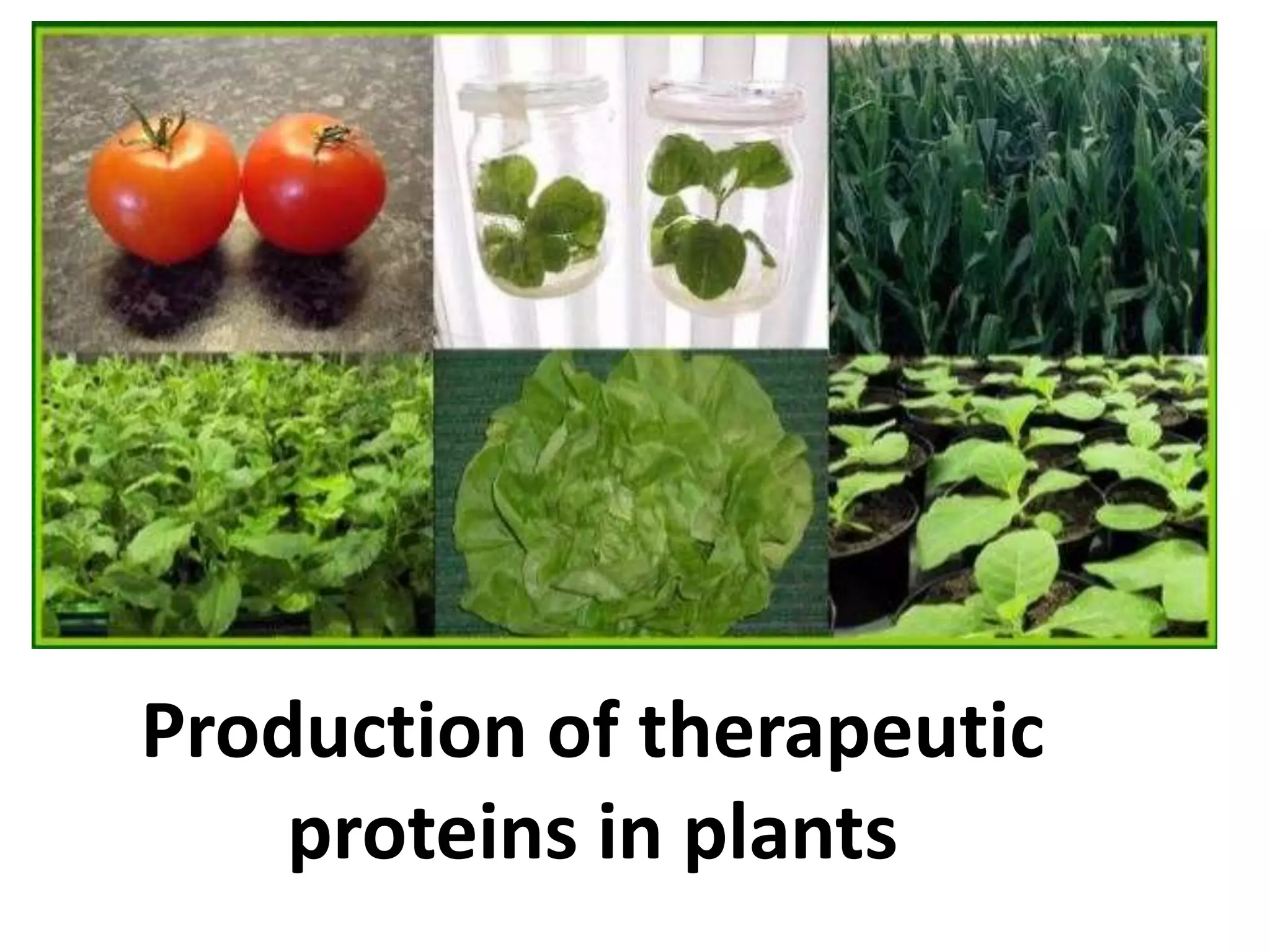
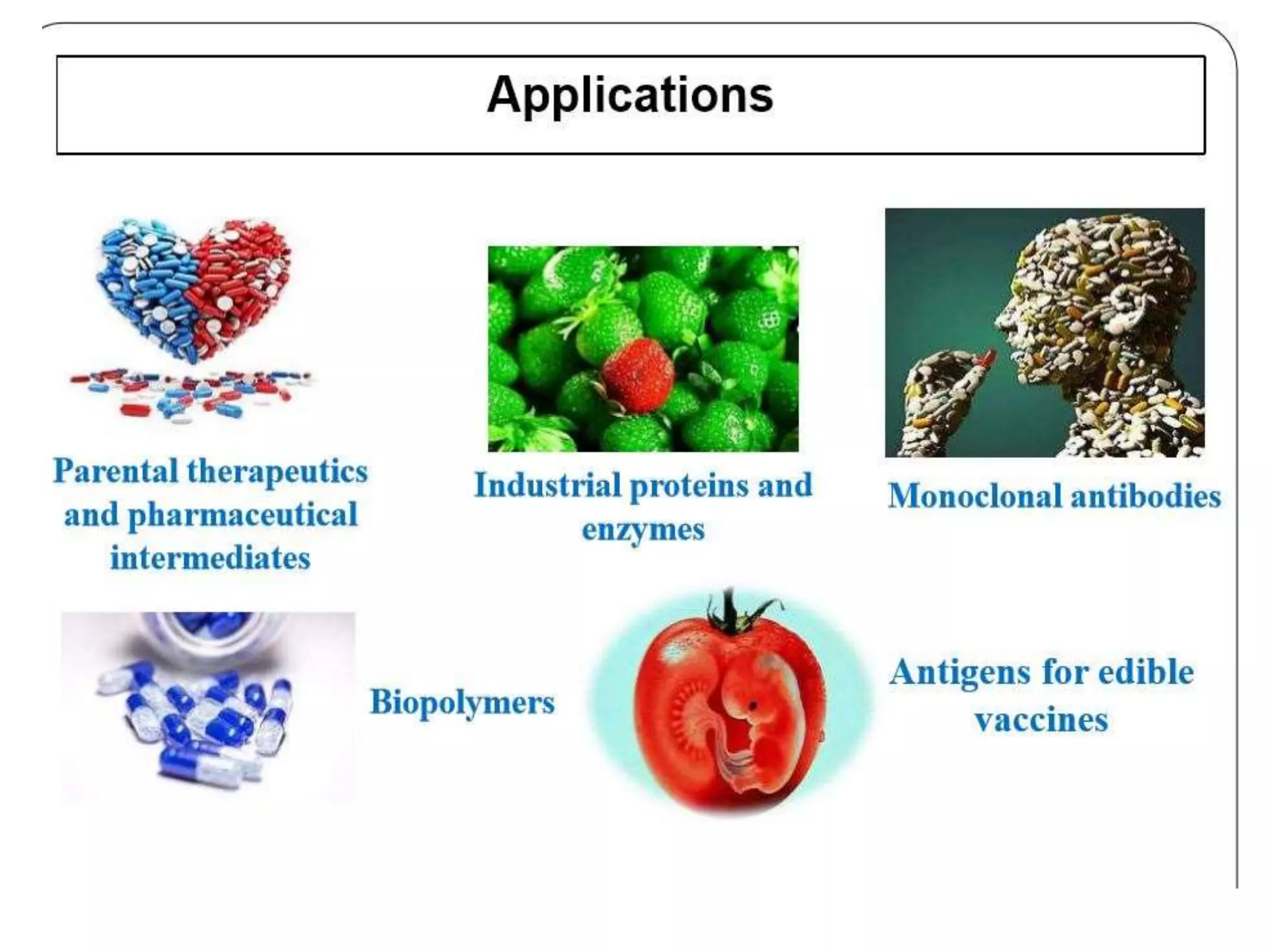
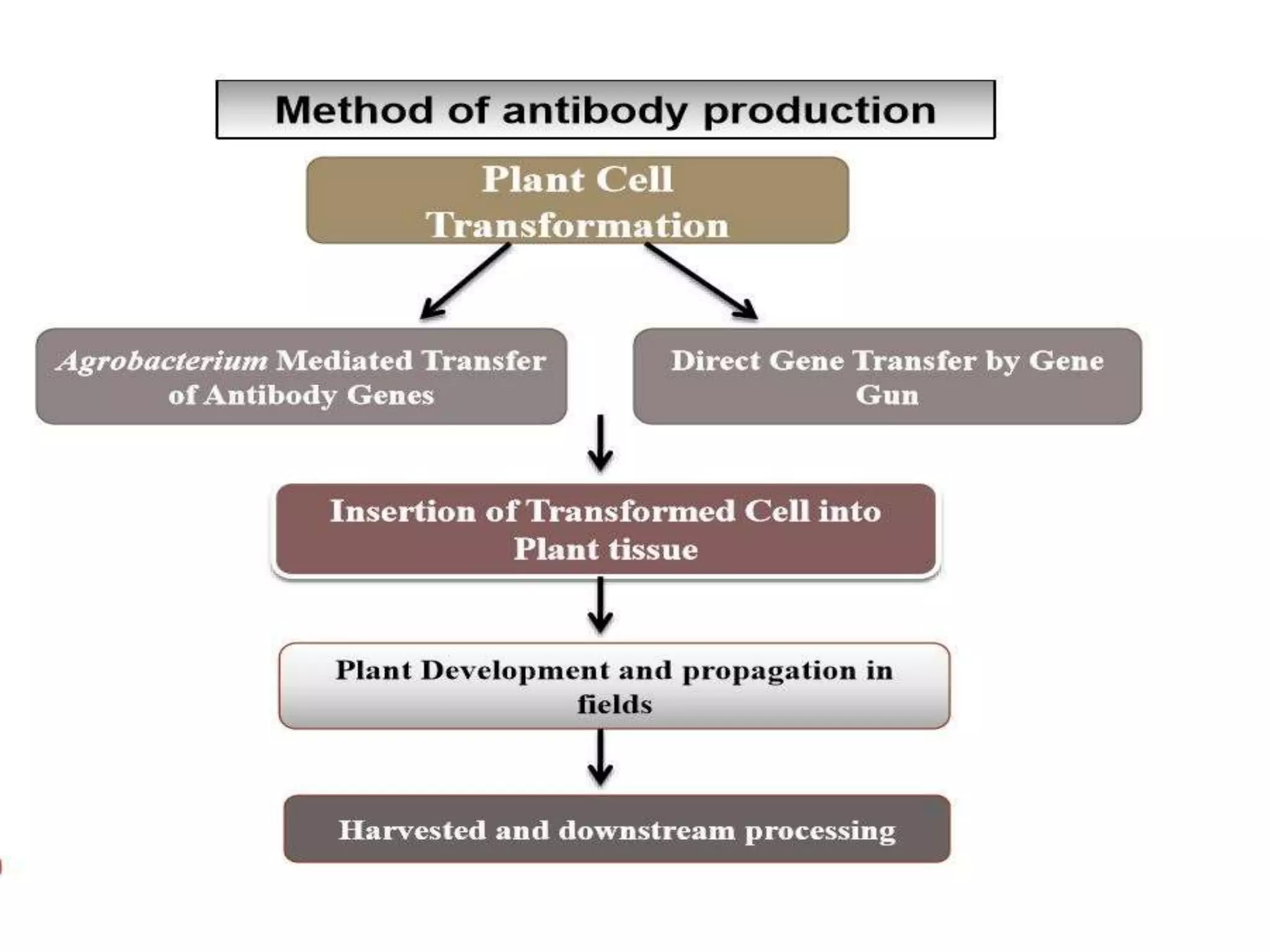
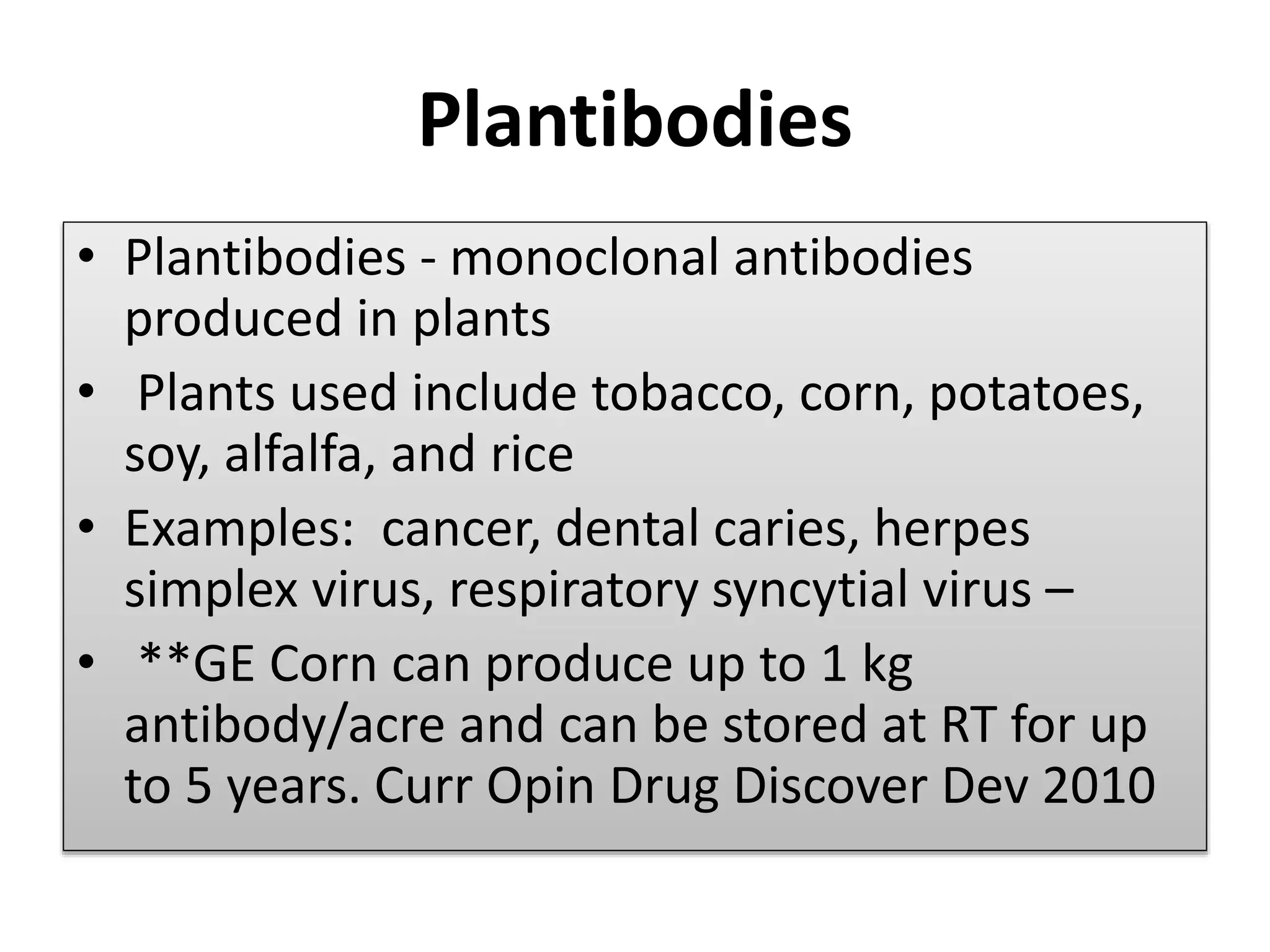
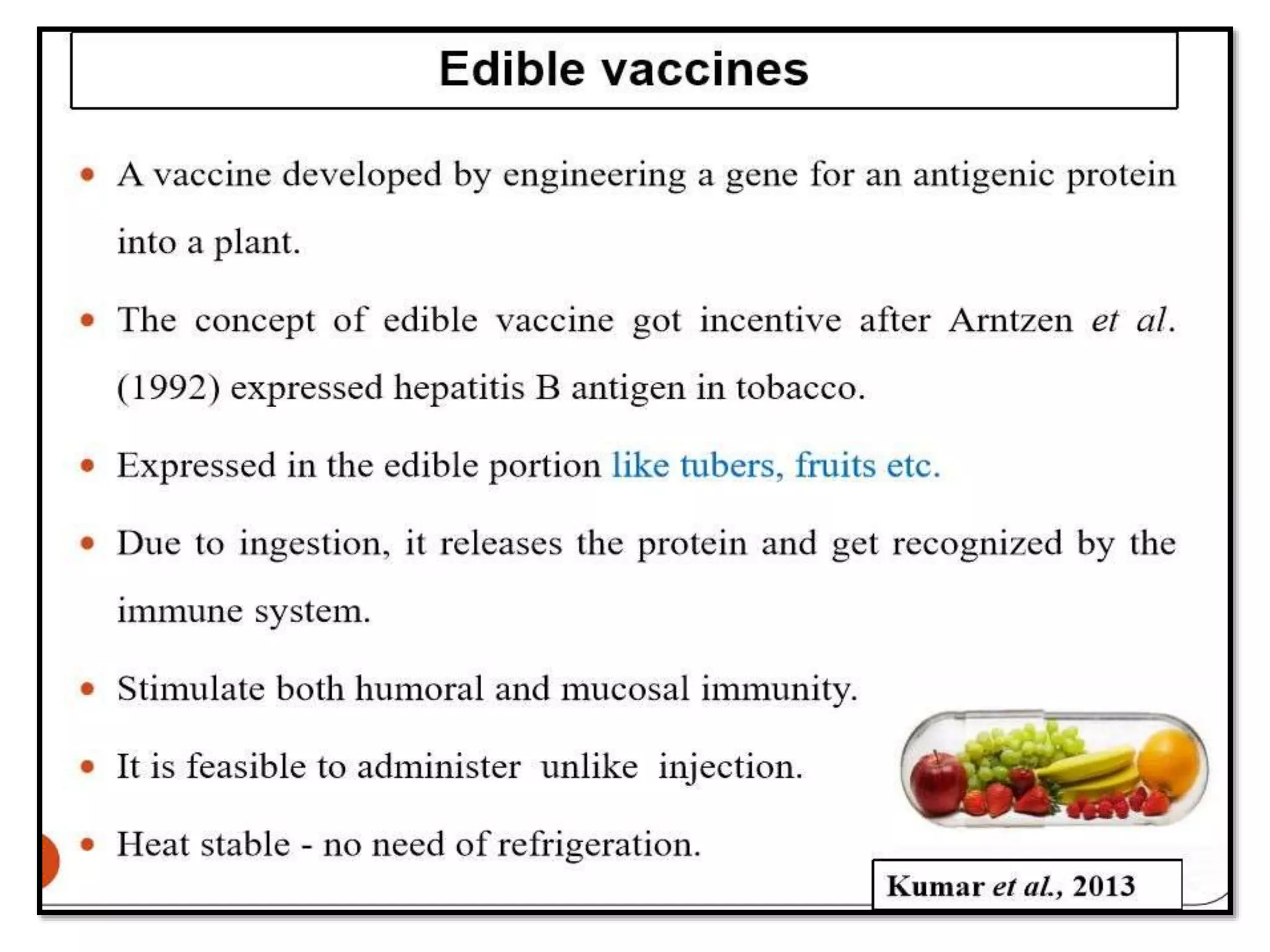
This document discusses the production of therapeutic proteins in plants. Therapeutic proteins are engineered proteins used for pharmaceutical purposes to treat diseases. Plants can be genetically modified to produce these proteins through nuclear or plastid transformation or transient expression. Examples of therapeutic proteins produced in plants include monoclonal antibodies in corn, HIV-suppressing proteins in spinach, and vaccines for hepatitis B in potato. While plant-based production has cost advantages over traditional methods, there are also bio-safety concerns regarding environmental contamination and food supply contamination that must be addressed.