The Foresight method
for scenario building
Grassroots Foresight initiative - Training of Resource persons
Participatory Prospective Analysis –Scenario Building
February 1-7, 2015
Quezon City, The Philippines
Robin Bourgeois GFAR Secretariat
1
Foresight is not Forecast
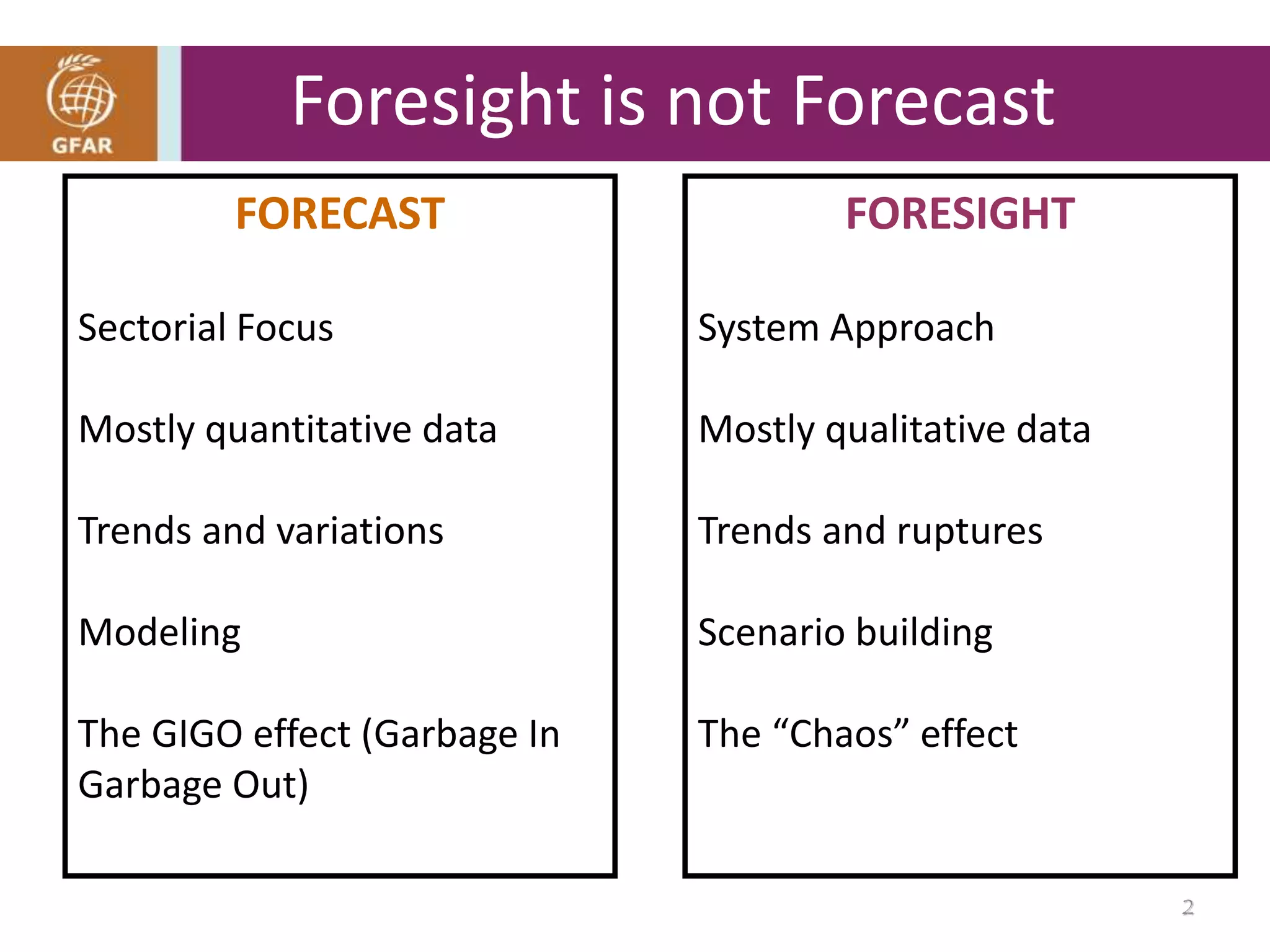
FORECAST
Sectorial Focus
Mostly quantitative data
Trends and variations
Modeling
The GIGO effect (Garbage In
Garbage Out)
FORESIGHT
System Approach
Mostly qualitative data
Trends and ruptures
Scenario building
The “Chaos” effect
2
Foresight is not Forecast
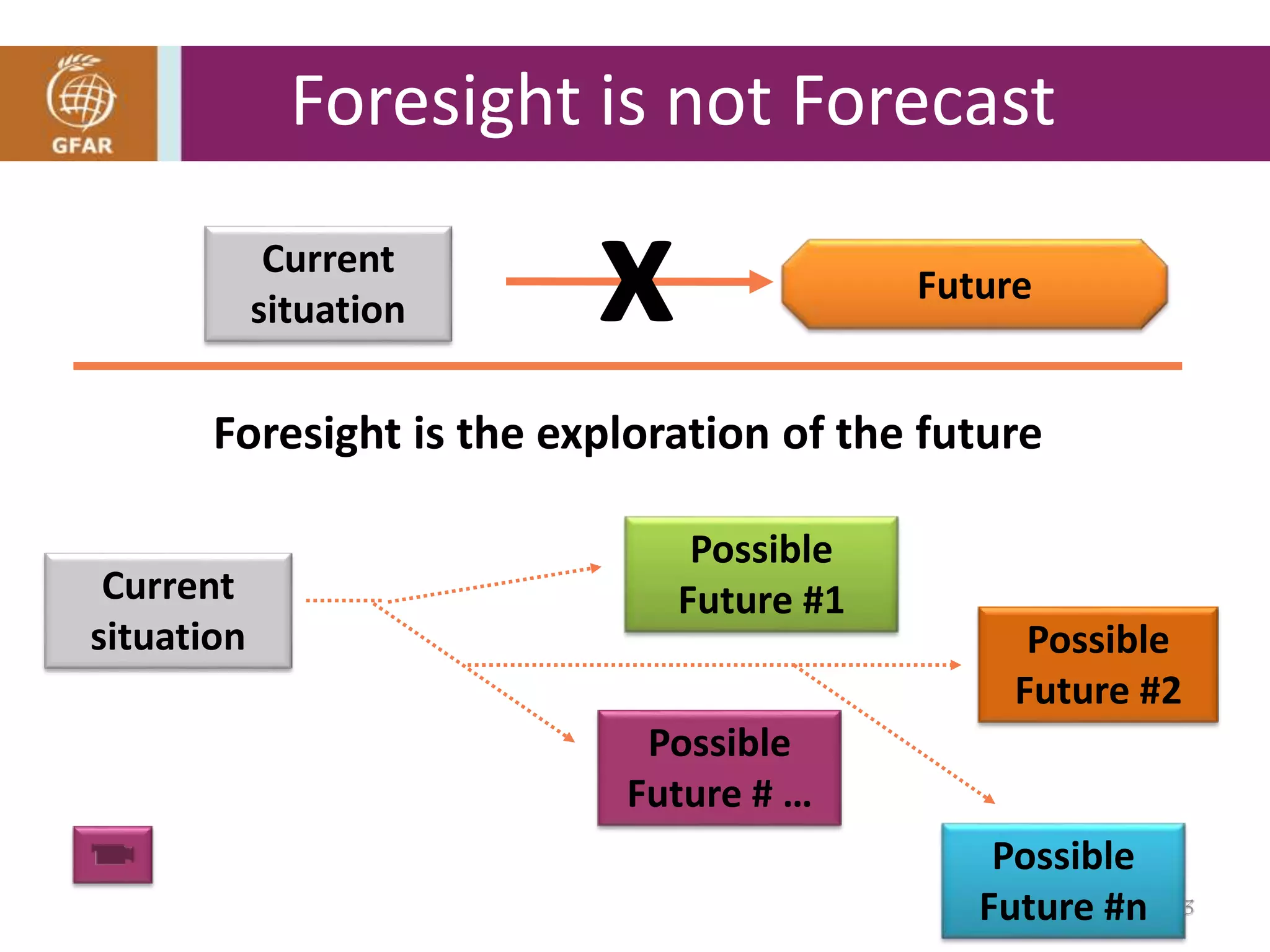
Future
x
Foresight is the exploration of the future
Current
situation
Possible
Future #1
Possible
Future #2
Possible
Future # …
Possible
Future #n
Current
situation
3
Facing change
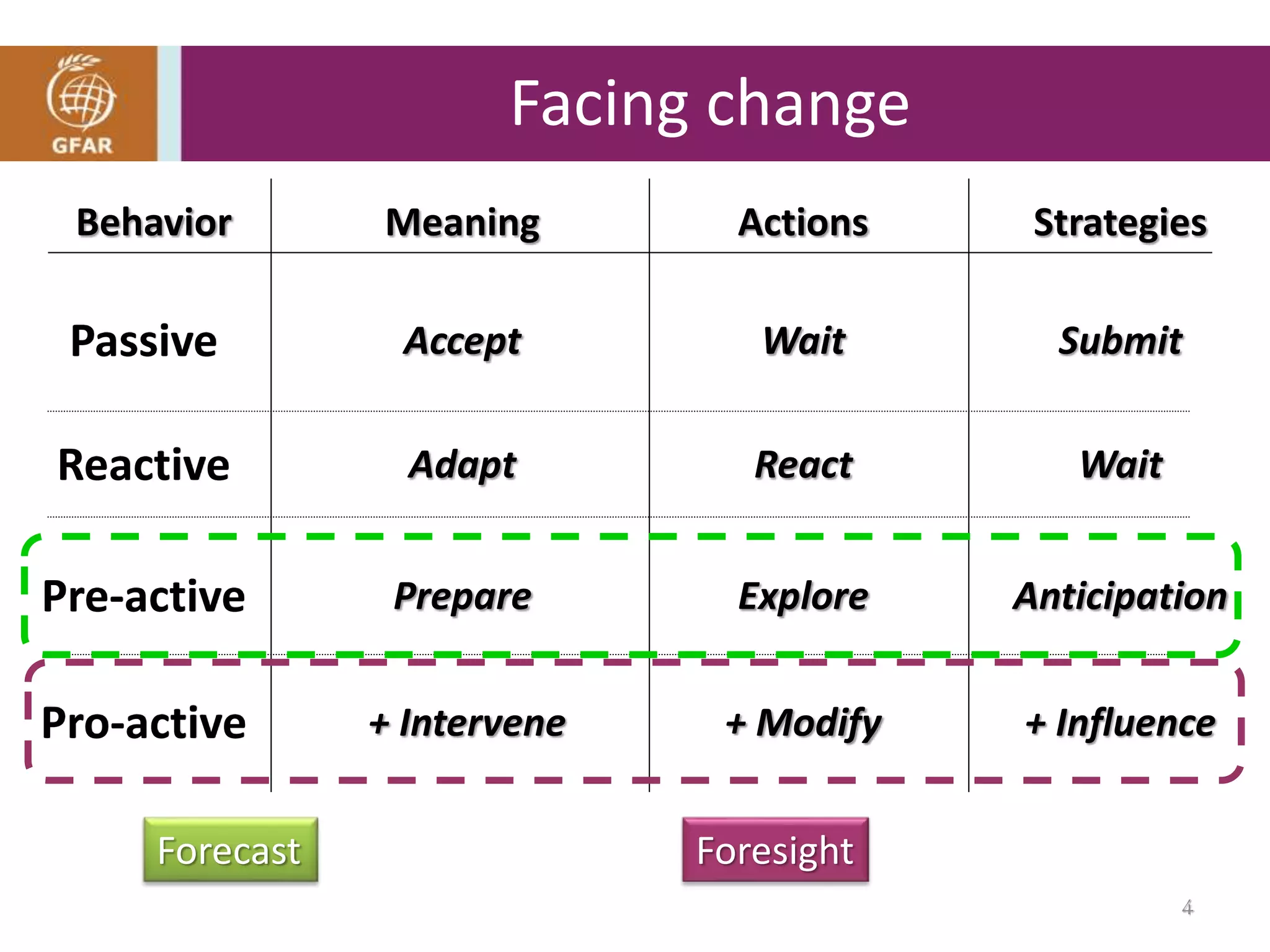
Meaning Actions Strategies
Passive Accept Wait Submit
Reactive Adapt React Wait
Pre-active Prepare Explore Anticipation
Pro-active + Intervene + Modify + Influence
Behavior
Forecast Foresight
4
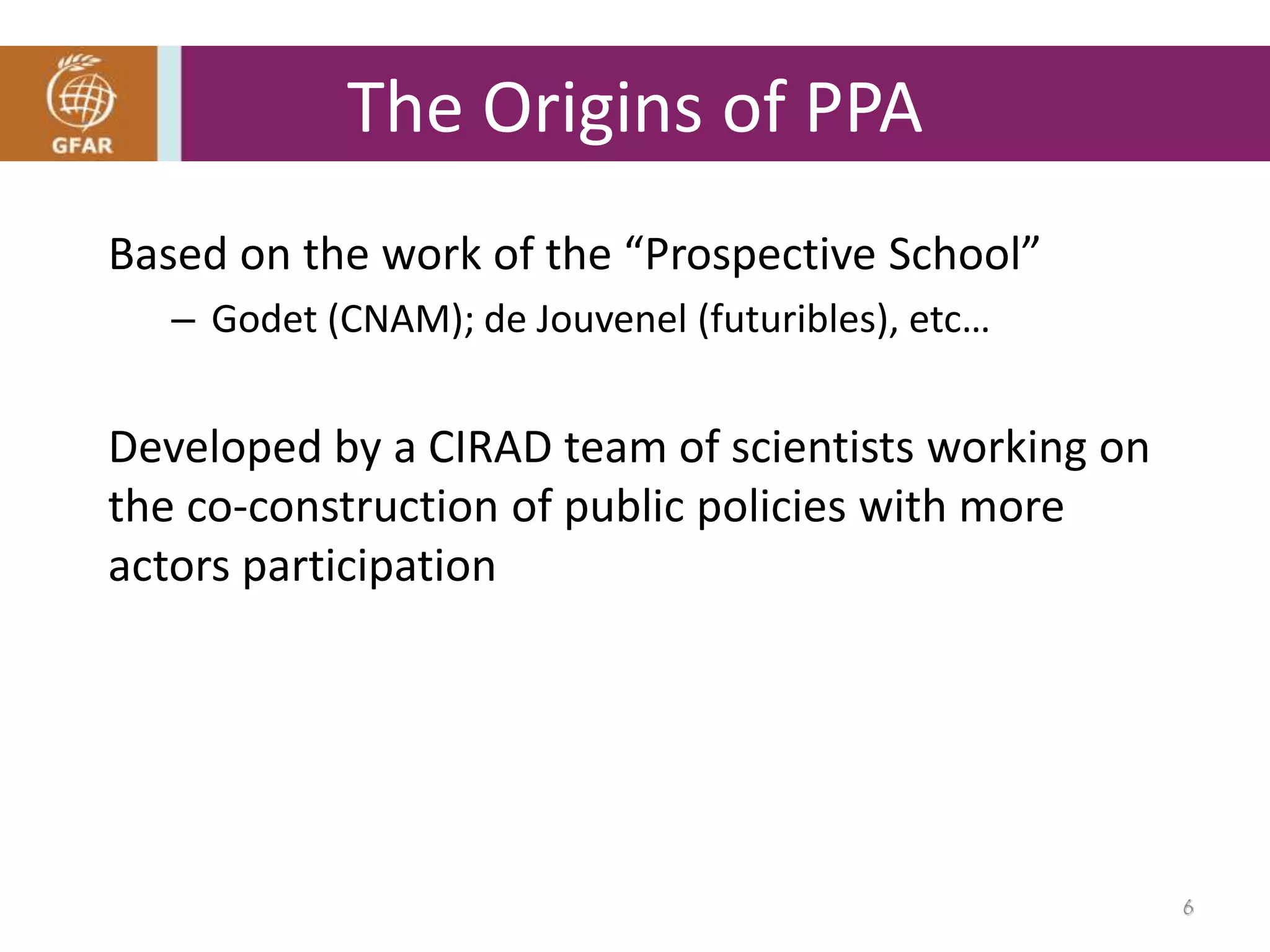
Building scenarios
with the
Participatory Prospective Analysis (PPA) Method
How to do a local foresight?
5
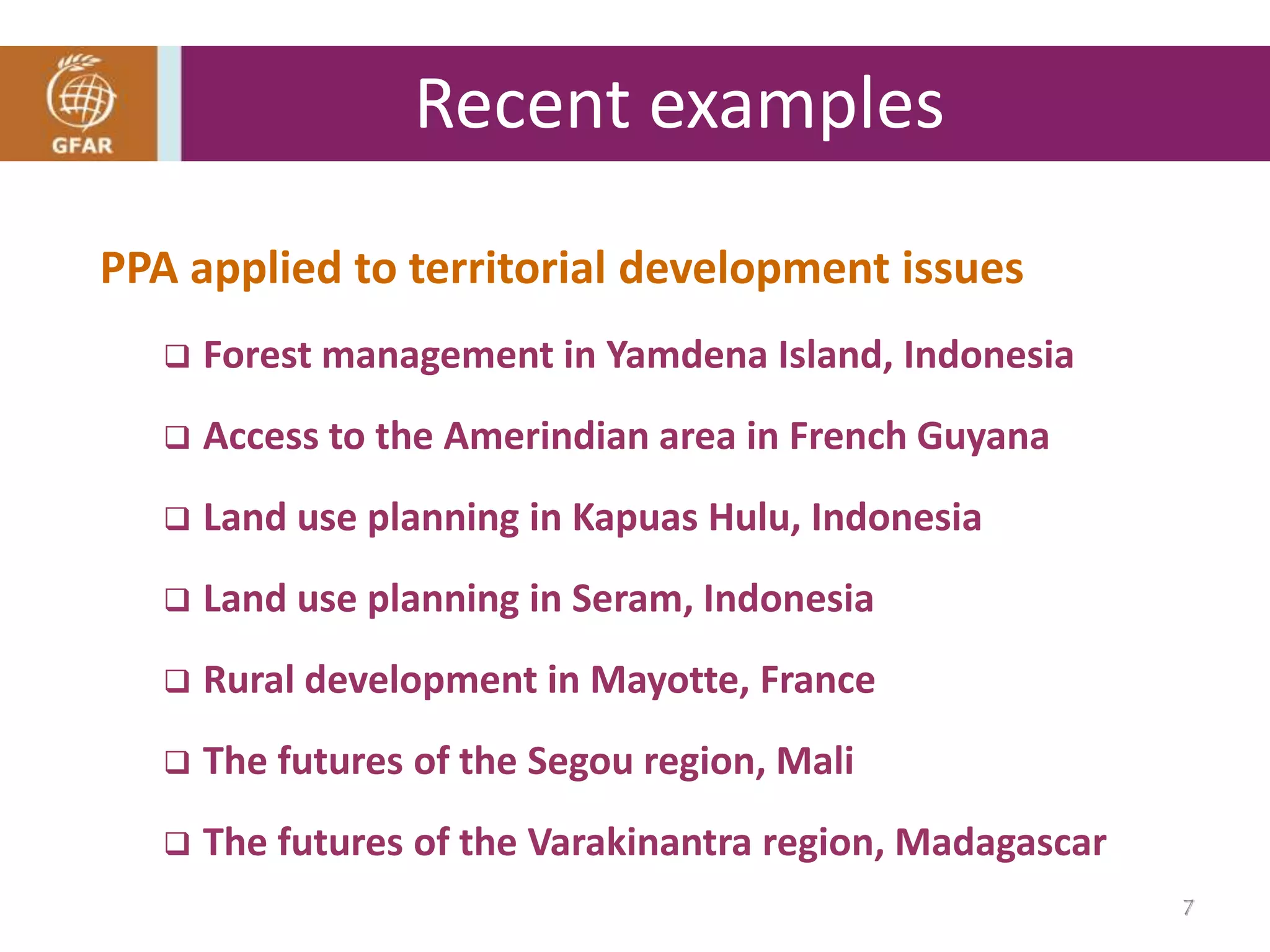
Based on the work of the “Prospective School”
– Godet (CNAM); de Jouvenel (futuribles), etc…
Developed by a CIRAD team of scientists working on
the co-construction of public policies with more
actors participation
The Origins of PPA
6
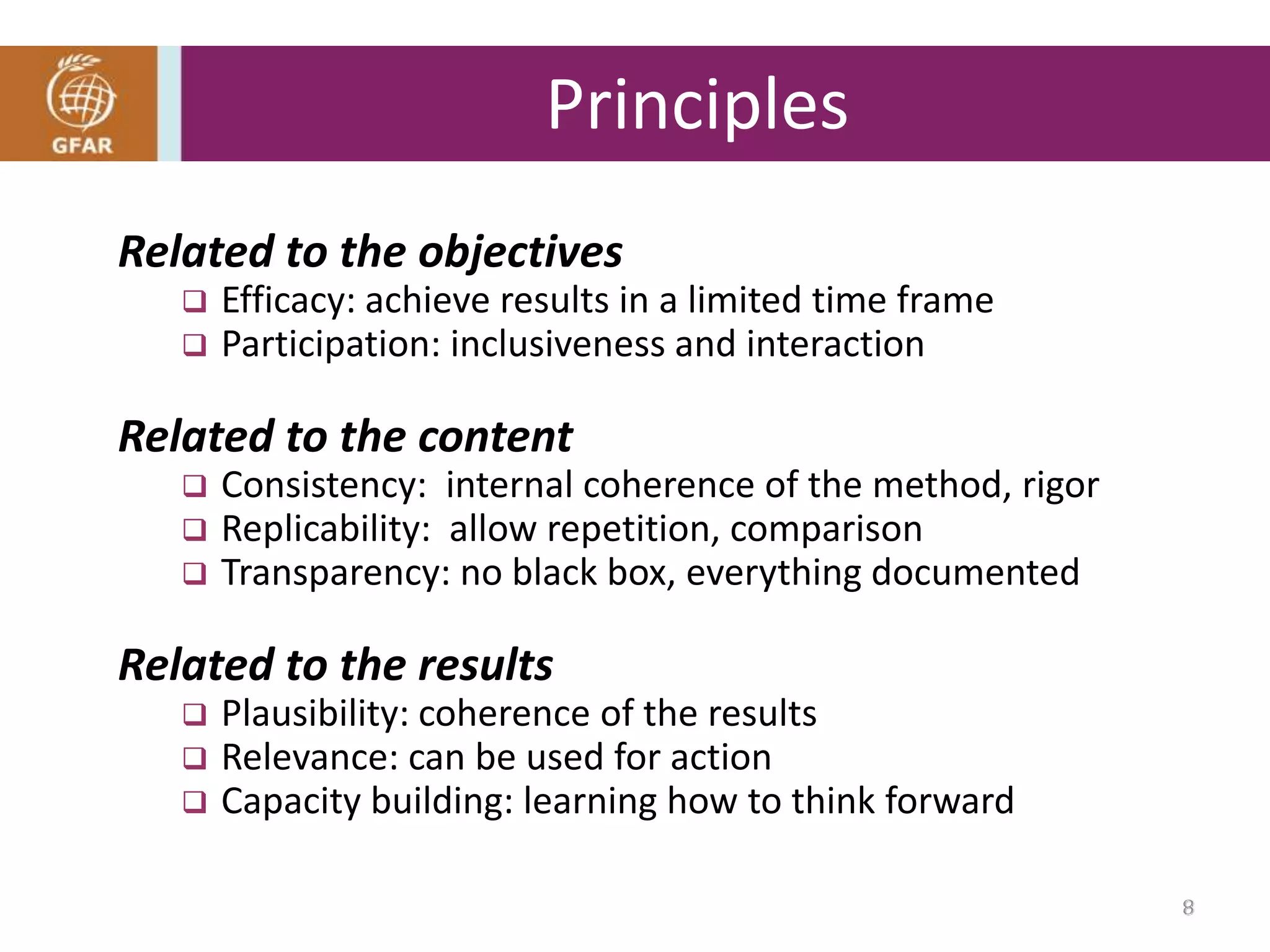
PPA applied to territorial development issues
 Forest management in Yamdena Island, Indonesia
 Access to the Amerindian area in French Guyana
 Land use planning in Kapuas Hulu, Indonesia
 Land use planning in Seram, Indonesia
 Rural development in Mayotte, France
 The futures of the Segou region, Mali
 The futures of the Varakinantra region, Madagascar
Recent examples
7
Related to the objectives
 Efficacy: achieve results in a limited time frame
 Participation: inclusiveness and interaction
Related to the content
 Consistency: internal coherence of the method, rigor
 Replicability: allow repetition, comparison
 Transparency: no black box, everything documented
Related to the results
 Plausibility: coherence of the results
 Relevance: can be used for action
 Capacity building: learning how to think forward
Principles
8
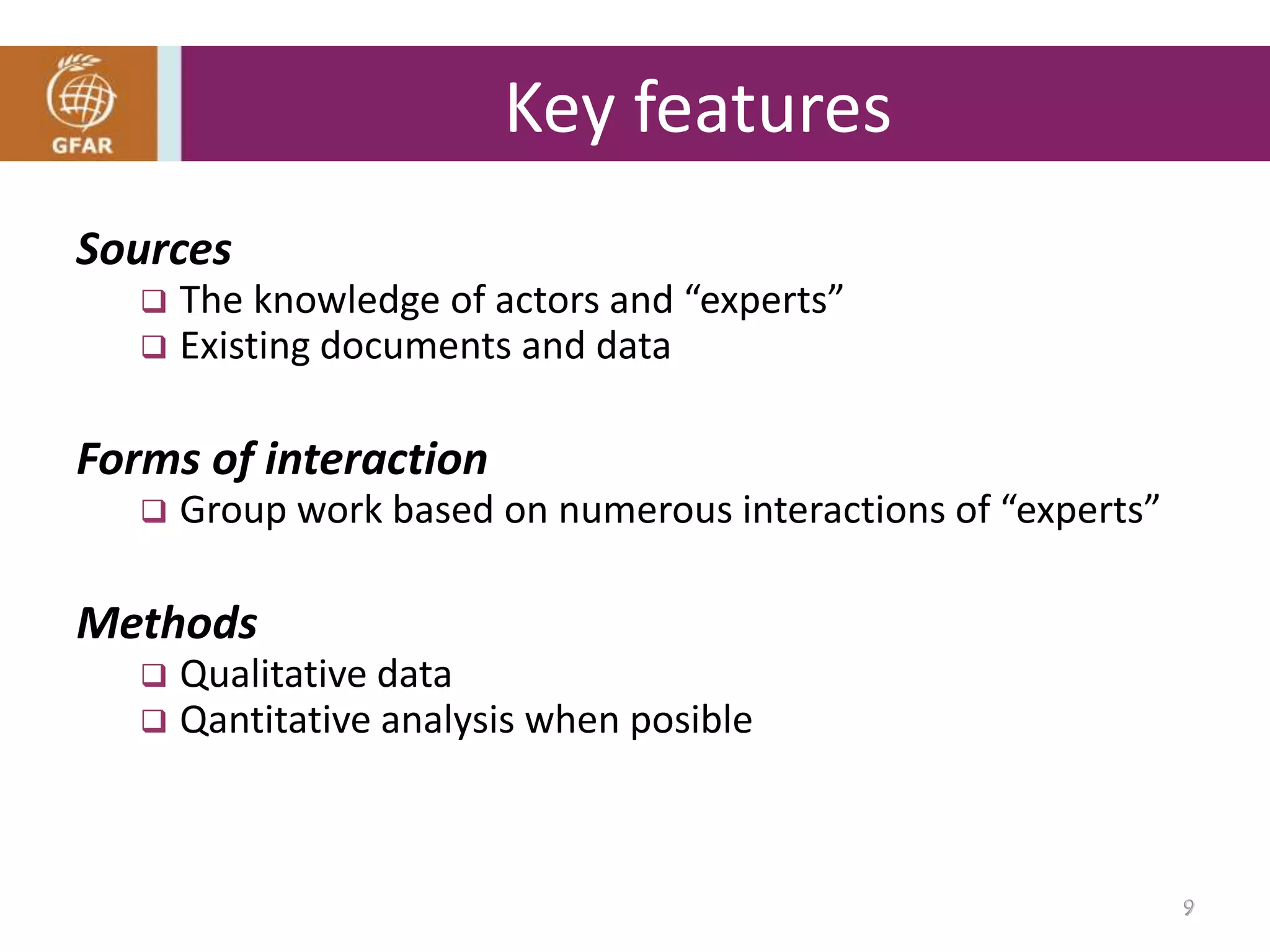
Sources
 The knowledge of actors and “experts”
 Existing documents and data
Forms of interaction
 Group work based on numerous interactions of “experts”
Methods
 Qualitative data
 Qantitative analysis when posible
Key features
9
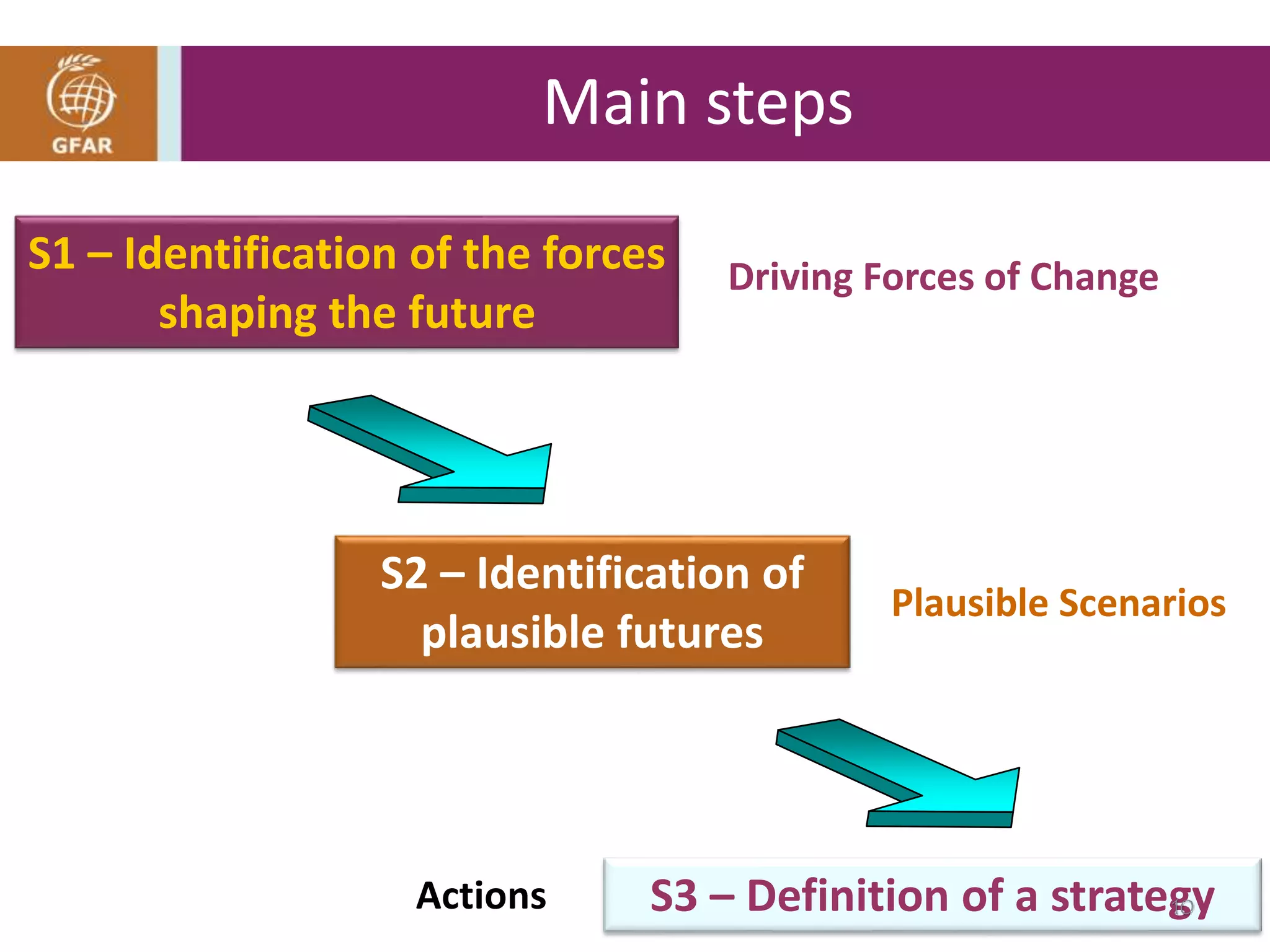
Main steps
S1 – Identification of the forces
shaping the future
Driving Forces of Change
S2 – Identification of
plausible futures
Plausible Scenarios
S3 – Definition of a strategyActions 10
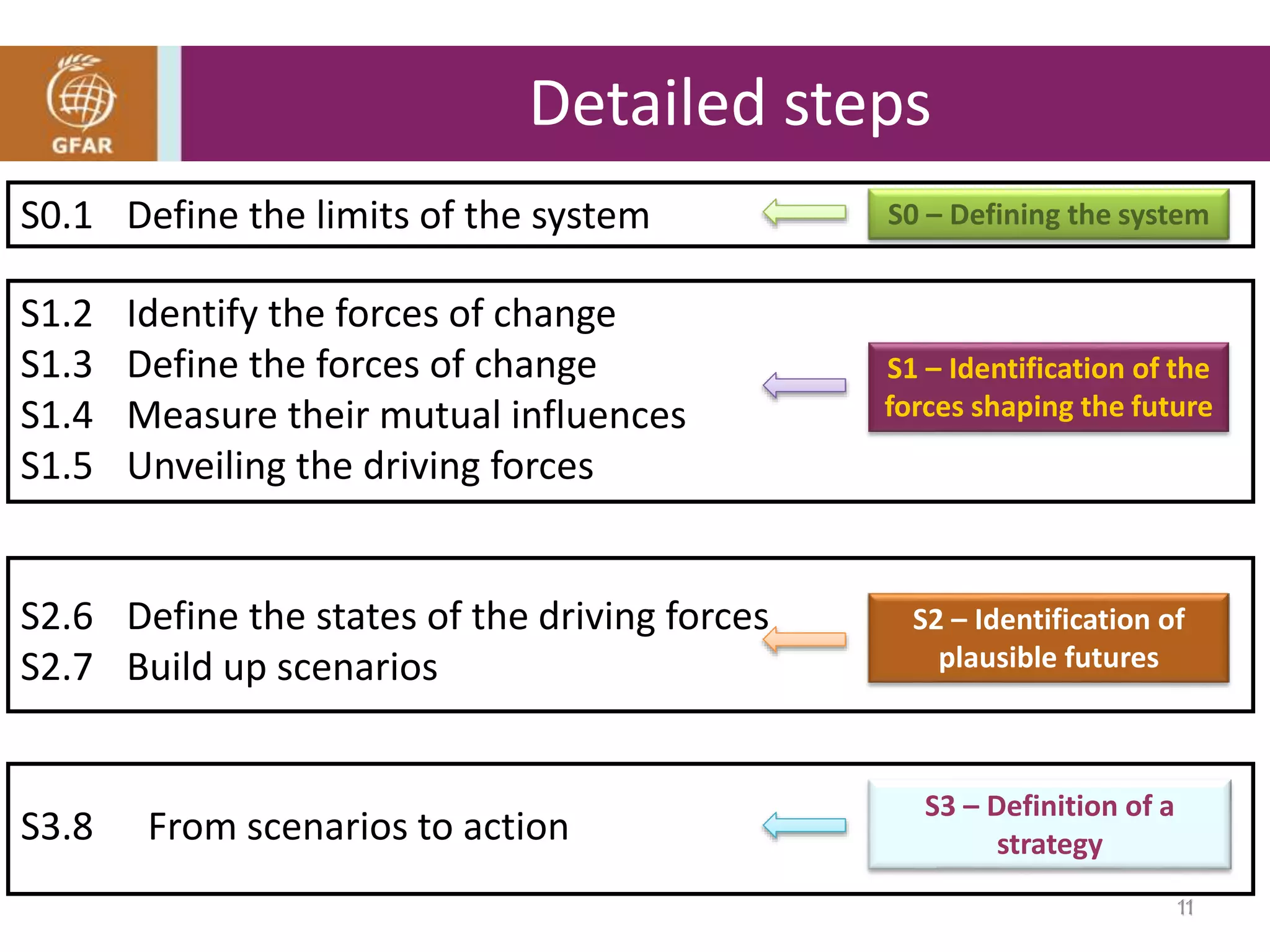
S3.8 From scenarios to action
S0.1 Define the limits of the system
S1.2 Identify the forces of change
S1.3 Define the forces of change
S1.4 Measure their mutual influences
S1.5 Unveiling the driving forces
S2.6 Define the states of the driving forces
S2.7 Build up scenarios
S0 – Defining the system
S1 – Identification of the
forces shaping the future
S2 – Identification of
plausible futures
S3 – Definition of a
strategy
Detailed steps
11

The Foresight method for scenario building

  • 1.
    The Foresight method forscenario building Grassroots Foresight initiative - Training of Resource persons Participatory Prospective Analysis –Scenario Building February 1-7, 2015 Quezon City, The Philippines Robin Bourgeois GFAR Secretariat 1
  • 2.
    Foresight is notForecast FORECAST Sectorial Focus Mostly quantitative data Trends and variations Modeling The GIGO effect (Garbage In Garbage Out) FORESIGHT System Approach Mostly qualitative data Trends and ruptures Scenario building The “Chaos” effect 2
  • 3.
    Foresight is notForecast Future x Foresight is the exploration of the future Current situation Possible Future #1 Possible Future #2 Possible Future # … Possible Future #n Current situation 3
  • 4.
    Facing change Meaning ActionsStrategies Passive Accept Wait Submit Reactive Adapt React Wait Pre-active Prepare Explore Anticipation Pro-active + Intervene + Modify + Influence Behavior Forecast Foresight 4
  • 5.
    Building scenarios with the ParticipatoryProspective Analysis (PPA) Method How to do a local foresight? 5
  • 6.
    Based on thework of the “Prospective School” – Godet (CNAM); de Jouvenel (futuribles), etc… Developed by a CIRAD team of scientists working on the co-construction of public policies with more actors participation The Origins of PPA 6
  • 7.
    PPA applied toterritorial development issues  Forest management in Yamdena Island, Indonesia  Access to the Amerindian area in French Guyana  Land use planning in Kapuas Hulu, Indonesia  Land use planning in Seram, Indonesia  Rural development in Mayotte, France  The futures of the Segou region, Mali  The futures of the Varakinantra region, Madagascar Recent examples 7
  • 8.
    Related to theobjectives  Efficacy: achieve results in a limited time frame  Participation: inclusiveness and interaction Related to the content  Consistency: internal coherence of the method, rigor  Replicability: allow repetition, comparison  Transparency: no black box, everything documented Related to the results  Plausibility: coherence of the results  Relevance: can be used for action  Capacity building: learning how to think forward Principles 8
  • 9.
    Sources  The knowledgeof actors and “experts”  Existing documents and data Forms of interaction  Group work based on numerous interactions of “experts” Methods  Qualitative data  Qantitative analysis when posible Key features 9
  • 10.
    Main steps S1 –Identification of the forces shaping the future Driving Forces of Change S2 – Identification of plausible futures Plausible Scenarios S3 – Definition of a strategyActions 10
  • 11.
    S3.8 From scenariosto action S0.1 Define the limits of the system S1.2 Identify the forces of change S1.3 Define the forces of change S1.4 Measure their mutual influences S1.5 Unveiling the driving forces S2.6 Define the states of the driving forces S2.7 Build up scenarios S0 – Defining the system S1 – Identification of the forces shaping the future S2 – Identification of plausible futures S3 – Definition of a strategy Detailed steps 11