1 
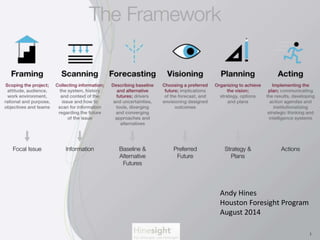
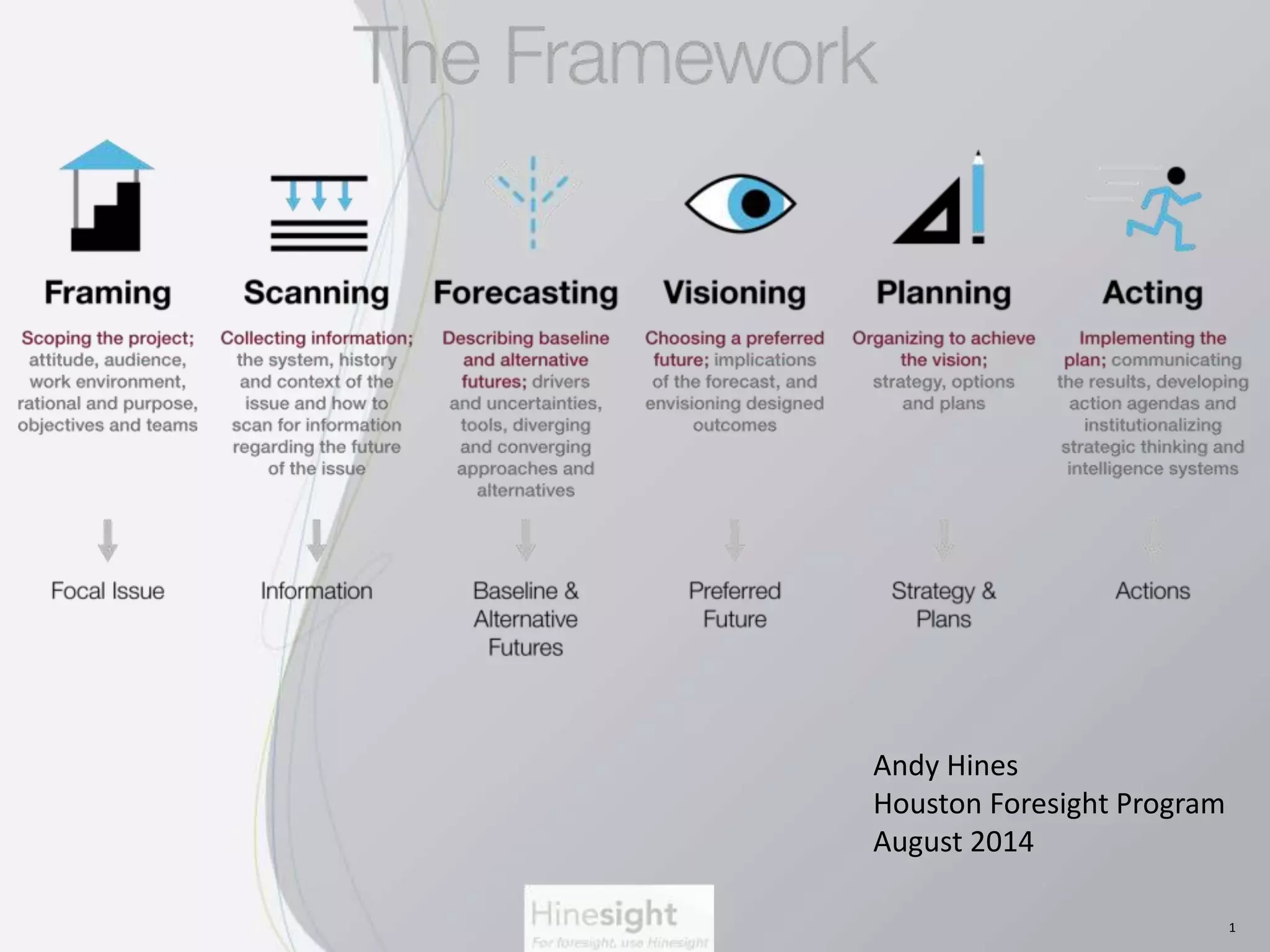
Andy Hines 
Houston Foresight Program 
August 2014
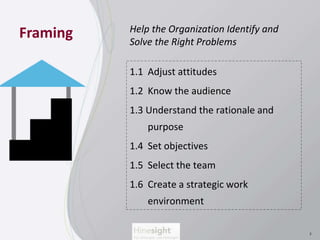
Framing 
2 
Help the Organization Identify and 
Solve the Right Problems 
1.1 Adjust attitudes 
1.2 Know the audience 
1.3 Understand the rationale and 
purpose 
1.4 Set objectives 
1.5 Select the team 
1.6 Create a strategic work 
environment
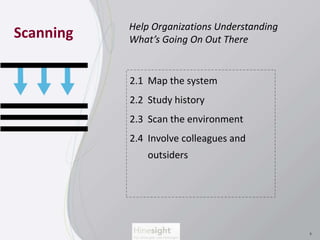
Scanning 
3 
Help Organizations Understanding 
What’s Going On Out There 
2.1 Map the system 
2.2 Study history 
2.3 Scan the environment 
2.4 Involve colleagues and 
outsiders
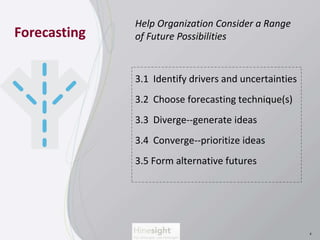
Forecasting 
4 
Help Organization Consider a Range 
of Future Possibilities 
3.1 Identify drivers and uncertainties 
3.2 Choose forecasting technique(s) 
3.3 Diverge--generate ideas 
3.4 Converge--prioritize ideas 
3.5 Form alternative futures
Visioning 
5 
Help Organizations Decide What 
They Want to Be in the Future 
4.1 Identify implications 
4.2 Challenge assumptions 
4.3 Think visionary
Planning 
6 
Help Organizations Create a Pathway to 
the Future 
5.1 Think strategically 
5.2 Develop strategic options
Acting 
7 
Help Organizations Translate Foresight 
into Action…on an Ongoing Basis 
6.1 Communicate results 
6.2 Create an action agenda 
6.3 Create an intelligence system 
6.4 Institutionalize strategic thinking
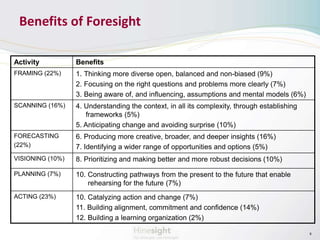
Benefits of Foresight 
8 
Activity Benefits 
FRAMING (22%) 1. Thinking more diverse open, balanced and non-biased (9%) 
2. Focusing on the right questions and problems more clearly (7%) 
3. Being aware of, and influencing, assumptions and mental models (6%) 
SCANNING (16%) 4. Understanding the context, in all its complexity, through establishing 
frameworks (5%) 
5. Anticipating change and avoiding surprise (10%) 
FORECASTING 
(22%) 
6. Producing more creative, broader, and deeper insights (16%) 
7. Identifying a wider range of opportunities and options (5%) 
VISIONING (10%) 8. Prioritizing and making better and more robust decisions (10%) 
PLANNING (7%) 10. Constructing pathways from the present to the future that enable 
rehearsing for the future (7%) 
ACTING (23%) 10. Catalyzing action and change (7%) 
11. Building alignment, commitment and confidence (14%) 
12. Building a learning organization (2%)
Contact Info 
9 
Andy Hines 
U of Houston FORESIGHT 
Asst. Professor & Program Coordinator 
ahines@uh.edu 
832 367 5575 
Principal, Hinesight 
www.andyhinesight.com

The foresight framework: Structuring a Foresight Project

  • 1.
    1 Andy Hines Houston Foresight Program August 2014
  • 2.
    Framing 2 Helpthe Organization Identify and Solve the Right Problems 1.1 Adjust attitudes 1.2 Know the audience 1.3 Understand the rationale and purpose 1.4 Set objectives 1.5 Select the team 1.6 Create a strategic work environment
  • 3.
    Scanning 3 HelpOrganizations Understanding What’s Going On Out There 2.1 Map the system 2.2 Study history 2.3 Scan the environment 2.4 Involve colleagues and outsiders
  • 4.
    Forecasting 4 HelpOrganization Consider a Range of Future Possibilities 3.1 Identify drivers and uncertainties 3.2 Choose forecasting technique(s) 3.3 Diverge--generate ideas 3.4 Converge--prioritize ideas 3.5 Form alternative futures
  • 5.
    Visioning 5 HelpOrganizations Decide What They Want to Be in the Future 4.1 Identify implications 4.2 Challenge assumptions 4.3 Think visionary
  • 6.
    Planning 6 HelpOrganizations Create a Pathway to the Future 5.1 Think strategically 5.2 Develop strategic options
  • 7.
    Acting 7 HelpOrganizations Translate Foresight into Action…on an Ongoing Basis 6.1 Communicate results 6.2 Create an action agenda 6.3 Create an intelligence system 6.4 Institutionalize strategic thinking
  • 8.
    Benefits of Foresight 8 Activity Benefits FRAMING (22%) 1. Thinking more diverse open, balanced and non-biased (9%) 2. Focusing on the right questions and problems more clearly (7%) 3. Being aware of, and influencing, assumptions and mental models (6%) SCANNING (16%) 4. Understanding the context, in all its complexity, through establishing frameworks (5%) 5. Anticipating change and avoiding surprise (10%) FORECASTING (22%) 6. Producing more creative, broader, and deeper insights (16%) 7. Identifying a wider range of opportunities and options (5%) VISIONING (10%) 8. Prioritizing and making better and more robust decisions (10%) PLANNING (7%) 10. Constructing pathways from the present to the future that enable rehearsing for the future (7%) ACTING (23%) 10. Catalyzing action and change (7%) 11. Building alignment, commitment and confidence (14%) 12. Building a learning organization (2%)
  • 9.
    Contact Info 9 Andy Hines U of Houston FORESIGHT Asst. Professor & Program Coordinator ahines@uh.edu 832 367 5575 Principal, Hinesight www.andyhinesight.com