ACTIVE COMPETITIVE
INTELLIGENCE
Tips and tools for staying on top of the competition
Agenda
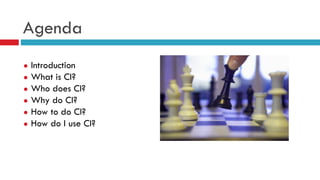
• Introduction
• What is CI?
• Who does CI?
• Why do CI?
• How to do CI?
• How do I use CI?
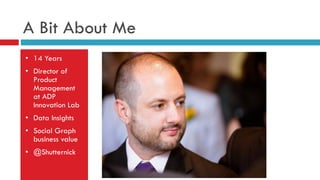
A Bit About Me
• 14 Years
• Director of
Product
Management
at ADP
Innovation Lab
• Data Insights
• Social Graph
business value
• @Shutternick
A Bit About You
What is it?
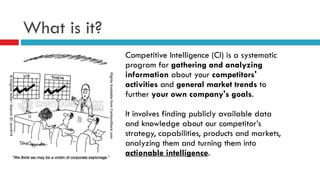
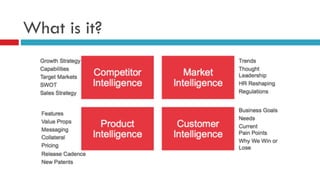
Competitive Intelligence (CI) is a systematic
program for gathering and analyzing
information about your competitors'
activities and general market trends to
further your own company's goals.
!
It involves finding publicly available data
and knowledge about our competitor’s
strategy, capabilities, products and markets,
analyzing them and turning them into
actionable intelligence.
Who does it?
¤ Depends on size of your company
¤ Corporate CI
¤ Product Marketing
¤ Product Management
¤ The R in the RACI is the Product
Owner
Why do it?
To determine how your product's features compare
to competing products. You do this in order to
select and prioritize features to add to the product
so it will sell better against the competition.
To include major functional areas that the market
(competitors, thought leaders, customers) is defining
as appealing extensions to the current product set.
When the competition makes a move, your
company is ready to counter them effectively.
Being SME about your product(s), product space,
value proposition, unique strengths and
differentiators. To be an ambassador / evangelist for
your product and help the field sell it!
What is it?
How to do it? - Ethics
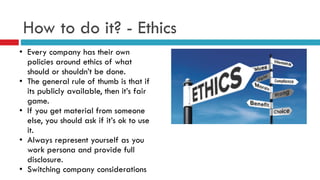
• Every company has their own
policies around ethics of what
should or shouldn’t be done.
• The general rule of thumb is that if
its publicly available, then it’s fair
game.
• If you get material from someone
else, you should ask if it’s ok to use
it.
• Always represent yourself as you
work persona and provide full
disclosure.
• Switching company considerations
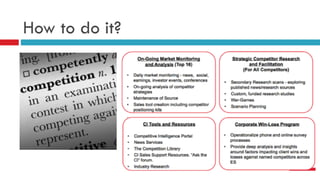
How to do it?
How to do it?
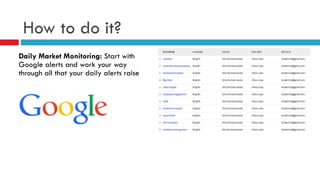
Daily Market Monitoring: Start with
Google alerts and work your way
through all that your daily alerts raise
How to do it?
Google Searches: You can find plenty
of interesting things on the web about
your competitors with a few practices.
How to do it?
Job Data Sites: You can find plenty of
interesting things on job information
and career sites.
How to do it?
Aggregate News Feeds: Tools that
aggregates syndicated web content
such as online newspapers, blogs,
podcasts, and video blogs (vlogs) in
one location for easy viewing.
How to do it?
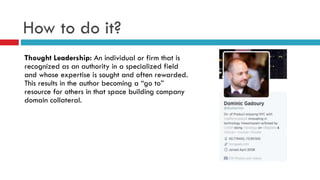
Thought Leadership: An individual or firm that is
recognized as an authority in a specialized field
and whose expertise is sought and often rewarded.
This results in the author becoming a “go to”
resource for others in that space building company
domain collateral.
How to do it?
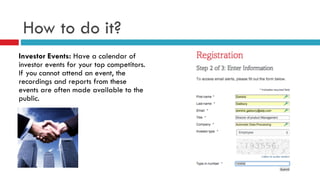
Investor Events: Have a calendar of
investor events for your top competitors.
If you cannot attend an event, the
recordings and reports from these
events are often made available to the
public.
How to do it?
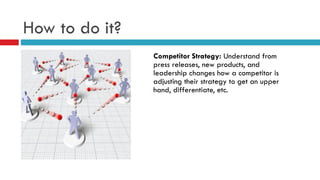
Competitor Strategy: Understand from
press releases, new products, and
leadership changes how a competitor is
adjusting their strategy to get an upper
hand, differentiate, etc.
How to do it?
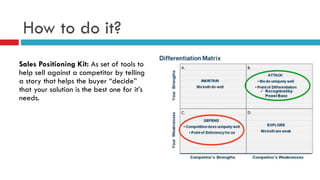
Sales Positioning Kit: As set of tools to
help sell against a competitor by telling
a story that helps the buyer “decide”
that your solution is the best one for it’s
needs.
How to do it?
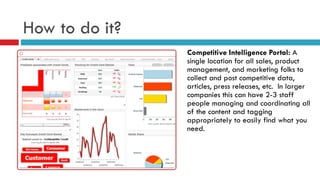
Competitive Intelligence Portal: A
single location for all sales, product
management, and marketing folks to
collect and post competitive data,
articles, press releases, etc. In larger
companies this can have 2-3 staff
people managing and coordinating all
of the content and tagging
appropriately to easily find what you
need.
How to do it?
Industry Research: Research conducted
by industry sector professionals who
deliver research and points of view on
emerging trends and regulatory
changes, develop performance
benchmarks, and share methodologies
that address key business issues. They
often compare and reference
competing solutions in that industry.
How to do it?
Social Media: With so much being
shared via social media, this is a very
large source of competitive data.
Customer complaints, employee shared
information is not uncommon, especially
when looking at the right times (i.e. User
Conferences)
How to do it?
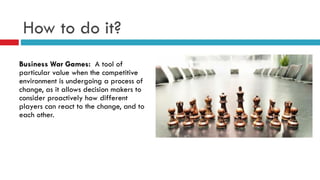
Business War Games: A tool of
particular value when the competitive
environment is undergoing a process of
change, as it allows decision makers to
consider proactively how different
players can react to the change, and to
each other.
How to do it?
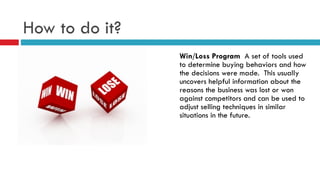
Win/Loss Program A set of tools used
to determine buying behaviors and how
the decisions were made. This usually
uncovers helpful information about the
reasons the business was lost or won
against competitors and can be used to
adjust selling techniques in similar
situations in the future.
How to do it?
Share what you found: While it may
be tempting to keep the information
you uncovered to yourself and use it
like a surprise weapon, sharing with
others in your company brings the
greatest value to the effort you put into
finding it in the first place.
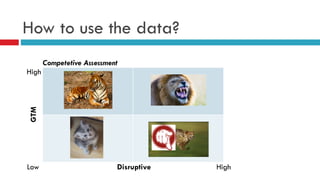
How to use the data?
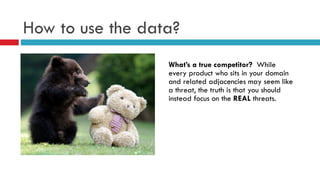
What’s a true competitor? While
every product who sits in your domain
and related adjacencies may seem like
a threat, the truth is that you should
instead focus on the REAL threats.
How to use the data?
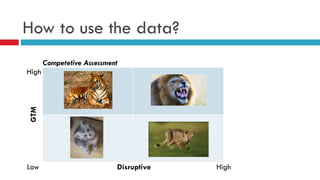
Competetive Assessment
GTM
Low
High
HighDisruptive
How to use the data?
Competetive Assessment
GTM
Low
High
HighDisruptive
Other Resources Tips for CI

Active Competitive Intelligence

  • 1.
    ACTIVE COMPETITIVE INTELLIGENCE Tips andtools for staying on top of the competition
  • 2.
    Agenda • Introduction • Whatis CI? • Who does CI? • Why do CI? • How to do CI? • How do I use CI?
  • 3.
    A Bit AboutMe • 14 Years • Director of Product Management at ADP Innovation Lab • Data Insights • Social Graph business value • @Shutternick
  • 4.
  • 5.
    What is it? CompetitiveIntelligence (CI) is a systematic program for gathering and analyzing information about your competitors' activities and general market trends to further your own company's goals. ! It involves finding publicly available data and knowledge about our competitor’s strategy, capabilities, products and markets, analyzing them and turning them into actionable intelligence.
  • 6.
    Who does it? ¤Depends on size of your company ¤ Corporate CI ¤ Product Marketing ¤ Product Management ¤ The R in the RACI is the Product Owner
  • 7.
    Why do it? Todetermine how your product's features compare to competing products. You do this in order to select and prioritize features to add to the product so it will sell better against the competition. To include major functional areas that the market (competitors, thought leaders, customers) is defining as appealing extensions to the current product set. When the competition makes a move, your company is ready to counter them effectively. Being SME about your product(s), product space, value proposition, unique strengths and differentiators. To be an ambassador / evangelist for your product and help the field sell it!
  • 8.
  • 9.
    How to doit? - Ethics • Every company has their own policies around ethics of what should or shouldn’t be done. • The general rule of thumb is that if its publicly available, then it’s fair game. • If you get material from someone else, you should ask if it’s ok to use it. • Always represent yourself as you work persona and provide full disclosure. • Switching company considerations
  • 10.
  • 11.
    How to doit? Daily Market Monitoring: Start with Google alerts and work your way through all that your daily alerts raise
  • 12.
    How to doit? Google Searches: You can find plenty of interesting things on the web about your competitors with a few practices.
  • 13.
    How to doit? Job Data Sites: You can find plenty of interesting things on job information and career sites.
  • 14.
    How to doit? Aggregate News Feeds: Tools that aggregates syndicated web content such as online newspapers, blogs, podcasts, and video blogs (vlogs) in one location for easy viewing.
  • 15.
    How to doit? Thought Leadership: An individual or firm that is recognized as an authority in a specialized field and whose expertise is sought and often rewarded. This results in the author becoming a “go to” resource for others in that space building company domain collateral.
  • 16.
    How to doit? Investor Events: Have a calendar of investor events for your top competitors. If you cannot attend an event, the recordings and reports from these events are often made available to the public.
  • 17.
    How to doit? Competitor Strategy: Understand from press releases, new products, and leadership changes how a competitor is adjusting their strategy to get an upper hand, differentiate, etc.
  • 18.
    How to doit? Sales Positioning Kit: As set of tools to help sell against a competitor by telling a story that helps the buyer “decide” that your solution is the best one for it’s needs.
  • 19.
    How to doit? Competitive Intelligence Portal: A single location for all sales, product management, and marketing folks to collect and post competitive data, articles, press releases, etc. In larger companies this can have 2-3 staff people managing and coordinating all of the content and tagging appropriately to easily find what you need.
  • 20.
    How to doit? Industry Research: Research conducted by industry sector professionals who deliver research and points of view on emerging trends and regulatory changes, develop performance benchmarks, and share methodologies that address key business issues. They often compare and reference competing solutions in that industry.
  • 21.
    How to doit? Social Media: With so much being shared via social media, this is a very large source of competitive data. Customer complaints, employee shared information is not uncommon, especially when looking at the right times (i.e. User Conferences)
  • 22.
    How to doit? Business War Games: A tool of particular value when the competitive environment is undergoing a process of change, as it allows decision makers to consider proactively how different players can react to the change, and to each other.
  • 23.
    How to doit? Win/Loss Program A set of tools used to determine buying behaviors and how the decisions were made. This usually uncovers helpful information about the reasons the business was lost or won against competitors and can be used to adjust selling techniques in similar situations in the future.
  • 24.
    How to doit? Share what you found: While it may be tempting to keep the information you uncovered to yourself and use it like a surprise weapon, sharing with others in your company brings the greatest value to the effort you put into finding it in the first place.
  • 25.
    How to usethe data? What’s a true competitor? While every product who sits in your domain and related adjacencies may seem like a threat, the truth is that you should instead focus on the REAL threats.
  • 26.
    How to usethe data? Competetive Assessment GTM Low High HighDisruptive
  • 27.
    How to usethe data? Competetive Assessment GTM Low High HighDisruptive
  • 28.