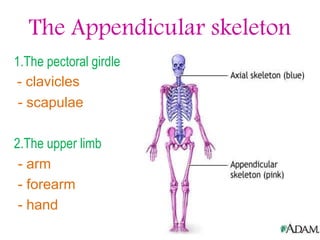
The Appendicular skeleton
1.The pectoral girdle
- clavicles
- scapulae
2.The upper limb
- arm
- forearm
- hand
The Appendicular skeleton
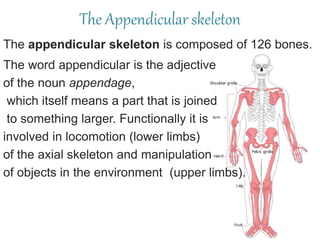
The appendicular skeleton is composed of 126 bones.
The word appendicular is the adjective
of the noun appendage,
which itself means a part that is joined
to something larger. Functionally it is
involved in locomotion (lower limbs)
of the axial skeleton and manipulation
of objects in the environment (upper limbs).
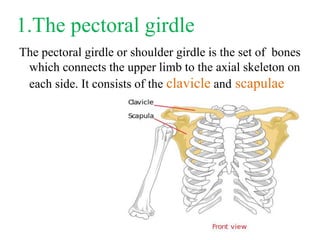
1.The pectoral girdle
The pectoral girdle or shoulder girdle is the set of bones
which connects the upper limb to the axial skeleton on
each side. It consists of the clavicle and scapulae
clavicles
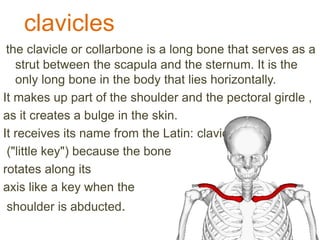
the clavicle or collarbone is a long bone that serves as a
strut between the scapula and the sternum. It is the
only long bone in the body that lies horizontally.
It makes up part of the shoulder and the pectoral girdle ,
as it creates a bulge in the skin.
It receives its name from the Latin: clavicula
("little key") because the bone
rotates along its
axis like a key when the
shoulder is abducted.
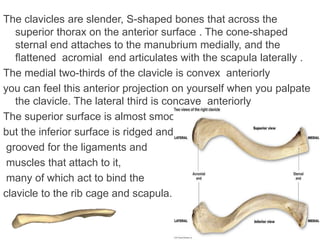
The clavicles are slender, S-shaped bones that across the
superior thorax on the anterior surface . The cone-shaped
sternal end attaches to the manubrium medially, and the
flattened acromial end articulates with the scapula laterally .
The medial two-thirds of the clavicle is convex anteriorly
you can feel this anterior projection on yourself when you palpate
the clavicle. The lateral third is concave anteriorly
The superior surface is almost smooth,
but the inferior surface is ridged and
grooved for the ligaments and
muscles that attach to it,
many of which act to bind the
clavicle to the rib cage and scapula.
scapulae
the scapula from Greek meaning "to dig" or
shoulder blade, the bone that connects the
humerus with the clavicle.
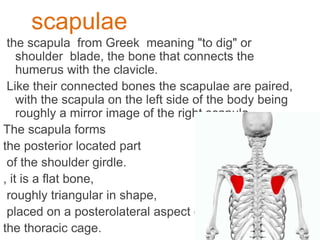
Like their connected bones the scapulae are paired,
with the scapula on the left side of the body being
roughly a mirror image of the right scapula.
The scapula forms
the posterior located part
of the shoulder girdle.
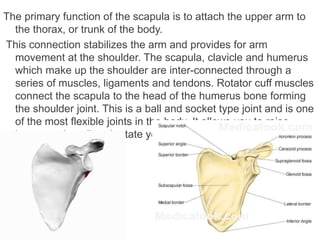
, it is a flat bone,
roughly triangular in shape,
placed on a posterolateral aspect of
the thoracic cage.
The primary function of the scapula is to attach the upper arm to
the thorax, or trunk of the body.
This connection stabilizes the arm and provides for arm
movement at the shoulder. The scapula, clavicle and humerus
which make up the shoulder are inter-connected through a
series of muscles, ligaments and tendons. Rotator cuff muscles
connect the scapula to the head of the humerus bone forming
the shoulder joint. This is a ball and socket type joint and is one
of the most flexible joints in the body. It allows you to raise,
lower, push, pull and rotate your arm.
2.The upper limb
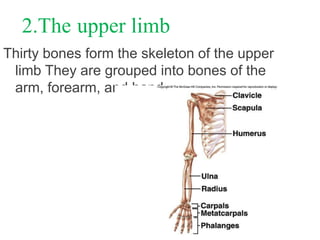
Thirty bones form the skeleton of the upper
limb They are grouped into bones of the
arm, forearm, and hand.
arm
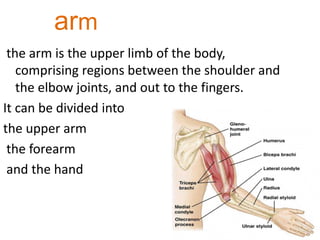
the arm is the upper limb of the body,
comprising regions between the shoulder and
the elbow joints, and out to the fingers.
It can be divided into
the upper arm
the forearm
and the hand
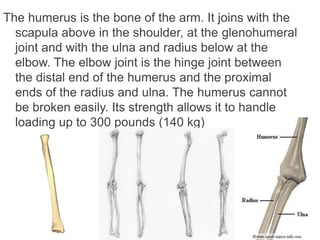
The humerus is the bone of the arm. It joins with the
scapula above in the shoulder, at the glenohumeral
joint and with the ulna and radius below at the
elbow. The elbow joint is the hinge joint between
the distal end of the humerus and the proximal
ends of the radius and ulna. The humerus cannot
be broken easily. Its strength allows it to handle
loading up to 300 pounds (140 kg)
forearm
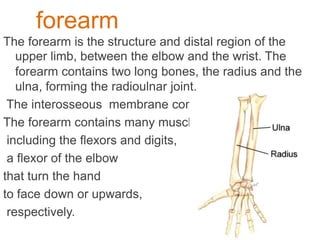
The forearm is the structure and distal region of the
upper limb, between the elbow and the wrist. The
forearm contains two long bones, the radius and the
ulna, forming the radioulnar joint.
The interosseous membrane connects these bones.
The forearm contains many muscles,
including the flexors and digits,
a flexor of the elbow
that turn the hand
to face down or upwards,
respectively.
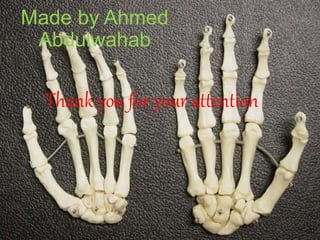
hand
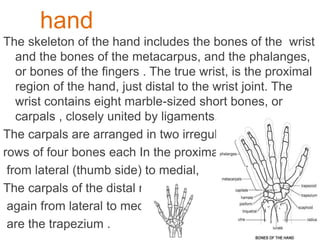
The skeleton of the hand includes the bones of the wrist
and the bones of the metacarpus, and the phalanges,
or bones of the fingers . The true wrist, is the proximal
region of the hand, just distal to the wrist joint. The
wrist contains eight marble-sized short bones, or
carpals , closely united by ligaments.
The carpals are arranged in two irregular
rows of four bones each In the proximal row,
from lateral (thumb side) to medial,
The carpals of the distal row,
again from lateral to medial,
are the trapezium .
Thank you for your attention
Made by Ahmed
Abdulwahab

The appendicular skeleton

  • 1.
    The Appendicular skeleton 1.Thepectoral girdle - clavicles - scapulae 2.The upper limb - arm - forearm - hand
  • 2.
    The Appendicular skeleton Theappendicular skeleton is composed of 126 bones. The word appendicular is the adjective of the noun appendage, which itself means a part that is joined to something larger. Functionally it is involved in locomotion (lower limbs) of the axial skeleton and manipulation of objects in the environment (upper limbs).
  • 3.
    1.The pectoral girdle Thepectoral girdle or shoulder girdle is the set of bones which connects the upper limb to the axial skeleton on each side. It consists of the clavicle and scapulae
  • 4.
    clavicles the clavicle orcollarbone is a long bone that serves as a strut between the scapula and the sternum. It is the only long bone in the body that lies horizontally. It makes up part of the shoulder and the pectoral girdle , as it creates a bulge in the skin. It receives its name from the Latin: clavicula ("little key") because the bone rotates along its axis like a key when the shoulder is abducted.
  • 5.
    The clavicles areslender, S-shaped bones that across the superior thorax on the anterior surface . The cone-shaped sternal end attaches to the manubrium medially, and the flattened acromial end articulates with the scapula laterally . The medial two-thirds of the clavicle is convex anteriorly you can feel this anterior projection on yourself when you palpate the clavicle. The lateral third is concave anteriorly The superior surface is almost smooth, but the inferior surface is ridged and grooved for the ligaments and muscles that attach to it, many of which act to bind the clavicle to the rib cage and scapula.
  • 6.
    scapulae the scapula fromGreek meaning "to dig" or shoulder blade, the bone that connects the humerus with the clavicle. Like their connected bones the scapulae are paired, with the scapula on the left side of the body being roughly a mirror image of the right scapula. The scapula forms the posterior located part of the shoulder girdle. , it is a flat bone, roughly triangular in shape, placed on a posterolateral aspect of the thoracic cage.
  • 7.
    The primary functionof the scapula is to attach the upper arm to the thorax, or trunk of the body. This connection stabilizes the arm and provides for arm movement at the shoulder. The scapula, clavicle and humerus which make up the shoulder are inter-connected through a series of muscles, ligaments and tendons. Rotator cuff muscles connect the scapula to the head of the humerus bone forming the shoulder joint. This is a ball and socket type joint and is one of the most flexible joints in the body. It allows you to raise, lower, push, pull and rotate your arm.
  • 8.
    2.The upper limb Thirtybones form the skeleton of the upper limb They are grouped into bones of the arm, forearm, and hand.
  • 9.
    arm the arm isthe upper limb of the body, comprising regions between the shoulder and the elbow joints, and out to the fingers. It can be divided into the upper arm the forearm and the hand
  • 10.
    The humerus isthe bone of the arm. It joins with the scapula above in the shoulder, at the glenohumeral joint and with the ulna and radius below at the elbow. The elbow joint is the hinge joint between the distal end of the humerus and the proximal ends of the radius and ulna. The humerus cannot be broken easily. Its strength allows it to handle loading up to 300 pounds (140 kg)
  • 11.
    forearm The forearm isthe structure and distal region of the upper limb, between the elbow and the wrist. The forearm contains two long bones, the radius and the ulna, forming the radioulnar joint. The interosseous membrane connects these bones. The forearm contains many muscles, including the flexors and digits, a flexor of the elbow that turn the hand to face down or upwards, respectively.
  • 12.
    hand The skeleton ofthe hand includes the bones of the wrist and the bones of the metacarpus, and the phalanges, or bones of the fingers . The true wrist, is the proximal region of the hand, just distal to the wrist joint. The wrist contains eight marble-sized short bones, or carpals , closely united by ligaments. The carpals are arranged in two irregular rows of four bones each In the proximal row, from lateral (thumb side) to medial, The carpals of the distal row, again from lateral to medial, are the trapezium .
  • 13.
    Thank you foryour attention Made by Ahmed Abdulwahab