Diagnosis
Children up to the age of 16 years requires the presence of at least 6 symptoms of
inattention or 6 symptoms of hyperactivity-impulsivity for at least 6 months in two or
more environments.
Children 17 years of age and older must exhibit at least 5 symptoms of inattention or at
least 5 symptoms of hyperactivity-impulsivity.
Inattention Hyperactivity Impulsivity
1. Failing to pay close attention to details
2. Appearing to not listen when spoken to directly
3. Failing to follow through on instructions
4. Having difficulty sustaining attention during tasks
5. Avoiding activities that require sustained mental effort
6. Frequently losing things required for tasks and
activities becoming easily distracted
7. Experiencing frequent forgetfulness in daily activities
Inattention
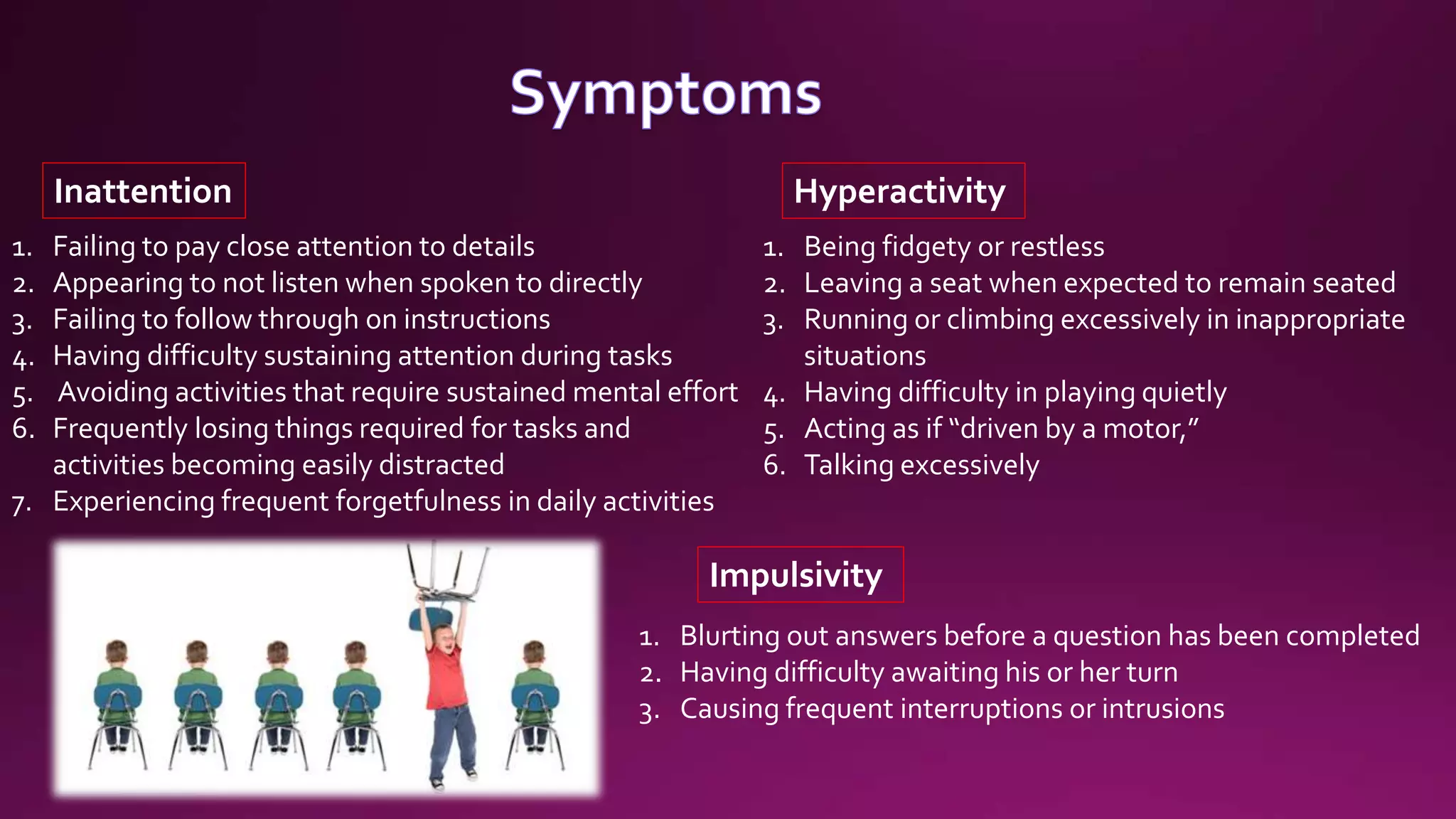
1. Being fidgety or restless
2. Leaving a seat when expected to remain seated
3. Running or climbing excessively in inappropriate
situations
4. Having difficulty in playing quietly
5. Acting as if “driven by a motor,”
6. Talking excessively
Hyperactivity
1. Blurting out answers before a question has been completed
2. Having difficulty awaiting his or her turn
3. Causing frequent interruptions or intrusions
Impulsivity
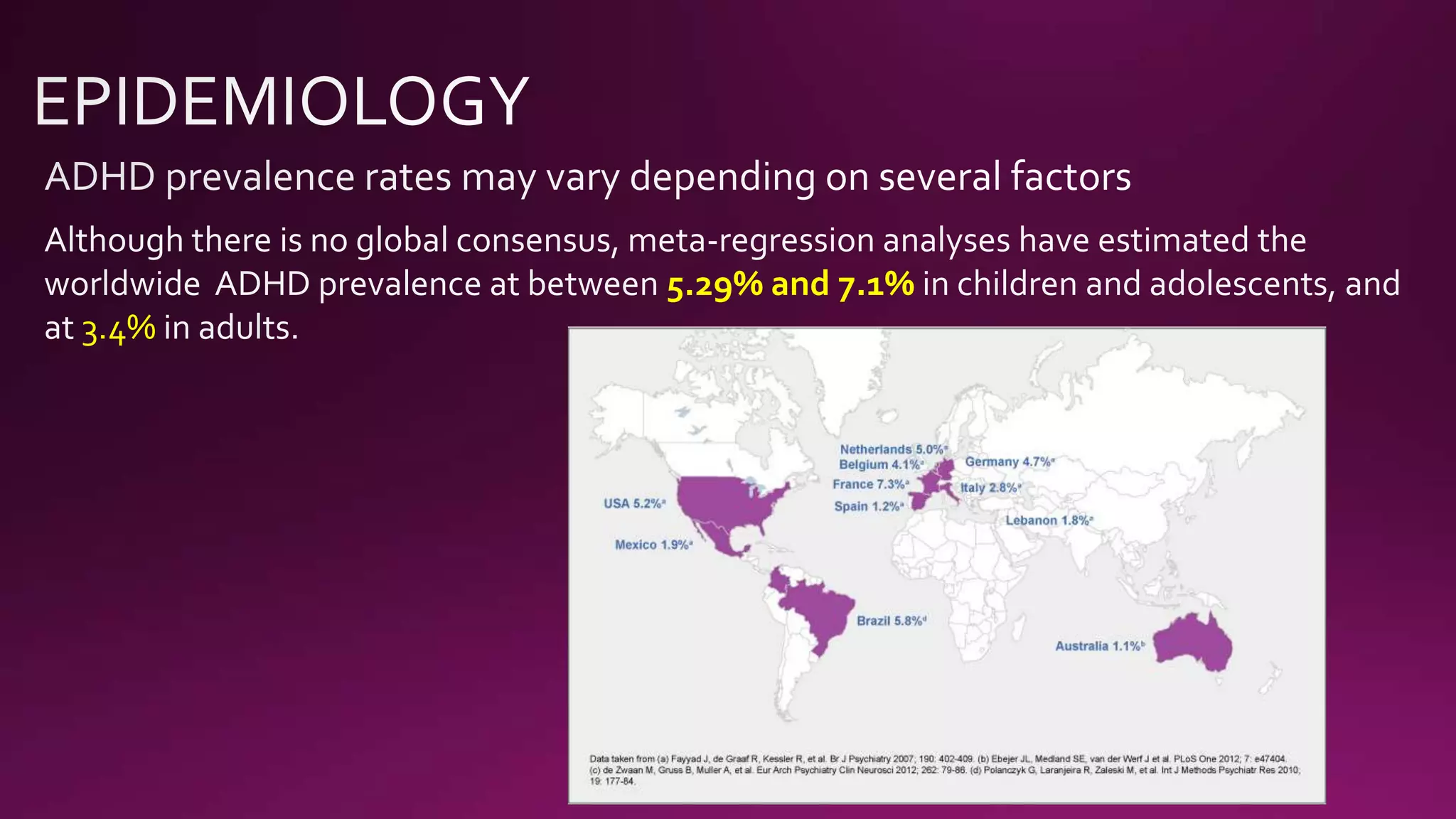
Although there is no global consensus, meta-regression analyses have estimated the
worldwide ADHD prevalence at between 5.29% and 7.1% in children and adolescents, and
at 3.4% in adults.
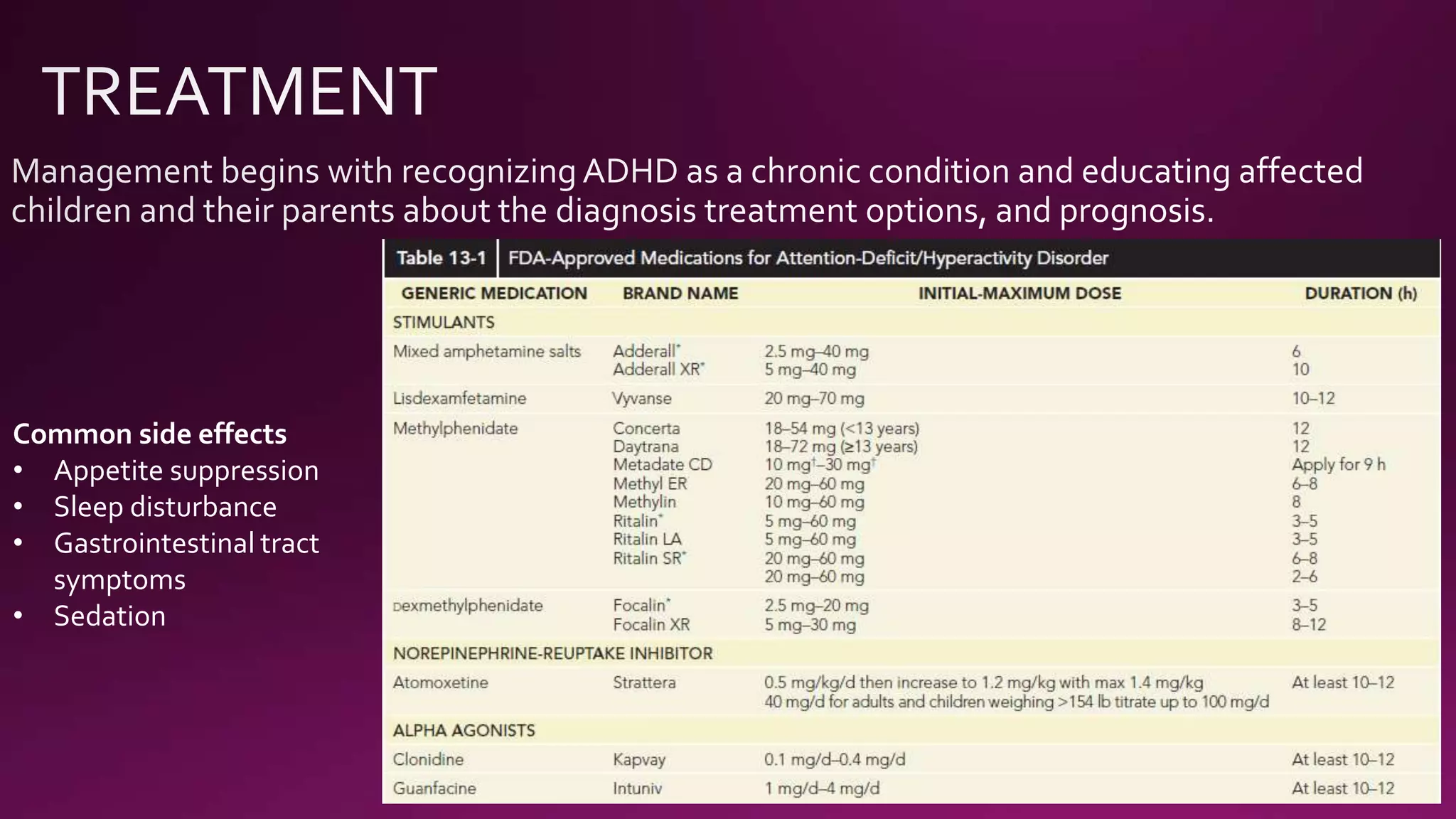
Common side effects
• Appetite suppression
• Sleep disturbance
• Gastrointestinal tract
symptoms
• Sedation
ADHD ATTENTION-DEFICIT/ HYPERACTIVITY DISORDER

ADHD ATTENTION-DEFICIT/ HYPERACTIVITY DISORDER

  • 2.
    Diagnosis Children up tothe age of 16 years requires the presence of at least 6 symptoms of inattention or 6 symptoms of hyperactivity-impulsivity for at least 6 months in two or more environments. Children 17 years of age and older must exhibit at least 5 symptoms of inattention or at least 5 symptoms of hyperactivity-impulsivity. Inattention Hyperactivity Impulsivity
  • 3.
    1. Failing topay close attention to details 2. Appearing to not listen when spoken to directly 3. Failing to follow through on instructions 4. Having difficulty sustaining attention during tasks 5. Avoiding activities that require sustained mental effort 6. Frequently losing things required for tasks and activities becoming easily distracted 7. Experiencing frequent forgetfulness in daily activities Inattention 1. Being fidgety or restless 2. Leaving a seat when expected to remain seated 3. Running or climbing excessively in inappropriate situations 4. Having difficulty in playing quietly 5. Acting as if “driven by a motor,” 6. Talking excessively Hyperactivity 1. Blurting out answers before a question has been completed 2. Having difficulty awaiting his or her turn 3. Causing frequent interruptions or intrusions Impulsivity
  • 5.
    Although there isno global consensus, meta-regression analyses have estimated the worldwide ADHD prevalence at between 5.29% and 7.1% in children and adolescents, and at 3.4% in adults.
  • 7.
    Common side effects •Appetite suppression • Sleep disturbance • Gastrointestinal tract symptoms • Sedation