Let’s get to know each
other?
Krishantha Jayasundara
Staff Officer-Human
Resources at Alpha
Apparels Ltd
BA General Degree
University of Peradeniya
(English, Psychology &
Sociology)
PQHRM(IPM)
NDTHRD(IPM)
2
4
What are the teams you are familiar with?
5
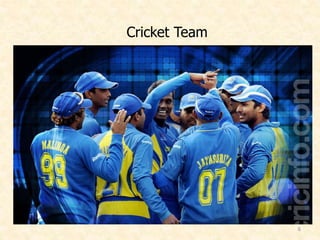
Cricket Team
6
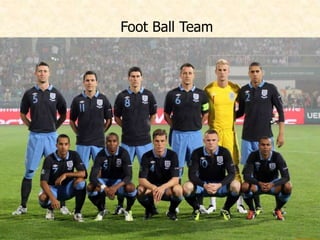
Foot Ball Team
7
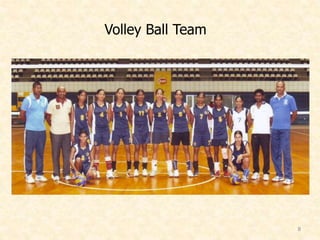
Volley Ball Team
8
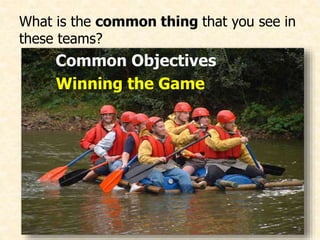
What is the common thing that you see in
these teams?
Common Objectives
Winning the Game
9
What is a Team???
• A team is a small number of people with
complementary skills who are
committed to a common goal for which
they are mutually accountable.
10
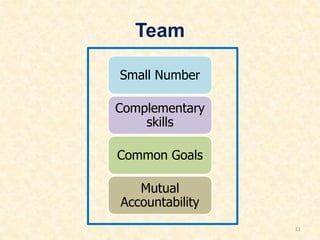
Team
Small Number
Complementary
skills
Common Goals
Mutual
Accountability
11
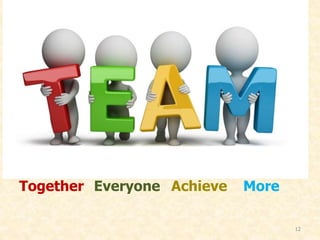
Together MoreEveryone Achieve
12
Activity
• Participants start counting.
• The odd numbers are read out loud.
• Even numbers are silent and the
person who is supposed to read even
number has to raise his hand.
13
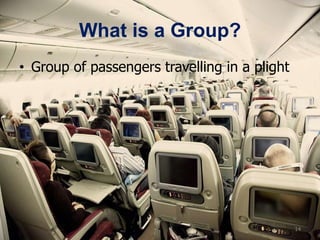
What is a Group?
• Group of passengers travelling in a plight
14
•Travelling
What is
common in
them?
•They are just
passengers
Are they for a
common
objective?
15
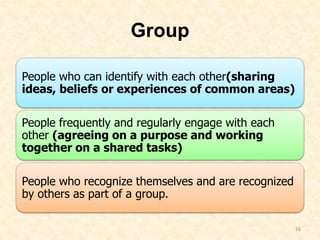
Group
People who can identify with each other(sharing
ideas, beliefs or experiences of common areas)
People frequently and regularly engage with each
other (agreeing on a purpose and working
together on a shared tasks)
People who recognize themselves and are recognized
by others as part of a group.
16
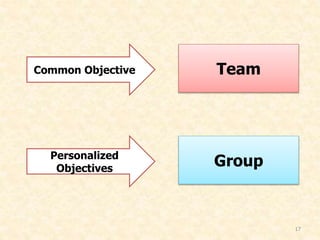
Common Objective Team
GroupPersonalized
Objectives
17
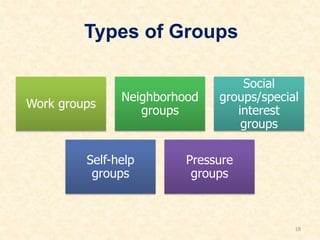
Types of Groups
Work groups
Neighborhood
groups
Social
groups/special
interest
groups
Self-help
groups
Pressure
groups
18
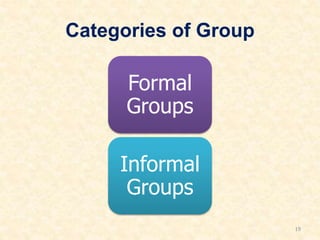
Categories of Group
Formal
Groups
Informal
Groups
19
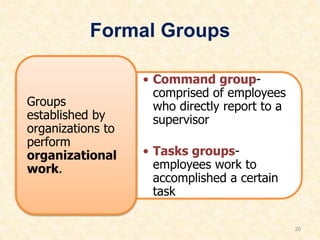
Formal Groups
• Command group-
comprised of employees
who directly report to a
supervisor
• Tasks groups-
employees work to
accomplished a certain
task
Groups
established by
organizations to
perform
organizational
work.
20
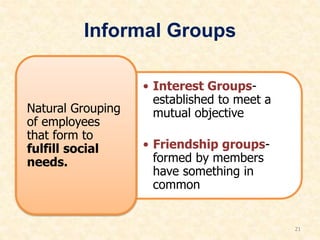
Informal Groups
• Interest Groups-
established to meet a
mutual objective
• Friendship groups-
formed by members
have something in
common
Natural Grouping
of employees
that form to
fulfill social
needs.
21
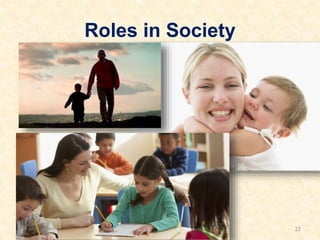
Roles in Society
22
What do you mean by “Role”?
23
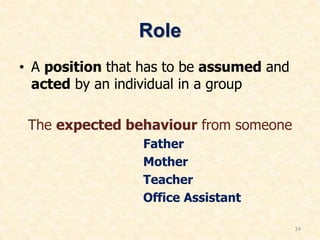
Role
• A position that has to be assumed and
acted by an individual in a group
The expected behaviour from someone
Father
Mother
Teacher
Office Assistant
24
Characteristics of Teams
25
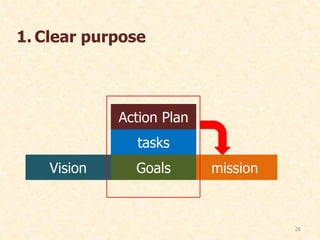
1. Clear purpose
Action Plan
missionGoals
tasks
Vision
26
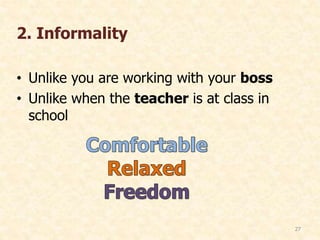
2. Informality
• Unlike you are working with your boss
• Unlike when the teacher is at class in
school
27
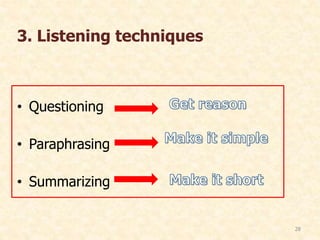
3. Listening techniques
• Questioning
• Paraphrasing
• Summarizing
28
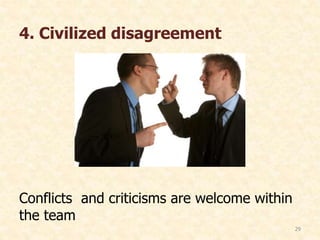
4. Civilized disagreement
Conflicts and criticisms are welcome within
the team
29
5. Consensus decision making
30
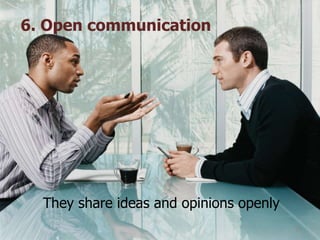
6. Open communication
They share ideas and opinions openly
31
7. Clear roles and work assignment
What?
Why?
When?
For whom?
32
8. Shared Leadership
• Not a single leader
• Members share leadership
• All are leaders
33
9. External Relations
• Team tries to makes relations with
external parties
34
10. Style Diversity
• Leadership
• Approaches to tasks
• Skills diversity
35
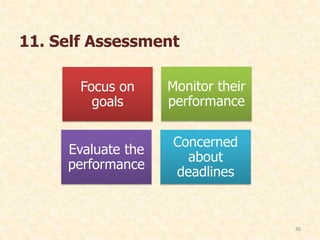
11. Self Assessment
Focus on
goals
Monitor their
performance
Evaluate the
performance
Concerned
about
deadlines
36
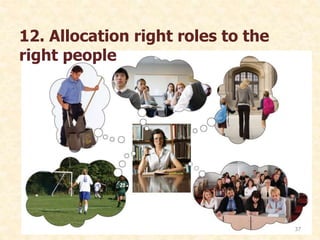
12. Allocation right roles to the
right people
37
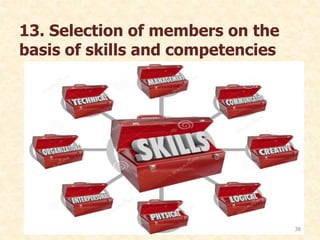
13. Selection of members on the
basis of skills and competencies
38
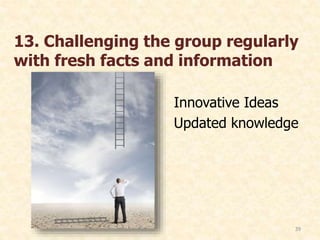
13. Challenging the group regularly
with fresh facts and information
Innovative Ideas
Updated knowledge
39
14. Individual responsibility and
accountability
• Each employee is aware of what is
expected from them
• Achievement of individual tasks leads to
the achievement of teams tasks
40
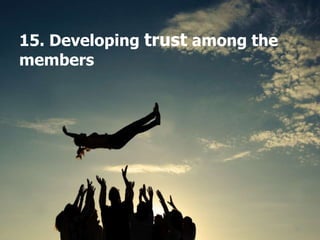
15. Developing trust among the
members
41
Benefits of Teams
42
1. Achievement of a goal in more
efficient and more effective manner as
team members are committed to one
single goal
• More efficient-little time
• More effective-high productive/lack of wastes
• Committed- highly focused
43
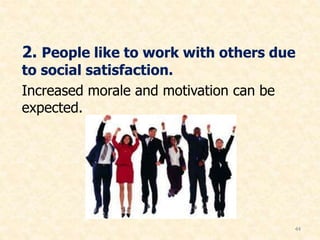
2. People like to work with others due
to social satisfaction.
Increased morale and motivation can be
expected.
44
3. High level of productivity through
specialized work processes and labour
distribution
45
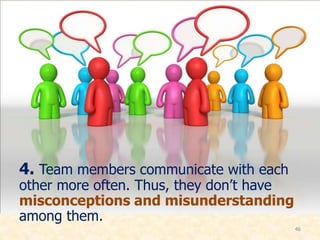
4. Team members communicate with each
other more often. Thus, they don’t have
misconceptions and misunderstanding
among them.
46
5.Social learning takes place.
People learn from each other and from their
mistakes as well.
47
6. Organizational flexibility
members are open-mined and willing to go
through changes
48
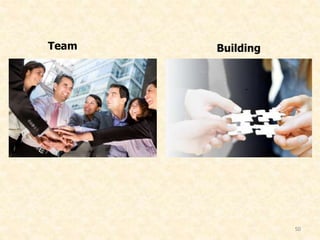
Team Building
49
Team Building
50
Team Building
• Team building is a process of deliberately
creating and effective team
51
Formation and Development of
Groups
52
53
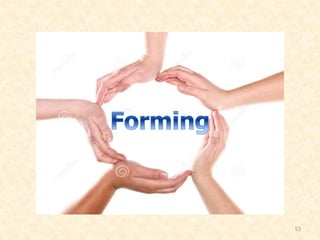
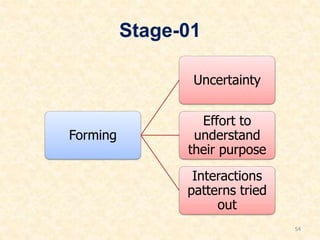
Stage-01
Forming
Uncertainty
Effort to
understand
their purpose
Interactions
patterns tried
out
54
55
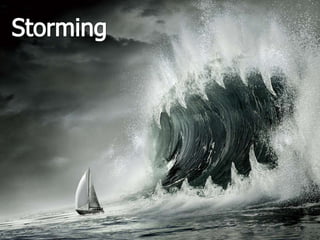
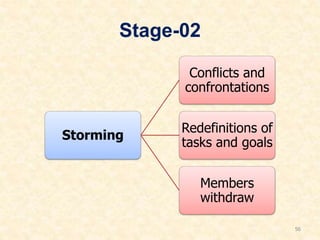
Stage-02
Storming
Conflicts and
confrontations
Redefinitions of
tasks and goals
Members
withdraw
56
57
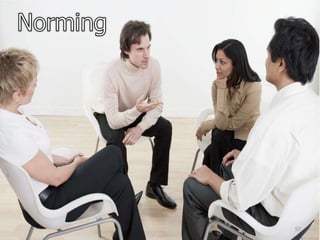
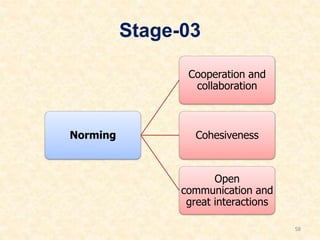
Stage-03
Norming
Cooperation and
collaboration
Cohesiveness
Open
communication and
great interactions
58
59
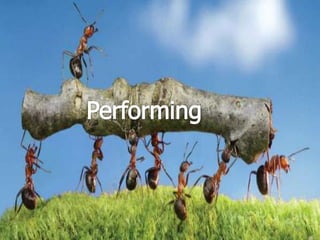
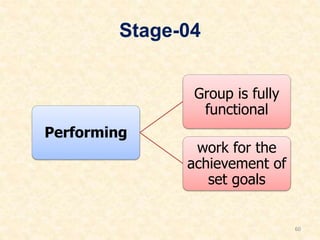
Stage-04
Performing
Group is fully
functional
work for the
achievement of
set goals
60
61
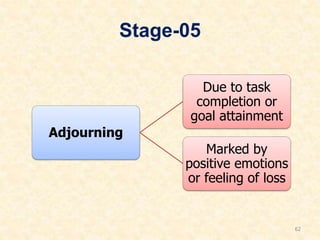
Stage-05
Adjourning
Due to task
completion or
goal attainment
Marked by
positive emotions
or feeling of loss
62
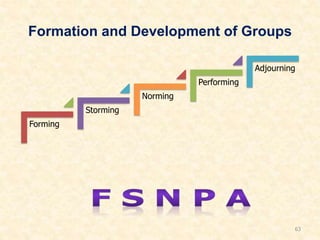
Formation and Development of Groups
Forming
Storming
Norming
Performing
Adjourning
63
Team Roles
• Meredith Belbin (1981) has identified key
roles within a team
64
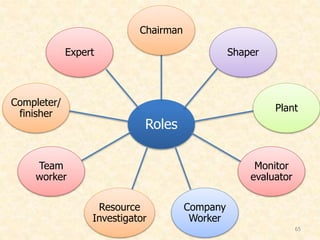
Roles
Chairman
Shaper
Plant
Monitor
evaluator
Company
Worker
Resource
Investigator
Team
worker
Completer/
finisher
Expert
65
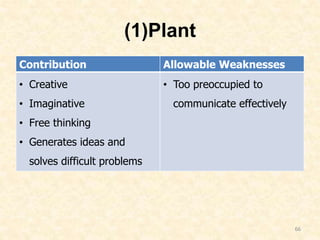
(1)Plant
Contribution Allowable Weaknesses
• Creative
• Imaginative
• Free thinking
• Generates ideas and
solves difficult problems
• Too preoccupied to
communicate effectively
66
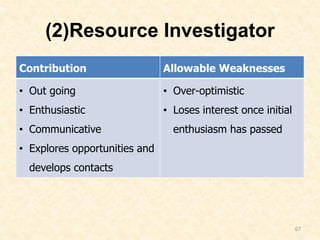
(2)Resource Investigator
Contribution Allowable Weaknesses
• Out going
• Enthusiastic
• Communicative
• Explores opportunities and
develops contacts
• Over-optimistic
• Loses interest once initial
enthusiasm has passed
67
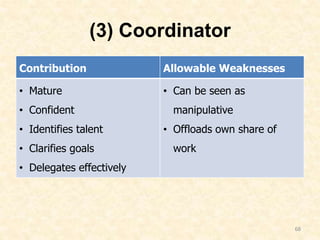
(3) Coordinator
Contribution Allowable Weaknesses
• Mature
• Confident
• Identifies talent
• Clarifies goals
• Delegates effectively
• Can be seen as
manipulative
• Offloads own share of
work
68
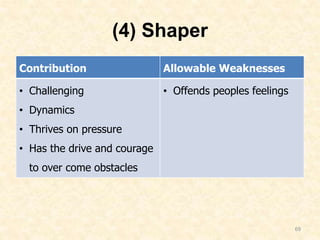
(4) Shaper
Contribution Allowable Weaknesses
• Challenging
• Dynamics
• Thrives on pressure
• Has the drive and courage
to over come obstacles
• Offends peoples feelings
69
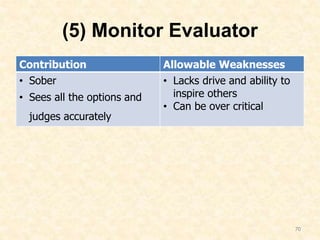
(5) Monitor Evaluator
Contribution Allowable Weaknesses
• Sober
• Sees all the options and
judges accurately
• Lacks drive and ability to
inspire others
• Can be over critical
70
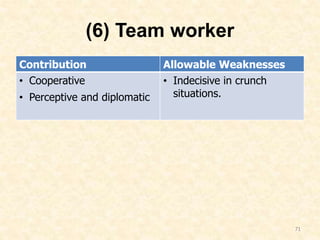
(6) Team worker
Contribution Allowable Weaknesses
• Cooperative
• Perceptive and diplomatic
• Indecisive in crunch
situations.
71
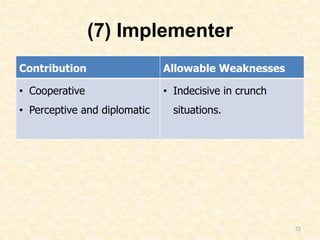
(7) Implementer
Contribution Allowable Weaknesses
• Cooperative
• Perceptive and diplomatic
• Indecisive in crunch
situations.
72
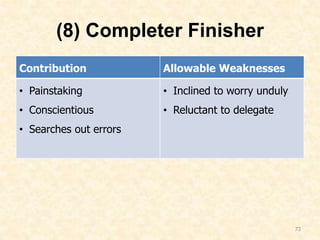
(8) Completer Finisher
Contribution Allowable Weaknesses
• Painstaking
• Conscientious
• Searches out errors
• Inclined to worry unduly
• Reluctant to delegate
73
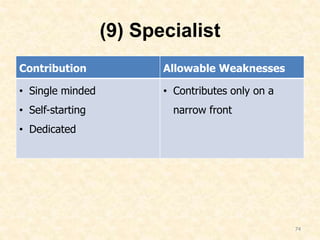
(9) Specialist
Contribution Allowable Weaknesses
• Single minded
• Self-starting
• Dedicated
• Contributes only on a
narrow front
74
75
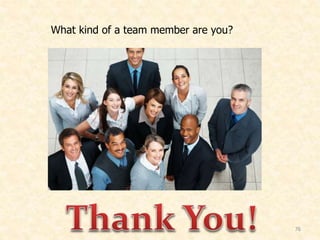
What kind of a team member are you?
76

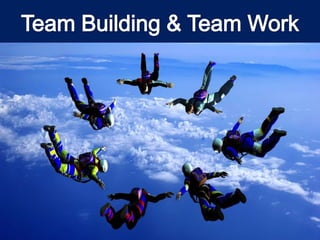
Team building and team work