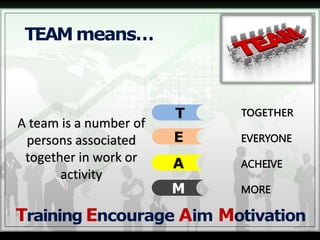
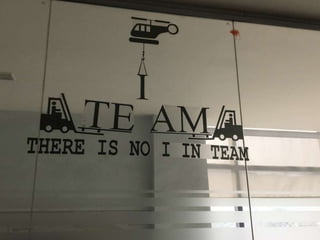
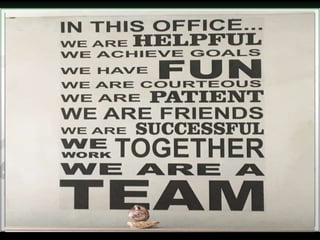
TOGETHER
EVERYONE
ACHEIVE
MORE
A team is a number of
persons associated
together in work or
activity
T
E
A
M
Training Encourage Aim Motivation
TEAM means…
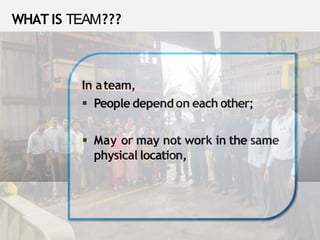
In ateam,
 People dependon each other;
 May or may not work in the same
physical location,
WHAT IS TEAM???
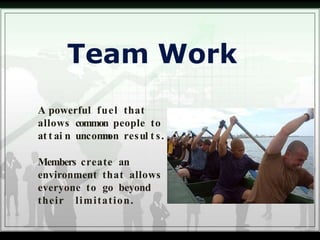
Team Work
A powerful fuel that
allows common people to
at t ai n uncommon resul t s.
Members create an
environment that allows
everyone to go beyond
their limitation.
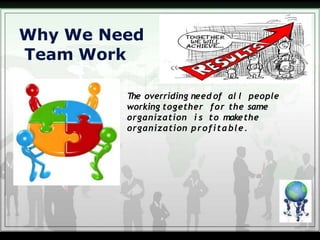
The overriding need of al l people
working together for the same
organization i s to makethe
organization profitable.
Why We Need
Team Work
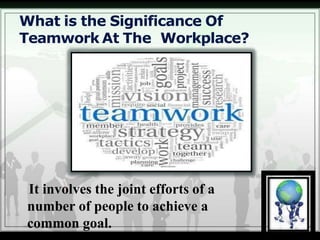
What is the Significance Of
Teamwork At The Workplace?
It involves the joint efforts of a
number of people to achieve a
common goal.
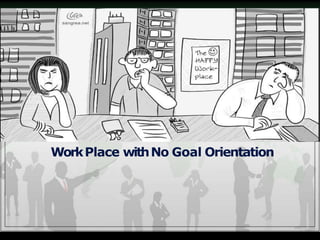
WorkPlace withNo Goal Orientation
Effective Teamwork Characteristics:
• Clear direction
• Open and honest communication
• Support risk taking and change
• Defined roles
• Mutually accountable
• Common goals
• Encourage differences in opinions
• Team trust
1. Social Loafing
2. Behavior Conflicts or Ingrained Individualism
3. Individual Tasks
Drawbacks of TeamWork
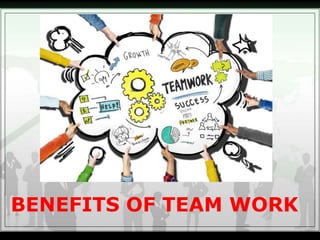
BENEFITS OF TEAM WORK
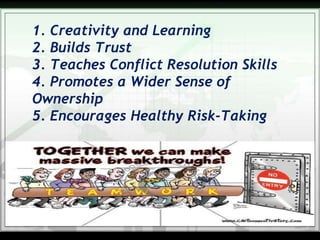
1. Creativity and Learning
2. Builds Trust
3. Teaches Conflict Resolution Skills
4. Promotes a Wider Sense of
Ownership
5. Encourages Healthy Risk-Taking
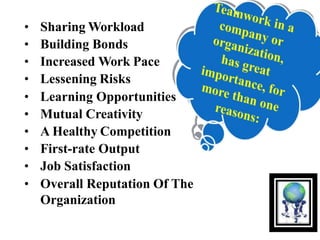
• Sharing Workload
• Building Bonds
• Increased Work Pace
• Lessening Risks
• Learning Opportunities
• Mutual Creativity
• A Healthy Competition
• First-rate Output
• Job Satisfaction
• Overall Reputation Of The
Organization
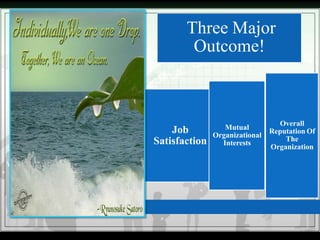
Three Major
Outcome!
Job
Satisfaction
Mutual
Organizational
Interests
Overall
Reputation Of
The
Organization
working with
The process of
a
team to clarify its
task and how team
members can work
together to achieve
it.
A strategy that can
help groups to
develop into a real
team is “team
building”
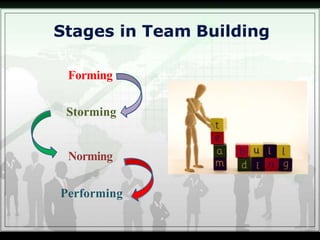
Stages in Team Building
Forming
Storming
Norming
Performing
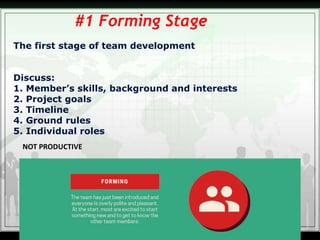
The first stage of team development
Discuss:
1. Member’s skills, background and interests
2. Project goals
3. Timeline
4. Ground rules
5. Individual roles
#1 Forming Stage
NOT PRODUCTIVE
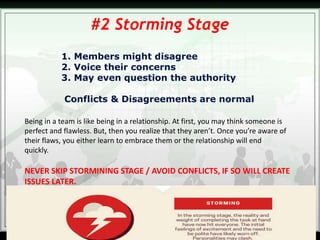
1. Members might disagree
2. Voice their concerns
3. May even question the authority
Conflicts & Disagreements are normal
#2 Storming Stage
Being in a team is like being in a relationship. At first, you may think someone is
perfect and flawless. But, then you realize that they aren’t. Once you’re aware of
their flaws, you either learn to embrace them or the relationship will end
quickly.
NEVER SKIP STORMINING STAGE / AVOID CONFLICTS, IF SO WILL CREATE
ISSUES LATER.
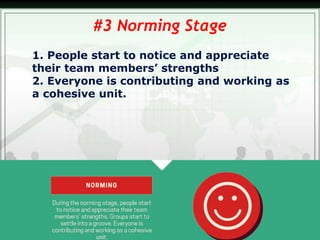
1. People start to notice and appreciate
their team members’ strengths
2. Everyone is contributing and working as
a cohesive unit.
#3 Norming Stage
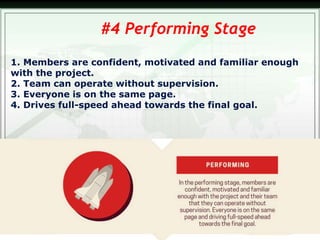
1. Members are confident, motivated and familiar enough
with the project.
2. Team can operate without supervision.
3. Everyone is on the same page.
4. Drives full-speed ahead towards the final goal.
#4 Performing Stage
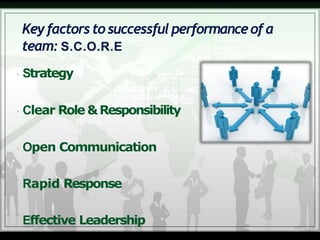
• Strategy
• Clear Role &Responsibility
• Open Communication
• Rapid Response
• Effective Leadership
Keyfactorstosuccessfulperformanceofa
team: S.C.O.R.E
Strategy
 Clearly articulatedvalues and ground rules
 Understanding of risks and opportunities facing the
team
 Clear categorization of the overall responsibilities of
the team
 To measure individualresults
Clear Roles&Responsibility
Clear definition of roles and responsibilities
Responsibility shared by all members
Specific objectives
among team
Respect for individualdifferences
Open communication environment
members
Rapid Response
Rapid response to the team’sproblems
Open Communication
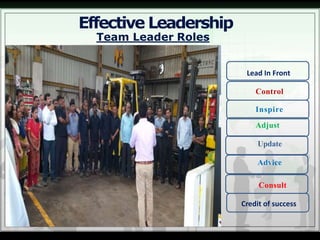
Team Leader Roles
Control
Inspire
Adjust
Update
Advice
Consult
Credit of success
Lead In Front
Effective Leadership
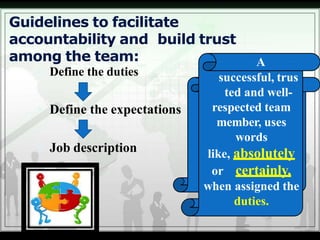
Guidelines to facilitate
accountability and build trust
among the team:
• Define the duties.
• Define the expectations
• Job description
A
successful, trus
ted and well-
respected team
member, uses
words
like, absolutely
or certainly,
when assigned the
duties.
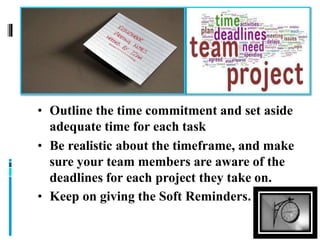
• Outline the time commitment and set aside
adequate time for each task
• Be realistic about the timeframe, and make
sure your team members are aware of the
deadlines for each project they take on.
• Keep on giving the Soft Reminders.
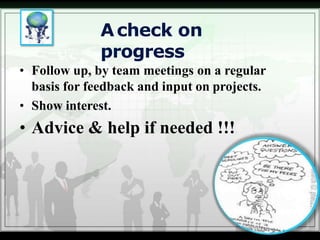
Acheck on
progress
• Follow up, by team meetings on a regular
basis for feedback and input on projects.
• Show interest.
• Advice & help if needed !!!
Prepare for taking
ownership!
•Encourage your team members to stand up
and lead.
•Delegate important responsibilities
according to hierarchy.
•Avoid showing favoritism toward specific
team members.
•Open the lines of communication by having
an open-door policy.
•Give them awareness of common goals.
•Resolve minor issues.
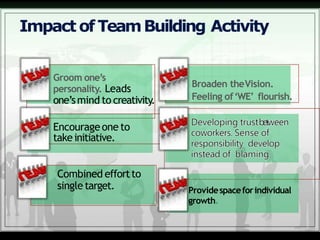
Impact of TeamBuilding Activity
Groom one’s
personality. Leads
one’smind to creativity.
Broaden theVision.
Feeling of‘WE’ flourish.
Encourageone to
takeinitiative.
Combined effortto
single target. Providespaceforindividual
growth.
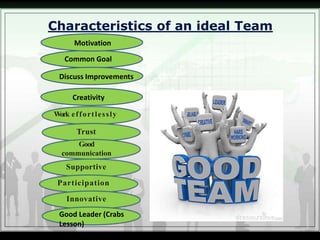
Characteristics of an ideal Team
Work effortlessly
Trust
Good
communication
Supportive
Participation
Innovative
Common Goal
Creativity
Discuss Improvements
Good Leader (Crabs
Lesson)
Motivation
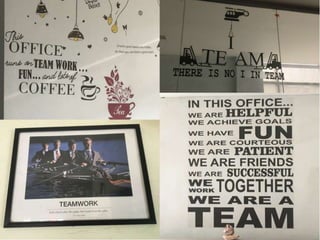
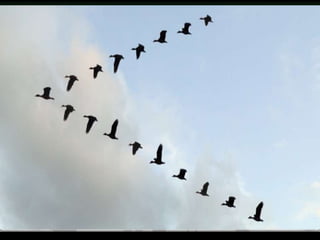
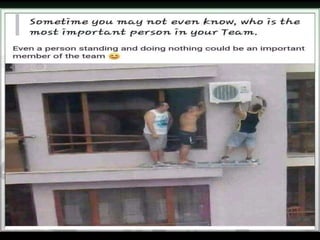
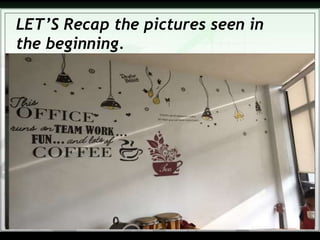
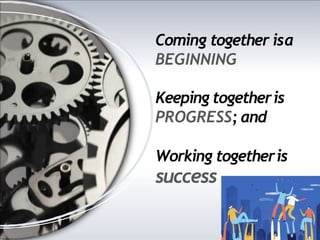
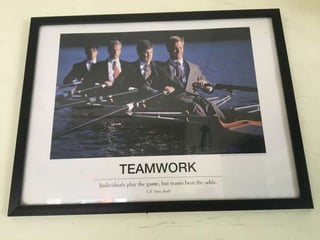
LET’S Recap the pictures seen in
the beginning.
Coming together isa
BEGINNING
Keeping togetheris
PROGRESS; and
Working togetheris
success
Presented by
Johnson James &
Yasmeen Khan

Team Work & Team Building

  • 3.
    TOGETHER EVERYONE ACHEIVE MORE A team isa number of persons associated together in work or activity T E A M Training Encourage Aim Motivation TEAM means…
  • 4.
    In ateam,  Peopledependon each other;  May or may not work in the same physical location, WHAT IS TEAM???
  • 5.
    Team Work A powerfulfuel that allows common people to at t ai n uncommon resul t s. Members create an environment that allows everyone to go beyond their limitation.
  • 6.
    The overriding needof al l people working together for the same organization i s to makethe organization profitable. Why We Need Team Work
  • 7.
    What is theSignificance Of Teamwork At The Workplace? It involves the joint efforts of a number of people to achieve a common goal.
  • 8.
  • 9.
    Effective Teamwork Characteristics: •Clear direction • Open and honest communication • Support risk taking and change • Defined roles • Mutually accountable • Common goals • Encourage differences in opinions • Team trust
  • 10.
    1. Social Loafing 2.Behavior Conflicts or Ingrained Individualism 3. Individual Tasks Drawbacks of TeamWork
  • 11.
  • 12.
    1. Creativity andLearning 2. Builds Trust 3. Teaches Conflict Resolution Skills 4. Promotes a Wider Sense of Ownership 5. Encourages Healthy Risk-Taking
  • 13.
    • Sharing Workload •Building Bonds • Increased Work Pace • Lessening Risks • Learning Opportunities • Mutual Creativity • A Healthy Competition • First-rate Output • Job Satisfaction • Overall Reputation Of The Organization
  • 14.
  • 16.
    working with The processof a team to clarify its task and how team members can work together to achieve it. A strategy that can help groups to develop into a real team is “team building”
  • 17.
    Stages in TeamBuilding Forming Storming Norming Performing
  • 18.
    The first stageof team development Discuss: 1. Member’s skills, background and interests 2. Project goals 3. Timeline 4. Ground rules 5. Individual roles #1 Forming Stage NOT PRODUCTIVE
  • 19.
    1. Members mightdisagree 2. Voice their concerns 3. May even question the authority Conflicts & Disagreements are normal #2 Storming Stage Being in a team is like being in a relationship. At first, you may think someone is perfect and flawless. But, then you realize that they aren’t. Once you’re aware of their flaws, you either learn to embrace them or the relationship will end quickly. NEVER SKIP STORMINING STAGE / AVOID CONFLICTS, IF SO WILL CREATE ISSUES LATER.
  • 20.
    1. People startto notice and appreciate their team members’ strengths 2. Everyone is contributing and working as a cohesive unit. #3 Norming Stage
  • 21.
    1. Members areconfident, motivated and familiar enough with the project. 2. Team can operate without supervision. 3. Everyone is on the same page. 4. Drives full-speed ahead towards the final goal. #4 Performing Stage
  • 22.
    • Strategy • ClearRole &Responsibility • Open Communication • Rapid Response • Effective Leadership Keyfactorstosuccessfulperformanceofa team: S.C.O.R.E
  • 23.
    Strategy  Clearly articulatedvaluesand ground rules  Understanding of risks and opportunities facing the team  Clear categorization of the overall responsibilities of the team  To measure individualresults
  • 24.
    Clear Roles&Responsibility Clear definitionof roles and responsibilities Responsibility shared by all members Specific objectives
  • 25.
    among team Respect forindividualdifferences Open communication environment members Rapid Response Rapid response to the team’sproblems Open Communication
  • 26.
    Team Leader Roles Control Inspire Adjust Update Advice Consult Creditof success Lead In Front Effective Leadership
  • 27.
    Guidelines to facilitate accountabilityand build trust among the team: • Define the duties. • Define the expectations • Job description A successful, trus ted and well- respected team member, uses words like, absolutely or certainly, when assigned the duties.
  • 28.
    • Outline thetime commitment and set aside adequate time for each task • Be realistic about the timeframe, and make sure your team members are aware of the deadlines for each project they take on. • Keep on giving the Soft Reminders.
  • 29.
    Acheck on progress • Followup, by team meetings on a regular basis for feedback and input on projects. • Show interest. • Advice & help if needed !!!
  • 30.
    Prepare for taking ownership! •Encourageyour team members to stand up and lead. •Delegate important responsibilities according to hierarchy. •Avoid showing favoritism toward specific team members. •Open the lines of communication by having an open-door policy. •Give them awareness of common goals. •Resolve minor issues.
  • 31.
    Impact of TeamBuildingActivity Groom one’s personality. Leads one’smind to creativity. Broaden theVision. Feeling of‘WE’ flourish. Encourageone to takeinitiative. Combined effortto single target. Providespaceforindividual growth.
  • 33.
    Characteristics of anideal Team Work effortlessly Trust Good communication Supportive Participation Innovative Common Goal Creativity Discuss Improvements Good Leader (Crabs Lesson) Motivation
  • 35.
    LET’S Recap thepictures seen in the beginning.
  • 39.
    Coming together isa BEGINNING Keepingtogetheris PROGRESS; and Working togetheris success
  • 41.