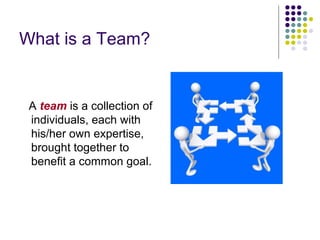
What is a Team? A  team  is a collection of individuals, each with his/her own expertise, brought together to benefit a common goal.
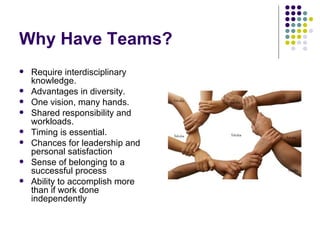
Why Have Teams? Require interdisciplinary knowledge. Advantages in diversity. One vision, many hands. Shared responsibility and workloads. Timing is essential. Chances for leadership and personal satisfaction Sense of belonging to a successful process Ability to accomplish more than if work done independently
“ Coming together is a beginning. Keeping together is progress.  Working together is success.”
Team work Teamwork is the ability to work together toward a common vision. The ability to direct individual accomplishments toward organizational objectives. It is the fuel that allows common people to attain uncommon results.
Teamwork Model Values/Behaviors: Trust among all parties Knowledge and trust remove the need for supervision Joint decision making Mutual respect for the expertise of all members of the team – this respect is communicated to the patient Communication that is not hierarchic but rather two-way facilitating sharing of information & knowledge Cooperation & coordination promote the use of the skills of all team members, prevent duplication, and enhance the productivity Optimism that this is the most effective method of delivery of quality of care
Stages of Team Development Forming:   Leader encourages equitable participation, begin focus on project. Storming:   Leader helps team to focus on strengths, not weaknesses, in working toward the task at hand  Norming:   Collective decision to behave professionally, and agree to norms   Performing:   True teamwork and cooperation, members individually committed, multiple leaders Adjourning:   Goal accomplished
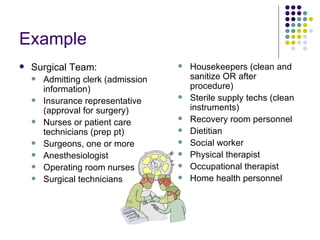
Example Surgical Team: Admitting clerk (admission information) Insurance representative (approval for surgery) Nurses or patient care technicians (prep pt) Surgeons, one or more  Anesthesiologist Operating room nurses Surgical technicians Housekeepers (clean and sanitize OR after procedure) Sterile supply techs (clean instruments) Recovery room personnel Dietitian Social worker Physical therapist Occupational therapist Home health personnel
Conclusion It's good to be individually brilliant and to have strong core competencies; but unless you're able to work in a team and harness each other's core competencies, you'll always perform below par because there will always be situations at which you'll do poorly and someone else does well.  Teamwork is mainly about situational leadership, letting the person with the relevant core competency for a situation take leadership .
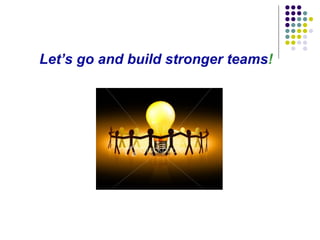
Let’s go and build stronger teams !

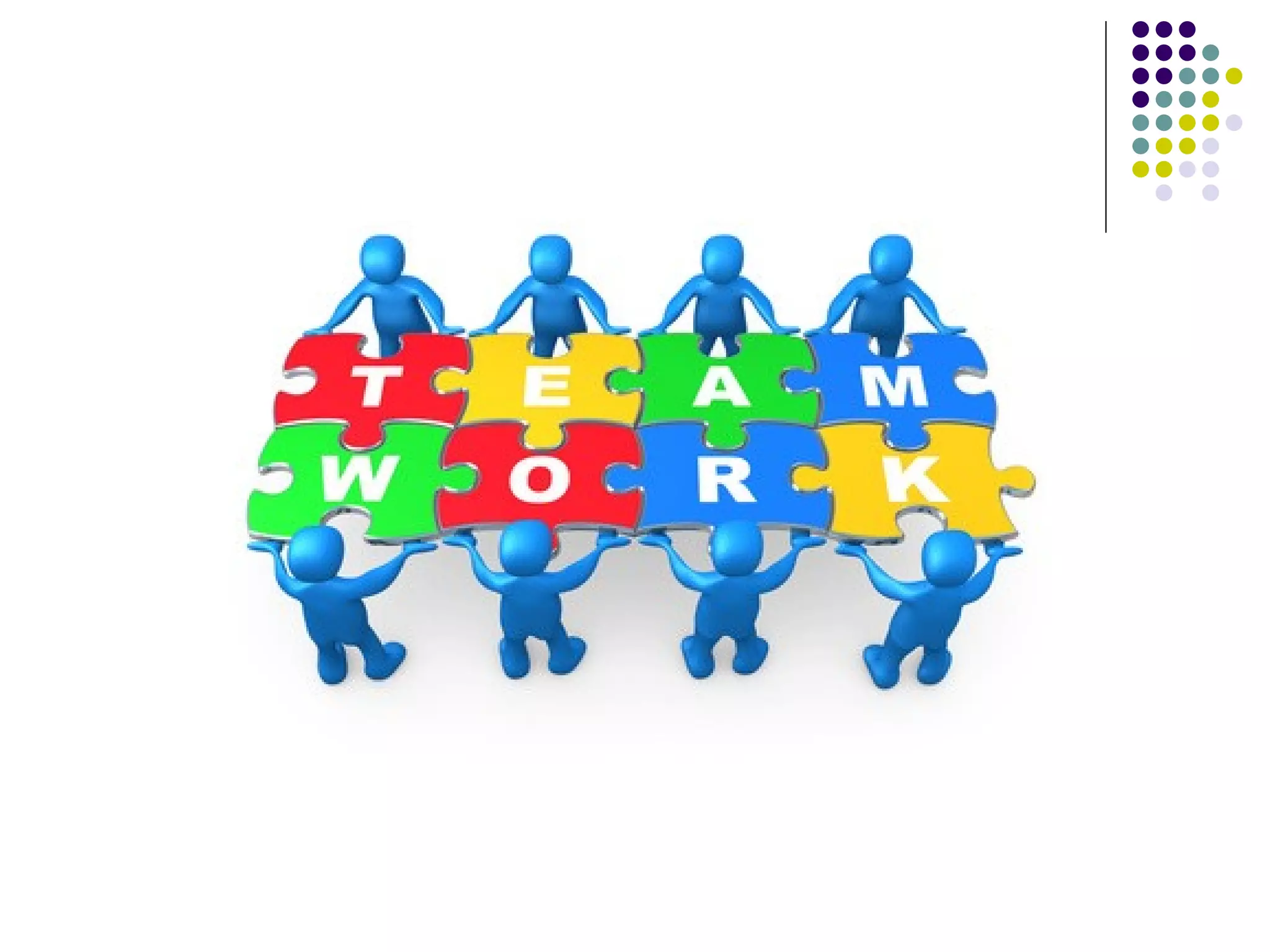
Teamwork

  • 1.
  • 2.
    What is aTeam? A team is a collection of individuals, each with his/her own expertise, brought together to benefit a common goal.
  • 3.
    Why Have Teams?Require interdisciplinary knowledge. Advantages in diversity. One vision, many hands. Shared responsibility and workloads. Timing is essential. Chances for leadership and personal satisfaction Sense of belonging to a successful process Ability to accomplish more than if work done independently
  • 4.
    “ Coming togetheris a beginning. Keeping together is progress. Working together is success.”
  • 5.
    Team work Teamworkis the ability to work together toward a common vision. The ability to direct individual accomplishments toward organizational objectives. It is the fuel that allows common people to attain uncommon results.
  • 6.
    Teamwork Model Values/Behaviors:Trust among all parties Knowledge and trust remove the need for supervision Joint decision making Mutual respect for the expertise of all members of the team – this respect is communicated to the patient Communication that is not hierarchic but rather two-way facilitating sharing of information & knowledge Cooperation & coordination promote the use of the skills of all team members, prevent duplication, and enhance the productivity Optimism that this is the most effective method of delivery of quality of care
  • 7.
    Stages of TeamDevelopment Forming: Leader encourages equitable participation, begin focus on project. Storming: Leader helps team to focus on strengths, not weaknesses, in working toward the task at hand Norming: Collective decision to behave professionally, and agree to norms Performing: True teamwork and cooperation, members individually committed, multiple leaders Adjourning: Goal accomplished
  • 8.
    Example Surgical Team:Admitting clerk (admission information) Insurance representative (approval for surgery) Nurses or patient care technicians (prep pt) Surgeons, one or more Anesthesiologist Operating room nurses Surgical technicians Housekeepers (clean and sanitize OR after procedure) Sterile supply techs (clean instruments) Recovery room personnel Dietitian Social worker Physical therapist Occupational therapist Home health personnel
  • 9.
    Conclusion It's goodto be individually brilliant and to have strong core competencies; but unless you're able to work in a team and harness each other's core competencies, you'll always perform below par because there will always be situations at which you'll do poorly and someone else does well. Teamwork is mainly about situational leadership, letting the person with the relevant core competency for a situation take leadership .
  • 10.
    Let’s go andbuild stronger teams !