It is a “planned, SYSTEMATIC method
of working to achieve planned outcomes-a
process not a product. Technology is the
applied side of the scientific development.”
(Dale, 1969)
“an organized set of doctrines, ideas, or
principles usually intended to explain the
arrangement or working of a systematic
whole”
(Merriam-Webster Dictionary)
Systematic Approach to Teaching
Lovebella C. Jao
Discussant
The systems approach views the entire
educational program as a system of closely
interrelated parts. It is an orchestrated
learning pattern with all parts harmoniously
integrated into the whole: the school, the
teacher, the students, the objectives, the
media, the materials, and assessment tools
and procedures. Such an approach
integrates the older, more familiar methods
and tools of instruction with the new ones
such as the computer.
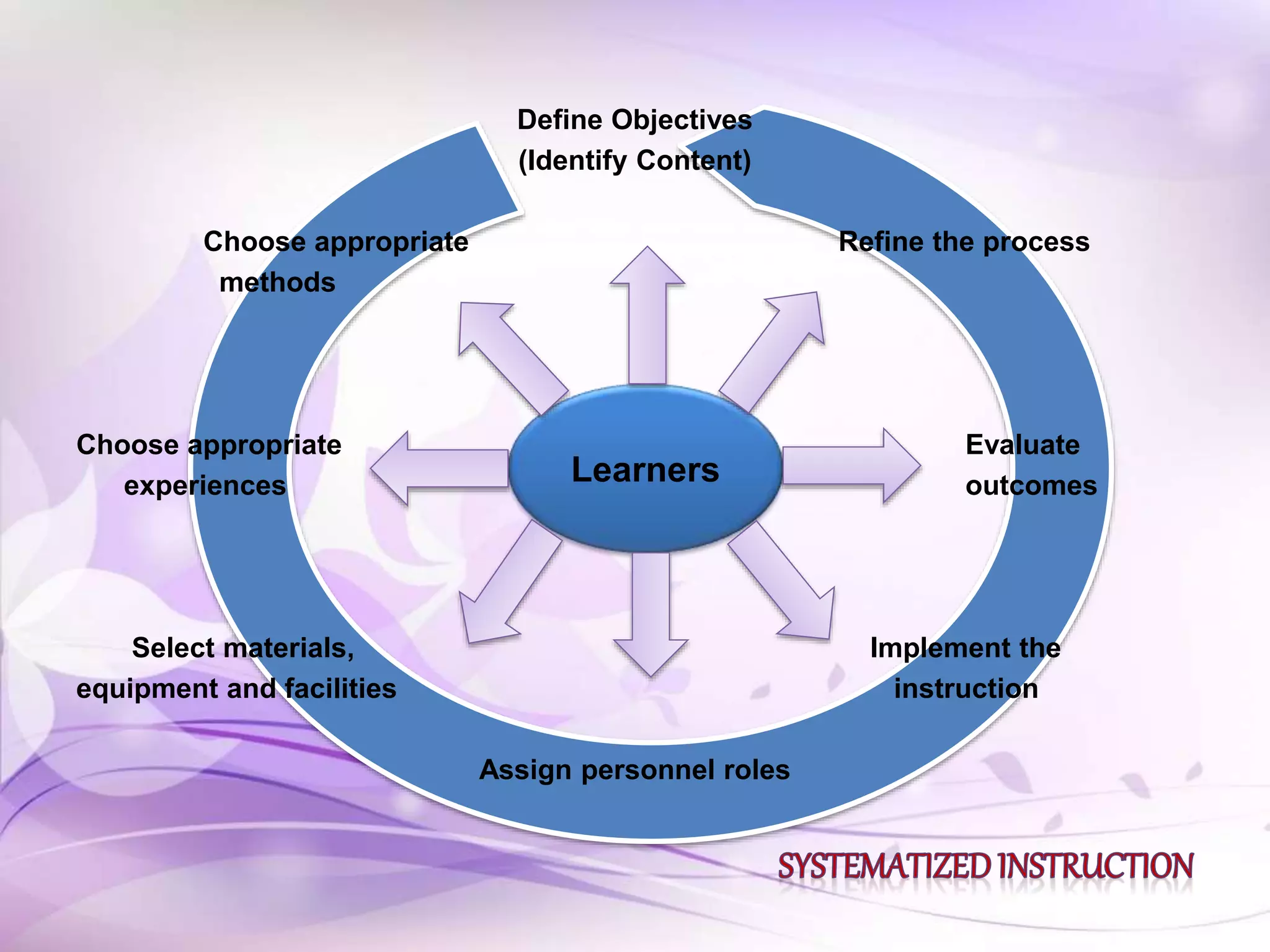
Define Objectives
(Identify Content)
Choose appropriate Refine the process
methods
Choose appropriate Evaluate
experiences outcomes
Select materials, Implement the
equipment and facilities instruction
Assign personnel roles
Learners
As depicted in the chart, the focus of the systematic
instructional planning is the LEARNER.
1. Define Objectives - Instruction begins with the definition
of instructional objectives that consider the students’
needs, interest, and readiness.
2. Choose appropriate methods
3. Choose appropriate experiences
4. Select materials, equipment, and facilities
On the basis of the objectives, the teacher selects the
appropriate teaching methods to be used and, in turn,
based on the teaching method selected, the appropriate
learning experiences and appropriate materials,
equipment and facilities will also be selected.
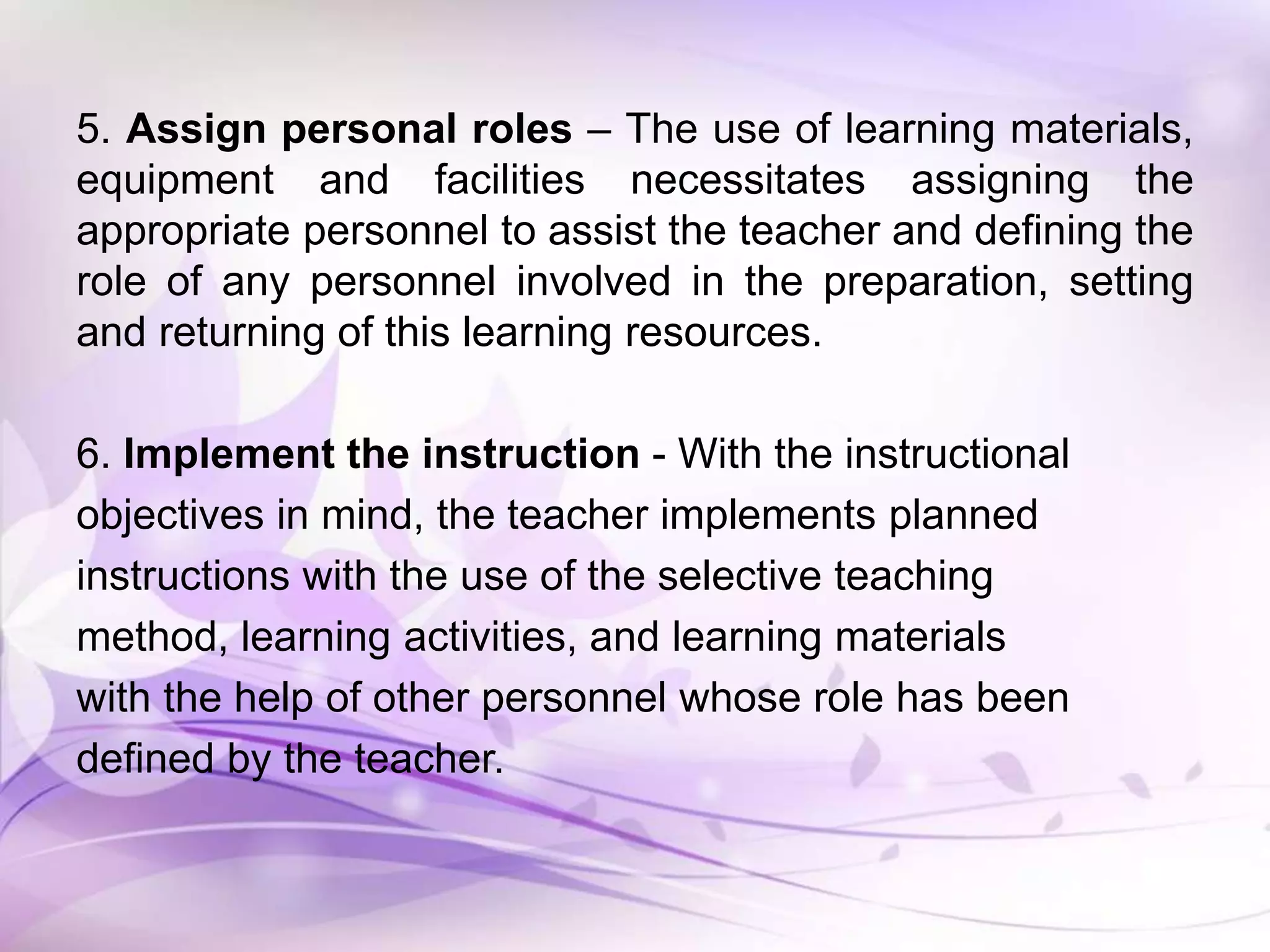
5. Assign personal roles – The use of learning materials,
equipment and facilities necessitates assigning the
appropriate personnel to assist the teacher and defining the
role of any personnel involved in the preparation, setting
and returning of this learning resources.
6. Implement the instruction - With the instructional
objectives in mind, the teacher implements planned
instructions with the use of the selective teaching
method, learning activities, and learning materials
with the help of other personnel whose role has been
defined by the teacher.
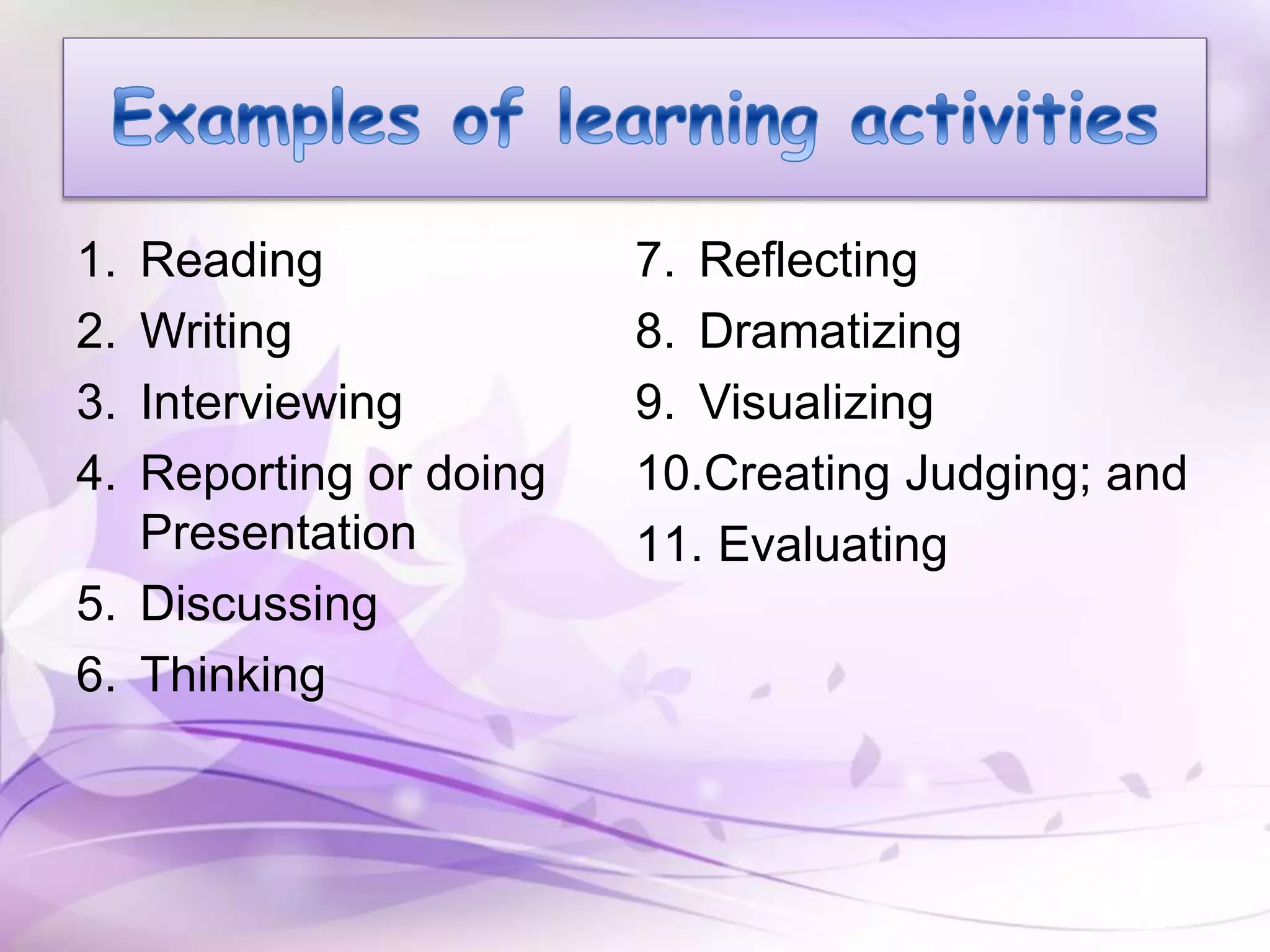
1. Reading
2. Writing
3. Interviewing
4. Reporting or doing
Presentation
5. Discussing
6. Thinking
7. Reflecting
8. Dramatizing
9. Visualizing
10.Creating Judging; and
11. Evaluating
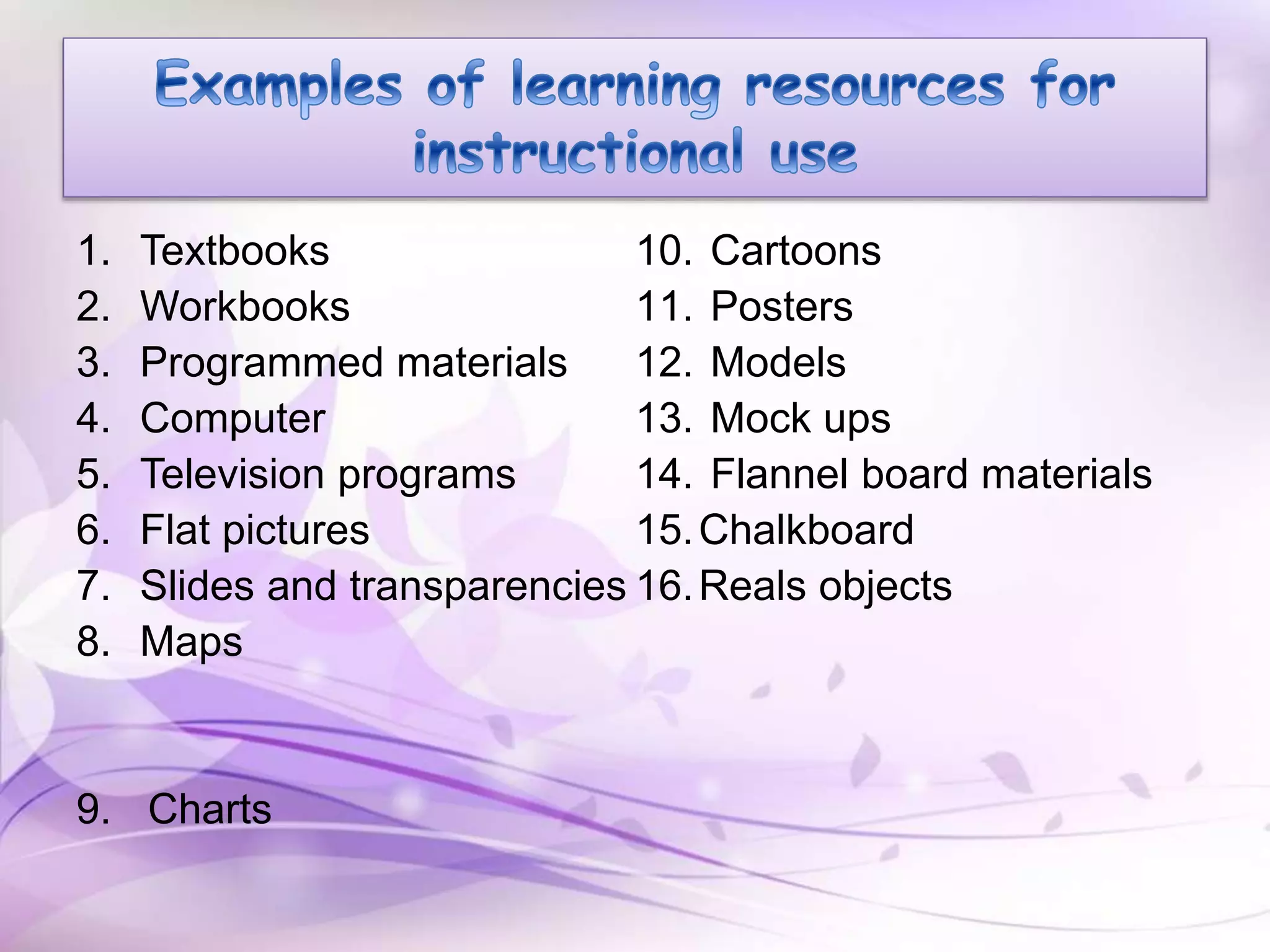
1. Textbooks
2. Workbooks
3. Programmed materials
4. Computer
5. Television programs
6. Flat pictures
7. Slides and transparencies
8. Maps
9. Charts
10. Cartoons
11. Posters
12. Models
13. Mock ups
14. Flannel board materials
15.Chalkboard
16.Reals objects
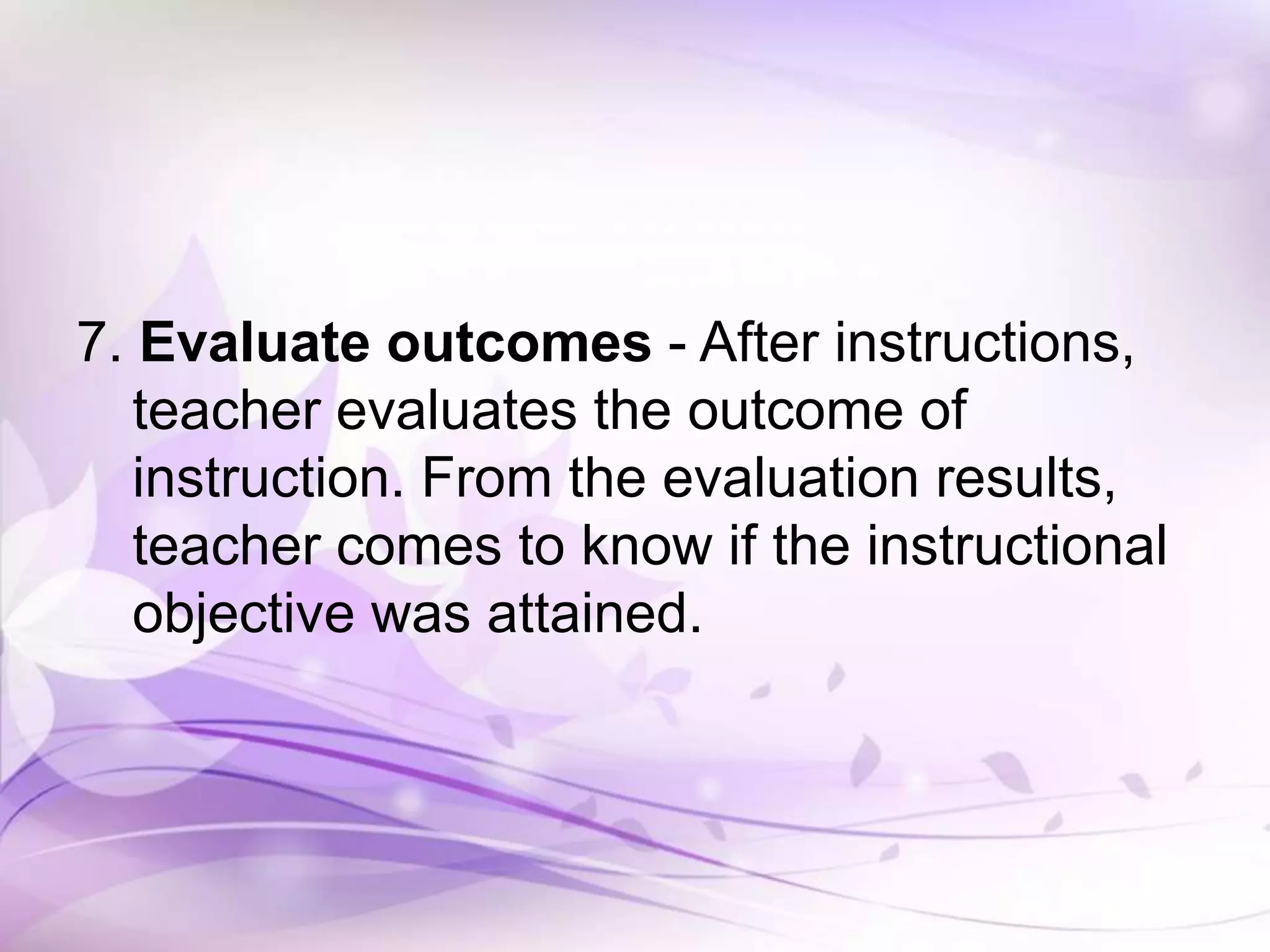
7. Evaluate outcomes - After instructions,
teacher evaluates the outcome of
instruction. From the evaluation results,
teacher comes to know if the instructional
objective was attained.
8. Refine the process - If the instructional
objective was attained, teacher proceeds to the
next lesson going through the same cycle once
more. If instructional objectives was not attained
, then teacher diagnoses was not learned and
finds out why it was not learned in order to
introduced a remedial measure for improved
student performance and attainment of
instructional objectives.
The purpose of a system
instructional design is “to ensure
orderly relationships and interactions
of human, technical, and environmental
resources to fulfill the goals which
have been established for
instructions.”
(Brown, 1969)
Systematic approach to teaching

Systematic approach to teaching

  • 2.
    It is a“planned, SYSTEMATIC method of working to achieve planned outcomes-a process not a product. Technology is the applied side of the scientific development.” (Dale, 1969)
  • 3.
    “an organized setof doctrines, ideas, or principles usually intended to explain the arrangement or working of a systematic whole” (Merriam-Webster Dictionary)
  • 4.
    Systematic Approach toTeaching Lovebella C. Jao Discussant
  • 5.
    The systems approachviews the entire educational program as a system of closely interrelated parts. It is an orchestrated learning pattern with all parts harmoniously integrated into the whole: the school, the teacher, the students, the objectives, the media, the materials, and assessment tools and procedures. Such an approach integrates the older, more familiar methods and tools of instruction with the new ones such as the computer.
  • 6.
    Define Objectives (Identify Content) Chooseappropriate Refine the process methods Choose appropriate Evaluate experiences outcomes Select materials, Implement the equipment and facilities instruction Assign personnel roles Learners
  • 7.
    As depicted inthe chart, the focus of the systematic instructional planning is the LEARNER. 1. Define Objectives - Instruction begins with the definition of instructional objectives that consider the students’ needs, interest, and readiness.
  • 8.
    2. Choose appropriatemethods 3. Choose appropriate experiences 4. Select materials, equipment, and facilities On the basis of the objectives, the teacher selects the appropriate teaching methods to be used and, in turn, based on the teaching method selected, the appropriate learning experiences and appropriate materials, equipment and facilities will also be selected.
  • 9.
    5. Assign personalroles – The use of learning materials, equipment and facilities necessitates assigning the appropriate personnel to assist the teacher and defining the role of any personnel involved in the preparation, setting and returning of this learning resources. 6. Implement the instruction - With the instructional objectives in mind, the teacher implements planned instructions with the use of the selective teaching method, learning activities, and learning materials with the help of other personnel whose role has been defined by the teacher.
  • 10.
    1. Reading 2. Writing 3.Interviewing 4. Reporting or doing Presentation 5. Discussing 6. Thinking 7. Reflecting 8. Dramatizing 9. Visualizing 10.Creating Judging; and 11. Evaluating
  • 11.
    1. Textbooks 2. Workbooks 3.Programmed materials 4. Computer 5. Television programs 6. Flat pictures 7. Slides and transparencies 8. Maps 9. Charts 10. Cartoons 11. Posters 12. Models 13. Mock ups 14. Flannel board materials 15.Chalkboard 16.Reals objects
  • 12.
    7. Evaluate outcomes- After instructions, teacher evaluates the outcome of instruction. From the evaluation results, teacher comes to know if the instructional objective was attained.
  • 13.
    8. Refine theprocess - If the instructional objective was attained, teacher proceeds to the next lesson going through the same cycle once more. If instructional objectives was not attained , then teacher diagnoses was not learned and finds out why it was not learned in order to introduced a remedial measure for improved student performance and attainment of instructional objectives.
  • 14.
    The purpose ofa system instructional design is “to ensure orderly relationships and interactions of human, technical, and environmental resources to fulfill the goals which have been established for instructions.” (Brown, 1969)