This document discusses different models for curriculum design, including subject-centered, learner-centered, and problem-centered designs. Subject-centered design focuses on academic content and disciplines. Learner-centered design places the student at the center and includes child-centered, experience-centered, and humanistic designs. Problem-centered design uses social problems, student needs and interests as the basis and can include life-situation design and core design curriculums. The document provides examples and explanations of each design model.
CURRICULUM DESIGN
MODEL
As ateacher, one has to be a
curriculum designer, curriculum implementor
and a curriculum evaluator. Hence it would
be a great help to know how school curricula
are being made or crafted.
3.
CRAFTING A CURRICULUM
-Is like writing a lesson plan
A curriculum can be organized either:
1. Horizontal Organization- the direction
of the curriculum elements is side ways.
2. Vertical Organization- the direction of
the curriculum elements follow a vertical
design.
4.
STRUCTURES OF CURRICULUM
DESIGN
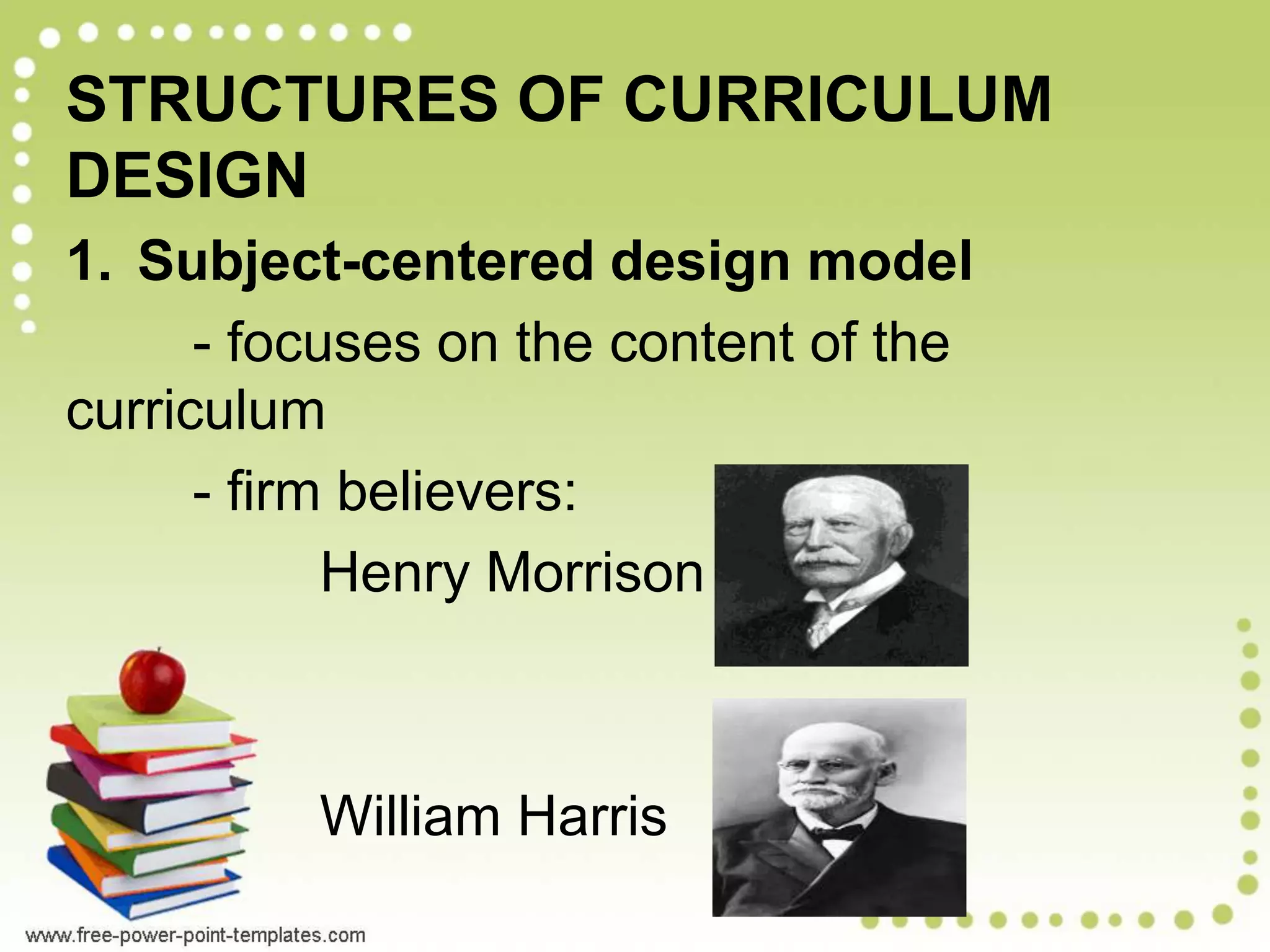
1.Subject-centered design model
- focuses on the content of the
curriculum
- firm believers:
Henry Morrison
William Harris
5.
Examples of Subject-centered
Curriculum
a.Subject design- centers on the cluster of
content
b. Discipline design- focuses on academic
disciplines
• Discipline- specific knowledge learned
through a method which the scholars use
to study a specific content of their fields
6.
c. Correlation design-links separate subject
design in order to reduce fragmentation
d. Broad field design/interdisciplinary-
made to prevent the compartmentalization
of subjects and integrate the contents that
are related to each other.
- sometimes called holistic curriculum
7.
2. Learner-Centered design
-the learner is the center of the educative
process
Examples of Learner-Centered designs
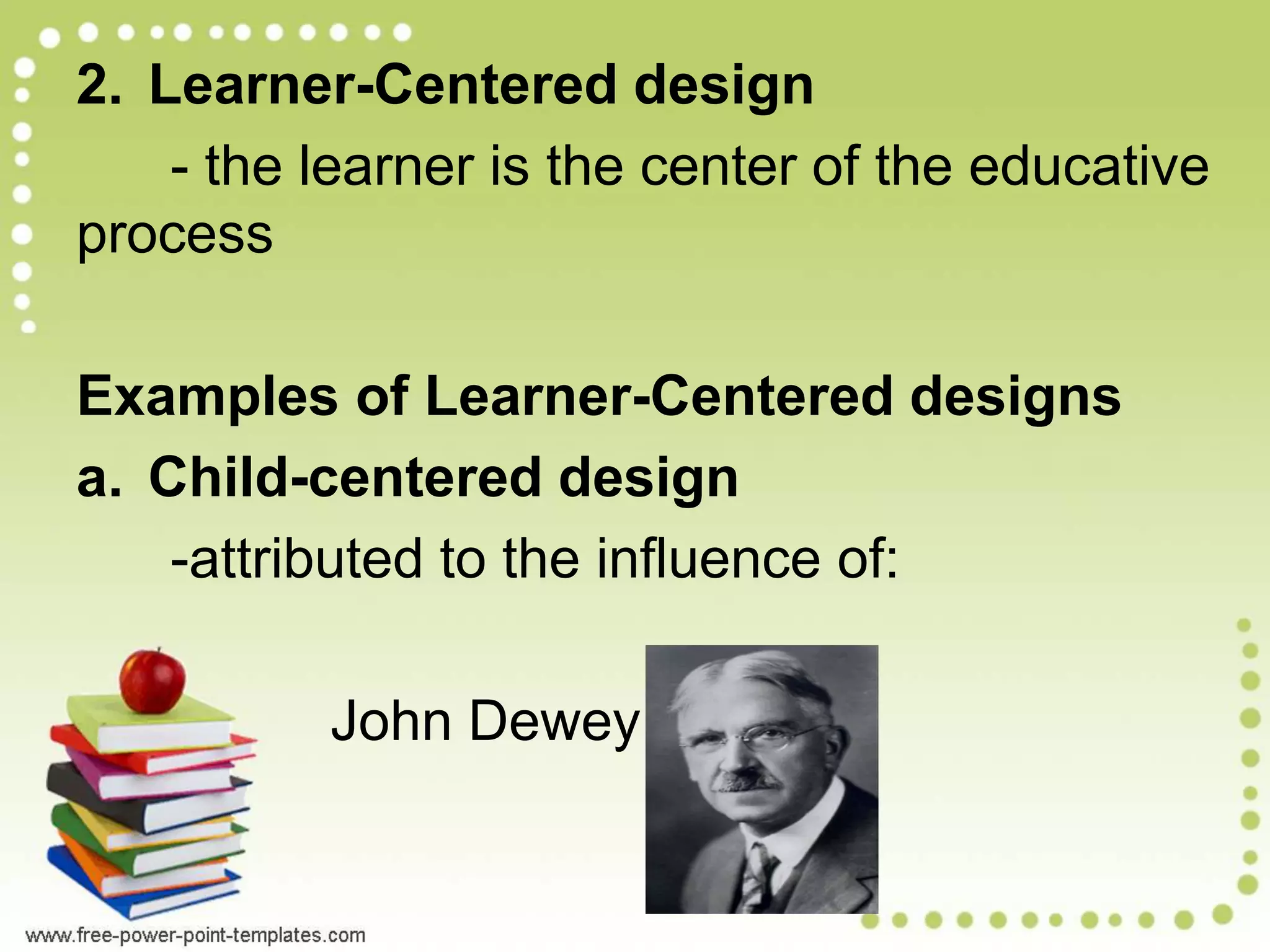
a. Child-centered design
-attributed to the influence of:
John Dewey
- Anchored onthe needs and interests of
the child
- Learns by doing
- Learners actively create, construct
meanings and understanding
(collaborative effort)
- Learning is a product of the child’s
interaction with environment
10.
b. Experience-Centered design
-experiences of the learners becomes the
starting point of the curriculum
- learners are made to choose from various
activities that the teacher provides
- activities revolve around different
emphasis
such as touching, feeling, imagining,
constructing, relating and others
- The developmentof self is the ultimate
objective of the learning
- It consider the cognitive, affective and
psycho motor domains to be
interconnected and must be addressed in
the curriculum
- Stresses the development of positive self-
concept and interpersonal skills
Various problems aregiven emphases.
There are those that centered on:
- life situation
- contemporary life problems
- areas of living and many others
In this curriculum content cuts across
subject boundaries and must be:
- based on the needs
- concern and abilities of the students
15.
Examples of Problem-Centereddesign
Curriculum
a. Life-situation design
- based on Herbert Spencer’s curriculum
writing his emphases where activities that
sustain life, enhance life and rearing children,
maintain the individual’s social and political
relations and enhance leisure, tasks and
feelings. The connection of subject matters to
real situations increases the relevance of the
curriculum
16.
b. Core design
-centers on general education and the
problems are based on common human
activities.
Ways on how to proceed a core design of
curriculum:
1. The problem is selected by either the
teacher or students
2. A group consensus is made to identify
the important problems and interest of the
class
17.
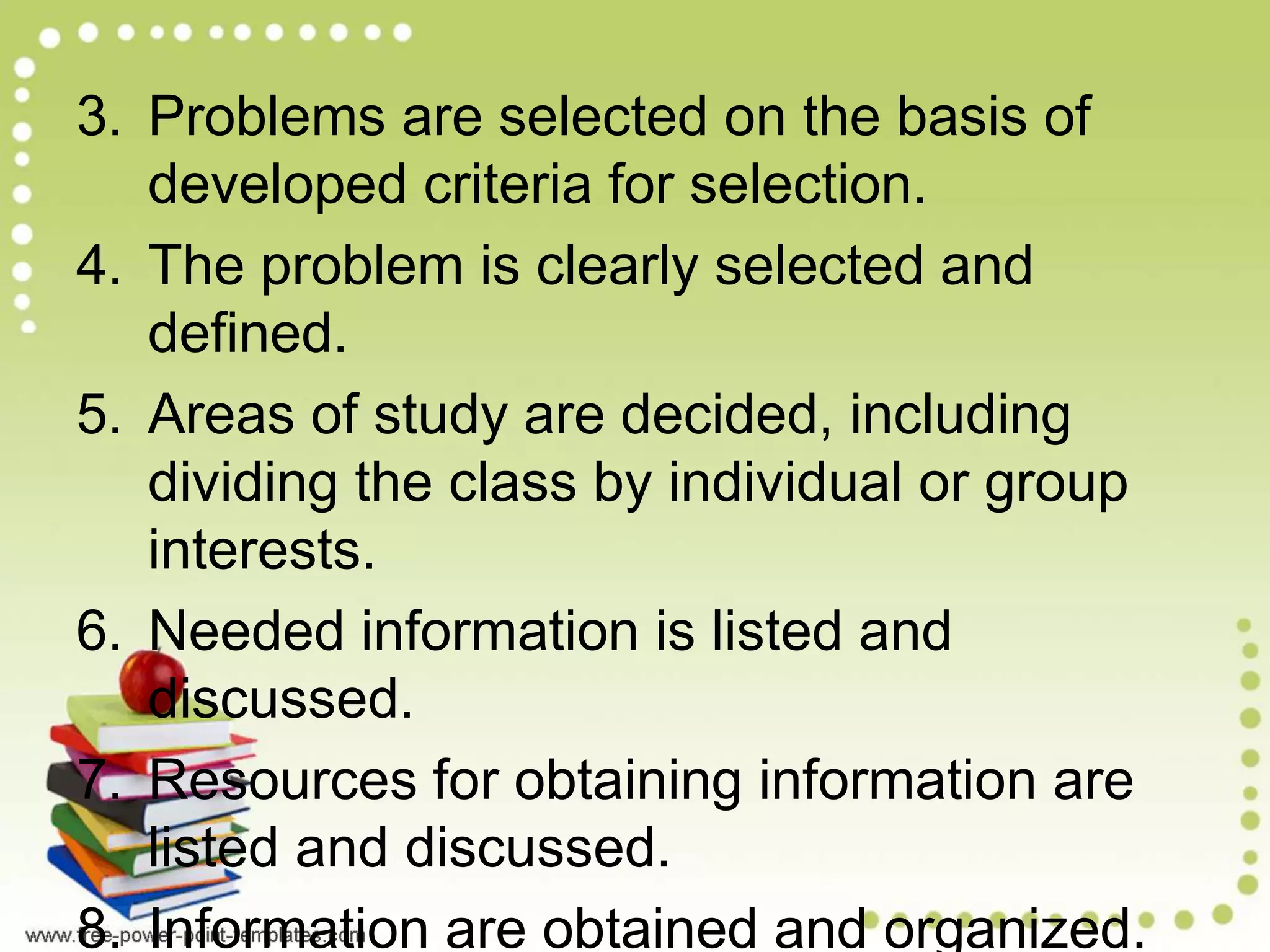
3. Problems areselected on the basis of
developed criteria for selection.
4. The problem is clearly selected and
defined.
5. Areas of study are decided, including
dividing the class by individual or group
interests.
6. Needed information is listed and
discussed.
7. Resources for obtaining information are
listed and discussed.
8. Information are obtained and organized.
18.
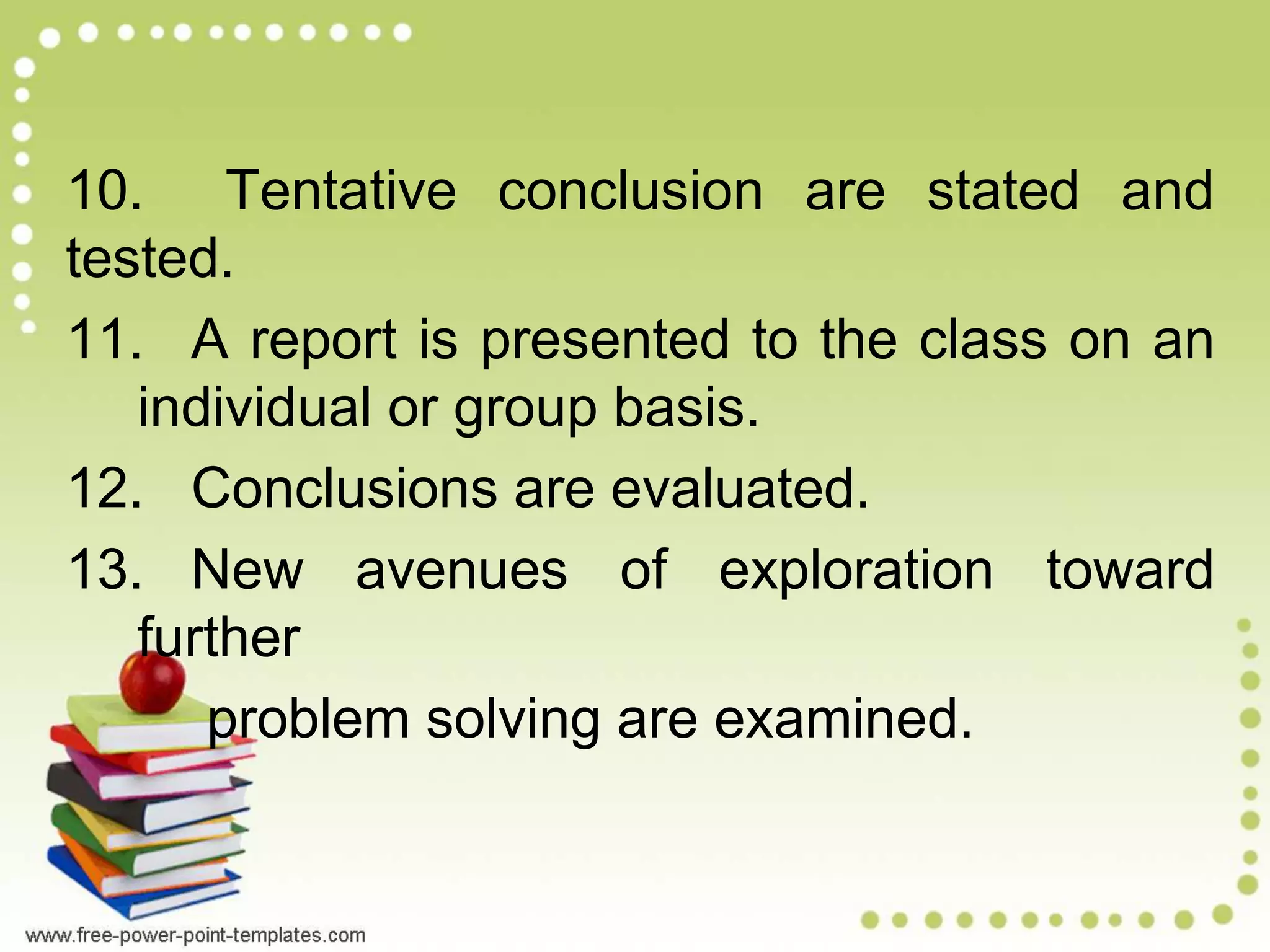
10. Tentative conclusionare stated and
tested.
11. A report is presented to the class on an
individual or group basis.
12. Conclusions are evaluated.
13. New avenues of exploration toward
further
problem solving are examined.