


Systematic Approach Systematic Approach 
to Teachingto Teaching
 “A plan that emphasizes the 
parts may pay the cost of failing 
to consider the whole, and a 
plain that emphasizes the whole 
must pay the cost of failing get 
down to the real depth with 
respect to the parts." 
– C. West 
Churchman
What isWhat is
Systematic?Systematic?
Systematic:Systematic:
MMethodical in procedure or planethodical in procedure or plan
(systematic approach)(systematic approach)
OOrganize; relating to or consistingrganize; relating to or consisting
Of aOf a systemsystem
LLogical- presented or formulatedogical- presented or formulated
As a coherent body of ideas orAs a coherent body of ideas or
Principle ( systematic thought)Principle ( systematic thought)
EEfficient- effective in class thatfficient- effective in class that
Marked by thoroughness andMarked by thoroughness and
regularity (systematic efforts)regularity (systematic efforts)
Systematic Approach Systematic Approach 
to Teachingto Teaching
The systems approach views the entire
educational program as a system of closely
interrelated parts.
It is an orchestrated learning pattern with all
parts harmoniously integrated into the whole:
the school, the teacher, the students, the
objectives, the media, the materials, and
assessment tools and procedures.
Such an approach integrates the older, more
familiar methods and tools of instruction with
the new ones such as the computer.
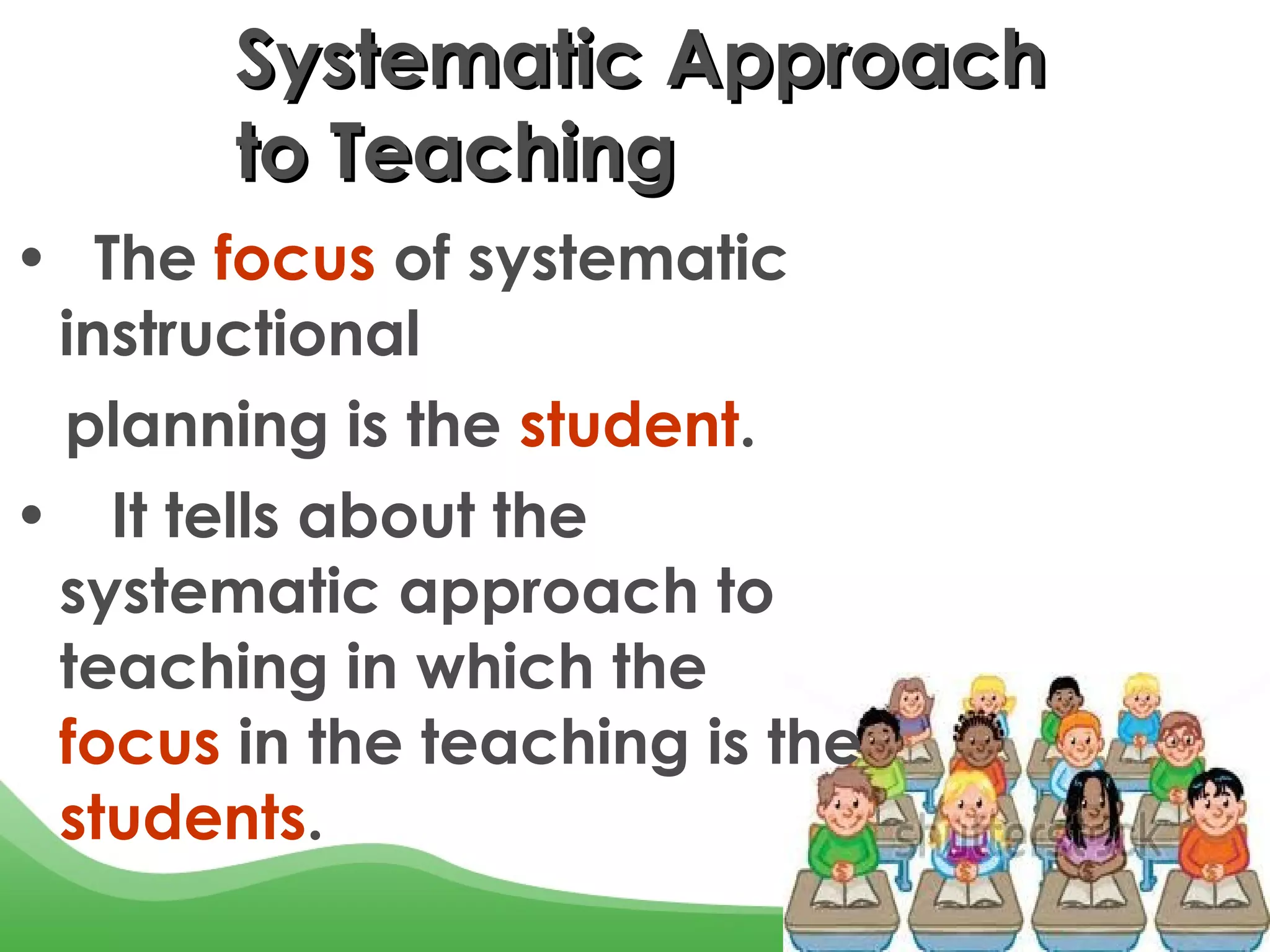
• The focus of systematic
instructional
planning is the student.
• It tells about the
systematic approach to
teaching in which the
focus in the teaching is the
students.
Systematic Approach Systematic Approach 
to Teachingto Teaching
ANALYSIS :
Sana Hindi ako
matawag!!
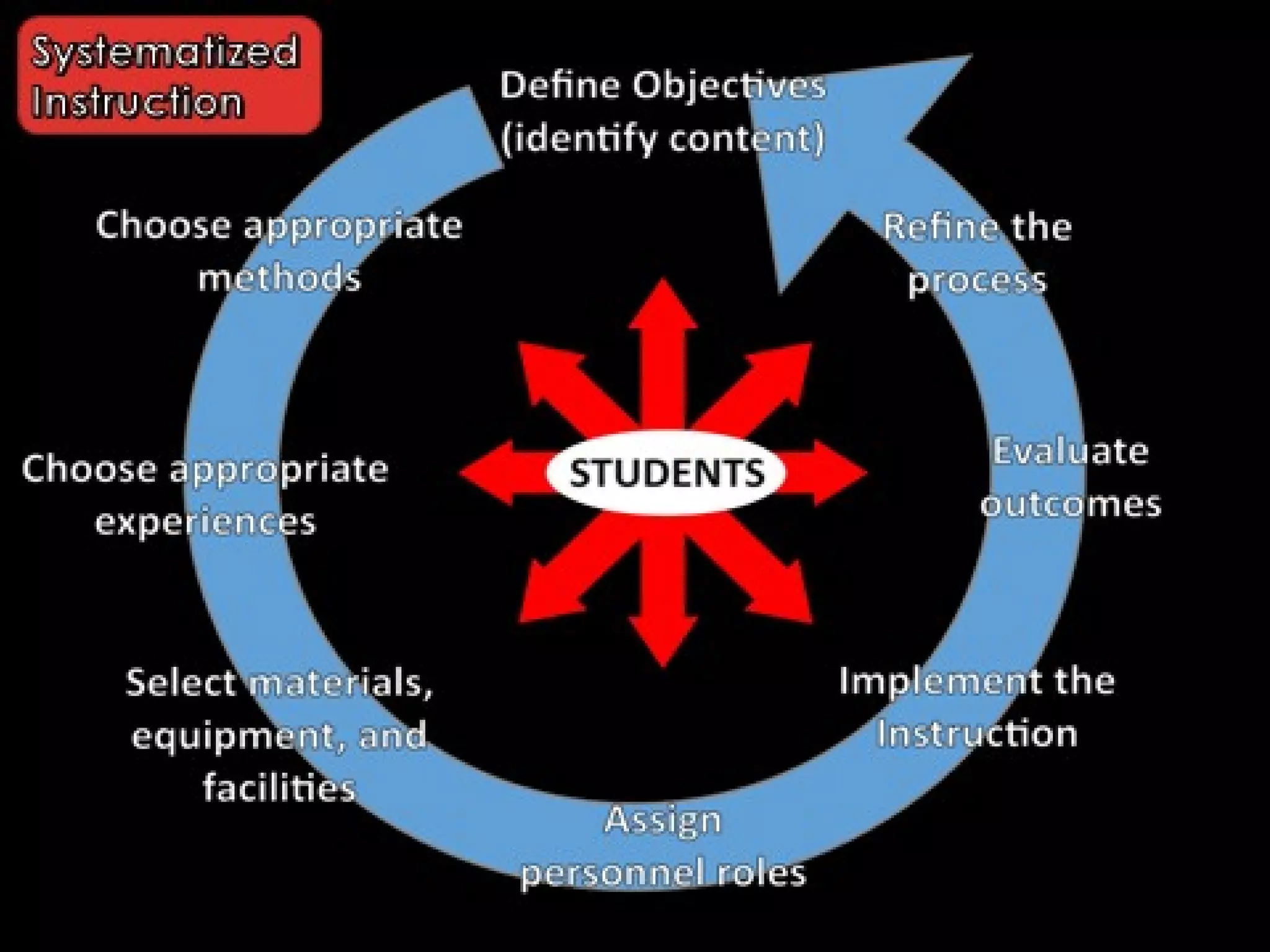
Systematized Instruction
Define
Objectives
Instruction begins with
the definition of
instructional objectives
that consider the
students' needs,
interests and
readiness. 
Systematized InstructionChoose
appropriate
methods
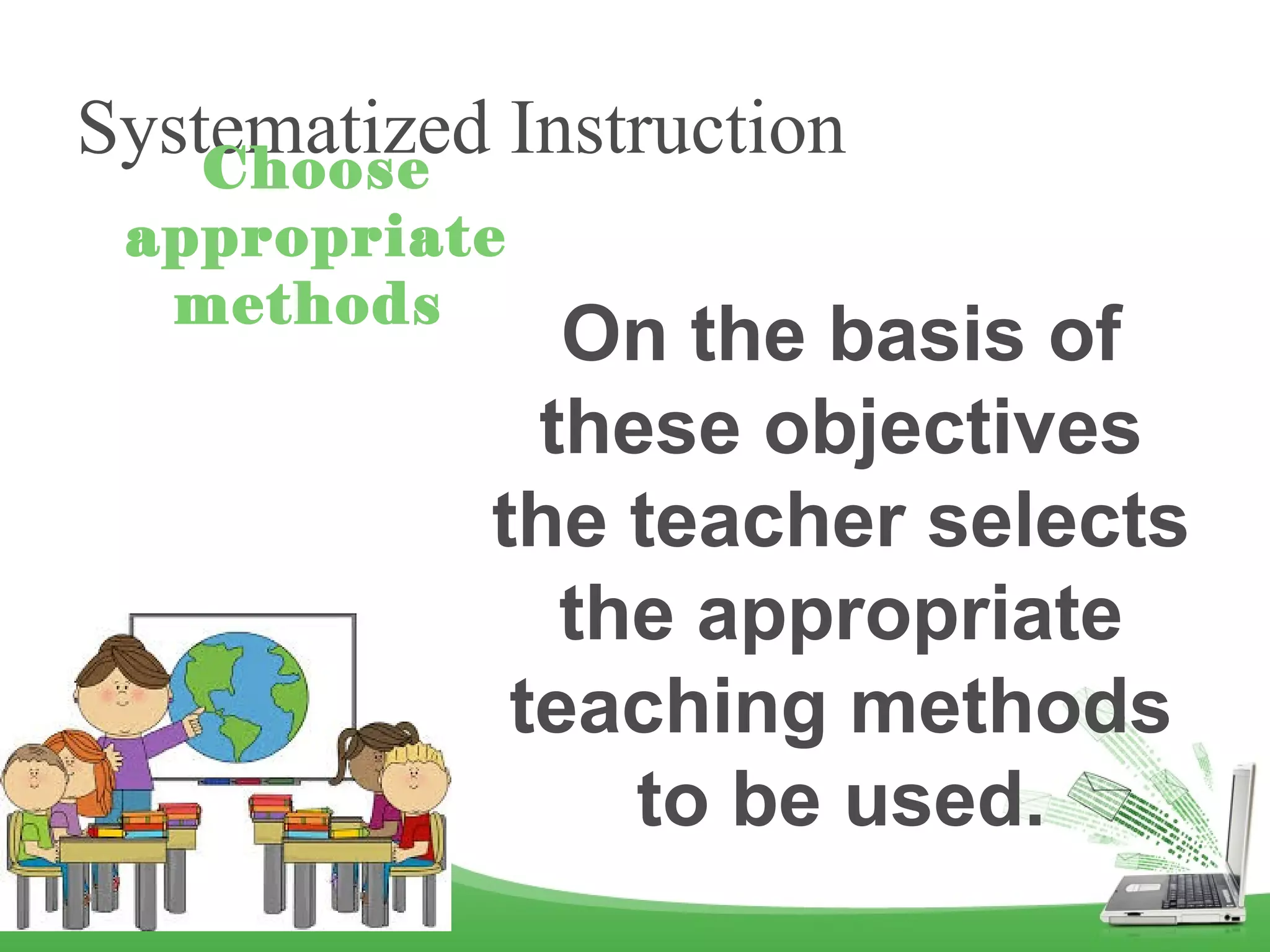
On the basis of
these objectives
the teacher selects
the appropriate
teaching methods
to be used.
Systematized Instruction
Choose appropriate
experiences
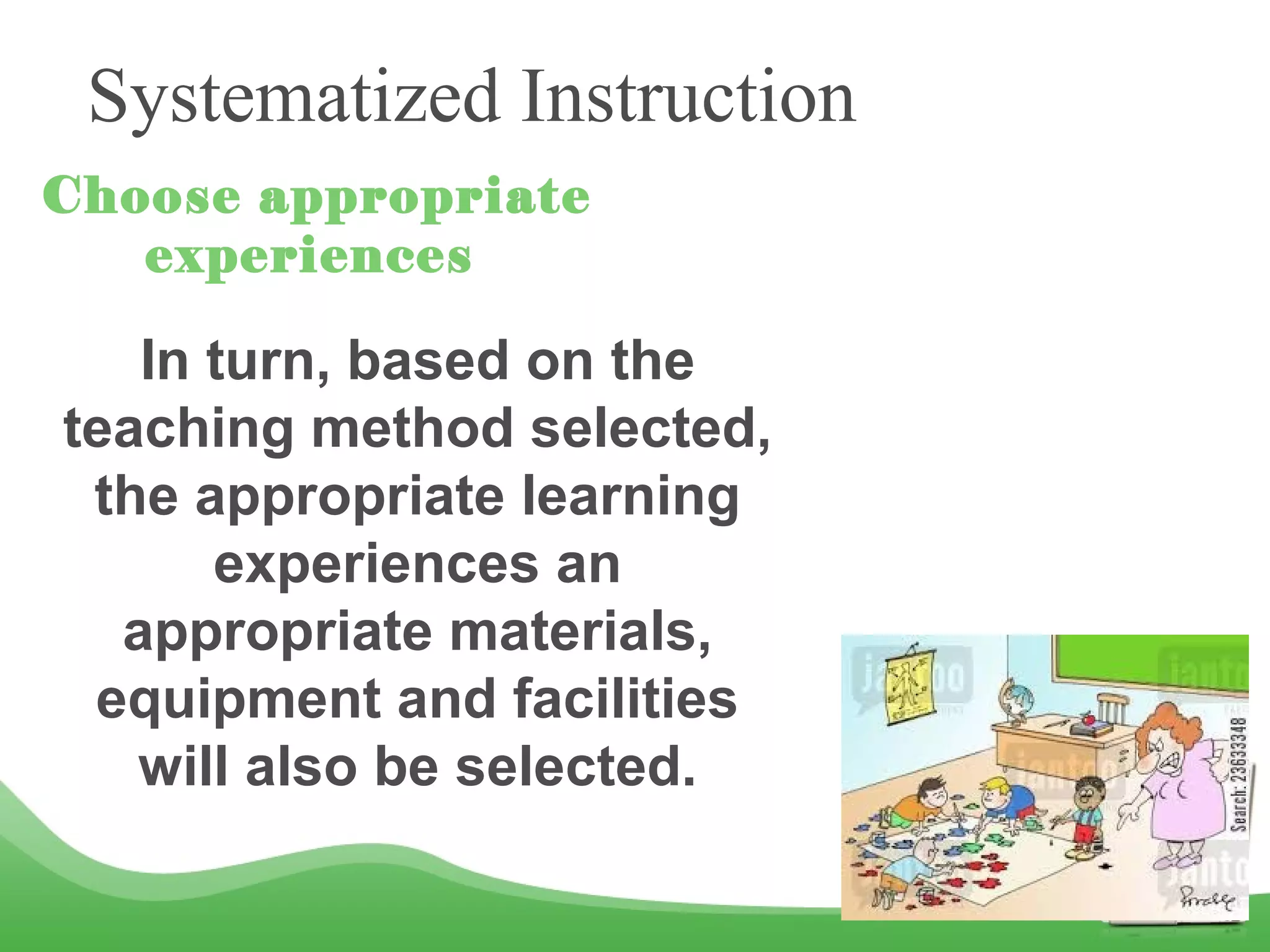
In turn, based on the
teaching method selected,
the appropriate learning
experiences an
appropriate materials,
equipment and facilities
will also be selected.
Systematized Instruction
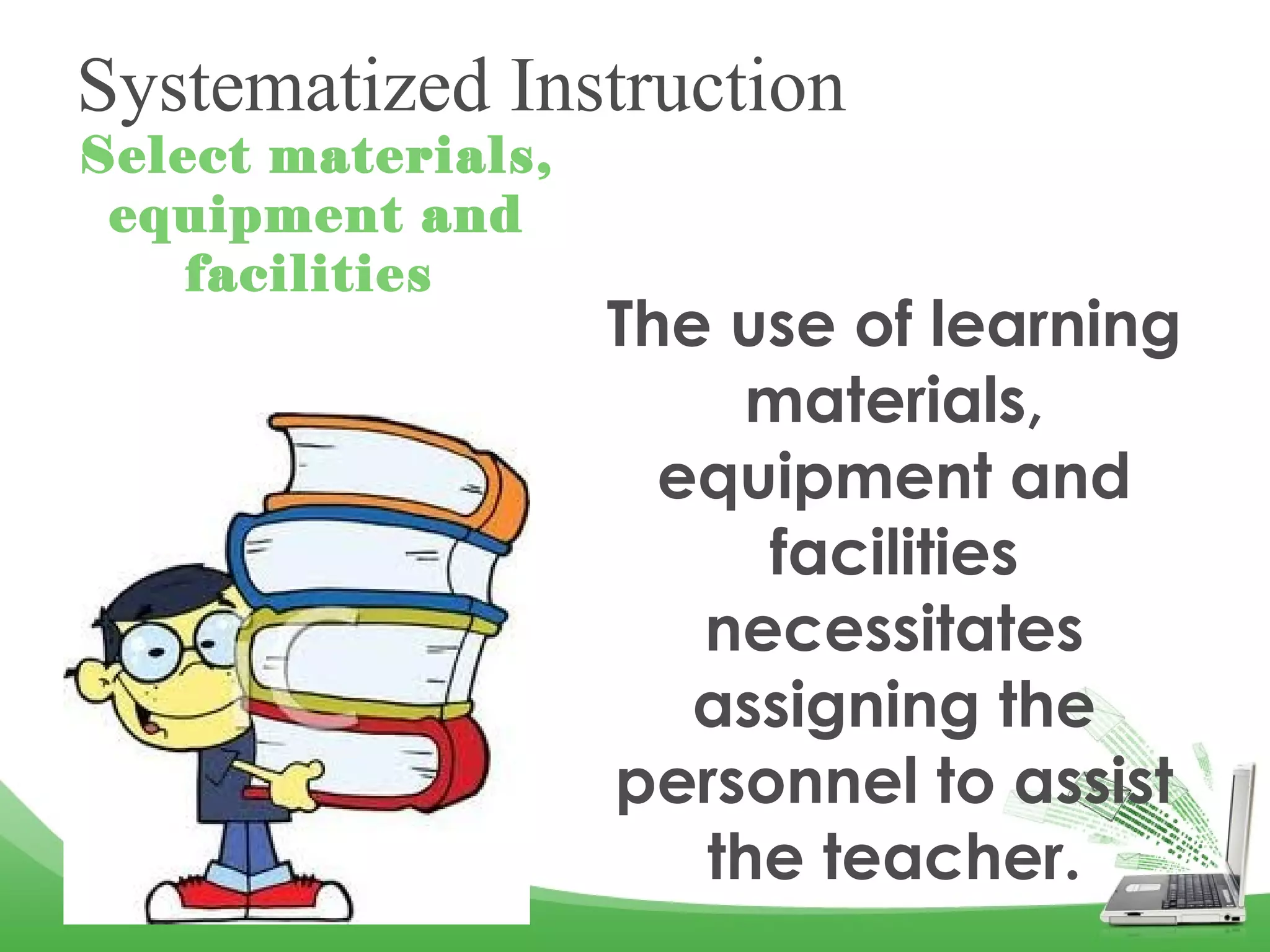
Select materials,
equipment and
facilities
The use of learning
materials,
equipment and
facilities
necessitates
assigning the
personnel to assist
the teacher.
Systematized Instruction
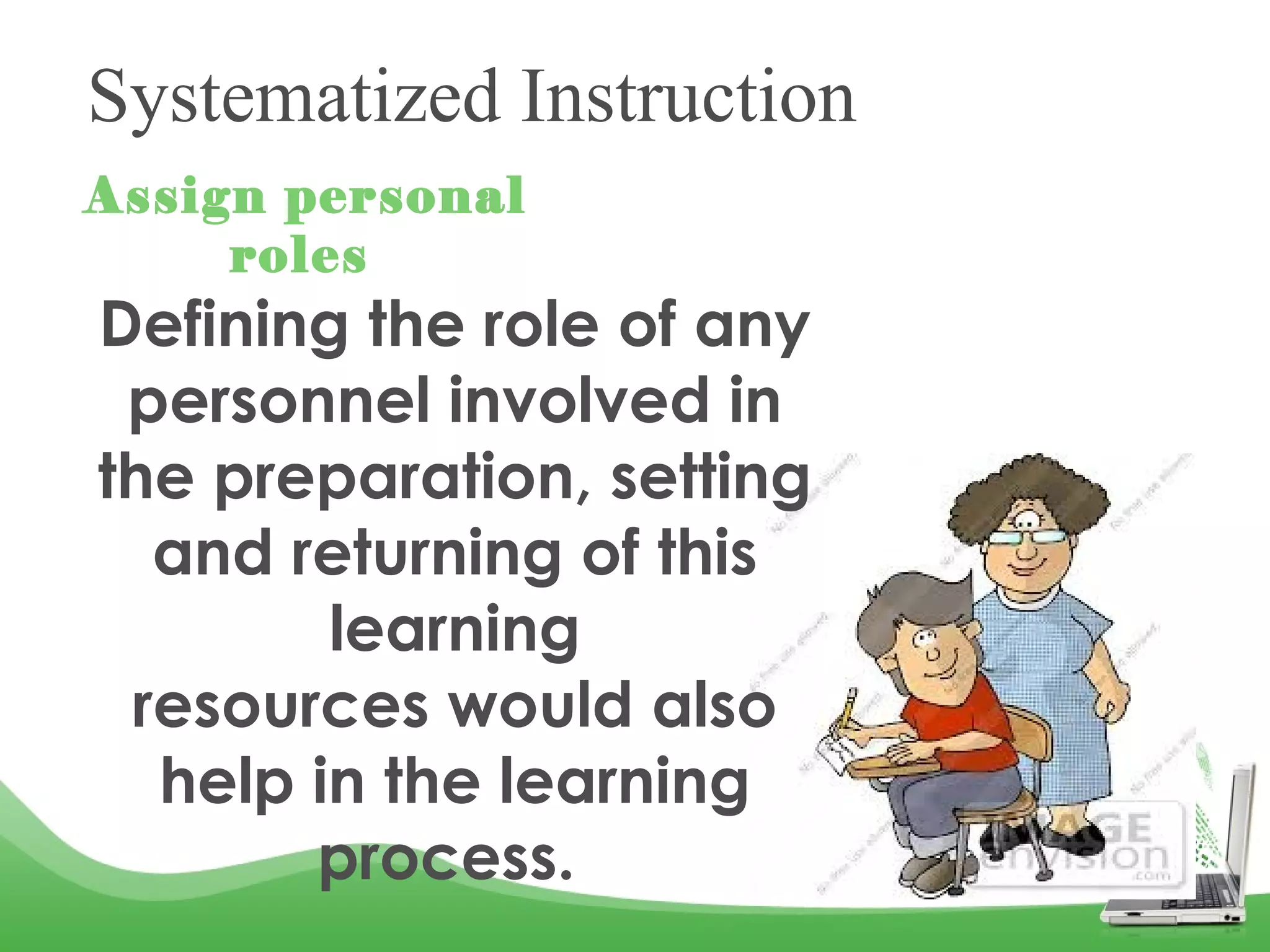
Assign personal
roles
Defining the role of any
personnel involved in
the preparation, setting
and returning of this
learning
resources would also
help in the learning
process.
Systematized Instruction
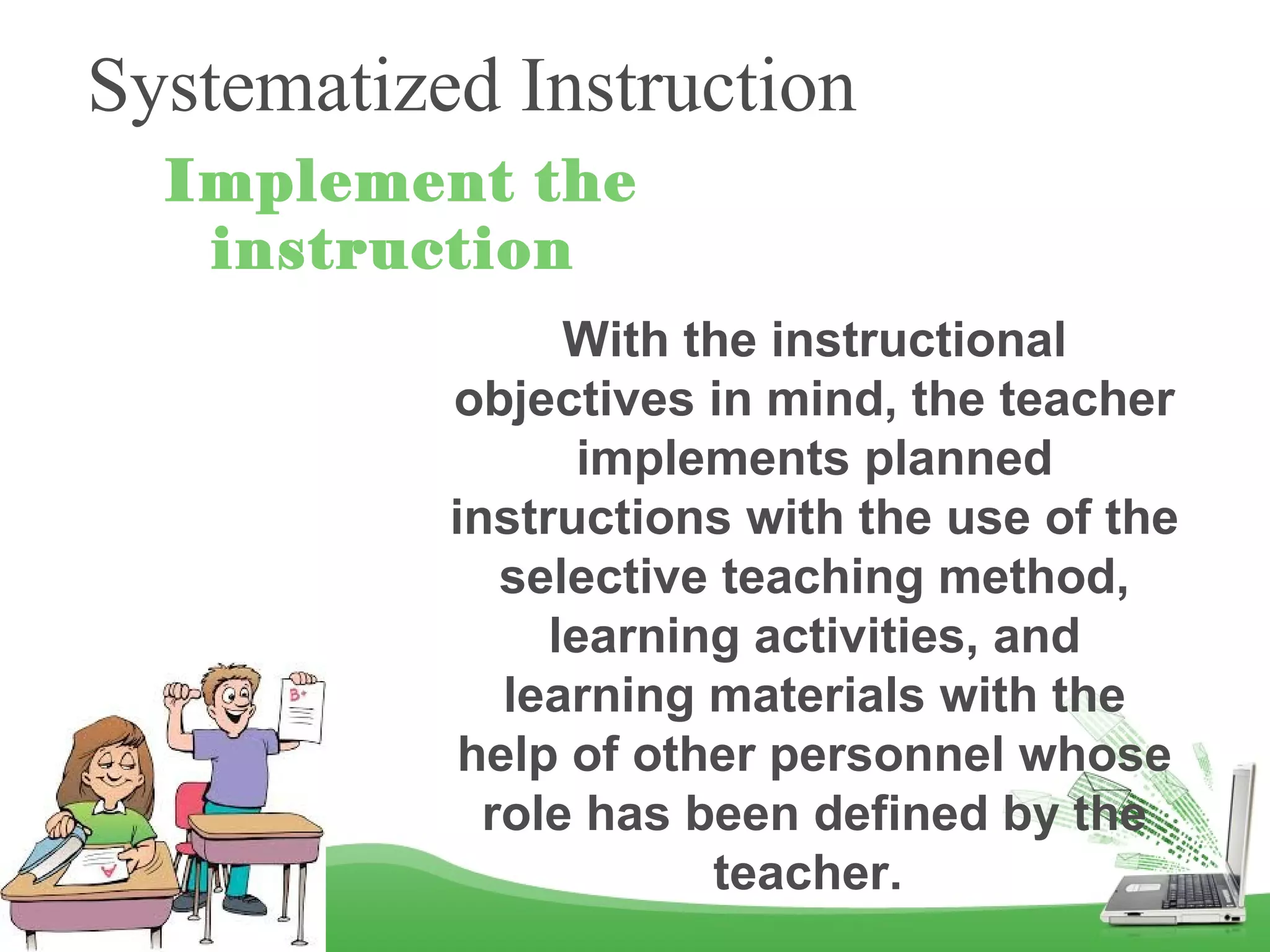
Implement the
instruction
With the instructional
objectives in mind, the teacher
implements planned
instructions with the use of the
selective teaching method,
learning activities, and
learning materials with the
help of other personnel whose
role has been defined by the
teacher.
Systematized Instruction
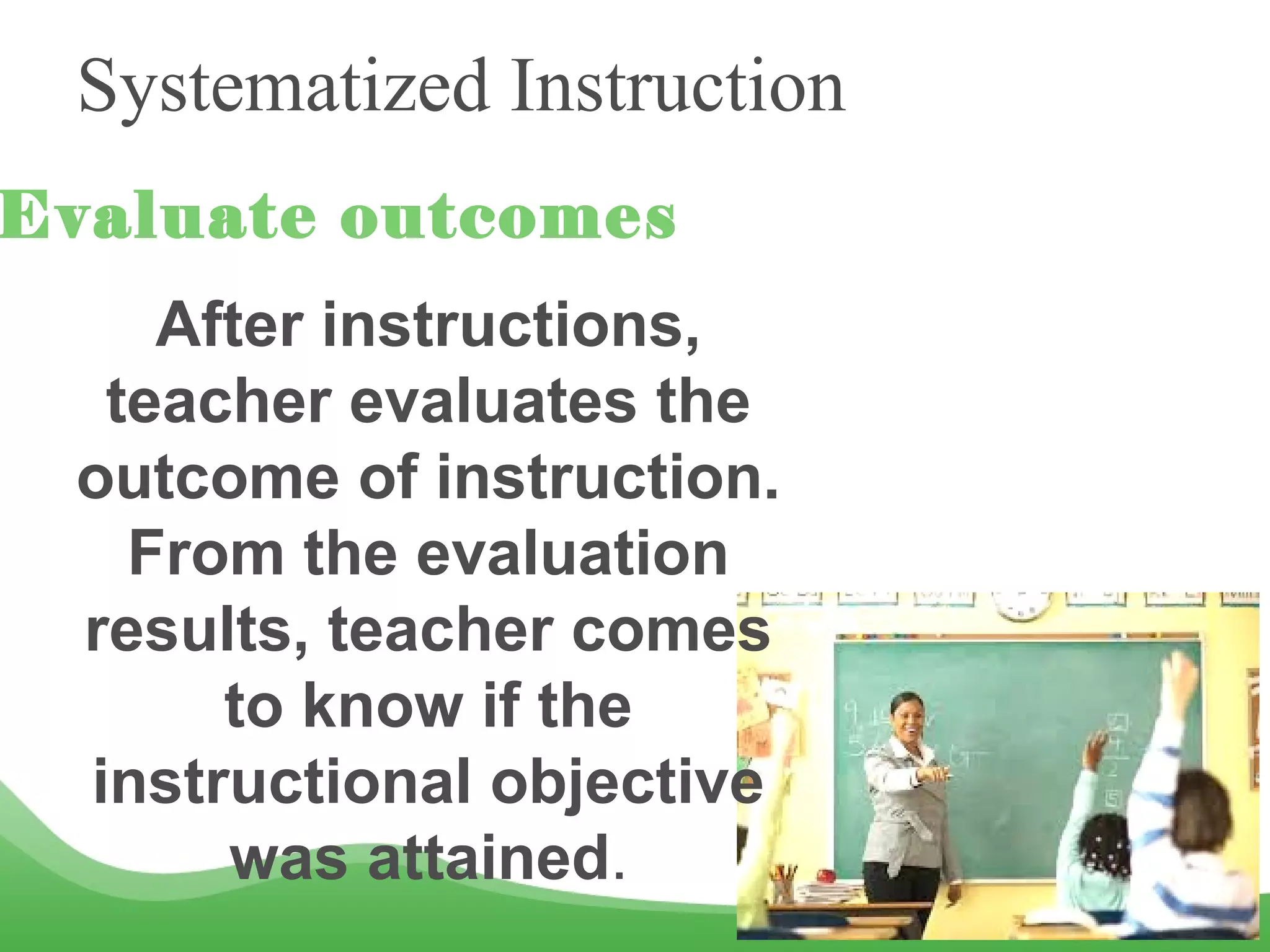
Evaluate outcomes
After instructions,
teacher evaluates the
outcome of instruction.
From the evaluation
results, teacher comes
to know if the
instructional objective
was attained.
Systematized Instruction
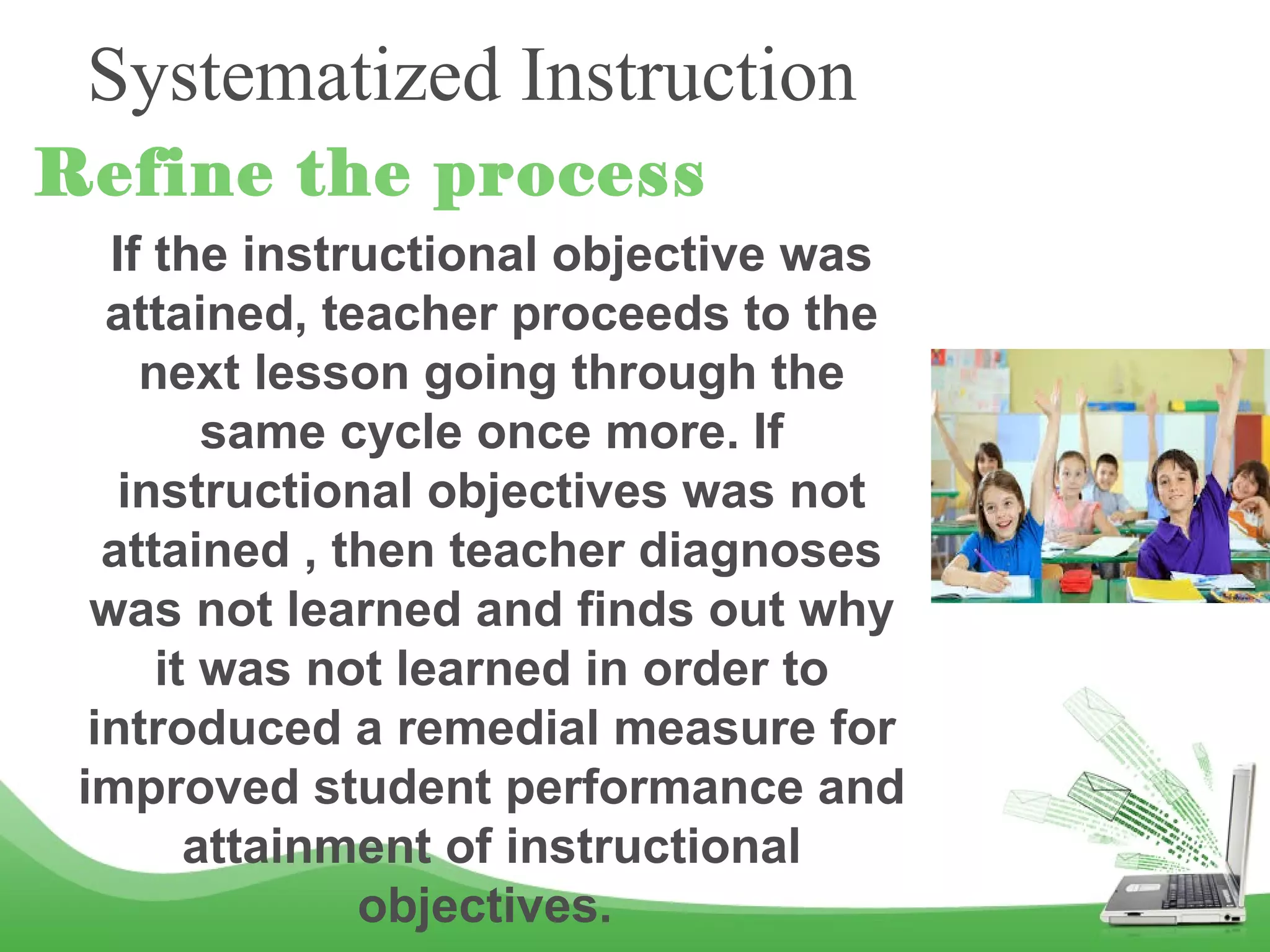
Refine the process
If the instructional objective was
attained, teacher proceeds to the
next lesson going through the
same cycle once more. If
instructional objectives was not
attained , then teacher diagnoses
was not learned and finds out why
it was not learned in order to
introduced a remedial measure for
improved student performance and
attainment of instructional
objectives.
In what way does theIn what way does the
chart show thechart show the
systematic orsystematic or
systems approach tosystems approach to
instructions? Are theinstructions? Are the
elements or phaseselements or phases
of instructionof instruction
independent of oneindependent of one
another or do theyanother or do they
relate to onerelate to one
another?another?
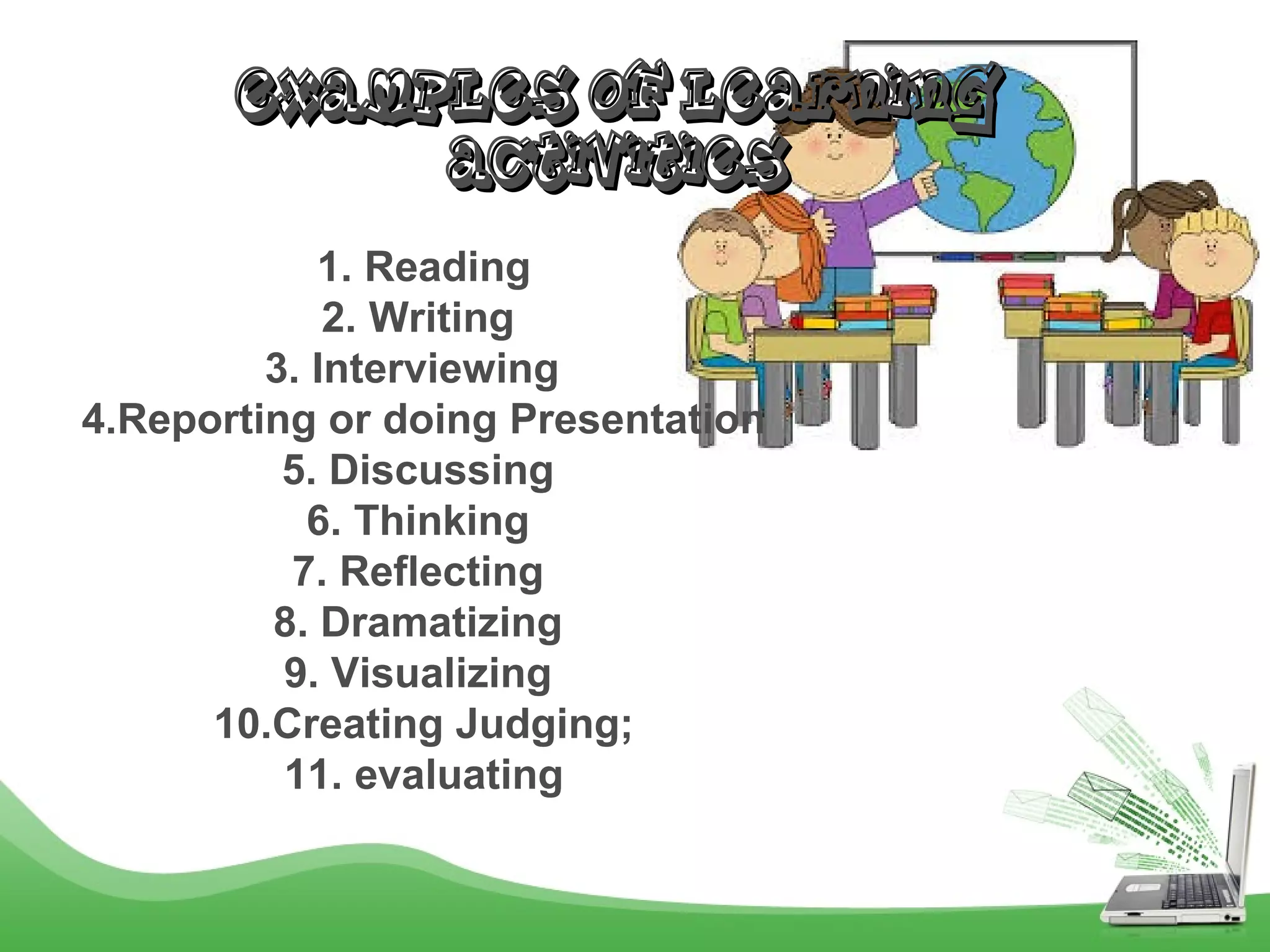
EXAMPLES OF LEARNINGEXAMPLES OF LEARNING
ACTIVITIESACTIVITIES
1. Reading
2. Writing
3. Interviewing
4.Reporting or doing Presentation
5. Discussing
6. Thinking
7. Reflecting
8. Dramatizing
9. Visualizing
10.Creating Judging;
11. evaluating
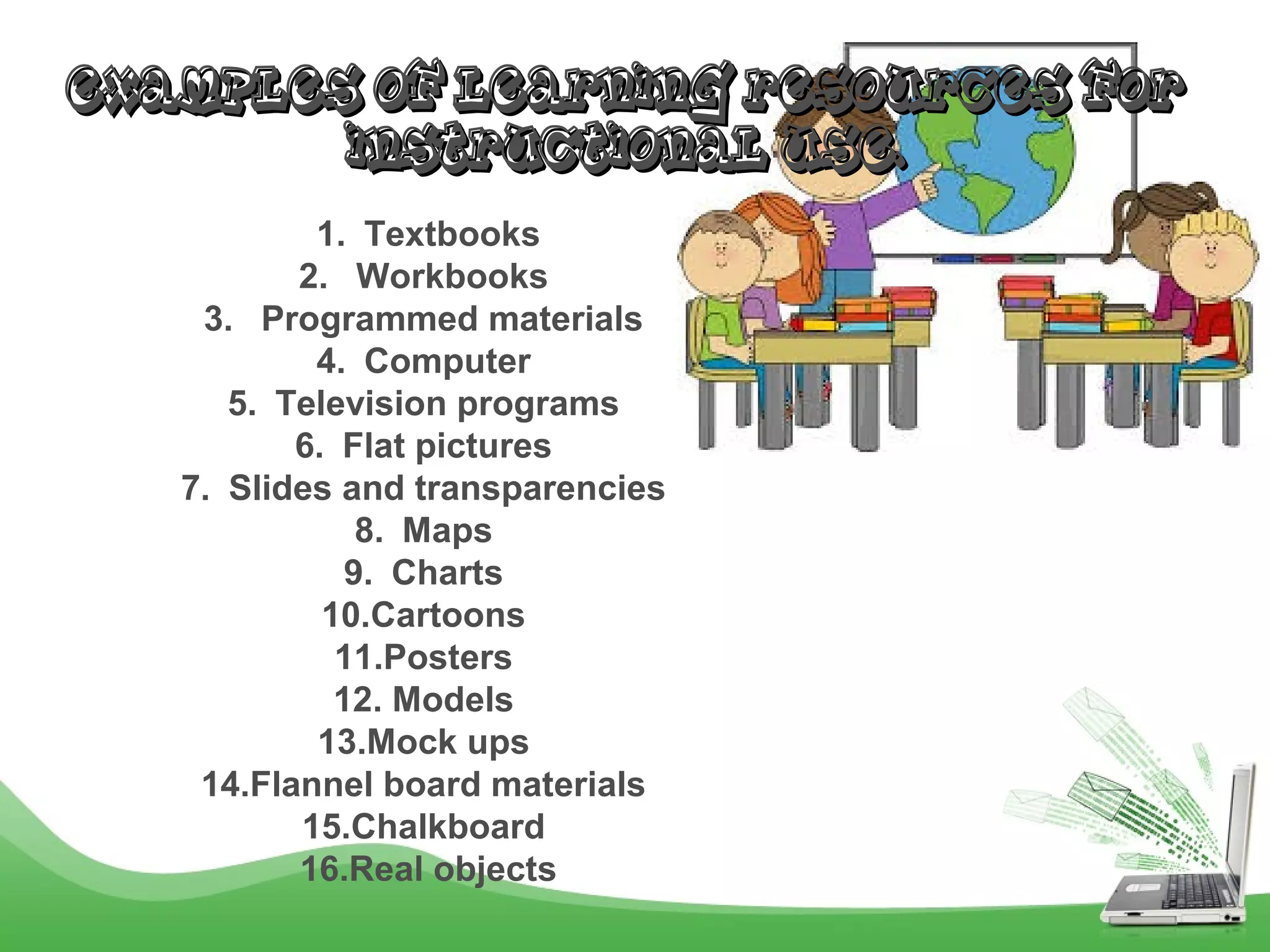
EXAMPLES OF LEARNING RESOURCES FOREXAMPLES OF LEARNING RESOURCES FOR
INSTRUCTIONAL USE.INSTRUCTIONAL USE.
1. Textbooks
2. Workbooks
3. Programmed materials
4. Computer
5. Television programs
6. Flat pictures
7. Slides and transparencies
8. Maps
9. Charts
10.Cartoons
11.Posters
12. Models
13.Mock ups
14.Flannel board materials
15.Chalkboard
16.Real objects
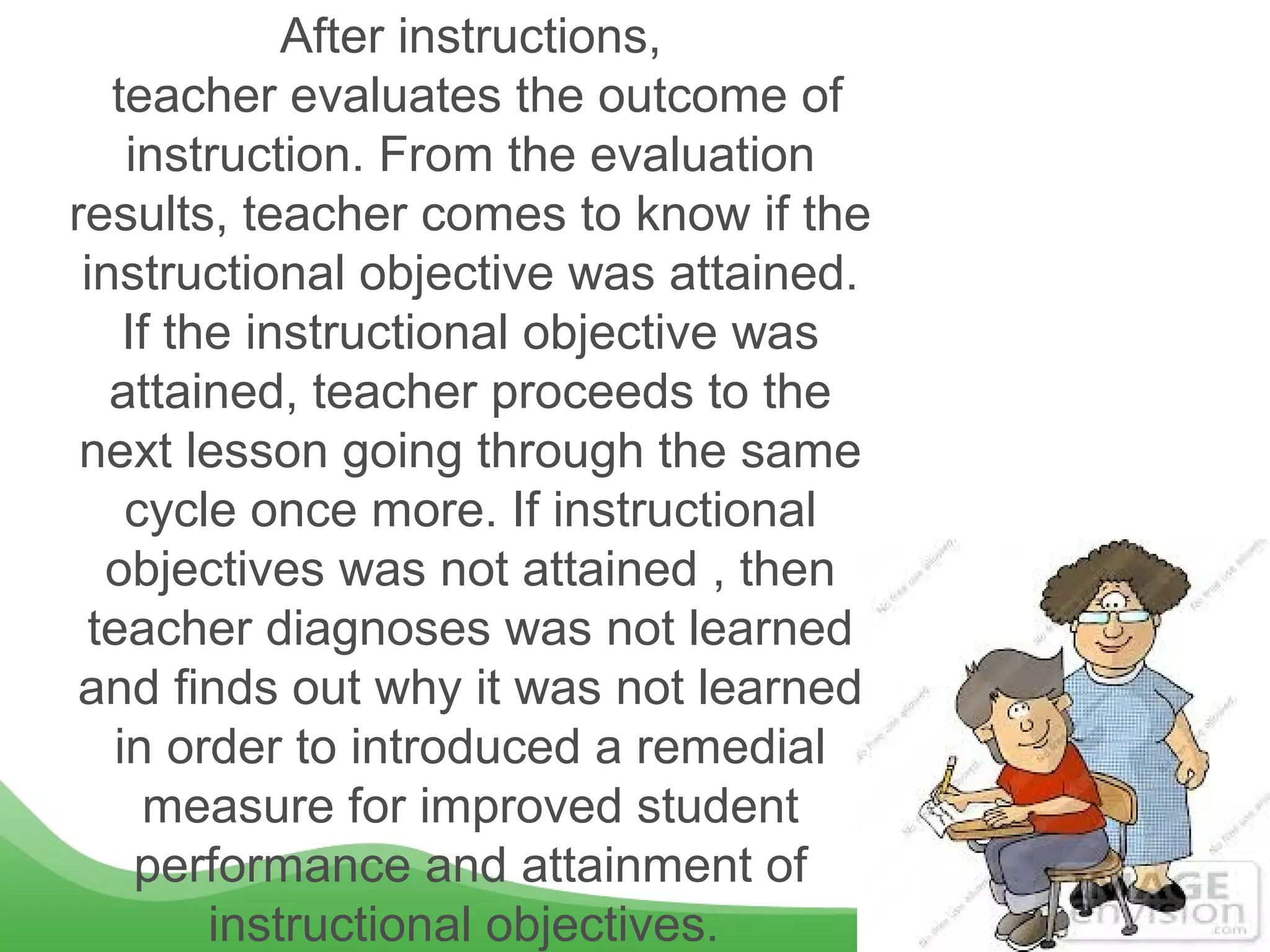
After instructions,
teacher evaluates the outcome of
instruction. From the evaluation
results, teacher comes to know if the
instructional objective was attained.
If the instructional objective was
attained, teacher proceeds to the
next lesson going through the same
cycle once more. If instructional
objectives was not attained , then
teacher diagnoses was not learned
and finds out why it was not learned
in order to introduced a remedial
measure for improved student
performance and attainment of
instructional objectives.
SUMMING
UP!!
       The phases or elements
are connected to one
another. If one element or
one phase of the
instructional process fails, the
outcome which is learning is
adversely affected. The
attainment of the learning
objective is dependent on
the synergy of all the
elements and of all the
factors involved in the
process
            The purpose of a system 
instructional design is to “ensure 
orderly relationships and 
interaction of human, technical, 
and environmental resources to 
fulfill the goals which have been 
established for instruction.” 
(Brown,1969).
 What are the things that
we need to consider to
have an effective
outcomes in using the
phases of systematic
approach?

Systematic approach

  • 1.
    Systematic Approach Systematic Approach  toTeachingto Teaching  “A plan that emphasizes the  parts may pay the cost of failing  to consider the whole, and a  plain that emphasizes the whole  must pay the cost of failing get  down to the real depth with  respect to the parts."  – C. West  Churchman
  • 2.
  • 3.
    Systematic:Systematic: MMethodical in procedureor planethodical in procedure or plan (systematic approach)(systematic approach) OOrganize; relating to or consistingrganize; relating to or consisting Of aOf a systemsystem LLogical- presented or formulatedogical- presented or formulated As a coherent body of ideas orAs a coherent body of ideas or Principle ( systematic thought)Principle ( systematic thought) EEfficient- effective in class thatfficient- effective in class that Marked by thoroughness andMarked by thoroughness and regularity (systematic efforts)regularity (systematic efforts)
  • 4.
    Systematic Approach Systematic Approach  toTeachingto Teaching The systems approach views the entire educational program as a system of closely interrelated parts. It is an orchestrated learning pattern with all parts harmoniously integrated into the whole: the school, the teacher, the students, the objectives, the media, the materials, and assessment tools and procedures. Such an approach integrates the older, more familiar methods and tools of instruction with the new ones such as the computer.
  • 5.
    • The focusof systematic instructional planning is the student. • It tells about the systematic approach to teaching in which the focus in the teaching is the students. Systematic Approach Systematic Approach  to Teachingto Teaching
  • 6.
    ANALYSIS : Sana Hindiako matawag!!
  • 7.
    Systematized Instruction Define Objectives Instruction beginswith the definition of instructional objectives that consider the students' needs, interests and readiness. 
  • 8.
    Systematized InstructionChoose appropriate methods On thebasis of these objectives the teacher selects the appropriate teaching methods to be used.
  • 9.
    Systematized Instruction Choose appropriate experiences Inturn, based on the teaching method selected, the appropriate learning experiences an appropriate materials, equipment and facilities will also be selected.
  • 10.
    Systematized Instruction Select materials, equipmentand facilities The use of learning materials, equipment and facilities necessitates assigning the personnel to assist the teacher.
  • 11.
    Systematized Instruction Assign personal roles Definingthe role of any personnel involved in the preparation, setting and returning of this learning resources would also help in the learning process.
  • 12.
    Systematized Instruction Implement the instruction Withthe instructional objectives in mind, the teacher implements planned instructions with the use of the selective teaching method, learning activities, and learning materials with the help of other personnel whose role has been defined by the teacher.
  • 13.
    Systematized Instruction Evaluate outcomes Afterinstructions, teacher evaluates the outcome of instruction. From the evaluation results, teacher comes to know if the instructional objective was attained.
  • 14.
    Systematized Instruction Refine theprocess If the instructional objective was attained, teacher proceeds to the next lesson going through the same cycle once more. If instructional objectives was not attained , then teacher diagnoses was not learned and finds out why it was not learned in order to introduced a remedial measure for improved student performance and attainment of instructional objectives.
  • 15.
    In what waydoes theIn what way does the chart show thechart show the systematic orsystematic or systems approach tosystems approach to instructions? Are theinstructions? Are the elements or phaseselements or phases of instructionof instruction independent of oneindependent of one another or do theyanother or do they relate to onerelate to one another?another?
  • 16.
    EXAMPLES OF LEARNINGEXAMPLESOF LEARNING ACTIVITIESACTIVITIES 1. Reading 2. Writing 3. Interviewing 4.Reporting or doing Presentation 5. Discussing 6. Thinking 7. Reflecting 8. Dramatizing 9. Visualizing 10.Creating Judging; 11. evaluating
  • 17.
    EXAMPLES OF LEARNINGRESOURCES FOREXAMPLES OF LEARNING RESOURCES FOR INSTRUCTIONAL USE.INSTRUCTIONAL USE. 1. Textbooks 2. Workbooks 3. Programmed materials 4. Computer 5. Television programs 6. Flat pictures 7. Slides and transparencies 8. Maps 9. Charts 10.Cartoons 11.Posters 12. Models 13.Mock ups 14.Flannel board materials 15.Chalkboard 16.Real objects
  • 18.
    After instructions, teacher evaluatesthe outcome of instruction. From the evaluation results, teacher comes to know if the instructional objective was attained. If the instructional objective was attained, teacher proceeds to the next lesson going through the same cycle once more. If instructional objectives was not attained , then teacher diagnoses was not learned and finds out why it was not learned in order to introduced a remedial measure for improved student performance and attainment of instructional objectives.
  • 19.
  • 20.
           The phasesor elements are connected to one another. If one element or one phase of the instructional process fails, the outcome which is learning is adversely affected. The attainment of the learning objective is dependent on the synergy of all the elements and of all the factors involved in the process
  • 21.
  • 23.
     What are thethings that we need to consider to have an effective outcomes in using the phases of systematic approach?