Sustained And Controlled Drug Delivery System
Presented By-
Mr. Bhamare Prashant Jayawant
M.Pharm, Sem- IInd 1st year
DEPARTMENT OF PHARMACEUTICS
R. C. Patel Institute of Pharmaceutical Education and Research, Shirpur.
1
Contents
Definition of SR and CRDDS
Comparison of drug release profile
Advantages and disadvantages of SR and CRDDS
Drug selection criteria for SR and CRDDS
Classification of oral SR and CRDDS
Evaluation of SR and CRDDS
Application of SR and CRDDS
Conclusion
References
2
Sustained drug delivery system
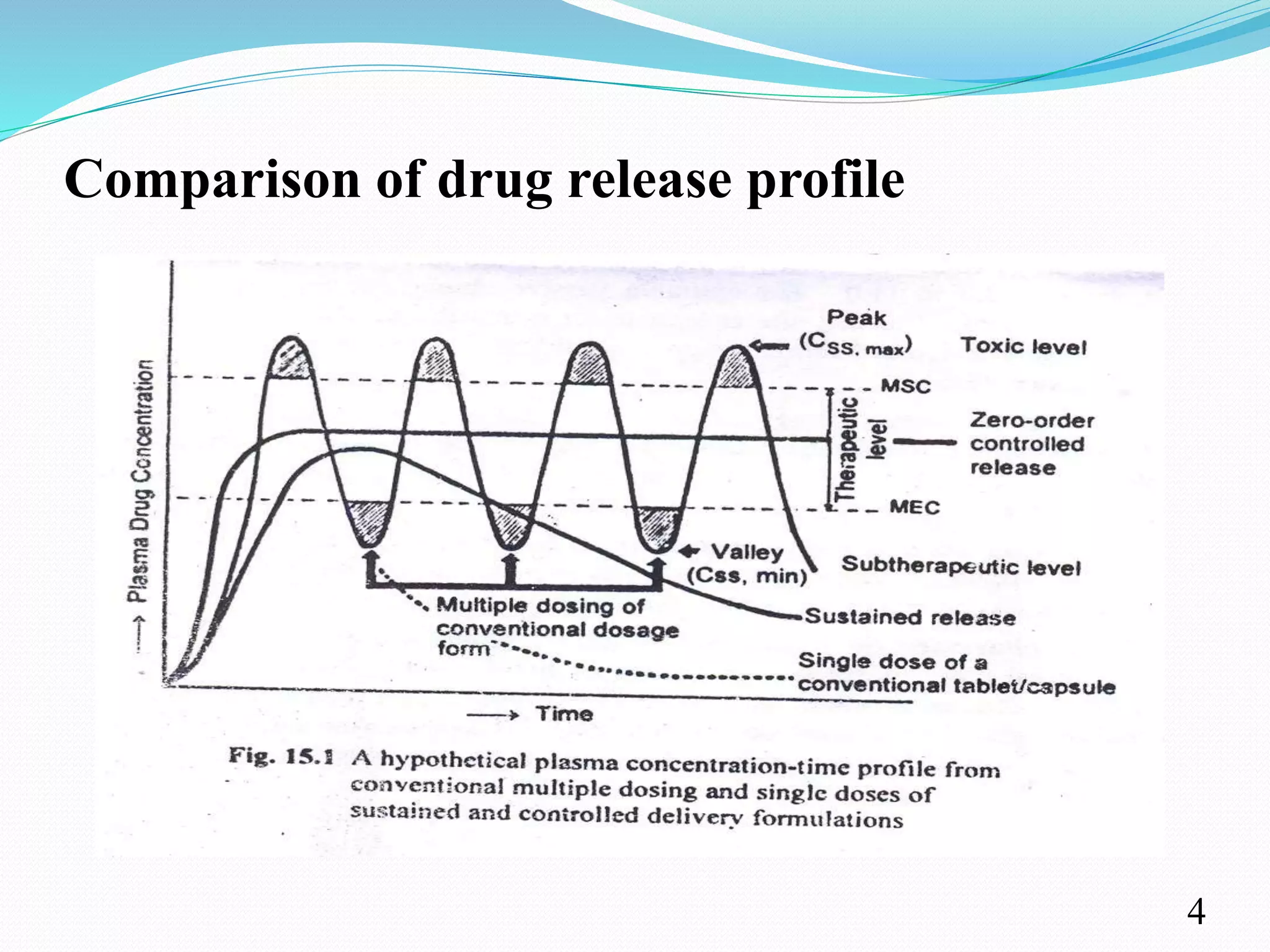
Sustained release are drug delivery system that achieve slow
release of drug over an extended period of time after
administration of single dose.
Controlled drug delivery system
Drug delivery System in which maintain constant level of drug
in blood and tissue for extended period of time.
3
Comparison of drug release profile
4
Advantages SR and CRDDS
Improve absorption, utilization and there by enhancing
bioavailability.
Decreased local and systemic side effects reduced
gastrointestinal irritation.
Reduction in dosing frequency.
Better patient acceptance and compliance.
Reduced fluctuations in circulating drug levels.
Reduction in the health care cost.
Bioavailability of certain drugs can be increased.
5
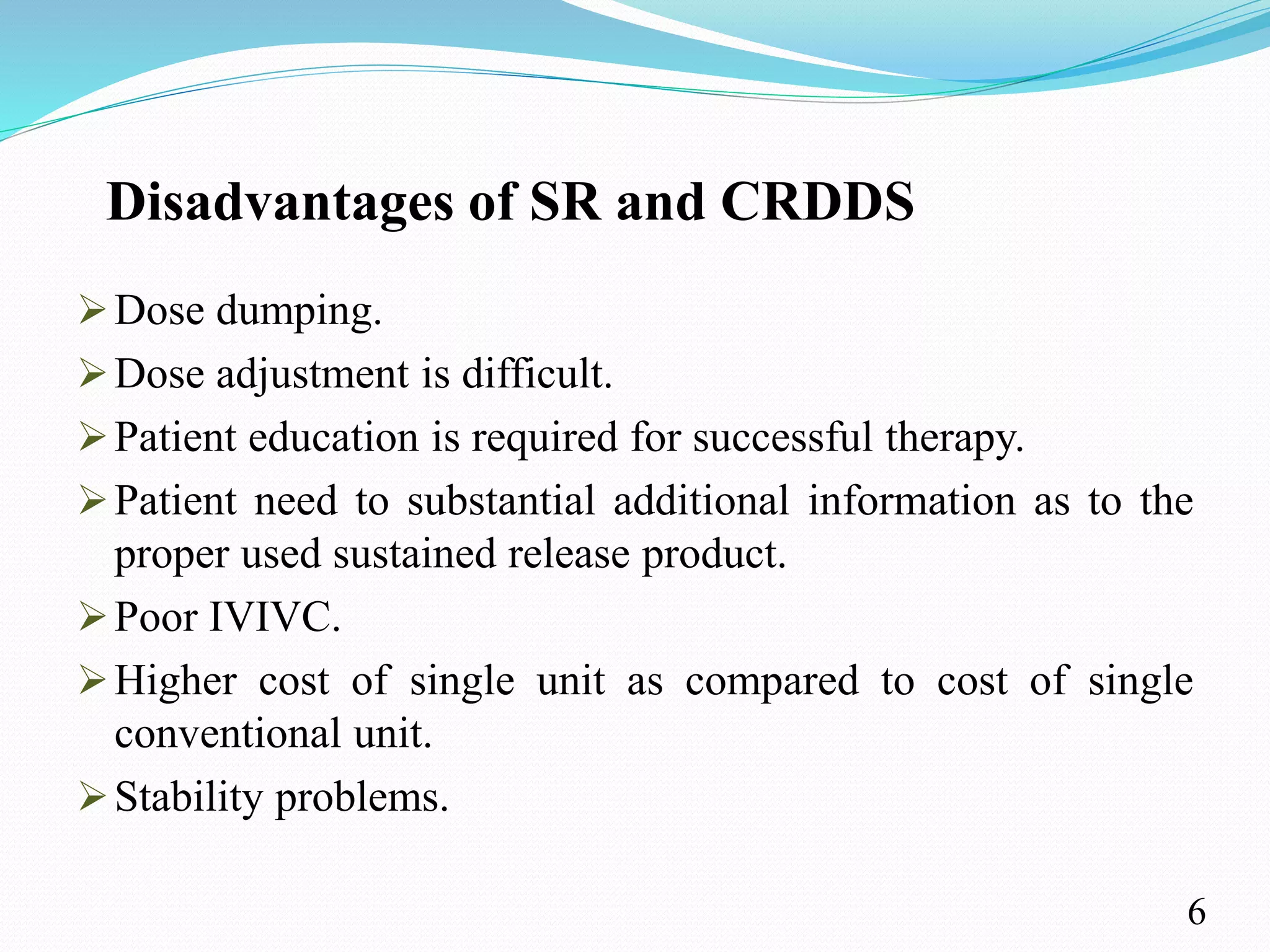
Disadvantages of SR and CRDDS
Dose dumping.
Dose adjustment is difficult.
Patient education is required for successful therapy.
Patient need to substantial additional information as to the
proper used sustained release product.
Poor IVIVC.
Higher cost of single unit as compared to cost of single
conventional unit.
Stability problems.
6
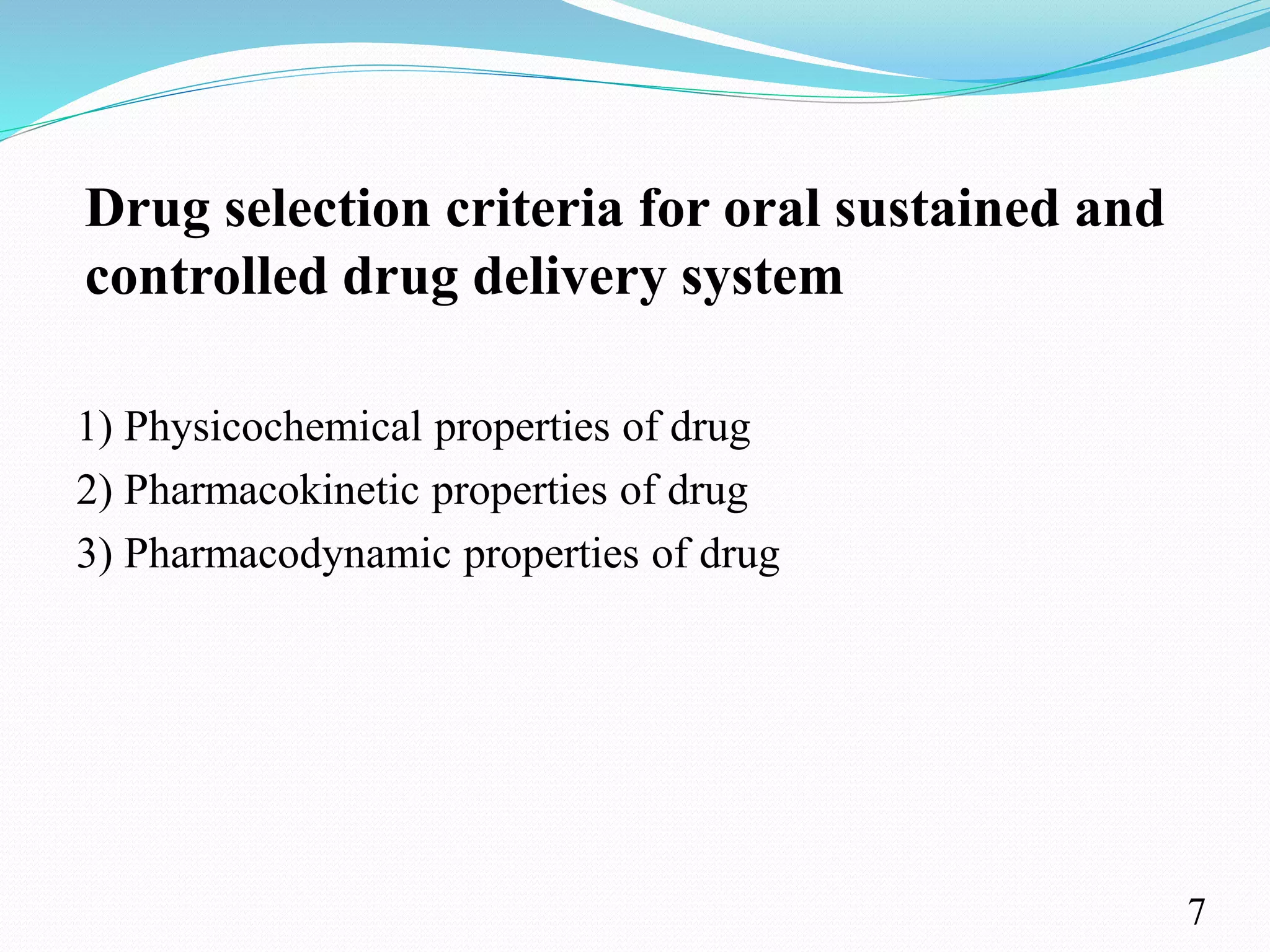
Drug selection criteria for oral sustained and
controlled drug delivery system
1) Physicochemical properties of drug
2) Pharmacokinetic properties of drug
3) Pharmacodynamic properties of drug
7
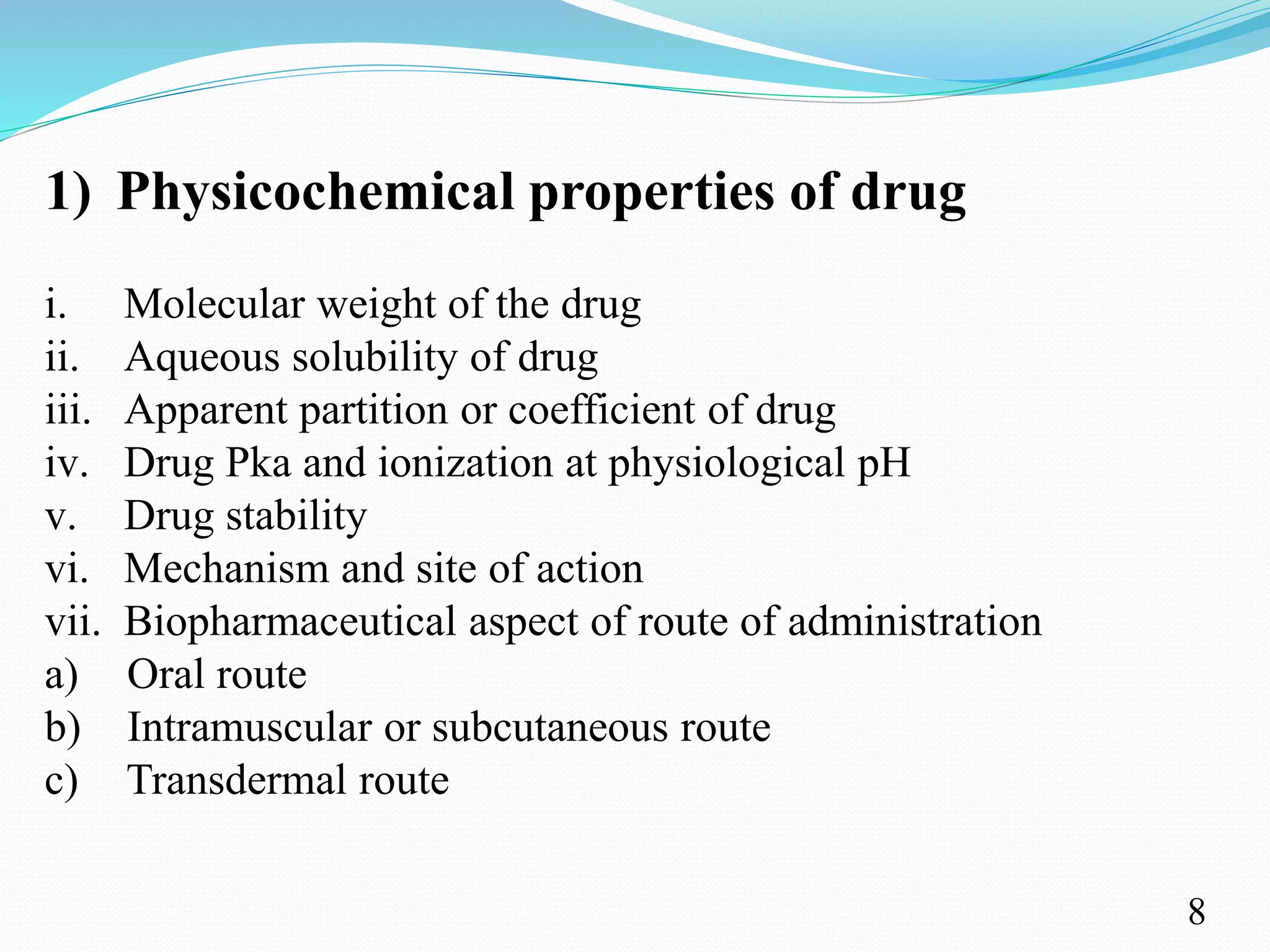
1) Physicochemical properties of drug
i. Molecular weight of the drug
ii. Aqueous solubility of drug
iii. Apparent partition or coefficient of drug
iv. Drug Pka and ionization at physiological pH
v. Drug stability
vi. Mechanism and site of action
vii. Biopharmaceutical aspect of route of administration
a) Oral route
b) Intramuscular or subcutaneous route
c) Transdermal route
8
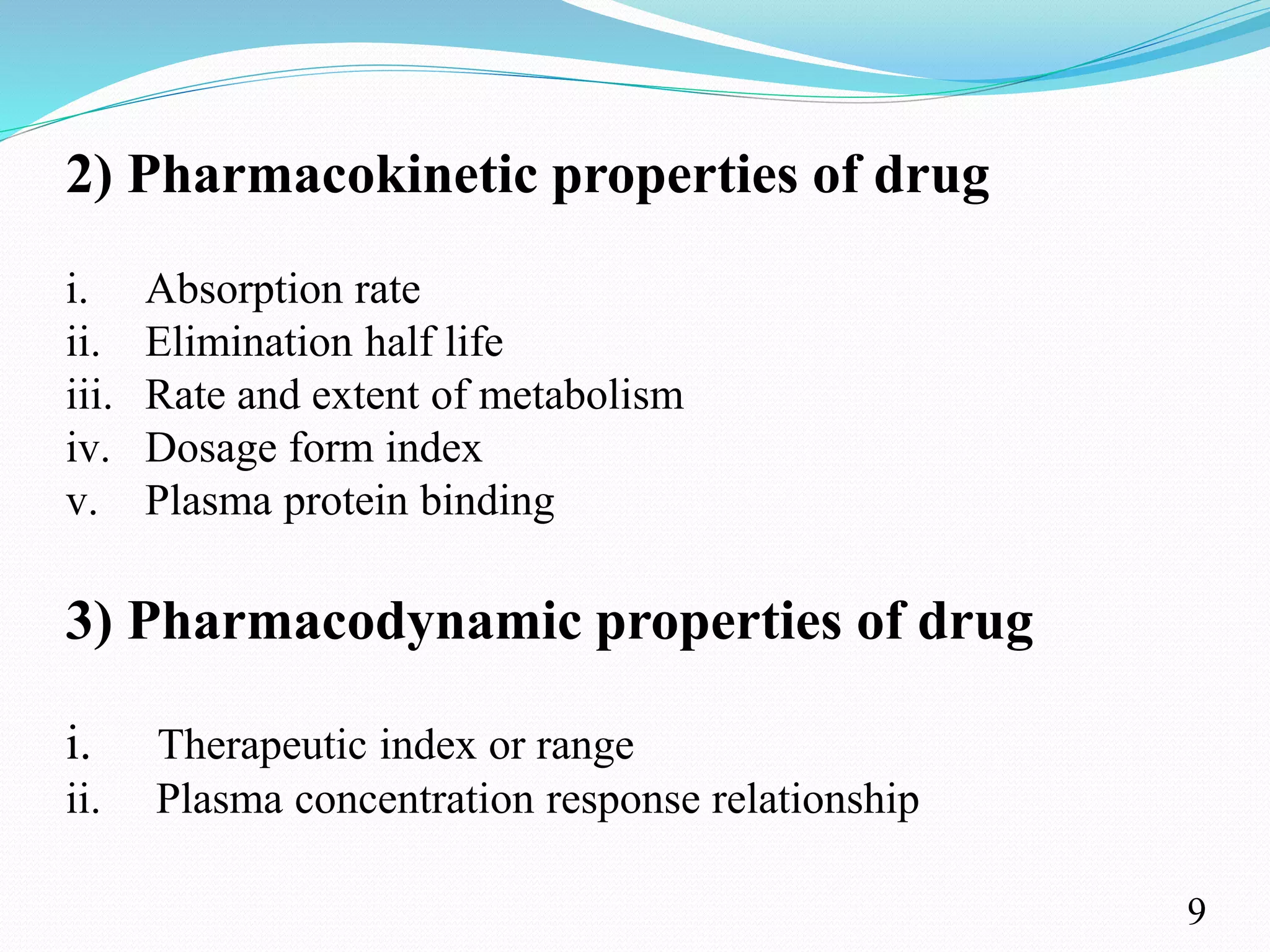
2) Pharmacokinetic properties of drug
i. Absorption rate
ii. Elimination half life
iii. Rate and extent of metabolism
iv. Dosage form index
v. Plasma protein binding
3) Pharmacodynamic properties of drug
i. Therapeutic index or range
ii. Plasma concentration response relationship
9
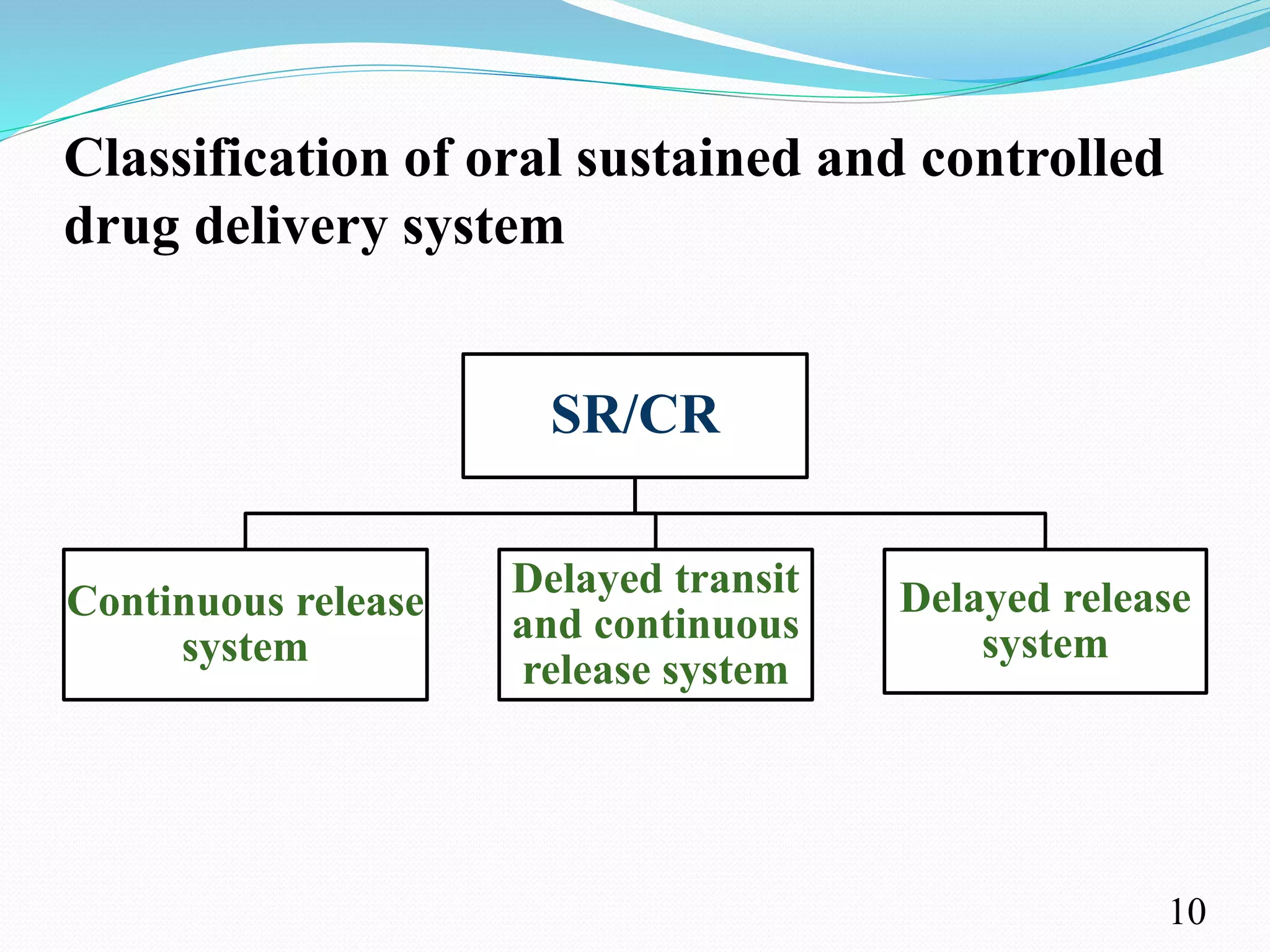
Classification of oral sustained and controlled
drug delivery system
10
SR/CR
Continuous release
system
Delayed transit
and continuous
release system
Delayed release
system
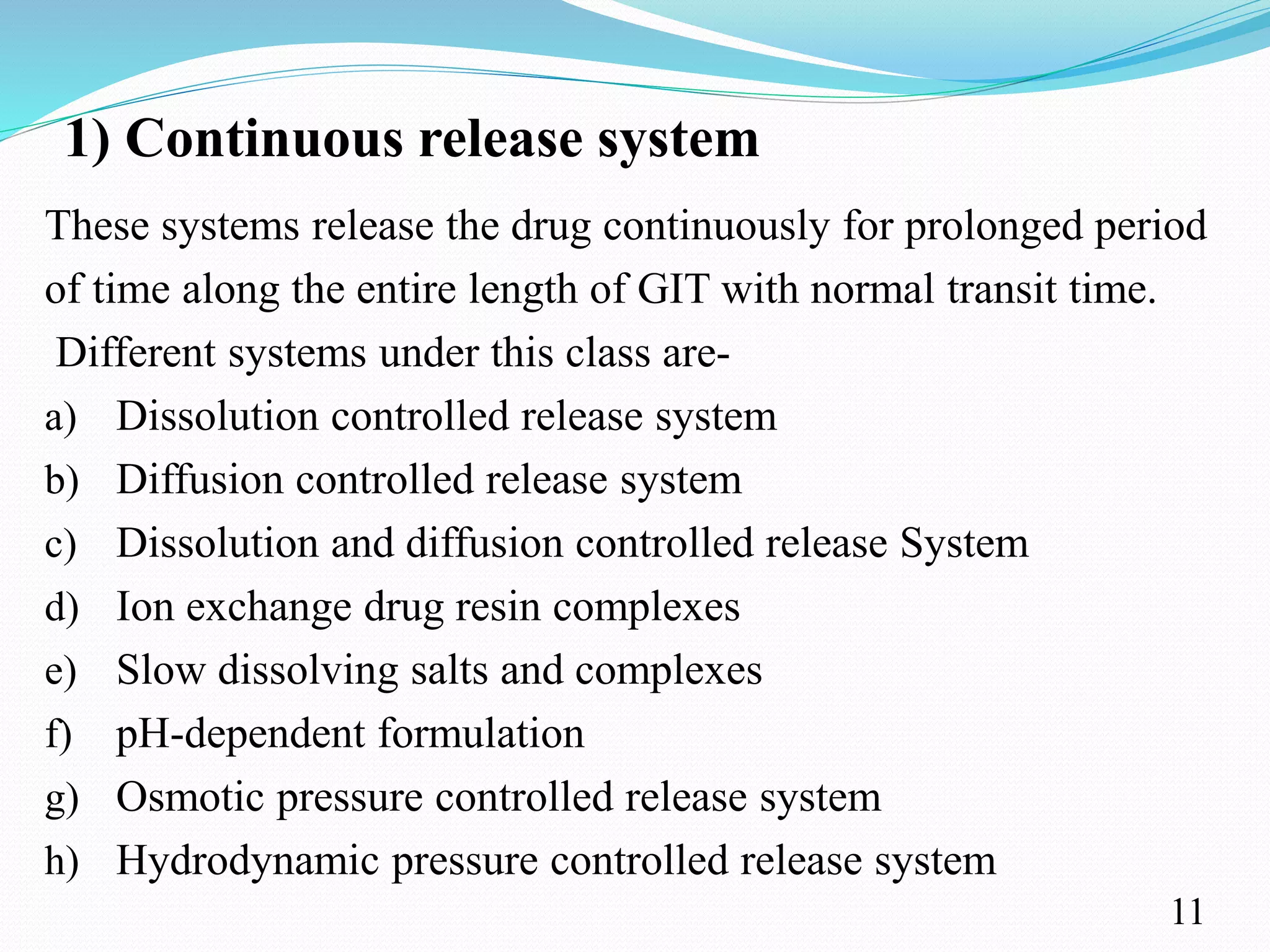
1) Continuous release system
These systems release the drug continuously for prolonged period
of time along the entire length of GIT with normal transit time.
Different systems under this class are-
a) Dissolution controlled release system
b) Diffusion controlled release system
c) Dissolution and diffusion controlled release System
d) Ion exchange drug resin complexes
e) Slow dissolving salts and complexes
f) pH-dependent formulation
g) Osmotic pressure controlled release system
h) Hydrodynamic pressure controlled release system
11
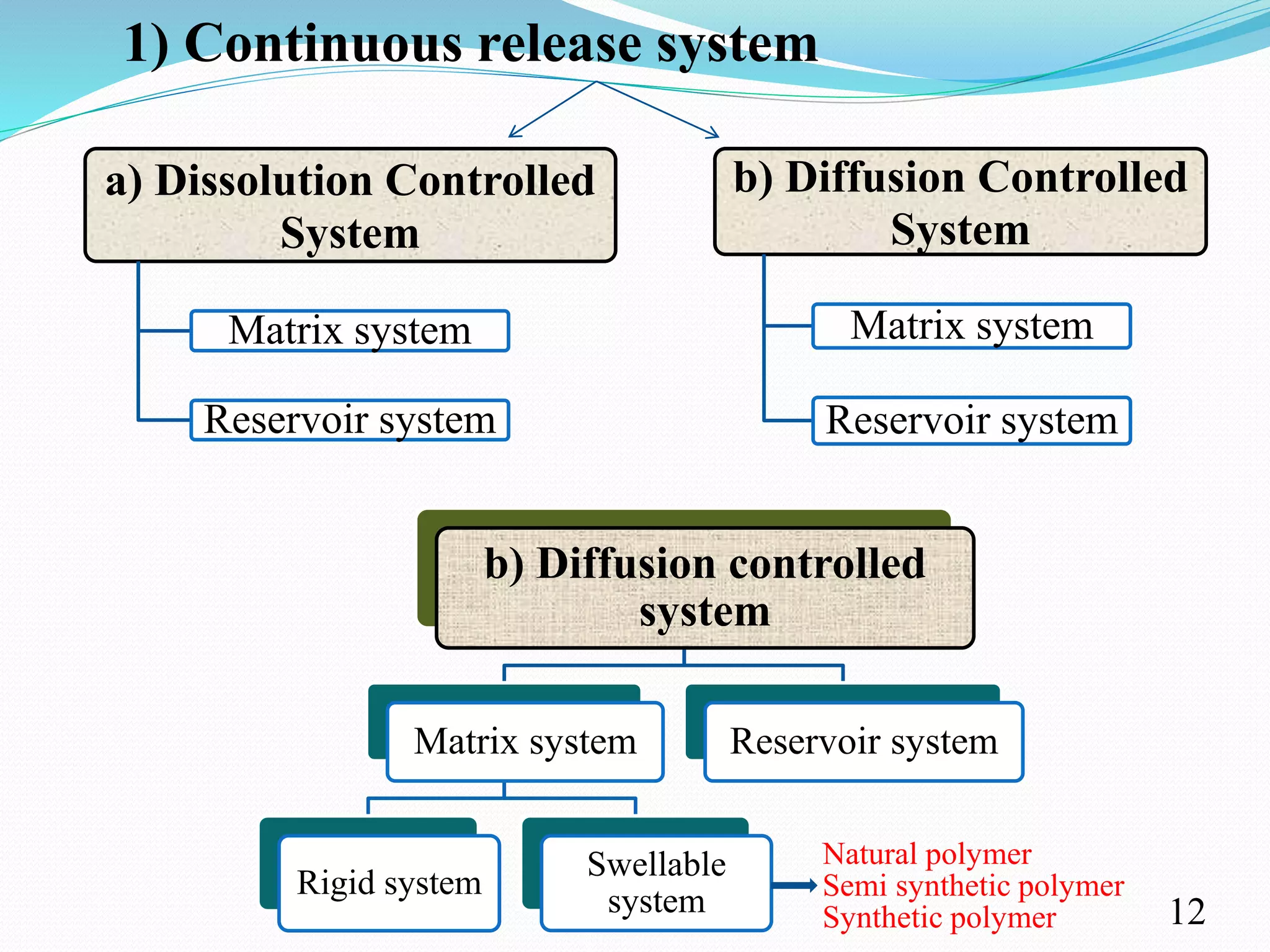
a) Dissolution Controlled
System
Matrix system
Reservoir system
b) Diffusion Controlled
System
Matrix system
Reservoir system
b) Diffusion controlled
system
Matrix system
Rigid system
Swellable
system
Reservoir system
1) Continuous release system
Natural polymer
Synthetic polymer
Semi synthetic polymer
12
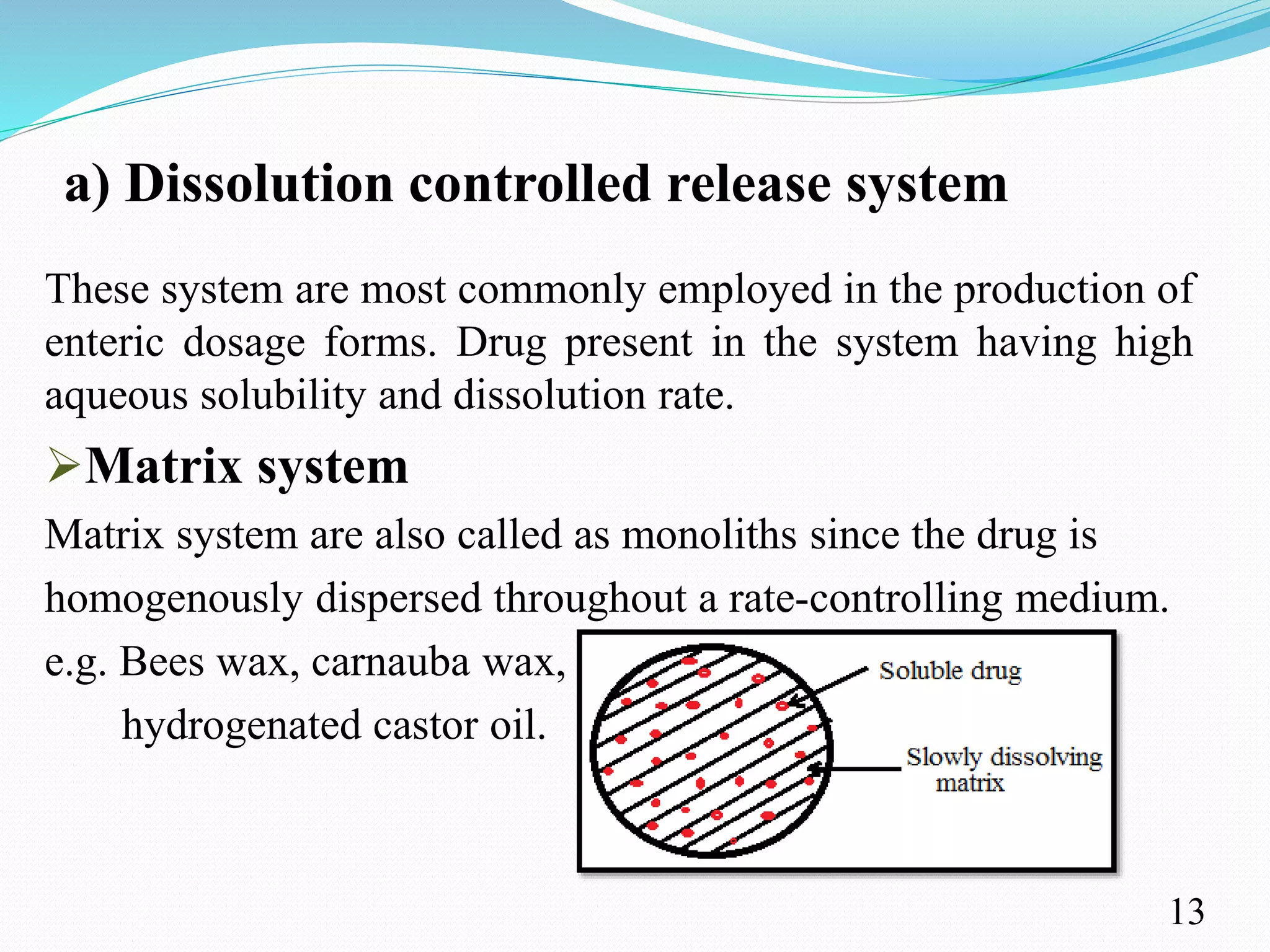
a) Dissolution controlled release system
These system are most commonly employed in the production of
enteric dosage forms. Drug present in the system having high
aqueous solubility and dissolution rate.
Matrix system
Matrix system are also called as monoliths since the drug is
homogenously dispersed throughout a rate-controlling medium.
e.g. Bees wax, carnauba wax,
hydrogenated castor oil.
13
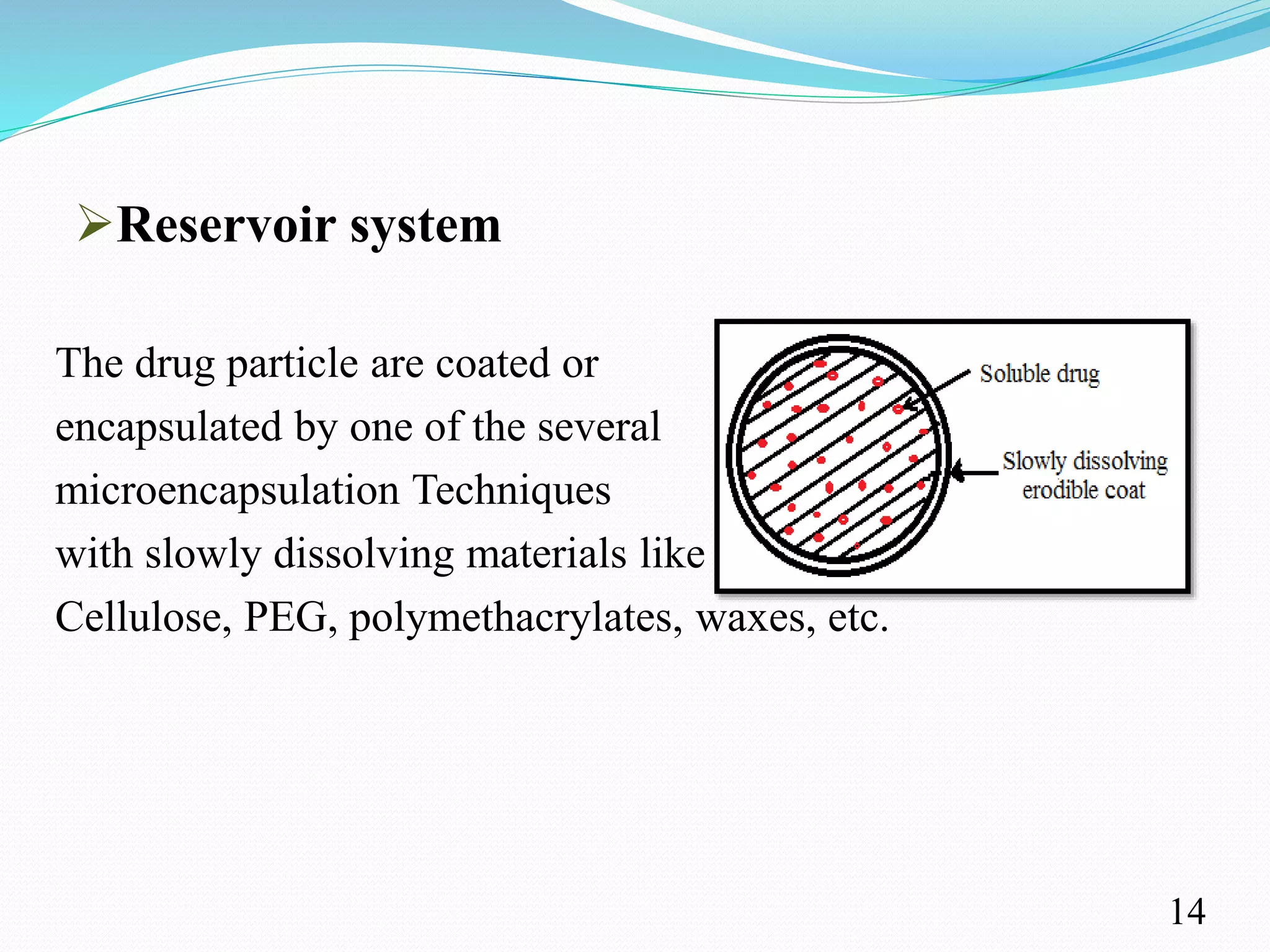
Reservoir system
The drug particle are coated or
encapsulated by one of the several
microencapsulation Techniques
with slowly dissolving materials like
Cellulose, PEG, polymethacrylates, waxes, etc.
14
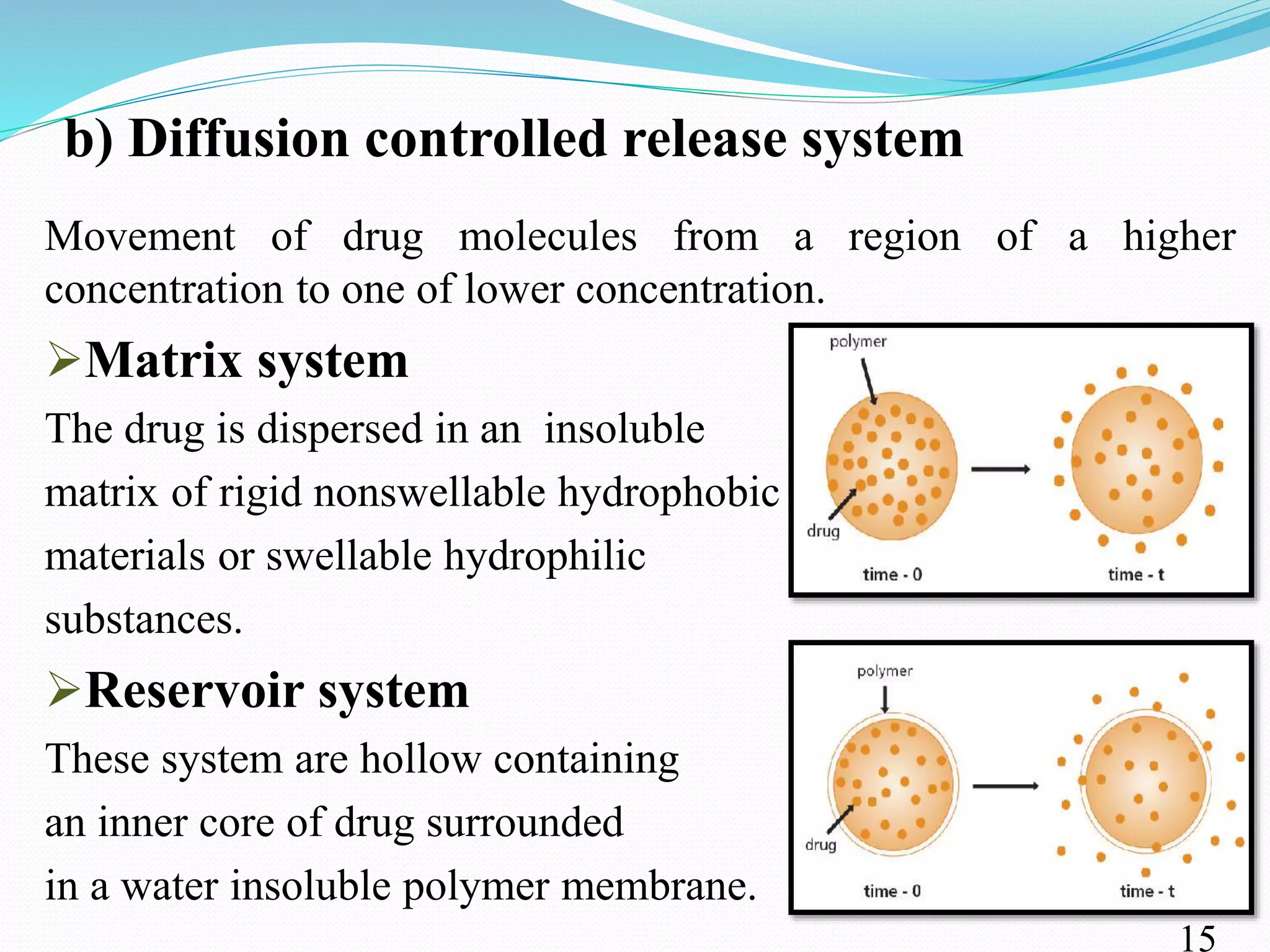
b) Diffusion controlled release system
Movement of drug molecules from a region of a higher
concentration to one of lower concentration.
Matrix system
The drug is dispersed in an insoluble
matrix of rigid nonswellable hydrophobic
materials or swellable hydrophilic
substances.
Reservoir system
These system are hollow containing
an inner core of drug surrounded
in a water insoluble polymer membrane.
15
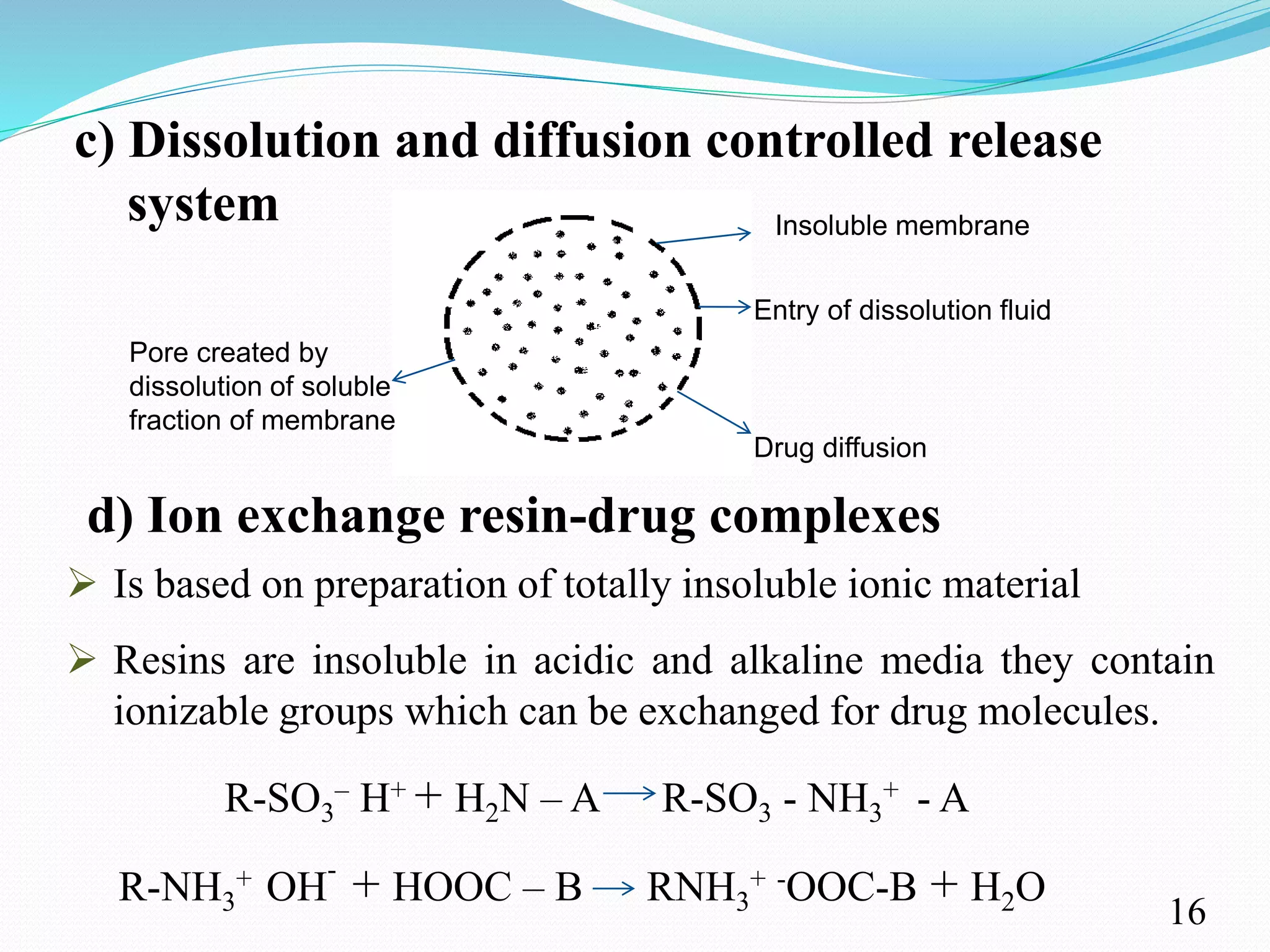
c) Dissolution and diffusion controlled release
system Insoluble membrane
Pore created by
dissolution of soluble
fraction of membrane
Entry of dissolution fluid
Drug diffusion
d) Ion exchange resin-drug complexes
 Is based on preparation of totally insoluble ionic material
 Resins are insoluble in acidic and alkaline media they contain
ionizable groups which can be exchanged for drug molecules.
R-SO3
– H+ + H2N – A R-SO3 - NH3
+ - A
R-NH3
+ OH
-
+ HOOC – B RNH3
+ -OOC-B + H2O
16
e) Slowly dissolving salts and complexes
Salt or complexes of drug which are slowly soluble in the GI
Fluid can be used for controlled release of the drug.
e.g. Penicillin G has been complexed with N,N- dibenzyl
ethylene diamine to give benzathine penicillin G.
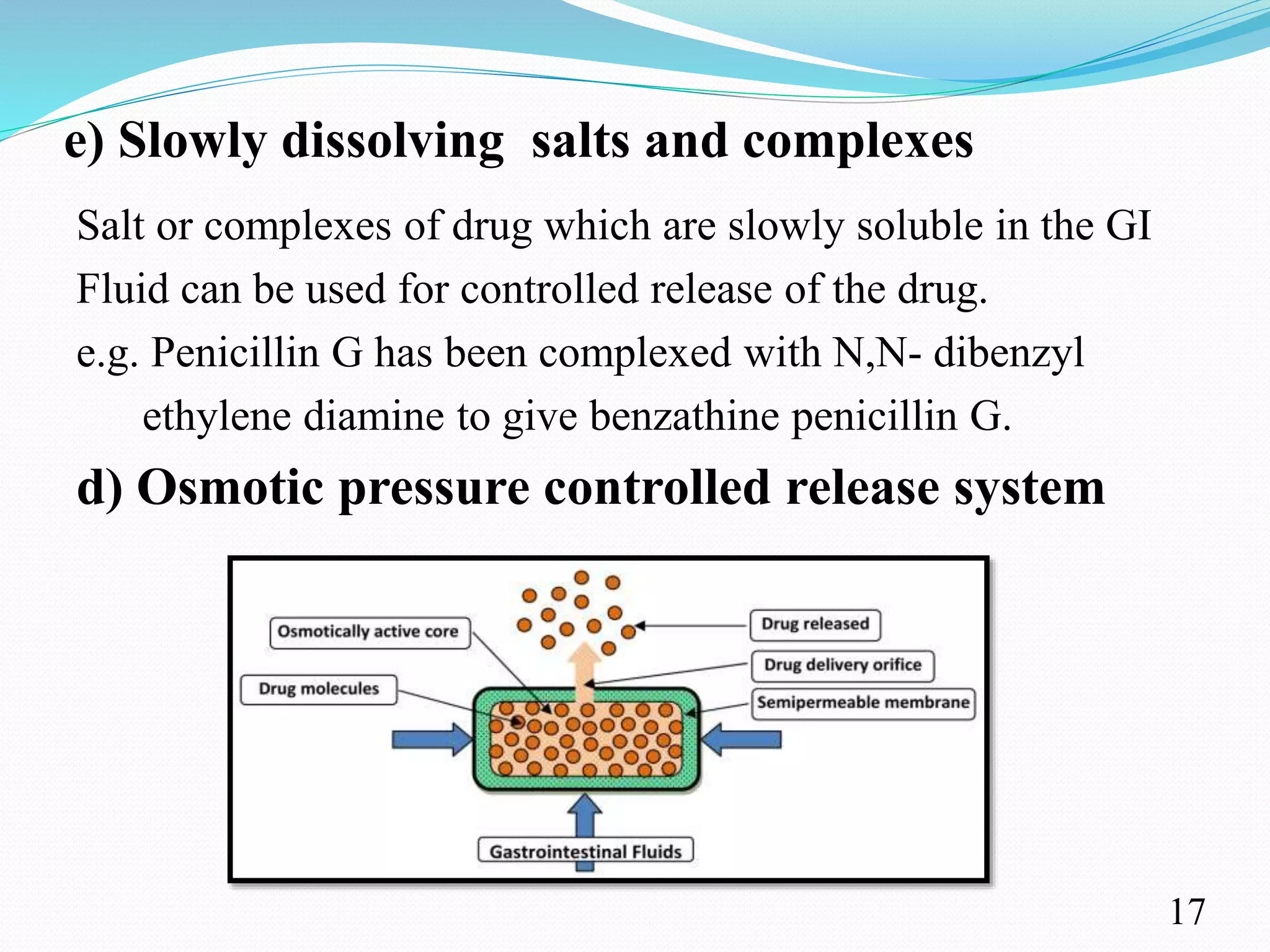
d) Osmotic pressure controlled release system
17
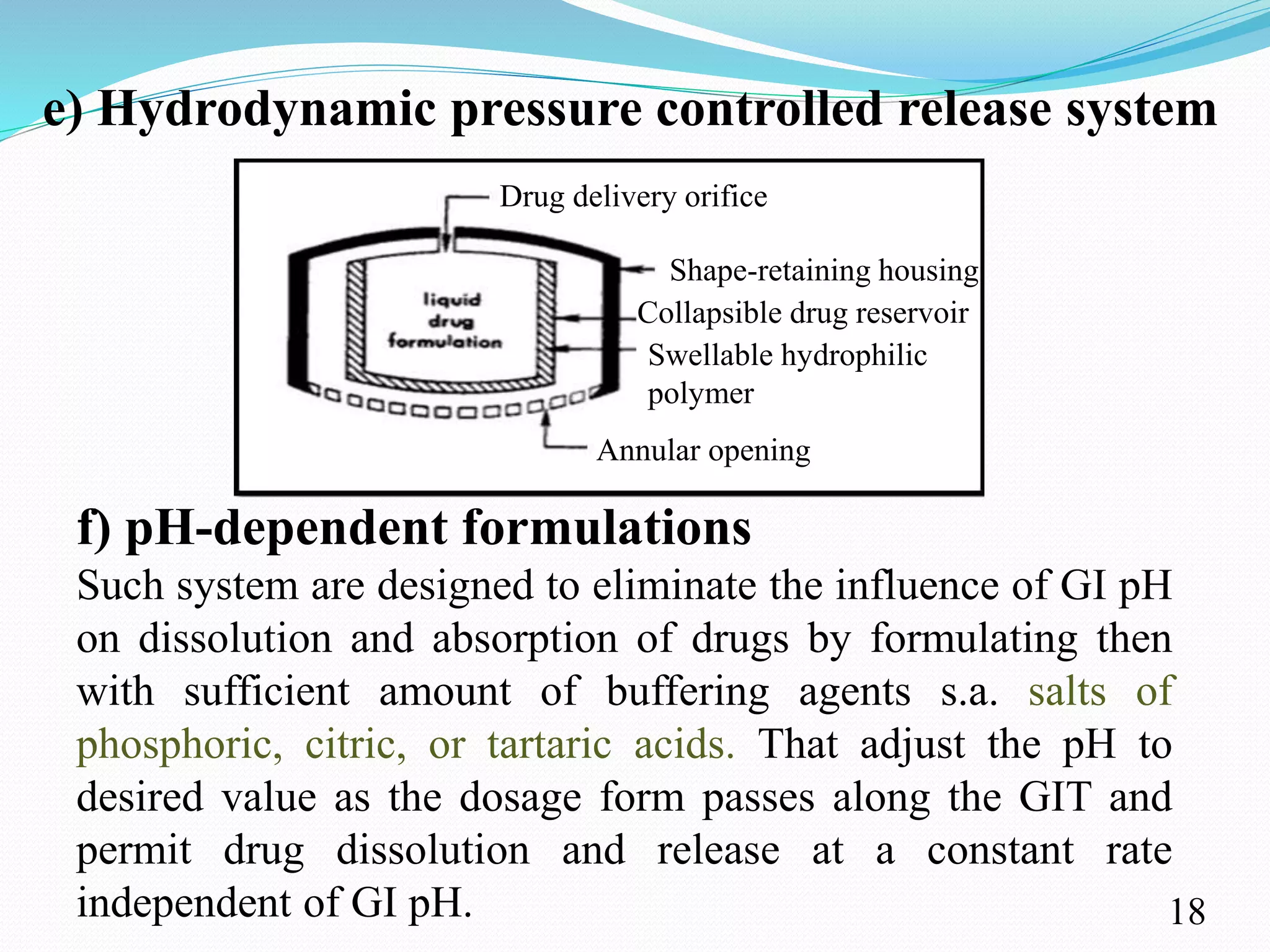
e) Hydrodynamic pressure controlled release system
Such system are designed to eliminate the influence of GI pH
on dissolution and absorption of drugs by formulating then
with sufficient amount of buffering agents s.a. salts of
phosphoric, citric, or tartaric acids. That adjust the pH to
desired value as the dosage form passes along the GIT and
permit drug dissolution and release at a constant rate
independent of GI pH.
f) pH-dependent formulations
18
Drug delivery orifice
Shape-retaining housing
Collapsible drug reservoir
Annular opening
Swellable hydrophilic
polymer
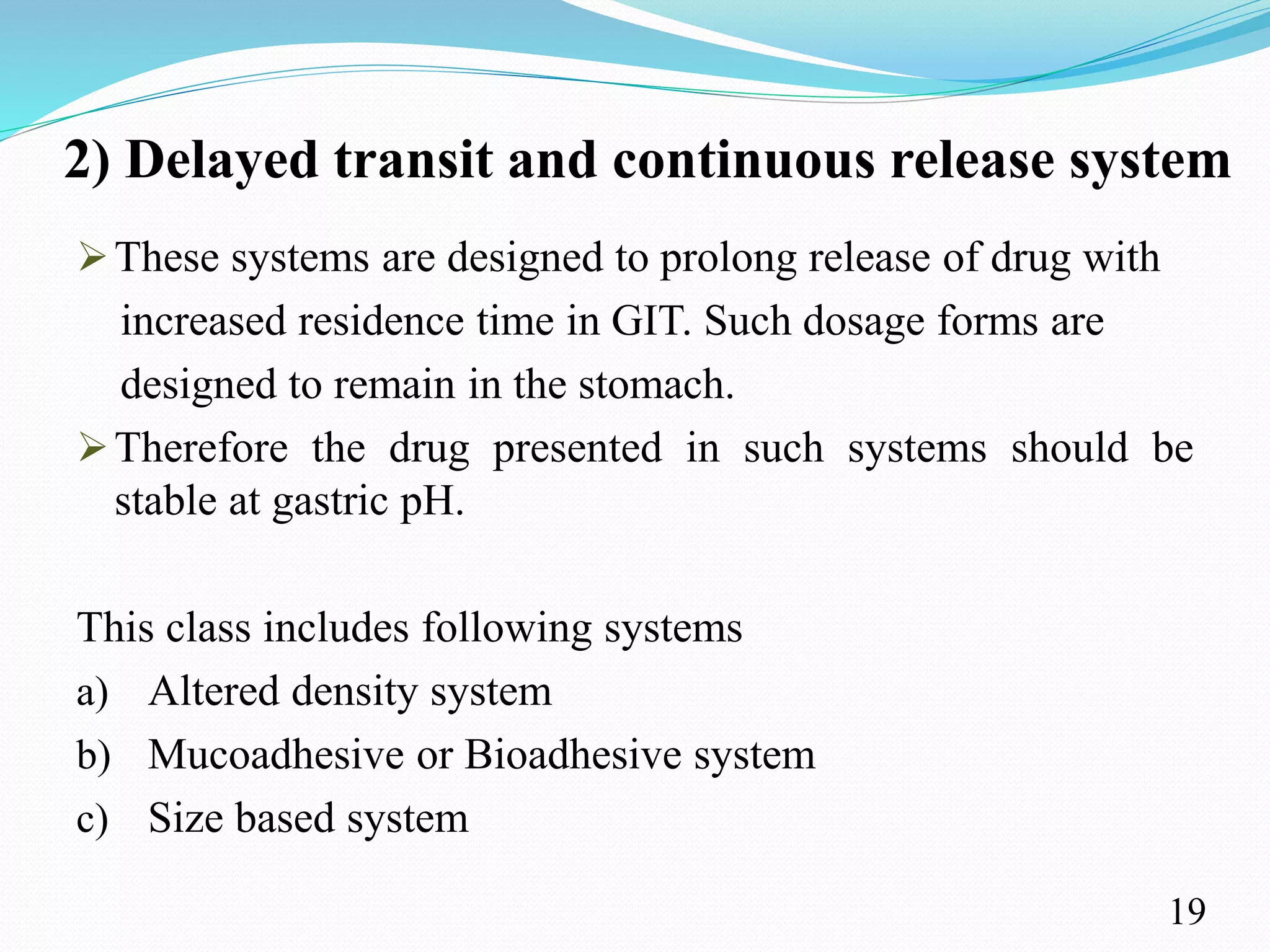
2) Delayed transit and continuous release system
These systems are designed to prolong release of drug with
increased residence time in GIT. Such dosage forms are
designed to remain in the stomach.
Therefore the drug presented in such systems should be
stable at gastric pH.
This class includes following systems
a) Altered density system
b) Mucoadhesive or Bioadhesive system
c) Size based system
19
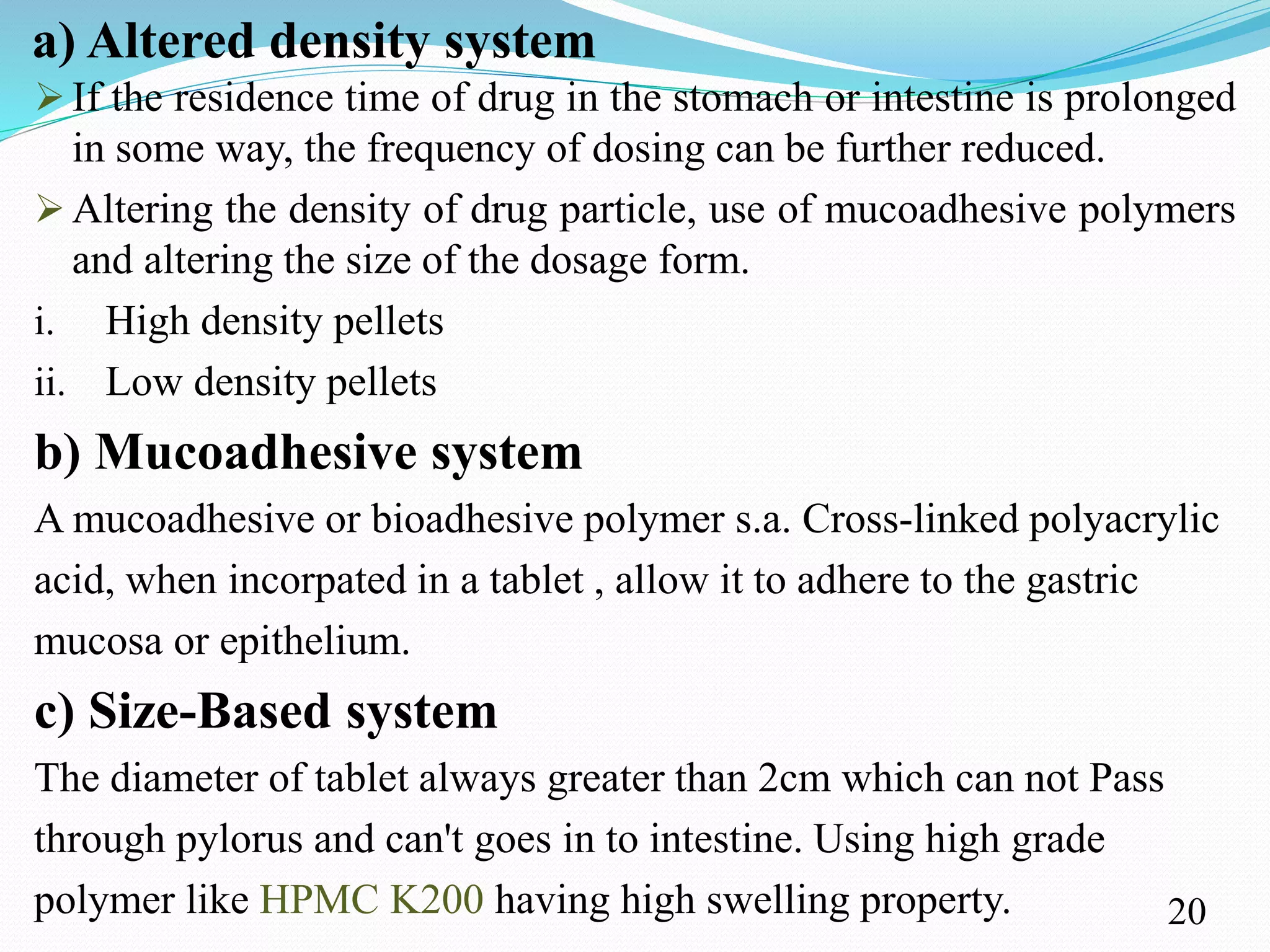
a) Altered density system
 If the residence time of drug in the stomach or intestine is prolonged
in some way, the frequency of dosing can be further reduced.
 Altering the density of drug particle, use of mucoadhesive polymers
and altering the size of the dosage form.
i. High density pellets
ii. Low density pellets
b) Mucoadhesive system
A mucoadhesive or bioadhesive polymer s.a. Cross-linked polyacrylic
acid, when incorpated in a tablet , allow it to adhere to the gastric
mucosa or epithelium.
c) Size-Based system
The diameter of tablet always greater than 2cm which can not Pass
through pylorus and can't goes in to intestine. Using high grade
polymer like HPMC K200 having high swelling property. 20
3) Delayed release system
These systems are fabricated to release the drug only at specific
site in the GIT.
The drugs those are-
 Destroyed in stomach or by intestinal enzymes.
 Known to cause gastric irritation
 Absorbed from specific site in intestine are formulated in
such systems.
The two types of delayed release systems are
a) Intestinal release system
b) Colonic release system
21
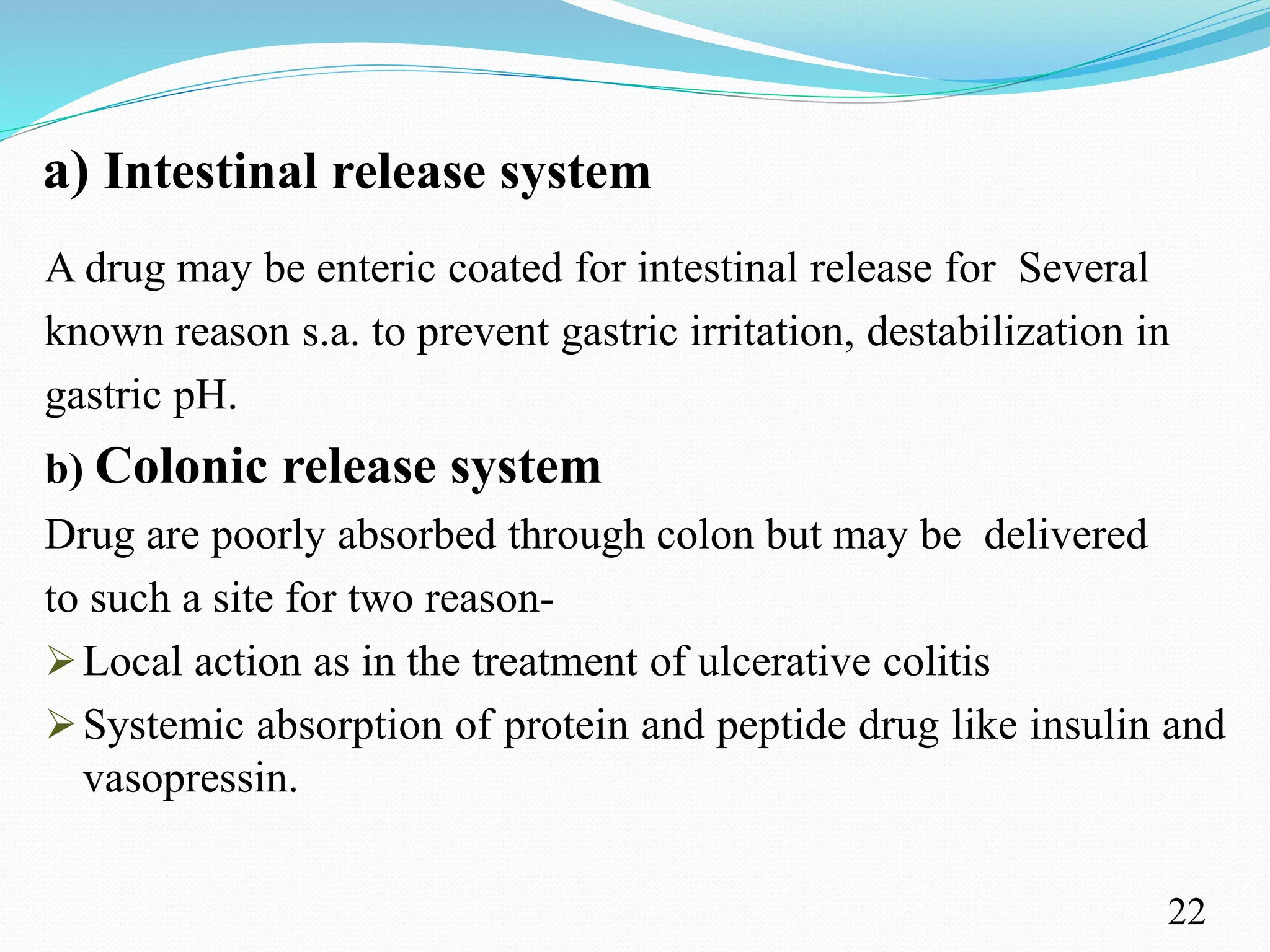
a) Intestinal release system
A drug may be enteric coated for intestinal release for Several
known reason s.a. to prevent gastric irritation, destabilization in
gastric pH.
b) Colonic release system
Drug are poorly absorbed through colon but may be delivered
to such a site for two reason-
Local action as in the treatment of ulcerative colitis
Systemic absorption of protein and peptide drug like insulin and
vasopressin.
22
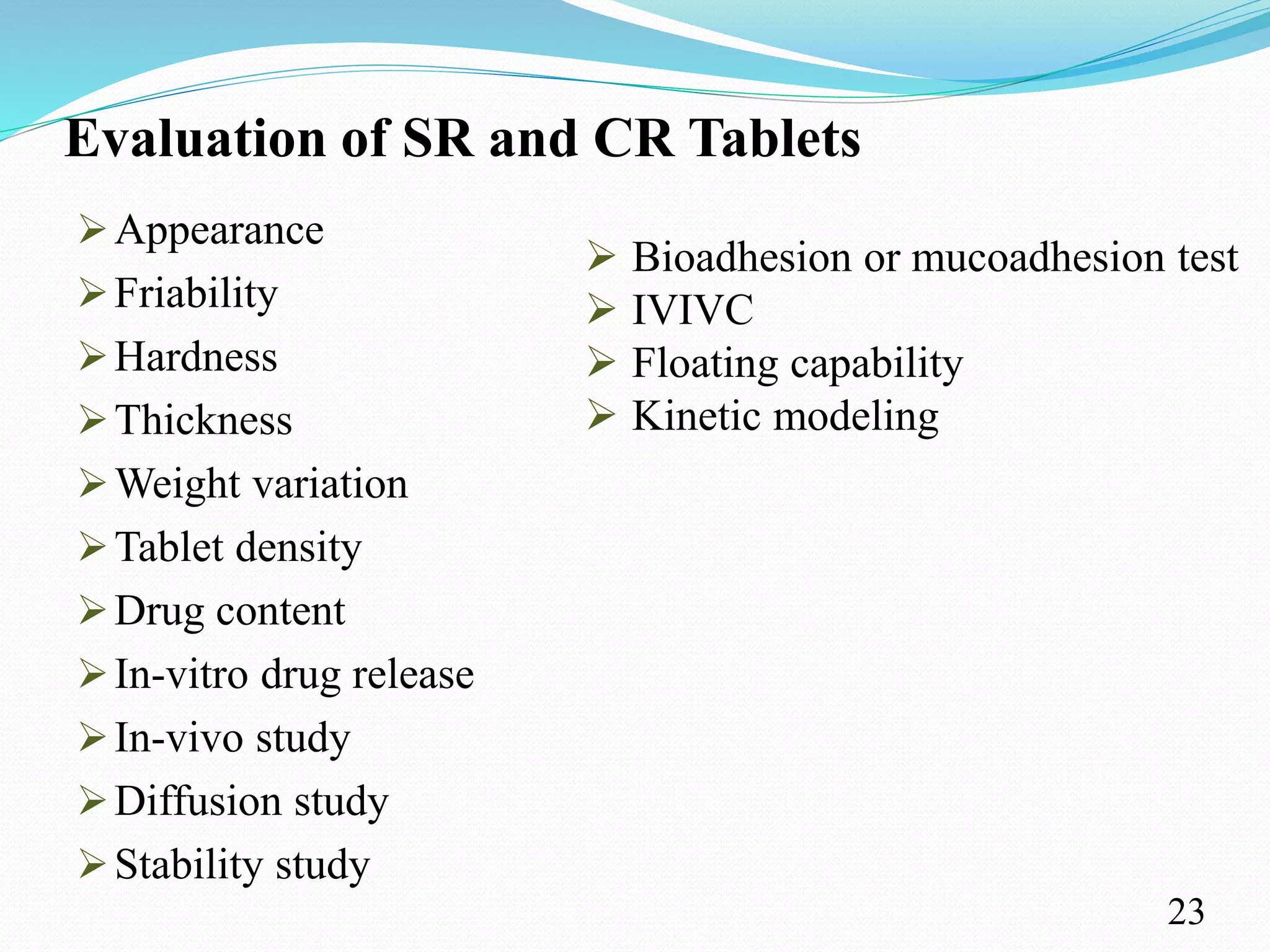
Evaluation of SR and CR Tablets
Appearance
Friability
Hardness
Thickness
Weight variation
Tablet density
Drug content
In-vitro drug release
In-vivo study
Diffusion study
Stability study
23
 Bioadhesion or mucoadhesion test
 IVIVC
 Floating capability
 Kinetic modeling
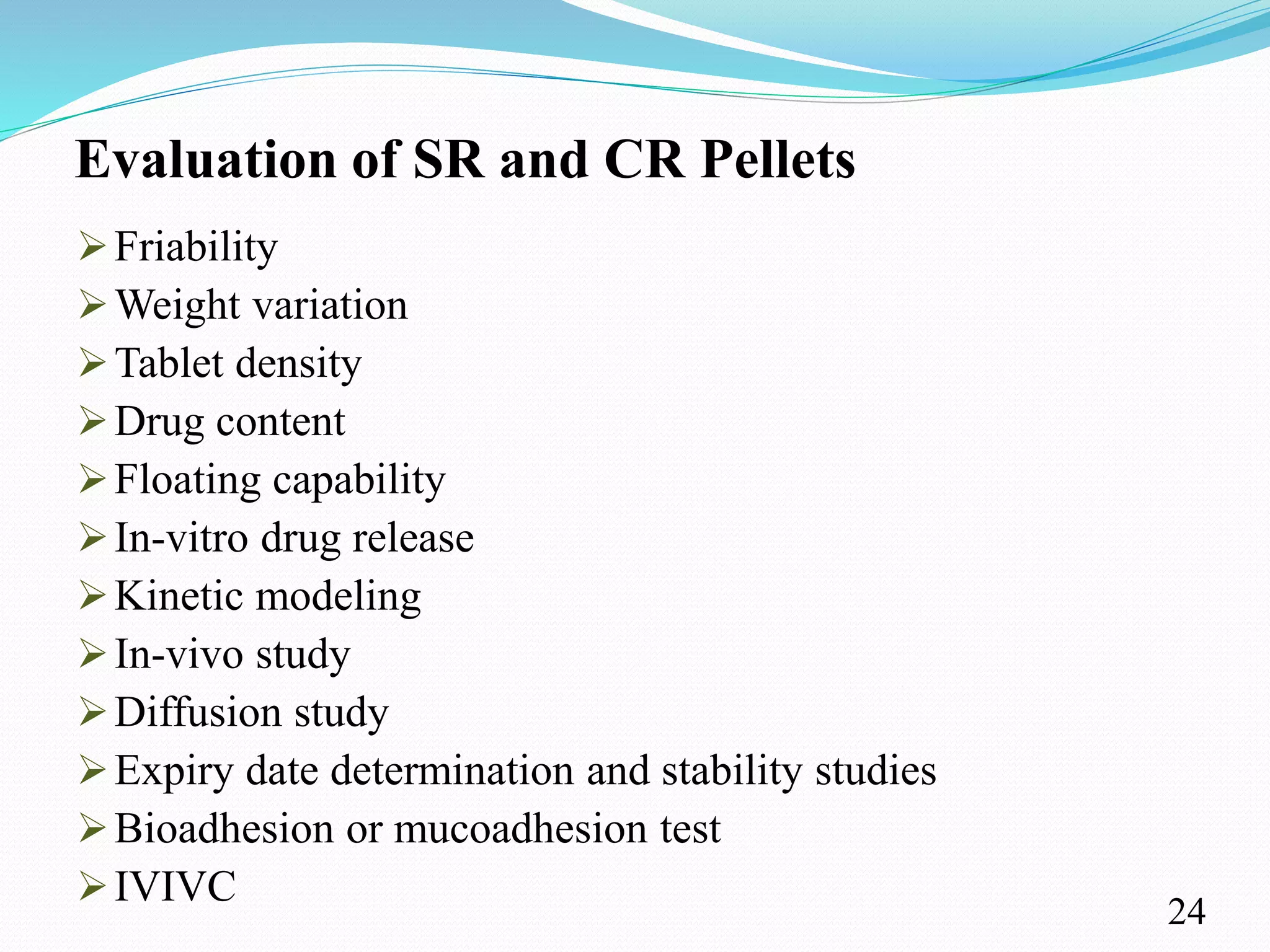
Evaluation of SR and CR Pellets
Friability
Weight variation
Tablet density
Drug content
Floating capability
In-vitro drug release
Kinetic modeling
In-vivo study
Diffusion study
Expiry date determination and stability studies
Bioadhesion or mucoadhesion test
IVIVC
24
Evaluation of SR and CR Capsules
Weight variation
Drug content
In-vivo study
In-vitro drug release
Stability study
25
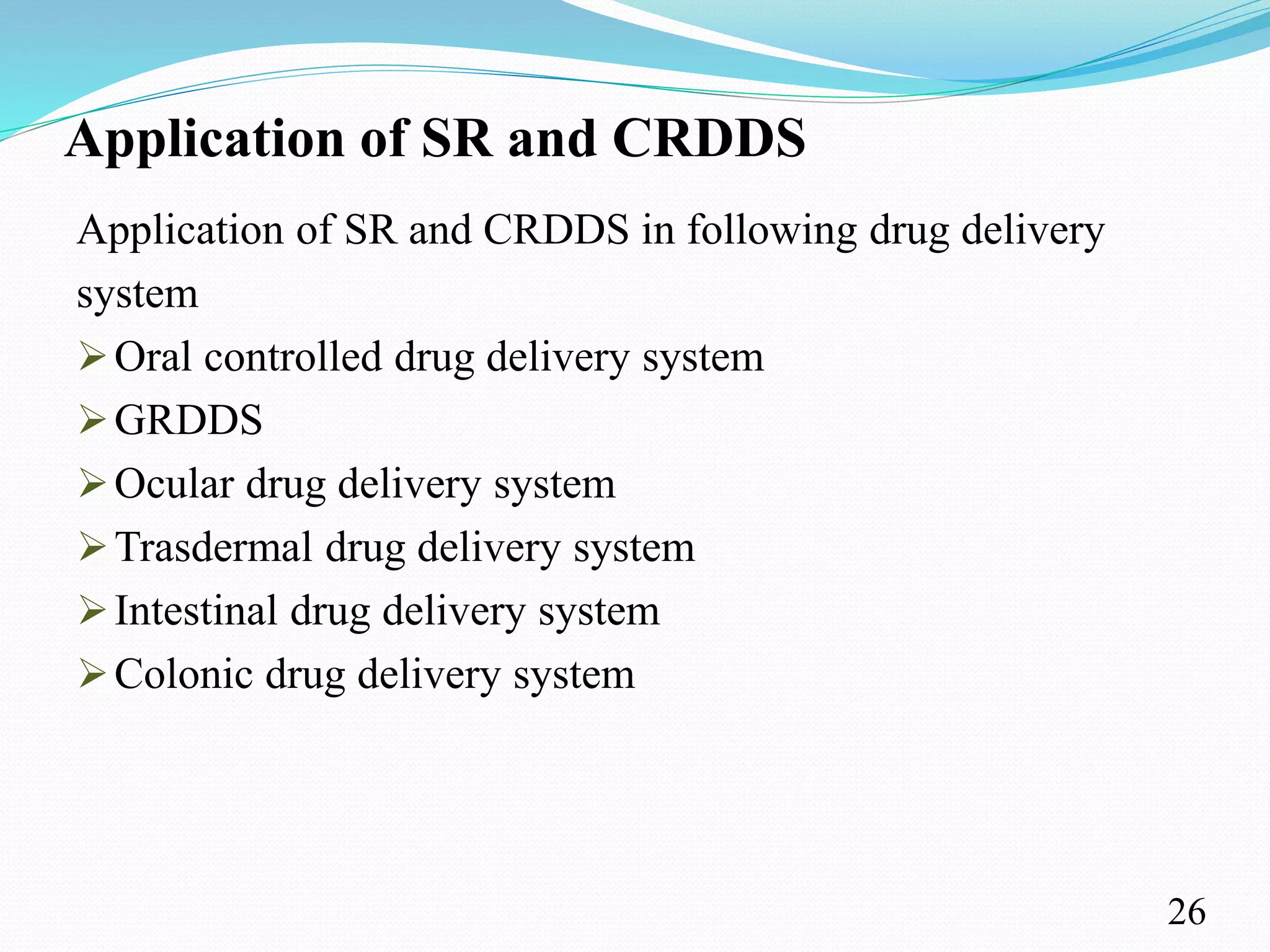
Application of SR and CRDDS
Application of SR and CRDDS in following drug delivery
system
Oral controlled drug delivery system
GRDDS
Ocular drug delivery system
Trasdermal drug delivery system
Intestinal drug delivery system
Colonic drug delivery system
26
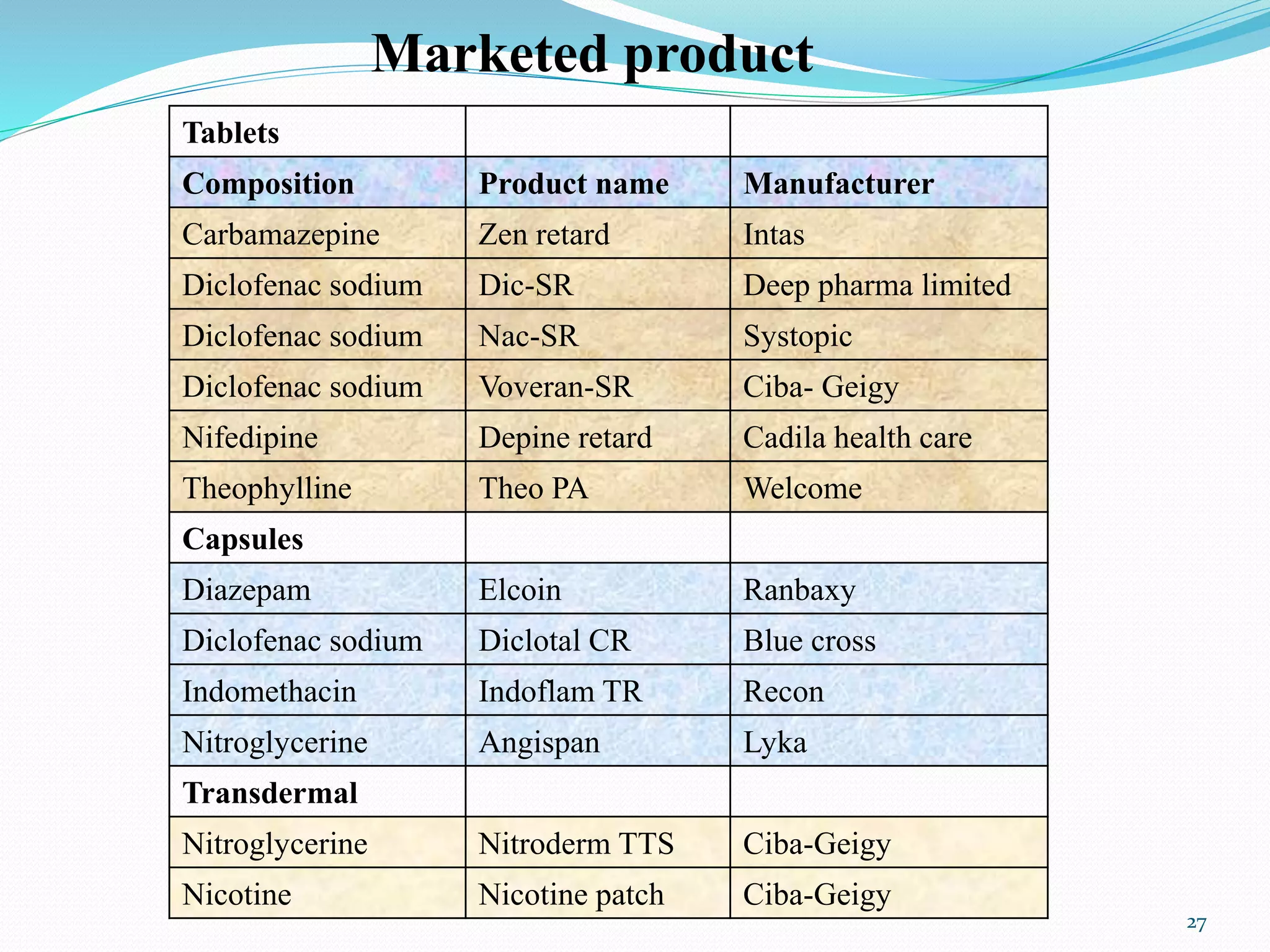
Marketed product
27
Tablets
Composition Product name Manufacturer
Carbamazepine Zen retard Intas
Diclofenac sodium Dic-SR Deep pharma limited
Diclofenac sodium Nac-SR Systopic
Diclofenac sodium Voveran-SR Ciba- Geigy
Nifedipine Depine retard Cadila health care
Theophylline Theo PA Welcome
Capsules
Diazepam Elcoin Ranbaxy
Diclofenac sodium Diclotal CR Blue cross
Indomethacin Indoflam TR Recon
Nitroglycerine Angispan Lyka
Transdermal
Nitroglycerine Nitroderm TTS Ciba-Geigy
Nicotine Nicotine patch Ciba-Geigy
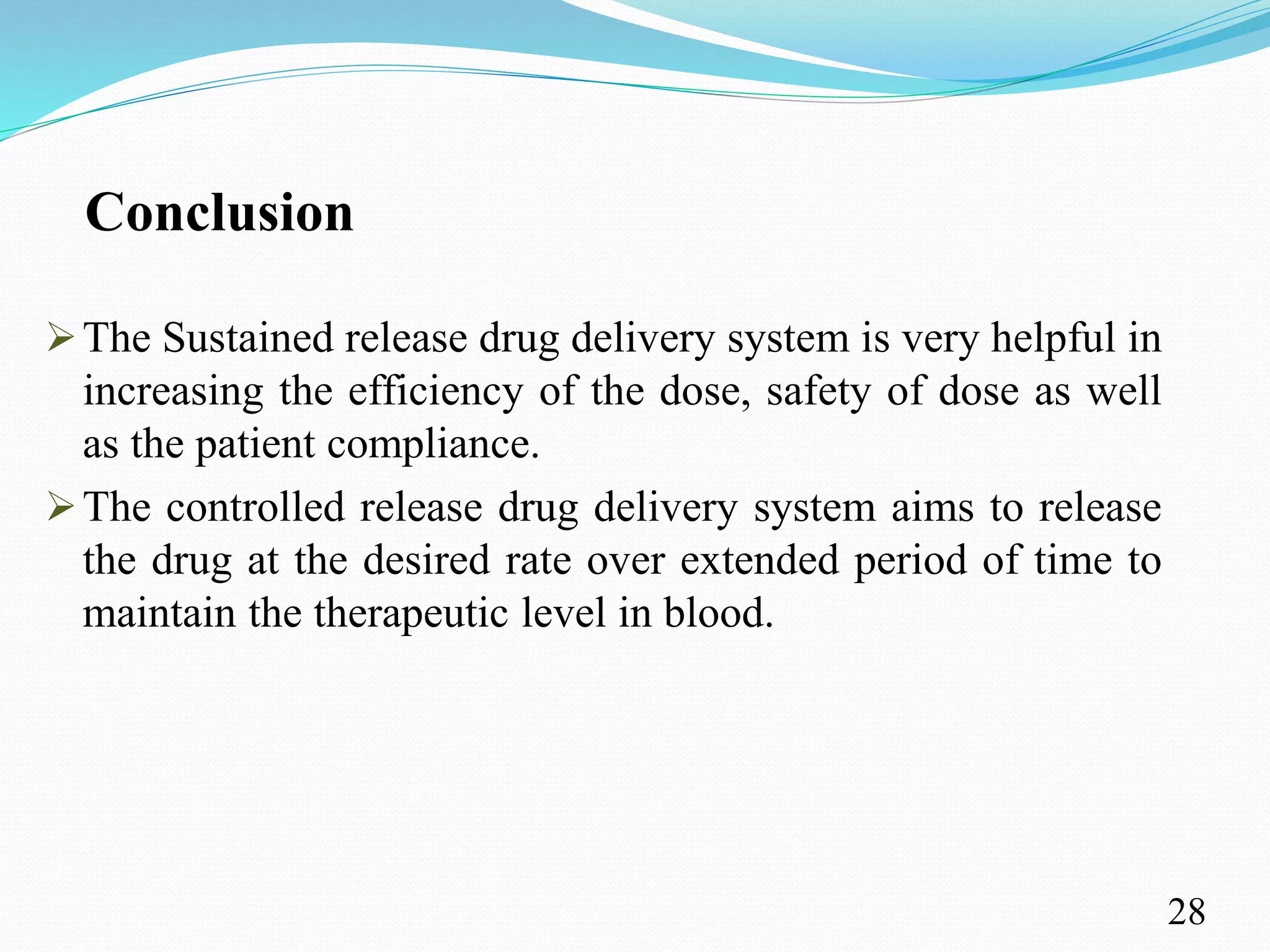
Conclusion
The Sustained release drug delivery system is very helpful in
increasing the efficiency of the dose, safety of dose as well
as the patient compliance.
The controlled release drug delivery system aims to release
the drug at the desired rate over extended period of time to
maintain the therapeutic level in blood.
28
References
Brahmankar D.M. and Jaiswal S.B. (2010), Biopharmaceutics
and Pharmacokinetics a Treatise. Delhi, Vallabh Prakashan,
2nd edition, pp.397-463.
Dr. Dheeraj T. Baviskar and Dr. Dinesh K. Jain, Novel drug
delivery system, Nirali prakashan, 3rd edition (2016), pp.2.1-2.31.
 C.V.S Subrahmanyam, Textbook of Biopharmaceutics and
Pharmacokinetic, Vallabh prakashan, 2nd edition(2015), pp.262-284.
Ratnaparkhi, M.P. and Gupta Jyoti, P., 2013. Sustained release
oral drug delivery system an overview. Terminology, 3, p.4.
Isha, C., Nimrata, S., Rana, A.C. and Surbhi, G., 2012. Oral
sustained release drug delivery system:an overview. International
research journal of pharmacy, 3(5), pp.57-62.
29
Rao, A.A., Rao, V.N., Devi, A.S., Anil, K., Naik, V.V. and
Rajesh, A., 2015. Oral controlled release drug delivery
system: an overview. International Journal of Pharma and
Chemical Research, 1(1), pp.6-15.
Deshpande, A.A., Rhodes, C.T., Shah, N.H. and Malick,
A.W., 1996. Controlled-release drug delivery systems for
prolonged gastric residence: an overview. Drug
Development and Industrial Pharmacy, 22(6), pp.531-539.
DIXIT, N. et.al. (2013). Sustained Release Drug Delivery
System. Indian Journal of Research in Pharmacy and
Biotechnology, 1(3), pp.305-310.
30
Cont…
31

Sustained and controlled drug delivery system

  • 1.
    Sustained And ControlledDrug Delivery System Presented By- Mr. Bhamare Prashant Jayawant M.Pharm, Sem- IInd 1st year DEPARTMENT OF PHARMACEUTICS R. C. Patel Institute of Pharmaceutical Education and Research, Shirpur. 1
  • 2.
    Contents Definition of SRand CRDDS Comparison of drug release profile Advantages and disadvantages of SR and CRDDS Drug selection criteria for SR and CRDDS Classification of oral SR and CRDDS Evaluation of SR and CRDDS Application of SR and CRDDS Conclusion References 2
  • 3.
    Sustained drug deliverysystem Sustained release are drug delivery system that achieve slow release of drug over an extended period of time after administration of single dose. Controlled drug delivery system Drug delivery System in which maintain constant level of drug in blood and tissue for extended period of time. 3
  • 4.
    Comparison of drugrelease profile 4
  • 5.
    Advantages SR andCRDDS Improve absorption, utilization and there by enhancing bioavailability. Decreased local and systemic side effects reduced gastrointestinal irritation. Reduction in dosing frequency. Better patient acceptance and compliance. Reduced fluctuations in circulating drug levels. Reduction in the health care cost. Bioavailability of certain drugs can be increased. 5
  • 6.
    Disadvantages of SRand CRDDS Dose dumping. Dose adjustment is difficult. Patient education is required for successful therapy. Patient need to substantial additional information as to the proper used sustained release product. Poor IVIVC. Higher cost of single unit as compared to cost of single conventional unit. Stability problems. 6
  • 7.
    Drug selection criteriafor oral sustained and controlled drug delivery system 1) Physicochemical properties of drug 2) Pharmacokinetic properties of drug 3) Pharmacodynamic properties of drug 7
  • 8.
    1) Physicochemical propertiesof drug i. Molecular weight of the drug ii. Aqueous solubility of drug iii. Apparent partition or coefficient of drug iv. Drug Pka and ionization at physiological pH v. Drug stability vi. Mechanism and site of action vii. Biopharmaceutical aspect of route of administration a) Oral route b) Intramuscular or subcutaneous route c) Transdermal route 8
  • 9.
    2) Pharmacokinetic propertiesof drug i. Absorption rate ii. Elimination half life iii. Rate and extent of metabolism iv. Dosage form index v. Plasma protein binding 3) Pharmacodynamic properties of drug i. Therapeutic index or range ii. Plasma concentration response relationship 9
  • 10.
    Classification of oralsustained and controlled drug delivery system 10 SR/CR Continuous release system Delayed transit and continuous release system Delayed release system
  • 11.
    1) Continuous releasesystem These systems release the drug continuously for prolonged period of time along the entire length of GIT with normal transit time. Different systems under this class are- a) Dissolution controlled release system b) Diffusion controlled release system c) Dissolution and diffusion controlled release System d) Ion exchange drug resin complexes e) Slow dissolving salts and complexes f) pH-dependent formulation g) Osmotic pressure controlled release system h) Hydrodynamic pressure controlled release system 11
  • 12.
    a) Dissolution Controlled System Matrixsystem Reservoir system b) Diffusion Controlled System Matrix system Reservoir system b) Diffusion controlled system Matrix system Rigid system Swellable system Reservoir system 1) Continuous release system Natural polymer Synthetic polymer Semi synthetic polymer 12
  • 13.
    a) Dissolution controlledrelease system These system are most commonly employed in the production of enteric dosage forms. Drug present in the system having high aqueous solubility and dissolution rate. Matrix system Matrix system are also called as monoliths since the drug is homogenously dispersed throughout a rate-controlling medium. e.g. Bees wax, carnauba wax, hydrogenated castor oil. 13
  • 14.
    Reservoir system The drugparticle are coated or encapsulated by one of the several microencapsulation Techniques with slowly dissolving materials like Cellulose, PEG, polymethacrylates, waxes, etc. 14
  • 15.
    b) Diffusion controlledrelease system Movement of drug molecules from a region of a higher concentration to one of lower concentration. Matrix system The drug is dispersed in an insoluble matrix of rigid nonswellable hydrophobic materials or swellable hydrophilic substances. Reservoir system These system are hollow containing an inner core of drug surrounded in a water insoluble polymer membrane. 15
  • 16.
    c) Dissolution anddiffusion controlled release system Insoluble membrane Pore created by dissolution of soluble fraction of membrane Entry of dissolution fluid Drug diffusion d) Ion exchange resin-drug complexes  Is based on preparation of totally insoluble ionic material  Resins are insoluble in acidic and alkaline media they contain ionizable groups which can be exchanged for drug molecules. R-SO3 – H+ + H2N – A R-SO3 - NH3 + - A R-NH3 + OH - + HOOC – B RNH3 + -OOC-B + H2O 16
  • 17.
    e) Slowly dissolvingsalts and complexes Salt or complexes of drug which are slowly soluble in the GI Fluid can be used for controlled release of the drug. e.g. Penicillin G has been complexed with N,N- dibenzyl ethylene diamine to give benzathine penicillin G. d) Osmotic pressure controlled release system 17
  • 18.
    e) Hydrodynamic pressurecontrolled release system Such system are designed to eliminate the influence of GI pH on dissolution and absorption of drugs by formulating then with sufficient amount of buffering agents s.a. salts of phosphoric, citric, or tartaric acids. That adjust the pH to desired value as the dosage form passes along the GIT and permit drug dissolution and release at a constant rate independent of GI pH. f) pH-dependent formulations 18 Drug delivery orifice Shape-retaining housing Collapsible drug reservoir Annular opening Swellable hydrophilic polymer
  • 19.
    2) Delayed transitand continuous release system These systems are designed to prolong release of drug with increased residence time in GIT. Such dosage forms are designed to remain in the stomach. Therefore the drug presented in such systems should be stable at gastric pH. This class includes following systems a) Altered density system b) Mucoadhesive or Bioadhesive system c) Size based system 19
  • 20.
    a) Altered densitysystem  If the residence time of drug in the stomach or intestine is prolonged in some way, the frequency of dosing can be further reduced.  Altering the density of drug particle, use of mucoadhesive polymers and altering the size of the dosage form. i. High density pellets ii. Low density pellets b) Mucoadhesive system A mucoadhesive or bioadhesive polymer s.a. Cross-linked polyacrylic acid, when incorpated in a tablet , allow it to adhere to the gastric mucosa or epithelium. c) Size-Based system The diameter of tablet always greater than 2cm which can not Pass through pylorus and can't goes in to intestine. Using high grade polymer like HPMC K200 having high swelling property. 20
  • 21.
    3) Delayed releasesystem These systems are fabricated to release the drug only at specific site in the GIT. The drugs those are-  Destroyed in stomach or by intestinal enzymes.  Known to cause gastric irritation  Absorbed from specific site in intestine are formulated in such systems. The two types of delayed release systems are a) Intestinal release system b) Colonic release system 21
  • 22.
    a) Intestinal releasesystem A drug may be enteric coated for intestinal release for Several known reason s.a. to prevent gastric irritation, destabilization in gastric pH. b) Colonic release system Drug are poorly absorbed through colon but may be delivered to such a site for two reason- Local action as in the treatment of ulcerative colitis Systemic absorption of protein and peptide drug like insulin and vasopressin. 22
  • 23.
    Evaluation of SRand CR Tablets Appearance Friability Hardness Thickness Weight variation Tablet density Drug content In-vitro drug release In-vivo study Diffusion study Stability study 23  Bioadhesion or mucoadhesion test  IVIVC  Floating capability  Kinetic modeling
  • 24.
    Evaluation of SRand CR Pellets Friability Weight variation Tablet density Drug content Floating capability In-vitro drug release Kinetic modeling In-vivo study Diffusion study Expiry date determination and stability studies Bioadhesion or mucoadhesion test IVIVC 24
  • 25.
    Evaluation of SRand CR Capsules Weight variation Drug content In-vivo study In-vitro drug release Stability study 25
  • 26.
    Application of SRand CRDDS Application of SR and CRDDS in following drug delivery system Oral controlled drug delivery system GRDDS Ocular drug delivery system Trasdermal drug delivery system Intestinal drug delivery system Colonic drug delivery system 26
  • 27.
    Marketed product 27 Tablets Composition Productname Manufacturer Carbamazepine Zen retard Intas Diclofenac sodium Dic-SR Deep pharma limited Diclofenac sodium Nac-SR Systopic Diclofenac sodium Voveran-SR Ciba- Geigy Nifedipine Depine retard Cadila health care Theophylline Theo PA Welcome Capsules Diazepam Elcoin Ranbaxy Diclofenac sodium Diclotal CR Blue cross Indomethacin Indoflam TR Recon Nitroglycerine Angispan Lyka Transdermal Nitroglycerine Nitroderm TTS Ciba-Geigy Nicotine Nicotine patch Ciba-Geigy
  • 28.
    Conclusion The Sustained releasedrug delivery system is very helpful in increasing the efficiency of the dose, safety of dose as well as the patient compliance. The controlled release drug delivery system aims to release the drug at the desired rate over extended period of time to maintain the therapeutic level in blood. 28
  • 29.
    References Brahmankar D.M. andJaiswal S.B. (2010), Biopharmaceutics and Pharmacokinetics a Treatise. Delhi, Vallabh Prakashan, 2nd edition, pp.397-463. Dr. Dheeraj T. Baviskar and Dr. Dinesh K. Jain, Novel drug delivery system, Nirali prakashan, 3rd edition (2016), pp.2.1-2.31.  C.V.S Subrahmanyam, Textbook of Biopharmaceutics and Pharmacokinetic, Vallabh prakashan, 2nd edition(2015), pp.262-284. Ratnaparkhi, M.P. and Gupta Jyoti, P., 2013. Sustained release oral drug delivery system an overview. Terminology, 3, p.4. Isha, C., Nimrata, S., Rana, A.C. and Surbhi, G., 2012. Oral sustained release drug delivery system:an overview. International research journal of pharmacy, 3(5), pp.57-62. 29
  • 30.
    Rao, A.A., Rao,V.N., Devi, A.S., Anil, K., Naik, V.V. and Rajesh, A., 2015. Oral controlled release drug delivery system: an overview. International Journal of Pharma and Chemical Research, 1(1), pp.6-15. Deshpande, A.A., Rhodes, C.T., Shah, N.H. and Malick, A.W., 1996. Controlled-release drug delivery systems for prolonged gastric residence: an overview. Drug Development and Industrial Pharmacy, 22(6), pp.531-539. DIXIT, N. et.al. (2013). Sustained Release Drug Delivery System. Indian Journal of Research in Pharmacy and Biotechnology, 1(3), pp.305-310. 30 Cont…
  • 31.