Main
Model
SCM
Design
Employ
Need
Assistance?
Main
Model
SCM
Design
Employ
Main
Model
SCM
Design
Employ
Doing The Work Right (ERP)
•During the 1980s, manufacturing became a lot more intelligent with
the creation of ERP.
Doing The Right Work (CMMS)
•At about the same time there were other industries, seeing a rising
cost in physical asset maintenance and management.
Doing The Right Work Right (EAM)
•The term Enterprise Asset Management (EAM) appeared to emerge
around the beginning of the 1990s.
Asset Integrity Functionality
Main
Model
SCM
Design
Employ
Main
Model
SCM
Design
Employ
“Supply chain talks logistics”
Integrity is a concept of consistency of actions, values, methods, measures,
principles, expectations, and outcomes.
Main
Model
SCM
Design
Employ
Main
Model
SCM
Design
Employ
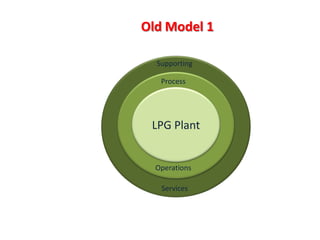
Supporting
Services
Process
Operations
LPG Plant
Main
Model
SCM
Design
Employ
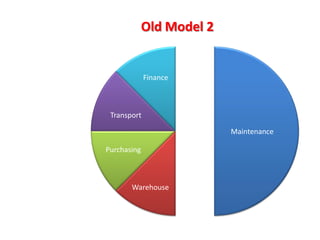
Static Model
Maintenance
Warehouse
Purchasing
Transport
Finance
Main
Model
SCM
Design
Employ
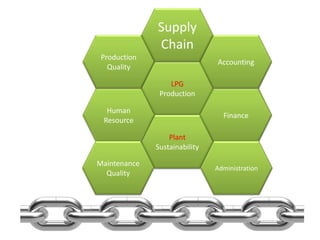
LPG
Production
Plant
Sustainability
Finance
Human
Resource
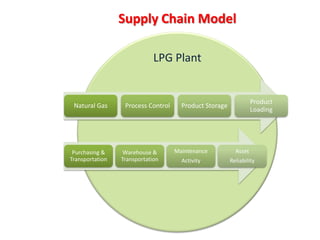
Natural Gas Process Control Product Storage
Product
Loading
Purchasing &
Transportation
Warehouse &
Transportation
Maintenance
Activity
Asset
Reliability
Main
Model
SCM
Design
Employ
Dynamic Model
LPG Plant
LPG
Production
Plant
Sustainability
Finance
Human
Resource
Main
Model
SCM
Design
Employ
Maintenance
Quality
Accounting
Production
Quality
Administration
Purchasing &
Transportation
Warehouse&
Transportation
Maintenance
Activities
Asset
Reliability
Plant
Sustainability
Main
Model
SCM
Design
Employ
Supply
Chain
Main
Model
SCM
Design
Employ
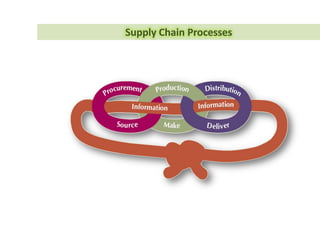
Supply Chain Processes
Main
Model
SCM
Design
Employ
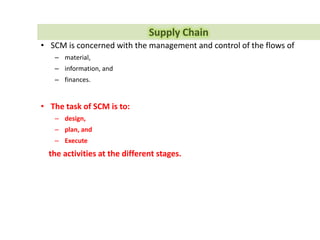
– material,
– information, and
– finances.
– design,
– plan, and
– Execute
Supply Chain
Main
Model
SCM
Design
Employ
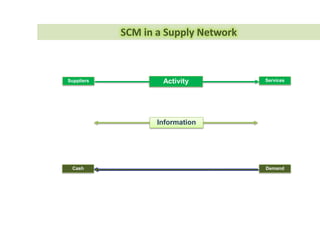
SCM in a Supply Network
Suppliers
Demand
Services
KPI’s
Information
Activity
Main
Model
SCM
Design
Employ
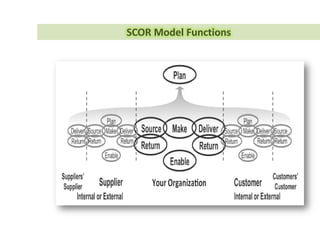
SCOR Model Functions
Main
Model
SCM
Design
Employ
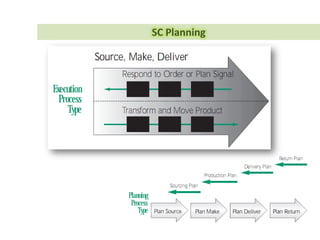
SC Planning
Main
Model
SCM
Design
Employ
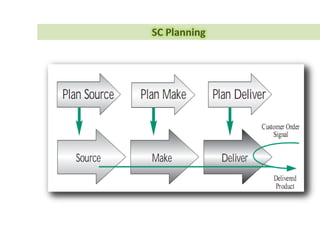
SC Planning
Main
Model
SCM
Design
Employ
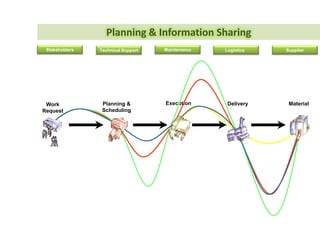
ExecutionPlanning &
Scheduling
Work
Request
Delivery Material
Planning & Information Sharing
MaintenanceTechnical SupportStakeholders Logistics Supplier
Main
Model
SCM
Design
Employ
ExecutionPlanning &
Scheduling
Work
Request
Delivery Material
Planning & Information Sharing
MaintenanceTechnical SupportStakeholders Logistics Supplier
Main
Model
SCM
Design
Employ
ExecutionPlanning &
Scheduling
Work
Request
Delivery Material
Planning & Information Sharing
MaintenanceTechnical SupportStakeholders Logistics Supplier
Main
Model
SCM
Design
Employ
ExecutionPlanning &
Scheduling
Work
Request
Delivery Material
Planning & Information Sharing
MaintenanceTechnical SupportStakeholders Logistics Supplier
Main
Model
SCM
Design
Employ
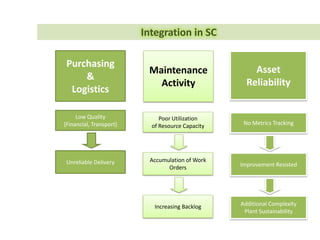
Purchasing
&
Logistics
Maintenance
Activity
Asset
Reliability
Low Quality
(Financial, Transport)
Unreliable Delivery
Poor Utilization
of Resource Capacity
Accumulation of Work
Orders
Increasing Backlog
No Metrics Tracking
Improvement Resisted
Additional Complexity
Plant Sustainability
Integration in SC
Main
Model
SCM
Design
Employ
Work Order
Asset
Priority
Activity
Operations
Spares People
Equipment
Tools
Time Frame
Consumables
Main
Model
SCM
Design
Employ
Segmentation
Main
Model
SCM
Design
Employ
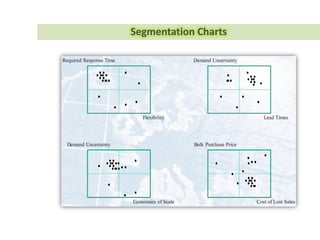
Segmentation Charts
Main
Model
SCM
Design
Employ
Main
Model
SCM
Design
Employ
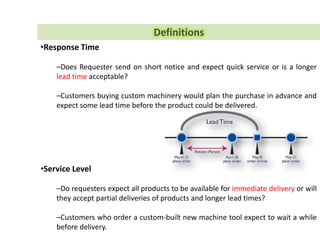
Definitions
•Response Time
– Is longer lead time acceptable?
•Service Level
–Expect immediate delivery or accept partial deliveries of products and longer
lead times?
• Day-to-day operations.
• Picking, packing, and delivery.
Main
Model
SCM
Design
Employ
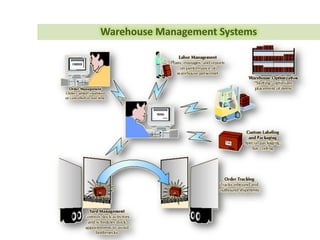
Warehouse Management Systems
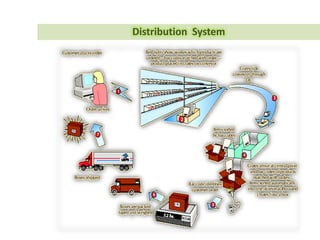
Logistics & Distribution System
• Logistics: getting the right material to the right place at the right time in
the right quantity.
Main
Model
SCM
Design
Employ
Inventory
– On shelf, and
– work in process.
Main
Model
SCM
Design
Employ
• Cycle Inventory
– Satisfy demand.
• Safety Stock
– Buffer against uncertainty.
• Seasonal Inventory
– Build up in anticipation of predictable increases in demand.
Inventory Types
Main
Model
SCM
Design
Employ
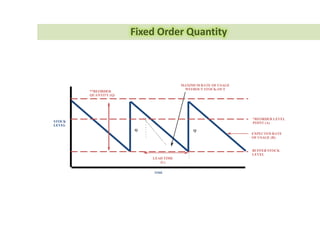
Fixed Order Quantity
Main
Model
SCM
Design
Employ
TIME
.
.
.
.
.
.
.
.
.
.
.
.
.
.
.
.
.
.
.
.
.
**REORDER
QUANTITY (Q)
LEAD TIME
(L)
MAXIMUM RATE OF USAGE
WITHOUT STOCK-OUT
Q Q
STOCK
LEVEL
*REORDER LEVEL
POINT (A)
EXPECTED RATE
OF USAGE (R)
BUFFER STOCK
LEVEL
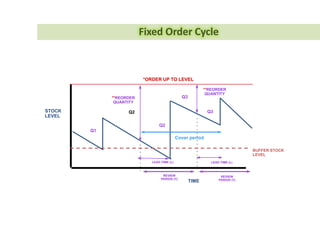
Fixed Order Cycle
Main
Model
SCM
Design
Employ
.
.
.
.
.
.
.
.
*ORDER UP TO LEVEL
**REORDER
QUANTITY
Q1
STOCK
LEVEL
BUFFER STOCK
LEVEL
TIME
Q2
Q2
Q3
Q3
LEAD TIME (L)
.
.
.
.
.
.
.
.
.
.
.
.
.
.
LEAD TIME (L)
REVIEW
PERIOD (T)
REVIEW
PERIOD (T)
Cover period
**REORDER
QUANTITY
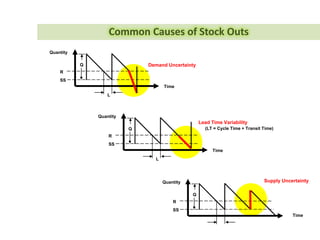
Common Causes of Stock Outs
Main
Model
SCM
Design
Employ
Quantity
Time
R
SS
L
Q Demand Uncertainty
Quantity
Time
R
SS
L
Q
Lead Time Variability
(LT = Cycle Time + Transit Time)
Quantity
Time
R
SS
Q
Supply Uncertainty
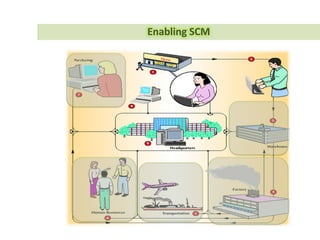
Enabling SCM
Main
Model
SCM
Design
Employ
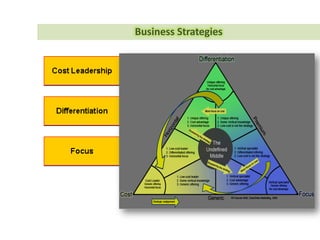
Business Strategies
Main
Model
SCM
Design
Employ
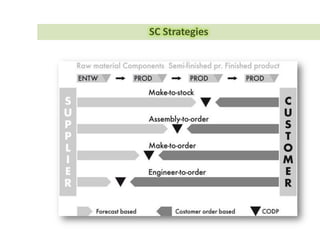
SC Strategies
Main
Model
SCM
Design
Employ
Push Pull
Main
Model
SCM
Design
Employ
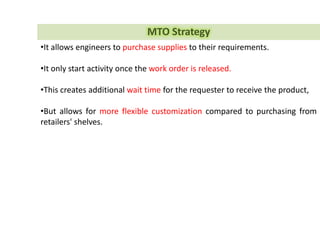
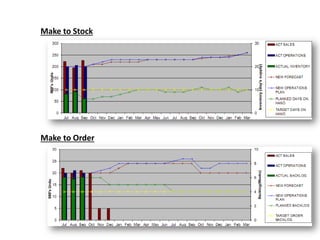
MTO Strategy
Main
Model
SCM
Design
Employ
•Purchase supplies to their requirements.
•Start activity once the work order is released.
•Wait time for execution,
•Allow for more flexible customization.
MTO Strategy
Main
Model
SCM
Design
Employ
Supply Chain
Team
Main
Model
SCM
Design
Employ
Why it is not
working?
We are not
synchronized
Need SCM?
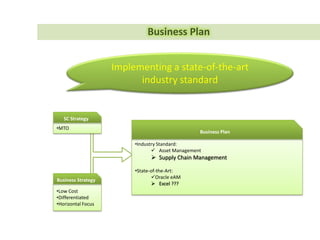
Implementing a state-of-the-art
industry standard
Business Plan
•Low Cost
•Differentiated
•Horizontal Focus
Business Strategy
•MTO
SC Strategy
•Industry Standard:
 Asset Management
 Supply Chain Management
•State-of-the-Art:
 Oracle eAM
Business Plan
Main
Model
SCM
Design
Employ
WO Status
Main
Model
SCM
Design
Employ
Planned
(Draft)
Firm
Planned
Exploded
Allocated
Released
Completed
• Planner
• Mgr
• SE
• JE
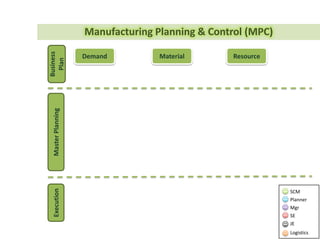
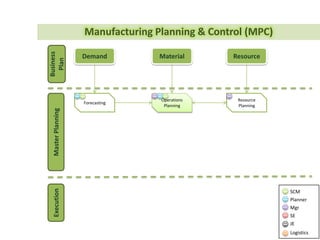
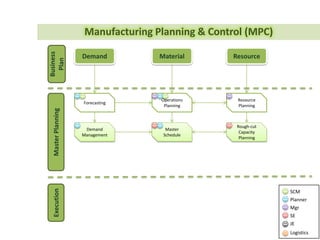
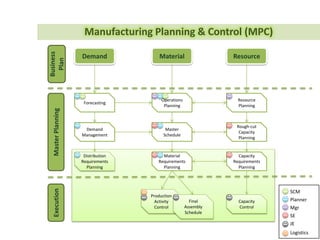
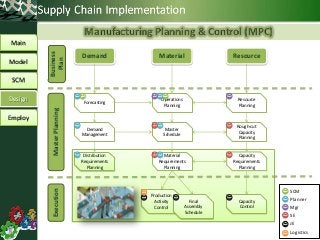
Manufacturing Planning & Control (MPC)
MaterialDemand ResourceMasterPlanningExecution
Business
Plan
• Logistics
• SCM
Main
Model
SCM
Design
Employ
• Planner
• Mgr
• SE
• JE
Manufacturing Planning & Control (MPC)
MaterialDemand Resource
Resource
Planning
Rough-cut
Capacity
Planning
MasterPlanningExecution
Capacity
Requirements
Planning
Capacity
Control
Operations
Planning
Master
Schedule
Material
Requirements
Planning
Production
Activity
Control
Final
Assembly
Schedule
Forecasting
Demand
Management
Distribution
Requirements
Planning
Business
Plan
• Logistics
• SCM
Main
Model
SCM
Design
Employ Planned Firm
Planned
AllocatedReleased Exploded
Sequenced
Completed
• Planner
• Mgr
• SE
• JE
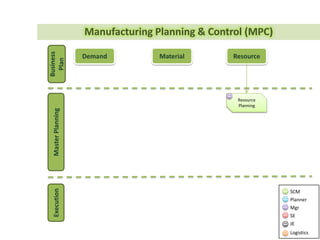
Manufacturing Planning & Control (MPC)
MaterialDemand Resource
Resource
Planning
MasterPlanningExecution
Business
Plan
• Logistics
• SCM
Main
Model
SCM
Design
Employ
Main
Model
SCM
Design
Employ
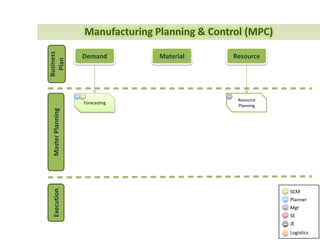
• Planner
• Mgr
• SE
• JE
Manufacturing Planning & Control (MPC)
MaterialDemand Resource
Resource
Planning
MasterPlanningExecution
Forecasting
Business
Plan
• Logistics
• SCM
Main
Model
SCM
Design
Employ
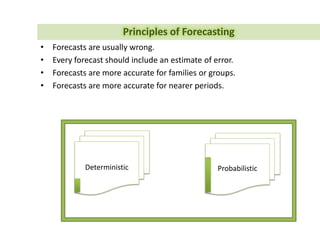
Principles of Forecasting
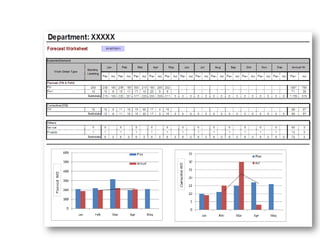
• Forecasts are usually wrong.
• Every forecast should include an estimate of error.
• Forecasts are more accurate for families or groups.
• Forecasts are more accurate for nearer periods.
Deterministic Probabilistic
Main
Model
SCM
Design
Employ
Forecasting Influence
• Forecasting errors can increase the total cost of ownership for a product
- inventory carrying costs,
- obsolete inventory,
- lack of sufficient inventory, and
- quality due to accepting marginal products to prevent stock out.
Main
Model
SCM
Design
Employ
Forecasting Benefits
• Essential for smooth operations of business organizations,
• Estimates of the occurrence, timing, or magnitude of uncertain future
events,
• Costs of forecasting:
– excess labor;
– excess materials;
– expediting costs;
– lost revenues.
Main
Model
SCM
Design
Employ
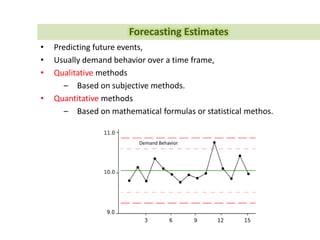
Forecasting Estimates
• Predicting future events,
• Usually demand behavior over a time frame,
• Qualitative methods
– Based on subjective methods.
• Quantitative methods
– Based on mathematical formulas or statistical methos.
Main
Model
SCM
Design
Employ
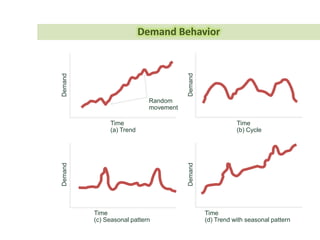
Demand Behavior
Demand Behavior
Time
(a) Trend
Time
(d) Trend with seasonal pattern
Time
(c) Seasonal pattern
Time
(b) Cycle
DemandDemand
DemandDemand
Random
movement
Main
Model
SCM
Design
Employ
150 –
125 –
100 –
75 –
50 –
25 –
0 – | | | | | | | | | | |
Jan Feb Mar Apr May June July Aug Sept Oct Nov
5-month
3-month
Actual
Orders
Month
Main
Model
SCM
Design
Employ
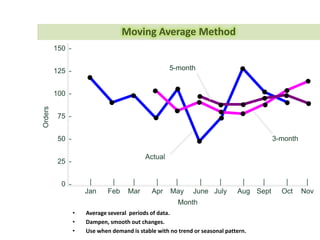
• Average several periods of data.
• Dampen, smooth out changes.
• Use when demand is stable with no trend or seasonal pattern.
Moving Average Method
70 –
60 –
50 –
40 –
30 –
20 –
10 –
0 – | | | | | | | | | | | |
1 2 3 4 5 6 7 8 9 10 11 12
 = 0.50Actual
Orders
Month
 = 0.30
Main
Model
SCM
Design
Employ
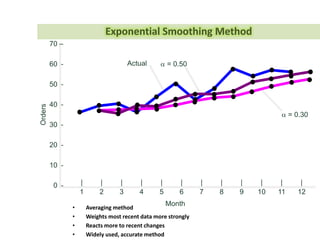
• Averaging method
• Weights most recent data more strongly
• Reacts more to recent changes
• Widely used, accurate method
Exponential Smoothing Method
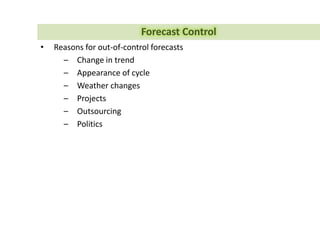
Forecast Control
• Reasons for out-of-control forecasts
– Change in trend
– Appearance of cycle
– Weather changes
– Projects
– Outsourcing
– Politics
Main
Model
SCM
Design
Employ
Main
Model
SCM
Design
Employ
• Planner
• Mgr
• SE
• JE
Manufacturing Planning & Control (MPC)
MaterialDemand Resource
Resource
Planning
MasterPlanningExecution
Operations
Planning
Forecasting
Business
Plan
• Logistics
• SCM
Main
Model
SCM
Design
Employ
Operations Planning
Main
Model
SCM
Design
Employ
The First OP Meeting
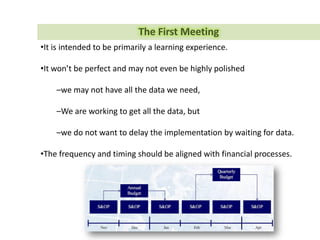
•It is intended to be primarily a learning experience.
•It won’t be perfect and may not have all the data we need.
•The frequency and timing should be aligned with financial processes.
Main
Model
SCM
Design
Employ
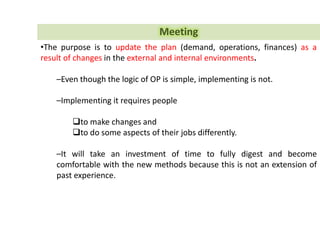
•The purpose is to update the plan (demand, operations, finances) as a
result of changes in the external and internal environments.
–Even though the logic of OP is simple, implementing is not.
–Implementing it requires people to make changes and to do some
aspects of their jobs differently.
Cycle OP Meeting
Main
Model
SCM
Design
Employ
Main
Model
SCM
Design
Employ
• Planner
• Mgr
• SE
• JE
Manufacturing Planning & Control (MPC)
MaterialDemand Resource
Resource
Planning
Rough-cut
Capacity
Planning
MasterPlanningExecution
Operations
Planning
Master
Schedule
Forecasting
Demand
Management
Business
Plan
• Logistics
• SCM
Main
Model
SCM
Design
Employ
Main
Model
SCM
Design
Employ
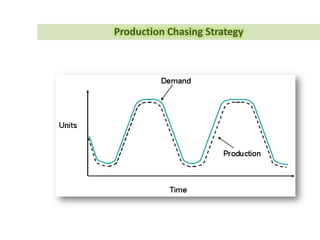
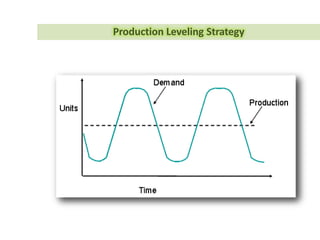
Production Strategy
Main
Model
SCM
Design
Employ
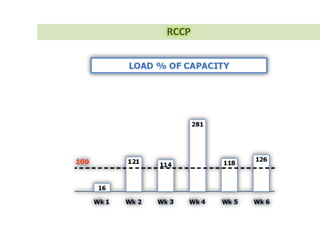
RCCP - SE
Main
Model
SCM
Design
Employ
guest use
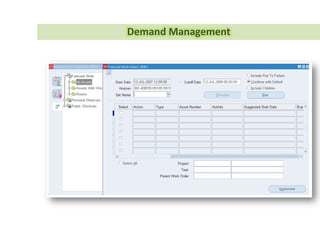
Demand Management - Planner
Main
Model
SCM
Design
Employ
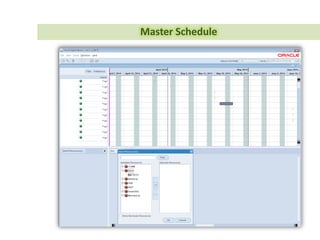
Master Schedule
Main
Model
SCM
Design
Employ
• Planner
• Mgr
• SE
• JE
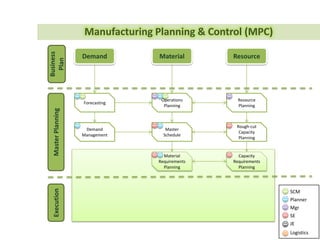
Manufacturing Planning & Control (MPC)
MaterialDemand Resource
Resource
Planning
Rough-cut
Capacity
Planning
MasterPlanningExecution
Capacity
Requirements
Planning
Operations
Planning
Master
Schedule
Material
Requirements
Planning
Forecasting
Demand
Management
Business
Plan
• Logistics
• SCM
Main
Model
SCM
Design
Employ
Main
Model
SCM
Design
Employ
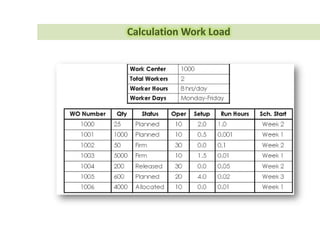
Calculation Work Load
Main
Model
SCM
Design
Employ
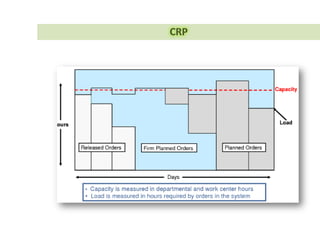
CRP
Main
Model
SCM
Design
Employ
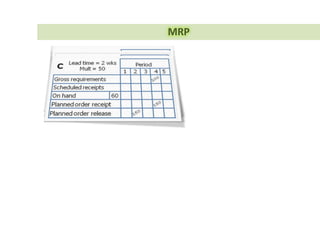
MRP
Main
Model
SCM
Design
Employ
• Planner
• Mgr
• SE
• JE
Manufacturing Planning & Control (MPC)
MaterialDemand Resource
Resource
Planning
Rough-cut
Capacity
Planning
MasterPlanningExecution
Capacity
Requirements
Planning
Capacity
Control
Operations
Planning
Master
Schedule
Material
Requirements
Planning
Production
Activity
Control
Final
Assembly
Schedule
Forecasting
Demand
Management
Distribution
Requirements
Planning
Business
Plan
• Logistics
• SCM
Main
Model
SCM
Design
Employ
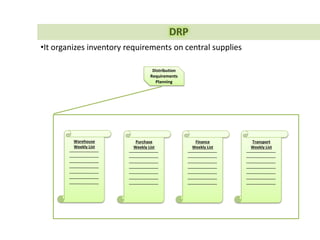
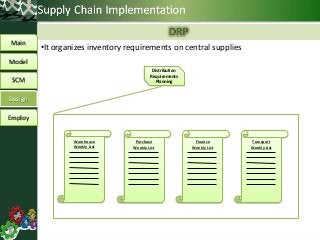
DRP
Main
Model
SCM
Design
Employ
•It organizes inventory requirements on central supplies
Distribution
Requirements
Planning
Warehouse
Weekly List
Purchase
Weekly List
Finance
Weekly List
Transport
Weekly List
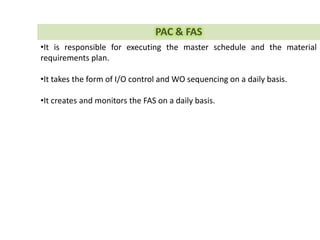
PAC & FAS
Main
Model
SCM
Design
Employ
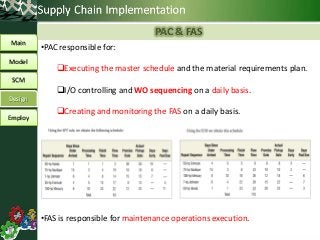
•PAC responsible for:
Executing the master schedule and the material requirements plan.
I/O controlling and WO sequencing on a daily basis.
Creating and monitoring the FAS on a daily basis.
•FAS is responsible for maintenance operations execution.
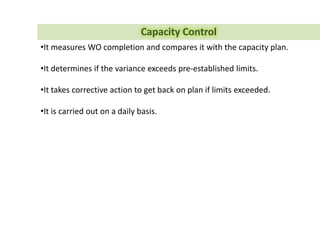
Capacity Control
Main
Model
SCM
Design
Employ
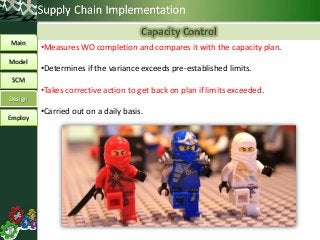
•Measures WO completion and compares it with the capacity plan.
•Determines if the variance exceeds pre-established limits.
•Takes corrective action to get back on plan if limits exceeded.
•Carried out on a daily basis.
Main
Model
SCM
Design
Employ
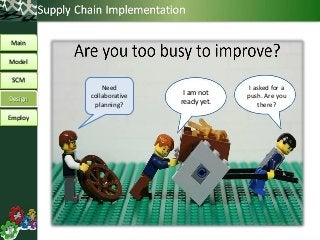
I am not
ready yet.
Need
collaborative
planning?
I asked for a
push. Are you
there?
Main
Model
SCM
Design
Employ
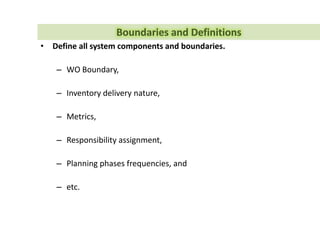
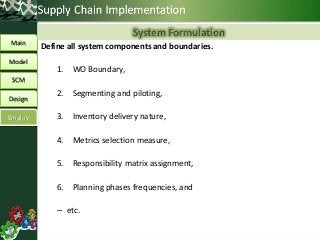
System Formulation
Define all system components and boundaries.
1. WO Boundary,
2. Segmenting and piloting,
3. Inventory delivery nature,
4. Metrics selection measure,
5. Responsibility matrix assignment,
6. Planning phases frequencies, and
– etc.
Main
Model
SCM
Design
Employ
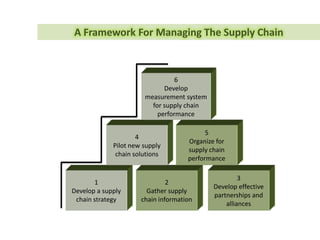
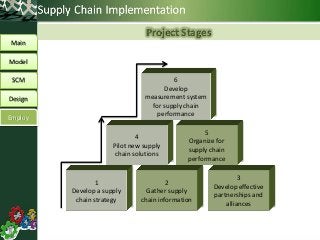
Project Stages
1
Develop a supply
chain strategy
2
Gather supply
chain information
3
Develop effective
partnerships and
alliances
4
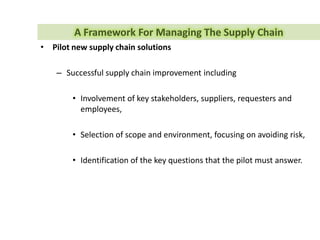
Pilot new supply
chain solutions
5
Organize for
supply chain
performance
6
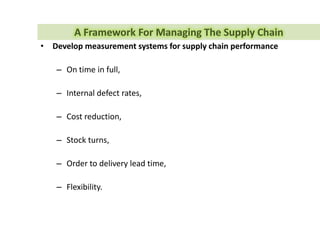
Develop
measurement system
for supply chain
performance
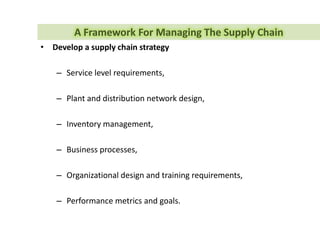
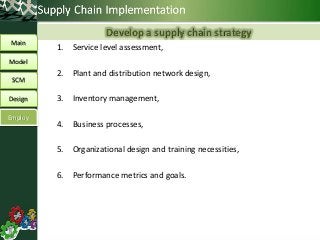
1. Service level assessment,
2. Plant and distribution network design,
3. Inventory management,
4. Business processes,
5. Organizational design and training necessities,
6. Performance metrics and goals.
Develop a supply chain strategy
Main
Model
SCM
Design
Employ
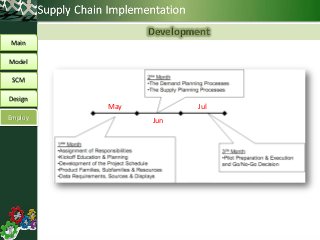
Development
Main
Model
SCM
Design
Employ
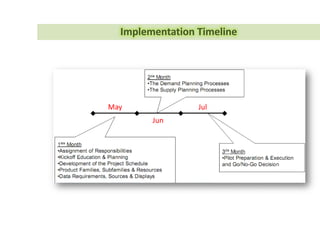
May
Jun
Jul
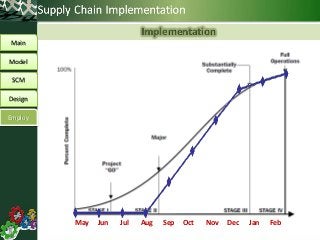
Implementation
Main
Model
SCM
Design
Employ
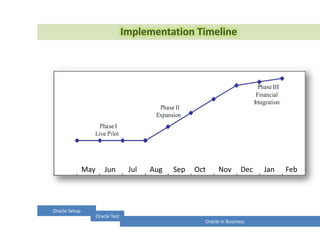
May Jun Jul Aug Sep Oct Nov Dec Jan Feb
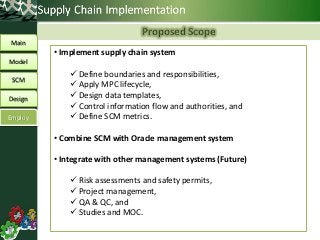
Proposed Scope
Main
Model
SCM
Design
Employ
• Implement supply chain system
 Define boundaries and responsibilities,
 Apply MPC lifecycle,
 Design data templates,
 Control information flow and authorities, and
 Define SCM metrics.
• Combine SCM with Oracle management system
• Integrate with other management systems (Future)
 Risk assessments and safety permits,
 Project management,
 QA & QC, and
 Studies and MOC.
Main
Model
SCM
Design
Employ
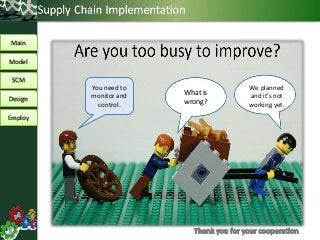
What is
wrong?
You need to
monitor and
control.
We planned
and it’s not
working yet.

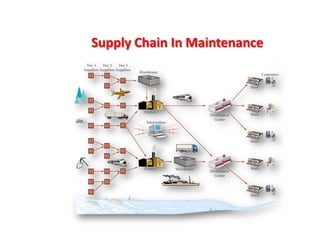
Supply Chain in Maintenance