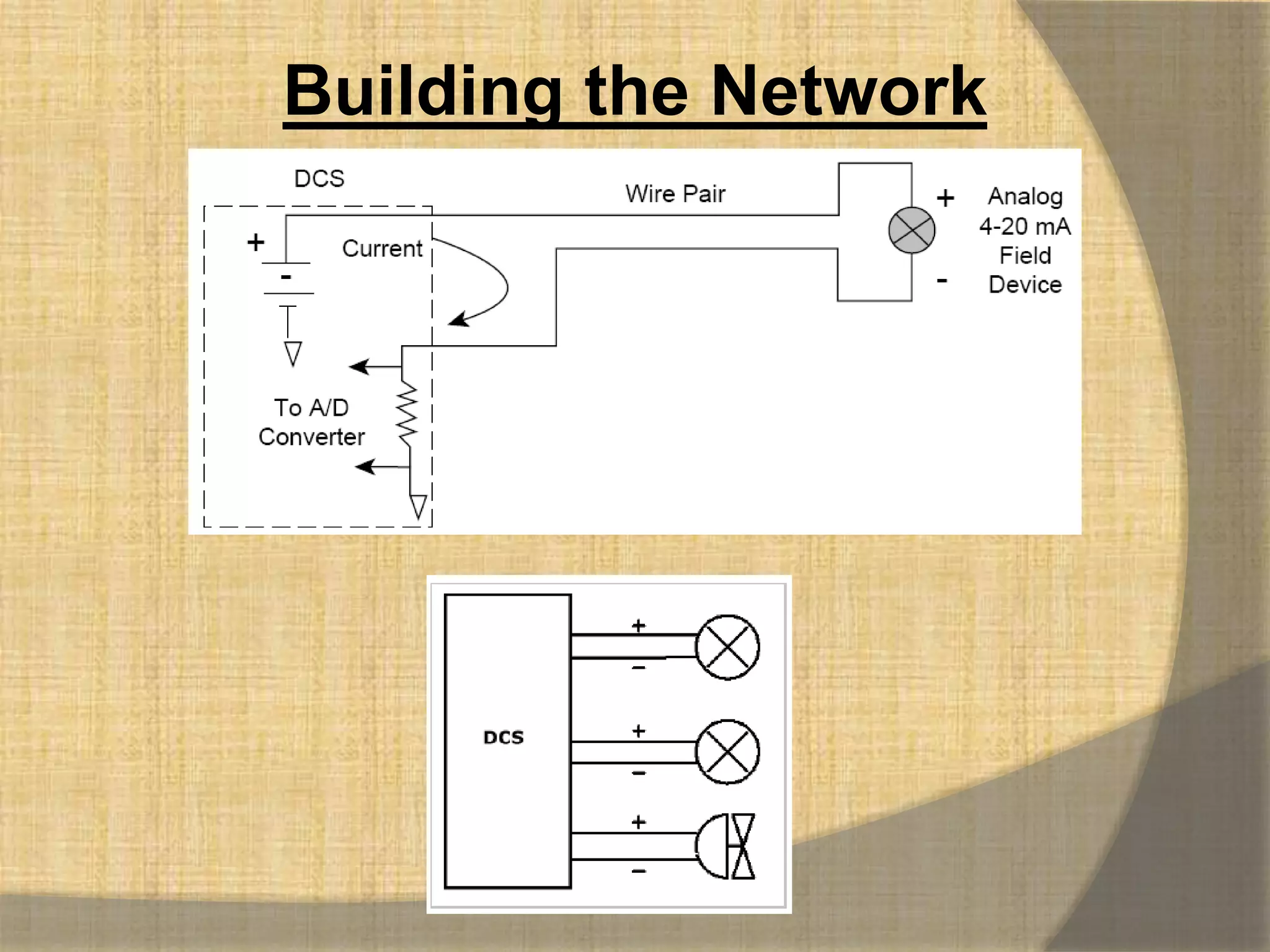
Building the Network
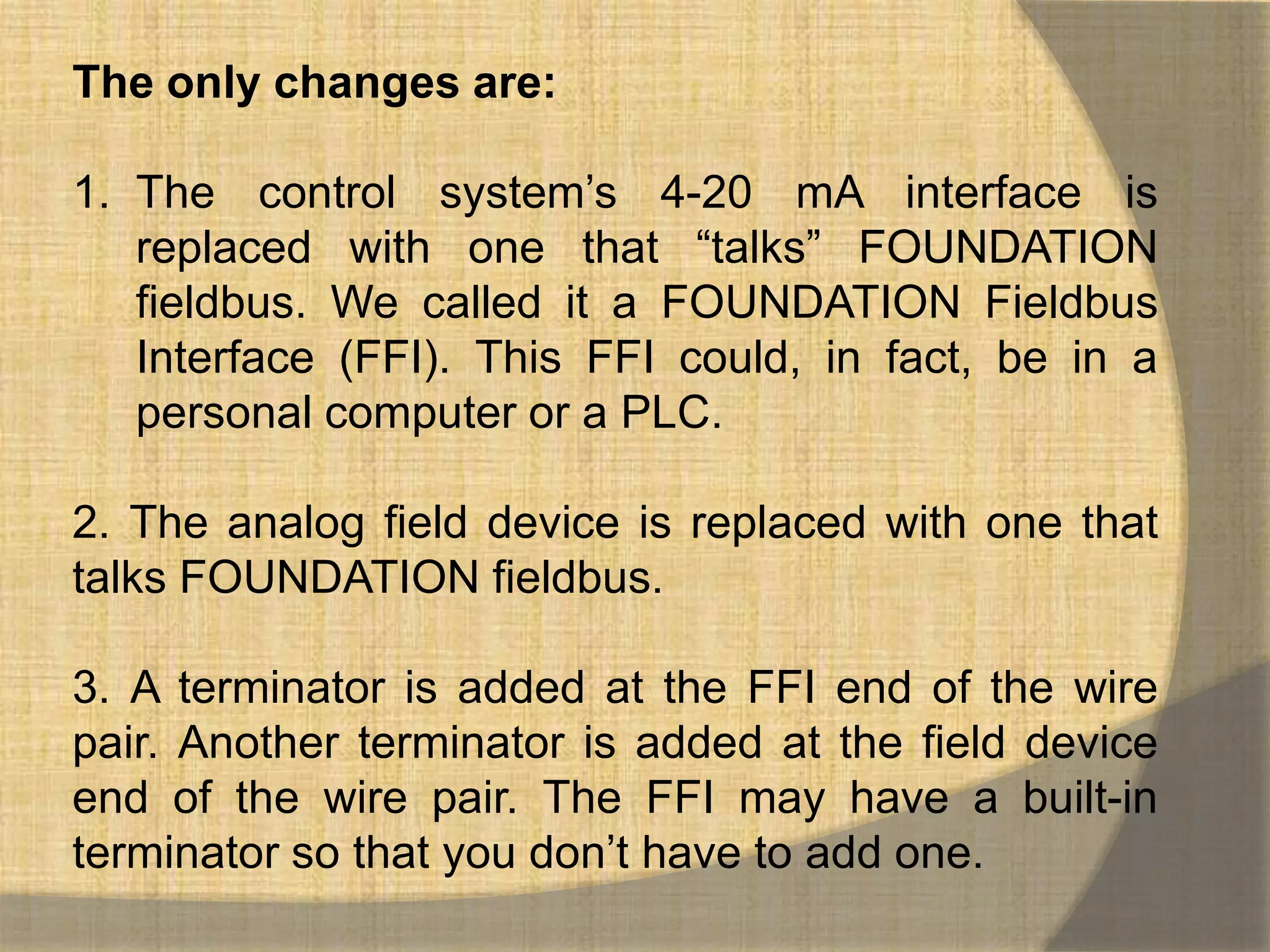
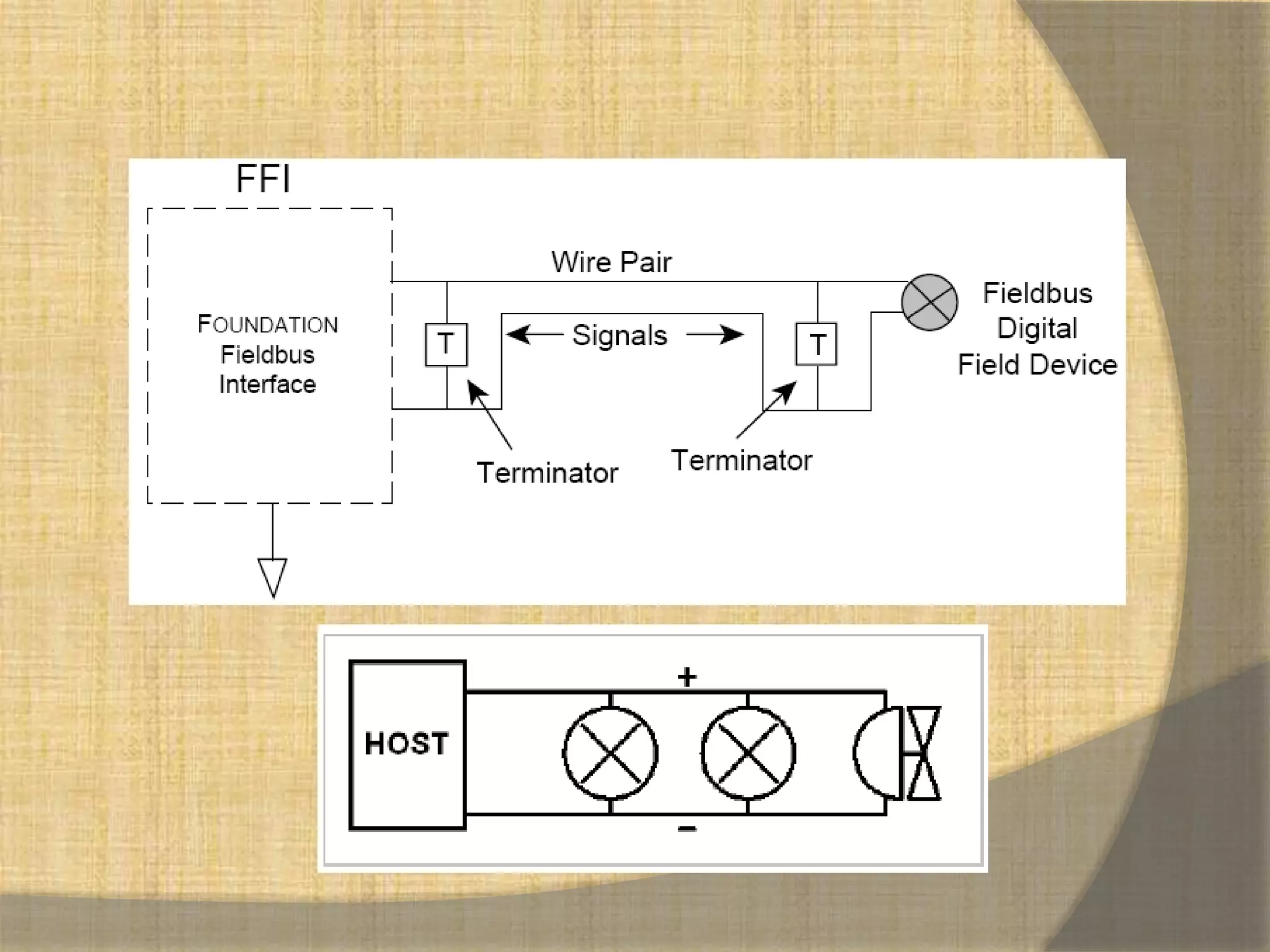
The only changes are:

1. The control system‟s 4-20 mA interface is
   replaced with one that “talks” FOUNDATION
   fieldbus. We called it a FOUNDATION Fieldbus
   Interface (FFI). This FFI could, in fact, be in a
   personal computer or a PLC.

2. The analog field device is replaced with one that
talks FOUNDATION fieldbus.

3. A terminator is added at the FFI end of the wire
pair. Another terminator is added at the field device
end of the wire pair. The FFI may have a built-in
terminator so that you don‟t have to add one.
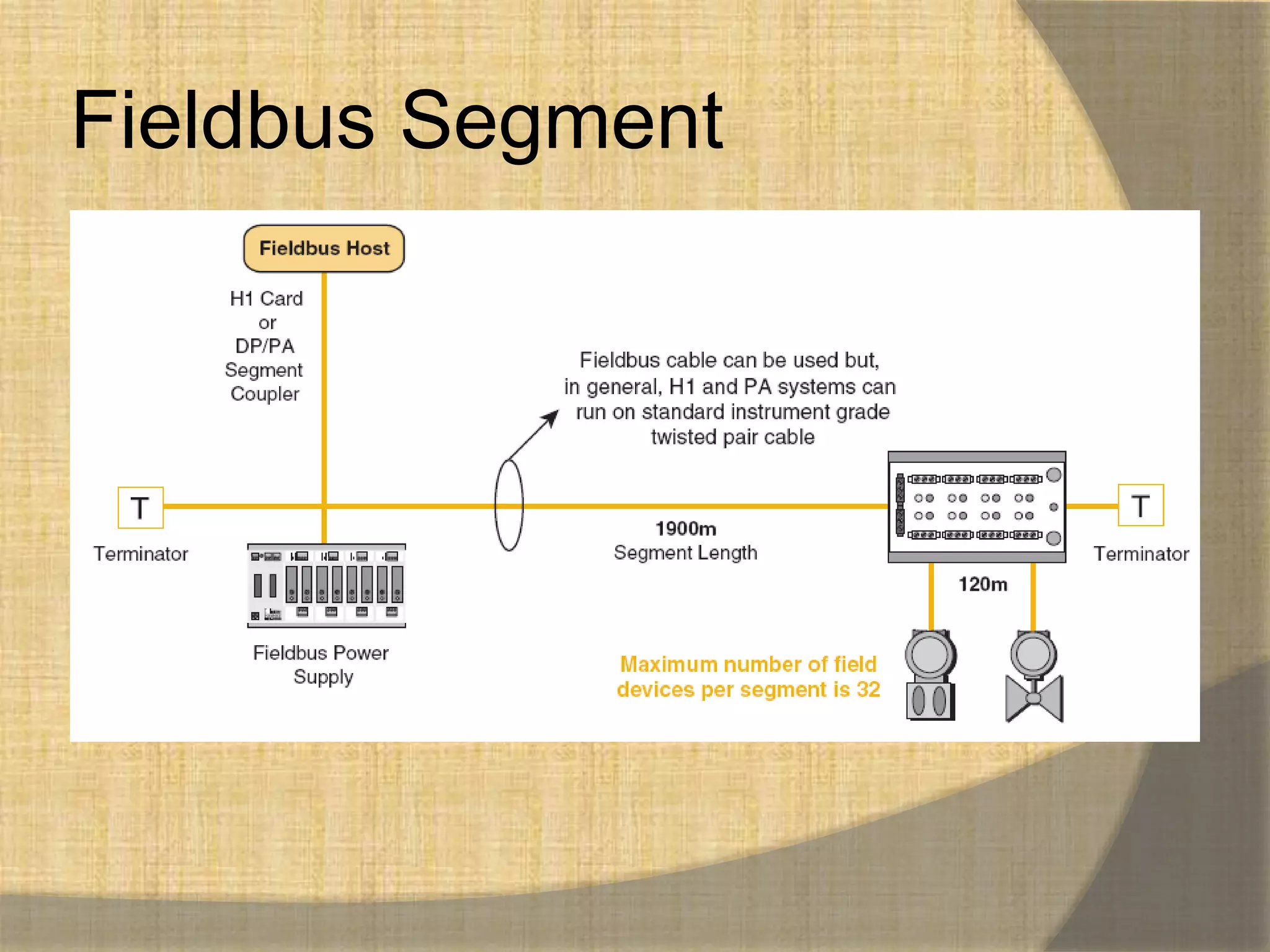
Fieldbus Segment
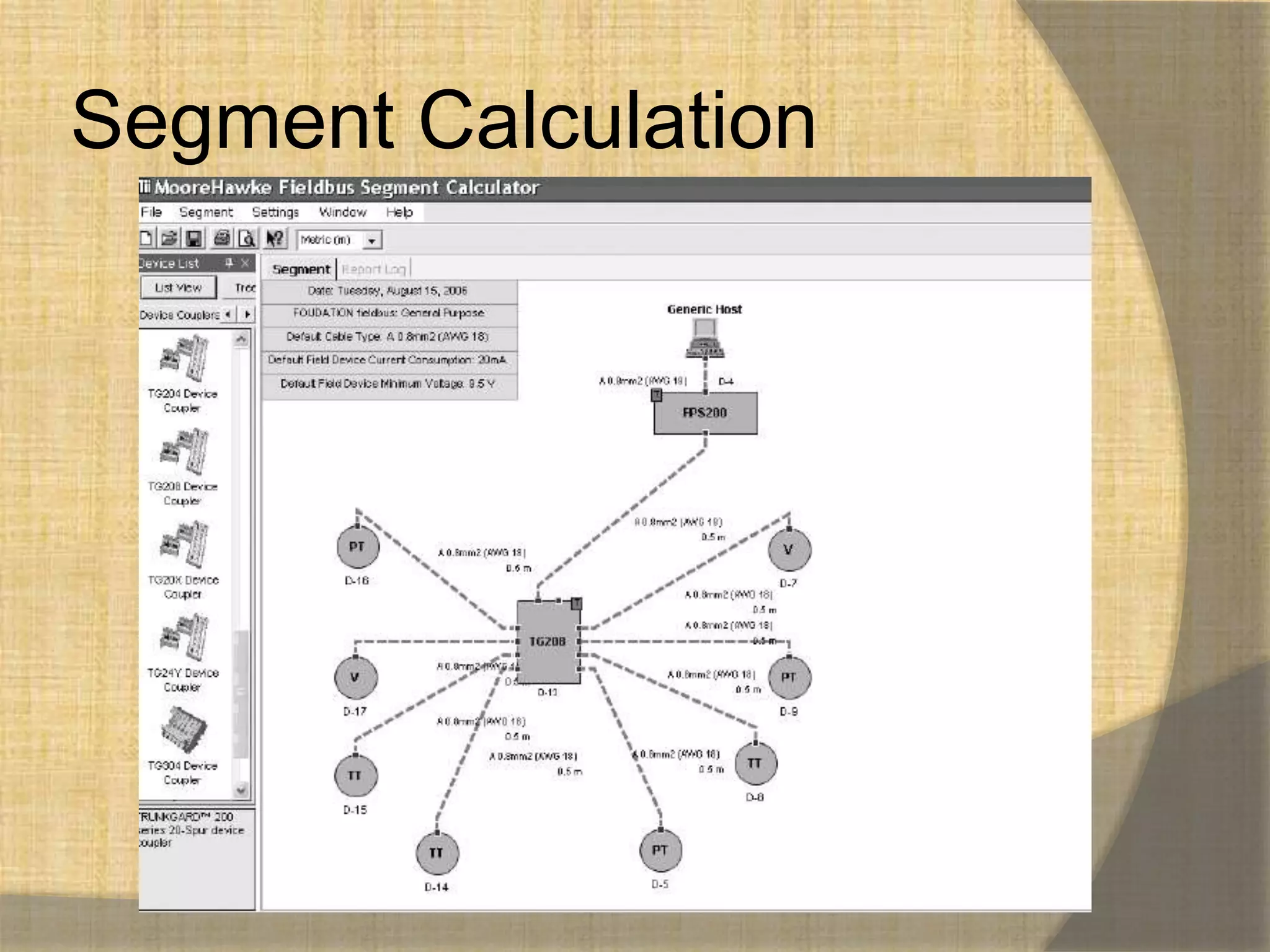
Segment Calculation
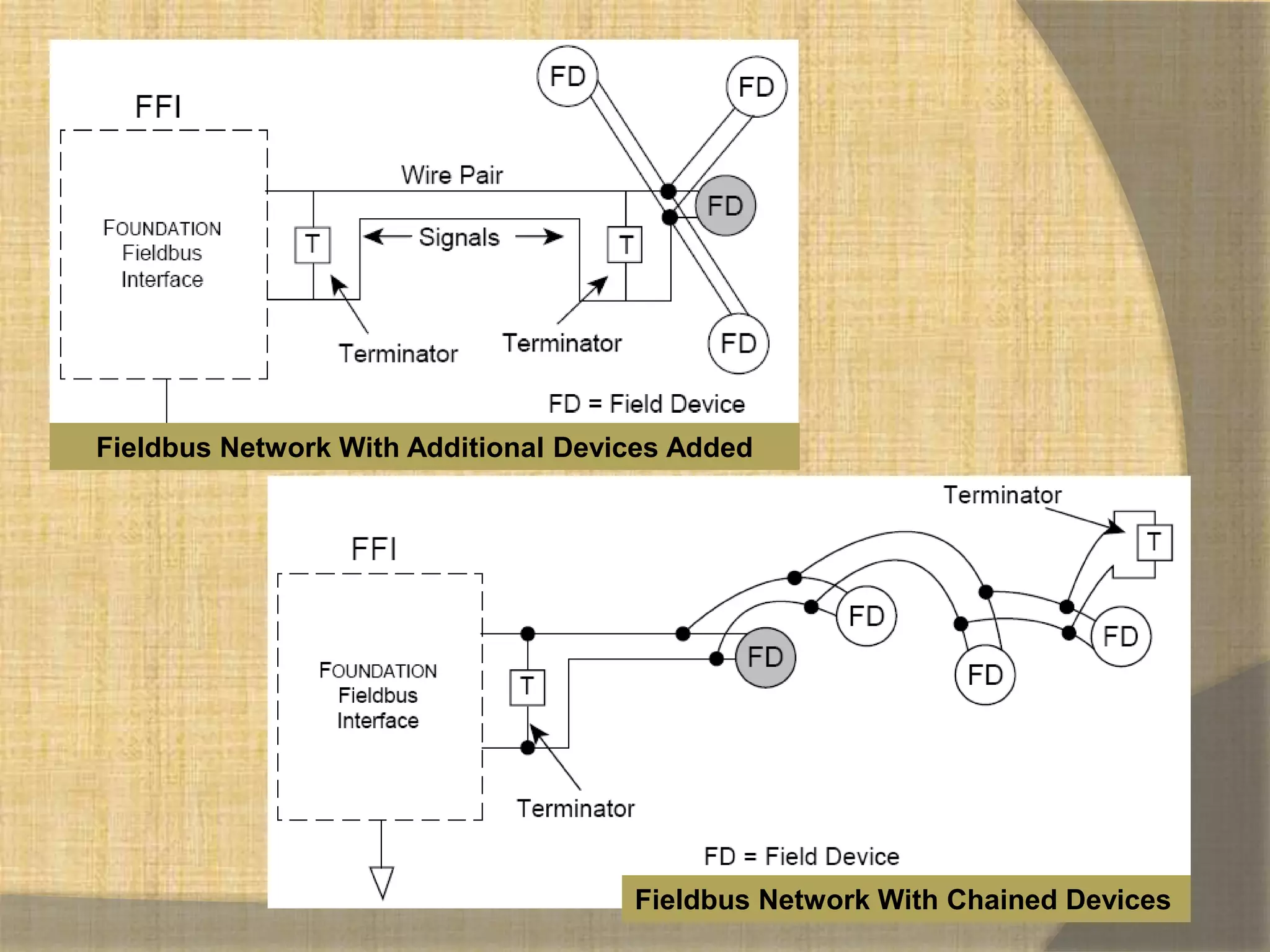
Fieldbus Network With Additional Devices Added


                                     Fieldbus Network With Chained Devices
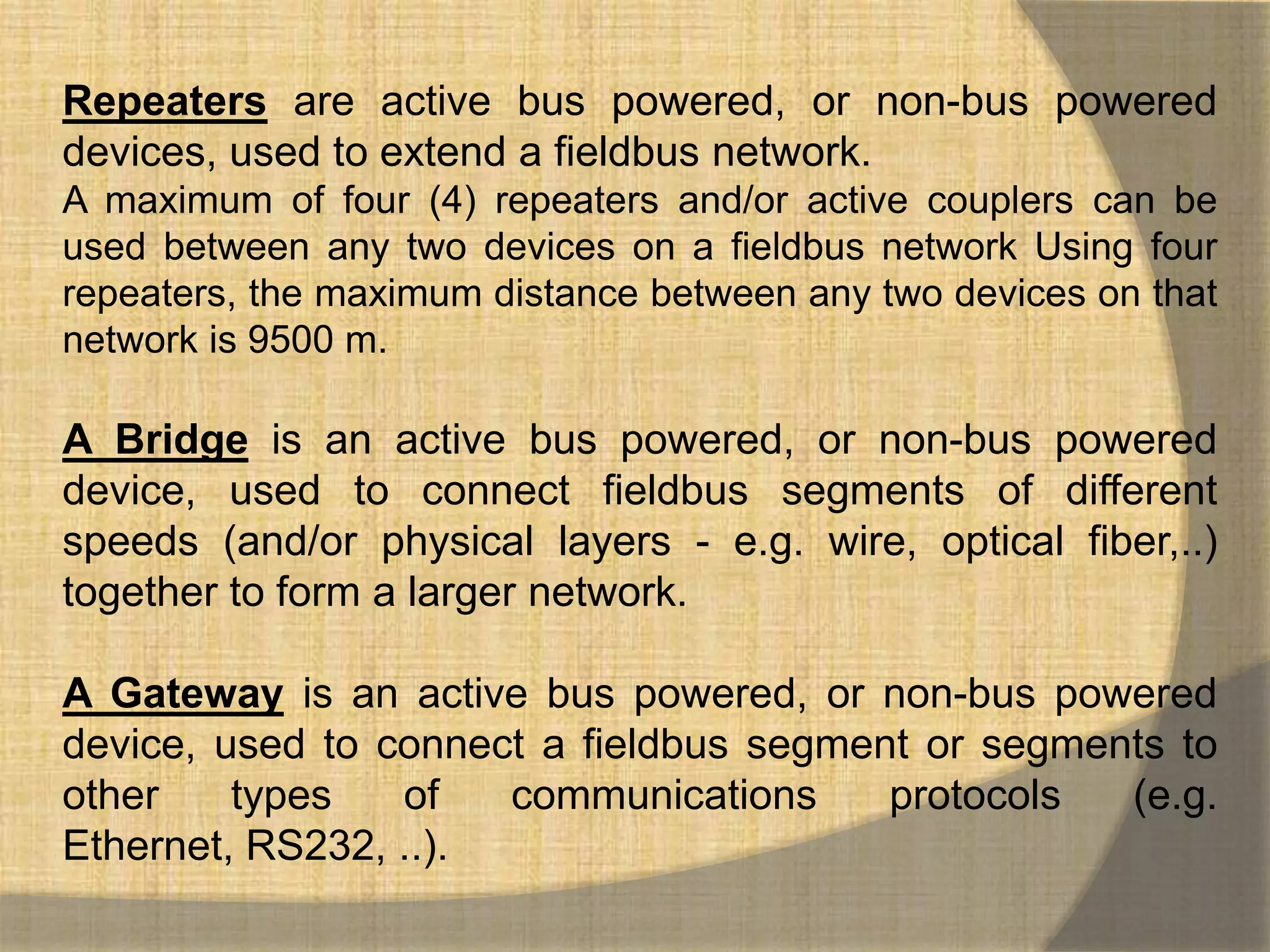
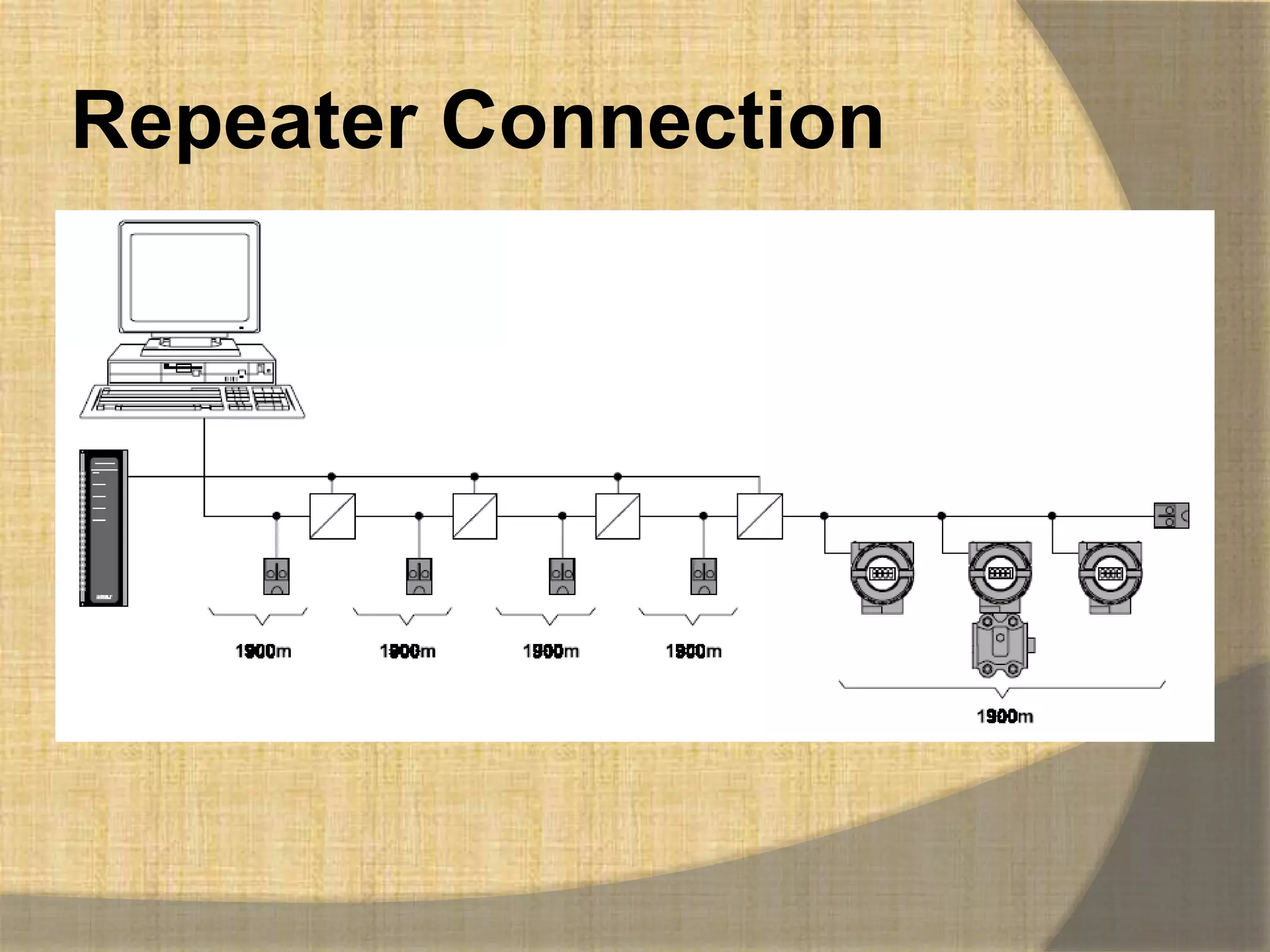
Repeaters are active bus powered, or non-bus powered
devices, used to extend a fieldbus network.
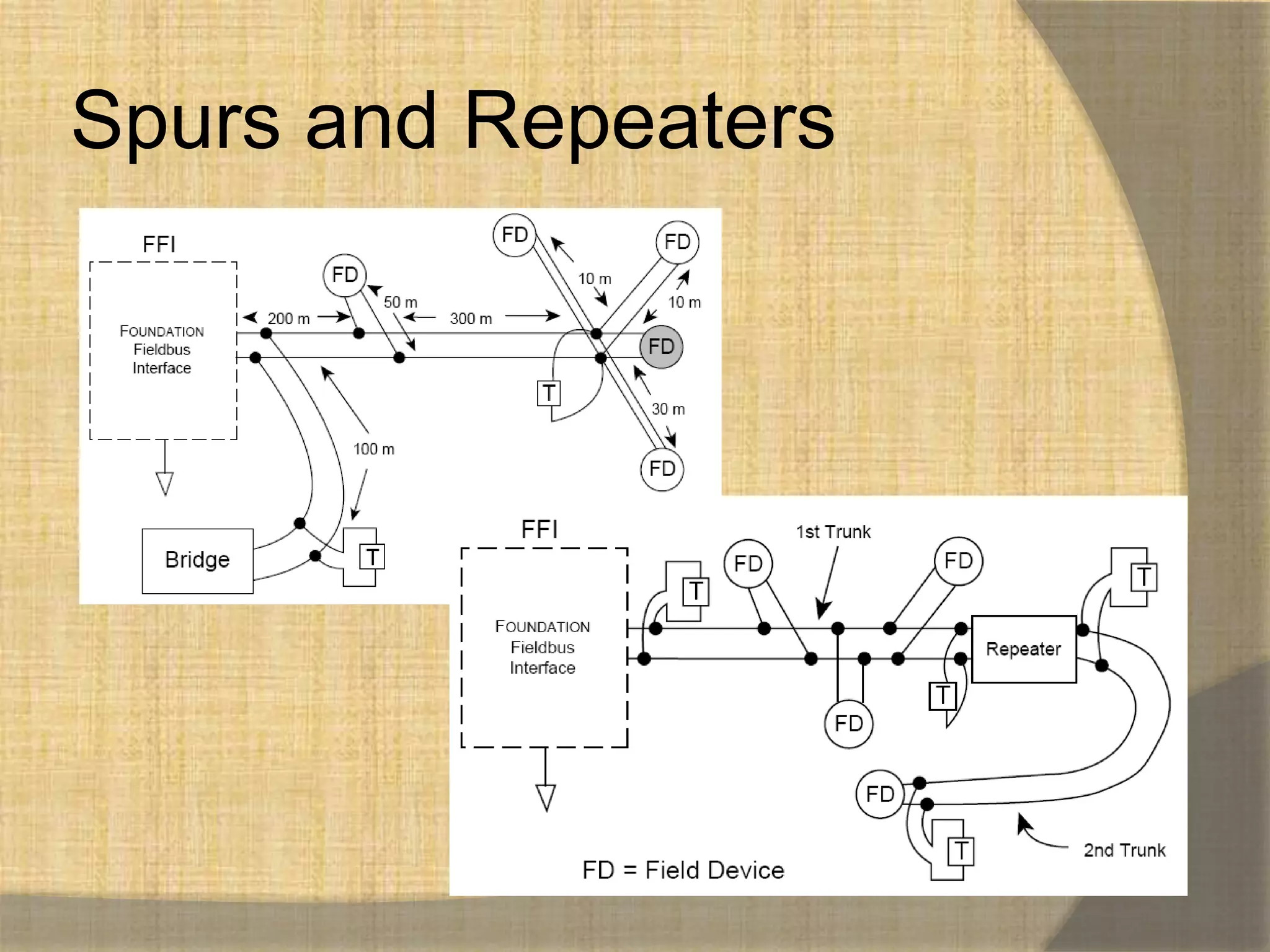
A maximum of four (4) repeaters and/or active couplers can be
used between any two devices on a fieldbus network Using four
repeaters, the maximum distance between any two devices on that
network is 9500 m.

A Bridge is an active bus powered, or non-bus powered
device, used to connect fieldbus segments of different
speeds (and/or physical layers - e.g. wire, optical fiber,..)
together to form a larger network.

A Gateway is an active bus powered, or non-bus powered
device, used to connect a fieldbus segment or segments to
other    types   of   communications     protocols  (e.g.
Ethernet, RS232, ..).
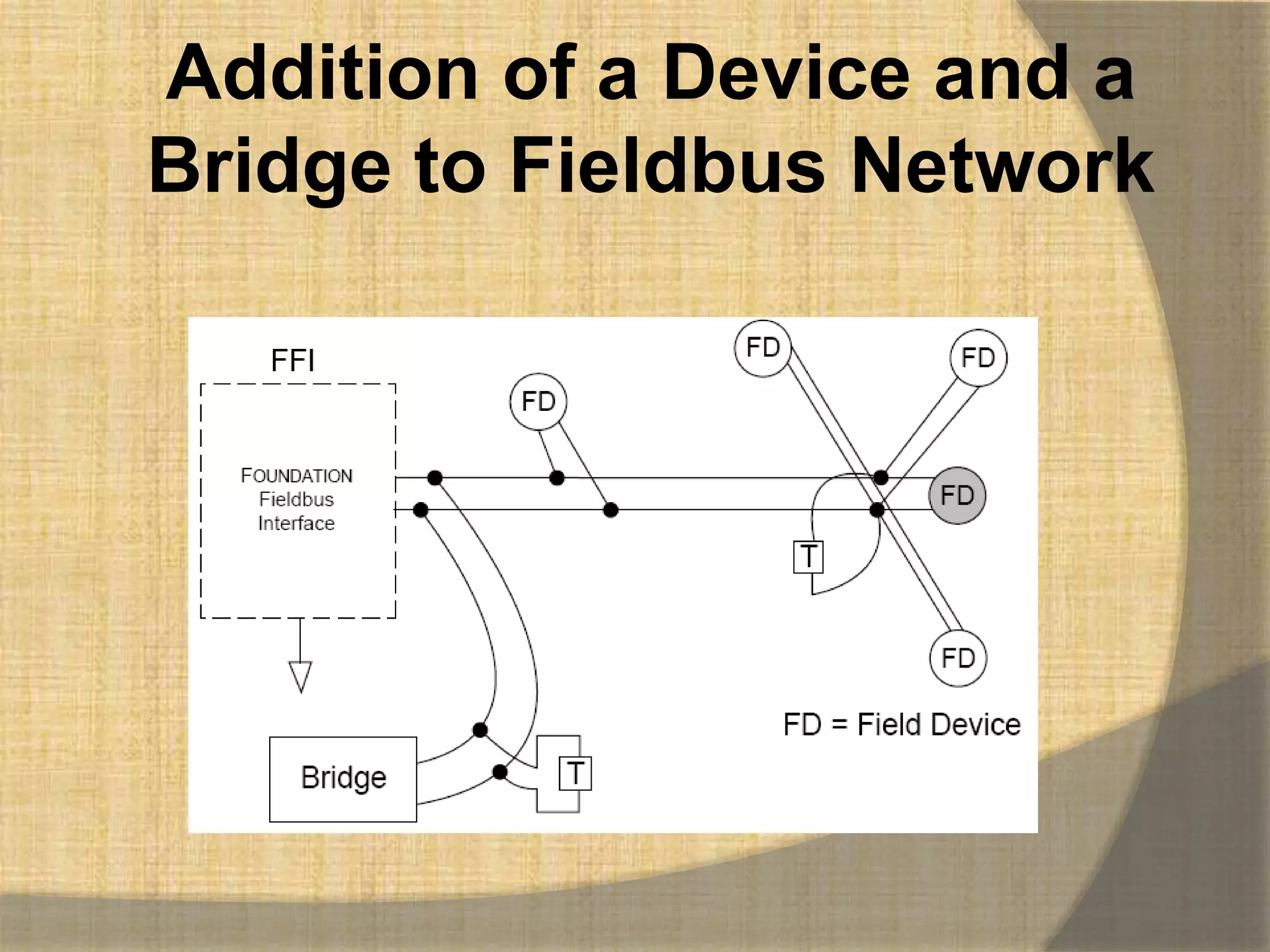
Addition of a Device and a
Bridge to Fieldbus Network
Spurs and Repeaters
Repeater Connection
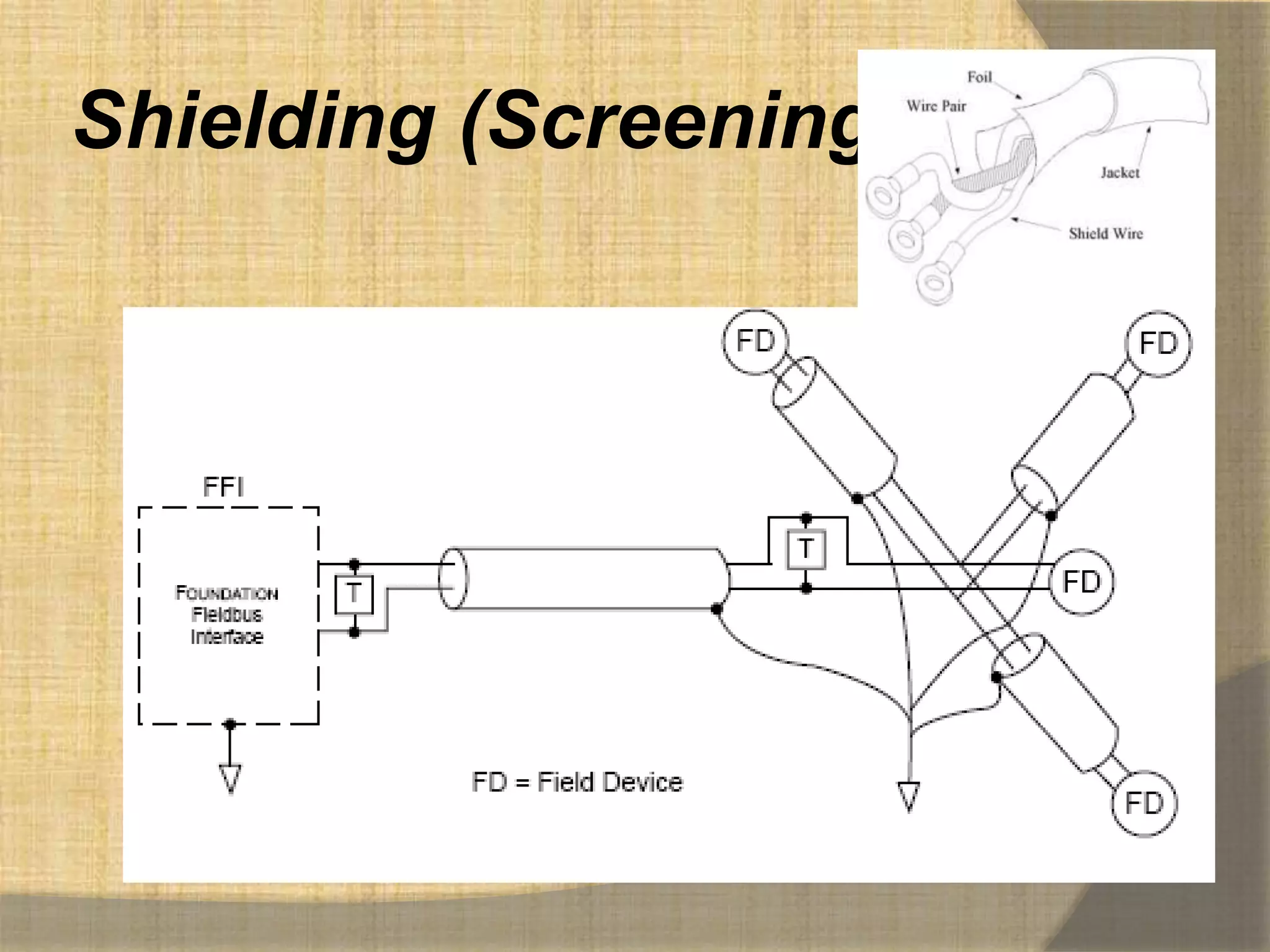
Shielding (Screening)
Polarity
The Manchester signal used by fieldbus is an alternating voltage that
changes polarity once or twice per bit.

In unpowered networks only this alternating voltage exists.

In powered networks the alternating voltage is superimposed onto the DC
voltage being used to power the devices.

In either case, the fieldbus receive circuits look at only the alternating
voltage.

Positive voltage swings have one meaning, negative swings have the
opposite meaning.

Therefore, the fieldbus signal is polarized. Field devices must be connected
so that they all see the signal in correct polarity.

If a field device is connected “backwards” it will see an inverted version of
the alternating voltage and won‟t be able to communicate.
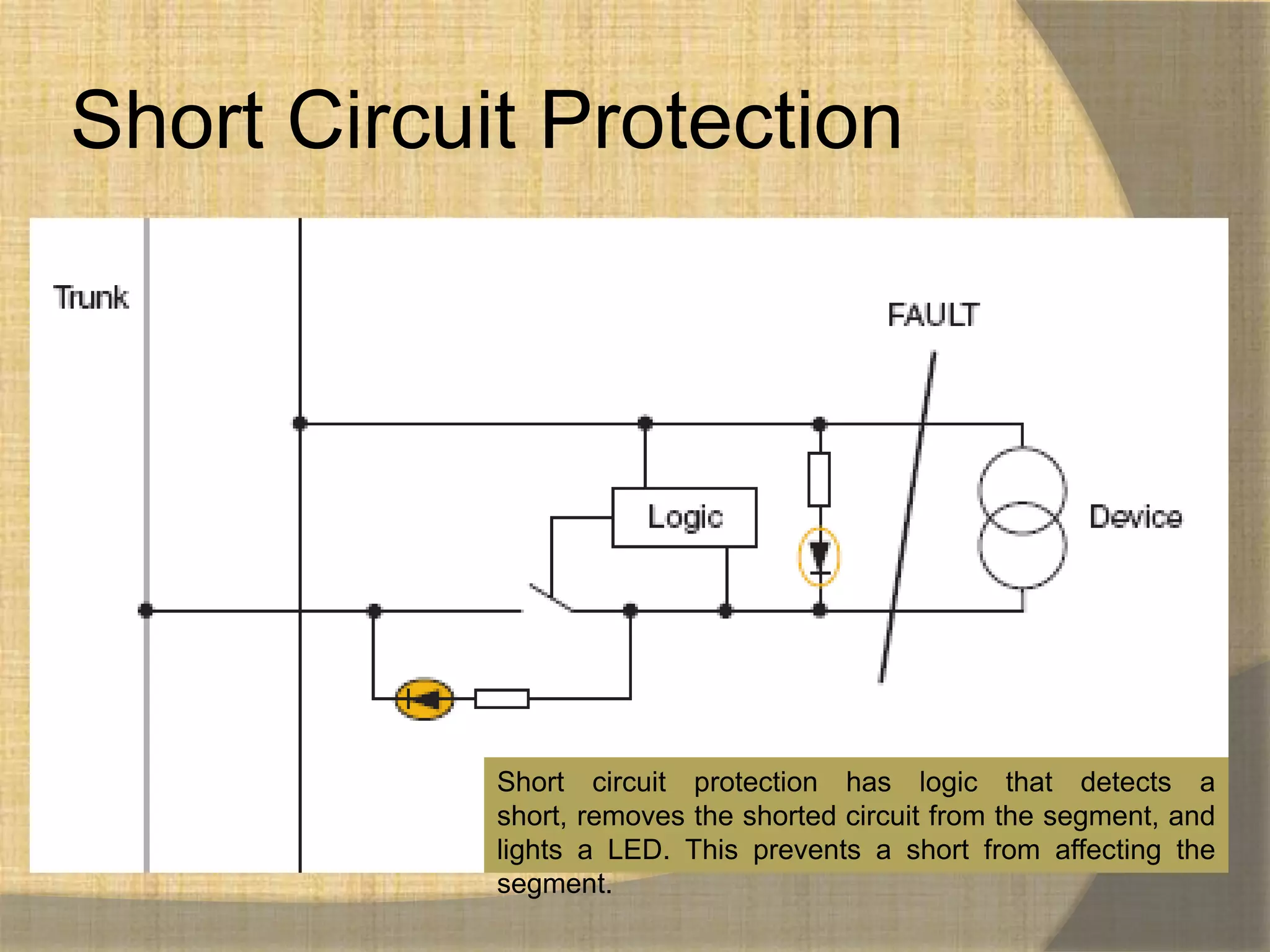
Short Circuit Protection


            Short circuit protection has logic that detects a
            short, removes the shorted circuit from the segment, and
            lights a LED. This prevents a short from affecting the
            segment.
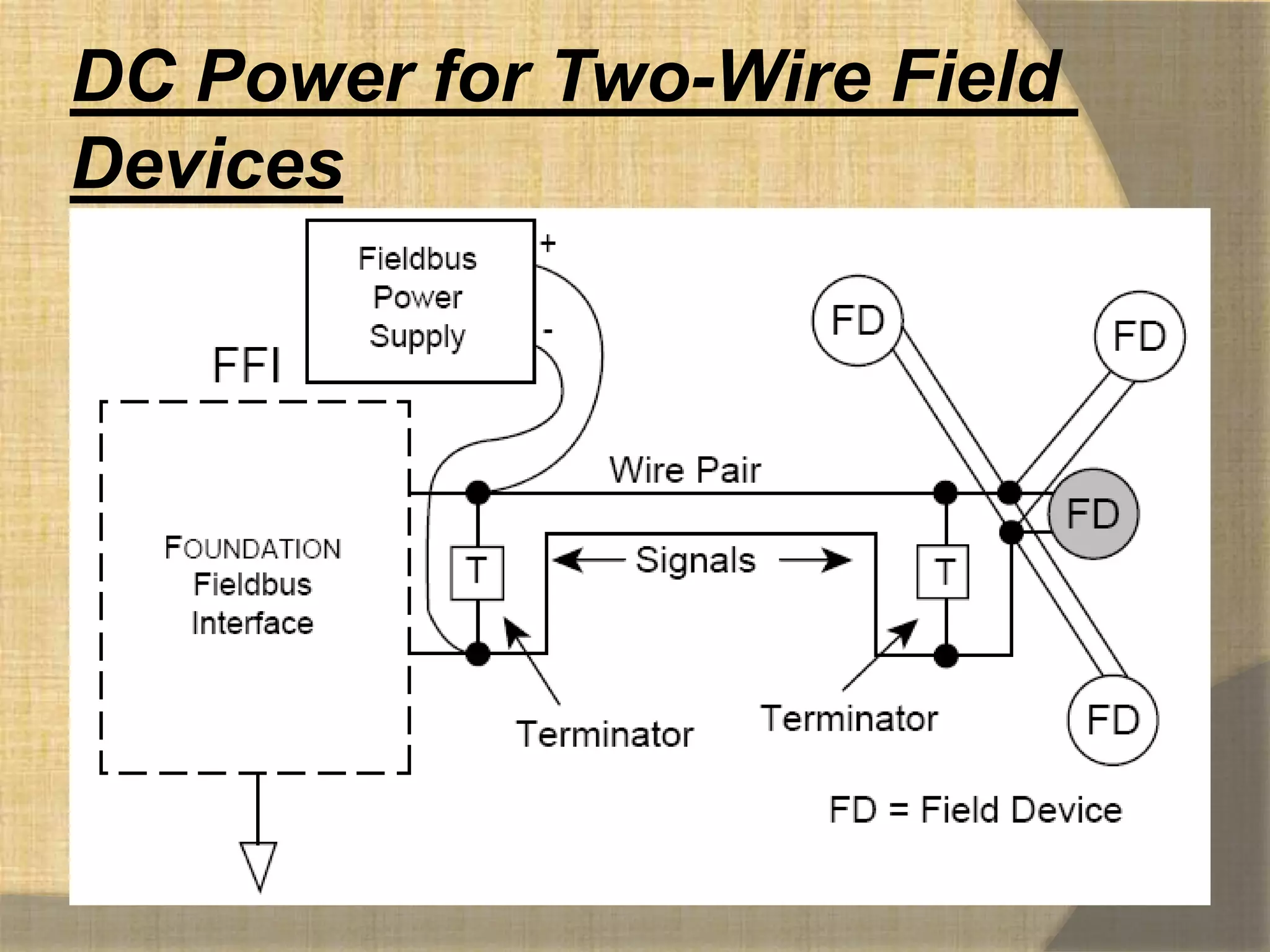
DC Power for Two-Wire Field
Devices
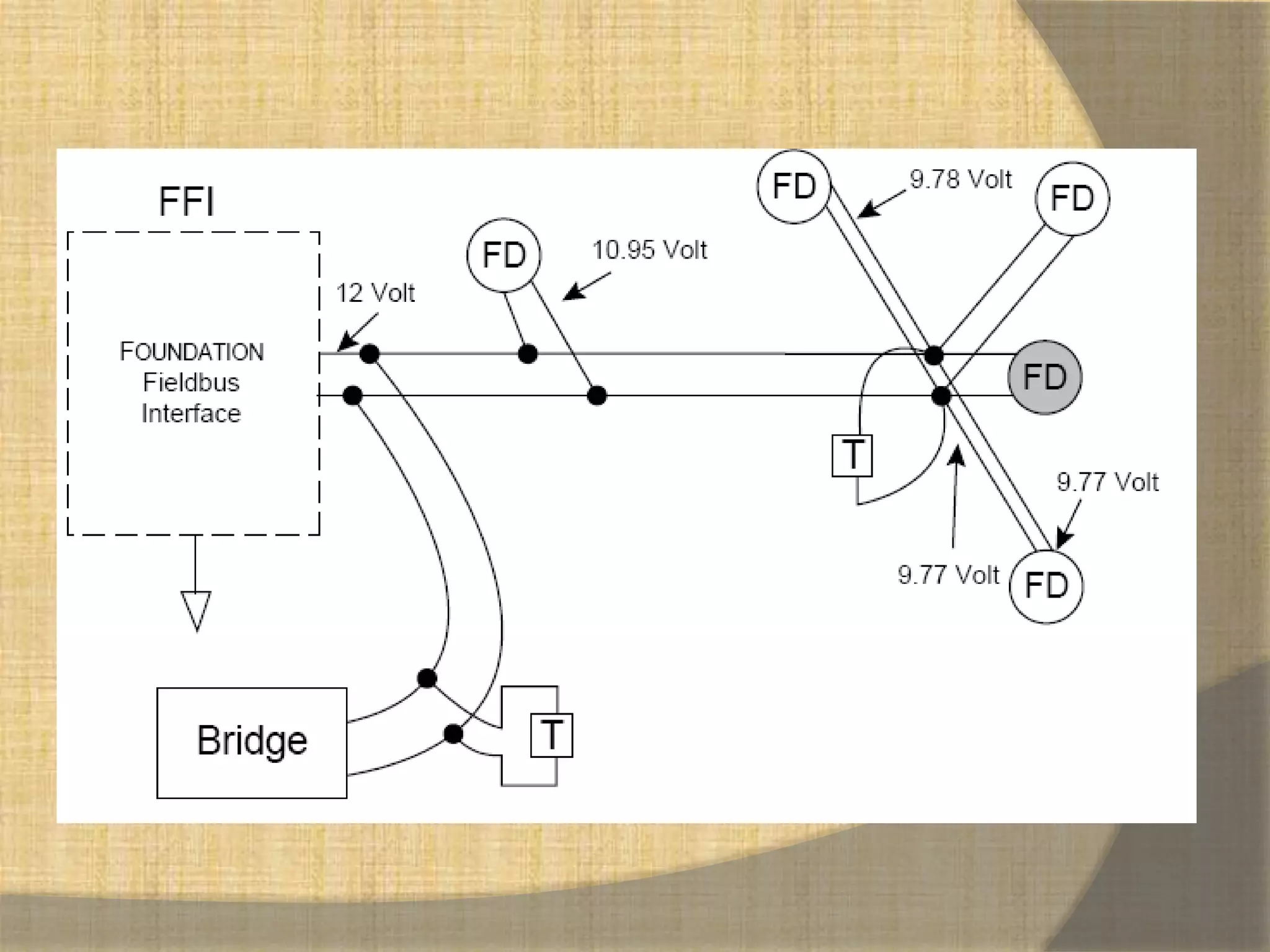
If you have 2-wire field devices in your network, you
have to make sure they have enough voltage to
operate.

Each device should have at least 9 volts.

You need to know:

1. The current consumption of each device.
2. Its location on the network.
3. The location of the power supply on the network.
4. The resistance of each cable section.
5. The power supply voltage.
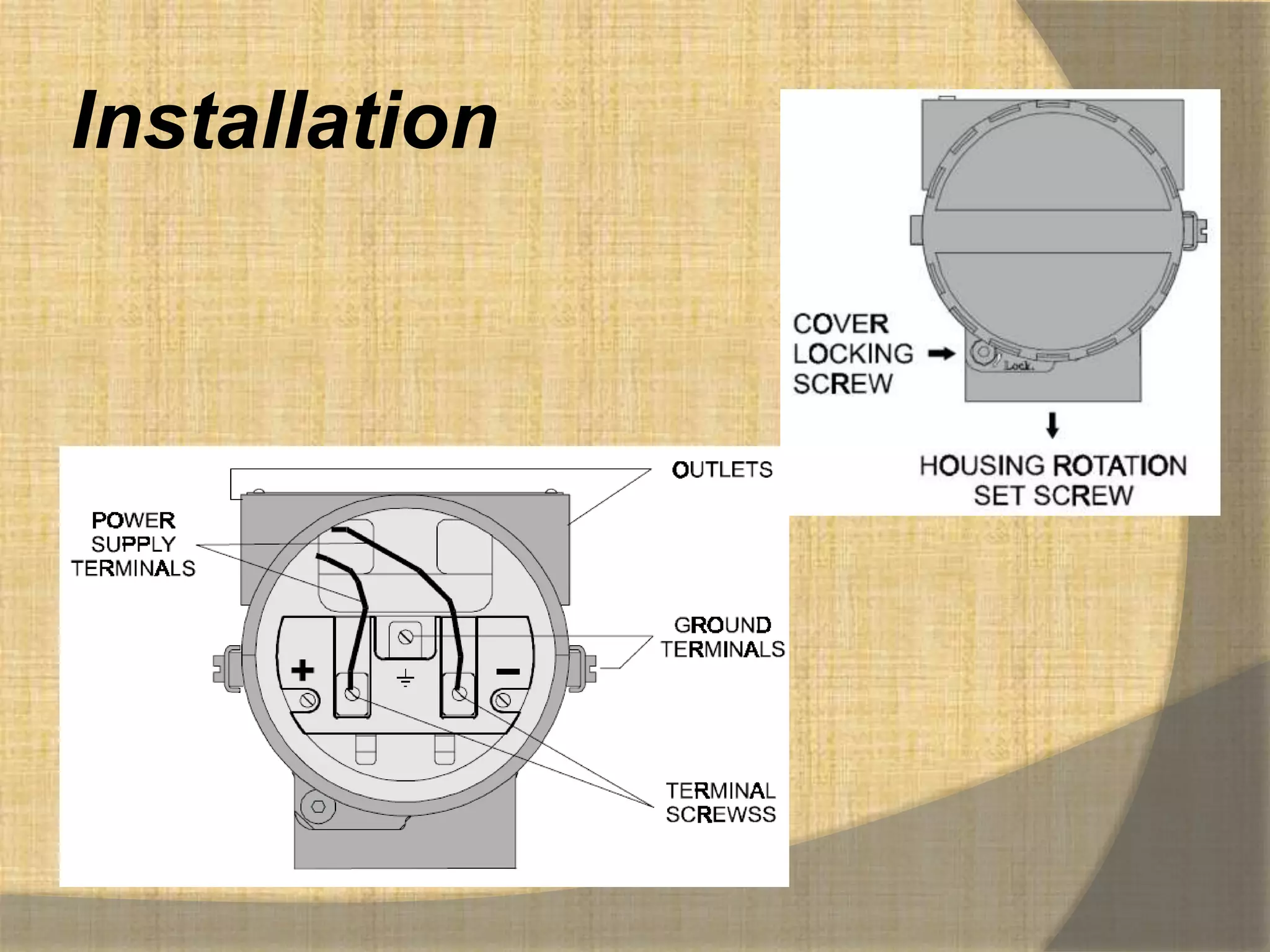
Installation
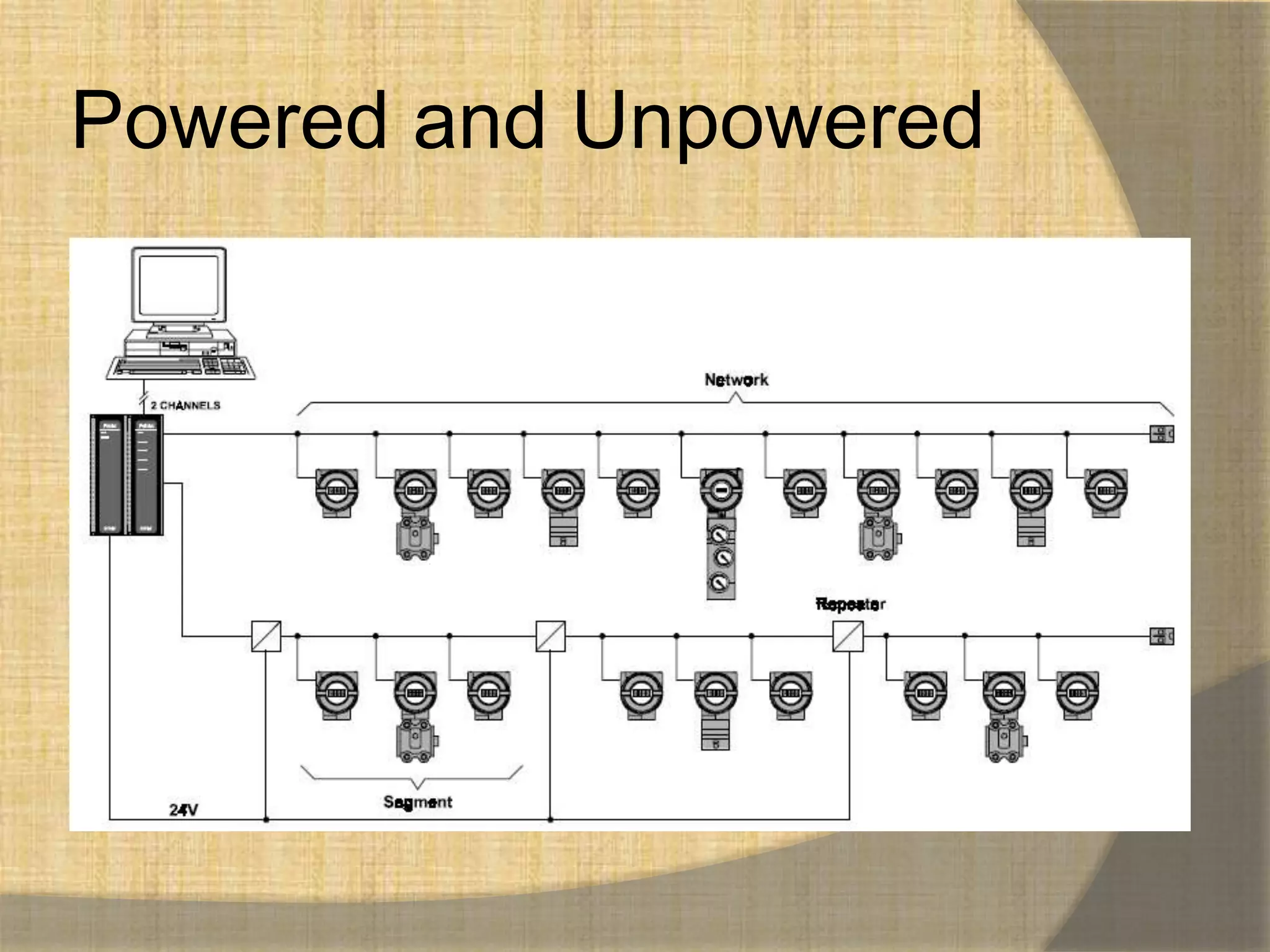
Powered and Unpowered
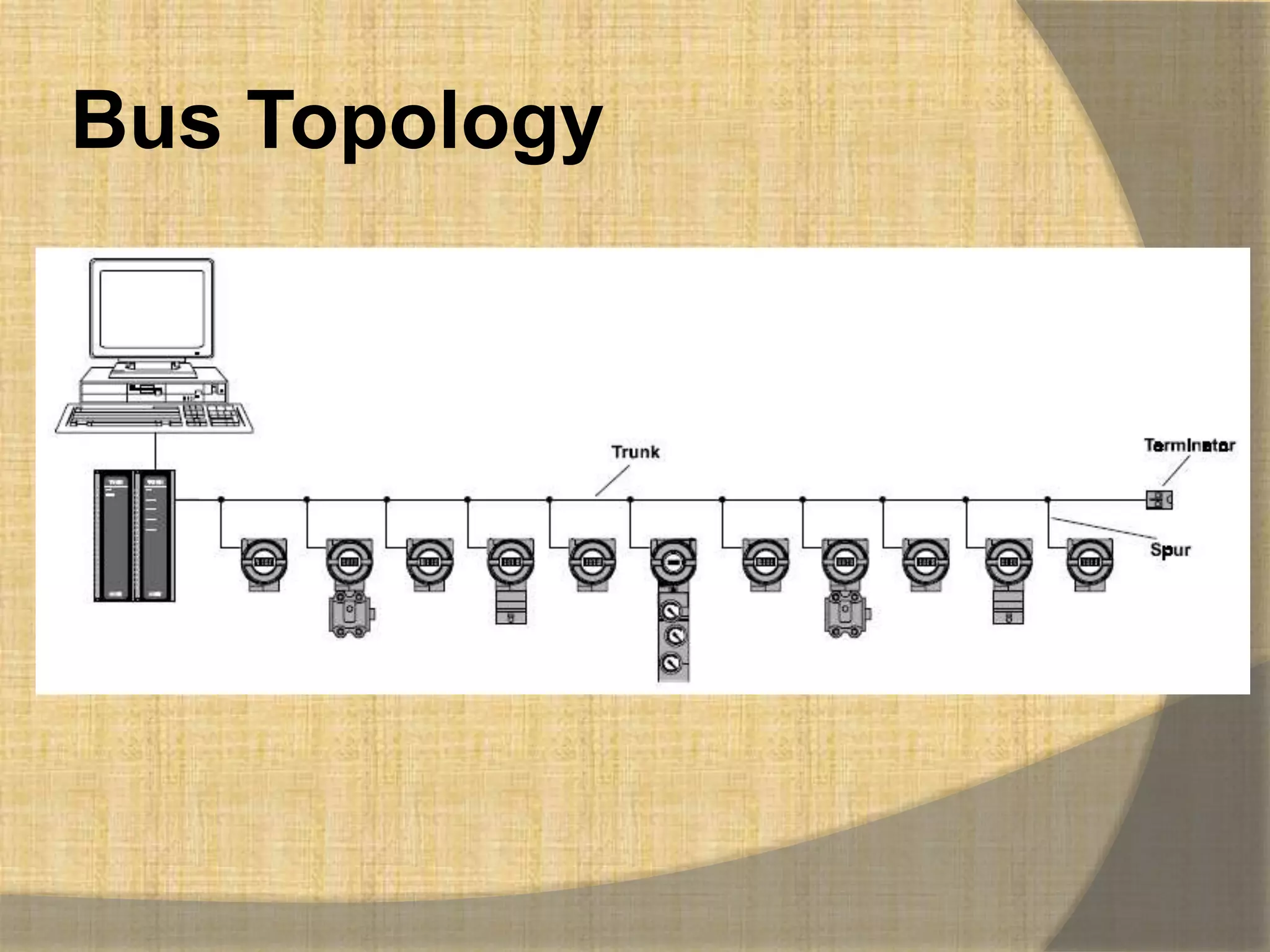
Bus Topology
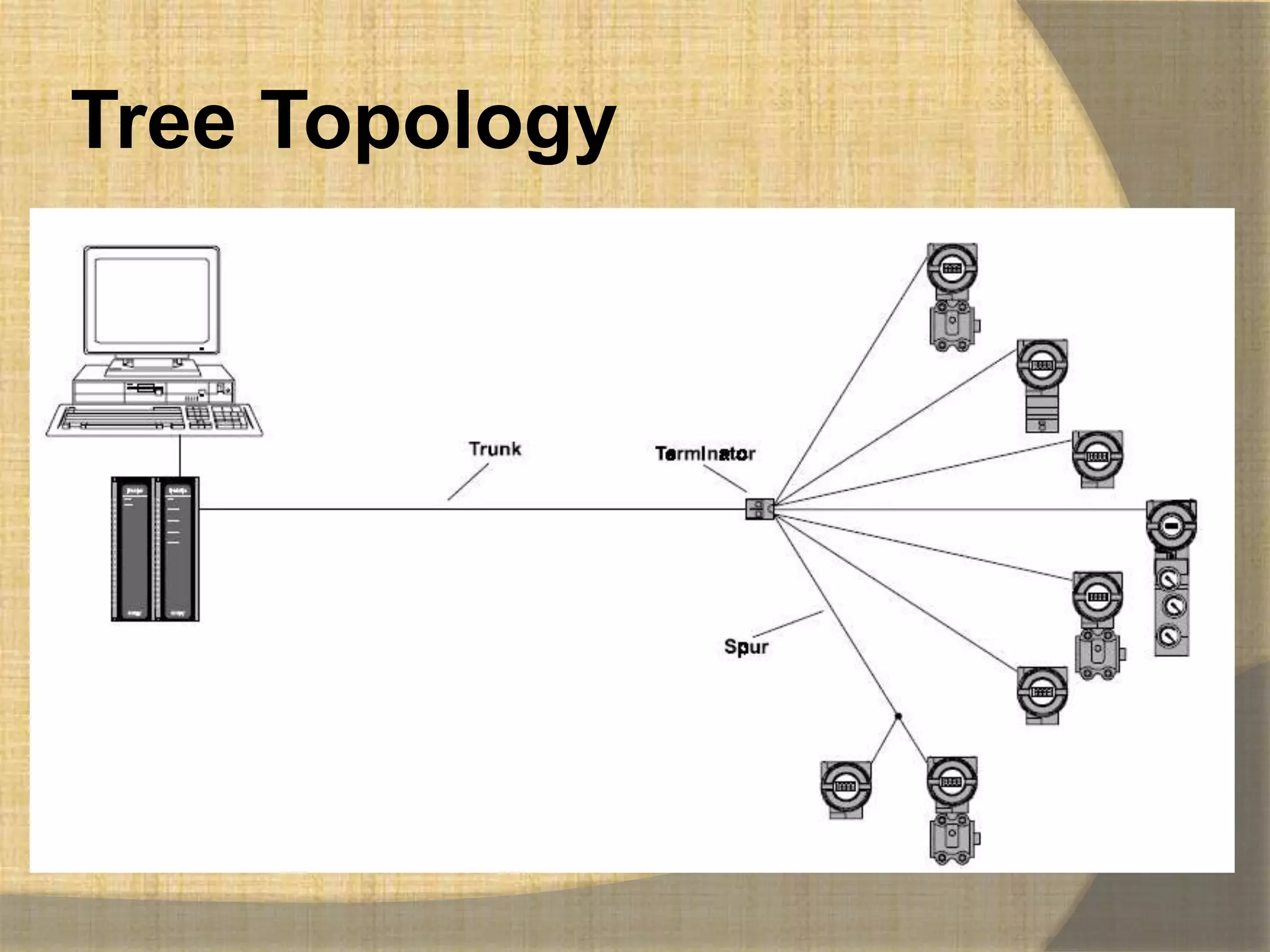
Tree Topology
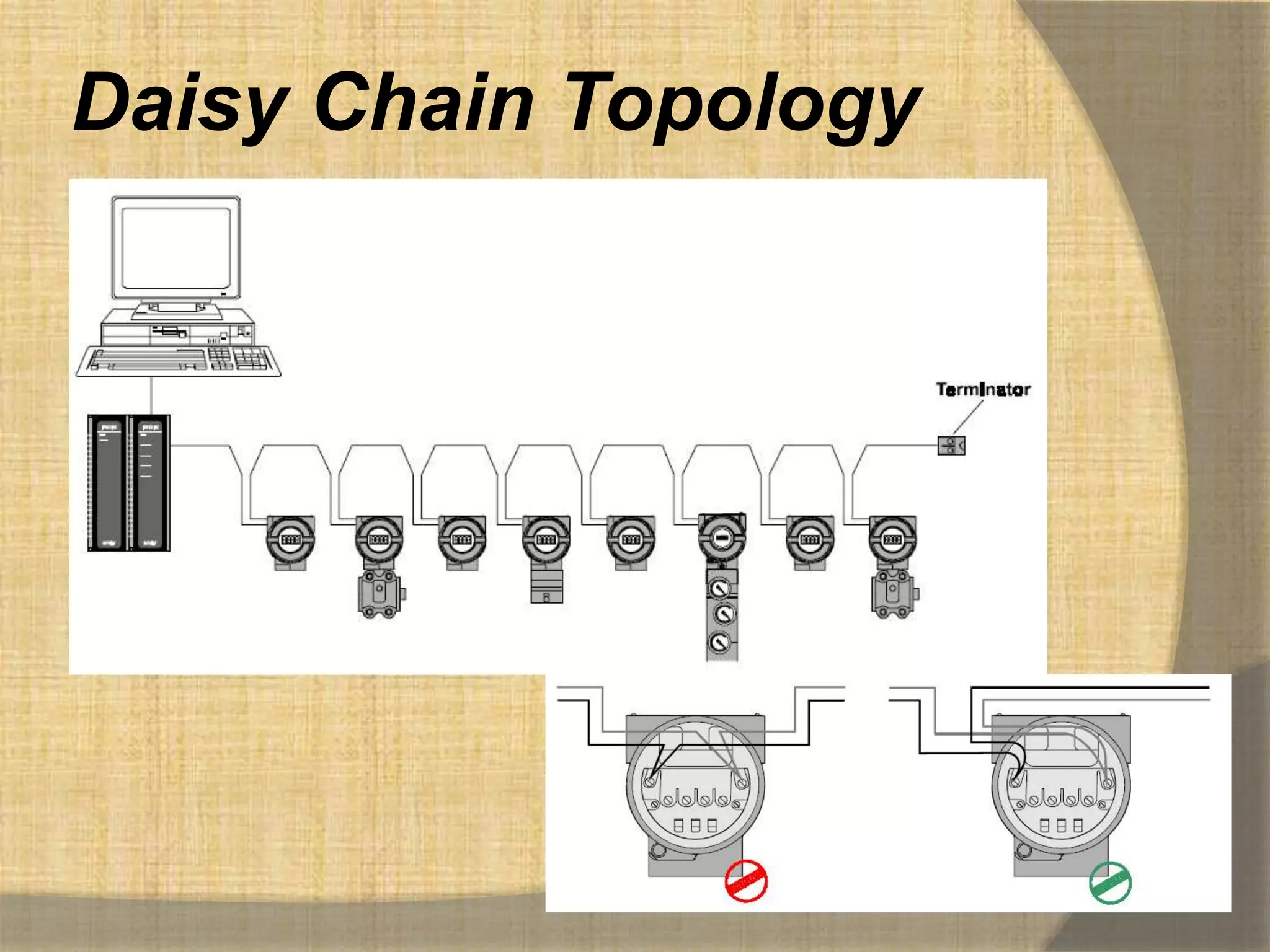
Daisy Chain Topology
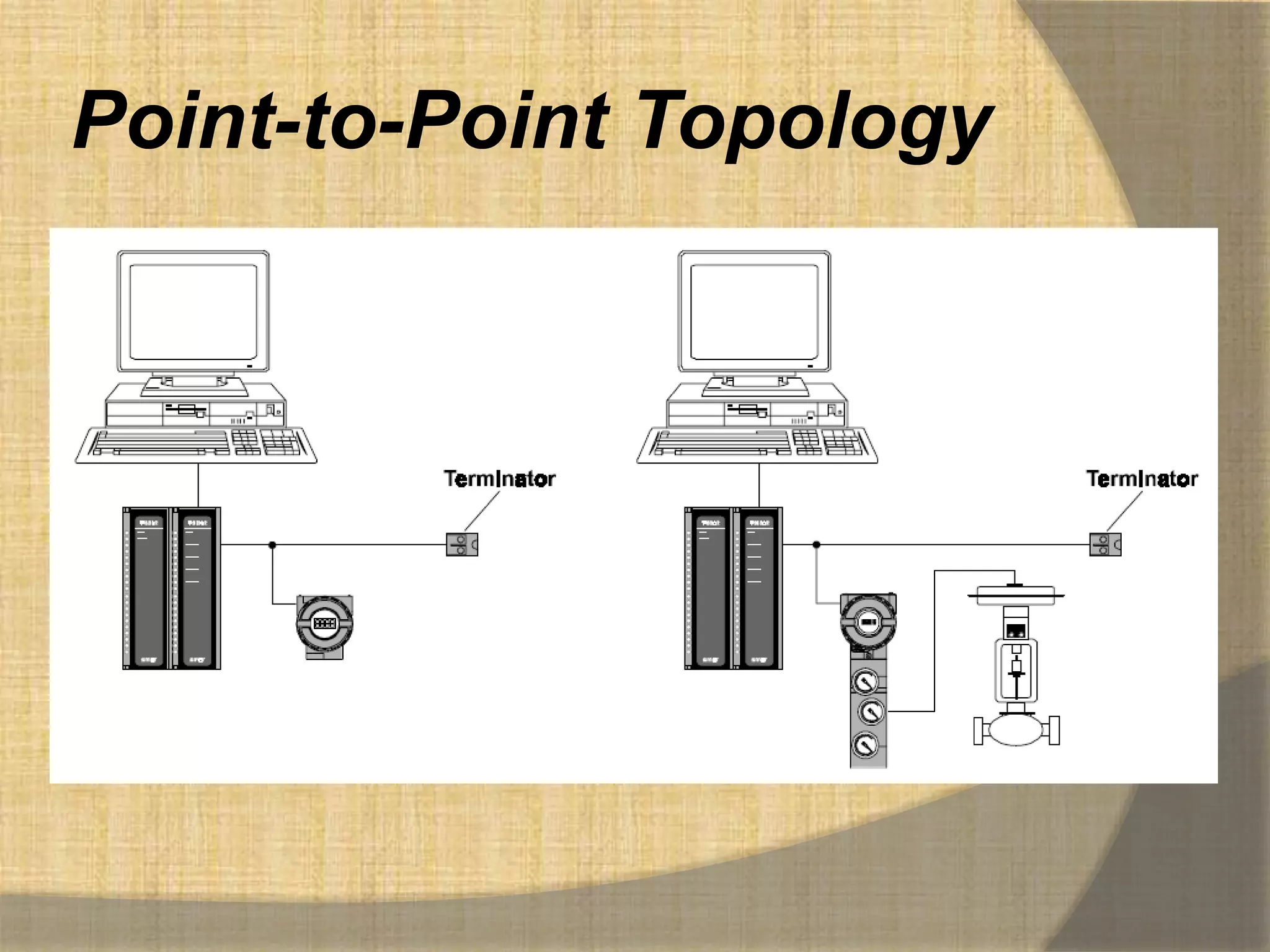
Point-to-Point Topology
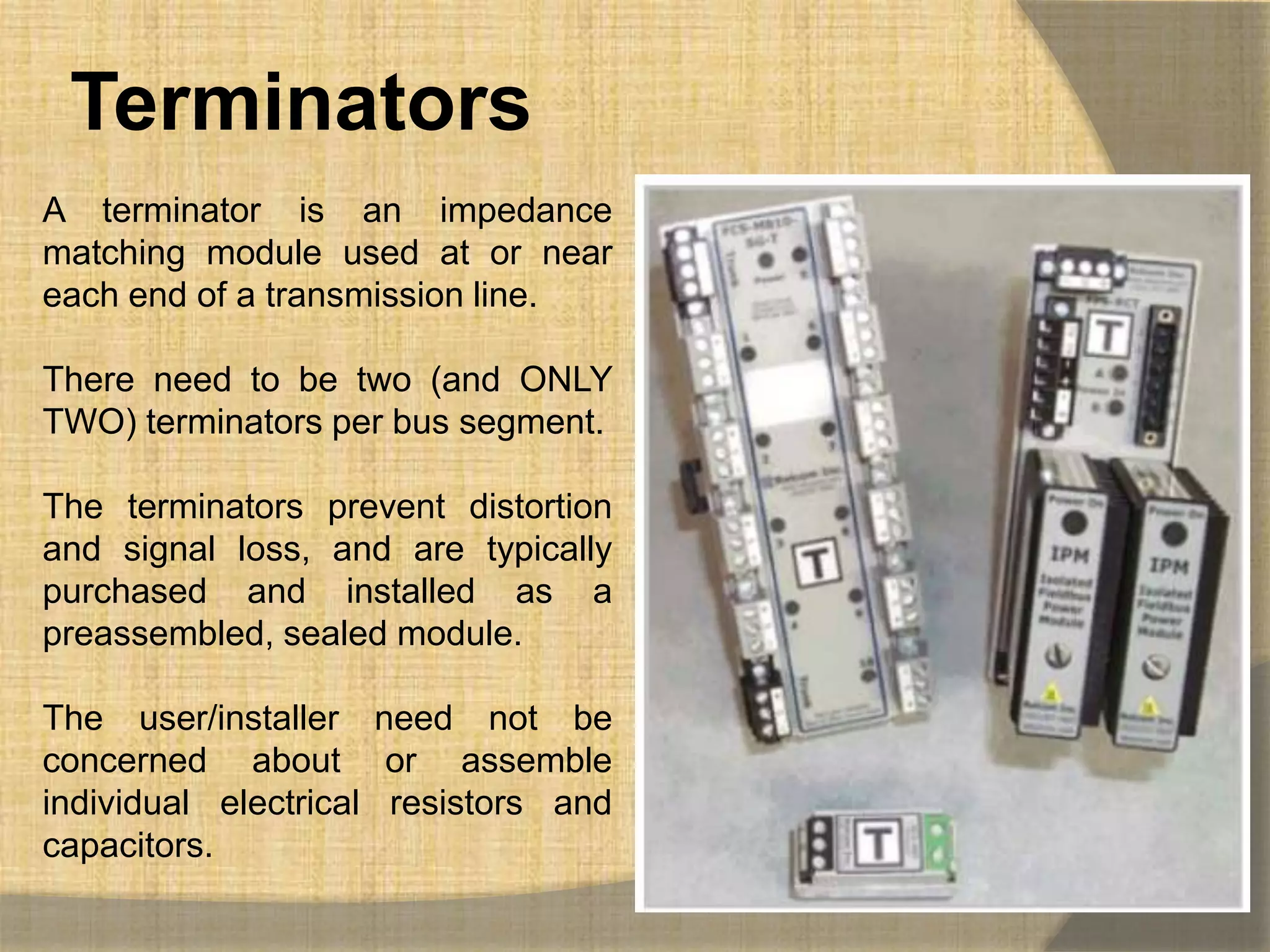
Terminators
A terminator is an impedance
matching module used at or near
each end of a transmission line.

There need to be two (and ONLY
TWO) terminators per bus segment.

The terminators prevent distortion
and signal loss, and are typically
purchased and installed as a
preassembled, sealed module.

The user/installer need not be
concerned about or assemble
individual electrical resistors and
capacitors.
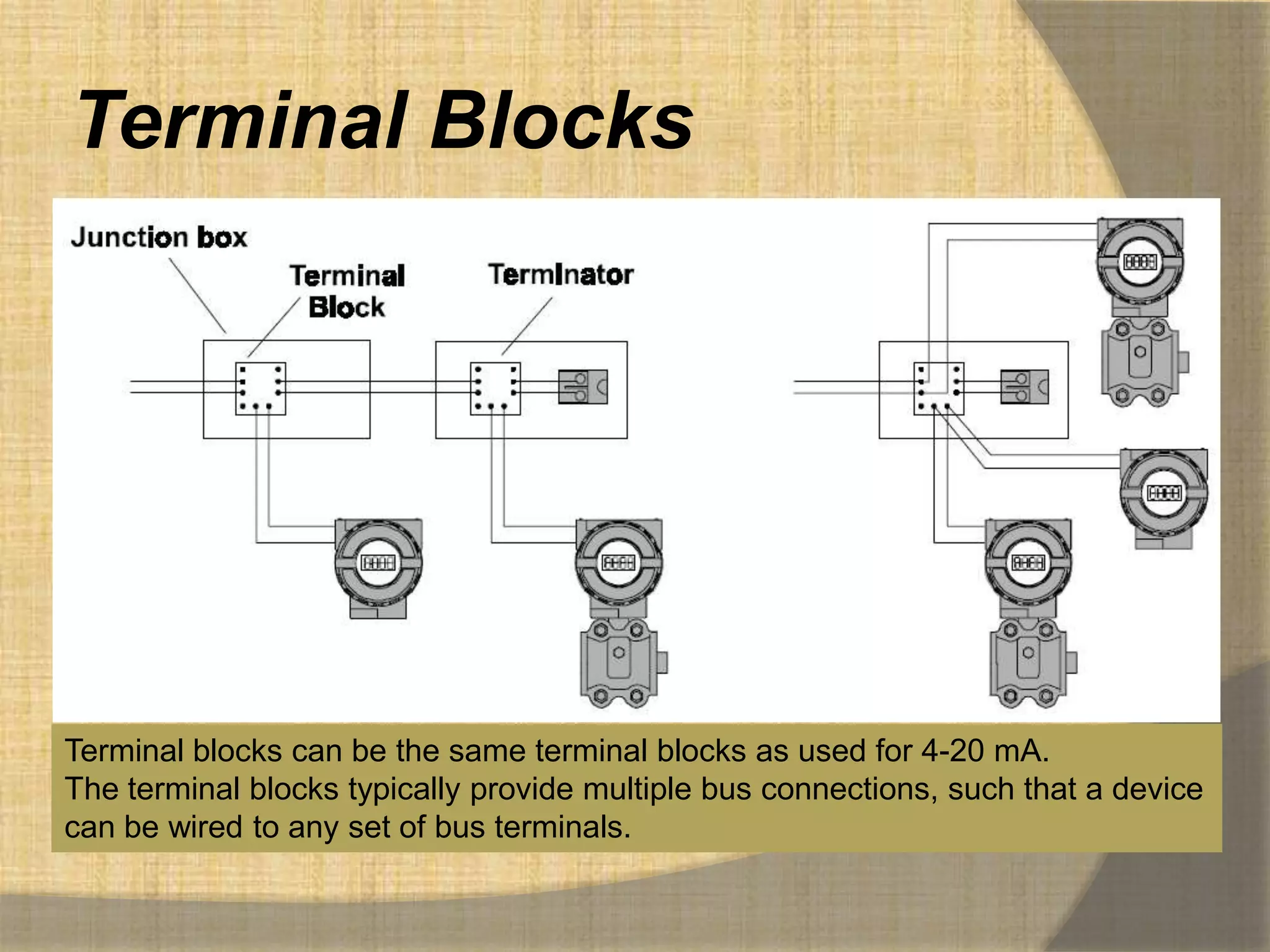
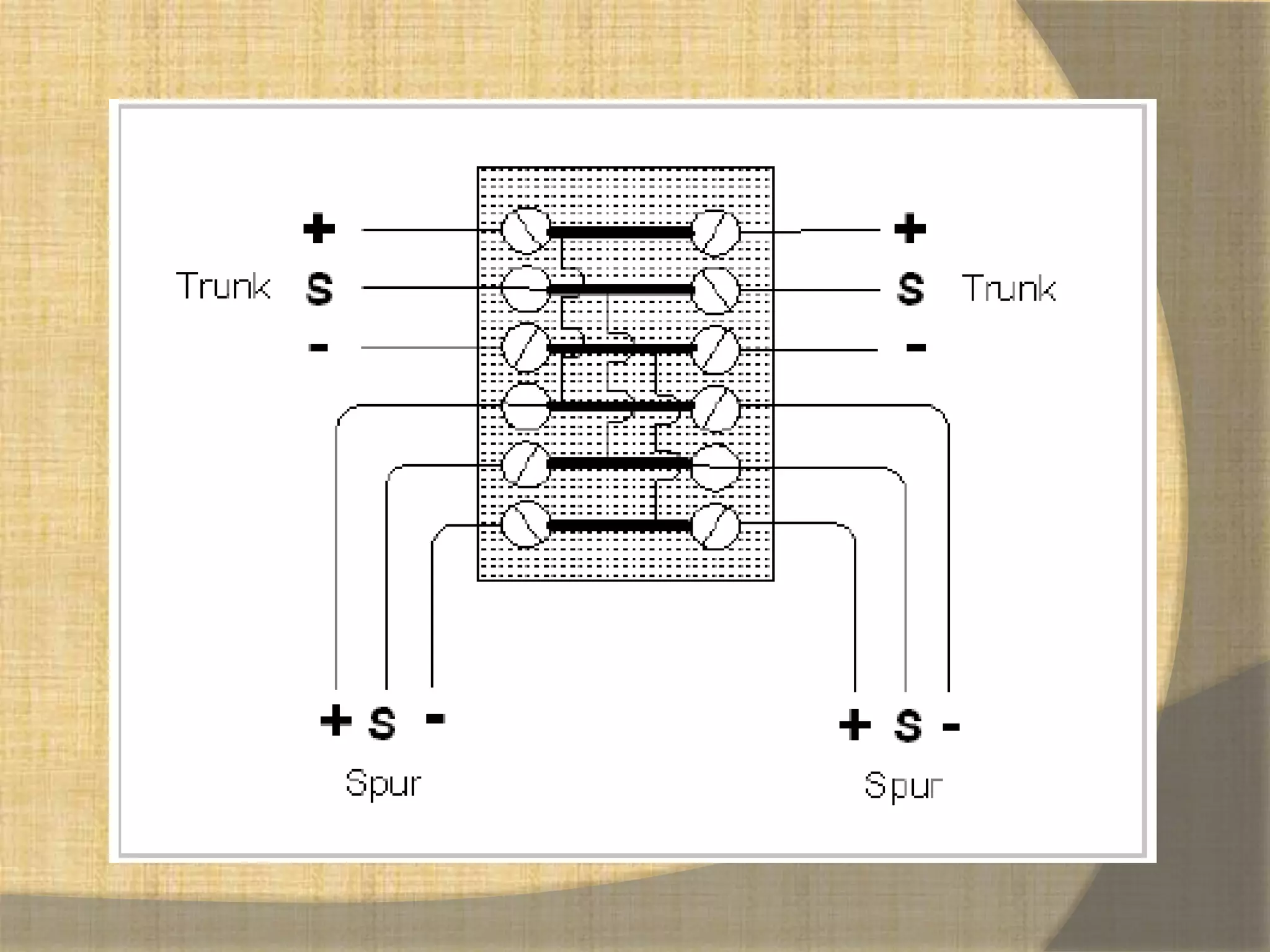
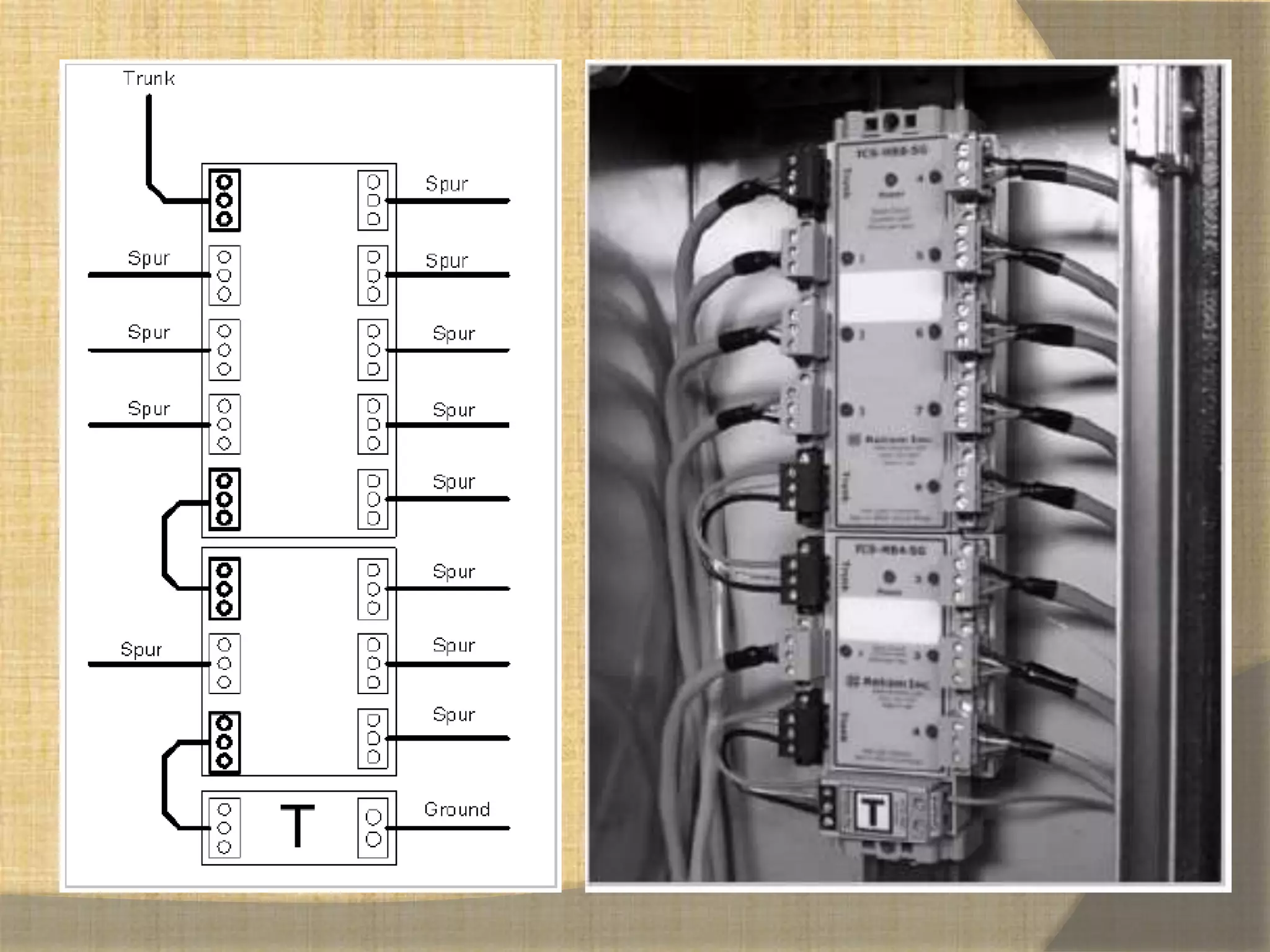
Terminal Blocks


Terminal blocks can be the same terminal blocks as used for 4-20 mA.
The terminal blocks typically provide multiple bus connections, such that a device
can be wired to any set of bus terminals.
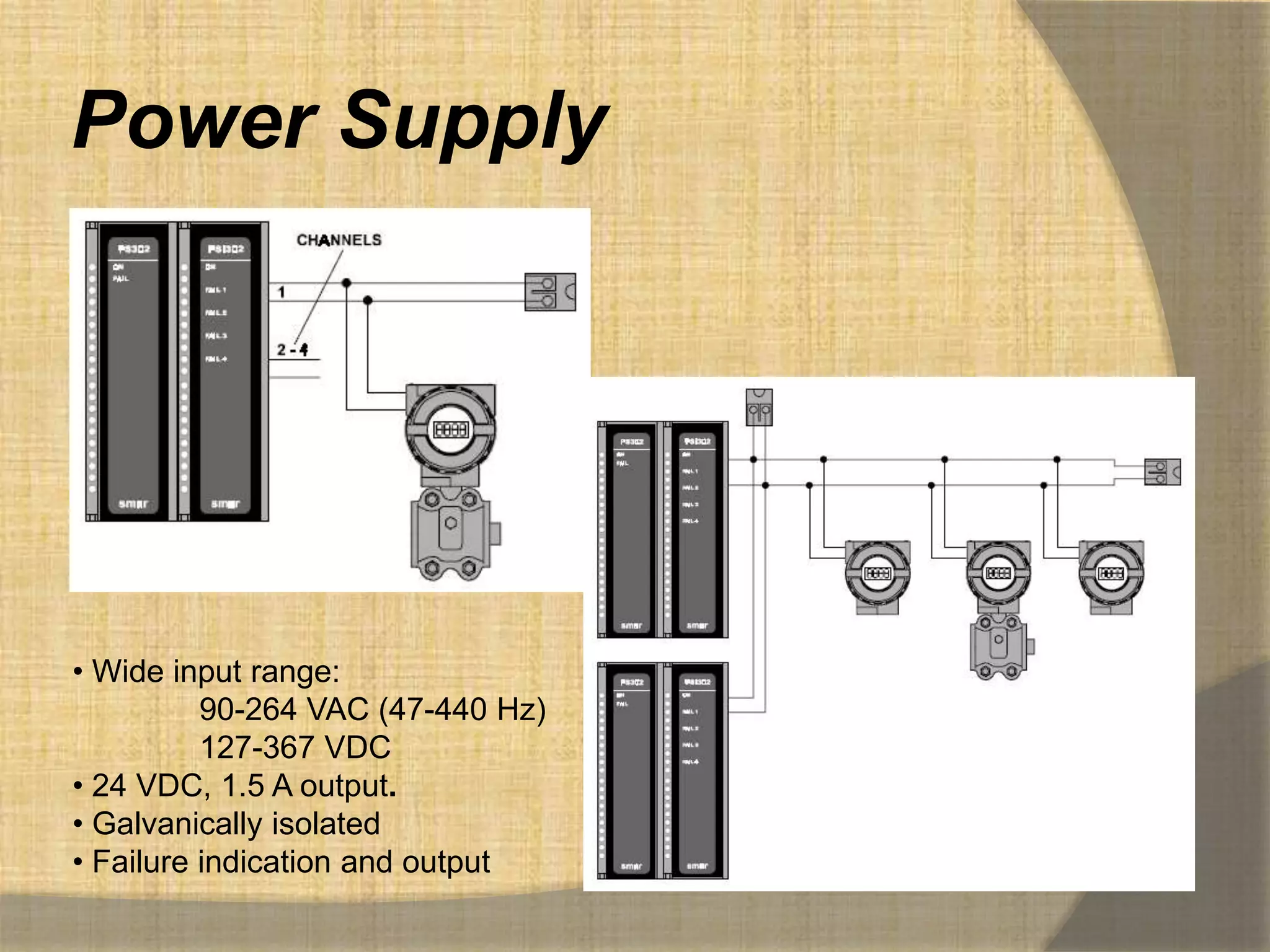
Power Supply


• Wide input range:
          90-264 VAC (47-440 Hz)
          127-367 VDC
• 24 VDC, 1.5 A output.
• Galvanically isolated
• Failure indication and output
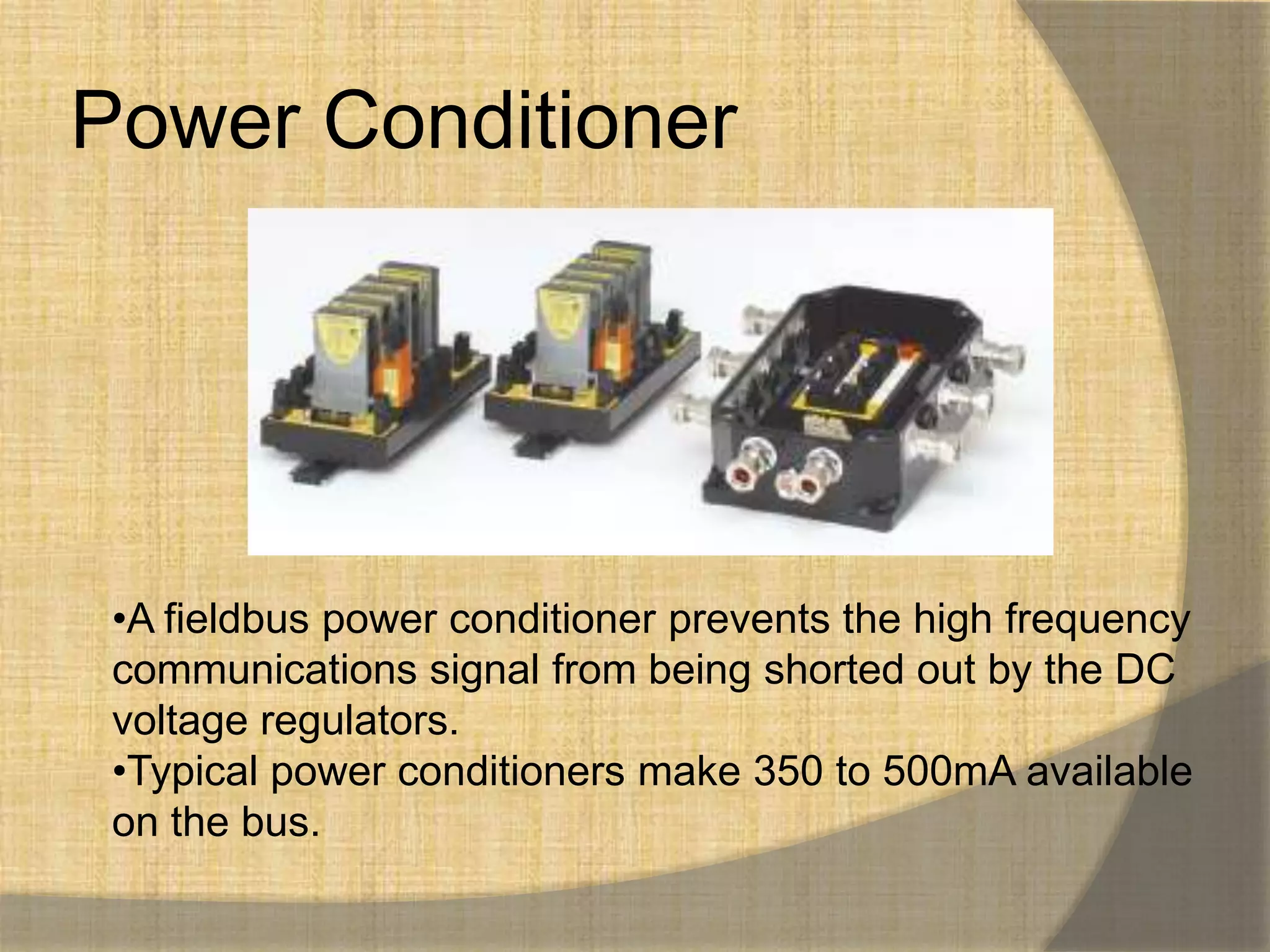
Power Conditioner


 •A fieldbus power conditioner prevents the high frequency
 communications signal from being shorted out by the DC
 voltage regulators.
 •Typical power conditioners make 350 to 500mA available
 on the bus.
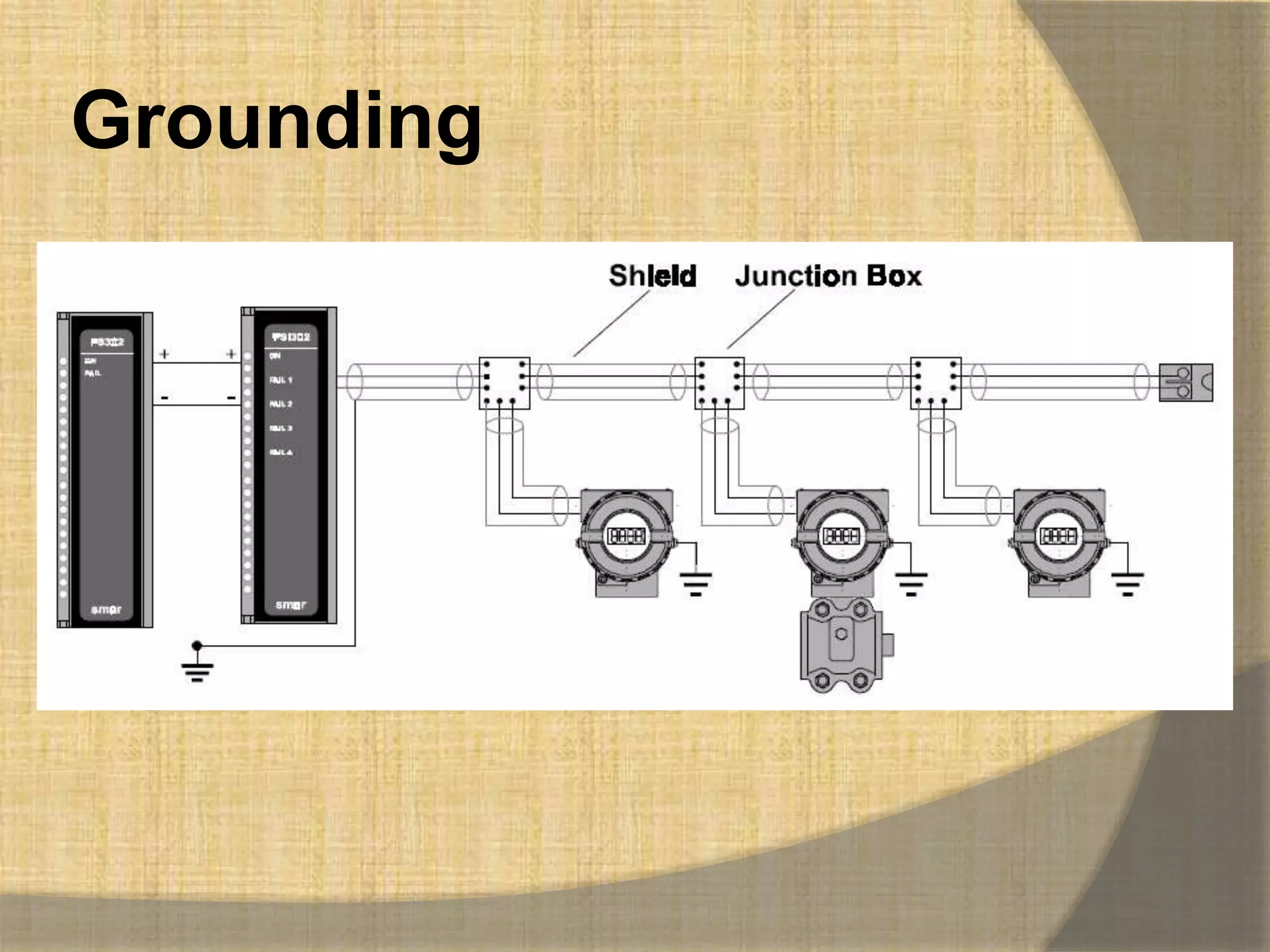
Grounding
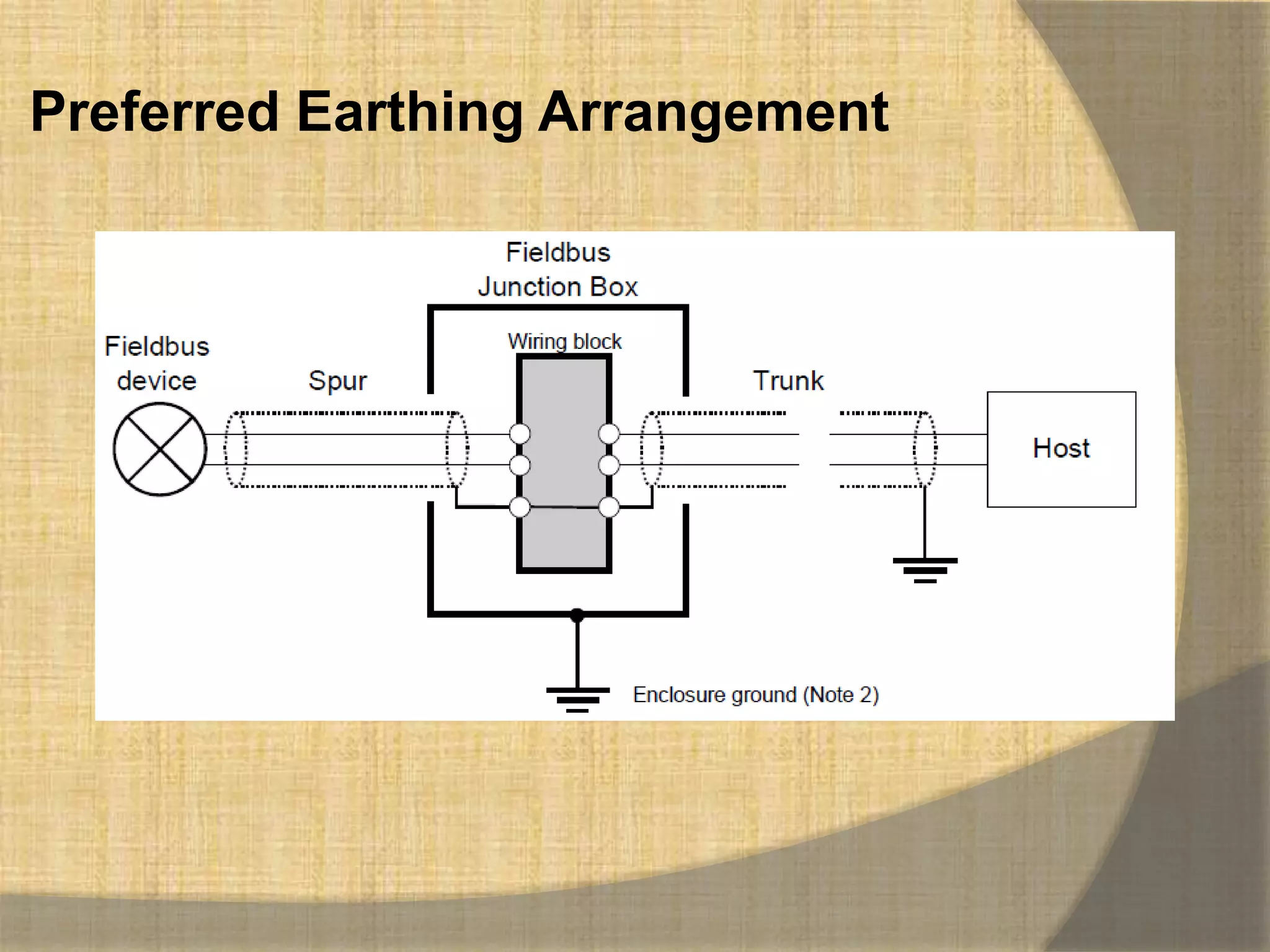
Preferred Earthing Arrangement
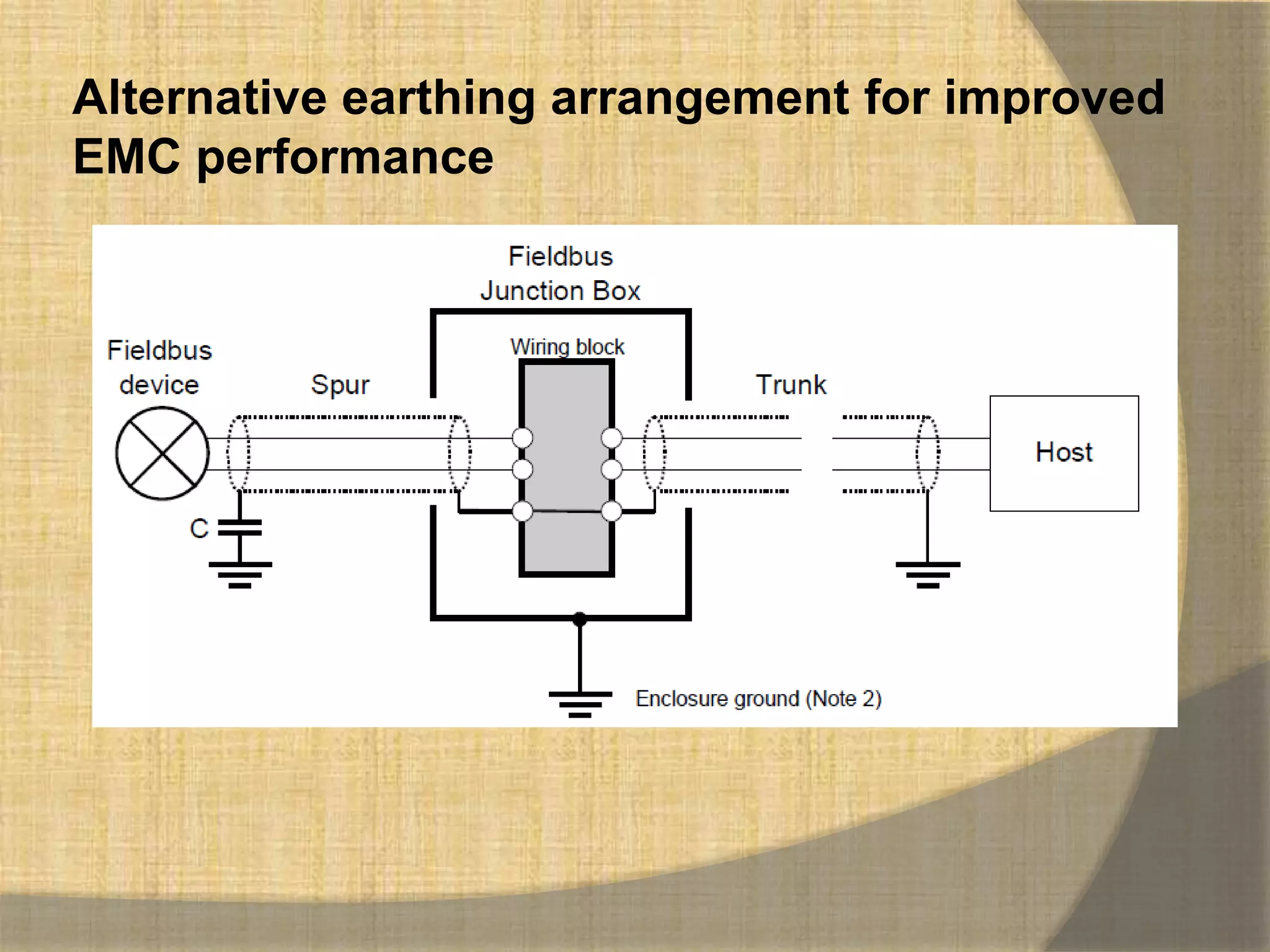
Alternative earthing arrangement for improved
EMC performance
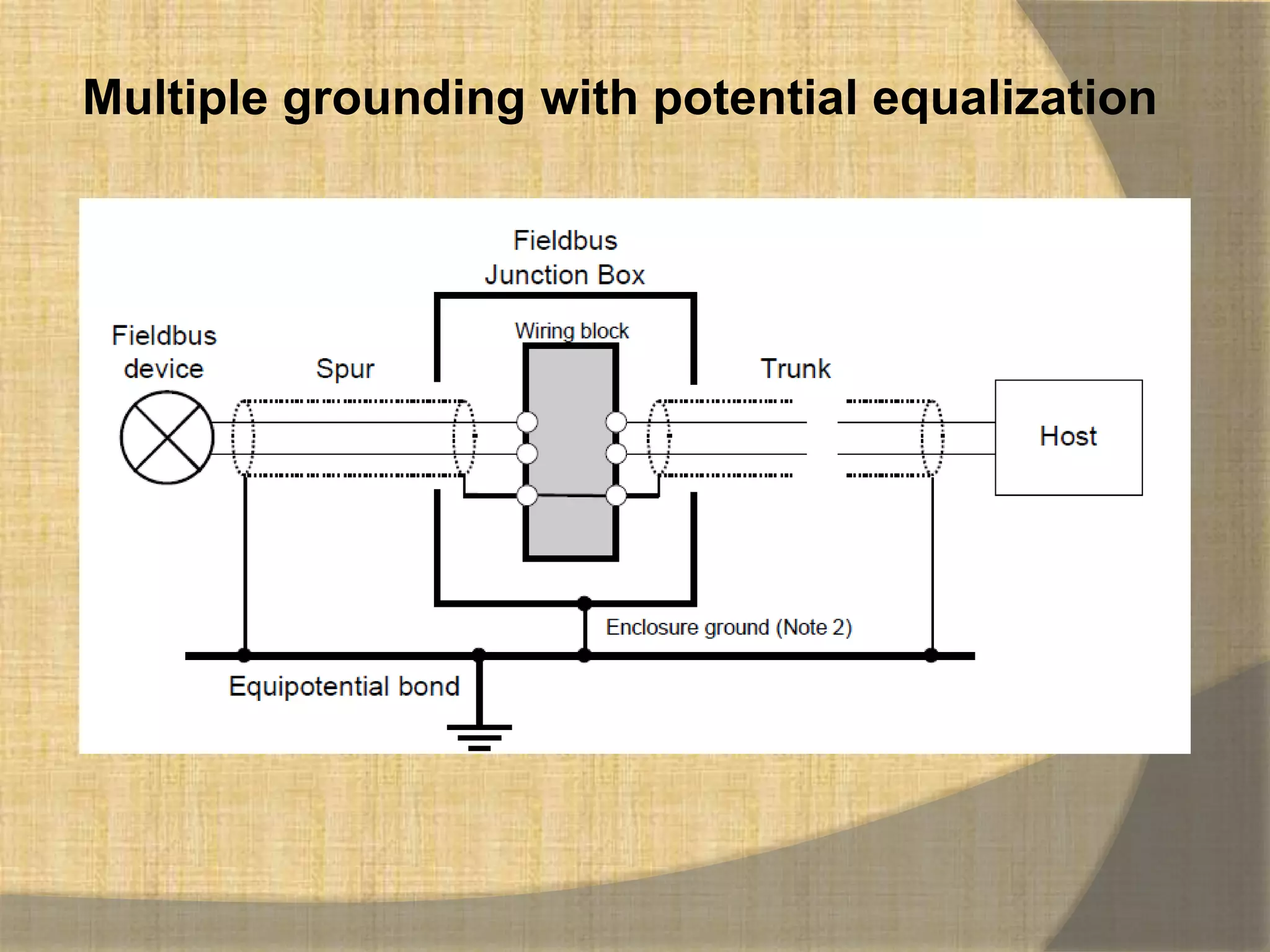
Multiple grounding with potential equalization
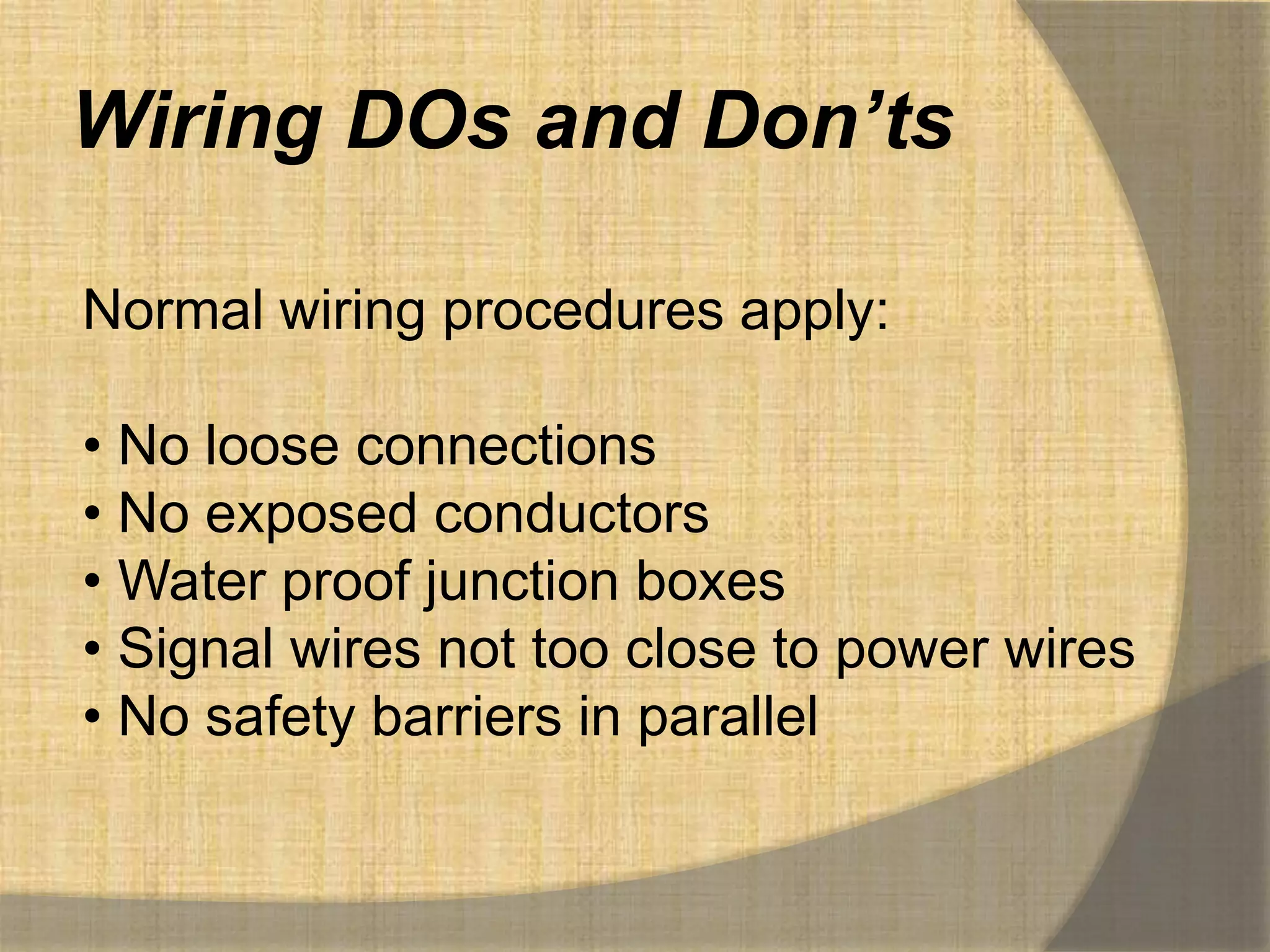
Wiring DOs and Don’ts

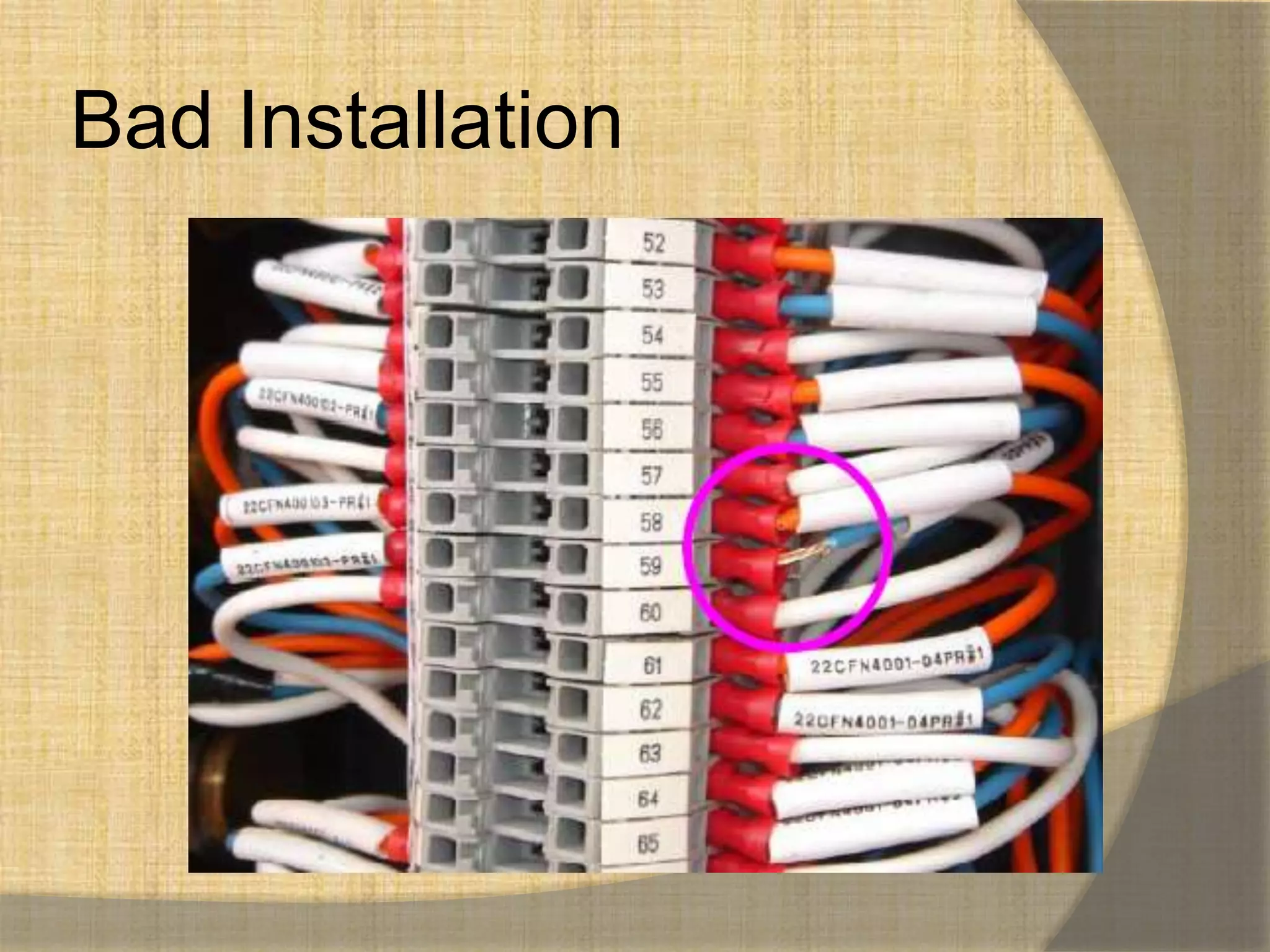
Normal wiring procedures apply:

• No loose connections
• No exposed conductors
• Water proof junction boxes
• Signal wires not too close to power wires
• No safety barriers in parallel
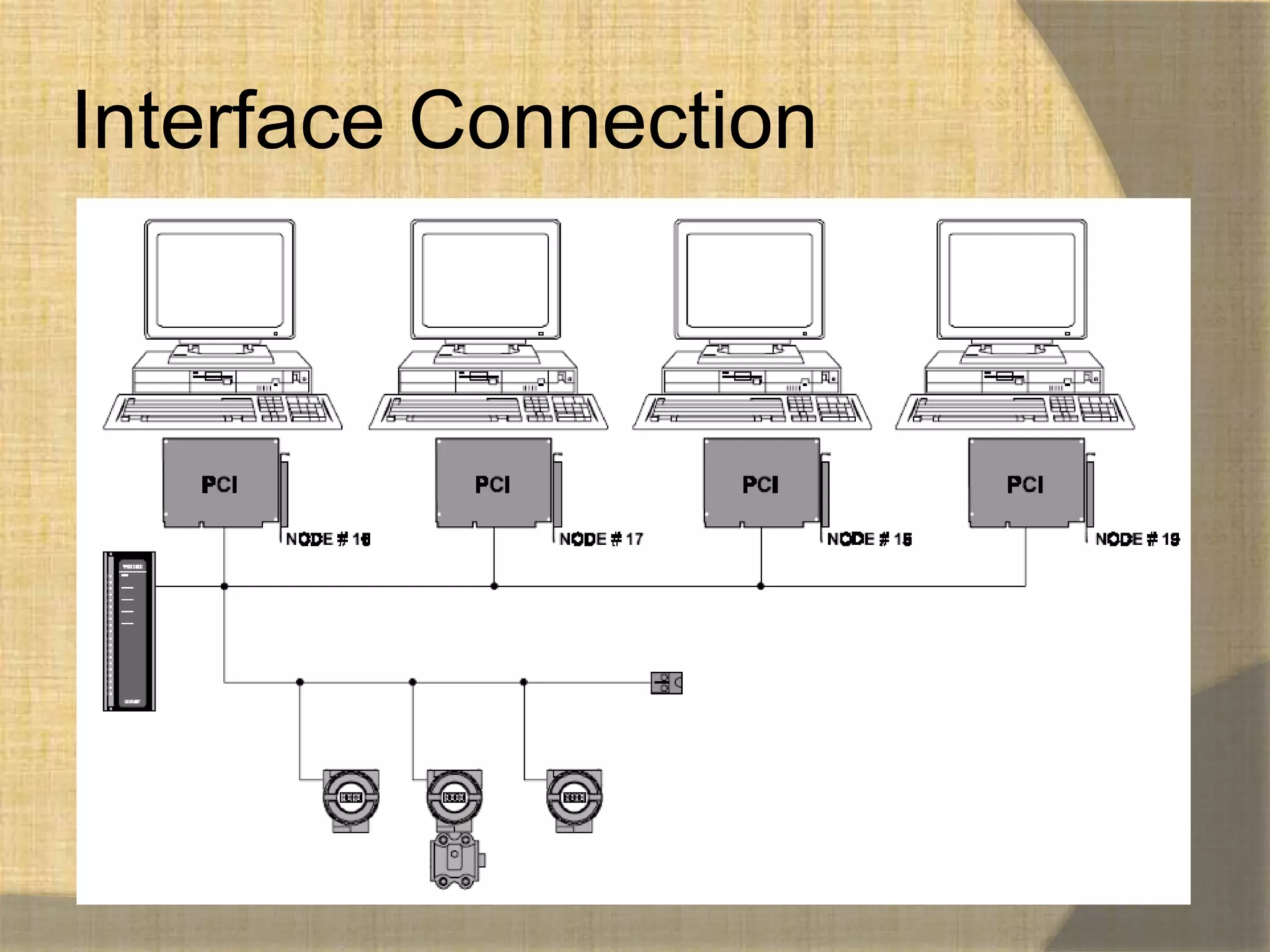
Interface Connection
Basic Troubleshooting
• Correct polarity
• Correct tag and address
• Integrity of the fieldbus network
• Supply voltage is sufficient, min 9.5 V even during
communication.
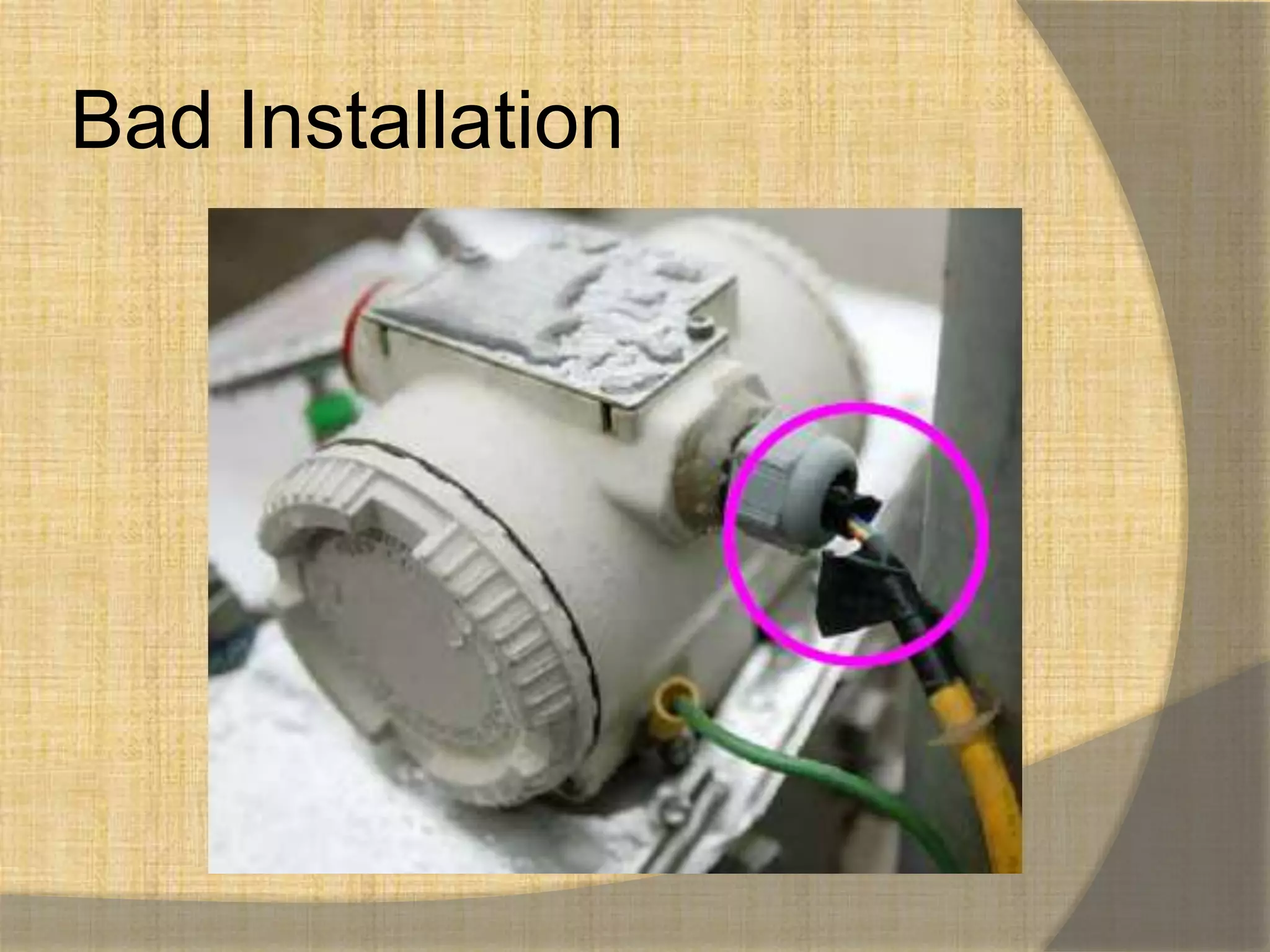
•Wiring errors, including wrong connections, open or short
circuits, intermittent
•Connections and reversed polarity
• Too many or too few terminators on each segment
• Faulty „out of the box‟ physical layer components or
fieldbus instruments
• Inadequate grounding, such as multiple grounds in field, or
the absence of any
clear grounding strategy
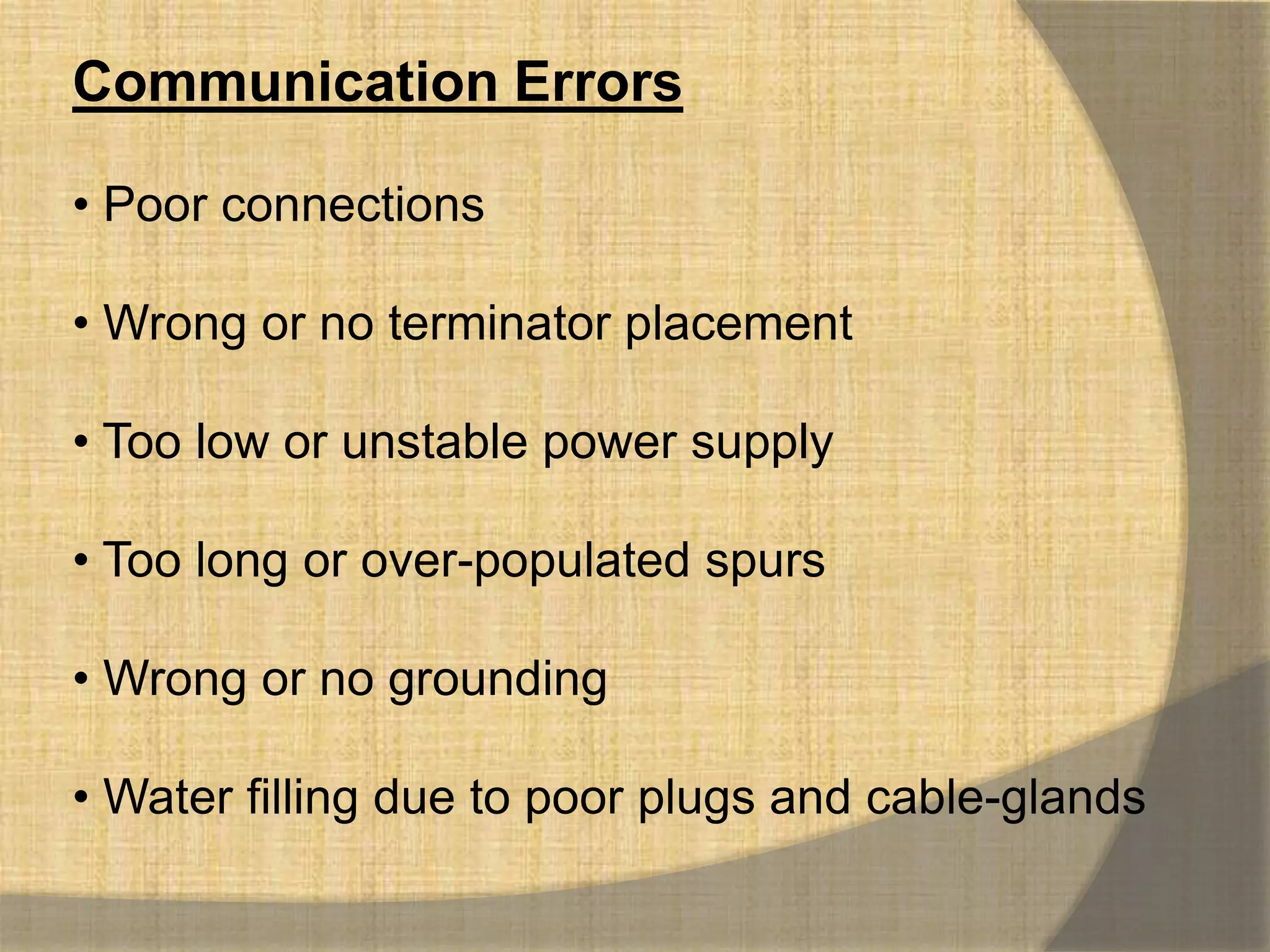
Communication Errors

• Poor connections

• Wrong or no terminator placement

• Too low or unstable power supply

• Too long or over-populated spurs

• Wrong or no grounding

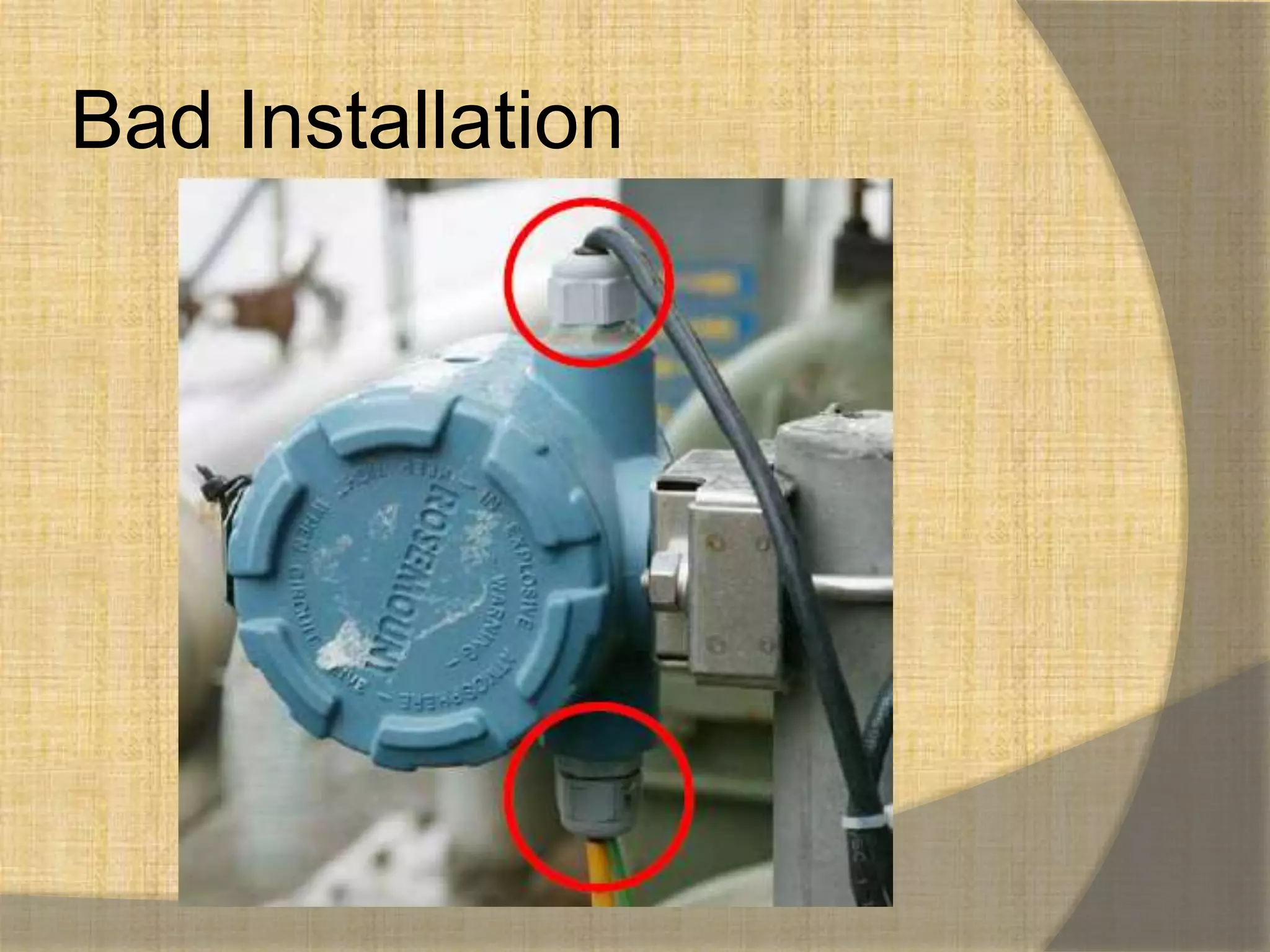
• Water filling due to poor plugs and cable-glands
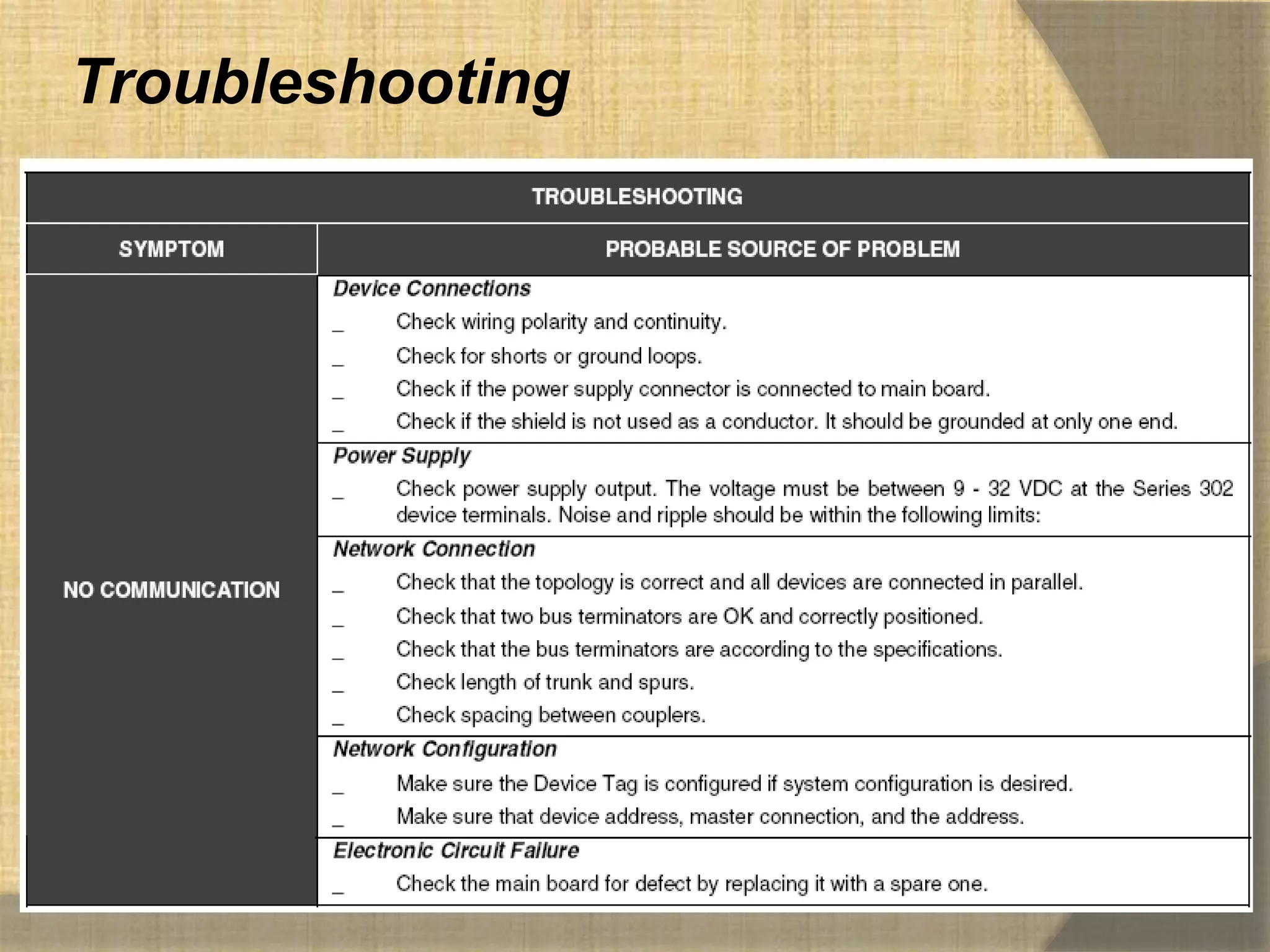
Troubleshooting
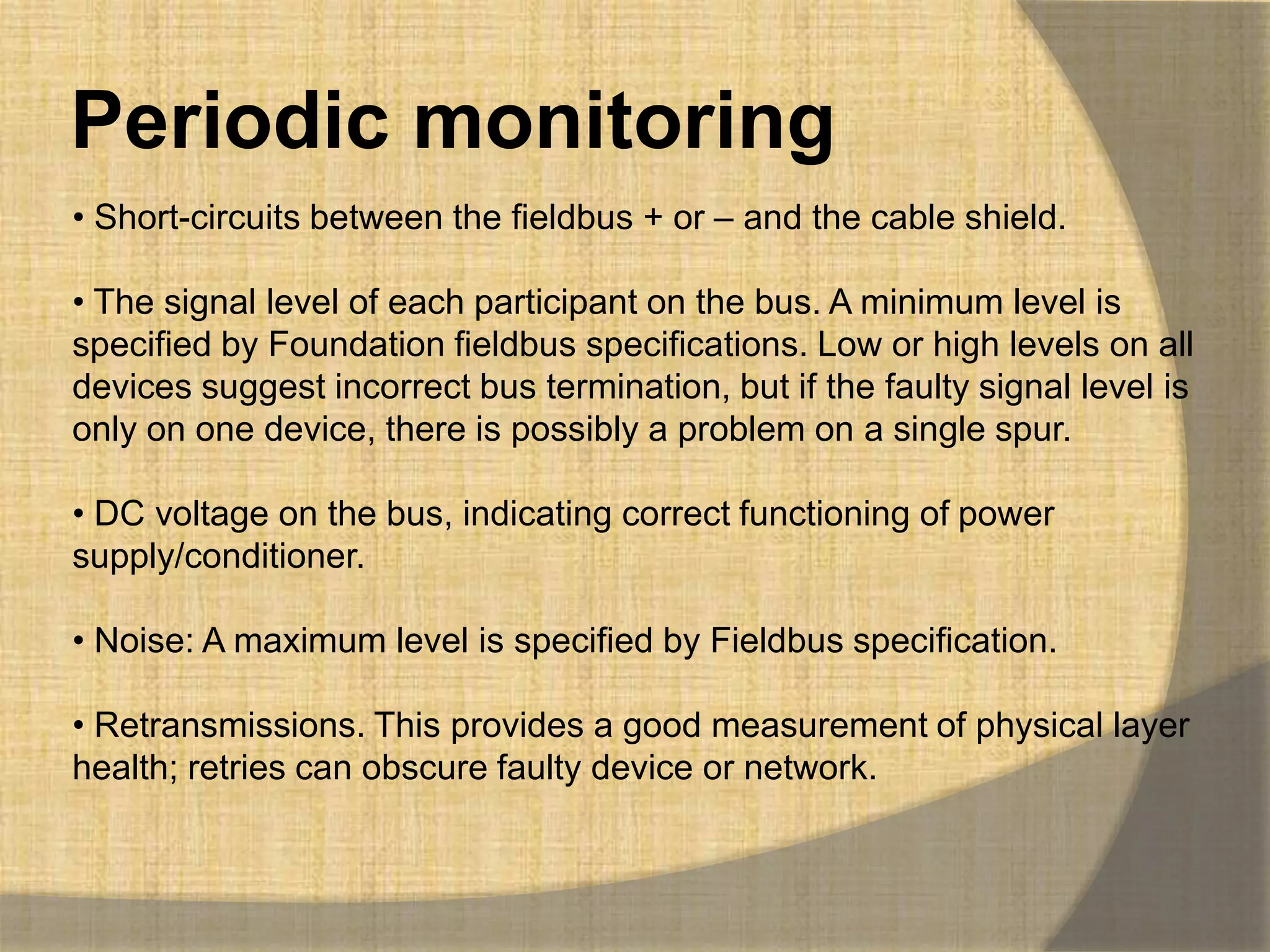
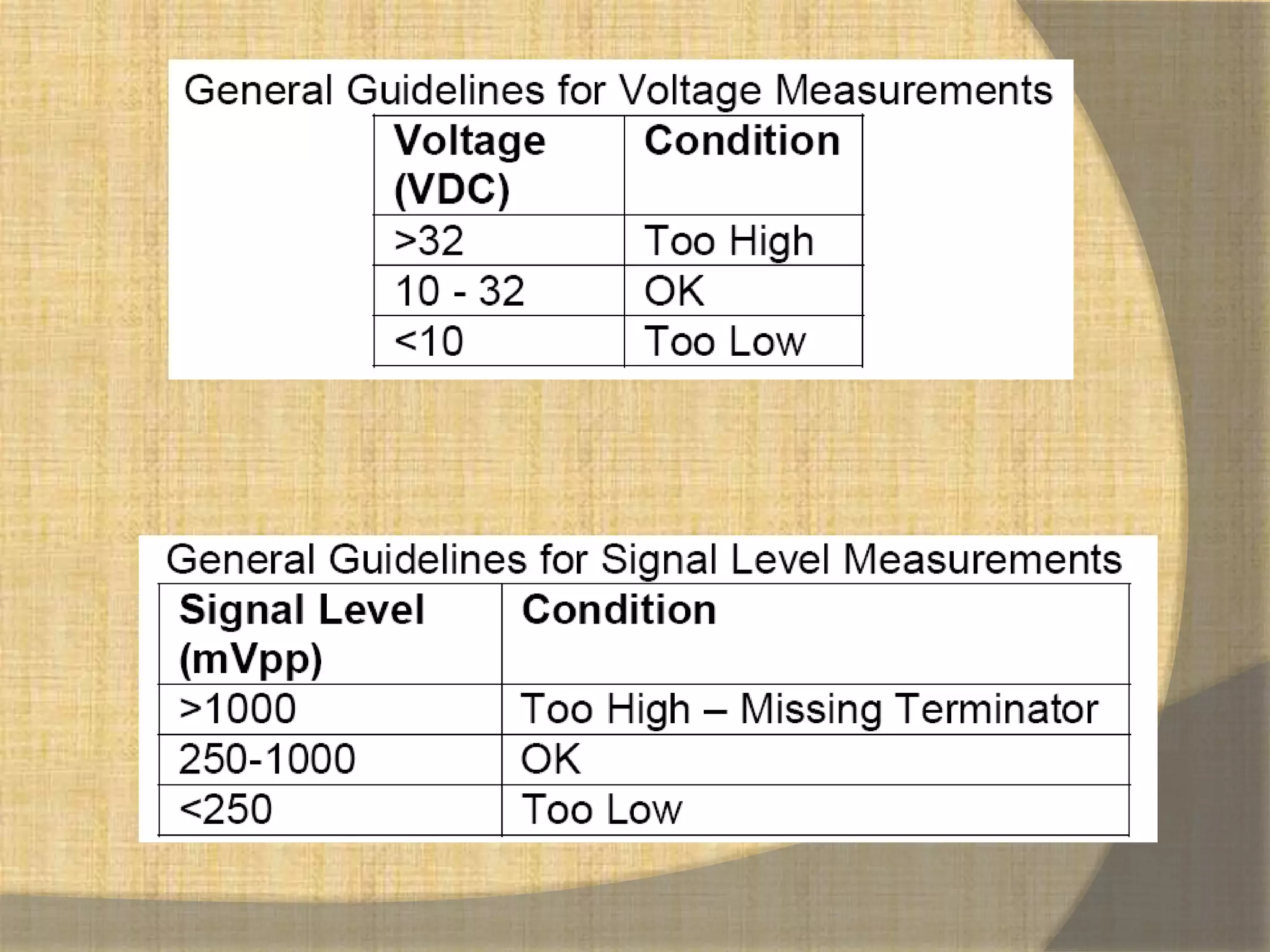
Periodic monitoring
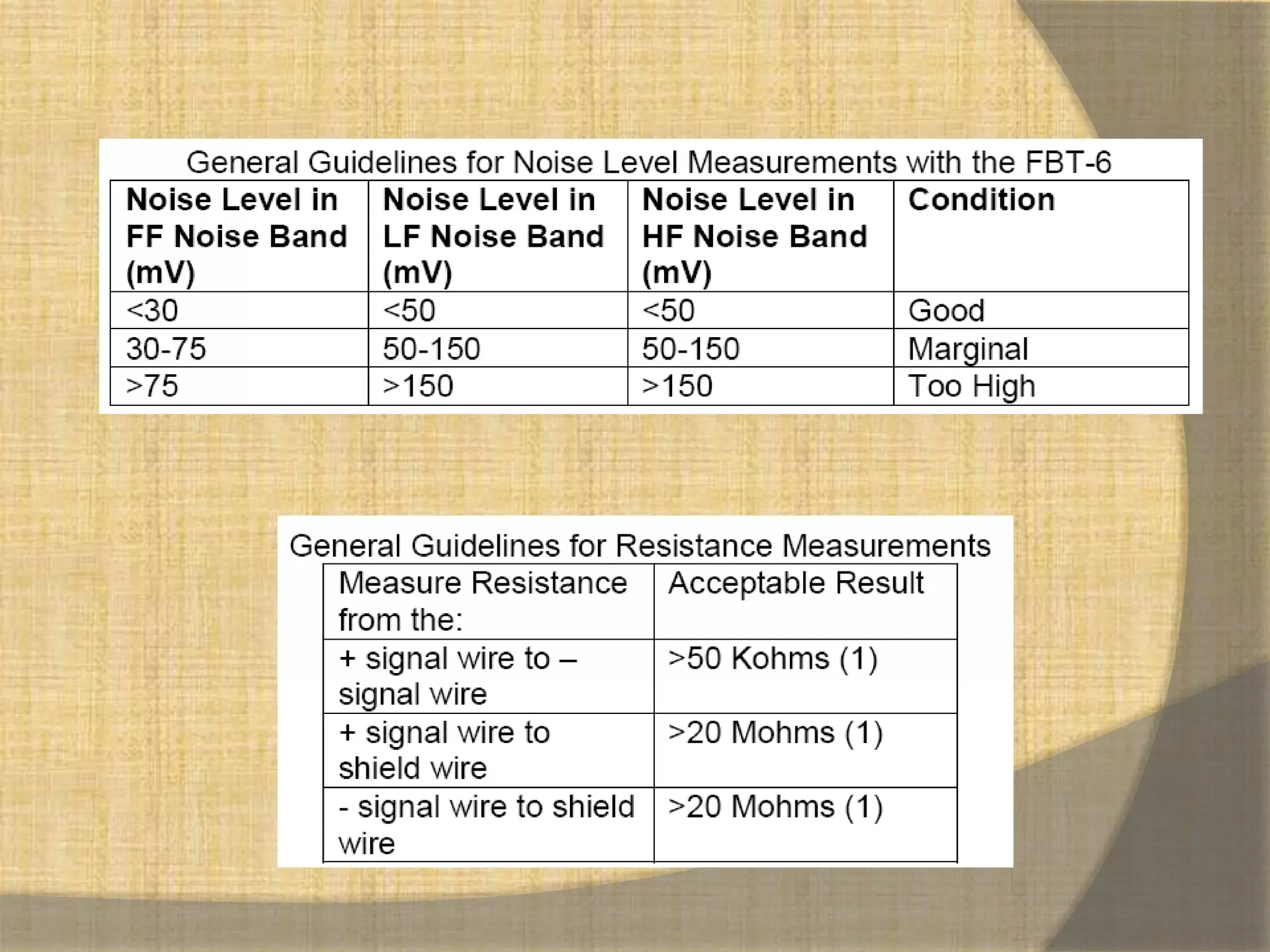
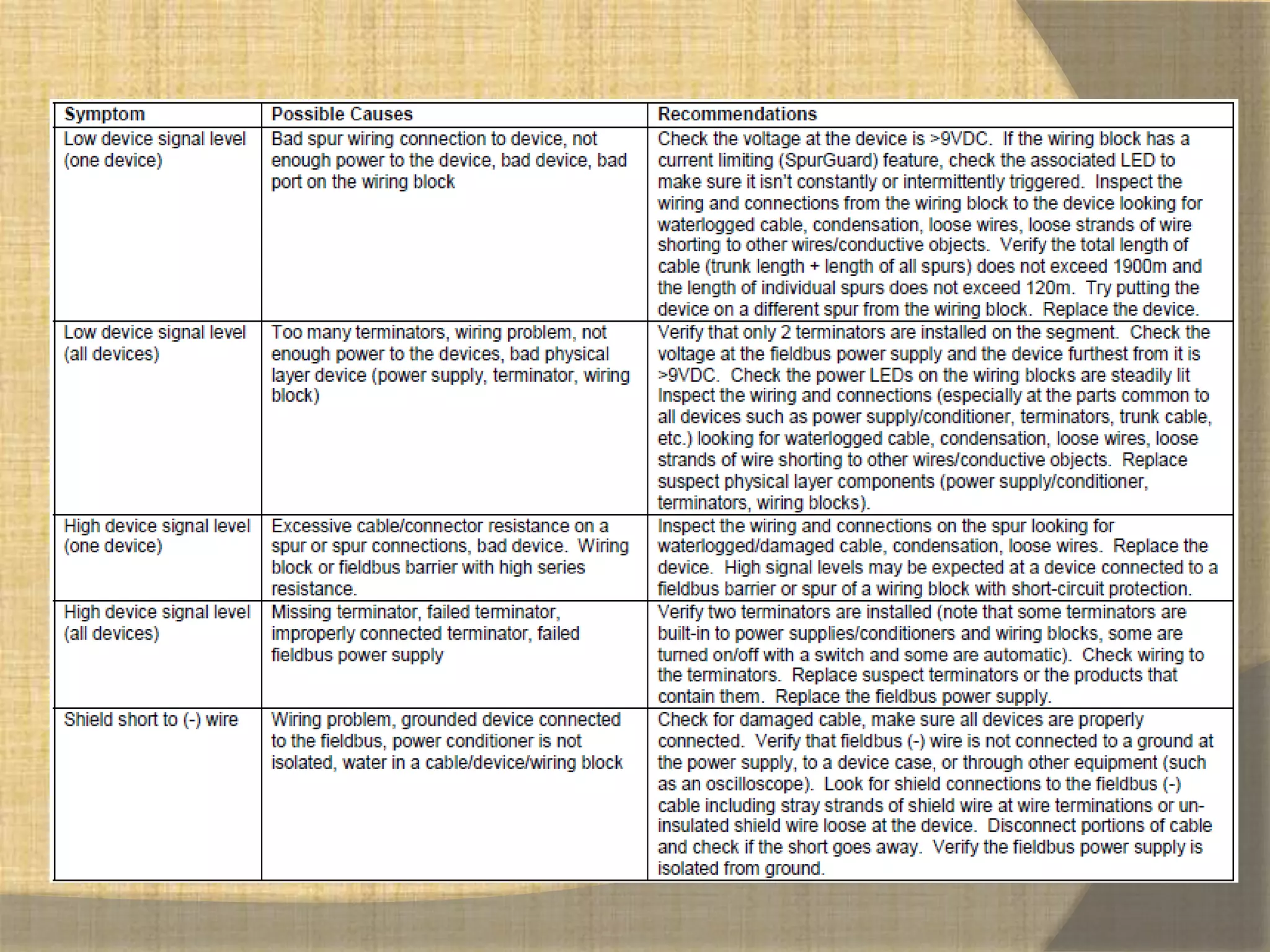
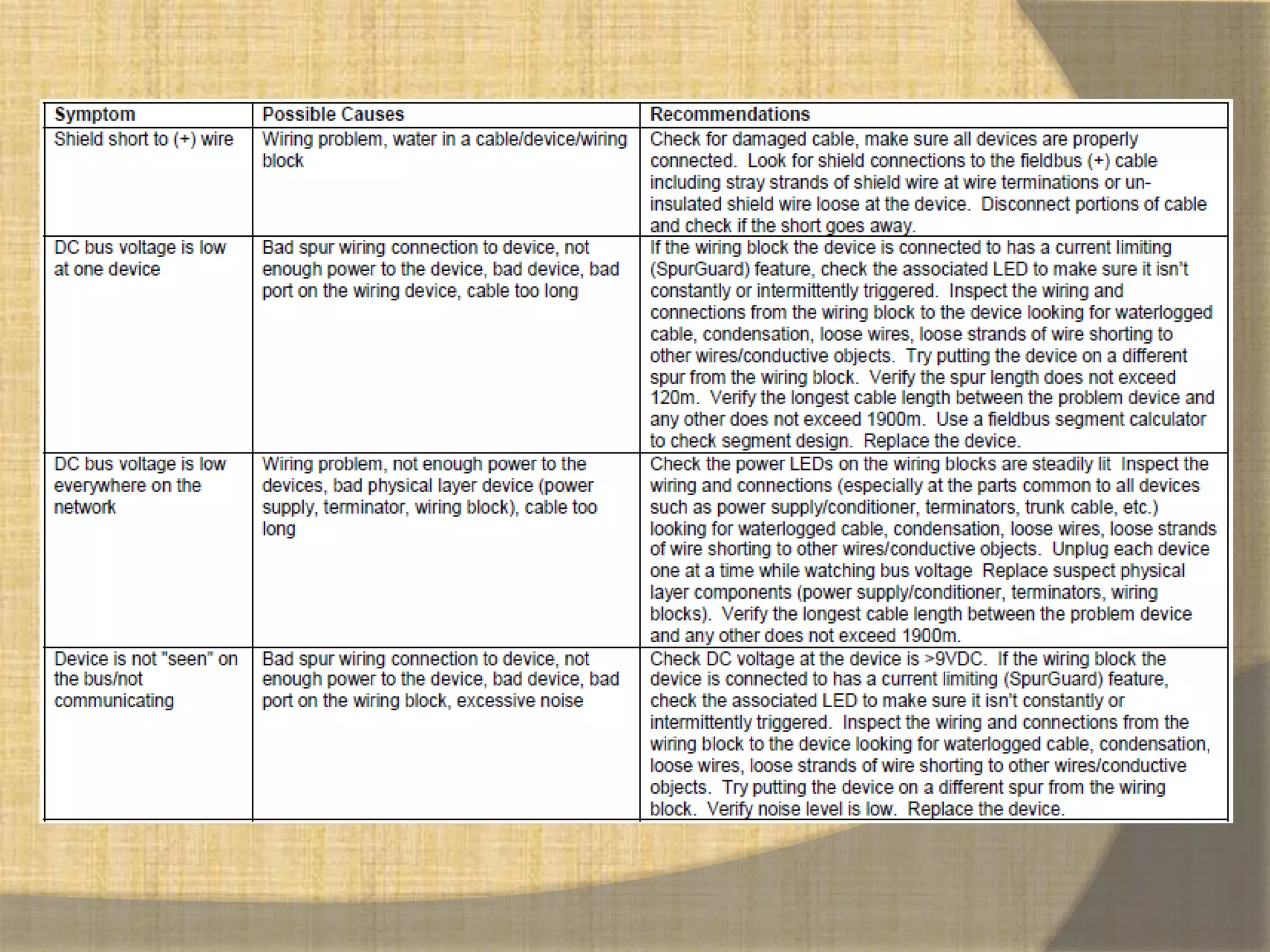
• Short-circuits between the fieldbus + or – and the cable shield.

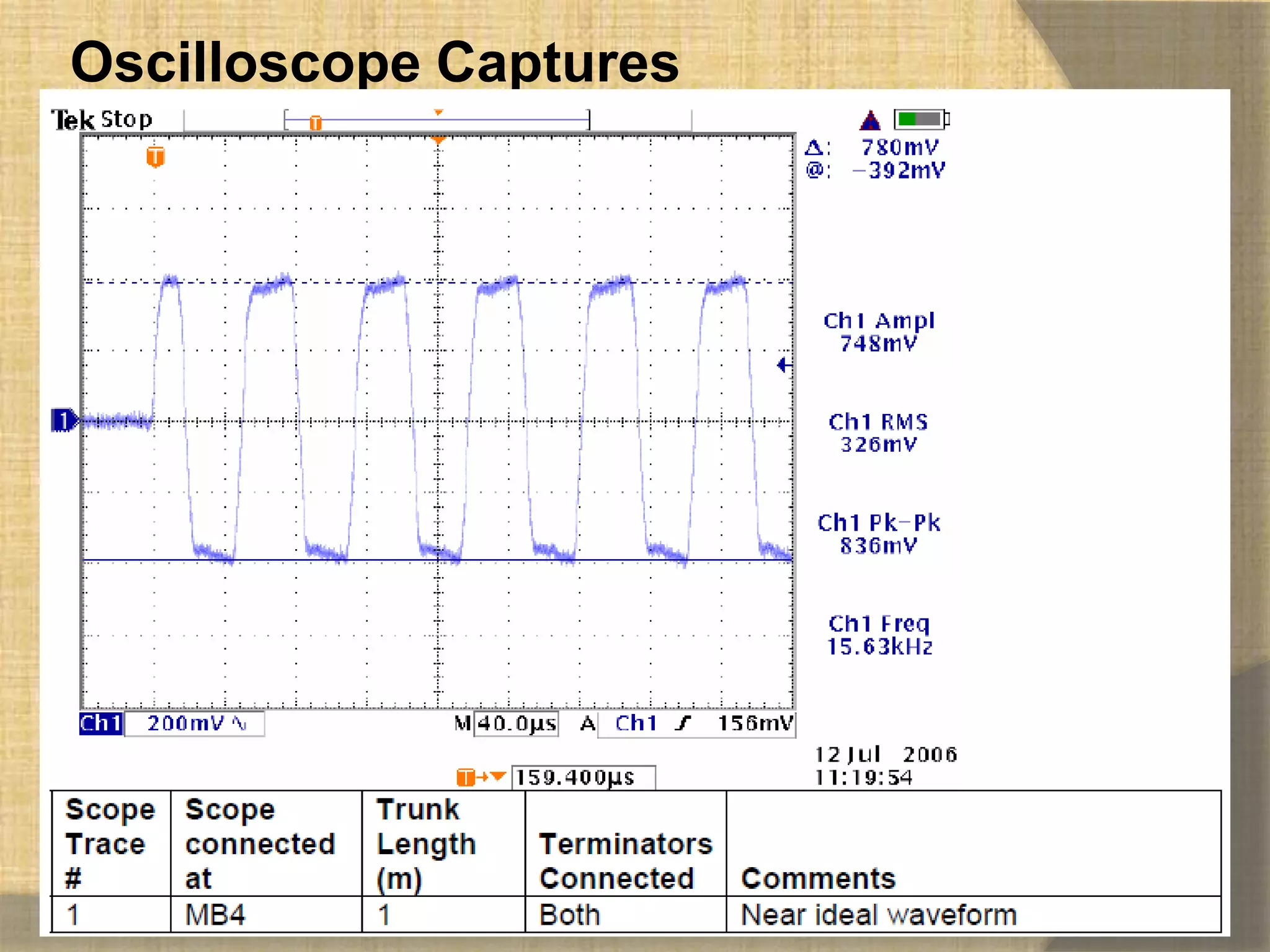
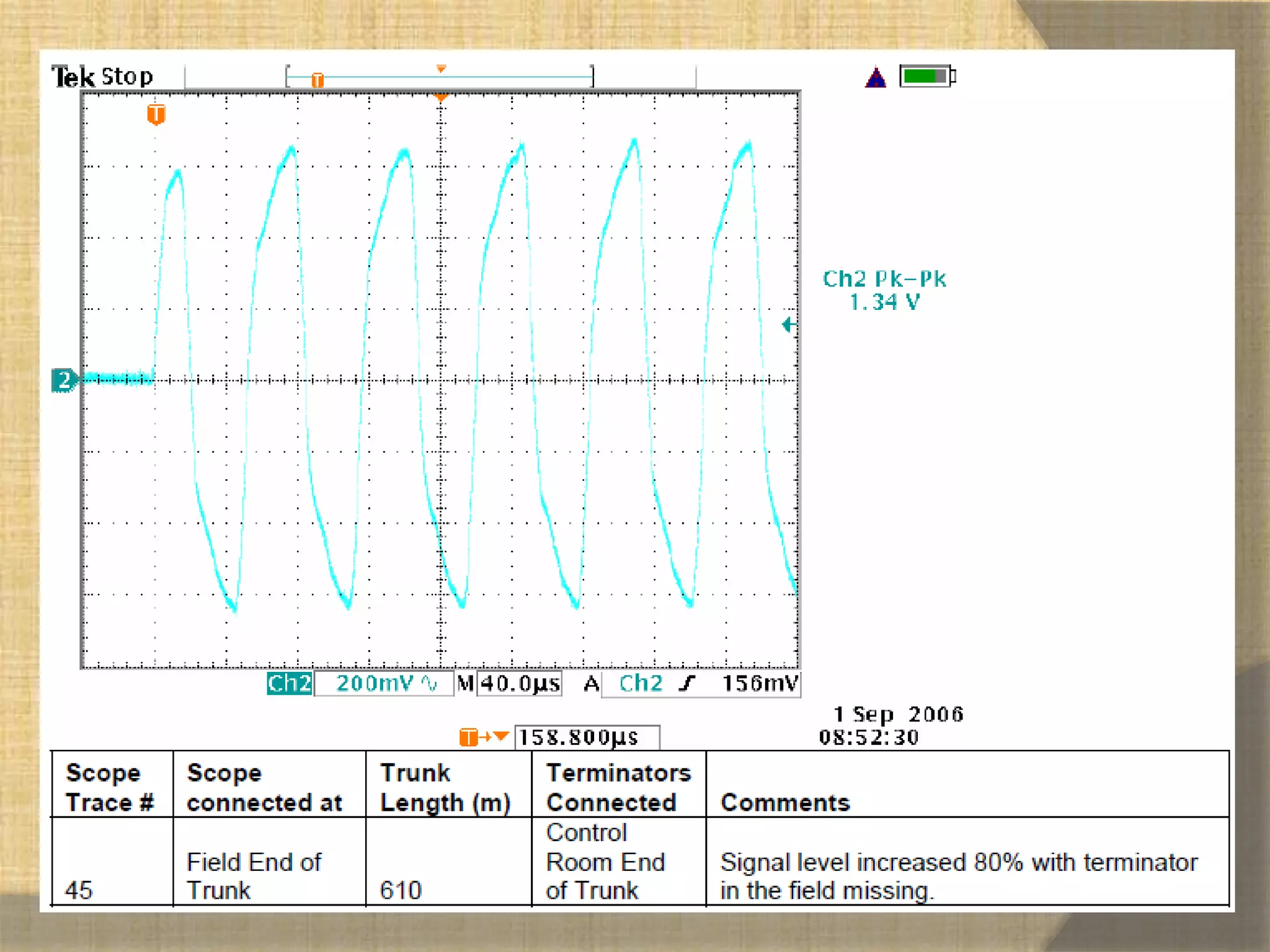
• The signal level of each participant on the bus. A minimum level is
specified by Foundation fieldbus specifications. Low or high levels on all
devices suggest incorrect bus termination, but if the faulty signal level is
only on one device, there is possibly a problem on a single spur.

• DC voltage on the bus, indicating correct functioning of power
supply/conditioner.

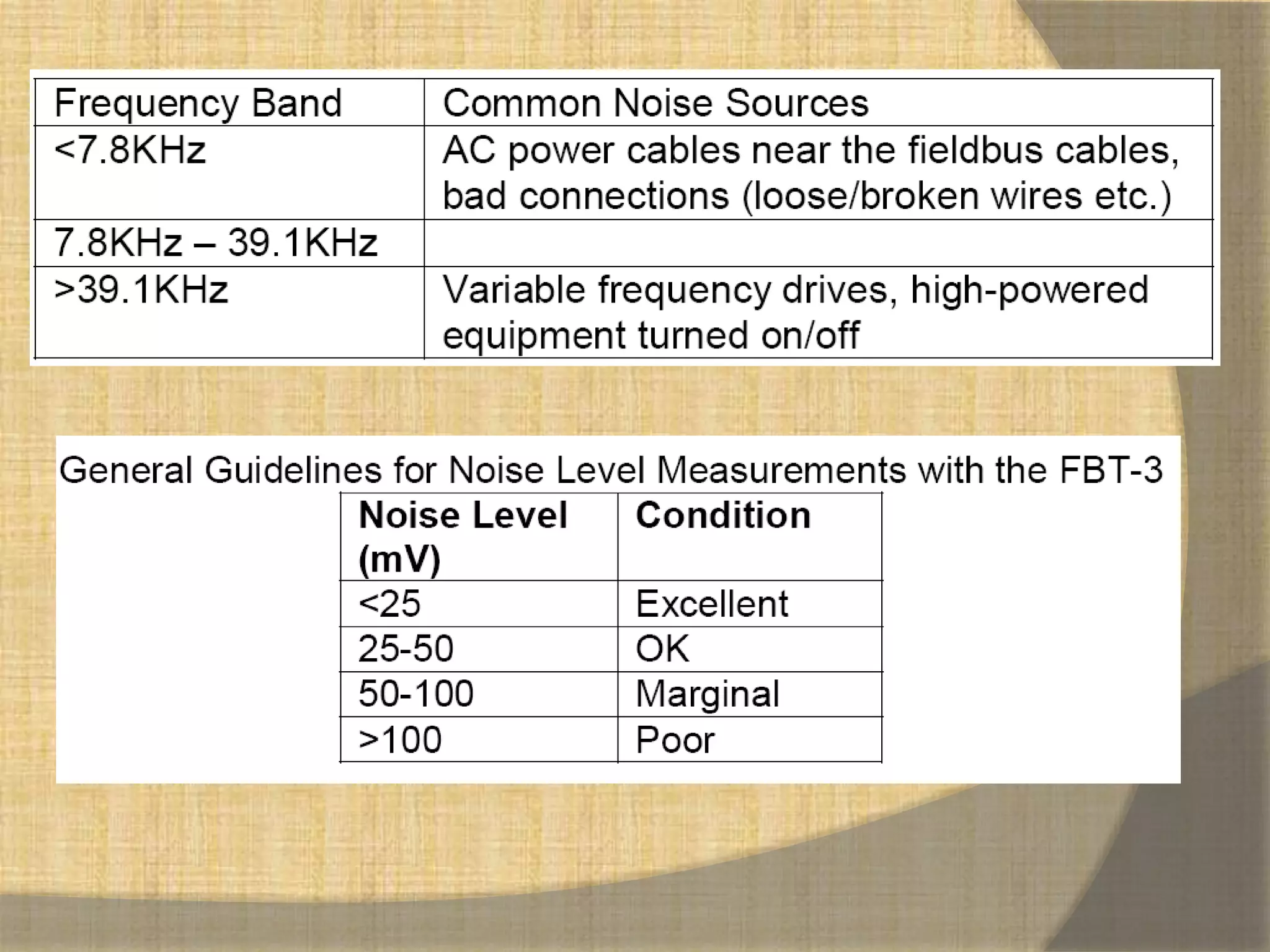
• Noise: A maximum level is specified by Fieldbus specification.

• Retransmissions. This provides a good measurement of physical layer
health; retries can obscure faulty device or network.
Tools
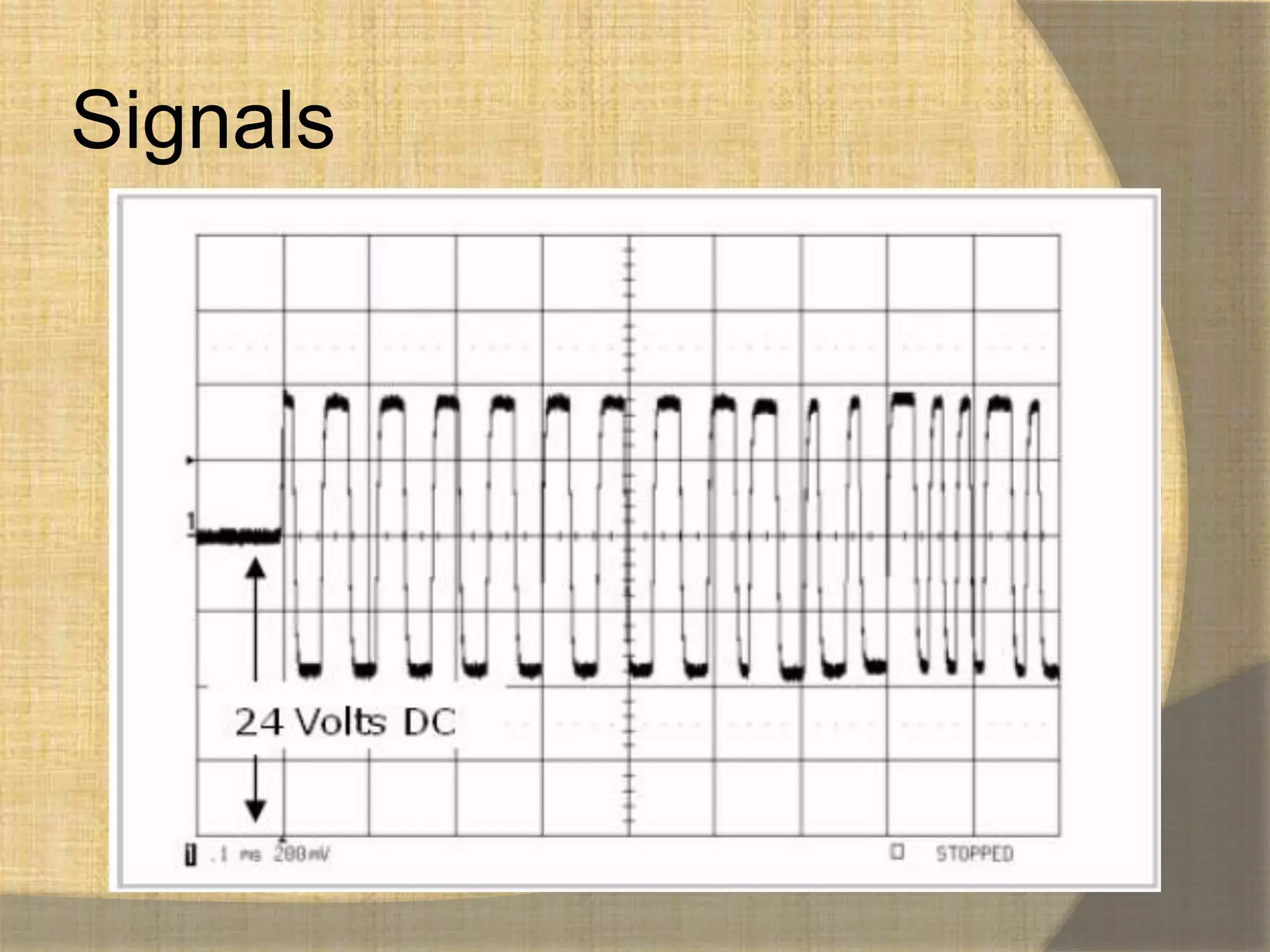
Signals
Multiple Fieldbus Frames
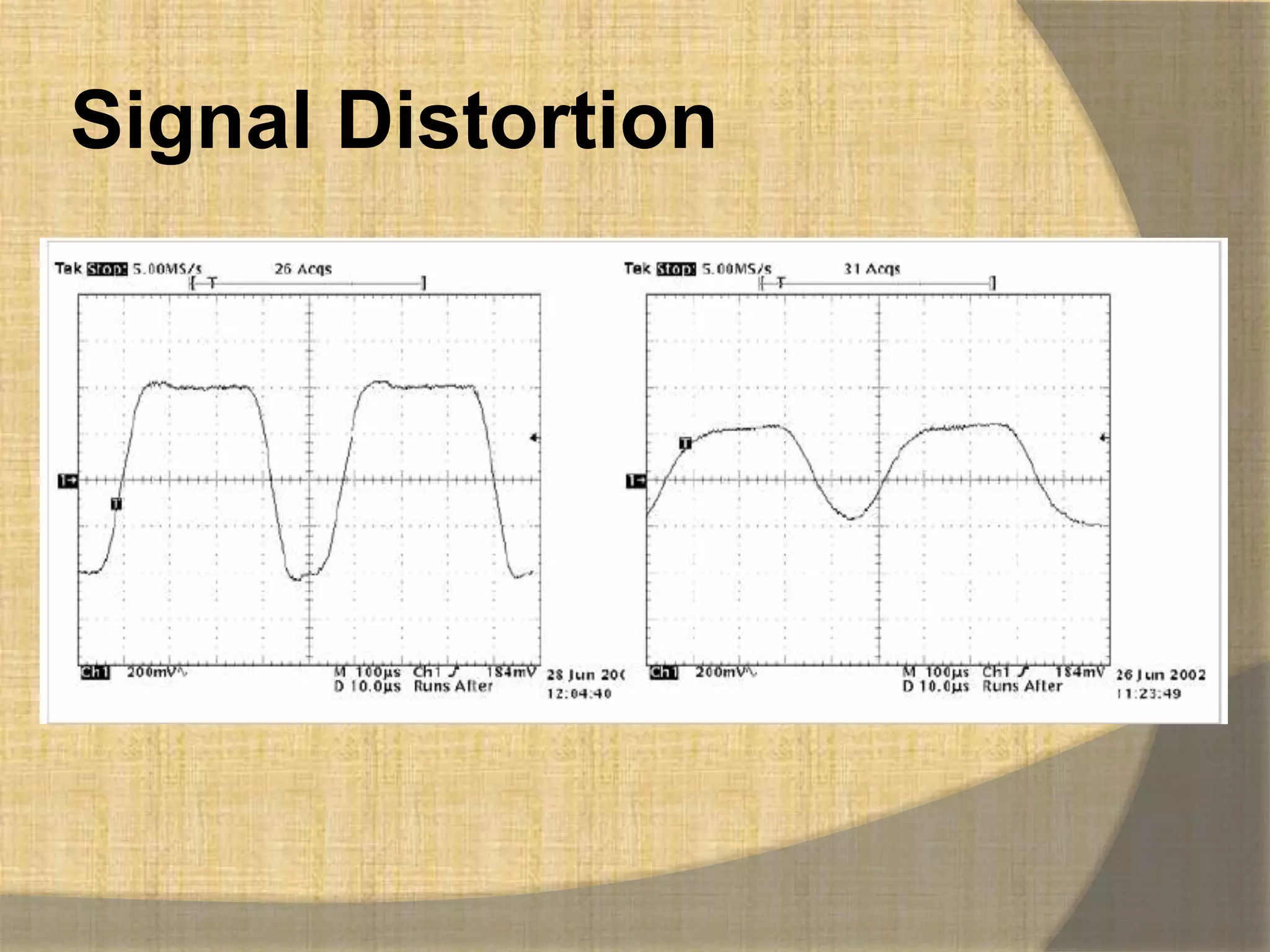
Signal Distortion
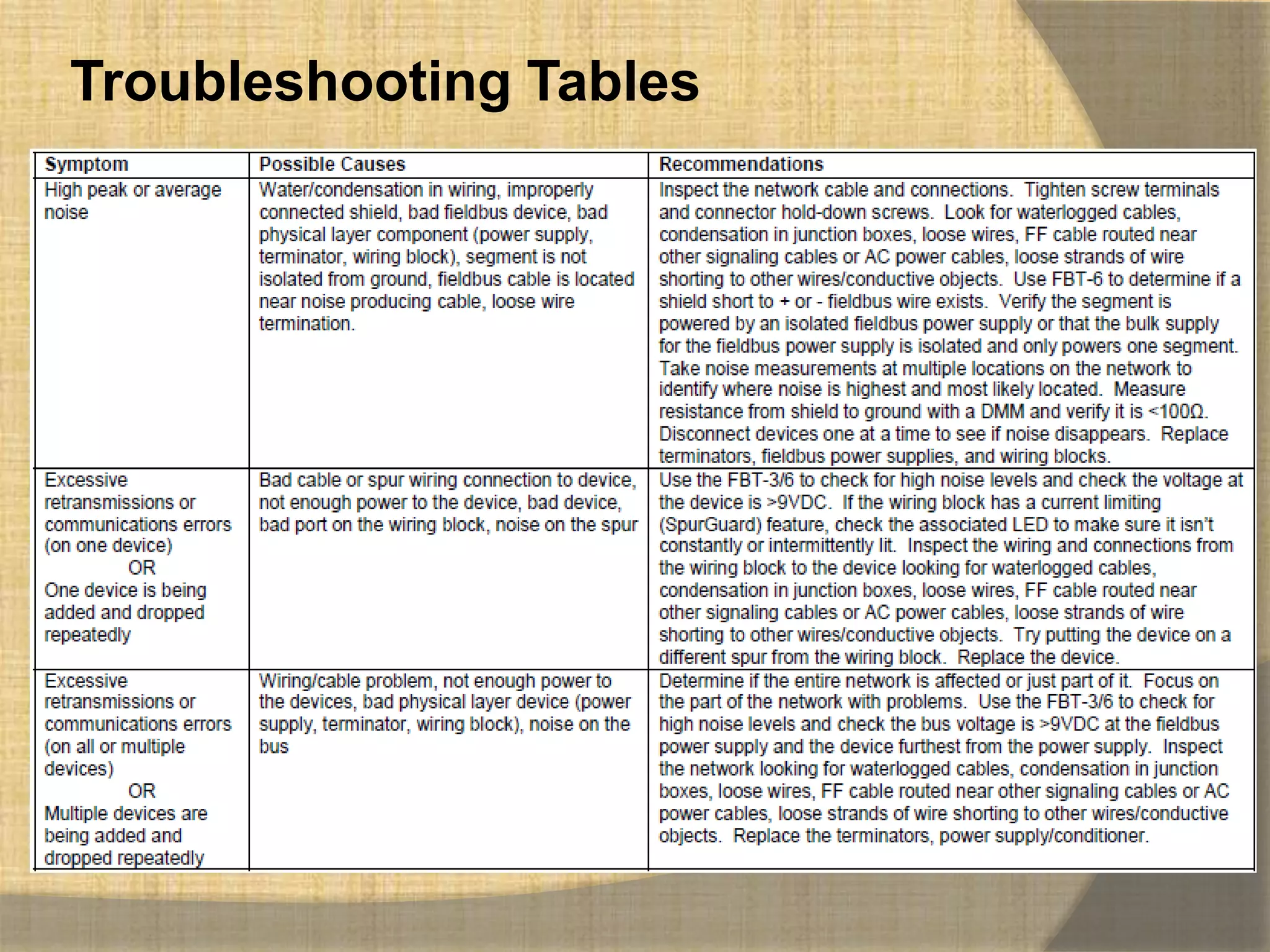
Troubleshooting Tables
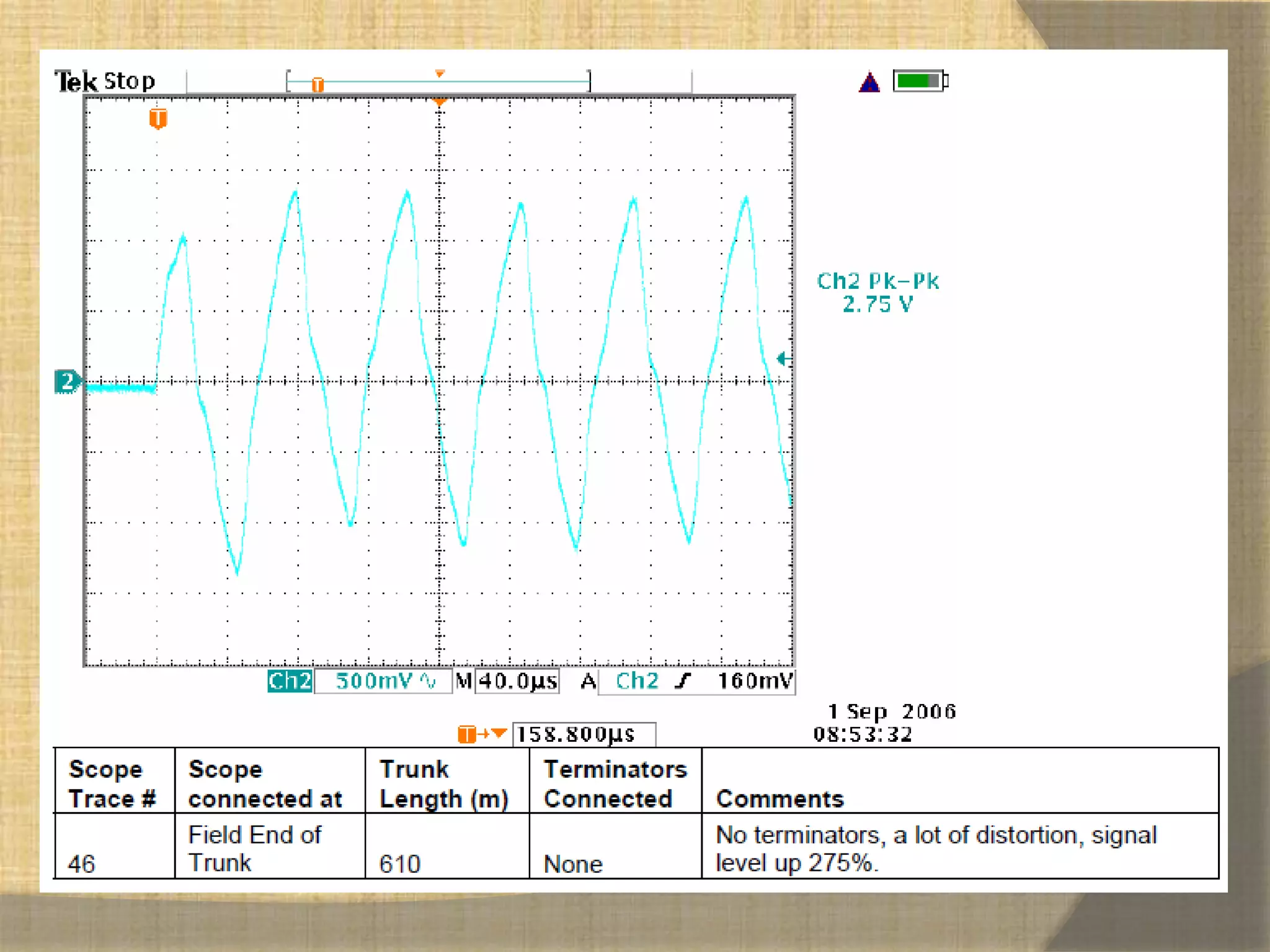
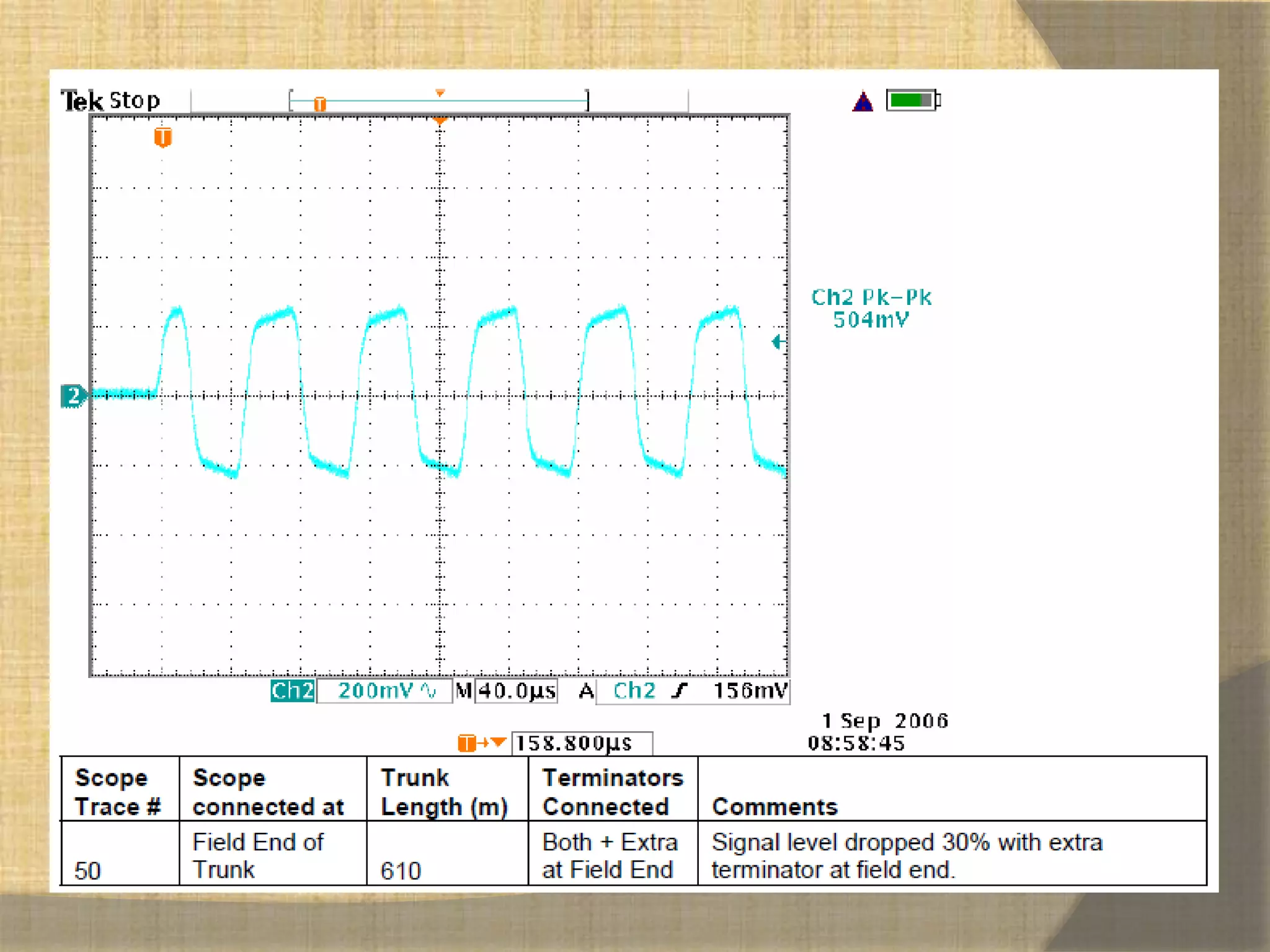
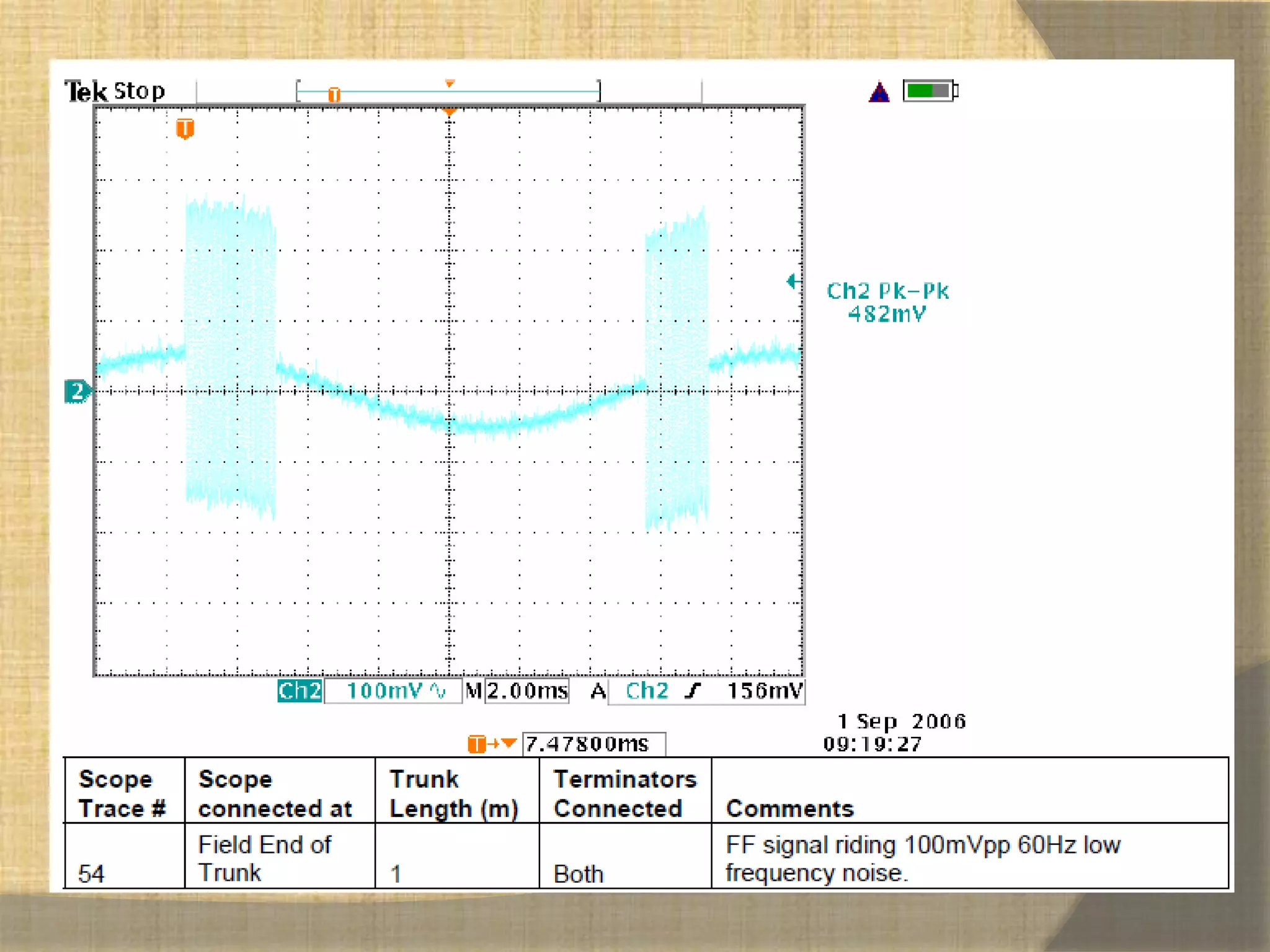
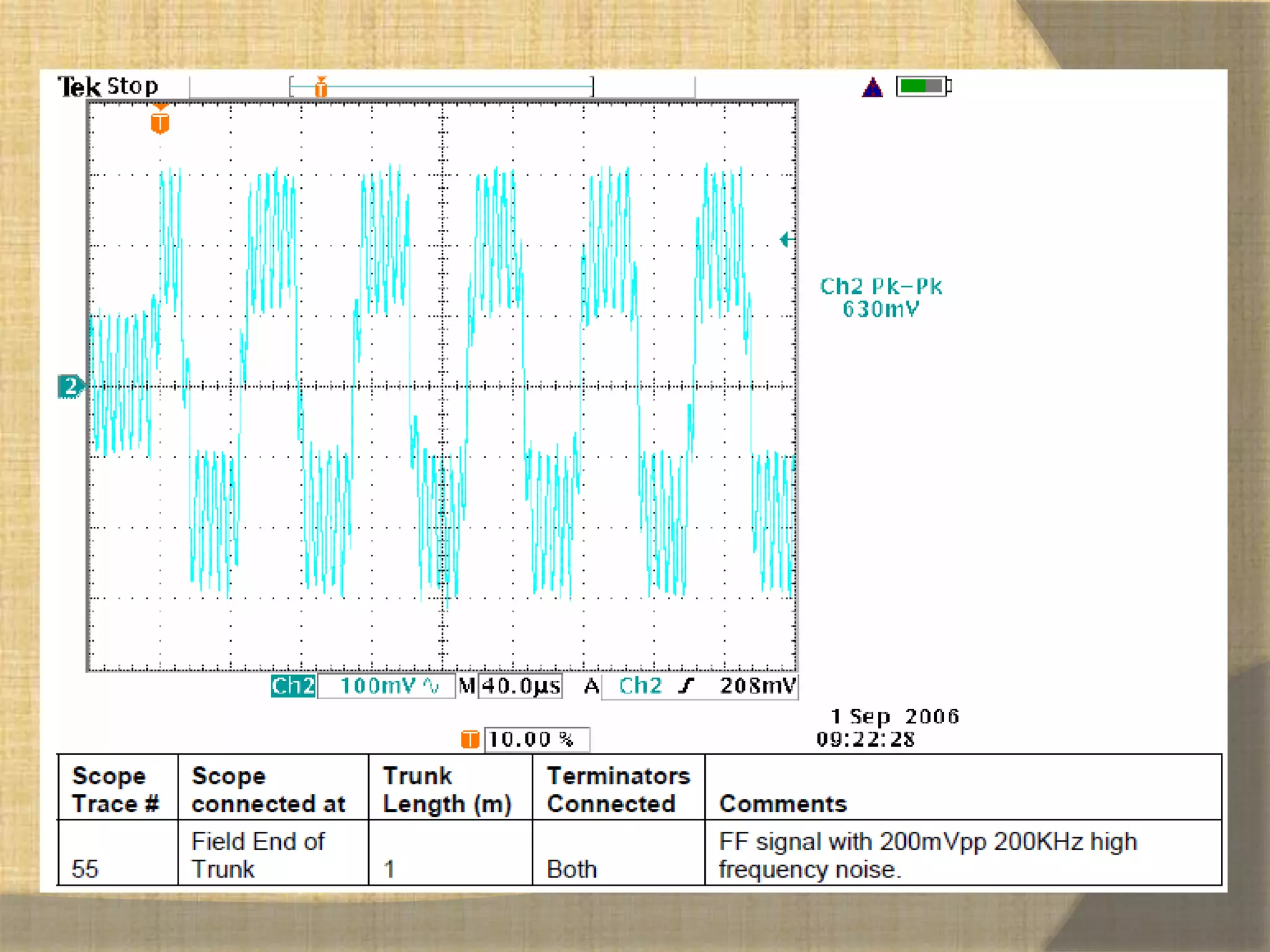
Oscilloscope Captures
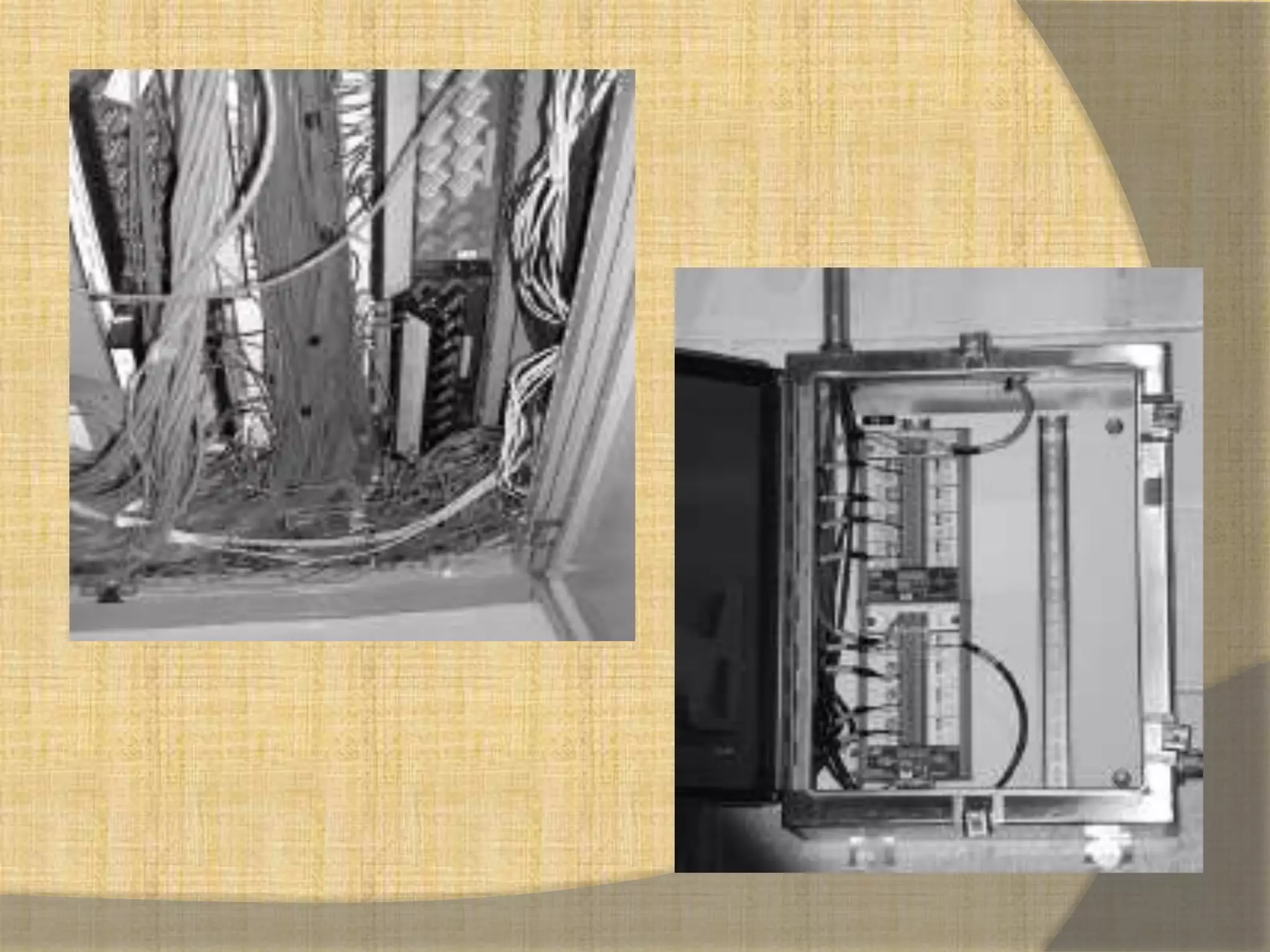
Bad Installation
Bad Installation
Bad Installation
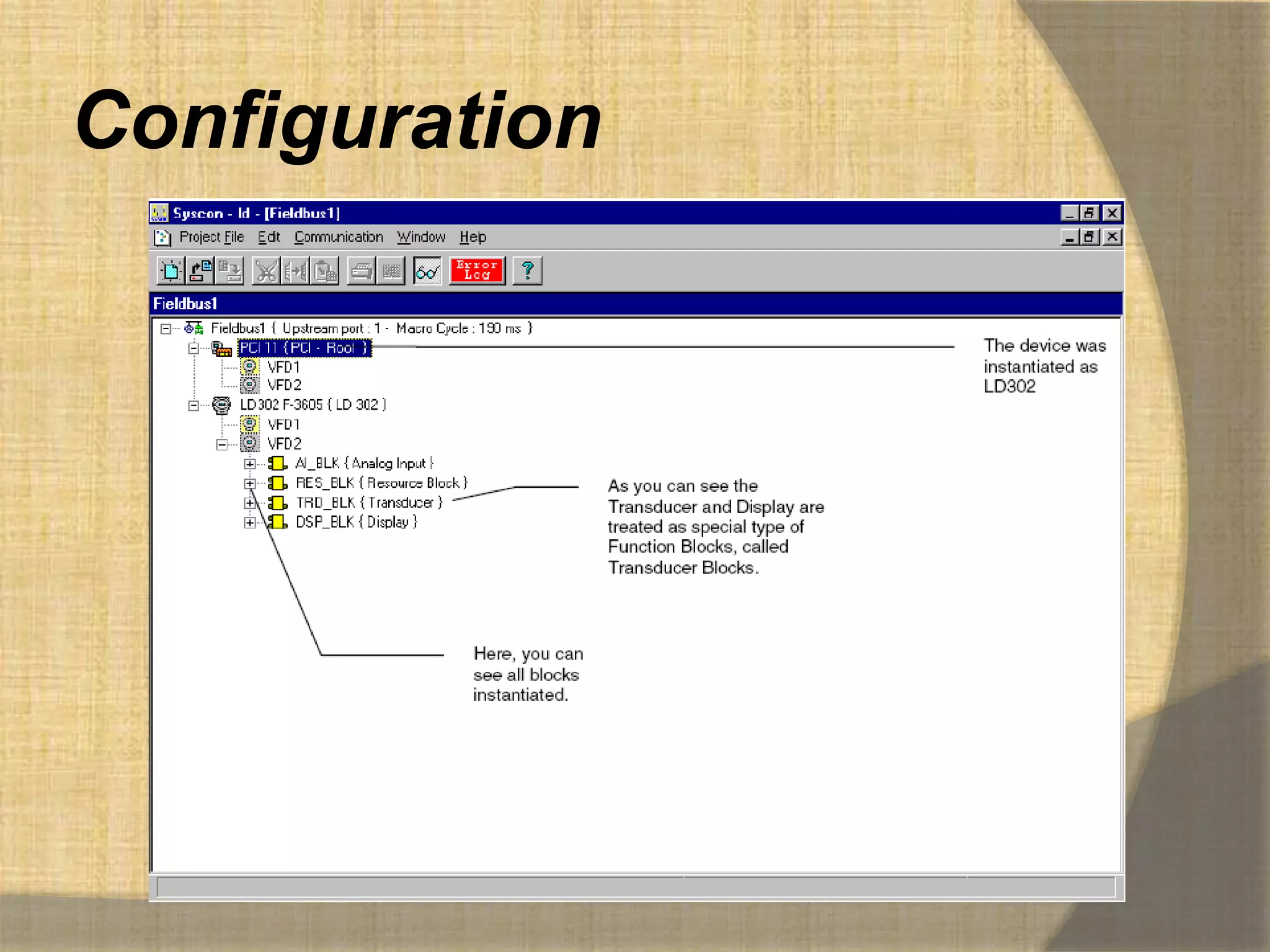
Configuration
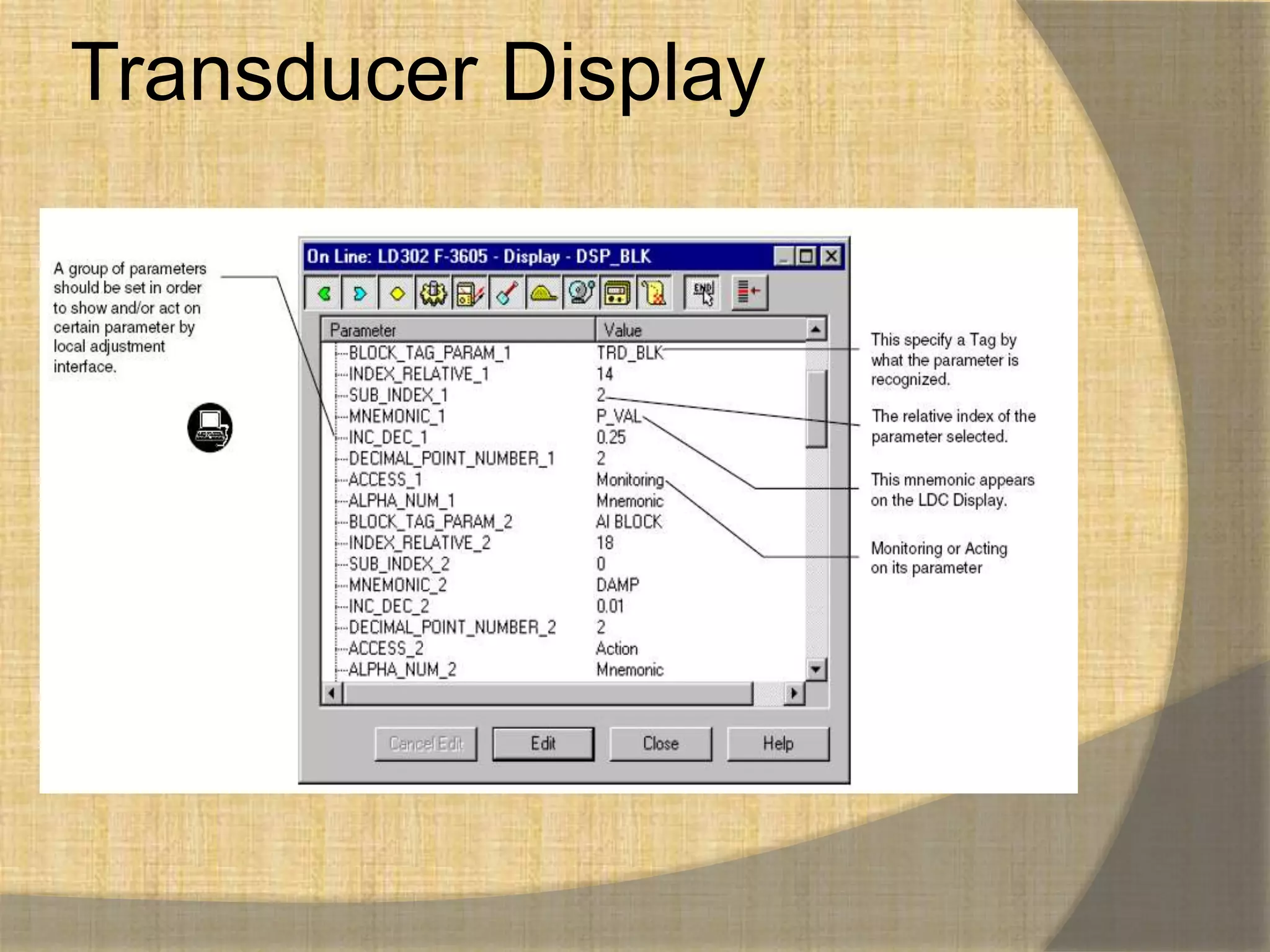
Transducer Display
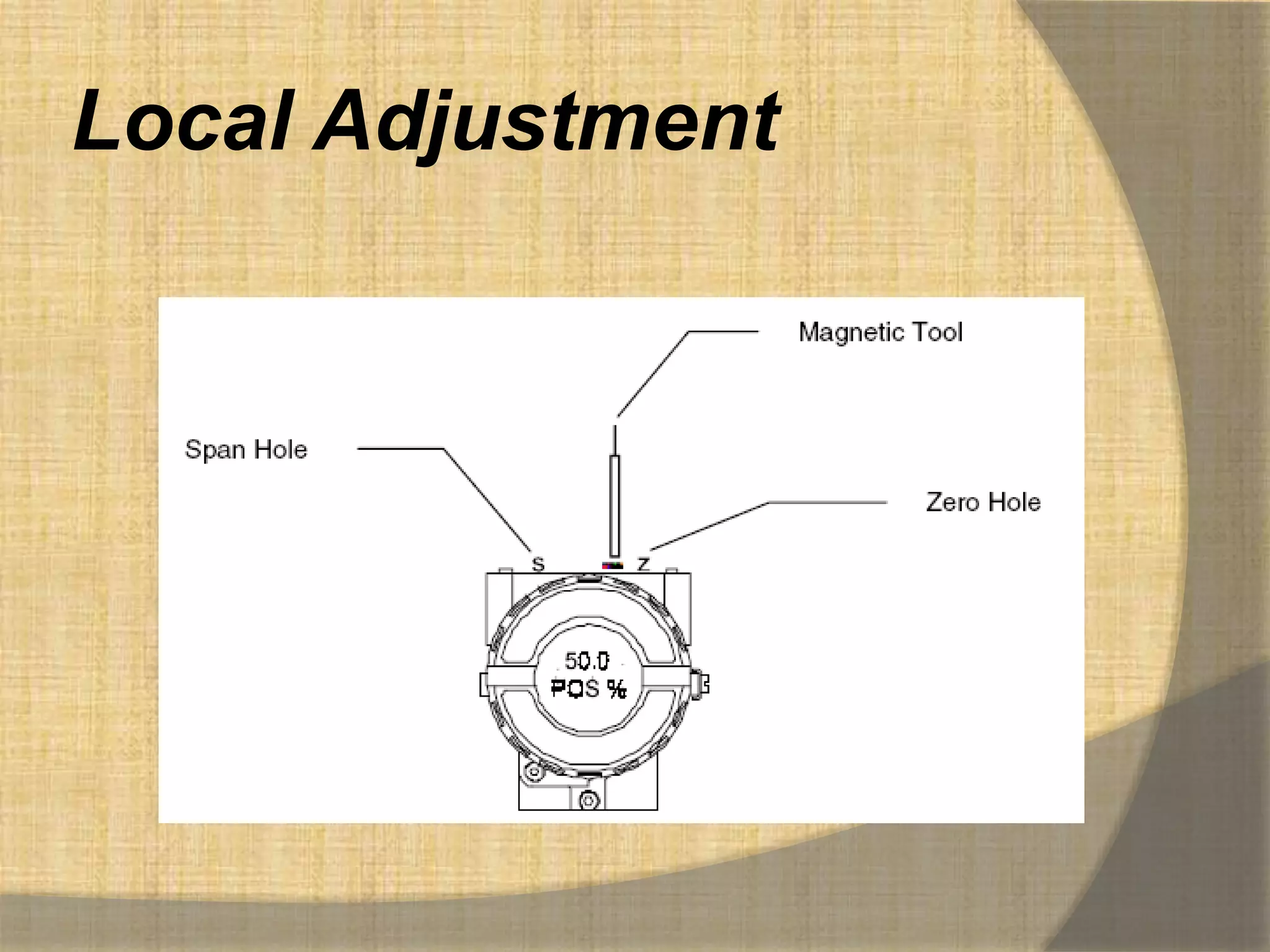
Local Adjustment
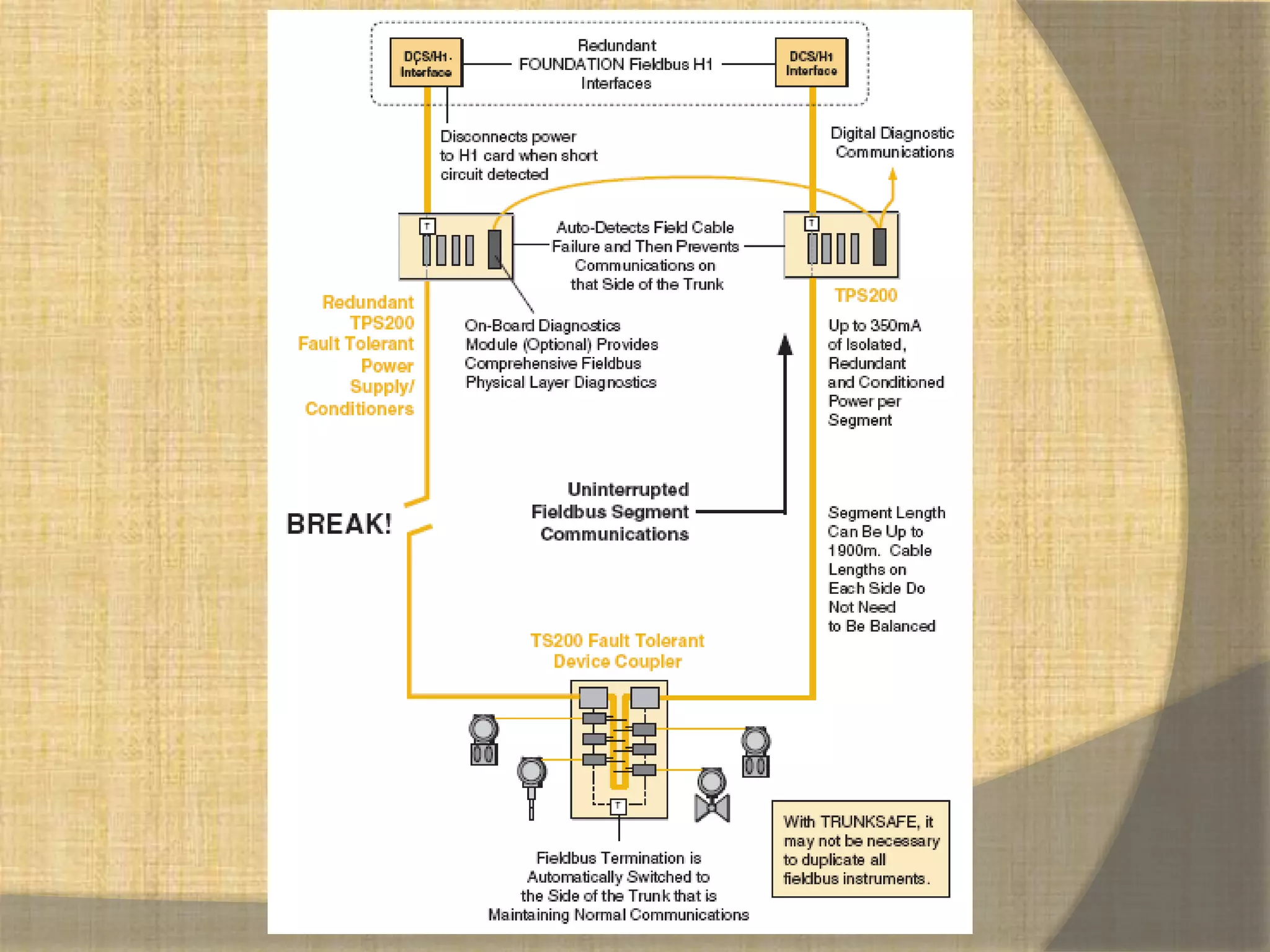
Redundancy
•No provision is made within either fieldbus
standard     for    redundant      segment
communications.

•Various fieldbus vendors, including major
process control companies, have developed
redundant fieldbus schemes that involve
complete duplication of all equipment.
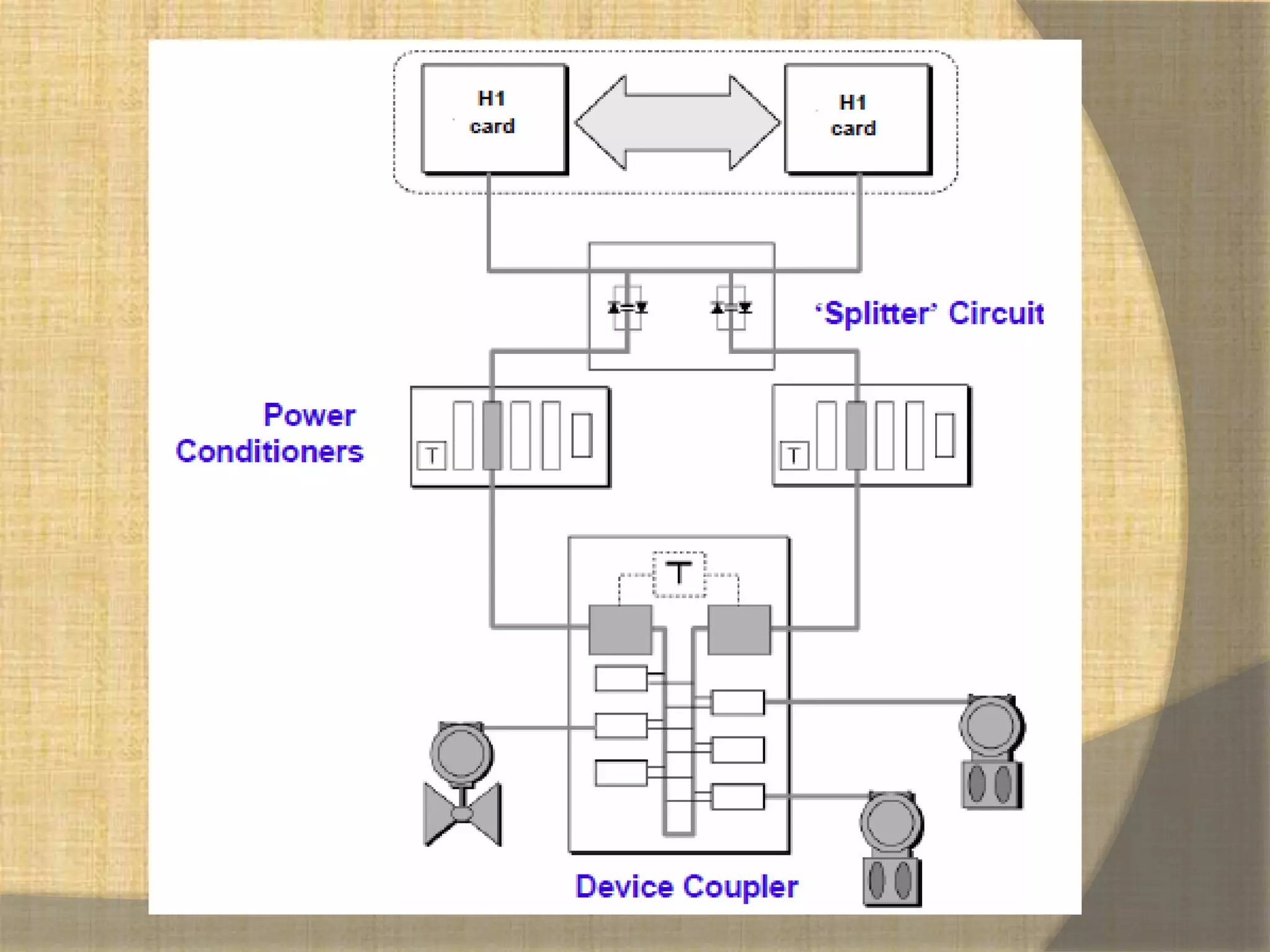
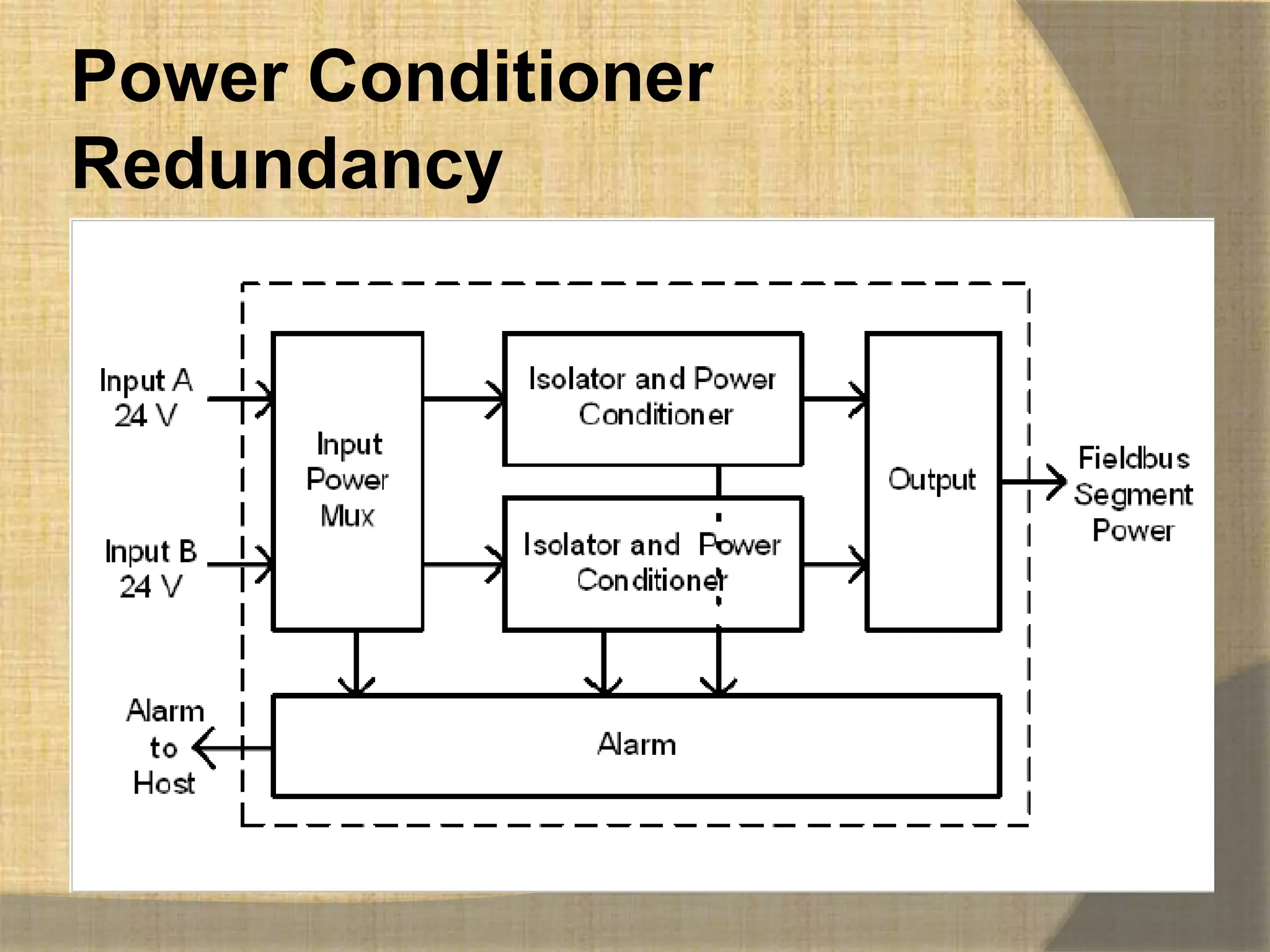
Power Conditioner
Redundancy
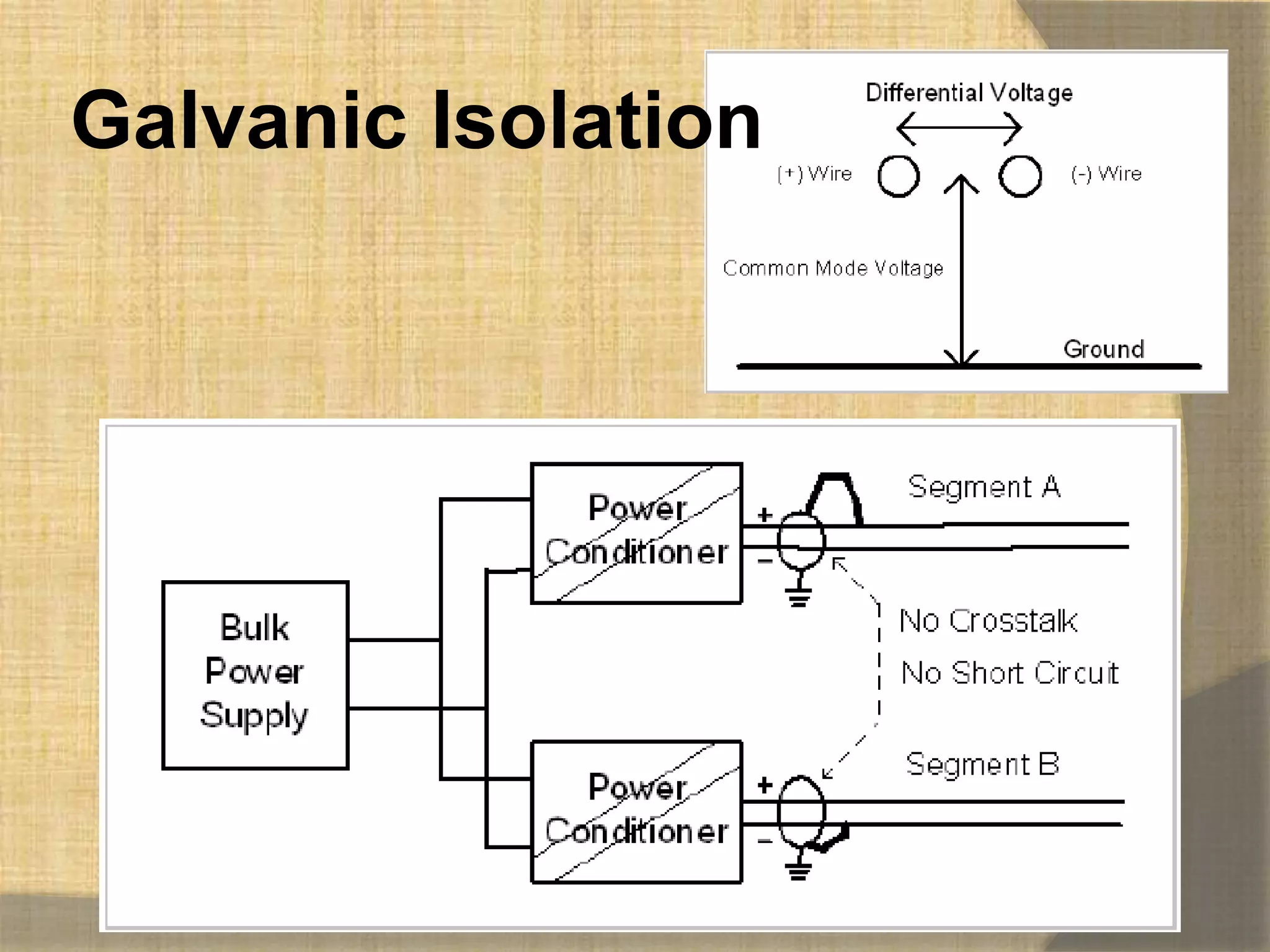
Galvanic Isolation
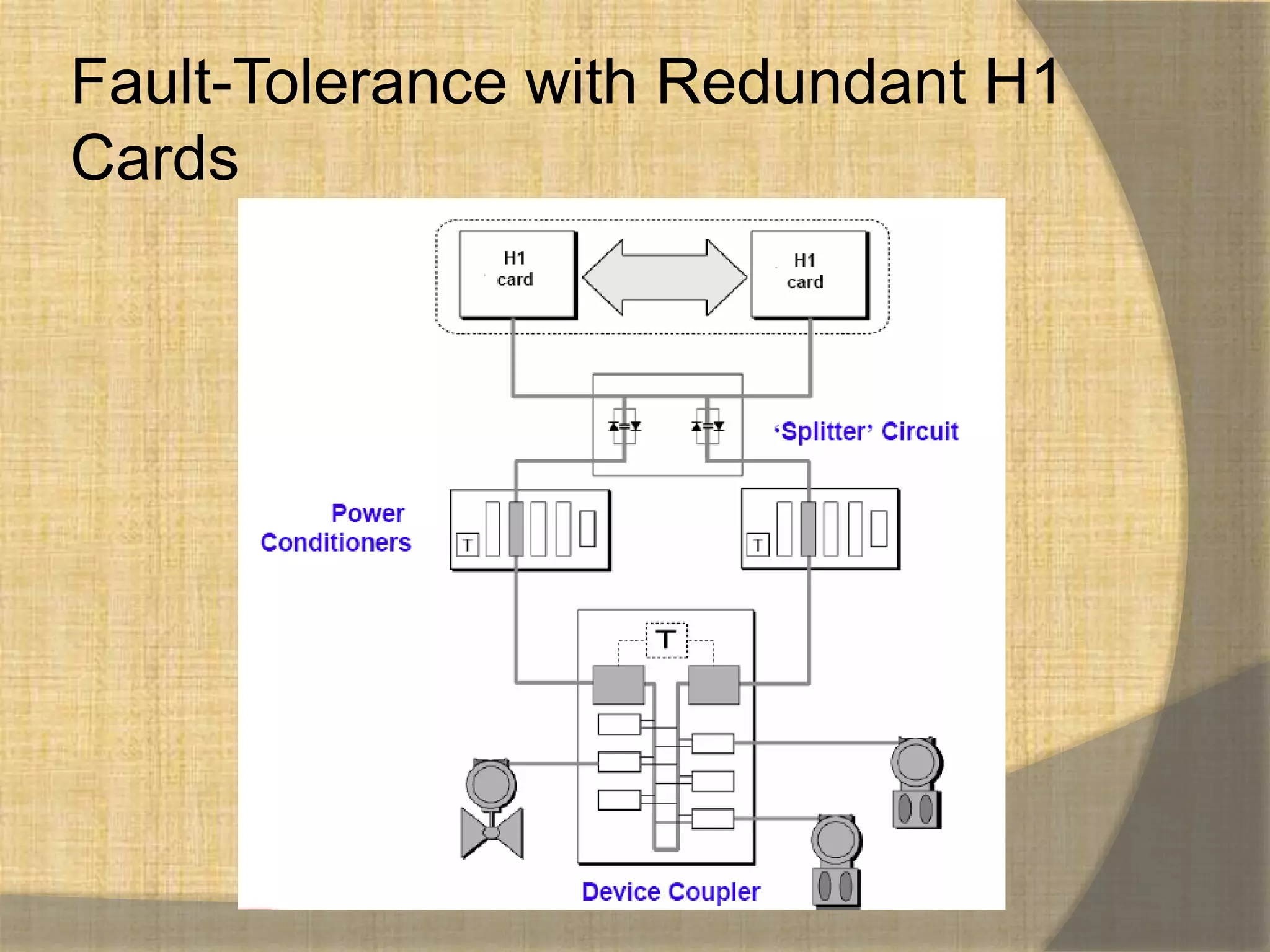
Fault-Tolerance with Redundant H1
Cards
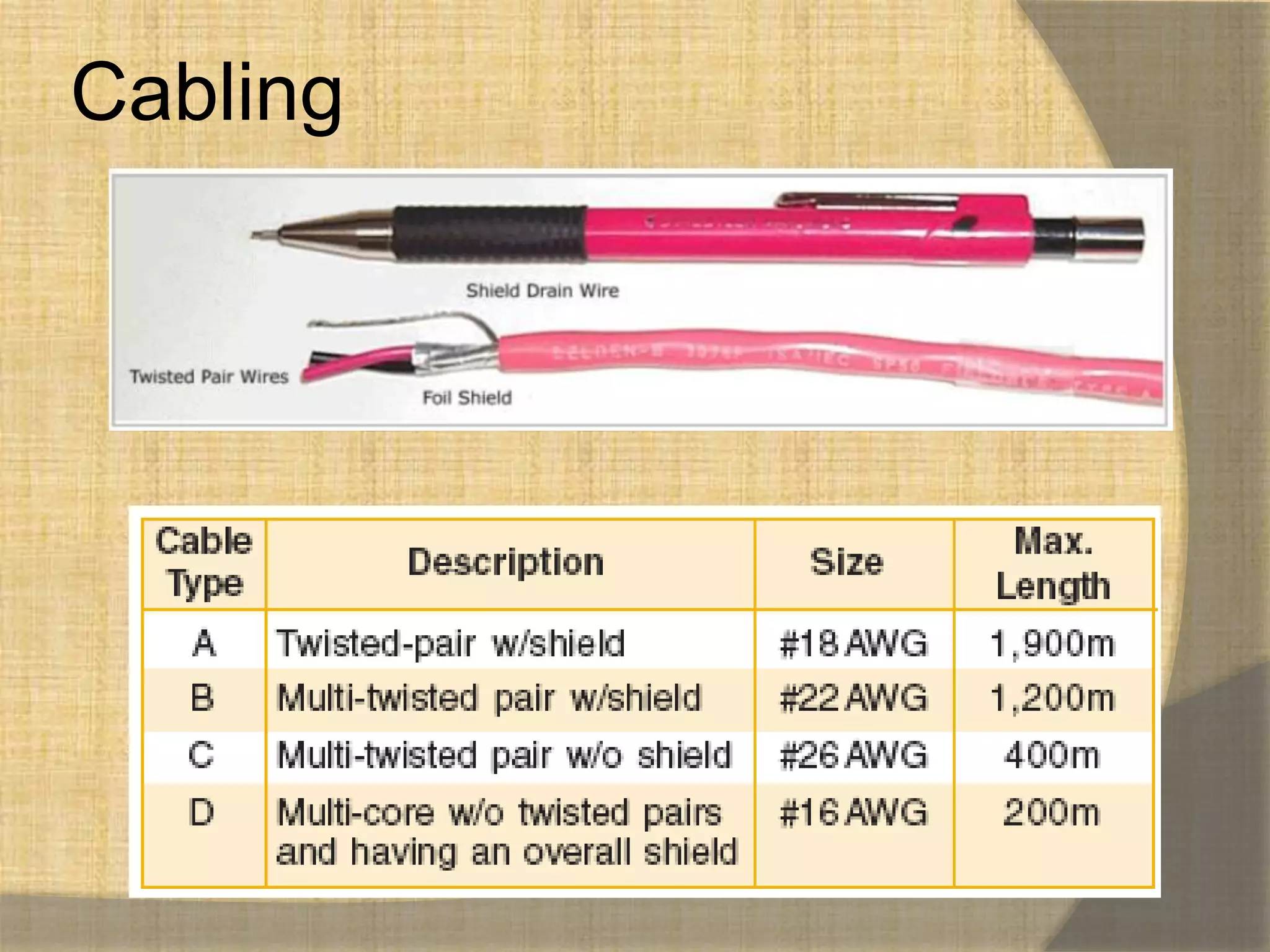
Cabling
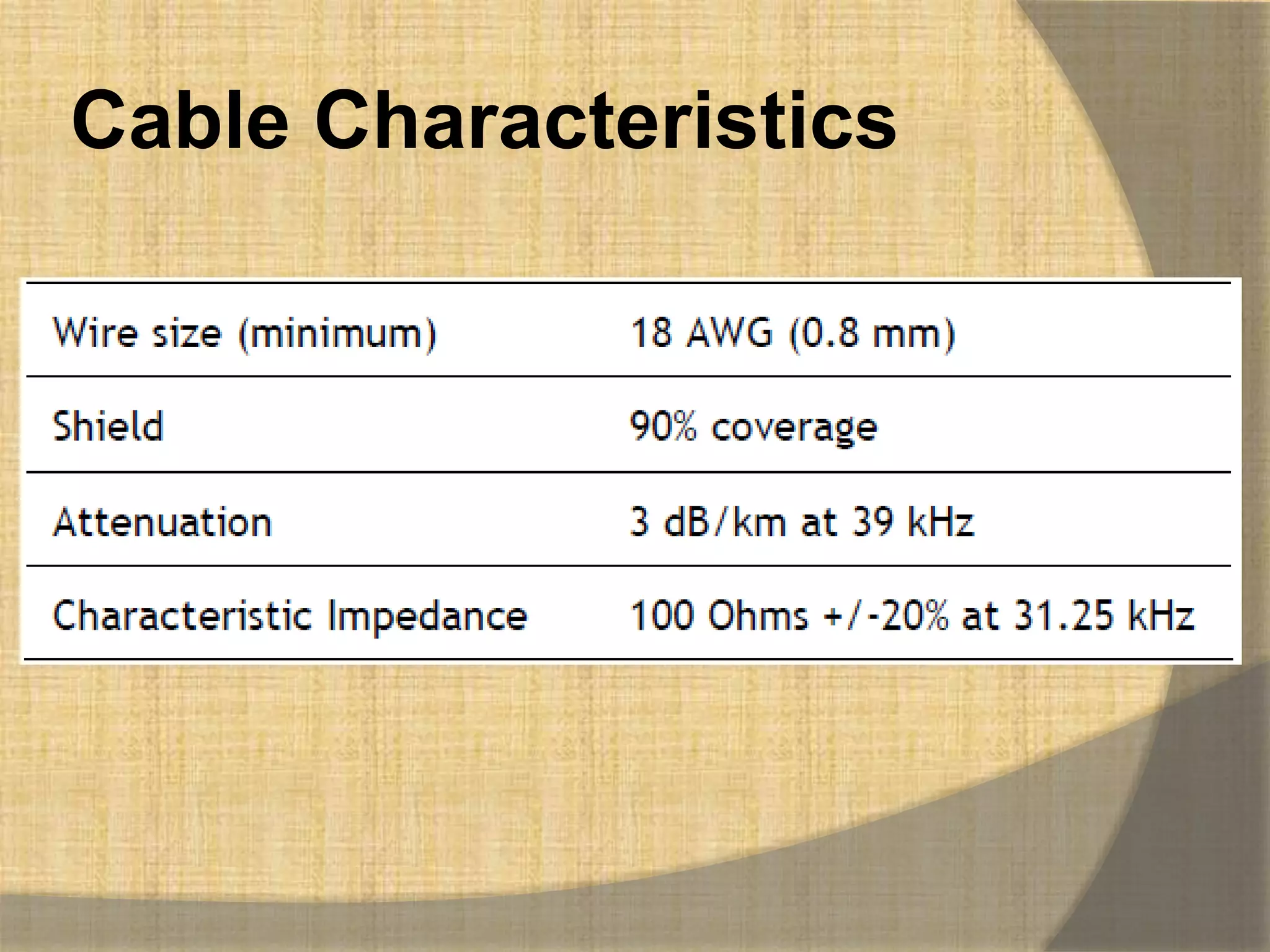
Cable Characteristics

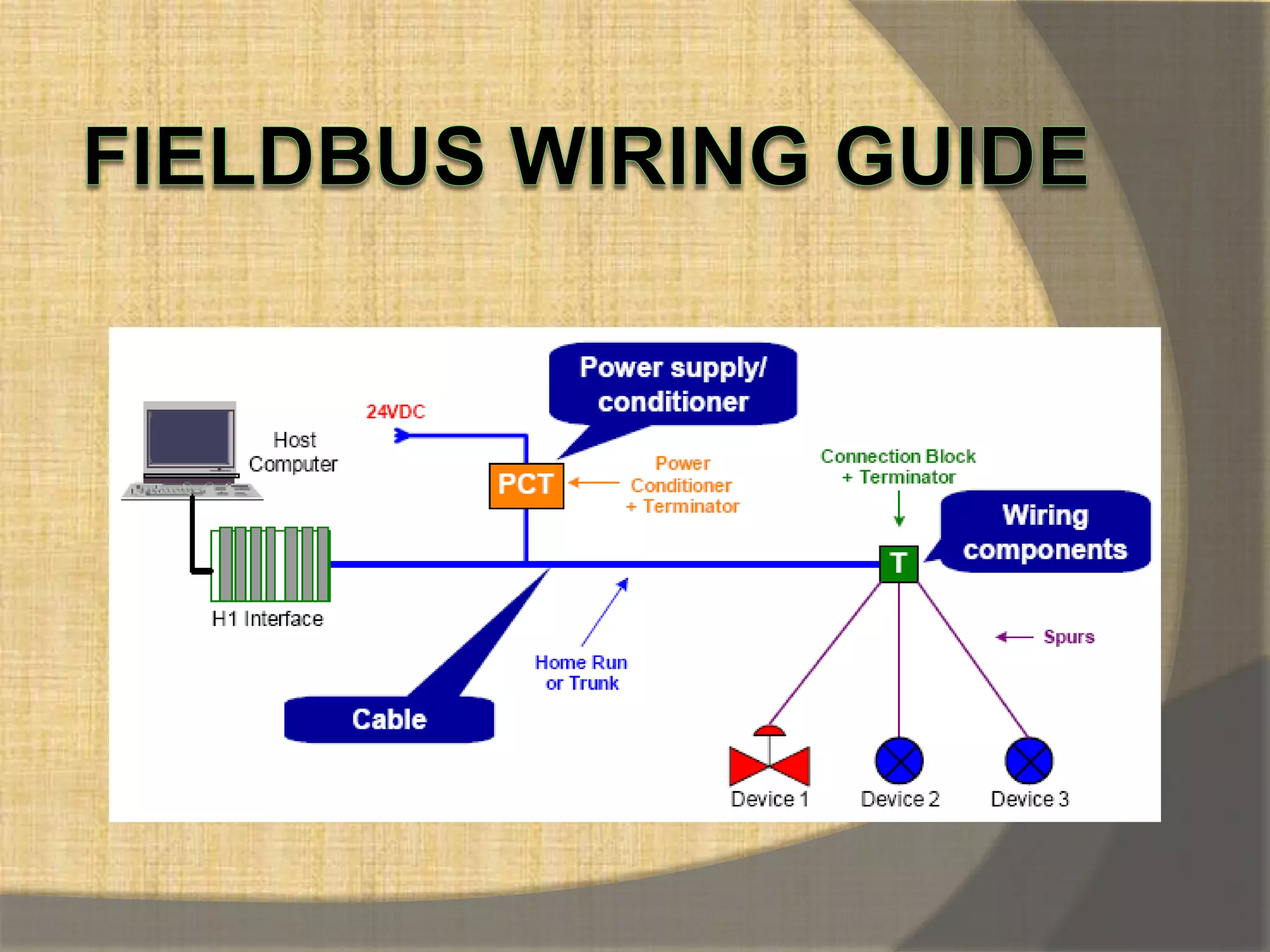
Fieldbus wiring guide

  • 2.
  • 3.
    The only changesare: 1. The control system‟s 4-20 mA interface is replaced with one that “talks” FOUNDATION fieldbus. We called it a FOUNDATION Fieldbus Interface (FFI). This FFI could, in fact, be in a personal computer or a PLC. 2. The analog field device is replaced with one that talks FOUNDATION fieldbus. 3. A terminator is added at the FFI end of the wire pair. Another terminator is added at the field device end of the wire pair. The FFI may have a built-in terminator so that you don‟t have to add one.
  • 6.
  • 8.
  • 9.
    Fieldbus Network WithAdditional Devices Added Fieldbus Network With Chained Devices
  • 10.
    Repeaters are activebus powered, or non-bus powered devices, used to extend a fieldbus network. A maximum of four (4) repeaters and/or active couplers can be used between any two devices on a fieldbus network Using four repeaters, the maximum distance between any two devices on that network is 9500 m. A Bridge is an active bus powered, or non-bus powered device, used to connect fieldbus segments of different speeds (and/or physical layers - e.g. wire, optical fiber,..) together to form a larger network. A Gateway is an active bus powered, or non-bus powered device, used to connect a fieldbus segment or segments to other types of communications protocols (e.g. Ethernet, RS232, ..).
  • 11.
    Addition of aDevice and a Bridge to Fieldbus Network
  • 12.
  • 13.
  • 14.
  • 15.
    Polarity The Manchester signalused by fieldbus is an alternating voltage that changes polarity once or twice per bit. In unpowered networks only this alternating voltage exists. In powered networks the alternating voltage is superimposed onto the DC voltage being used to power the devices. In either case, the fieldbus receive circuits look at only the alternating voltage. Positive voltage swings have one meaning, negative swings have the opposite meaning. Therefore, the fieldbus signal is polarized. Field devices must be connected so that they all see the signal in correct polarity. If a field device is connected “backwards” it will see an inverted version of the alternating voltage and won‟t be able to communicate.
  • 16.
    Short Circuit Protection Short circuit protection has logic that detects a short, removes the shorted circuit from the segment, and lights a LED. This prevents a short from affecting the segment.
  • 18.
    DC Power forTwo-Wire Field Devices
  • 19.
    If you have2-wire field devices in your network, you have to make sure they have enough voltage to operate. Each device should have at least 9 volts. You need to know: 1. The current consumption of each device. 2. Its location on the network. 3. The location of the power supply on the network. 4. The resistance of each cable section. 5. The power supply voltage.
  • 21.
  • 22.
  • 23.
  • 24.
  • 25.
  • 26.
  • 27.
    Terminators A terminator isan impedance matching module used at or near each end of a transmission line. There need to be two (and ONLY TWO) terminators per bus segment. The terminators prevent distortion and signal loss, and are typically purchased and installed as a preassembled, sealed module. The user/installer need not be concerned about or assemble individual electrical resistors and capacitors.
  • 28.
    Terminal Blocks Terminal blockscan be the same terminal blocks as used for 4-20 mA. The terminal blocks typically provide multiple bus connections, such that a device can be wired to any set of bus terminals.
  • 31.
    Power Supply • Wideinput range: 90-264 VAC (47-440 Hz) 127-367 VDC • 24 VDC, 1.5 A output. • Galvanically isolated • Failure indication and output
  • 32.
    Power Conditioner •Afieldbus power conditioner prevents the high frequency communications signal from being shorted out by the DC voltage regulators. •Typical power conditioners make 350 to 500mA available on the bus.
  • 33.
  • 34.
  • 35.
    Alternative earthing arrangementfor improved EMC performance
  • 36.
    Multiple grounding withpotential equalization
  • 37.
    Wiring DOs andDon’ts Normal wiring procedures apply: • No loose connections • No exposed conductors • Water proof junction boxes • Signal wires not too close to power wires • No safety barriers in parallel
  • 38.
  • 39.
    Basic Troubleshooting • Correctpolarity • Correct tag and address • Integrity of the fieldbus network • Supply voltage is sufficient, min 9.5 V even during communication. •Wiring errors, including wrong connections, open or short circuits, intermittent •Connections and reversed polarity • Too many or too few terminators on each segment • Faulty „out of the box‟ physical layer components or fieldbus instruments • Inadequate grounding, such as multiple grounds in field, or the absence of any clear grounding strategy
  • 40.
    Communication Errors • Poorconnections • Wrong or no terminator placement • Too low or unstable power supply • Too long or over-populated spurs • Wrong or no grounding • Water filling due to poor plugs and cable-glands
  • 41.
  • 42.
    Periodic monitoring • Short-circuitsbetween the fieldbus + or – and the cable shield. • The signal level of each participant on the bus. A minimum level is specified by Foundation fieldbus specifications. Low or high levels on all devices suggest incorrect bus termination, but if the faulty signal level is only on one device, there is possibly a problem on a single spur. • DC voltage on the bus, indicating correct functioning of power supply/conditioner. • Noise: A maximum level is specified by Fieldbus specification. • Retransmissions. This provides a good measurement of physical layer health; retries can obscure faulty device or network.
  • 43.
  • 46.
  • 47.
  • 48.
  • 52.
  • 55.
  • 61.
  • 62.
  • 63.
  • 64.
  • 65.
  • 66.
  • 67.
    Redundancy •No provision ismade within either fieldbus standard for redundant segment communications. •Various fieldbus vendors, including major process control companies, have developed redundant fieldbus schemes that involve complete duplication of all equipment.
  • 70.
  • 71.
  • 72.
  • 73.
  • 74.