Atlantic Testing Laboratories


                        Subsurface Investigation
                                 and
                        Geotechnical Evaluation


                                NYSCHSA

                            January 22, 2013
Topics

   Designing a Subsurface Investigation Program
   Subsurface Investigation Methodologies
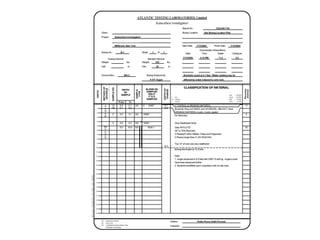
   Subsurface Investigation Log Review
   CPT Log Review
   Soil Classifications
   Engineering Properties of Soil
   Geotechnical Evaluation
Designing a Subsurface Investigation


 Determining the Number of Soil Borings

    Former NYS Building Code

    The Building Code of NYS 2002 (based on IBC 2000)

    As a Rule of Thumb – 1 Boring for every 2,500 to 5,000 s.f.
     of building footprint
Seismic Site Classification
Determination


   Code does not require a 100 foot boring
   Calculate the average soil properties in the
    top 100 feet. (either soil shear wave velocity,
    Standard Penetration resistance, of soil
    undrained shear strength)
   Section 1615.1.1 allows the register design
    professional to assume based on knowledge
    of local geology
Seismic Site Classification
Determination

   Use table 1615.1.1 to determine Seismic Site
    Classification (class A, B, C, D, E, or F)

   Obtain the maximum considered earthquake ground
    motion of 0.2 sec spectral response (Ss)

   Obtain the maximum considered earthquake ground
    motion of 1 sec spectral response (S1)
Seismic Site Classification
Determination


   Can be obtained from the maps in the code,
    the CD prepared by ICC, or USGS web page

   Adjust Ss and S1 based on coefficients
    presented in Tables 1615.1.2(1) and
    1615.1.2(2)
Seismic Site Classification
Determination

   Central New York sites typically fall into site
    class B, C, or D

   Glacial till and/or bedrock is often found at
    shallow depths.

   Exception is Onondaga Lake area, bedrock
    and/or glacial till in excess of 300 feet
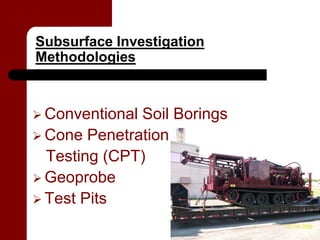
Subsurface Investigation
Methodologies


 ConventionalSoil Borings
 Cone Penetration
  Testing (CPT)
 Geoprobe
 Test Pits
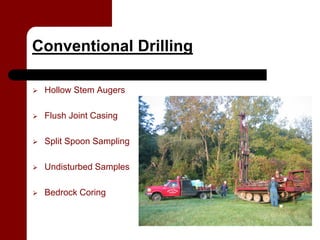
Conventional Drilling

   Hollow Stem Augers

   Flush Joint Casing

   Split Spoon Sampling

   Undisturbed Samples

   Bedrock Coring
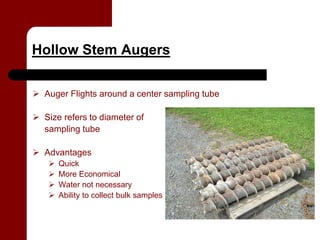
Hollow Stem Augers

 Auger Flights around a center sampling tube

 Size refers to diameter of
  sampling tube

 Advantages
       Quick
       More Economical
       Water not necessary
       Ability to collect bulk samples
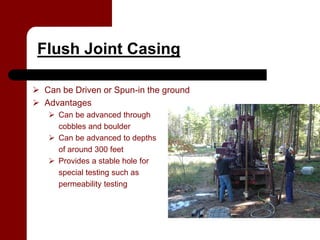
Flush Joint Casing

 Can be Driven or Spun-in the ground
 Advantages
    Can be advanced through
     cobbles and boulder
    Can be advanced to depths
     of around 300 feet
    Provides a stable hole for
     special testing such as
     permeability testing
Split Spoon Sampling


   In accordance with ASTM D 1586

   Sample for soil classification and future
    laboratory testing

   Retained in sealed glass jars
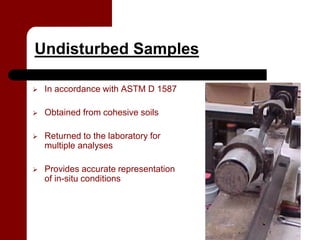
Undisturbed Samples

   In accordance with ASTM D 1587

   Obtained from cohesive soils

   Returned to the laboratory for
    multiple analyses

   Provides accurate representation
    of in-situ conditions
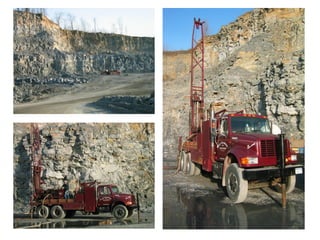
Bedrock Coring


   In accordance with ASTM D 2113

   Double tubed core barrel with a diamond
    cutting shoe

   Samples are returned for classification, RQD
    determination, and laboratory analysis
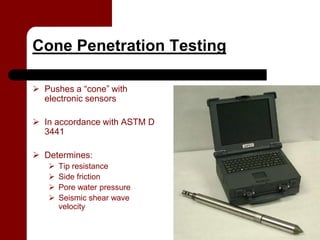
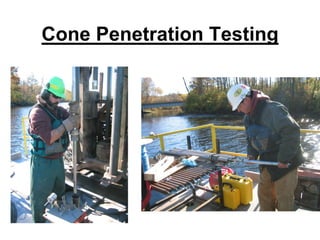
Cone Penetration Testing

 Pushes a “cone” with
  electronic sensors

 In accordance with ASTM D
  3441

 Determines:
      Tip resistance
      Side friction
      Pore water pressure
      Seismic shear wave
       velocity
Cone Penetration Testing

 Advantages

   Rapid: Can advance 200 to 400 feet per day

   Accurately determines to Seismic Site Classification

   Replicates pile driving

   Useful in cohesive and sand soils
Cone Penetration Testing

 Disadvantages

   Not able to be pushed in dense soils or bedrock

   No sample recovered, soil classifications relies on
    soil properties

   Requires a large drill rig for reaction weight
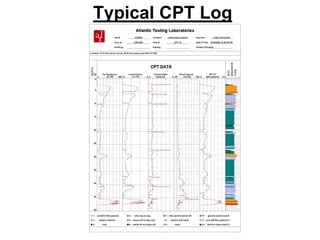
Typical CPT Log
Cone Penetration Testing
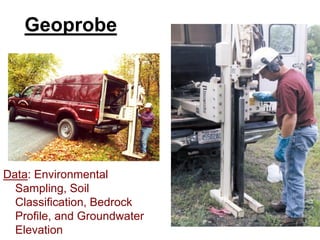
Geoprobe


Data: Environmental
  Sampling, Soil
  Classification, Bedrock
  Profile, and Groundwater
  Elevation
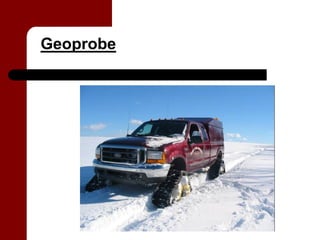
Geoprobe
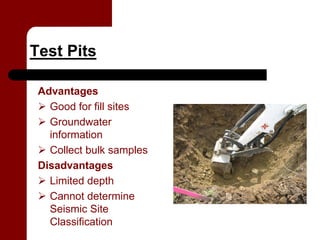
Test Pits

 Advantages
  Good for fill sites
  Groundwater
   information
  Collect bulk samples
 Disadvantages
  Limited depth
  Cannot determine
   Seismic Site
   Classification
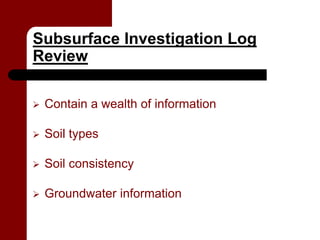
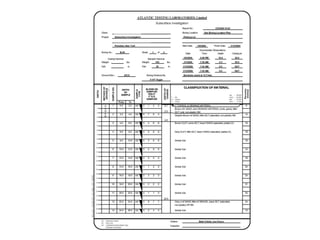
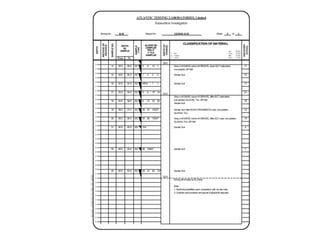
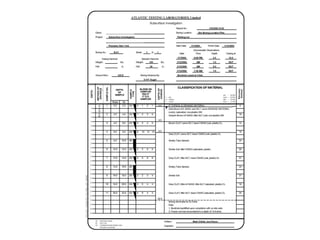
Subsurface Investigation Log
Review

   Contain a wealth of information

   Soil types

   Soil consistency

   Groundwater information
Soil Classification

   Several Systems Used

   Burmister

   Unified Soil Classification System

   NYSDOT

   USDA
Burmister Soil Classification


   Visual-manual procedure

   Performed by the drillers in the field

   Soil classification verified in the laboratory
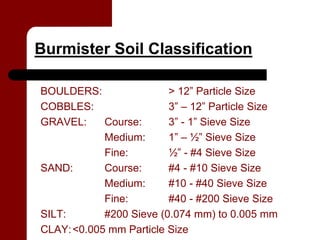
Burmister Soil Classification

BOULDERS:                > 12” Particle Size
COBBLES:                 3” – 12” Particle Size
GRAVEL:     Course:      3” - 1” Sieve Size
            Medium:      1” – ½” Sieve Size
            Fine:        ½” - #4 Sieve Size
SAND:       Course:      #4 - #10 Sieve Size
            Medium:      #10 - #40 Sieve Size
            Fine:        #40 - #200 Sieve Size
SILT:       #200 Sieve (0.074 mm) to 0.005 mm
CLAY: <0.005 mm Particle Size
Unified Soil Classification System


   In accordance with ASTM D 2487 and ASTM
    D 2488

   ASTM D 2487 - laboratory analysis

   ASTM D 2488 - visual manual procedure
    performed in laboratory
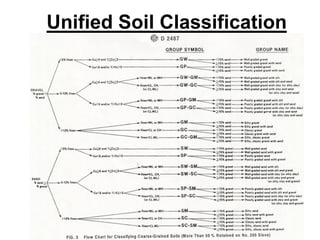
Unified Soil Classification
Engineering Properties of Soil

 Natural Moisture Content

 Atterberg Limits
     Liquid Limit
     Plastic Limit
     Plasticity Index
 Shear Strength

 Internal Friction Angle

 Consolidation Potential
Soil Property Uses


   Bearing Capacity

   Lateral Earth Pressures

   Slope Stability

   Frost Heave Potential
Geotechnical Evaluation


   Geotechnical Report Contents

   Optional Services

   Site Visit
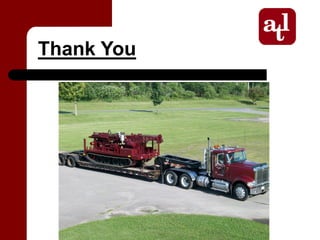
Thank You
Question & Answer


  How deep can you
  drill with hollow stem
  augers?
Question & Answer


    In what type of soil
    conditions is a
    Shelby Tube most
    conducive?
Question & Answer


  Does a 100 foot
  boring need to be
  drilled to determine
  the seismic site
  classification?
Question & Answer


      True or False:
      Determining the
      groundwater
      table is extremely
      important.
Question & Answer


 What type of soil parameter
 does Cone Penetration
 Testing (CPT) determine that
 conventional soil borings can
 not?
Thank You

Subsurface Investigation and Geotechnical Evaluation

  • 1.
    Atlantic Testing Laboratories Subsurface Investigation and Geotechnical Evaluation NYSCHSA January 22, 2013
  • 2.
    Topics  Designing a Subsurface Investigation Program  Subsurface Investigation Methodologies  Subsurface Investigation Log Review  CPT Log Review  Soil Classifications  Engineering Properties of Soil  Geotechnical Evaluation
  • 3.
    Designing a SubsurfaceInvestigation  Determining the Number of Soil Borings  Former NYS Building Code  The Building Code of NYS 2002 (based on IBC 2000)  As a Rule of Thumb – 1 Boring for every 2,500 to 5,000 s.f. of building footprint
  • 4.
    Seismic Site Classification Determination  Code does not require a 100 foot boring  Calculate the average soil properties in the top 100 feet. (either soil shear wave velocity, Standard Penetration resistance, of soil undrained shear strength)  Section 1615.1.1 allows the register design professional to assume based on knowledge of local geology
  • 5.
    Seismic Site Classification Determination  Use table 1615.1.1 to determine Seismic Site Classification (class A, B, C, D, E, or F)  Obtain the maximum considered earthquake ground motion of 0.2 sec spectral response (Ss)  Obtain the maximum considered earthquake ground motion of 1 sec spectral response (S1)
  • 6.
    Seismic Site Classification Determination  Can be obtained from the maps in the code, the CD prepared by ICC, or USGS web page  Adjust Ss and S1 based on coefficients presented in Tables 1615.1.2(1) and 1615.1.2(2)
  • 7.
    Seismic Site Classification Determination  Central New York sites typically fall into site class B, C, or D  Glacial till and/or bedrock is often found at shallow depths.  Exception is Onondaga Lake area, bedrock and/or glacial till in excess of 300 feet
  • 8.
    Subsurface Investigation Methodologies  ConventionalSoilBorings  Cone Penetration Testing (CPT)  Geoprobe  Test Pits
  • 9.
    Conventional Drilling  Hollow Stem Augers  Flush Joint Casing  Split Spoon Sampling  Undisturbed Samples  Bedrock Coring
  • 10.
    Hollow Stem Augers Auger Flights around a center sampling tube  Size refers to diameter of sampling tube  Advantages  Quick  More Economical  Water not necessary  Ability to collect bulk samples
  • 11.
    Flush Joint Casing Can be Driven or Spun-in the ground  Advantages  Can be advanced through cobbles and boulder  Can be advanced to depths of around 300 feet  Provides a stable hole for special testing such as permeability testing
  • 12.
    Split Spoon Sampling  In accordance with ASTM D 1586  Sample for soil classification and future laboratory testing  Retained in sealed glass jars
  • 13.
    Undisturbed Samples  In accordance with ASTM D 1587  Obtained from cohesive soils  Returned to the laboratory for multiple analyses  Provides accurate representation of in-situ conditions
  • 14.
    Bedrock Coring  In accordance with ASTM D 2113  Double tubed core barrel with a diamond cutting shoe  Samples are returned for classification, RQD determination, and laboratory analysis
  • 16.
    Cone Penetration Testing Pushes a “cone” with electronic sensors  In accordance with ASTM D 3441  Determines:  Tip resistance  Side friction  Pore water pressure  Seismic shear wave velocity
  • 17.
    Cone Penetration Testing Advantages  Rapid: Can advance 200 to 400 feet per day  Accurately determines to Seismic Site Classification  Replicates pile driving  Useful in cohesive and sand soils
  • 18.
    Cone Penetration Testing Disadvantages  Not able to be pushed in dense soils or bedrock  No sample recovered, soil classifications relies on soil properties  Requires a large drill rig for reaction weight
  • 19.
  • 20.
  • 21.
    Geoprobe Data: Environmental Sampling, Soil Classification, Bedrock Profile, and Groundwater Elevation
  • 22.
  • 23.
    Test Pits Advantages  Good for fill sites  Groundwater information  Collect bulk samples Disadvantages  Limited depth  Cannot determine Seismic Site Classification
  • 24.
    Subsurface Investigation Log Review  Contain a wealth of information  Soil types  Soil consistency  Groundwater information
  • 29.
    Soil Classification  Several Systems Used  Burmister  Unified Soil Classification System  NYSDOT  USDA
  • 30.
    Burmister Soil Classification  Visual-manual procedure  Performed by the drillers in the field  Soil classification verified in the laboratory
  • 31.
    Burmister Soil Classification BOULDERS: > 12” Particle Size COBBLES: 3” – 12” Particle Size GRAVEL: Course: 3” - 1” Sieve Size Medium: 1” – ½” Sieve Size Fine: ½” - #4 Sieve Size SAND: Course: #4 - #10 Sieve Size Medium: #10 - #40 Sieve Size Fine: #40 - #200 Sieve Size SILT: #200 Sieve (0.074 mm) to 0.005 mm CLAY: <0.005 mm Particle Size
  • 32.
    Unified Soil ClassificationSystem  In accordance with ASTM D 2487 and ASTM D 2488  ASTM D 2487 - laboratory analysis  ASTM D 2488 - visual manual procedure performed in laboratory
  • 33.
  • 34.
    Engineering Properties ofSoil  Natural Moisture Content  Atterberg Limits  Liquid Limit  Plastic Limit  Plasticity Index  Shear Strength  Internal Friction Angle  Consolidation Potential
  • 35.
    Soil Property Uses  Bearing Capacity  Lateral Earth Pressures  Slope Stability  Frost Heave Potential
  • 36.
    Geotechnical Evaluation  Geotechnical Report Contents  Optional Services  Site Visit
  • 37.
  • 38.
    Question & Answer How deep can you drill with hollow stem augers?
  • 39.
    Question & Answer In what type of soil conditions is a Shelby Tube most conducive?
  • 40.
    Question & Answer Does a 100 foot boring need to be drilled to determine the seismic site classification?
  • 41.
    Question & Answer True or False: Determining the groundwater table is extremely important.
  • 42.
    Question & Answer What type of soil parameter does Cone Penetration Testing (CPT) determine that conventional soil borings can not?
  • 43.