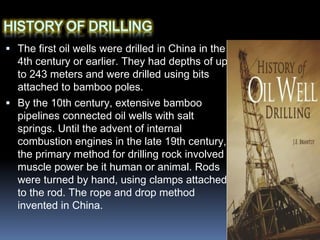
 The first oil wells were drilled in China in the
4th century or earlier. They had depths of up
to 243 meters and were drilled using bits
attached to bamboo poles.
 By the 10th century, extensive bamboo
pipelines connected oil wells with salt
springs. Until the advent of internal
combustion engines in the late 19th century,
the primary method for drilling rock involved
muscle power be it human or animal. Rods
were turned by hand, using clamps attached
to the rod. The rope and drop method
invented in China.
Four drilling methods are widely used, each depending on
the type of information required and/or the rock types being
drilled.
1- AIR ROTARY DRILLING
2- AIR PERCUSSION DRILLING
3- MUD ROTARY DRILLING
4- DIAMOND CORE DRILLING
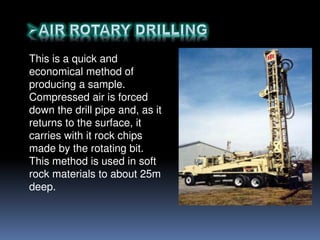
This is a quick and
economical method of
producing a sample.
Compressed air is forced
down the drill pipe and, as it
returns to the surface, it
carries with it rock chips
made by the rotating bit.
This method is used in soft
rock materials to about 25m
deep.
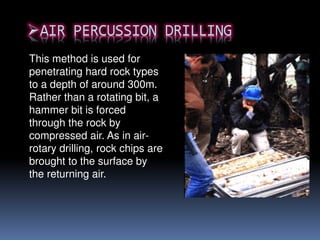
This method is used for
penetrating hard rock types
to a depth of around 300m.
Rather than a rotating bit, a
hammer bit is forced
through the rock by
compressed air. As in air-
rotary drilling, rock chips are
brought to the surface by
the returning air.
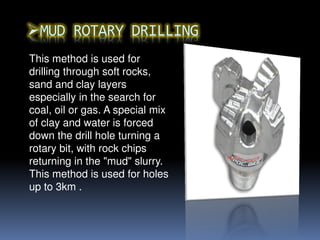
This method is used for
drilling through soft rocks,
sand and clay layers
especially in the search for
coal, oil or gas. A special mix
of clay and water is forced
down the drill hole turning a
rotary bit, with rock chips
returning in the "mud" slurry.
This method is used for holes
up to 3km .
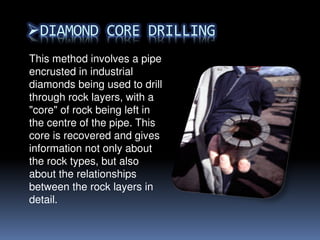
This method involves a pipe
encrusted in industrial
diamonds being used to drill
through rock layers, with a
"core" of rock being left in
the centre of the pipe. This
core is recovered and gives
information not only about
the rock types, but also
about the relationships
between the rock layers in
detail.
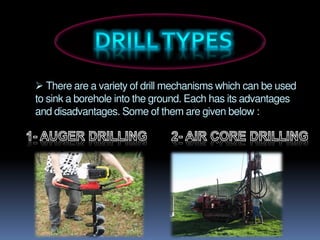
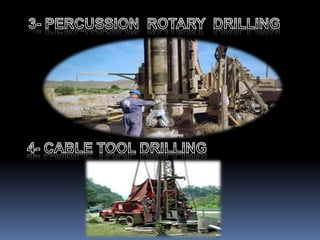
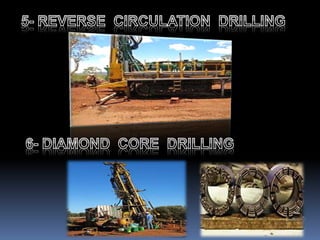
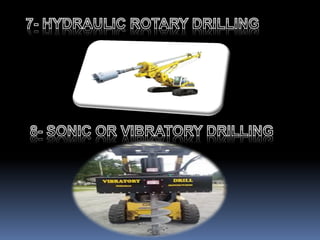
 There are a variety of drill mechanisms which can be used
to sink a borehole into the ground. Each has its advantages
and disadvantages. Some of them are given below :
DRILL BITS
Drill bits come in a huge variety of shapes and sizes. Standard
drill bits are generally designed for wood, metal, or masonry.
Some of them are given below :
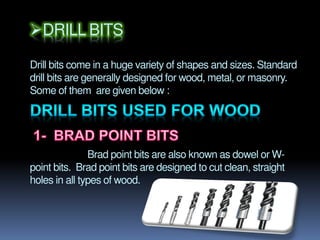
Brad point bits are also known as dowel or W-
point bits. Brad point bits are designed to cut clean, straight
holes in all types of wood.
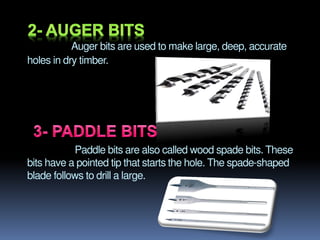
Auger bits are used to make large, deep, accurate
holes in dry timber.
Paddle bits are also called wood spade bits. These
bits have a pointed tip that starts the hole. The spade-shaped
blade follows to drill a large.

Metal bits are also known as high-speed steel
(HSS) or twist bits. They are usually black in color and can be
used for wood and plastic. Most metal bits come with
cylindrical shanks, but some feature quarter inch hex shanks.
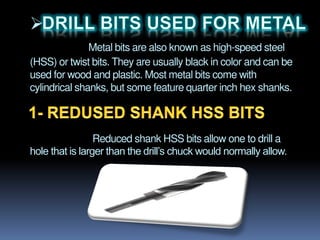
Reduced shank HSS bits allow one to drill a
hole that is larger than the drill’s chuck would normally allow.
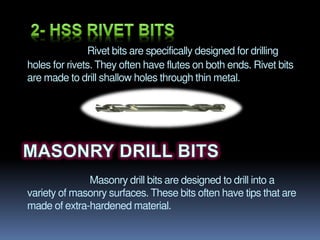
Rivet bits are specifically designed for drilling
holes for rivets. They often have flutes on both ends. Rivet bits
are made to drill shallow holes through thin metal.
Masonry drill bits are designed to drill into a
variety of masonry surfaces. These bits often have tips that are
made of extra-hardened material.
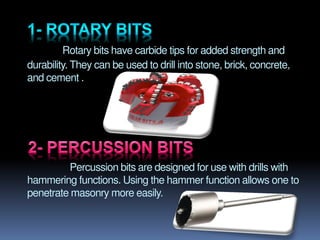
Rotary bits have carbide tips for added strength and
durability. They can be used to drill into stone, brick, concrete,
and cement .
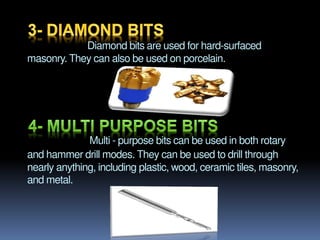
Percussion bits are designed for use with drills with
hammering functions. Using the hammer function allows one to
penetrate masonry more easily.
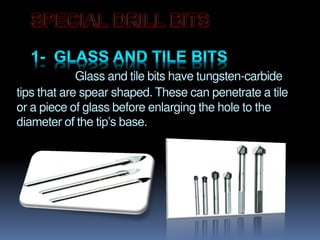
Diamond bits are used for hard-surfaced
masonry. They can also be used on porcelain.
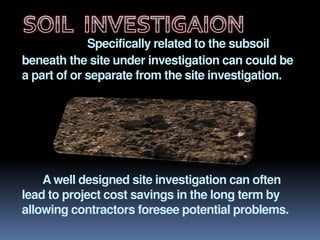
Multi - purpose bits can be used in both rotary
and hammer drill modes. They can be used to drill through
nearly anything, including plastic, wood, ceramic tiles, masonry,
and metal.
Glass and tile bits have tungsten-carbide
tips that are spear shaped. These can penetrate a tile
or a piece of glass before enlarging the hole to the
diameter of the tip’s base.
Specifically related to the subsoil
beneath the site under investigation can could be
a part of or separate from the site investigation.
A well designed site investigation can often
lead to project cost savings in the long term by
allowing contractors foresee potential problems.
1- Determine the suitability of the site foe the
proposed project.
2- Determine an adequate and economic
foundation design.
3- Determine the difficulties which may arise
during the construction process and period.
4- Determine the occurrence and/or cause of all
changes in subsoil condition,
Methods chosen will depend on several
factors :
1- Size of contract.
2- Type of proposed foundation.
3- Type of sample required.
4- Type of subsoil's which may be encountered.
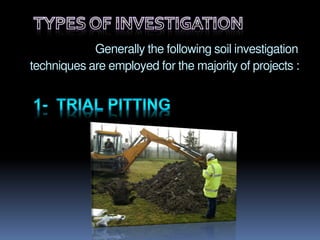
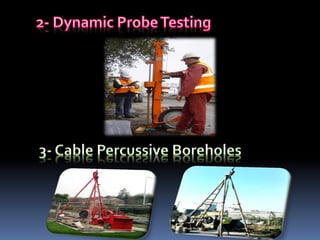
Generally the following soil investigation
techniques are employed for the majority of projects :
Soil Investigation And Drilling ( Types,Drill Bits )

Soil Investigation And Drilling ( Types,Drill Bits )

  • 4.
     The firstoil wells were drilled in China in the 4th century or earlier. They had depths of up to 243 meters and were drilled using bits attached to bamboo poles.  By the 10th century, extensive bamboo pipelines connected oil wells with salt springs. Until the advent of internal combustion engines in the late 19th century, the primary method for drilling rock involved muscle power be it human or animal. Rods were turned by hand, using clamps attached to the rod. The rope and drop method invented in China.
  • 6.
    Four drilling methodsare widely used, each depending on the type of information required and/or the rock types being drilled. 1- AIR ROTARY DRILLING 2- AIR PERCUSSION DRILLING 3- MUD ROTARY DRILLING 4- DIAMOND CORE DRILLING
  • 7.
    This is aquick and economical method of producing a sample. Compressed air is forced down the drill pipe and, as it returns to the surface, it carries with it rock chips made by the rotating bit. This method is used in soft rock materials to about 25m deep.
  • 8.
    This method isused for penetrating hard rock types to a depth of around 300m. Rather than a rotating bit, a hammer bit is forced through the rock by compressed air. As in air- rotary drilling, rock chips are brought to the surface by the returning air.
  • 9.
    This method isused for drilling through soft rocks, sand and clay layers especially in the search for coal, oil or gas. A special mix of clay and water is forced down the drill hole turning a rotary bit, with rock chips returning in the "mud" slurry. This method is used for holes up to 3km .
  • 10.
    This method involvesa pipe encrusted in industrial diamonds being used to drill through rock layers, with a "core" of rock being left in the centre of the pipe. This core is recovered and gives information not only about the rock types, but also about the relationships between the rock layers in detail.
  • 11.
     There area variety of drill mechanisms which can be used to sink a borehole into the ground. Each has its advantages and disadvantages. Some of them are given below :
  • 15.
    DRILL BITS Drill bitscome in a huge variety of shapes and sizes. Standard drill bits are generally designed for wood, metal, or masonry. Some of them are given below : Brad point bits are also known as dowel or W- point bits. Brad point bits are designed to cut clean, straight holes in all types of wood.
  • 16.
    Auger bits areused to make large, deep, accurate holes in dry timber. Paddle bits are also called wood spade bits. These bits have a pointed tip that starts the hole. The spade-shaped blade follows to drill a large.
  • 17.
     Metal bits arealso known as high-speed steel (HSS) or twist bits. They are usually black in color and can be used for wood and plastic. Most metal bits come with cylindrical shanks, but some feature quarter inch hex shanks. Reduced shank HSS bits allow one to drill a hole that is larger than the drill’s chuck would normally allow.
  • 18.
    Rivet bits arespecifically designed for drilling holes for rivets. They often have flutes on both ends. Rivet bits are made to drill shallow holes through thin metal. Masonry drill bits are designed to drill into a variety of masonry surfaces. These bits often have tips that are made of extra-hardened material.
  • 19.
    Rotary bits havecarbide tips for added strength and durability. They can be used to drill into stone, brick, concrete, and cement . Percussion bits are designed for use with drills with hammering functions. Using the hammer function allows one to penetrate masonry more easily.
  • 20.
    Diamond bits areused for hard-surfaced masonry. They can also be used on porcelain. Multi - purpose bits can be used in both rotary and hammer drill modes. They can be used to drill through nearly anything, including plastic, wood, ceramic tiles, masonry, and metal.
  • 21.
    Glass and tilebits have tungsten-carbide tips that are spear shaped. These can penetrate a tile or a piece of glass before enlarging the hole to the diameter of the tip’s base.
  • 22.
    Specifically related tothe subsoil beneath the site under investigation can could be a part of or separate from the site investigation. A well designed site investigation can often lead to project cost savings in the long term by allowing contractors foresee potential problems.
  • 23.
    1- Determine thesuitability of the site foe the proposed project. 2- Determine an adequate and economic foundation design. 3- Determine the difficulties which may arise during the construction process and period. 4- Determine the occurrence and/or cause of all changes in subsoil condition,
  • 24.
    Methods chosen willdepend on several factors : 1- Size of contract. 2- Type of proposed foundation. 3- Type of sample required. 4- Type of subsoil's which may be encountered.
  • 25.
    Generally the followingsoil investigation techniques are employed for the majority of projects :