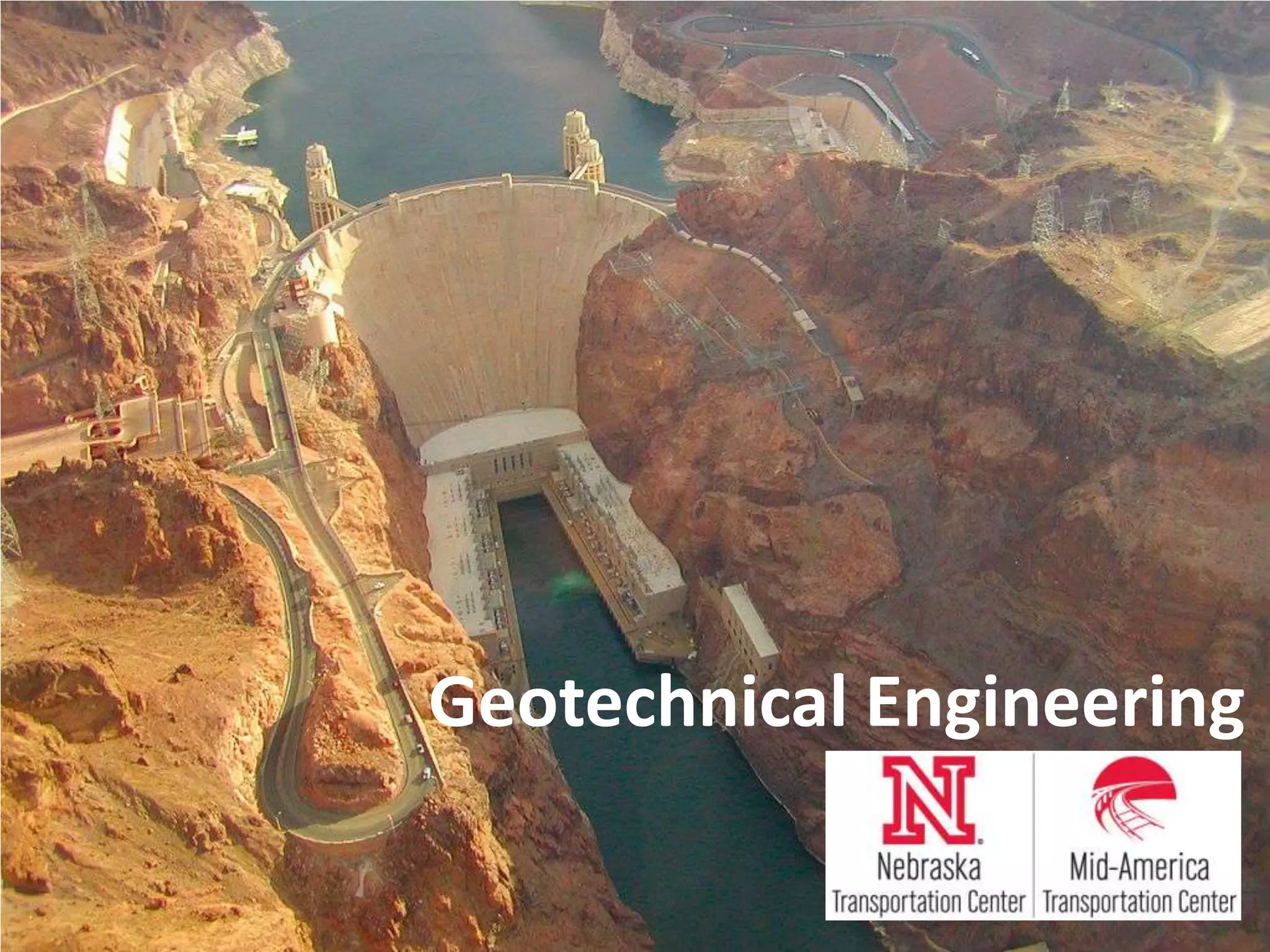
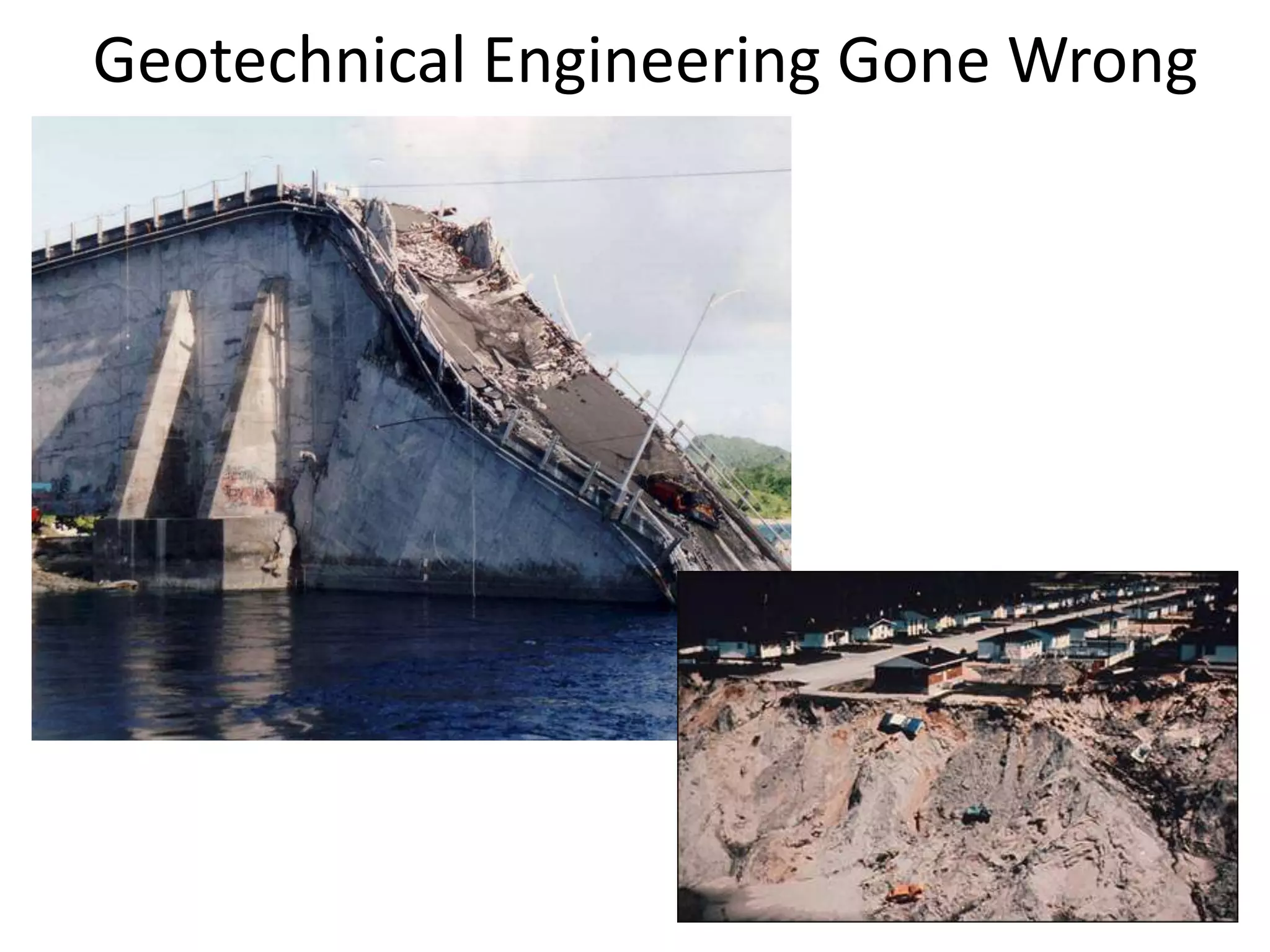
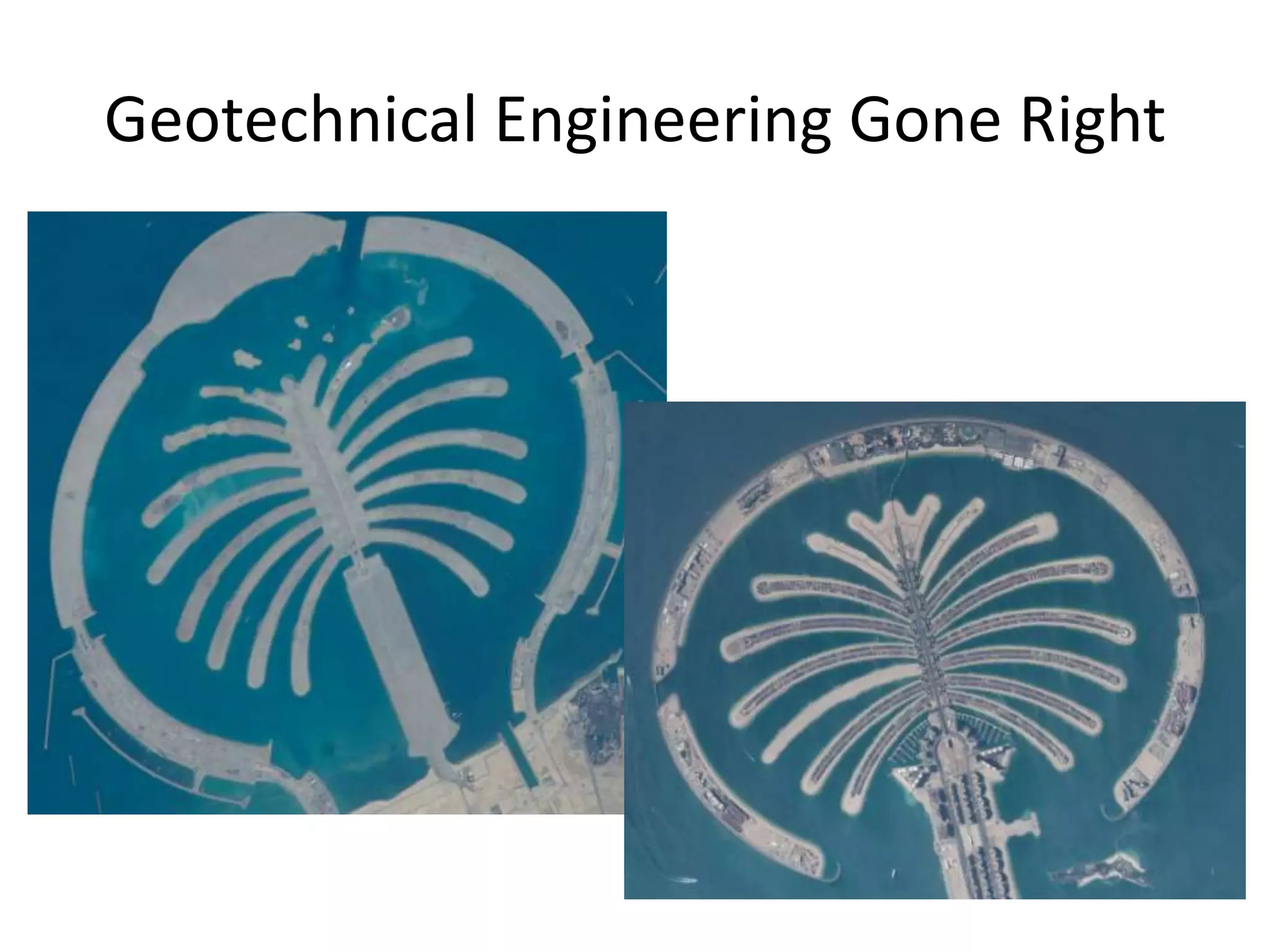
Geotechnical engineering involves assessing soil and earth conditions to inform construction decisions, addressing questions related to building safety and infrastructure development. Professionals in this field include geotechnical engineers, civil engineers, GIS analysts, land surveyors, and construction representatives, with varying educational requirements and salaries. This document outlines the roles, responsibilities, and career outlook in geotechnical engineering, emphasizing its critical importance in construction projects.
What is GeotechnicalEngineering?
• Geo –
• Technical –
• What do they do?
– Go out to construction sites to test soil
– Bring soil back to the lab to test
means earth
having special knowledge
4.
Questions geotechnical engineers
answer…
•How tall can we make a building on this
ground?
• Can we build a road here?
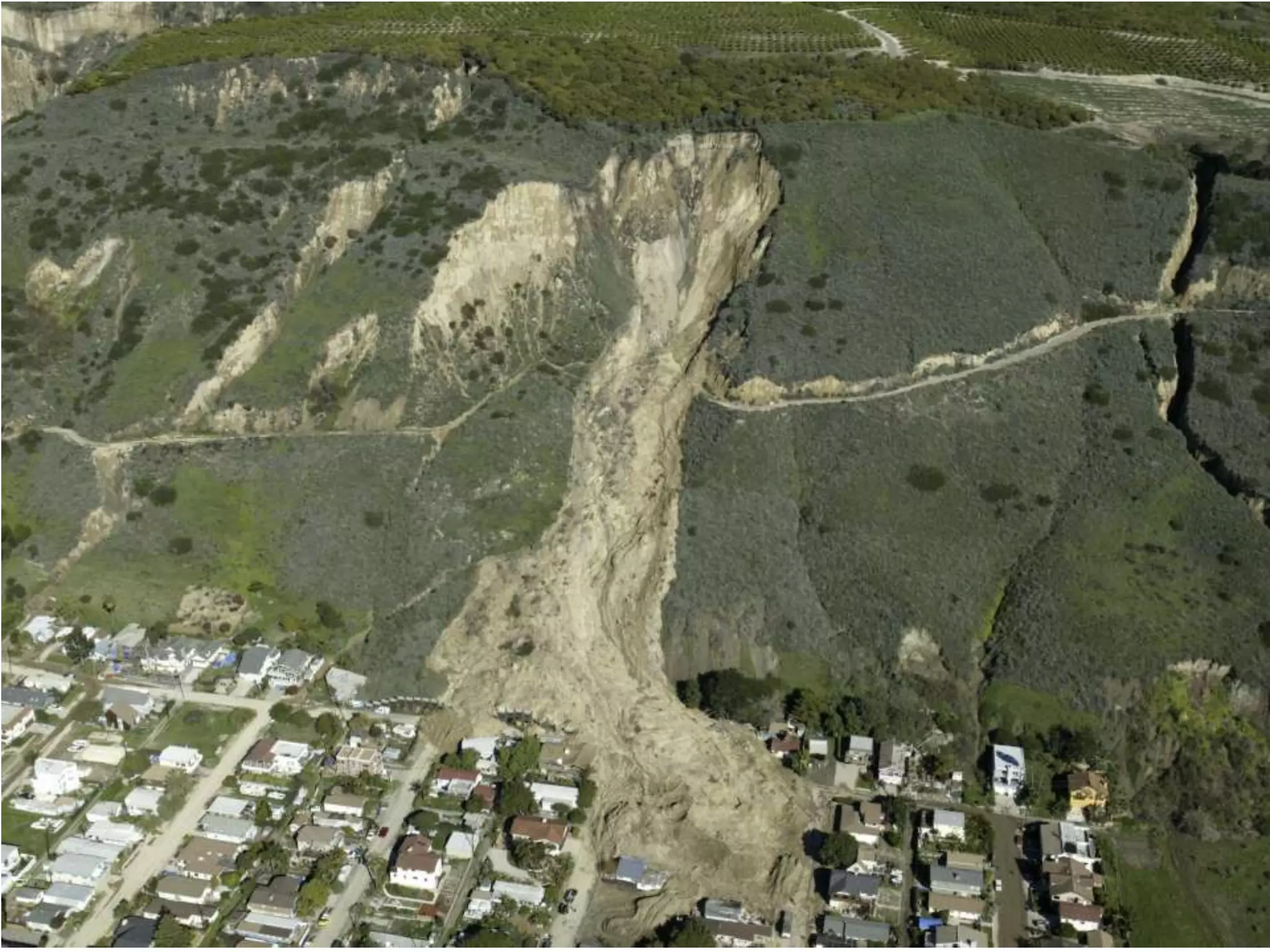
• If we cut through this mountain, will the
slopes collapse down onto the road?
5.
When do weneed Geotechnical
Engineers?
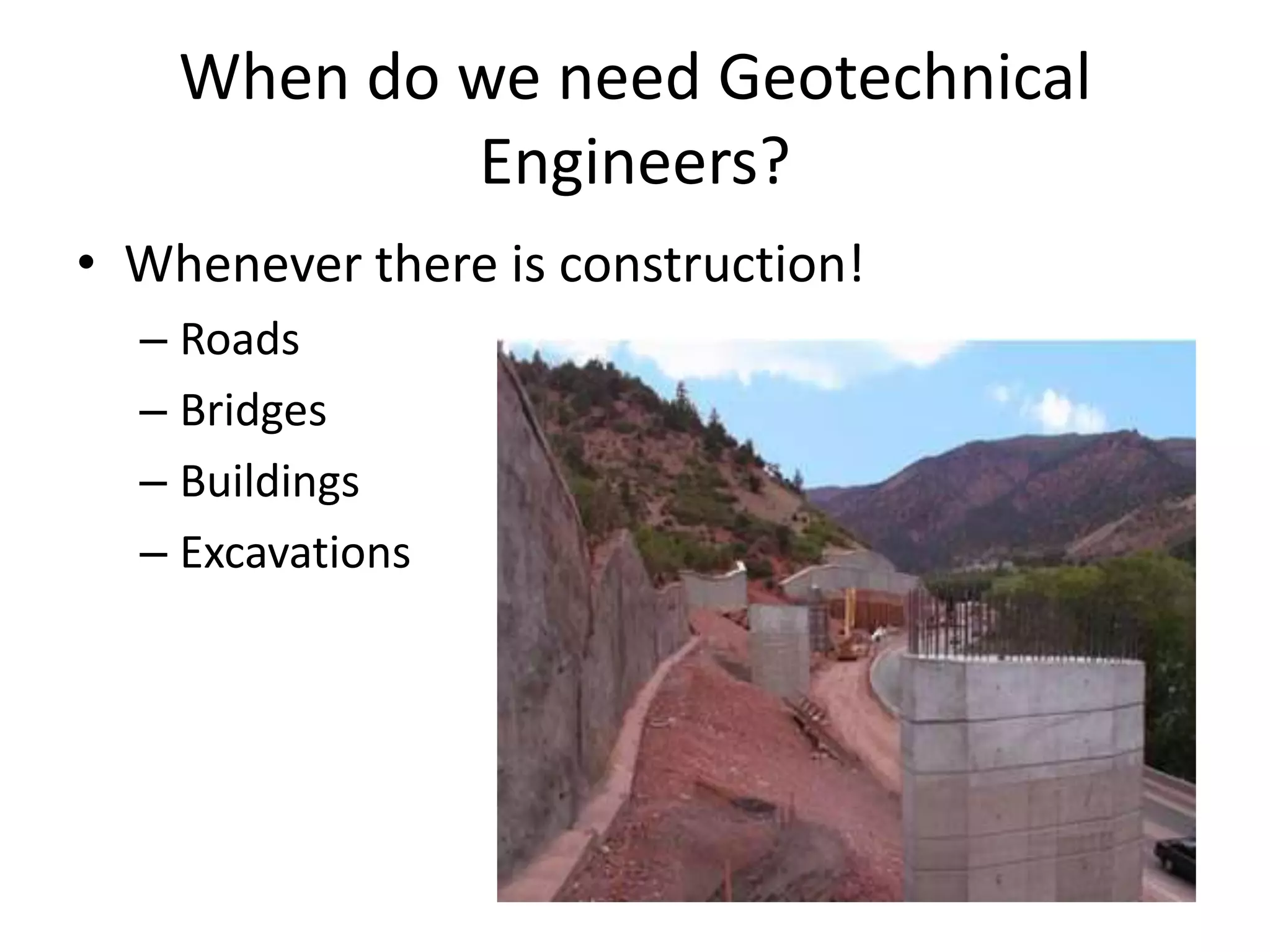
• Whenever there is construction!
– Roads
– Bridges
– Buildings
– Excavations
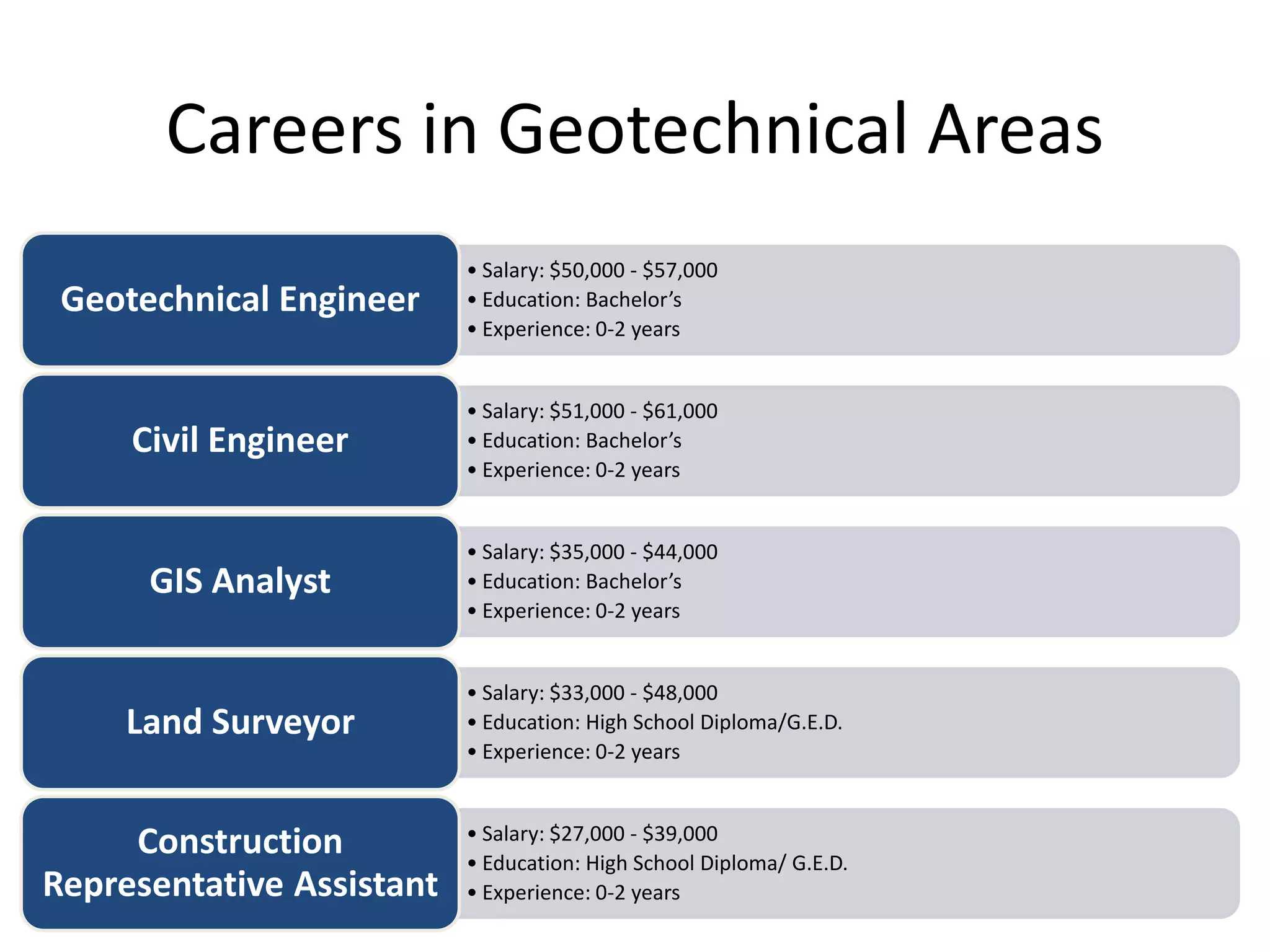
Careers in GeotechnicalAreas
• Salary: $50,000 - $57,000
• Education: Bachelor’s
• Experience: 0-2 years
Geotechnical Engineer
• Salary: $51,000 - $61,000
• Education: Bachelor’s
• Experience: 0-2 years
Civil Engineer
• Salary: $35,000 - $44,000
• Education: Bachelor’s
• Experience: 0-2 years
GIS Analyst
• Salary: $33,000 - $48,000
• Education: High School Diploma/G.E.D.
• Experience: 0-2 years
Land Surveyor
• Salary: $27,000 - $39,000
• Education: High School Diploma/ G.E.D.
• Experience: 0-2 years
Construction
Representative Assistant
13.
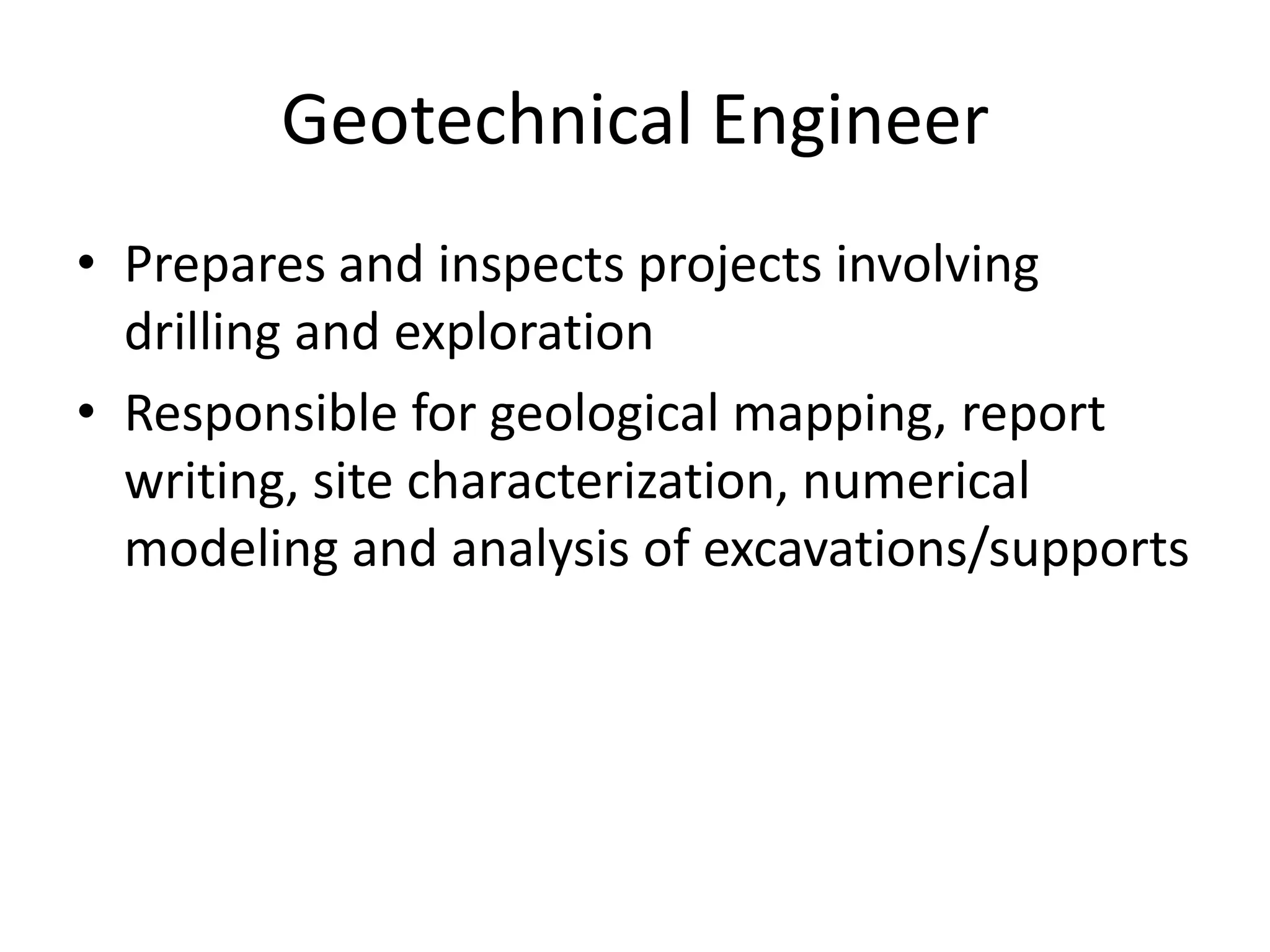
Geotechnical Engineer
• Preparesand inspects projects involving
drilling and exploration
• Responsible for geological mapping, report
writing, site characterization, numerical
modeling and analysis of excavations/supports
14.
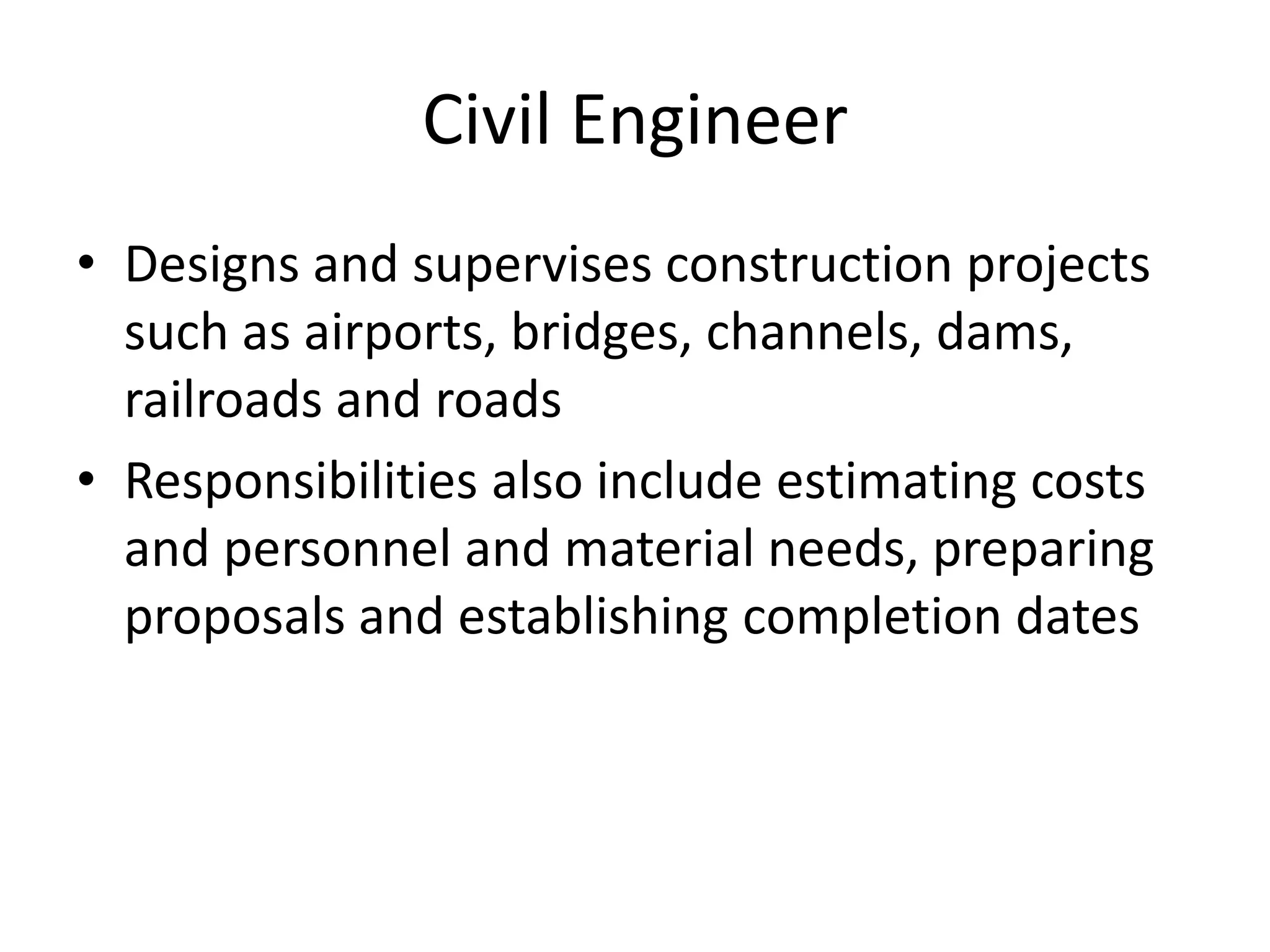
Civil Engineer
• Designsand supervises construction projects
such as airports, bridges, channels, dams,
railroads and roads
• Responsibilities also include estimating costs
and personnel and material needs, preparing
proposals and establishing completion dates
15.
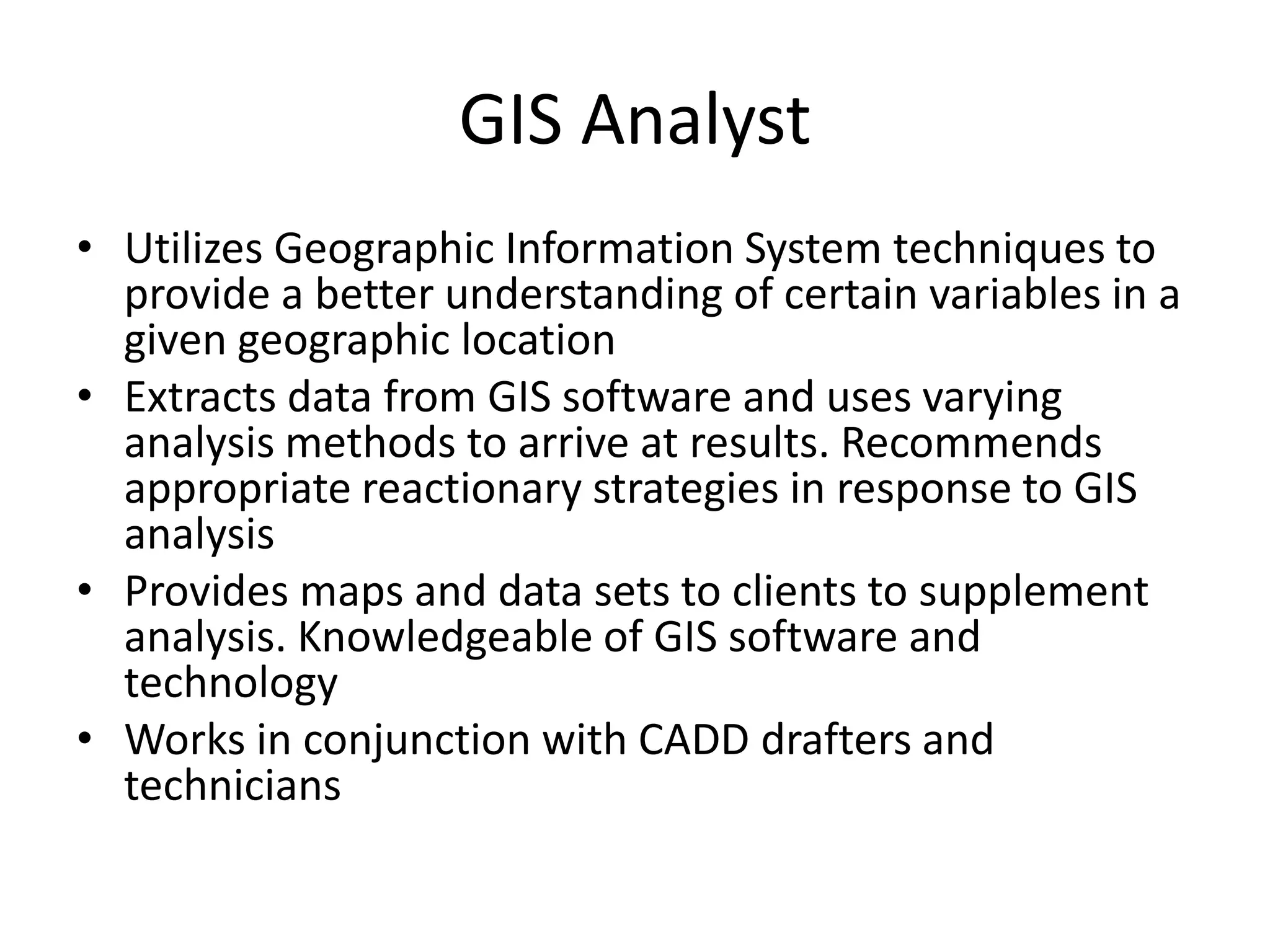
GIS Analyst
• UtilizesGeographic Information System techniques to
provide a better understanding of certain variables in a
given geographic location
• Extracts data from GIS software and uses varying
analysis methods to arrive at results. Recommends
appropriate reactionary strategies in response to GIS
analysis
• Provides maps and data sets to clients to supplement
analysis. Knowledgeable of GIS software and
technology
• Works in conjunction with CADD drafters and
technicians
16.
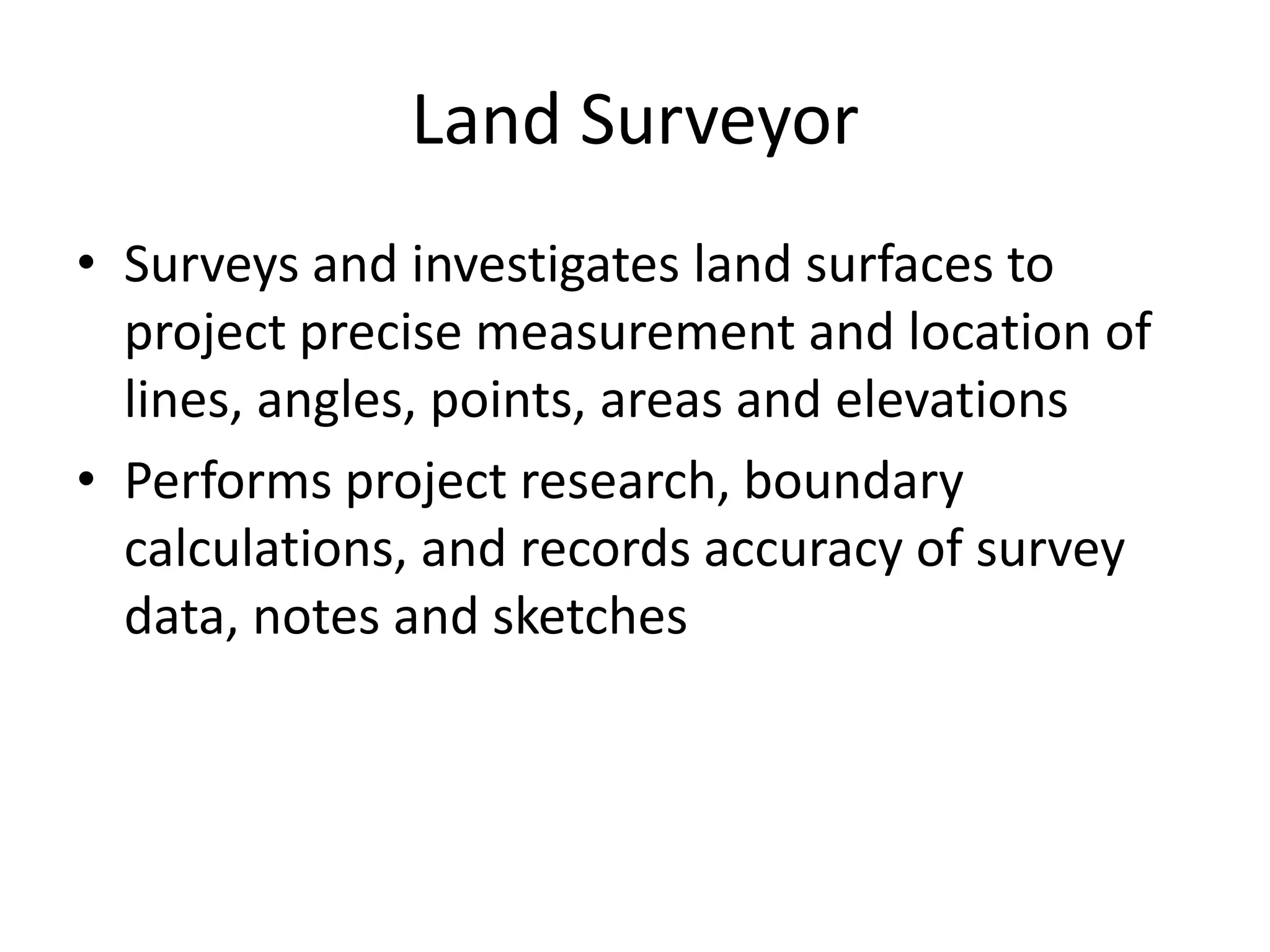
Land Surveyor
• Surveysand investigates land surfaces to
project precise measurement and location of
lines, angles, points, areas and elevations
• Performs project research, boundary
calculations, and records accuracy of survey
data, notes and sketches
17.
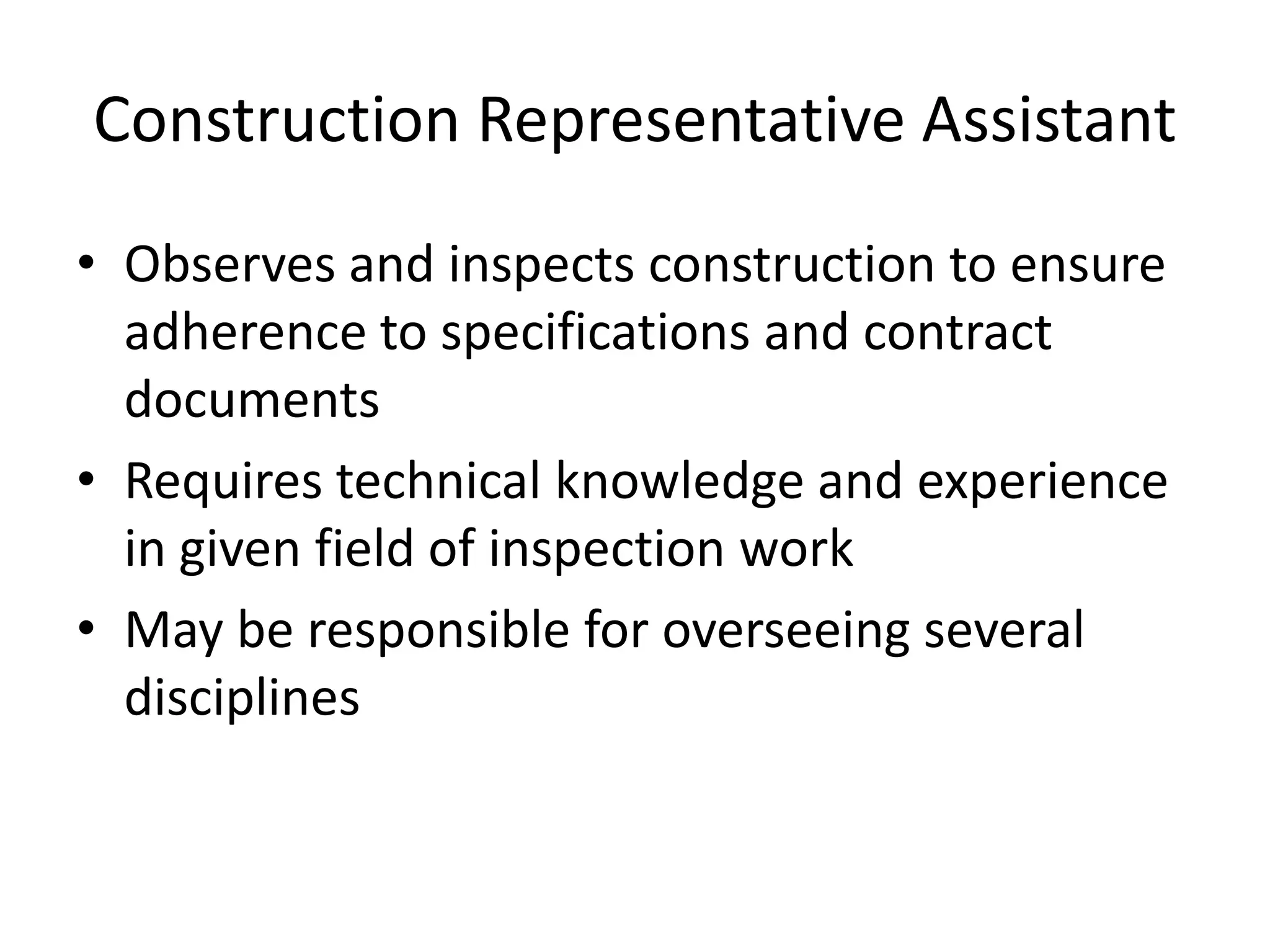
Construction Representative Assistant
•Observes and inspects construction to ensure
adherence to specifications and contract
documents
• Requires technical knowledge and experience
in given field of inspection work
• May be responsible for overseeing several
disciplines