 Definition
 Main Characteristics
 Main Figures
     Ferdinand de Saussure
     Roland Barthes
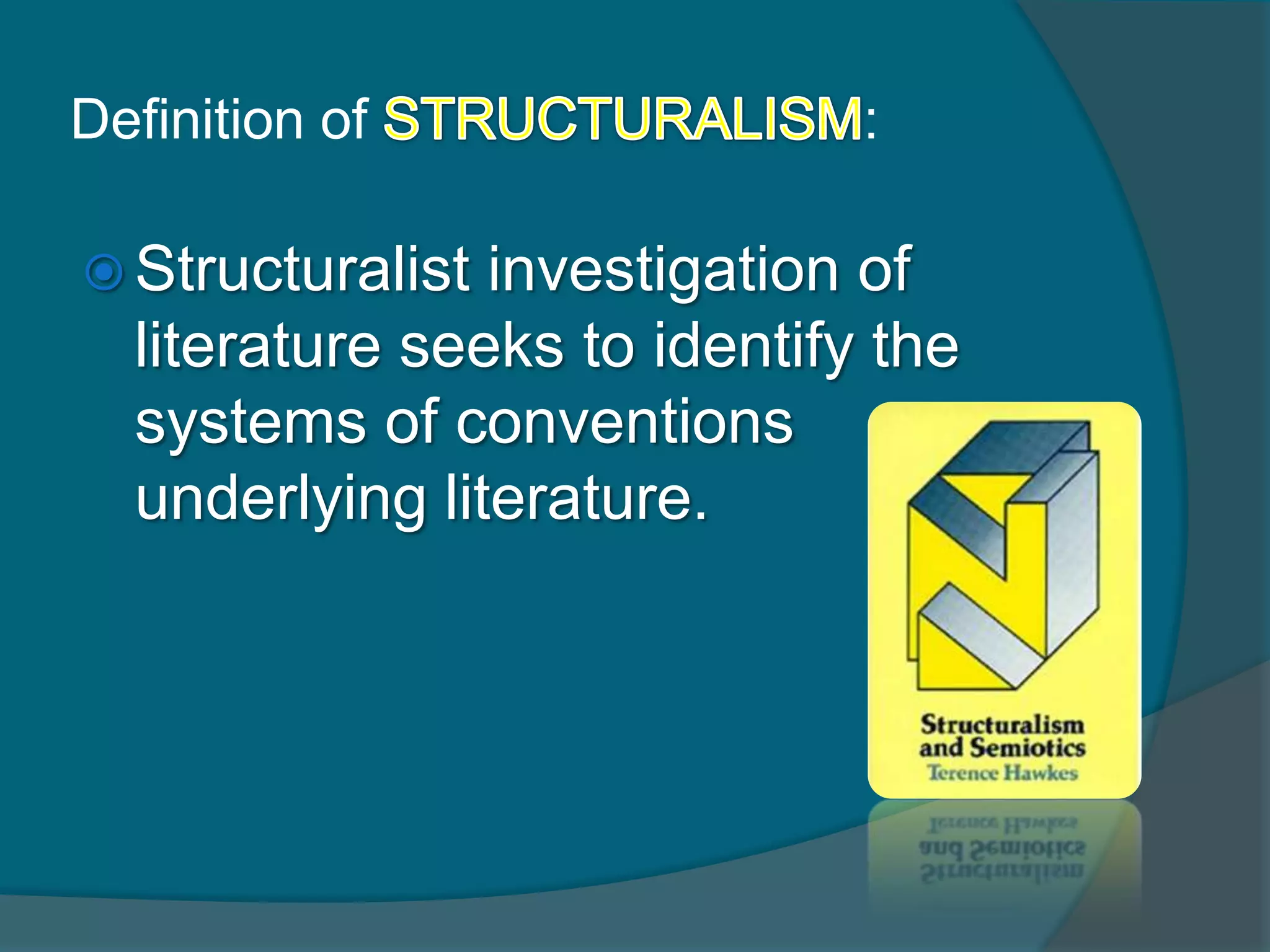
Definition of                 :

 Structuralist investigation of
  literature seeks to identify the
  systems of conventions
  underlying literature.
Main Characteristics:
 Language needs to be studied “in itself,”
  rather than in its connection with other
  things.
 Language is not a naming process, each
  word corresponding to the thing it names.
 Language (as opposed to speech) is
  “outside of the individual who can never
  create nor modify it by himself.”
Main Characteristics:
 Language is a system of signs in which the
  only essential thing is the union of
  meanings and sound-images.
 Language is a social institution, with unique
  features that distinguish it from
  other, political and legal, institutions
Ferdinand de Saussure (1857–
1913)
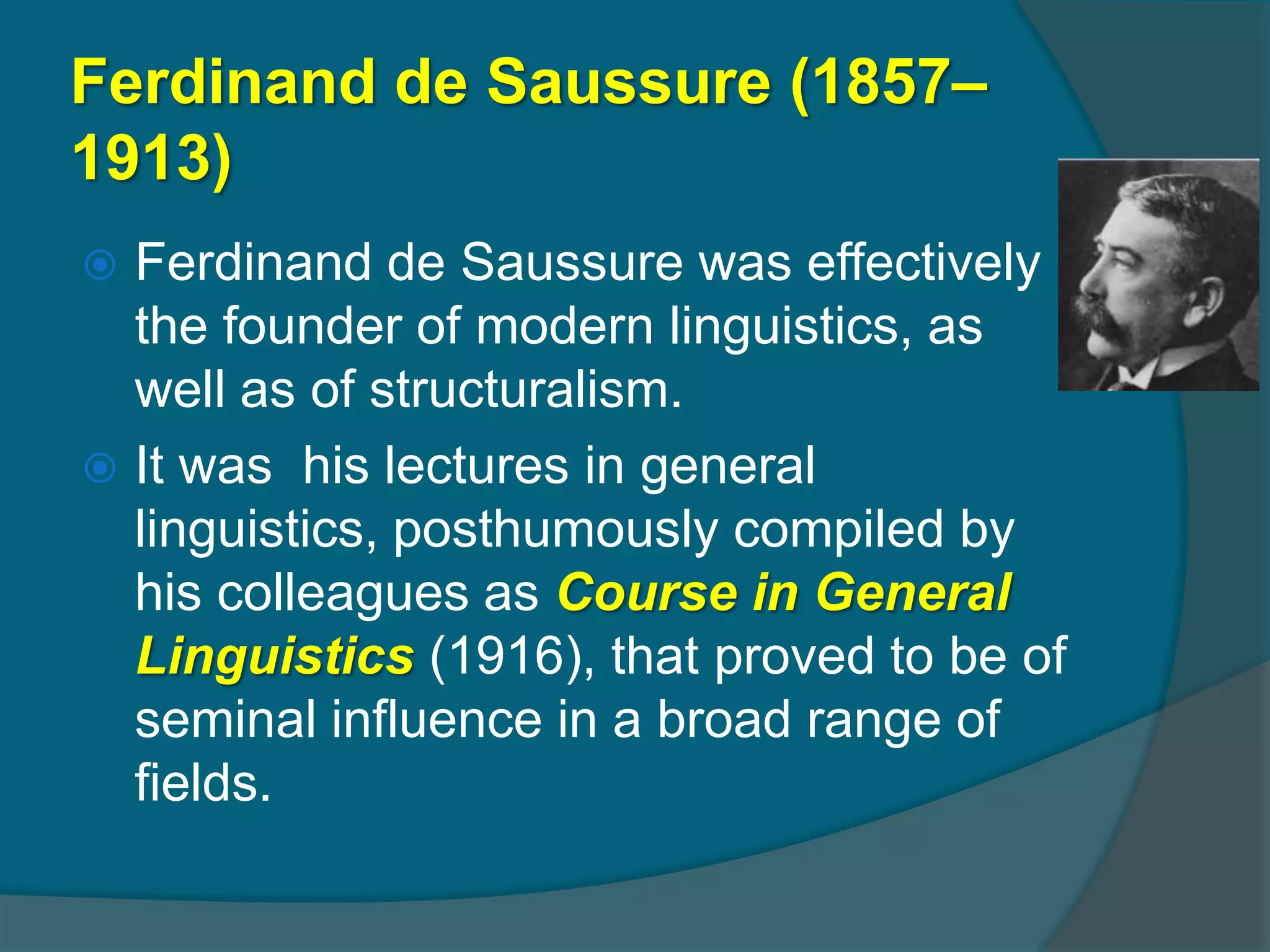
 Ferdinand de Saussure was effectively
  the founder of modern linguistics, as
  well as of structuralism.
 It was his lectures in general
  linguistics, posthumously compiled by
  his colleagues as Course in General
  Linguistics (1916), that proved to be of
  seminal influence in a broad range of
  fields.
Ferdinand de Saussure (1857–
1913)
   As opposed to a diachronic approach
    which studies changes in language over
    a period of time, Saussure undertook a
    synchronic approach which saw
    language as a structure that could be
    studied in its entirety at a given point in
    time.
Ferdinand de Saussure (1857–
1913)
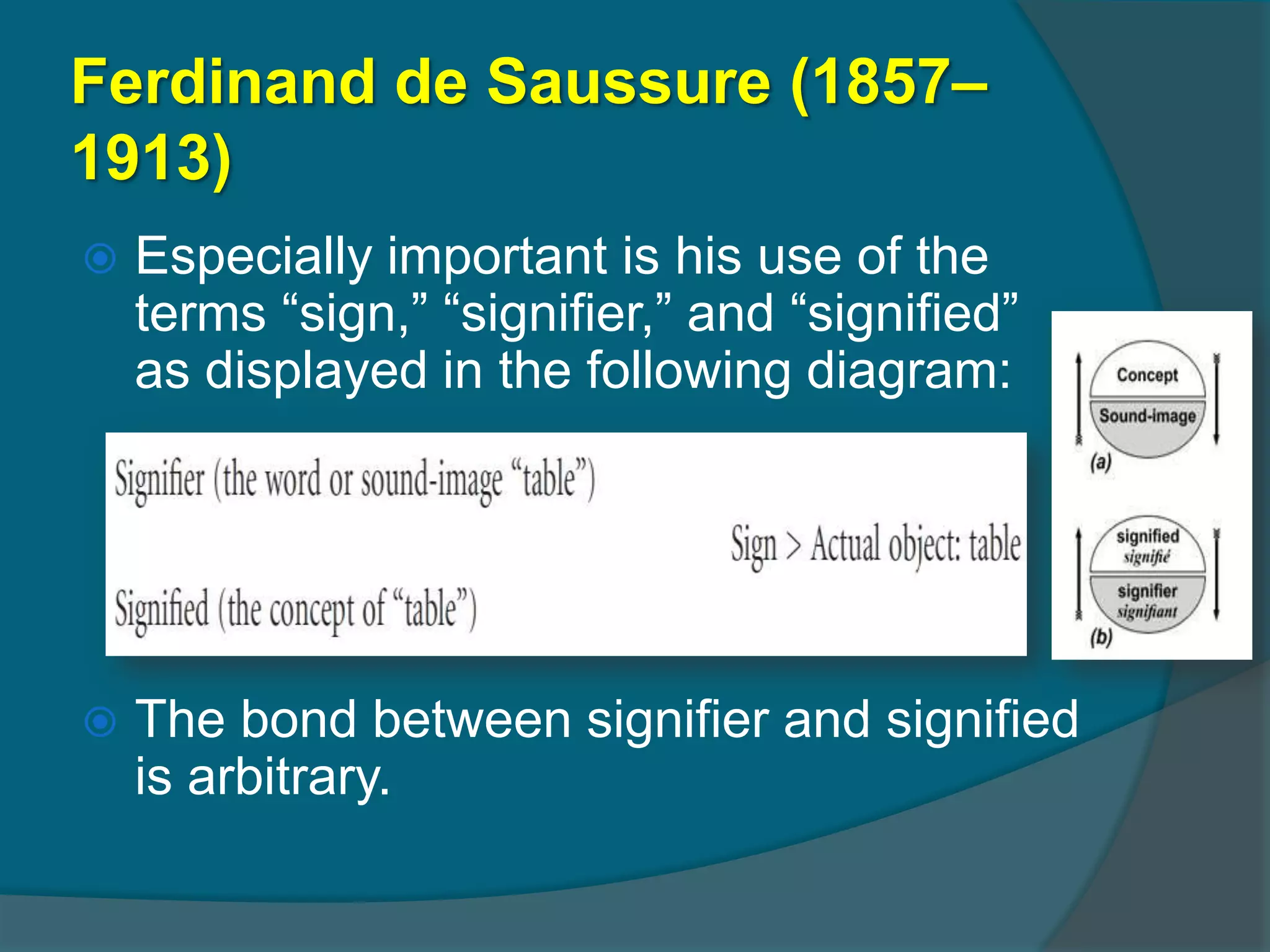
   Especially important is his use of the
    terms “sign,” “signifier,” and “signified”
    as displayed in the following diagram:


   The bond between signifier and signified
    is arbitrary.
Roland Barthes (1915–1980)
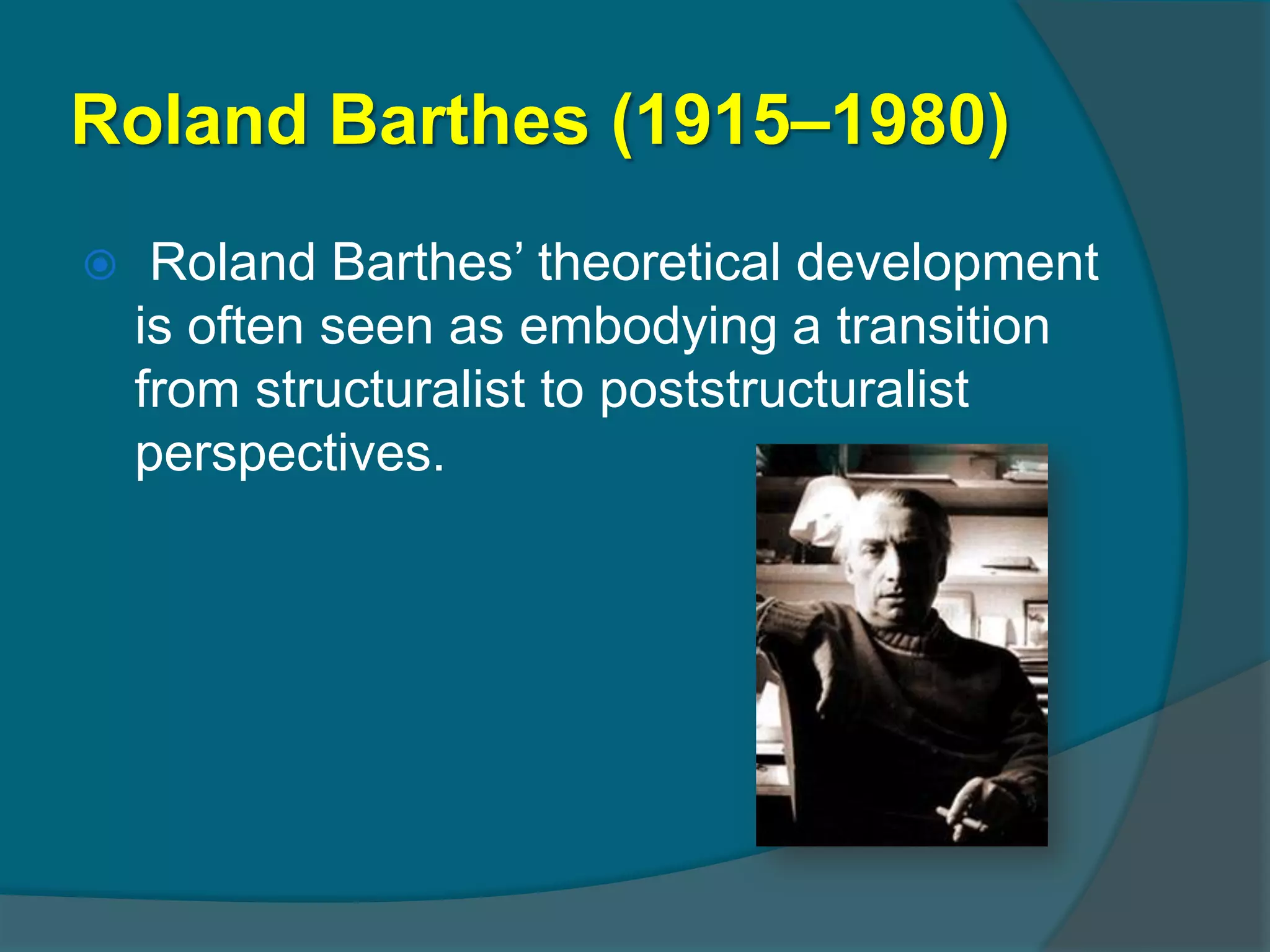
    Roland Barthes’ theoretical development
    is often seen as embodying a transition
    from structuralist to poststructuralist
    perspectives.
Roland Barthes (1915–1980)
  Barthes effectively extended structural
  analysis and semiology (the study of
  signs) to broad cultural phenomena.
 His renowned essay “The Death of the
  Author” appeared in 1968.

Structuralism

  • 2.
     Definition  MainCharacteristics  Main Figures  Ferdinand de Saussure  Roland Barthes
  • 4.
    Definition of :  Structuralist investigation of literature seeks to identify the systems of conventions underlying literature.
  • 6.
    Main Characteristics:  Languageneeds to be studied “in itself,” rather than in its connection with other things.  Language is not a naming process, each word corresponding to the thing it names.  Language (as opposed to speech) is “outside of the individual who can never create nor modify it by himself.”
  • 7.
    Main Characteristics:  Languageis a system of signs in which the only essential thing is the union of meanings and sound-images.  Language is a social institution, with unique features that distinguish it from other, political and legal, institutions
  • 9.
    Ferdinand de Saussure(1857– 1913)  Ferdinand de Saussure was effectively the founder of modern linguistics, as well as of structuralism.  It was his lectures in general linguistics, posthumously compiled by his colleagues as Course in General Linguistics (1916), that proved to be of seminal influence in a broad range of fields.
  • 10.
    Ferdinand de Saussure(1857– 1913)  As opposed to a diachronic approach which studies changes in language over a period of time, Saussure undertook a synchronic approach which saw language as a structure that could be studied in its entirety at a given point in time.
  • 11.
    Ferdinand de Saussure(1857– 1913)  Especially important is his use of the terms “sign,” “signifier,” and “signified” as displayed in the following diagram:  The bond between signifier and signified is arbitrary.
  • 12.
    Roland Barthes (1915–1980)  Roland Barthes’ theoretical development is often seen as embodying a transition from structuralist to poststructuralist perspectives.
  • 13.
    Roland Barthes (1915–1980)  Barthes effectively extended structural analysis and semiology (the study of signs) to broad cultural phenomena.  His renowned essay “The Death of the Author” appeared in 1968.