Downloaded 375 times


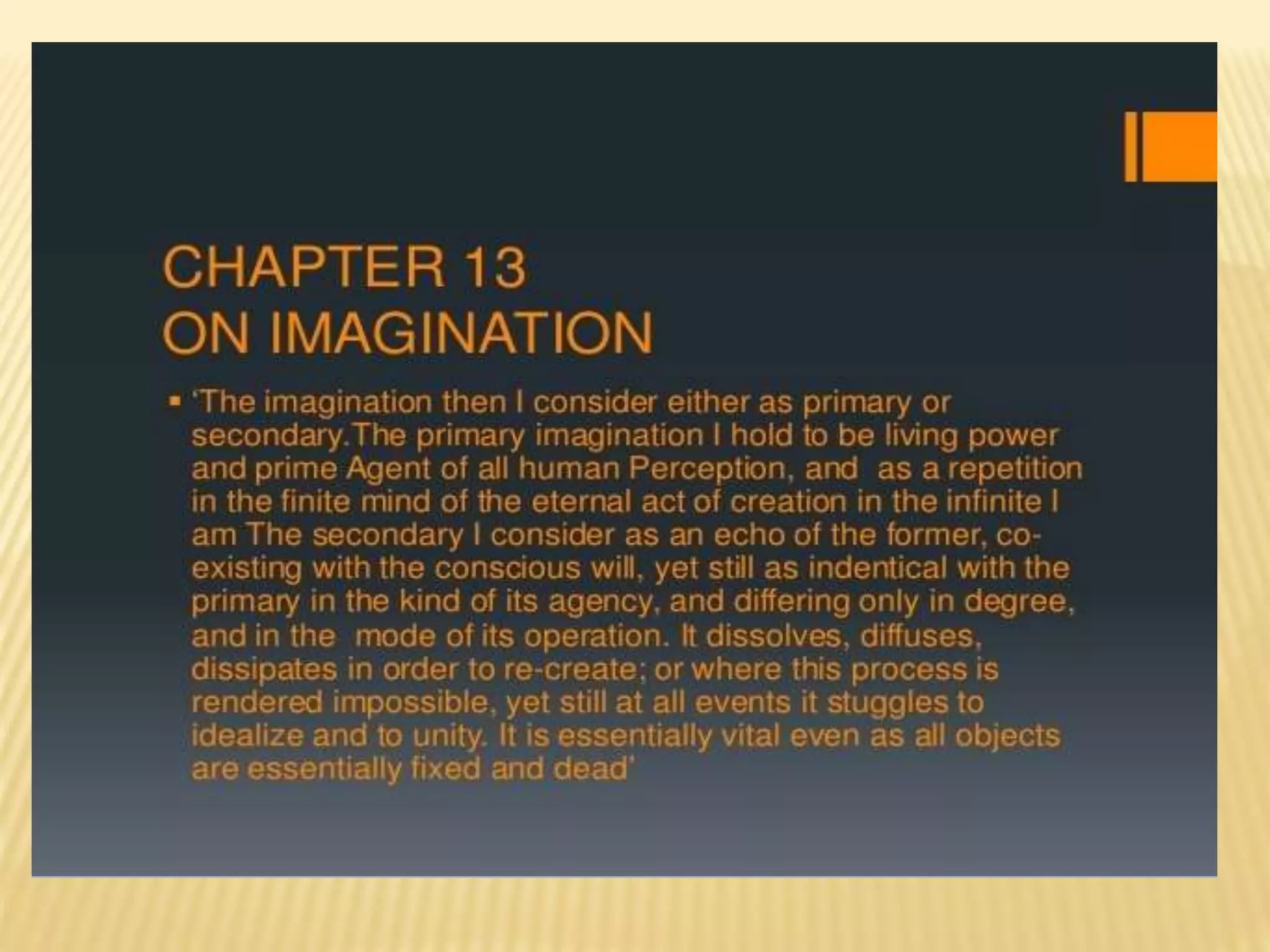









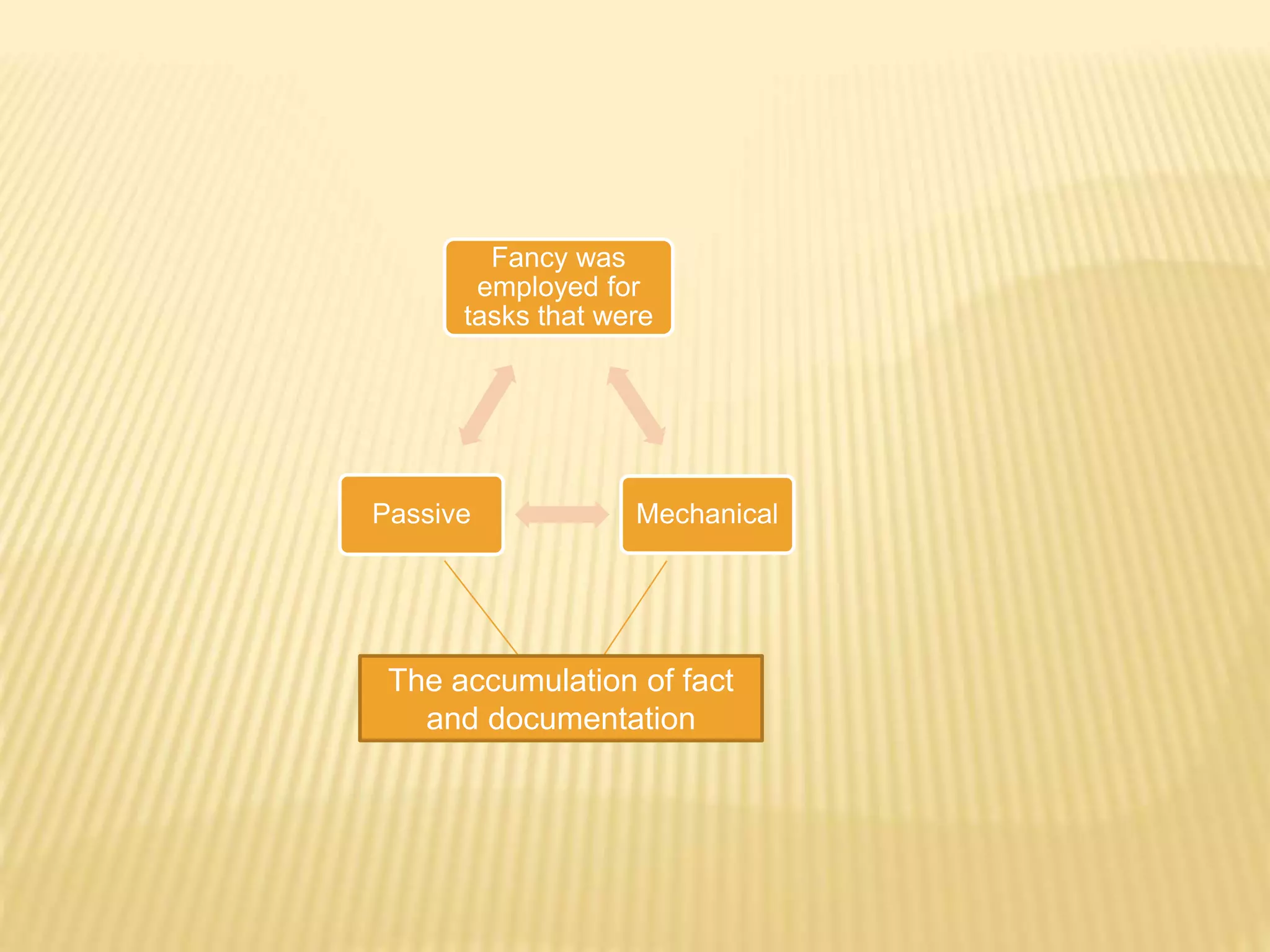




Coleridge's Biographia Literaria discusses his concepts of imagination and fancy. He divides the mind into two faculties: primary imagination, which is a creative power that mimics the divine principle of creation; and secondary imagination, which relies on the will to recreate primary imagination. Coleridge coined the term "esemplastic" to describe imagination's ability to shape multiple ideas into a unified whole. In contrast, fancy is a mechanical, passive faculty that accumulates facts but cannot create anything new. Coleridge viewed imagination as the primary creative force in writing.


