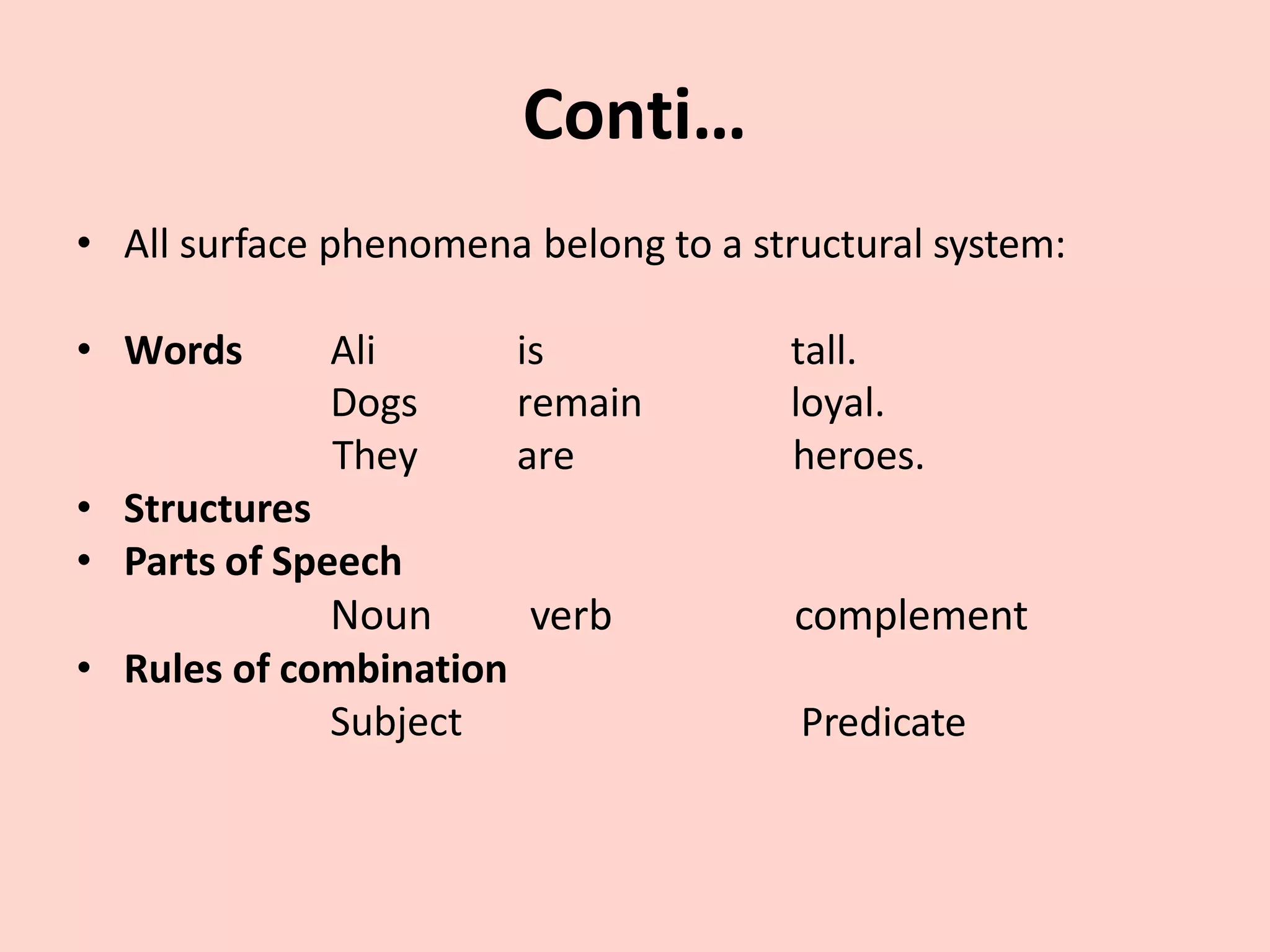
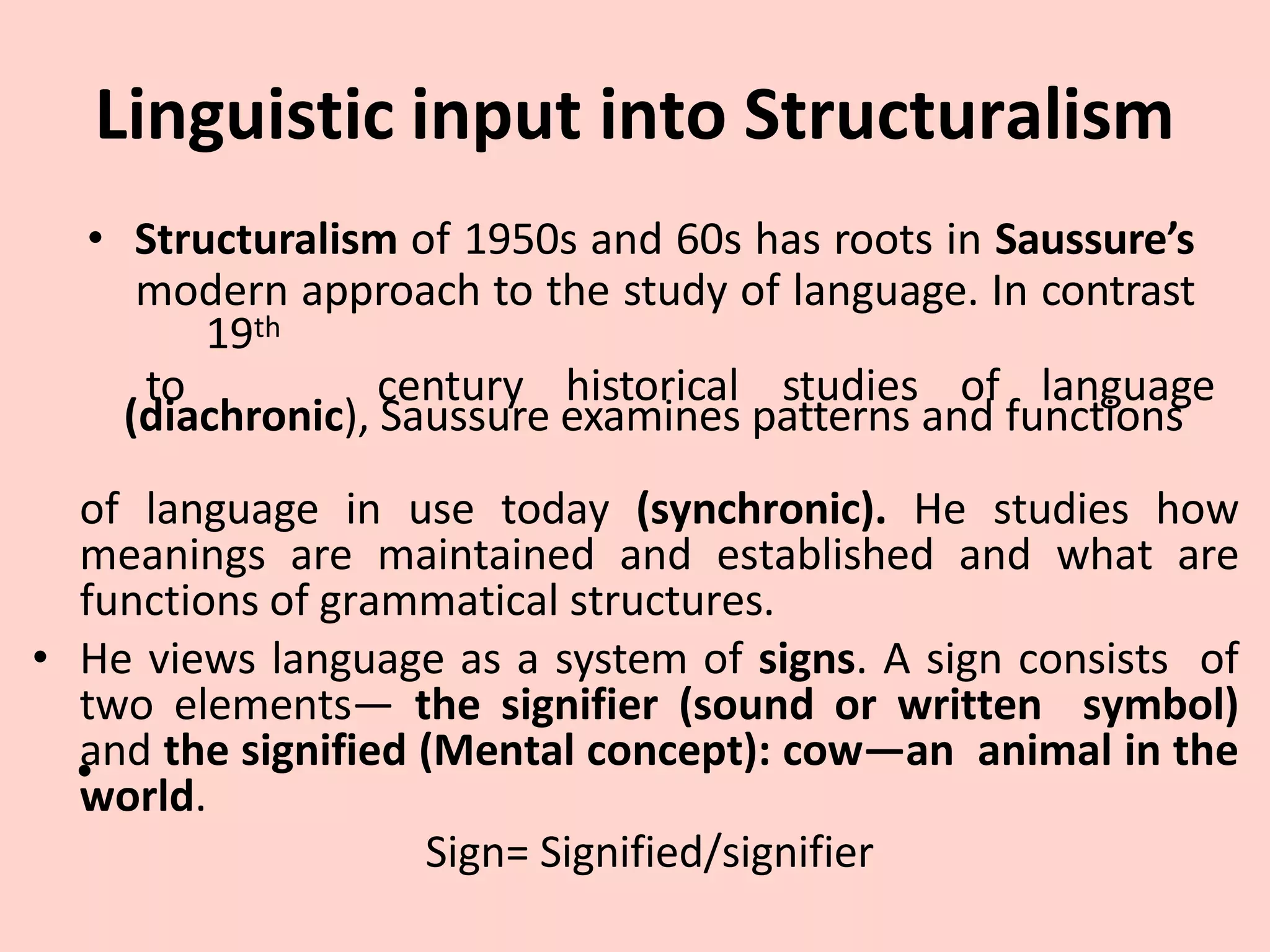
Structuralism is a literary theory that emerged in the 1950s, primarily in France, positing that meanings are derived from underlying structures rather than isolated texts. Key figures like Claude Lévi-Strauss and Roland Barthes argued that understanding narratives requires contextualizing them within larger cultural and social systems, suggesting that language and its structures significantly shape human consciousness. The theory contrasts with formalism by connecting texts to broader structural and thematic frameworks instead of focusing solely on individual works.