Downloaded 485 times
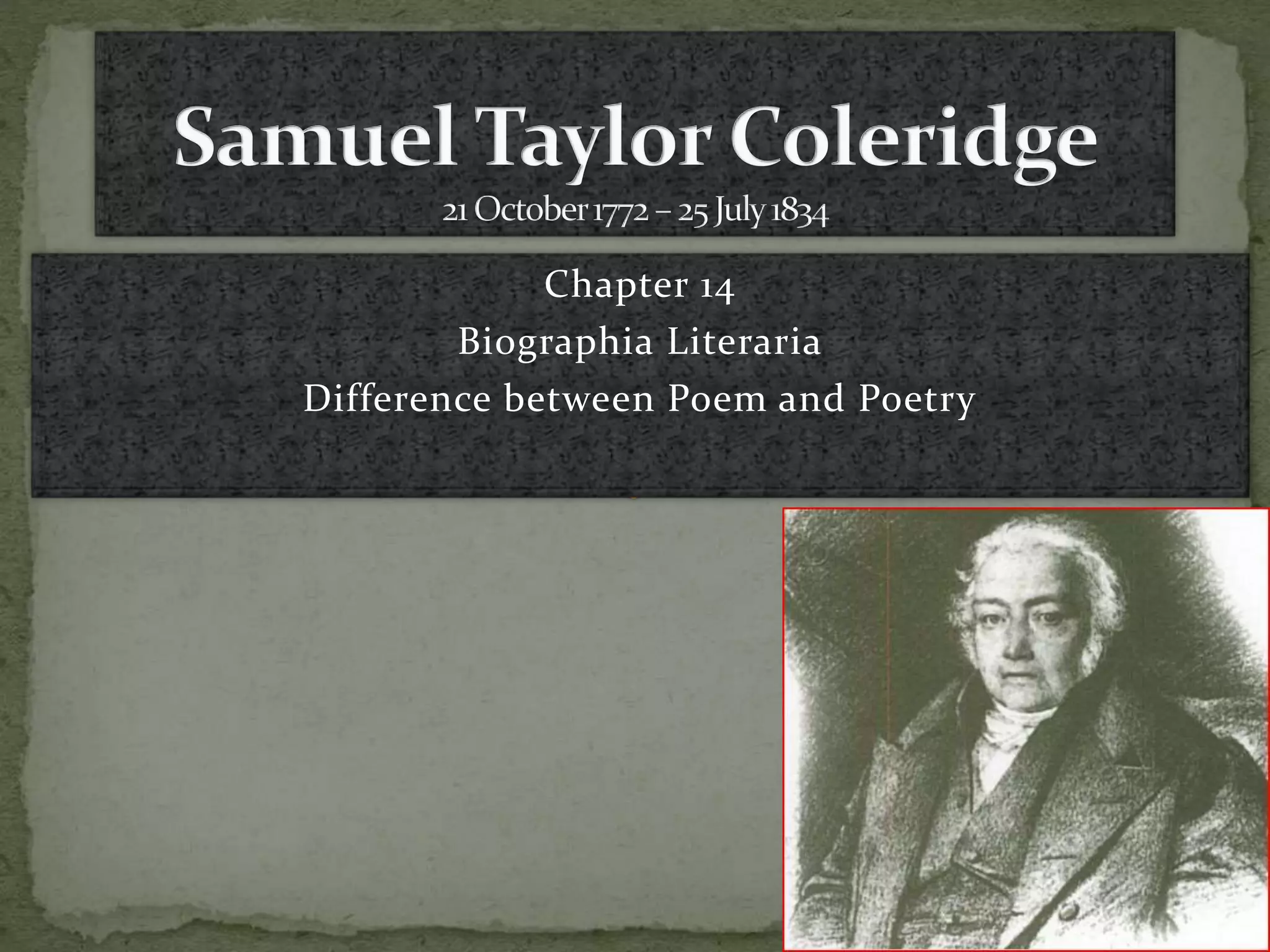









In Chapter 14 of 'Biographia Literaria', Coleridge explores the nature and function of poetry through a philosophical lens, distinguishing between poetry and prose, as well as between 'poem' and 'poetry'. He identifies two cardinal points of poetry: one that evokes sympathy by representing nature truthfully, and the other that captures novelty through imagination, with 'Lyrical Ballads' exemplifying these principles. Coleridge posits that poetry is a broader activity of the mind, with 'poem' serving as its verbal expression, while emphasizing that genuine poetry aims to please rather than instruct.


![Arnold and his criticism [The Study of Poetry]](https://cdn.slidesharecdn.com/ss_thumbnails/arnoldandhiscriticismbyijs-191220072019-thumbnail.jpg?width=640&height=640&fit=bounds)


