STRATEGIC CAPABILITY
1. Position audit is examination of an organization’s strategic capability Strategic capability is defined by the adequacy and suitability of resources and competencies. Organization’s resources: men, money, materials, markets, management, methods Unique resource is better than that of competitor and difficult to imitate. Limiting factor: shortage or difficulty of supply Resource based strategy: distinctive resource can be a source of sustained competitive advantage.
2. Cost Efficiency Economies of scale: reducing cost per unit by increasing sales volume. Supply costs: transport costs; quantity of purchase Design of products and processes: reducing wastage, efficient designs. Experience: learning curve, experience curve
3. Sustainable Competitive Advantage Value to buyers: satisfying customer needs Rarity: De Beers Robustness: Apple Non-substitutability: not easily substituted Dynamic capabilities: change, innovate and learn
4. Knowledge Organizational knowledge is the collective and shared experience accumulated through systems, routines and activities of sharing across the organization Tangible knowledge and Intangible Knowledge Data, information and knowledge Knowledge Management: is the process by which organizations generate value from their intellectual and knowledge-based assets.
4. Knowledge Knowledge management systems Office automation Groupware Intranet Extranet Internet Expert system Database
5. Value Chain The value chain describes those activities of the organization that add value to purchase inputs. Value activities are the means by which a firm creates value in its products. Value Chain Diagram Value Network Diagram
6 & 7. The Product Portfolio New Products and innovation Must develop new products Consumer needs Source of growth for the company Response to environment and technology Every product is born, has its stages and then dies New Product Development strategies: 1. acquisition 2. new product development (original products, product improvements, product modifications, new brands)
New Product Odds Up to 90 % of new products meet failure New Coke, Eagle Snacks, Zap Mail, Premier “Smokeless” cigarettes, Arch Deluxe Reasons: Market overestimation Actual product poorly designed Incorrectly positioned Wrong timing for launch Price too high Poor advertisement
Process Idea generation Idea screening Concept development and testing Marketing strategy development Business analysis Product development Test marketing Commercialization
Product Life Cycle Product launch – happy life Cover costs Earn profits Length not know in advance Coca-Cola, Gillette, Budweiser, American Express, Wells-Fargo, and Tabasco
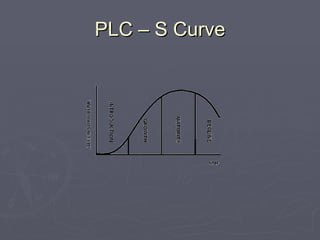
PLC – S Curve
Introduction Stage Product launch Takes time Slow growth Negative profits High promotion and distribution cost
Growth Stage Product, if satisfies market, enters growth stage Sales climb quickly Early adopters continue, new join through favorable word of mouth New competitors enter market Competition – increase in sale points Spread of sales, unit cost reduces Sustain rapid growth New market segments Prices may be lowered to attract more customers (iPod)
Maturity At some point sale slows down, product enters maturity stage Lasts longer Marketing management most of the time deals with mature products More producers selling the same product Greater competition Prices down, increase in sales promotion Drop in profit Well established competitors stay
Maturity Product manager should modify market, product and marketing mix Market: increase consumption of product, new users, present users Product: quality, features, style (milk pak, Honda City) Four Ps
Decline Stage Eventually dip Oat meal, VHS tapes, VCR, Tape recorders Reasons: technology, consumer tastes, increased competition, profits decline, withdrawal from market Furthermore:  Weak product costly to firm Management time Price adjustments Advertising/sales efforts Reputation of other co products affected Old Spice/ co can sell brands
8. Benchmarking Benchmarking is the process of gauging the internal practices and activities within a firm to an external reference or standard. It is a continuous process of measuring one’s own products, services, systems, and practices against the world’s toughest competitors to identify areas for improvement.  Managers while benchmarking their practices should set realistic goals and gradually increase the level of difficulty to encourage employees. This technique is also known as shaping. For example, if an organization wants to meet the 1 % defects benchmark from its existing 20 %. It would be appropriate to set 15 % goals in the first place. Once this goal is achieved the manager can set a new target of 10 % and gradually meet the benchmark of 1 %. To use shaping effectively in benchmarking practices, the following tips can be considered:
8. Benchmarking Identify a benchmark (product, service or process) Identify comparables. Collect data to accurately define goals. Collect data to determine the current performance of the organization against the benchmark. Make the target specific. Train the staff to meet set goals. Provide feedback and reinforce set goals. Review progress periodically.
9. Managing Strategic Capability Competencies can be extended Things that do not create value should cease Best practices to be extended Activities that add value should be extended New and improved way of working should be introduced Weakness should be remedied External links should be improved
10. SWOT analysis Environmental analysis Internal appraisal TOWS Matrix

Strategic Capability

  • 1.
  • 2.
    1. Position auditis examination of an organization’s strategic capability Strategic capability is defined by the adequacy and suitability of resources and competencies. Organization’s resources: men, money, materials, markets, management, methods Unique resource is better than that of competitor and difficult to imitate. Limiting factor: shortage or difficulty of supply Resource based strategy: distinctive resource can be a source of sustained competitive advantage.
  • 3.
    2. Cost EfficiencyEconomies of scale: reducing cost per unit by increasing sales volume. Supply costs: transport costs; quantity of purchase Design of products and processes: reducing wastage, efficient designs. Experience: learning curve, experience curve
  • 4.
    3. Sustainable CompetitiveAdvantage Value to buyers: satisfying customer needs Rarity: De Beers Robustness: Apple Non-substitutability: not easily substituted Dynamic capabilities: change, innovate and learn
  • 5.
    4. Knowledge Organizationalknowledge is the collective and shared experience accumulated through systems, routines and activities of sharing across the organization Tangible knowledge and Intangible Knowledge Data, information and knowledge Knowledge Management: is the process by which organizations generate value from their intellectual and knowledge-based assets.
  • 6.
    4. Knowledge Knowledgemanagement systems Office automation Groupware Intranet Extranet Internet Expert system Database
  • 7.
    5. Value ChainThe value chain describes those activities of the organization that add value to purchase inputs. Value activities are the means by which a firm creates value in its products. Value Chain Diagram Value Network Diagram
  • 8.
    6 & 7.The Product Portfolio New Products and innovation Must develop new products Consumer needs Source of growth for the company Response to environment and technology Every product is born, has its stages and then dies New Product Development strategies: 1. acquisition 2. new product development (original products, product improvements, product modifications, new brands)
  • 9.
    New Product OddsUp to 90 % of new products meet failure New Coke, Eagle Snacks, Zap Mail, Premier “Smokeless” cigarettes, Arch Deluxe Reasons: Market overestimation Actual product poorly designed Incorrectly positioned Wrong timing for launch Price too high Poor advertisement
  • 10.
    Process Idea generationIdea screening Concept development and testing Marketing strategy development Business analysis Product development Test marketing Commercialization
  • 11.
    Product Life CycleProduct launch – happy life Cover costs Earn profits Length not know in advance Coca-Cola, Gillette, Budweiser, American Express, Wells-Fargo, and Tabasco
  • 12.
    PLC – SCurve
  • 13.
    Introduction Stage Productlaunch Takes time Slow growth Negative profits High promotion and distribution cost
  • 14.
    Growth Stage Product,if satisfies market, enters growth stage Sales climb quickly Early adopters continue, new join through favorable word of mouth New competitors enter market Competition – increase in sale points Spread of sales, unit cost reduces Sustain rapid growth New market segments Prices may be lowered to attract more customers (iPod)
  • 15.
    Maturity At somepoint sale slows down, product enters maturity stage Lasts longer Marketing management most of the time deals with mature products More producers selling the same product Greater competition Prices down, increase in sales promotion Drop in profit Well established competitors stay
  • 16.
    Maturity Product managershould modify market, product and marketing mix Market: increase consumption of product, new users, present users Product: quality, features, style (milk pak, Honda City) Four Ps
  • 17.
    Decline Stage Eventuallydip Oat meal, VHS tapes, VCR, Tape recorders Reasons: technology, consumer tastes, increased competition, profits decline, withdrawal from market Furthermore: Weak product costly to firm Management time Price adjustments Advertising/sales efforts Reputation of other co products affected Old Spice/ co can sell brands
  • 18.
    8. Benchmarking Benchmarkingis the process of gauging the internal practices and activities within a firm to an external reference or standard. It is a continuous process of measuring one’s own products, services, systems, and practices against the world’s toughest competitors to identify areas for improvement. Managers while benchmarking their practices should set realistic goals and gradually increase the level of difficulty to encourage employees. This technique is also known as shaping. For example, if an organization wants to meet the 1 % defects benchmark from its existing 20 %. It would be appropriate to set 15 % goals in the first place. Once this goal is achieved the manager can set a new target of 10 % and gradually meet the benchmark of 1 %. To use shaping effectively in benchmarking practices, the following tips can be considered:
  • 19.
    8. Benchmarking Identifya benchmark (product, service or process) Identify comparables. Collect data to accurately define goals. Collect data to determine the current performance of the organization against the benchmark. Make the target specific. Train the staff to meet set goals. Provide feedback and reinforce set goals. Review progress periodically.
  • 20.
    9. Managing StrategicCapability Competencies can be extended Things that do not create value should cease Best practices to be extended Activities that add value should be extended New and improved way of working should be introduced Weakness should be remedied External links should be improved
  • 21.
    10. SWOT analysisEnvironmental analysis Internal appraisal TOWS Matrix