MODULE 03: INTERNAL
ANALYSIS
Strategic Vision: A strategic vision statement supports the mission
statement, but is more tangible. It describes an achievable future state
of an organization. Exact timelines may vary, but typically range from
three to 10 years. This statement should help you and your employees
visualize where the organization is headed.
Mission: A Strategic Mission defines the unique purpose of an
organization's scope of operations. It is a high-level long-term plan that
an organization aims to achieve. A mission statement explains why the
organization exists, its purpose, and what it serves.
Goals: Strategic goals are the specific financial and non-financial
objectives and results a company aims to achieve over a specific
period of time, usually the next three to five years.
Long-Term Objectives: Long-term objectives usually include specific
improvements in the organization's competitive position, technology
leadership, profitability, return on investment, employee relations and
productivity, and corporate image.
Short-Term Objectives: Common short-term
production objectives are increasing monthly production
levels, decreasing daily error rates and increasing
quarterly production efficiency. Normally, these short-
term goals are part of a longer-term strategy.
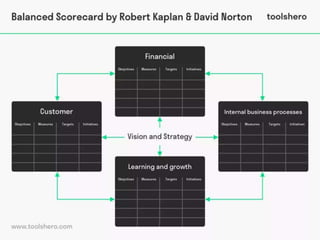
Balanced Scorecard:
most notably “Balanced Scorecards,” are a
strategic performance management tool that
can leverage automated surveys to track how an
organization executes strategy and the
consequences arising from business processes,
most commonly referred to as activity metrics.
Scorecards characteristically have a mixture of
financial and nonfinancial measures, each
compared to its targets, all within a single
concise report.
Strategic Management Capabilities:
Strategic capability includes resources and competences that a firm
utilises to compete in its business environment. It can therefore
constitute a firm's strengths and weaknesses, and be a source of
competitive advantage or disadvantage over its rivals.
some organizational capabilities examples are:
1. Organizational culture
2. Leadership performance
3. Strategic unity
4. Innovation
5. Agility
6. Talent
7. Customer connectivity
Strategic Management Competencies:
Core competencies are a set of advantages of
organisation that enables to deliver unique value to
customers, which creates sustainable competitive
advantage for organisation. Core competencies also
contribute substantially to the benefits a company’s
products offer customers. It’s hard for competitors to
copy or procure. Understanding Core Competencies
allows companies to invest in the strengths that
differentiate them and set strategies that unify their
entire organization. All the strategy must base on core
competencies of a firm, which includes tangible and
intangible resources.
An organisation want to develop core
competencies must:
a. Determine which internal capacities are key
strategic factors to creating and sustaining value.
b. Conduct an organization wide core
competency assessment and isolate strengths
and weaknesses.
c. Benchmark against other companies with the
same capacities to ensure that the firm aims to
develop key factors.
Resource-Based View of the
Firm(RBV):
The Resource Based View (RBV) of the firm
starts from the concept that a firm's
performance is determined by the
resources it has at its disposal. The way
these resources are used and configured
enable the firm to perform and can provide
a distinct competitive advantage.
Firms in possession of a resource, or mix of resources
that are rare among competitors, are said to have
a comparative advantage. This comparative advantage
enables firms to produce marketing offerings that are
either:
(a) perceived as having superior value or
(b) can be produced at lower costs.
Therefore, a comparative advantage in resources can
lead to a competitive advantage in market position.
Following classifications are of competitive
positions:
1. Price positioning
2. Quality positioning
3. Innovation positioning
4. Service positioning
5. Benefit positioning
SWOC Analysis:
SWOC analysis is a strategic planning method
used to research external and internal factors
which affect company success and growth. Firms
use SWOC analysis to determine:
Strengths
Weaknesses
Opportunities
Challenges of their firm, products, and
competition.
How to use SWOC analysis:
When beginning a SWOC analysis of a product or firm, you must go
through each section individually. Starting with:
1. Strengths:
Strengths are features which benefit the company, such as product
sales. For example, sales of Product X is growing 3% each month. But
Product Z is seeing a 3% monthly decline. In this case, Product X, which
brings in more revenue, is where the firm should focus their efforts to
continue profit growth.
2. Weaknesses:
The next step is noticing weaknesses. Weaknesses cause a company to
struggle. For example, if you’ve decided to target a younger audience
but your packaging is still dedicated to senior citizens, the new
consumer base will struggle to connect to the product. This will show
in reports, and cause an internal struggle within the company.
3. Opportunities:
Opportunities are often external. They provide ways for firms to grow
successfully. For example, a digital marketing agency helps a client
develop an effective email marketing strategy. The agency has been
thinking of doing graphic design so they offer a reduced fee to re-do
the existing client’s logo. This is an opportunity for the agency to
develop a new section of their business without having to devise a
marketing plan because they can reach out to existing clients.
4. Challenges:
The final step in SWOC analysis is acknowledging challenges. This is
how SWOC and SWOT analysis differ because SWOT analysis focuses
on threats.
Challenges are similar to threats but have the chance of being
overcome. Threats have the potential to damage a firm, but challenges
often already exist and need to be handled appropriately.
Value Chain Analysis:
Value chain analysis is a means of evaluating each of the
activities in a company's value chain to understand where
opportunities for improvement lie. Conducting a value chain
analysis prompts you to consider how each step adds or
subtracts value from your final product or service.
Completing a value chain analysis allows businesses to examine
their activities and find competitive opportunities.
For example, McDonald's mission is to provide customers with
low-priced food items.
Benchmarking:
What is benchmarking?
evaluate something by comparison with a standard.
Benchmarking is the practice of comparing business
processes and performance metrics to industry bests
and best practices from other companies. Dimensions
typically measured are quality, time and cost.

Strategic mgt mod 03.pptx

  • 1.
  • 2.
    Strategic Vision: Astrategic vision statement supports the mission statement, but is more tangible. It describes an achievable future state of an organization. Exact timelines may vary, but typically range from three to 10 years. This statement should help you and your employees visualize where the organization is headed. Mission: A Strategic Mission defines the unique purpose of an organization's scope of operations. It is a high-level long-term plan that an organization aims to achieve. A mission statement explains why the organization exists, its purpose, and what it serves. Goals: Strategic goals are the specific financial and non-financial objectives and results a company aims to achieve over a specific period of time, usually the next three to five years. Long-Term Objectives: Long-term objectives usually include specific improvements in the organization's competitive position, technology leadership, profitability, return on investment, employee relations and productivity, and corporate image.
  • 3.
    Short-Term Objectives: Commonshort-term production objectives are increasing monthly production levels, decreasing daily error rates and increasing quarterly production efficiency. Normally, these short- term goals are part of a longer-term strategy.
  • 4.
    Balanced Scorecard: most notably“Balanced Scorecards,” are a strategic performance management tool that can leverage automated surveys to track how an organization executes strategy and the consequences arising from business processes, most commonly referred to as activity metrics. Scorecards characteristically have a mixture of financial and nonfinancial measures, each compared to its targets, all within a single concise report.
  • 6.
    Strategic Management Capabilities: Strategiccapability includes resources and competences that a firm utilises to compete in its business environment. It can therefore constitute a firm's strengths and weaknesses, and be a source of competitive advantage or disadvantage over its rivals. some organizational capabilities examples are: 1. Organizational culture 2. Leadership performance 3. Strategic unity 4. Innovation 5. Agility 6. Talent 7. Customer connectivity
  • 7.
    Strategic Management Competencies: Corecompetencies are a set of advantages of organisation that enables to deliver unique value to customers, which creates sustainable competitive advantage for organisation. Core competencies also contribute substantially to the benefits a company’s products offer customers. It’s hard for competitors to copy or procure. Understanding Core Competencies allows companies to invest in the strengths that differentiate them and set strategies that unify their entire organization. All the strategy must base on core competencies of a firm, which includes tangible and intangible resources.
  • 8.
    An organisation wantto develop core competencies must: a. Determine which internal capacities are key strategic factors to creating and sustaining value. b. Conduct an organization wide core competency assessment and isolate strengths and weaknesses. c. Benchmark against other companies with the same capacities to ensure that the firm aims to develop key factors.
  • 9.
    Resource-Based View ofthe Firm(RBV): The Resource Based View (RBV) of the firm starts from the concept that a firm's performance is determined by the resources it has at its disposal. The way these resources are used and configured enable the firm to perform and can provide a distinct competitive advantage.
  • 10.
    Firms in possessionof a resource, or mix of resources that are rare among competitors, are said to have a comparative advantage. This comparative advantage enables firms to produce marketing offerings that are either: (a) perceived as having superior value or (b) can be produced at lower costs. Therefore, a comparative advantage in resources can lead to a competitive advantage in market position.
  • 11.
    Following classifications areof competitive positions: 1. Price positioning 2. Quality positioning 3. Innovation positioning 4. Service positioning 5. Benefit positioning
  • 12.
    SWOC Analysis: SWOC analysisis a strategic planning method used to research external and internal factors which affect company success and growth. Firms use SWOC analysis to determine: Strengths Weaknesses Opportunities Challenges of their firm, products, and competition.
  • 13.
    How to useSWOC analysis: When beginning a SWOC analysis of a product or firm, you must go through each section individually. Starting with: 1. Strengths: Strengths are features which benefit the company, such as product sales. For example, sales of Product X is growing 3% each month. But Product Z is seeing a 3% monthly decline. In this case, Product X, which brings in more revenue, is where the firm should focus their efforts to continue profit growth. 2. Weaknesses: The next step is noticing weaknesses. Weaknesses cause a company to struggle. For example, if you’ve decided to target a younger audience but your packaging is still dedicated to senior citizens, the new consumer base will struggle to connect to the product. This will show in reports, and cause an internal struggle within the company.
  • 14.
    3. Opportunities: Opportunities areoften external. They provide ways for firms to grow successfully. For example, a digital marketing agency helps a client develop an effective email marketing strategy. The agency has been thinking of doing graphic design so they offer a reduced fee to re-do the existing client’s logo. This is an opportunity for the agency to develop a new section of their business without having to devise a marketing plan because they can reach out to existing clients. 4. Challenges: The final step in SWOC analysis is acknowledging challenges. This is how SWOC and SWOT analysis differ because SWOT analysis focuses on threats. Challenges are similar to threats but have the chance of being overcome. Threats have the potential to damage a firm, but challenges often already exist and need to be handled appropriately.
  • 15.
    Value Chain Analysis: Valuechain analysis is a means of evaluating each of the activities in a company's value chain to understand where opportunities for improvement lie. Conducting a value chain analysis prompts you to consider how each step adds or subtracts value from your final product or service. Completing a value chain analysis allows businesses to examine their activities and find competitive opportunities. For example, McDonald's mission is to provide customers with low-priced food items.
  • 16.
    Benchmarking: What is benchmarking? evaluatesomething by comparison with a standard. Benchmarking is the practice of comparing business processes and performance metrics to industry bests and best practices from other companies. Dimensions typically measured are quality, time and cost.