Change Management:
Leading Corporate Transformation
2
Contents
• Principles of Change
• Five Activities Contributing to Effective Change
Management
• Motivating Change
• Creating Vision of Change
• Developing Political Support
• Managing the Transition
• Sustaining Momentum
3
“When the rate of change outside
exceeds the rate of change inside,
the end is in sight”
Rate of Change
Jack Welch
4
Activity – Change Your Seat
5
1. Change is a process that can be enabled, not
managed
2. The belief that you can change is the key to change
3. It is not the duration of the treatment that allows
people to change but rather its ability to inspire
continued efforts in that direction
4. Repeated efforts are critical to changing
Principles of Change
6
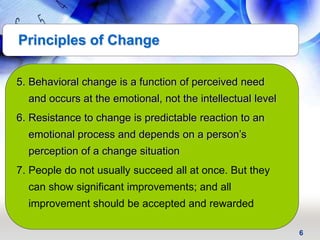
5. Behavioral change is a function of perceived need
and occurs at the emotional, not the intellectual level
6. Resistance to change is predictable reaction to an
emotional process and depends on a person’s
perception of a change situation
7. People do not usually succeed all at once. But they
can show significant improvements; and all
improvement should be accepted and rewarded
Principles of Change
7
Activity – Goodies Auction
8
Five Activities Contributing to
Effective Change Management
9
Five Activities Contributing to Effective
Change Management
1. Motivating Change
2. Creating Vision of
Change
3. Developing Political
Support
4. Managing the
Transition of Change
5. Sustaining Momentum
Effective
Change
Management
10
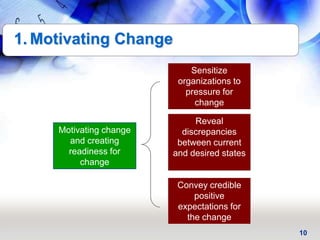
1. Motivating Change
Motivating change
and creating
readiness for
change
Sensitize
organizations to
pressure for
change
Reveal
discrepancies
between current
and desired states
Convey credible
positive
expectations for
the change
11
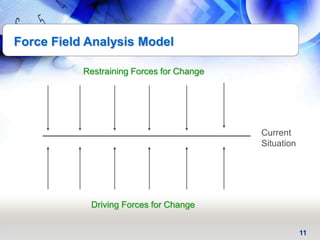
Force Field Analysis Model
Current
Situation
Restraining Forces for Change
Driving Forces for Change
12
Force Field Analysis Model
Strengthening
or adding
driving forces
Removing or
reducing
restraining
forces
Changing the
direction of
some of the
forces
Change
13
Activity – May the Forces be With You!
14
Group Exercise
• Take this opportunity to think of a situation in your organization
where Force Field Model could be demonstrated. Begin by
identifying a change being instituted in your organization
• List the driving forces
• List the restraining forces
15
Activity – Perceptual Barriers To Change
16
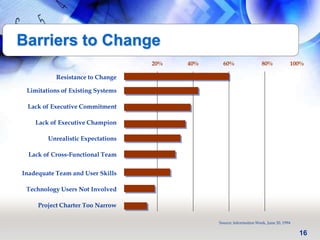
Resistance to Change
20% 40% 60% 80% 100%
Source: Information Week, June 20, 1994
Limitations of Existing Systems
Lack of Executive Commitment
Lack of Executive Champion
Unrealistic Expectations
Lack of Cross-Functional Team
Inadequate Team and User Skills
Technology Users Not Involved
Project Charter Too Narrow
Barriers to Change
17
Individual Resistance
Individual
Resistance
Habit
Selective
Information
Processing
Economic
Factors
Job Security
Fear of the
Unknown
18
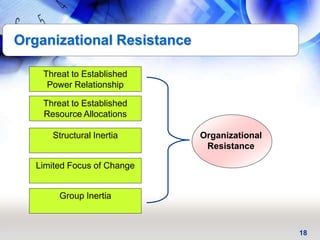
Organizational Resistance
Organizational
Resistance
Threat to Established
Power Relationship
Group Inertia
Threat to Established
Resource Allocations
Structural Inertia
Limited Focus of Change
19
Activity – Wedding Guests
20
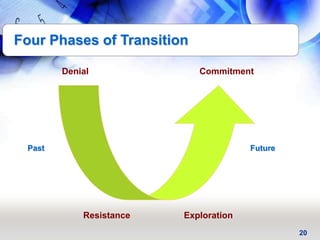
Denial
Resistance Exploration
Past Future
Four Phases of Transition
Commitment
21
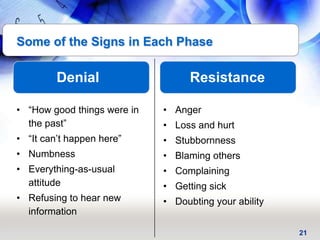
• “How good things were in
the past”
• “It can’t happen here”
• Numbness
• Everything-as-usual
attitude
• Refusing to hear new
information
• Anger
• Loss and hurt
• Stubbornness
• Blaming others
• Complaining
• Getting sick
• Doubting your ability
Some of the Signs in Each Phase
Denial Resistance
22
Exploration Commitment
• “What’s going to happen to
me?”
• Seeing possibilities
• Chaos
• Indecisiveness
• Unfocused work
• Energy
• Clarifying goals
• Seeing resources
• Exploring alternatives
• “Where I am headed”
• Focus
• Teamwork
• Vision
• Cooperation
• Balance
Some of the Signs in Each Phase
23
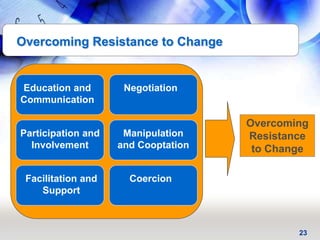
Overcoming Resistance to Change
Education and
Communication
Participation and
Involvement
Facilitation and
Support
Negotiation
Manipulation
and Cooptation
Coercion
Overcoming
Resistance
to Change
24
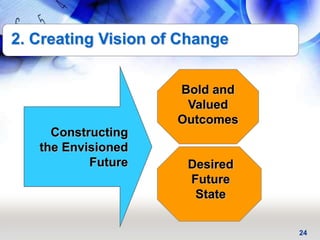
2. Creating Vision of Change
Constructing
the Envisioned
Future
Bold and
Valued
Outcomes
Desired
Future
State
25
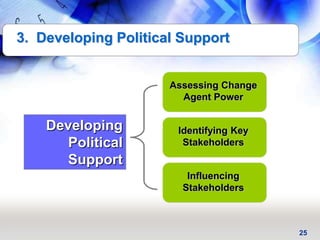
3. Developing Political Support
Assessing Change
Agent Power
Identifying Key
Stakeholders
Influencing
Stakeholders
Developing
Political
Support
26
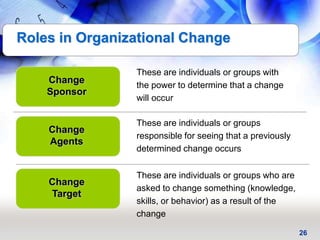
Roles in Organizational Change
Change
Sponsor
Change
Agents
Change
Target
These are individuals or groups with
the power to determine that a change
will occur
These are individuals or groups
responsible for seeing that a previously
determined change occurs
These are individuals or groups who are
asked to change something (knowledge,
skills, or behavior) as a result of the
change
27
4. Managing the Transition
Current
State
Desired Future
State
Transition
State
• Activity Planning
• Change Management Team
28
Critical Skills of Change Agents
Understands
change
dynamics
Appreciates
diversity
Anticipates
and manages
resistance
Understands
power and
influence
Has high
credibility
Manages
multiple tasks
29
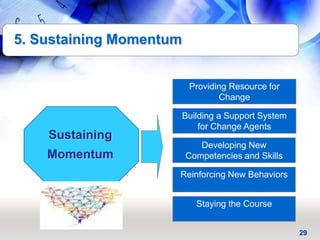
5. Sustaining Momentum
Sustaining
Momentum
Providing Resource for
Change
Building a Support System
for Change Agents
Developing New
Competencies and Skills
Reinforcing New Behaviors
Staying the Course
30
Activity – Change is the Name of the Game

Change management

  • 1.
  • 2.
    2 Contents • Principles ofChange • Five Activities Contributing to Effective Change Management • Motivating Change • Creating Vision of Change • Developing Political Support • Managing the Transition • Sustaining Momentum
  • 3.
    3 “When the rateof change outside exceeds the rate of change inside, the end is in sight” Rate of Change Jack Welch
  • 4.
  • 5.
    5 1. Change isa process that can be enabled, not managed 2. The belief that you can change is the key to change 3. It is not the duration of the treatment that allows people to change but rather its ability to inspire continued efforts in that direction 4. Repeated efforts are critical to changing Principles of Change
  • 6.
    6 5. Behavioral changeis a function of perceived need and occurs at the emotional, not the intellectual level 6. Resistance to change is predictable reaction to an emotional process and depends on a person’s perception of a change situation 7. People do not usually succeed all at once. But they can show significant improvements; and all improvement should be accepted and rewarded Principles of Change
  • 7.
  • 8.
    8 Five Activities Contributingto Effective Change Management
  • 9.
    9 Five Activities Contributingto Effective Change Management 1. Motivating Change 2. Creating Vision of Change 3. Developing Political Support 4. Managing the Transition of Change 5. Sustaining Momentum Effective Change Management
  • 10.
    10 1. Motivating Change Motivatingchange and creating readiness for change Sensitize organizations to pressure for change Reveal discrepancies between current and desired states Convey credible positive expectations for the change
  • 11.
    11 Force Field AnalysisModel Current Situation Restraining Forces for Change Driving Forces for Change
  • 12.
    12 Force Field AnalysisModel Strengthening or adding driving forces Removing or reducing restraining forces Changing the direction of some of the forces Change
  • 13.
    13 Activity – Maythe Forces be With You!
  • 14.
    14 Group Exercise • Takethis opportunity to think of a situation in your organization where Force Field Model could be demonstrated. Begin by identifying a change being instituted in your organization • List the driving forces • List the restraining forces
  • 15.
    15 Activity – PerceptualBarriers To Change
  • 16.
    16 Resistance to Change 20%40% 60% 80% 100% Source: Information Week, June 20, 1994 Limitations of Existing Systems Lack of Executive Commitment Lack of Executive Champion Unrealistic Expectations Lack of Cross-Functional Team Inadequate Team and User Skills Technology Users Not Involved Project Charter Too Narrow Barriers to Change
  • 17.
  • 18.
    18 Organizational Resistance Organizational Resistance Threat toEstablished Power Relationship Group Inertia Threat to Established Resource Allocations Structural Inertia Limited Focus of Change
  • 19.
  • 20.
  • 21.
    21 • “How goodthings were in the past” • “It can’t happen here” • Numbness • Everything-as-usual attitude • Refusing to hear new information • Anger • Loss and hurt • Stubbornness • Blaming others • Complaining • Getting sick • Doubting your ability Some of the Signs in Each Phase Denial Resistance
  • 22.
    22 Exploration Commitment • “What’sgoing to happen to me?” • Seeing possibilities • Chaos • Indecisiveness • Unfocused work • Energy • Clarifying goals • Seeing resources • Exploring alternatives • “Where I am headed” • Focus • Teamwork • Vision • Cooperation • Balance Some of the Signs in Each Phase
  • 23.
    23 Overcoming Resistance toChange Education and Communication Participation and Involvement Facilitation and Support Negotiation Manipulation and Cooptation Coercion Overcoming Resistance to Change
  • 24.
    24 2. Creating Visionof Change Constructing the Envisioned Future Bold and Valued Outcomes Desired Future State
  • 25.
    25 3. Developing PoliticalSupport Assessing Change Agent Power Identifying Key Stakeholders Influencing Stakeholders Developing Political Support
  • 26.
    26 Roles in OrganizationalChange Change Sponsor Change Agents Change Target These are individuals or groups with the power to determine that a change will occur These are individuals or groups responsible for seeing that a previously determined change occurs These are individuals or groups who are asked to change something (knowledge, skills, or behavior) as a result of the change
  • 27.
    27 4. Managing theTransition Current State Desired Future State Transition State • Activity Planning • Change Management Team
  • 28.
    28 Critical Skills ofChange Agents Understands change dynamics Appreciates diversity Anticipates and manages resistance Understands power and influence Has high credibility Manages multiple tasks
  • 29.
    29 5. Sustaining Momentum Sustaining Momentum ProvidingResource for Change Building a Support System for Change Agents Developing New Competencies and Skills Reinforcing New Behaviors Staying the Course
  • 30.
    30 Activity – Changeis the Name of the Game