PORTER’S FIVE FORCES
Porter’s five forces:
• Porter's five forces analysis is a framework for
industry analysis and business strategy development
formed by Michael E. Porter.
• It determines the competitive intensity. It also
determines the ultimate profit potential of the
industry
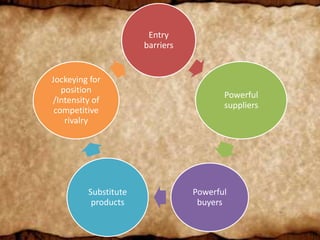
Entry
barriers
Powerful
suppliers
Powerful
buyers
Substitute
products
Jockeying for
position
/Intensity of
competitive
rivalry
Apparel industry
• Apparel industry primarily concerned with the
production of yarn, and cloth and the subsequent
design or manufacture of clothing and their
distribution. The raw material may be natural or
synthetic using products of the chemical industry.
The Industrial processes
• Cotton manufacturing
• Synthetic fibers- rayon nylons and polyesters
• Natural fibers- sheep, goat, rabbit, silk-worm flax,
Hemp, Jute sisal
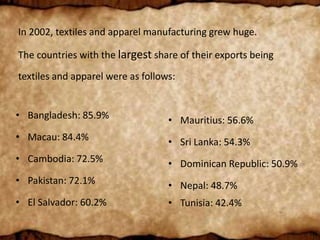
In 2002, textiles and apparel manufacturing grew huge.
The countries with the largest share of their exports being
textiles and apparel were as follows:
• Bangladesh: 85.9%
• Macau: 84.4%
• Cambodia: 72.5%
• Pakistan: 72.1%
• El Salvador: 60.2%
• Mauritius: 56.6%
• Sri Lanka: 54.3%
• Dominican Republic: 50.9%
• Nepal: 48.7%
• Tunisia: 42.4%
Michel porter’s five competitive force
model for Apparel industry
Entry barriers
• Economies of scale apparel industry is high
• Industry will buy raw materials in bulk for further
production when raw materials buy in bulk the
average cost will reduce
Product differentiation : High
• Product differentiation will be high for new entering
industry in terms of brand identification, brand
loyalty, quality, consumer service and advertising to
overcome by strong existing one and who are first in
market
Eg :Harpa and calvin klein
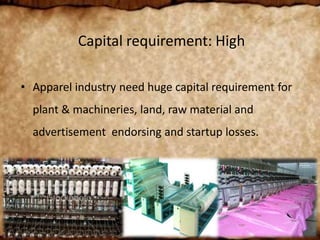
Capital requirement: High
• Apparel industry need huge capital requirement for
plant & machineries, land, raw material and
advertisement endorsing and startup losses.
• Comparatively the Government policies are few for
apparel industry to startup , they required license for
textile mill , import & export etc
Government policy – Less
Conclusion for entry barrier
• When the firm’s financial aspects are strong it can
enter apparel industry easily, legal aspects play a role
when the manufacturing is into textiles.
• Over all entry barriers for entering into apparel
industry is not so difficult too.
Powerful suppliers:
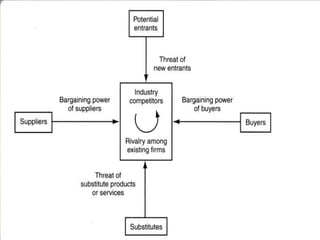
• Suppliers refer to the firms that provide inputs to the
industry.
• Bargaining power of the suppliers refer to the
potential of the suppliers to increase the prices of
inputs like labour, raw materials, services, etc or the
costs of industry in other ways.
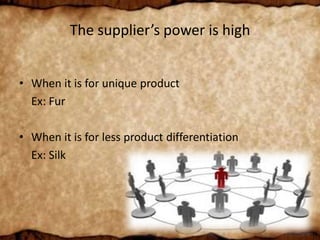
The supplier’s power is high
• When it is for unique product
Ex: Fur
• When it is for less product differentiation
Ex: Silk
Conclusion
• Suppliers have high bargaining power when the
supply is for unique and un differentiated products.
Powerful buyers:
• Buyers refer to the customers who finally consume the
product or the firms who distribute the industry’s
product to the final consumers.
• Bargaining power of buyers refer to the potential of
buyers to bargain down the prices charged by the firms in
the industry or to increase the firms cost in the industry
by demanding better quality and service of product.
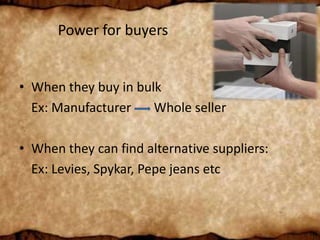
Power for buyers
• When they buy in bulk
Ex: Manufacturer Whole seller
• When they can find alternative suppliers:
Ex: Levies, Spykar, Pepe jeans etc
Conclusion
• Bargaining power of buyers is high when they by in
huge quantity and also when there are more number
of suppliers to the market
Substitute product
• These are the alternative products/ brands satisfying the
similar need of the customer
• Substitute products affect when the switching cost is high
Ex: Levis and Pepe jeans
• Switching for quality, durability and status
Ex: Luiviton, Gucci
Conclusion
• Substitute product affects when the switching
of brand takes place.
• It also affects for the factors like quality, status
symbol etc
Rivalry among current competitors
• Rivalry refers to the competitive struggle for market
share between firms in an industry.
• Extreme rivalry among established firms poses a
strong threat to profitability.
• Competition is high in apparel industry
• Competitors include numerous apparel designers,
manufacturers, distributors, importers, and retailers
• Ex: competitors like
• Nike, Puma, Reebok and Adidas
• Biba and Global Desi
• Peter England, Van Heusen, Louis
Philip, Arrow, Allen solly
Conclusion
• Apparel industry is facing huge competition
• Due to such intensive competition survival of
a new entrant is hard.
Final conclusion
• Apparel industry is one of the booming industry
• The above factors determine that the entry
barrier for a new entrant in apparel industry is
high.
• It is difficult for a new entrant to enter and exit
easily, because it will have to face the initial
losses
• It is very difficult to match the service level of
the established competitors of the market for
initials.
• Gaining the customer loyalty is too difficult
and involve huge time, cost to achieve it.
Porter’s five forces

Porter’s five forces

  • 1.
  • 2.
    Porter’s five forces: •Porter's five forces analysis is a framework for industry analysis and business strategy development formed by Michael E. Porter. • It determines the competitive intensity. It also determines the ultimate profit potential of the industry
  • 3.
  • 5.
    Apparel industry • Apparelindustry primarily concerned with the production of yarn, and cloth and the subsequent design or manufacture of clothing and their distribution. The raw material may be natural or synthetic using products of the chemical industry.
  • 6.
    The Industrial processes •Cotton manufacturing • Synthetic fibers- rayon nylons and polyesters • Natural fibers- sheep, goat, rabbit, silk-worm flax, Hemp, Jute sisal
  • 7.
    In 2002, textilesand apparel manufacturing grew huge. The countries with the largest share of their exports being textiles and apparel were as follows: • Bangladesh: 85.9% • Macau: 84.4% • Cambodia: 72.5% • Pakistan: 72.1% • El Salvador: 60.2% • Mauritius: 56.6% • Sri Lanka: 54.3% • Dominican Republic: 50.9% • Nepal: 48.7% • Tunisia: 42.4%
  • 8.
    Michel porter’s fivecompetitive force model for Apparel industry
  • 9.
  • 10.
    • Economies ofscale apparel industry is high • Industry will buy raw materials in bulk for further production when raw materials buy in bulk the average cost will reduce
  • 11.
    Product differentiation :High • Product differentiation will be high for new entering industry in terms of brand identification, brand loyalty, quality, consumer service and advertising to overcome by strong existing one and who are first in market Eg :Harpa and calvin klein
  • 12.
    Capital requirement: High •Apparel industry need huge capital requirement for plant & machineries, land, raw material and advertisement endorsing and startup losses.
  • 13.
    • Comparatively theGovernment policies are few for apparel industry to startup , they required license for textile mill , import & export etc Government policy – Less
  • 14.
    Conclusion for entrybarrier • When the firm’s financial aspects are strong it can enter apparel industry easily, legal aspects play a role when the manufacturing is into textiles. • Over all entry barriers for entering into apparel industry is not so difficult too.
  • 15.
    Powerful suppliers: • Suppliersrefer to the firms that provide inputs to the industry. • Bargaining power of the suppliers refer to the potential of the suppliers to increase the prices of inputs like labour, raw materials, services, etc or the costs of industry in other ways.
  • 16.
    The supplier’s poweris high • When it is for unique product Ex: Fur • When it is for less product differentiation Ex: Silk
  • 17.
    Conclusion • Suppliers havehigh bargaining power when the supply is for unique and un differentiated products.
  • 18.
    Powerful buyers: • Buyersrefer to the customers who finally consume the product or the firms who distribute the industry’s product to the final consumers. • Bargaining power of buyers refer to the potential of buyers to bargain down the prices charged by the firms in the industry or to increase the firms cost in the industry by demanding better quality and service of product.
  • 19.
    Power for buyers •When they buy in bulk Ex: Manufacturer Whole seller • When they can find alternative suppliers: Ex: Levies, Spykar, Pepe jeans etc
  • 20.
    Conclusion • Bargaining powerof buyers is high when they by in huge quantity and also when there are more number of suppliers to the market
  • 21.
    Substitute product • Theseare the alternative products/ brands satisfying the similar need of the customer • Substitute products affect when the switching cost is high Ex: Levis and Pepe jeans • Switching for quality, durability and status Ex: Luiviton, Gucci
  • 22.
    Conclusion • Substitute productaffects when the switching of brand takes place. • It also affects for the factors like quality, status symbol etc
  • 23.
    Rivalry among currentcompetitors • Rivalry refers to the competitive struggle for market share between firms in an industry. • Extreme rivalry among established firms poses a strong threat to profitability. • Competition is high in apparel industry
  • 24.
    • Competitors includenumerous apparel designers, manufacturers, distributors, importers, and retailers • Ex: competitors like • Nike, Puma, Reebok and Adidas • Biba and Global Desi • Peter England, Van Heusen, Louis Philip, Arrow, Allen solly
  • 25.
    Conclusion • Apparel industryis facing huge competition • Due to such intensive competition survival of a new entrant is hard.
  • 26.
    Final conclusion • Apparelindustry is one of the booming industry • The above factors determine that the entry barrier for a new entrant in apparel industry is high. • It is difficult for a new entrant to enter and exit easily, because it will have to face the initial losses
  • 27.
    • It isvery difficult to match the service level of the established competitors of the market for initials. • Gaining the customer loyalty is too difficult and involve huge time, cost to achieve it.