Strategic Training
Contents 
• Introduction. 
• Strategy impacts training with a strong influence 
on determining. 
• Evolution of training’s role. 
• The strategic training and development process. 
• Metrics and training: balanced scorecard. 
• Organizational characteristics that influence 
training. 
• Models of organizing the training department. 
• Characteristics of virtual training organizations.
Introduction: Business Strategy 
• A plan that integrates the company’s goals, policies, 
and actions 
• The strategy influences how the company uses: 
–physical capital (plants, technology, and equipment) 
–financial capital (assets and cash reserves) 
–human capital (employees) 
• The business strategy helps direct the company’s 
activities to reach specific goals
Strategy impacts training with a strong 
influence on determining 
• The amount of training devoted to current or 
future job skills 
• The extent to which training is customized for: 
–the particular needs of an employee, 
–or developed based on the needs of a team, unit, or 
division 
• Whether training is restricted to specific groups 
of employees or open to all employees
Strategy impacts training with a strong 
influence on determining 
• Whether training is: 
–planned and systematically administered, or 
–provided only when problems occur, or 
–spontaneously as a reaction to what competitors are 
doing 
• The importance placed on training compared to 
other human resource management practices 
such as selection and compensation
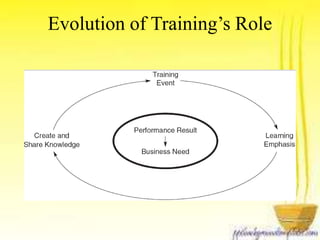
Evolution of Training’s Role
Evolution of Training’s Role: Learning 
• The acquisition of knowledge by individuals, 
employees, or groups of employees. 
• Willing to apply that knowledge in their jobs 
in making decisions and accomplishing tasks 
for the company.
Evolution of Training’s Role: 
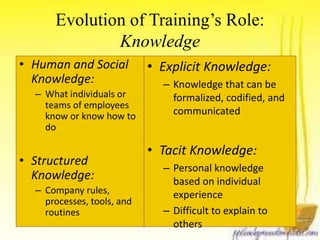
Knowledge 
• Human and Social 
Knowledge: 
– What individuals or 
teams of employees 
know or know how to 
do 
• Structured 
Knowledge: 
– Company rules, 
processes, tools, and 
routines 
• Explicit Knowledge: 
– Knowledge that can be 
formalized, codified, and 
communicated 
• Tacit Knowledge: 
– Personal knowledge 
based on individual 
experience 
– Difficult to explain to 
others
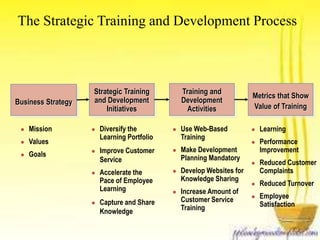
The Strategic Training and Development Process 
Business Strategy 
Strategic Training 
and Development 
Initiatives 
Training and 
Development 
Activities 
Metrics that Show 
Value of Training 
 Diversify the 
Learning Portfolio 
 Improve Customer 
Service 
 Accelerate the 
Pace of Employee 
Learning 
 Capture and Share 
Knowledge 
 Use Web-Based 
Training 
 Make Development 
Planning Mandatory 
 Develop Websites for 
Knowledge Sharing 
 Increase Amount of 
Customer Service 
Training 
 Learning 
 Performance 
Improvement 
 Reduced Customer 
Complaints 
 Reduced Turnover 
 Employee 
Satisfaction 
 Mission 
 Values 
 Goals
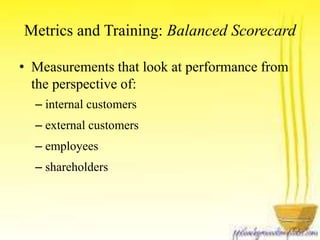
Metrics and Training: Balanced Scorecard 
• Measurements that look at performance from 
the perspective of: 
– internal customers 
– external customers 
– employees 
– shareholders
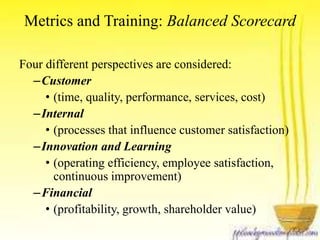
Metrics and Training: Balanced Scorecard 
Four different perspectives are considered: 
–Customer 
• (time, quality, performance, services, cost) 
–Internal 
• (processes that influence customer satisfaction) 
–Innovation and Learning 
• (operating efficiency, employee satisfaction, 
continuous improvement) 
–Financial 
• (profitability, growth, shareholder value)
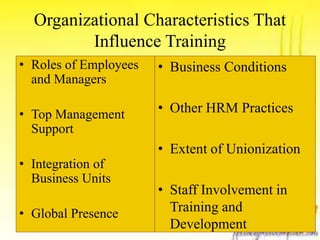
Organizational Characteristics That 
Influence Training 
• Roles of Employees 
and Managers 
• Top Management 
Support 
• Integration of 
Business Units 
• Global Presence 
• Business Conditions 
• Other HRM Practices 
• Extent of Unionization 
• Staff Involvement in 
Training and 
Development
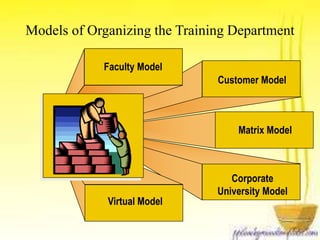
Models of Organizing the Training Department 
Faculty Model 
Customer Model 
Matrix Model 
Corporate 
University Model 
Virtual Model
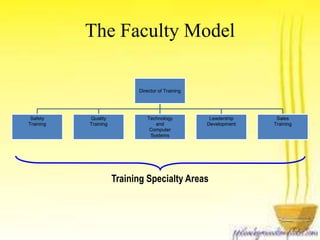
The Faculty Model 
Director of Training 
Training Specialty Areas 
Safety 
Training 
Quality 
Training 
Technology 
and 
Computer 
Systems 
Leadership 
Development 
Sales 
Training
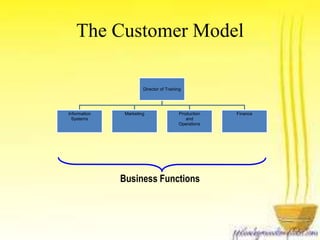
The Customer Model 
Director of Training 
Business Functions 
Information 
Systems 
Marketing Production 
and 
Operations 
Finance
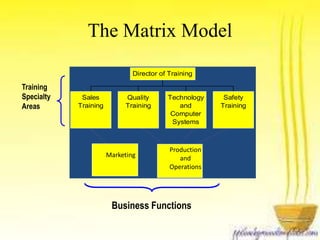
The Matrix Model 
Sales 
Training 
Quality 
Training 
Technology 
and 
Computer 
Systems 
Safety 
Training 
Director of Training 
Marketing 
Production 
and 
Operations 
Business Functions 
Training 
Specialty 
Areas
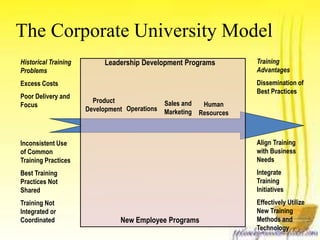
The Corporate University Model 
Training 
Advantages 
Dissemination of 
Best Practices 
Align Training 
with Business 
Needs 
Integrate 
Training 
Initiatives 
Effectively Utilize 
New Training 
Methods and 
Technology 
Historical Training 
Problems 
Excess Costs 
Poor Delivery and 
Focus 
Inconsistent Use 
of Common 
Training Practices 
Best Training 
Practices Not 
Shared 
Training Not 
Integrated or 
Coordinated 
Leadership Development Programs 
New Employee Programs 
Product 
Development Operations 
Sales and 
Marketing 
Human 
Resources
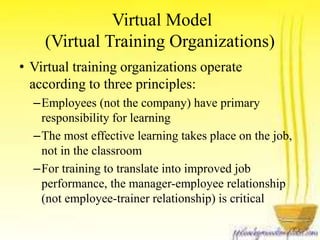
Virtual Model 
(Virtual Training Organizations) 
• Virtual training organizations operate 
according to three principles: 
–Employees (not the company) have primary 
responsibility for learning 
–The most effective learning takes place on the job, 
not in the classroom 
–For training to translate into improved job 
performance, the manager-employee relationship 
(not employee-trainer relationship) is critical
Characteristics of Virtual Training 
Organizations: 
• A virtual training organization is customer focused 
• Takes more responsibility for learning and 
evaluating training effectiveness 
• Provides customized training solutions based on 
customer needs 
• Determines when and how to deliver training 
based on customer needs 
• Leverages resources from many areas 
• Involves line managers in direction and content
Strategic training

Strategic training

  • 1.
  • 2.
    Contents • Introduction. • Strategy impacts training with a strong influence on determining. • Evolution of training’s role. • The strategic training and development process. • Metrics and training: balanced scorecard. • Organizational characteristics that influence training. • Models of organizing the training department. • Characteristics of virtual training organizations.
  • 3.
    Introduction: Business Strategy • A plan that integrates the company’s goals, policies, and actions • The strategy influences how the company uses: –physical capital (plants, technology, and equipment) –financial capital (assets and cash reserves) –human capital (employees) • The business strategy helps direct the company’s activities to reach specific goals
  • 4.
    Strategy impacts trainingwith a strong influence on determining • The amount of training devoted to current or future job skills • The extent to which training is customized for: –the particular needs of an employee, –or developed based on the needs of a team, unit, or division • Whether training is restricted to specific groups of employees or open to all employees
  • 5.
    Strategy impacts trainingwith a strong influence on determining • Whether training is: –planned and systematically administered, or –provided only when problems occur, or –spontaneously as a reaction to what competitors are doing • The importance placed on training compared to other human resource management practices such as selection and compensation
  • 6.
  • 7.
    Evolution of Training’sRole: Learning • The acquisition of knowledge by individuals, employees, or groups of employees. • Willing to apply that knowledge in their jobs in making decisions and accomplishing tasks for the company.
  • 8.
    Evolution of Training’sRole: Knowledge • Human and Social Knowledge: – What individuals or teams of employees know or know how to do • Structured Knowledge: – Company rules, processes, tools, and routines • Explicit Knowledge: – Knowledge that can be formalized, codified, and communicated • Tacit Knowledge: – Personal knowledge based on individual experience – Difficult to explain to others
  • 9.
    The Strategic Trainingand Development Process Business Strategy Strategic Training and Development Initiatives Training and Development Activities Metrics that Show Value of Training  Diversify the Learning Portfolio  Improve Customer Service  Accelerate the Pace of Employee Learning  Capture and Share Knowledge  Use Web-Based Training  Make Development Planning Mandatory  Develop Websites for Knowledge Sharing  Increase Amount of Customer Service Training  Learning  Performance Improvement  Reduced Customer Complaints  Reduced Turnover  Employee Satisfaction  Mission  Values  Goals
  • 10.
    Metrics and Training:Balanced Scorecard • Measurements that look at performance from the perspective of: – internal customers – external customers – employees – shareholders
  • 11.
    Metrics and Training:Balanced Scorecard Four different perspectives are considered: –Customer • (time, quality, performance, services, cost) –Internal • (processes that influence customer satisfaction) –Innovation and Learning • (operating efficiency, employee satisfaction, continuous improvement) –Financial • (profitability, growth, shareholder value)
  • 12.
    Organizational Characteristics That Influence Training • Roles of Employees and Managers • Top Management Support • Integration of Business Units • Global Presence • Business Conditions • Other HRM Practices • Extent of Unionization • Staff Involvement in Training and Development
  • 13.
    Models of Organizingthe Training Department Faculty Model Customer Model Matrix Model Corporate University Model Virtual Model
  • 14.
    The Faculty Model Director of Training Training Specialty Areas Safety Training Quality Training Technology and Computer Systems Leadership Development Sales Training
  • 15.
    The Customer Model Director of Training Business Functions Information Systems Marketing Production and Operations Finance
  • 16.
    The Matrix Model Sales Training Quality Training Technology and Computer Systems Safety Training Director of Training Marketing Production and Operations Business Functions Training Specialty Areas
  • 17.
    The Corporate UniversityModel Training Advantages Dissemination of Best Practices Align Training with Business Needs Integrate Training Initiatives Effectively Utilize New Training Methods and Technology Historical Training Problems Excess Costs Poor Delivery and Focus Inconsistent Use of Common Training Practices Best Training Practices Not Shared Training Not Integrated or Coordinated Leadership Development Programs New Employee Programs Product Development Operations Sales and Marketing Human Resources
  • 18.
    Virtual Model (VirtualTraining Organizations) • Virtual training organizations operate according to three principles: –Employees (not the company) have primary responsibility for learning –The most effective learning takes place on the job, not in the classroom –For training to translate into improved job performance, the manager-employee relationship (not employee-trainer relationship) is critical
  • 19.
    Characteristics of VirtualTraining Organizations: • A virtual training organization is customer focused • Takes more responsibility for learning and evaluating training effectiveness • Provides customized training solutions based on customer needs • Determines when and how to deliver training based on customer needs • Leverages resources from many areas • Involves line managers in direction and content