Internal Analysis: Distinctive 
Competencies, Competitive 
Advantage, and Profitability 
Chapter 3
Internal Analysis: Identifying 
Strengths and Weaknesses 
Managers must understand 
– The role of resources, capabilities, and 
distinctive competencies in the process by 
which companies create value and profit 
– The importance of superior efficiency, 
innovation, quality, and responsiveness to 
customers 
– The sources of their company’s competitive 
advantage (strengths and weaknesses)
Distinctive Competences and 
Competitive Advantage 
• Distinctive competencies 
– Firm-specific strengths that allow a company 
to gain competitive advantage by 
differentiating its products and/or achieving 
lower costs than its rivals 
– Arise from unique application of resources 
and acquisition of capabilities
The Role of Resources 
• Resources 
– Capital or financial, physical, social or human, 
technological, and organizational factor endowments 
• Tangible and intangible 
• A firm-specific and difficult to imitate resource is 
likely to lead to distinctive competency 
• A valuable resource that creates strong demand 
for a firm’s products may lead to distinctive 
competency
The Role of Capabilities 
• Capabilities 
– A company’s skills at coordinating and using 
its resources 
• Capabilities are the product of 
organizational structure, processes, and 
control systems 
• We must add people, particularly 
leadership in building the structure, etc.
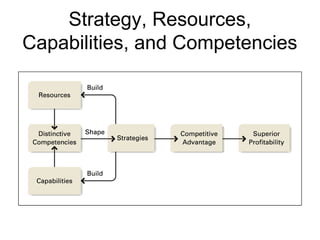
Strategy, Resources, 
Capabilities, and Competencies
A Critical Distinction 
• If a firm has firm-specific and valuable 
resources, it must also have the capability 
to use them effectively to create distinctive 
competency 
• A firm can create distinctive competency 
without firm-specific and valuable 
resources if it has unique capabilities
Competitive Advantage, Value 
Creation, and Profitability 
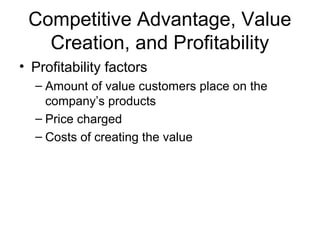
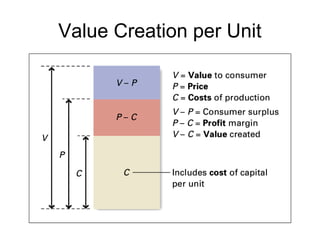
• Profitability factors 
– Amount of value customers place on the 
company’s products 
– Price charged 
– Costs of creating the value
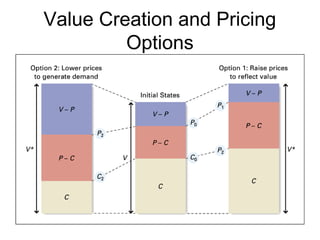
Value Creation and Pricing 
Options
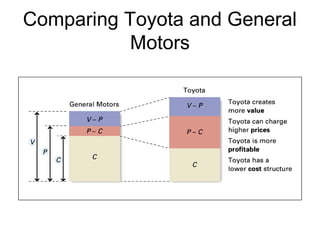
Comparing Toyota and General 
Motors
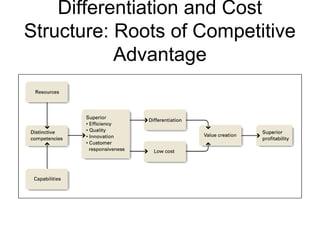
Differentiation and Cost 
Structure: Roots of Competitive 
Advantage
The Value Chain 
• A company is a chain of activities for 
transforming inputs into outputs that 
customers value 
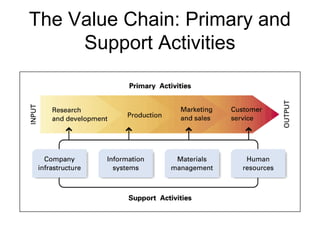
• The transformation process is composed 
of primary and support activities that add 
value to the product
The Value Chain: Primary and 
Support Activities
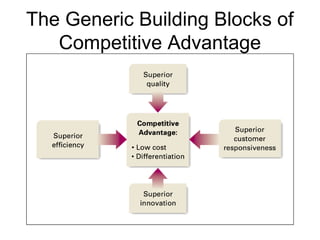
The Generic Building Blocks of 
Competitive Advantage
Exercise 
• Strategy in Action 3.2: Southwest Airlines 
• What portions of the value chain does 
Southwest Airlines work on to create value 
for its customers? 
• Why these portions rather than the more 
significant costs like fuel?
Efficiency 
• The quantity of inputs it takes to produce a 
given output. Usually measured as 
outputs over inputs; examples of latter 
– No. of employees 
– Capital investment 
• Productivity leads to greater efficiency and 
lower costs 
– Employee productivity 
– Capital productivity
Quality 
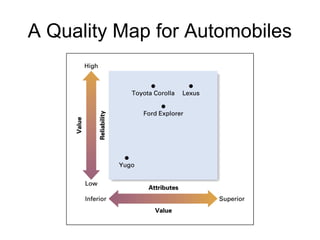
• Superior quality = customer perception of 
greater value in a specific product’s 
attributes 
– Form, features, performance, durability, 
reliability, style, design 
• Quality products = goods and services 
that are reliable and that are differentiated 
by attributes that customers perceive to 
have higher value
Quality (cont’d) 
• The impact of quality on competitive 
advantage 
– High-quality products increase the value of 
(differentiate) the products in customers’ eyes 
– Greater efficiency and lower unit costs are 
associated with reliable products
A Quality Map for Automobiles
Innovation 
• The act of creating new, commercially 
viable products or processes 
– Product innovation 
• Creates products that customers perceive as more 
valuable, increasing the company’s pricing options 
– Process innovation 
• Creates value by lowering production costs 
• Perhaps the most important building block 
of competitive advantage
Responsiveness to Customers 
• Doing a better job than competitors of 
identifying and satisfying customers’ 
needs 
– Superior quality and innovation are integral to 
superior responsiveness to customers 
– Customizing goods and services to the unique 
demands of individual customers or customer 
groups
Responsiveness to Customers 
(cont’d) 
• Sources of enhanced customer 
responsiveness 
– Customer response time, design, service, 
after-sales service and support 
• Differentiates a company’s products; leads 
to brand loyalty and premium pricing
Value Creation per Unit
Analyzing Competitive 
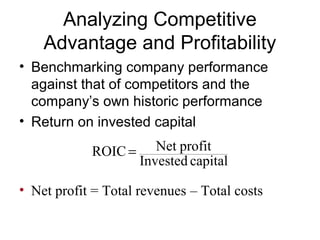
Advantage and Profitability 
• Benchmarking company performance 
against that of competitors and the 
company’s own historic performance 
• Return on invested capital 
ROIC = Net profit 
Invested capital 
• Net profit = Total revenues – Total costs
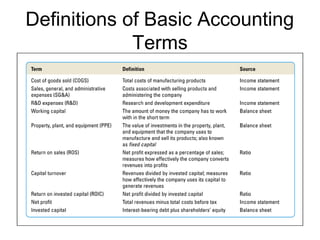
Definitions of Basic Accounting 
Terms
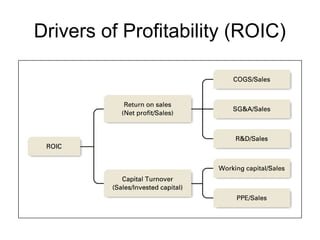
Drivers of Profitability (ROIC)
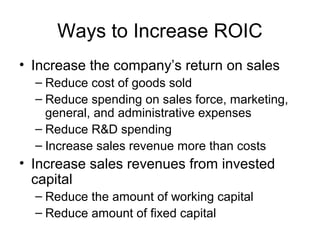
Ways to Increase ROIC 
• Increase the company’s return on sales 
– Reduce cost of goods sold 
– Reduce spending on sales force, marketing, 
general, and administrative expenses 
– Reduce R&D spending 
– Increase sales revenue more than costs 
• Increase sales revenues from invested 
capital 
– Reduce the amount of working capital 
– Reduce amount of fixed capital
The Durability of Competitive 
Advantage 
• Barriers to Imitation 
– Imitating Resources 
– Imitating Capabilities 
• Capability of Competitors 
– Strategic commitment 
– Absorptive capacity 
• Industry Dynamism
Why Companies Fail 
• Inertia 
– Companies find it difficult to change their strategies 
and structures 
• Prior strategic commitments 
– Limit a company’s ability to imitate and cause 
competitive disadvantage 
• The Icarus paradox 
– A company can become so specialized based on past 
success that it loses sight of market realities 
– Craftsmen, builders, pioneers, salesmen

Distinctive competency

  • 1.
    Internal Analysis: Distinctive Competencies, Competitive Advantage, and Profitability Chapter 3
  • 2.
    Internal Analysis: Identifying Strengths and Weaknesses Managers must understand – The role of resources, capabilities, and distinctive competencies in the process by which companies create value and profit – The importance of superior efficiency, innovation, quality, and responsiveness to customers – The sources of their company’s competitive advantage (strengths and weaknesses)
  • 3.
    Distinctive Competences and Competitive Advantage • Distinctive competencies – Firm-specific strengths that allow a company to gain competitive advantage by differentiating its products and/or achieving lower costs than its rivals – Arise from unique application of resources and acquisition of capabilities
  • 4.
    The Role ofResources • Resources – Capital or financial, physical, social or human, technological, and organizational factor endowments • Tangible and intangible • A firm-specific and difficult to imitate resource is likely to lead to distinctive competency • A valuable resource that creates strong demand for a firm’s products may lead to distinctive competency
  • 5.
    The Role ofCapabilities • Capabilities – A company’s skills at coordinating and using its resources • Capabilities are the product of organizational structure, processes, and control systems • We must add people, particularly leadership in building the structure, etc.
  • 6.
  • 7.
    A Critical Distinction • If a firm has firm-specific and valuable resources, it must also have the capability to use them effectively to create distinctive competency • A firm can create distinctive competency without firm-specific and valuable resources if it has unique capabilities
  • 8.
    Competitive Advantage, Value Creation, and Profitability • Profitability factors – Amount of value customers place on the company’s products – Price charged – Costs of creating the value
  • 9.
    Value Creation andPricing Options
  • 10.
    Comparing Toyota andGeneral Motors
  • 11.
    Differentiation and Cost Structure: Roots of Competitive Advantage
  • 12.
    The Value Chain • A company is a chain of activities for transforming inputs into outputs that customers value • The transformation process is composed of primary and support activities that add value to the product
  • 13.
    The Value Chain:Primary and Support Activities
  • 14.
    The Generic BuildingBlocks of Competitive Advantage
  • 15.
    Exercise • Strategyin Action 3.2: Southwest Airlines • What portions of the value chain does Southwest Airlines work on to create value for its customers? • Why these portions rather than the more significant costs like fuel?
  • 16.
    Efficiency • Thequantity of inputs it takes to produce a given output. Usually measured as outputs over inputs; examples of latter – No. of employees – Capital investment • Productivity leads to greater efficiency and lower costs – Employee productivity – Capital productivity
  • 17.
    Quality • Superiorquality = customer perception of greater value in a specific product’s attributes – Form, features, performance, durability, reliability, style, design • Quality products = goods and services that are reliable and that are differentiated by attributes that customers perceive to have higher value
  • 18.
    Quality (cont’d) •The impact of quality on competitive advantage – High-quality products increase the value of (differentiate) the products in customers’ eyes – Greater efficiency and lower unit costs are associated with reliable products
  • 19.
    A Quality Mapfor Automobiles
  • 20.
    Innovation • Theact of creating new, commercially viable products or processes – Product innovation • Creates products that customers perceive as more valuable, increasing the company’s pricing options – Process innovation • Creates value by lowering production costs • Perhaps the most important building block of competitive advantage
  • 21.
    Responsiveness to Customers • Doing a better job than competitors of identifying and satisfying customers’ needs – Superior quality and innovation are integral to superior responsiveness to customers – Customizing goods and services to the unique demands of individual customers or customer groups
  • 22.
    Responsiveness to Customers (cont’d) • Sources of enhanced customer responsiveness – Customer response time, design, service, after-sales service and support • Differentiates a company’s products; leads to brand loyalty and premium pricing
  • 23.
  • 24.
    Analyzing Competitive Advantageand Profitability • Benchmarking company performance against that of competitors and the company’s own historic performance • Return on invested capital ROIC = Net profit Invested capital • Net profit = Total revenues – Total costs
  • 25.
    Definitions of BasicAccounting Terms
  • 26.
  • 27.
    Ways to IncreaseROIC • Increase the company’s return on sales – Reduce cost of goods sold – Reduce spending on sales force, marketing, general, and administrative expenses – Reduce R&D spending – Increase sales revenue more than costs • Increase sales revenues from invested capital – Reduce the amount of working capital – Reduce amount of fixed capital
  • 28.
    The Durability ofCompetitive Advantage • Barriers to Imitation – Imitating Resources – Imitating Capabilities • Capability of Competitors – Strategic commitment – Absorptive capacity • Industry Dynamism
  • 29.
    Why Companies Fail • Inertia – Companies find it difficult to change their strategies and structures • Prior strategic commitments – Limit a company’s ability to imitate and cause competitive disadvantage • The Icarus paradox – A company can become so specialized based on past success that it loses sight of market realities – Craftsmen, builders, pioneers, salesmen