Ethics in Performance
Management
Sheetal Wagh
Ethics is the backbone of an organization and all its activities
Ethical performance management is defined as the ‘process
of planning, managing, appraising, and monitoring employee
performance based on the principles of fairness, objectivity,
transparency and good corporate governance
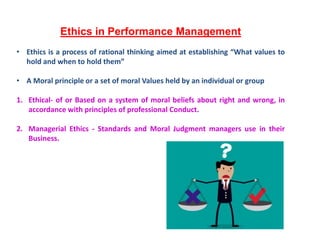
Ethics in Performance Management
• Ethics is a process of rational thinking aimed at establishing “What values to
hold and when to hold them”
• A Moral principle or a set of moral Values held by an individual or group
1. Ethical- of or Based on a system of moral beliefs about right and wrong, in
accordance with principles of professional Conduct.
2. Managerial Ethics - Standards and Moral Judgment managers use in their
Business.
 Ethical Behaviour
• Higher employee loyalty
• Encouragement of personal sacrifice
• Honouring of Organisational policies
• Reduction in Turnover
• Satisfied Customers
 Unethical Behaviour
• Manufacturing- Use of inferior quality of material
• Marketing- Misleading customers about product features or service differentiations.
• Distribution- Changing priority of booked orders without informing customers.
• Customer Care- Not keeping commitment on Guarantees.
Objectives and Significance of Ethics in
Performance Management
 Building a better society
 Cultivates high-performance teams
 Attracts and retains talent
 Maintains legal sanctity
 Improves reporting
 Promotes a strong corporate image
Ethical Issues and dilemmas in
Performance Management
 Managerial malpractice
 Value Conflict
 Moral Mazes
 Corporate goal achievement
 Employee engagement
 Managerial favoritism
 Peer Pressure
 Workplace politics
 Violation of ethics
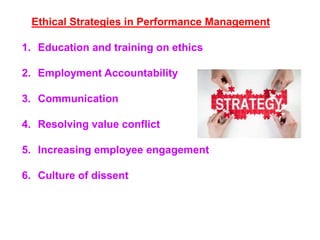
Ethical Strategies in Performance Management
1. Education and training on ethics
2. Employment Accountability
3. Communication
4. Resolving value conflict
5. Increasing employee engagement
6. Culture of dissent
Ethics in Performance Management

Ethics in Performance Management

  • 1.
  • 2.
    Ethics is thebackbone of an organization and all its activities Ethical performance management is defined as the ‘process of planning, managing, appraising, and monitoring employee performance based on the principles of fairness, objectivity, transparency and good corporate governance
  • 3.
    Ethics in PerformanceManagement • Ethics is a process of rational thinking aimed at establishing “What values to hold and when to hold them” • A Moral principle or a set of moral Values held by an individual or group 1. Ethical- of or Based on a system of moral beliefs about right and wrong, in accordance with principles of professional Conduct. 2. Managerial Ethics - Standards and Moral Judgment managers use in their Business.
  • 4.
     Ethical Behaviour •Higher employee loyalty • Encouragement of personal sacrifice • Honouring of Organisational policies • Reduction in Turnover • Satisfied Customers  Unethical Behaviour • Manufacturing- Use of inferior quality of material • Marketing- Misleading customers about product features or service differentiations. • Distribution- Changing priority of booked orders without informing customers. • Customer Care- Not keeping commitment on Guarantees.
  • 5.
    Objectives and Significanceof Ethics in Performance Management  Building a better society  Cultivates high-performance teams  Attracts and retains talent  Maintains legal sanctity  Improves reporting  Promotes a strong corporate image
  • 6.
    Ethical Issues anddilemmas in Performance Management  Managerial malpractice  Value Conflict  Moral Mazes  Corporate goal achievement  Employee engagement  Managerial favoritism  Peer Pressure  Workplace politics  Violation of ethics
  • 7.
    Ethical Strategies inPerformance Management 1. Education and training on ethics 2. Employment Accountability 3. Communication 4. Resolving value conflict 5. Increasing employee engagement 6. Culture of dissent