& Their type

By Pankaj Kukreti
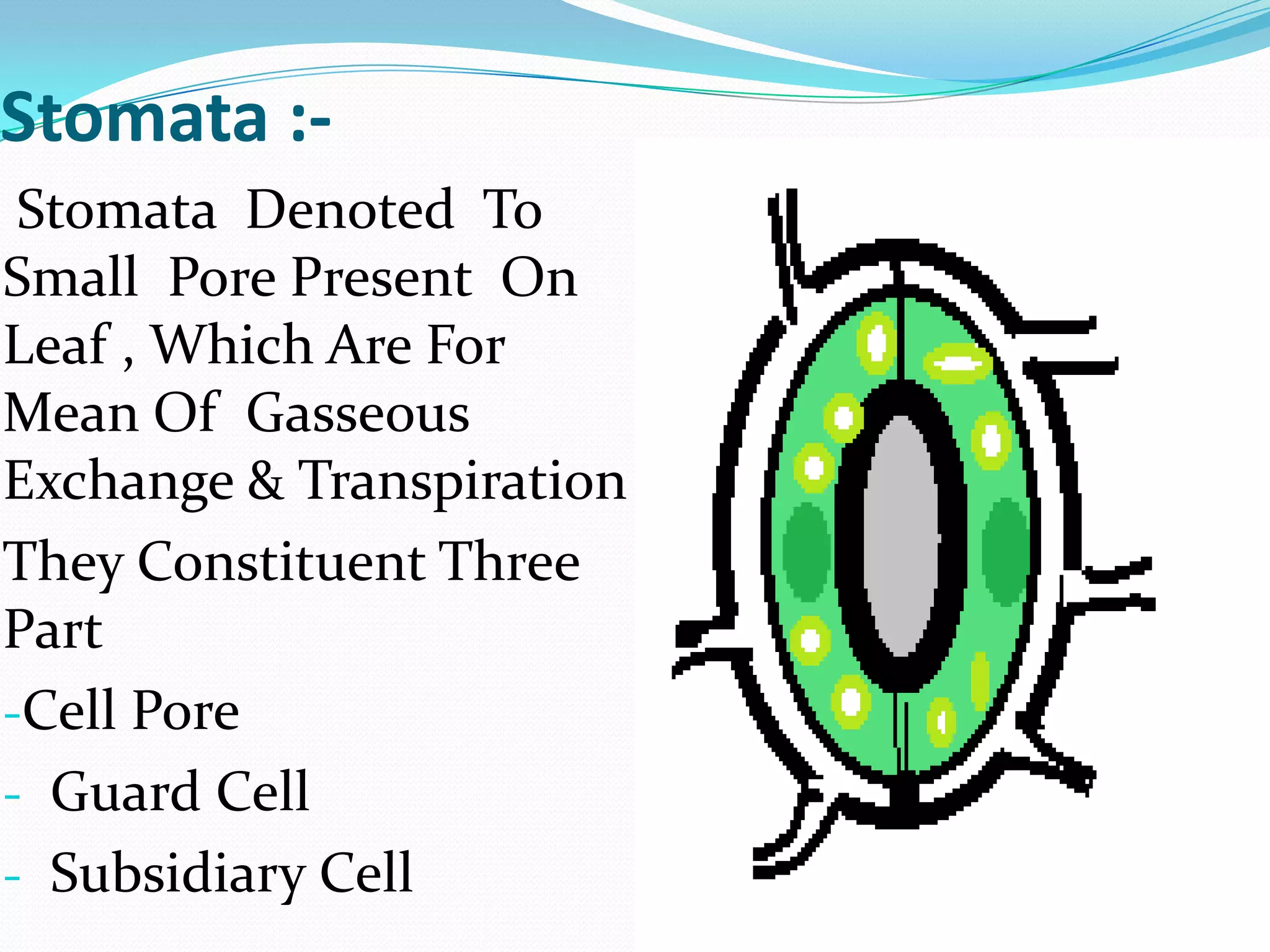
Stomata :Stomata Denoted To
Small Pore Present On
Leaf , Which Are For
Mean Of Gasseous
Exchange & Transpiration
They Constituent Three
Part
-Cell Pore
- Guard Cell
- Subsidiary Cell
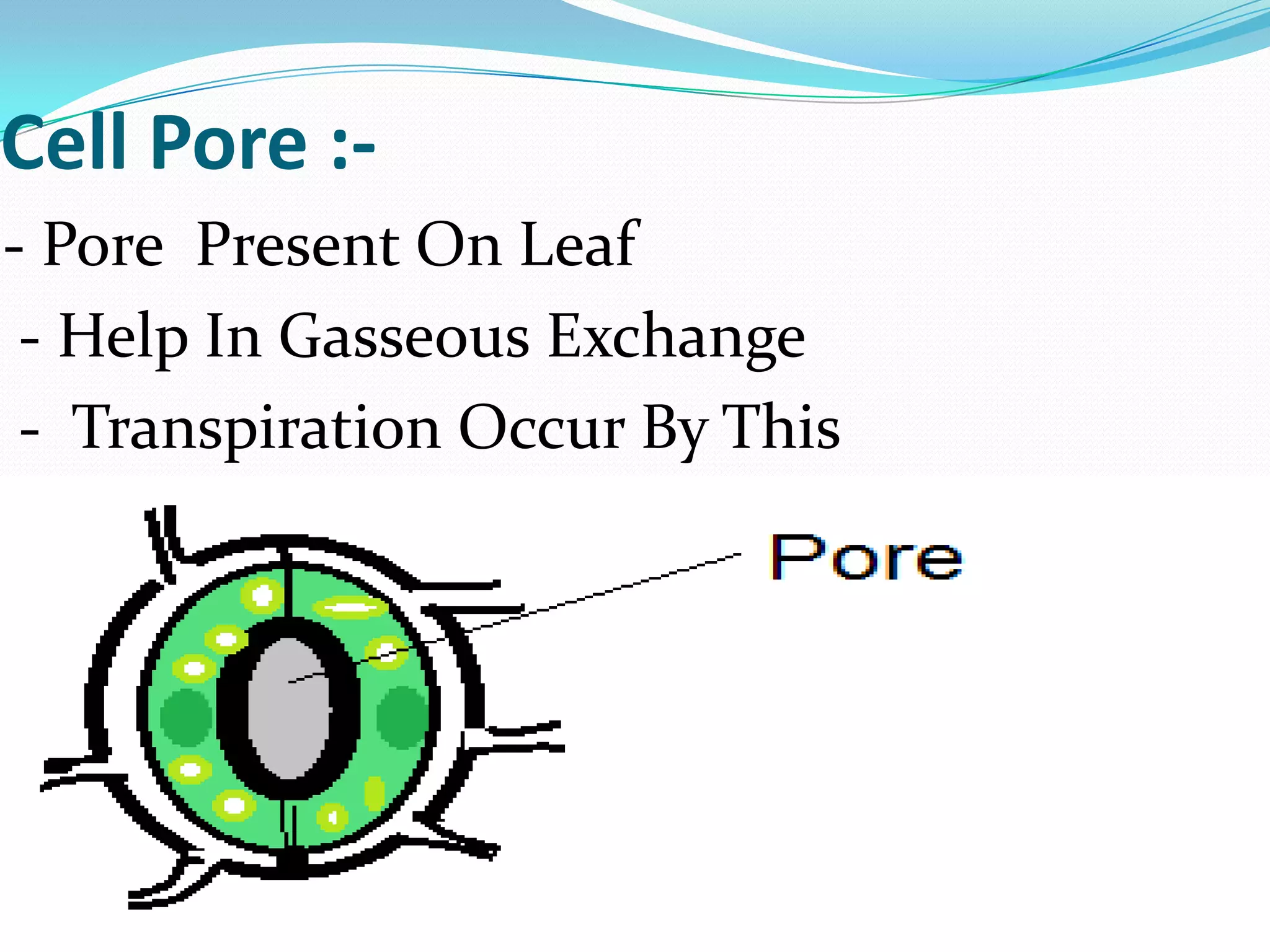
Cell Pore :- Pore Present On Leaf
- Help In Gasseous Exchange
- Transpiration Occur By This
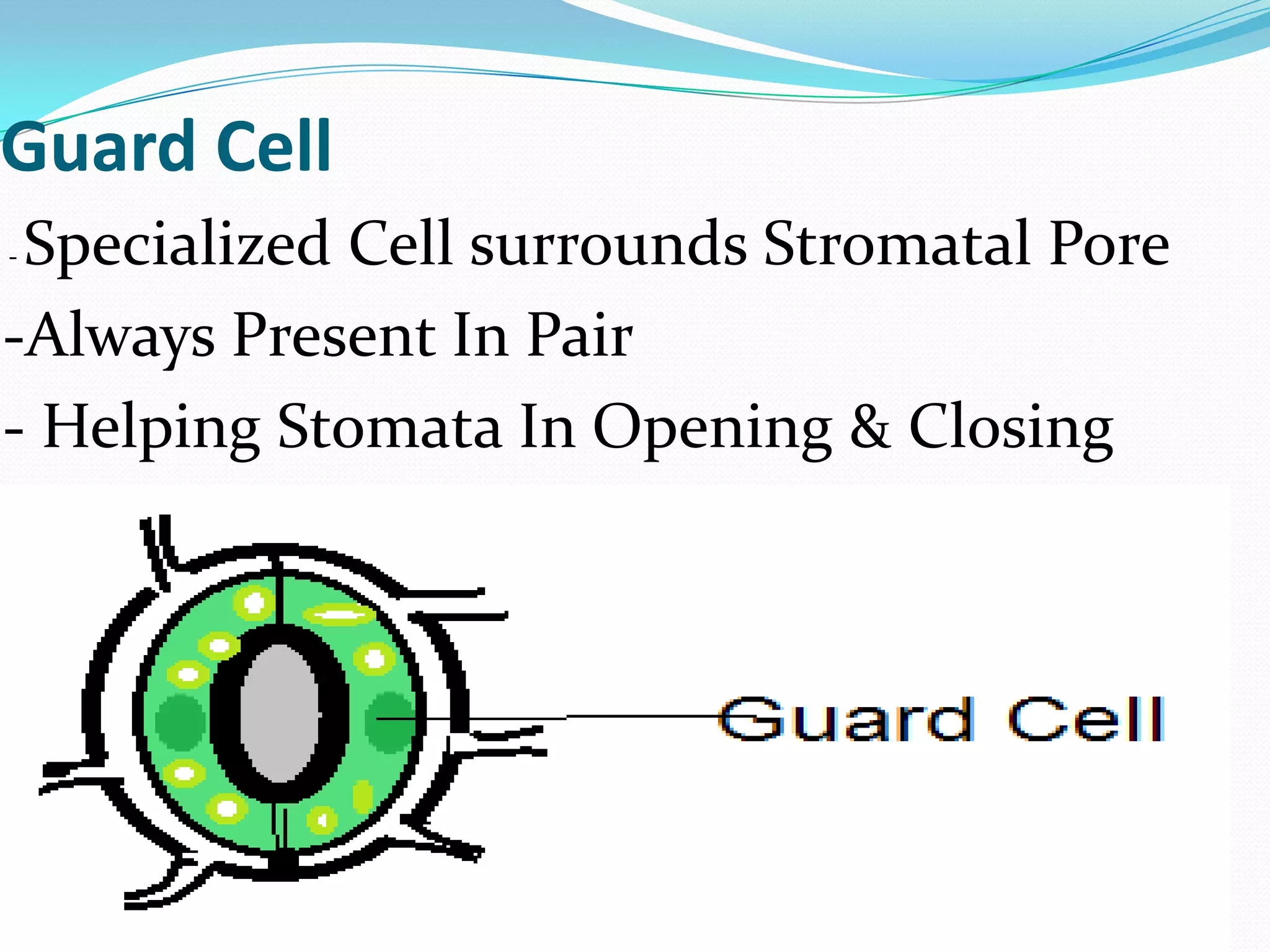
Guard Cell
Specialized Cell surrounds Stromatal Pore
-Always Present In Pair
- Helping Stomata In Opening & Closing
-
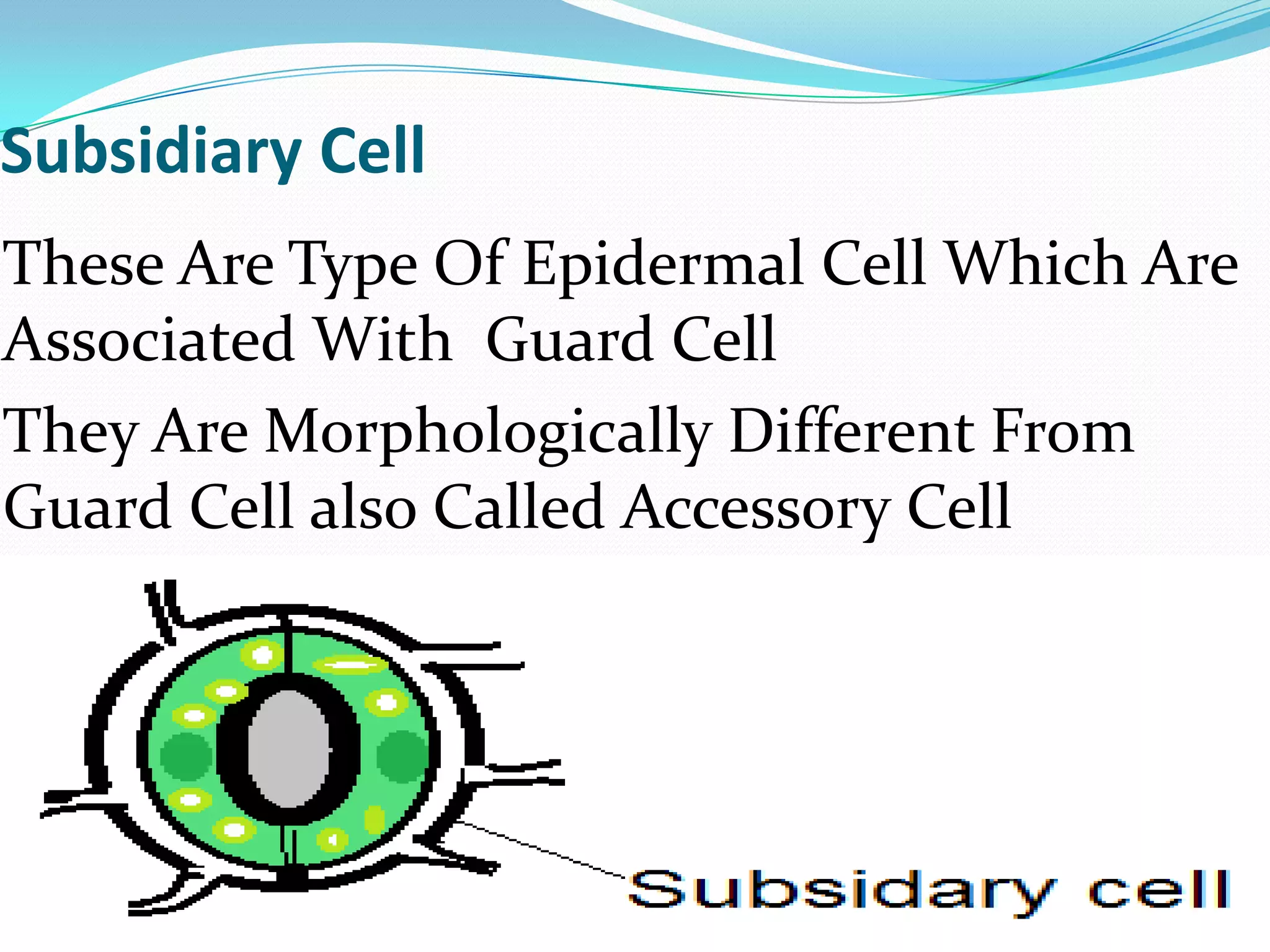
Subsidiary Cell
These Are Type Of Epidermal Cell Which Are
Associated With Guard Cell
They Are Morphologically Different From
Guard Cell also Called Accessory Cell
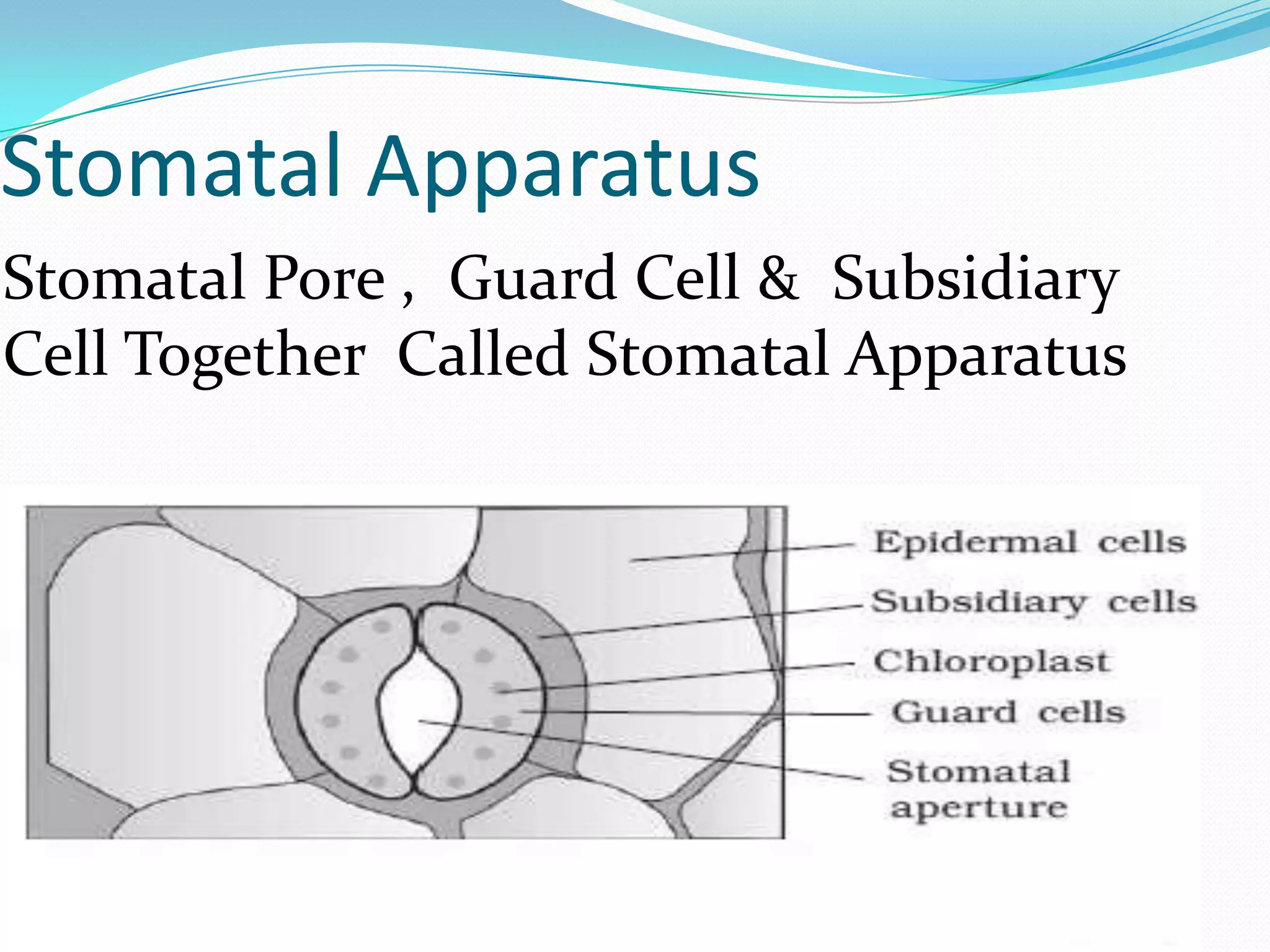
Stomatal Apparatus
Stomatal Pore , Guard Cell & Subsidiary
Cell Together Called Stomatal Apparatus
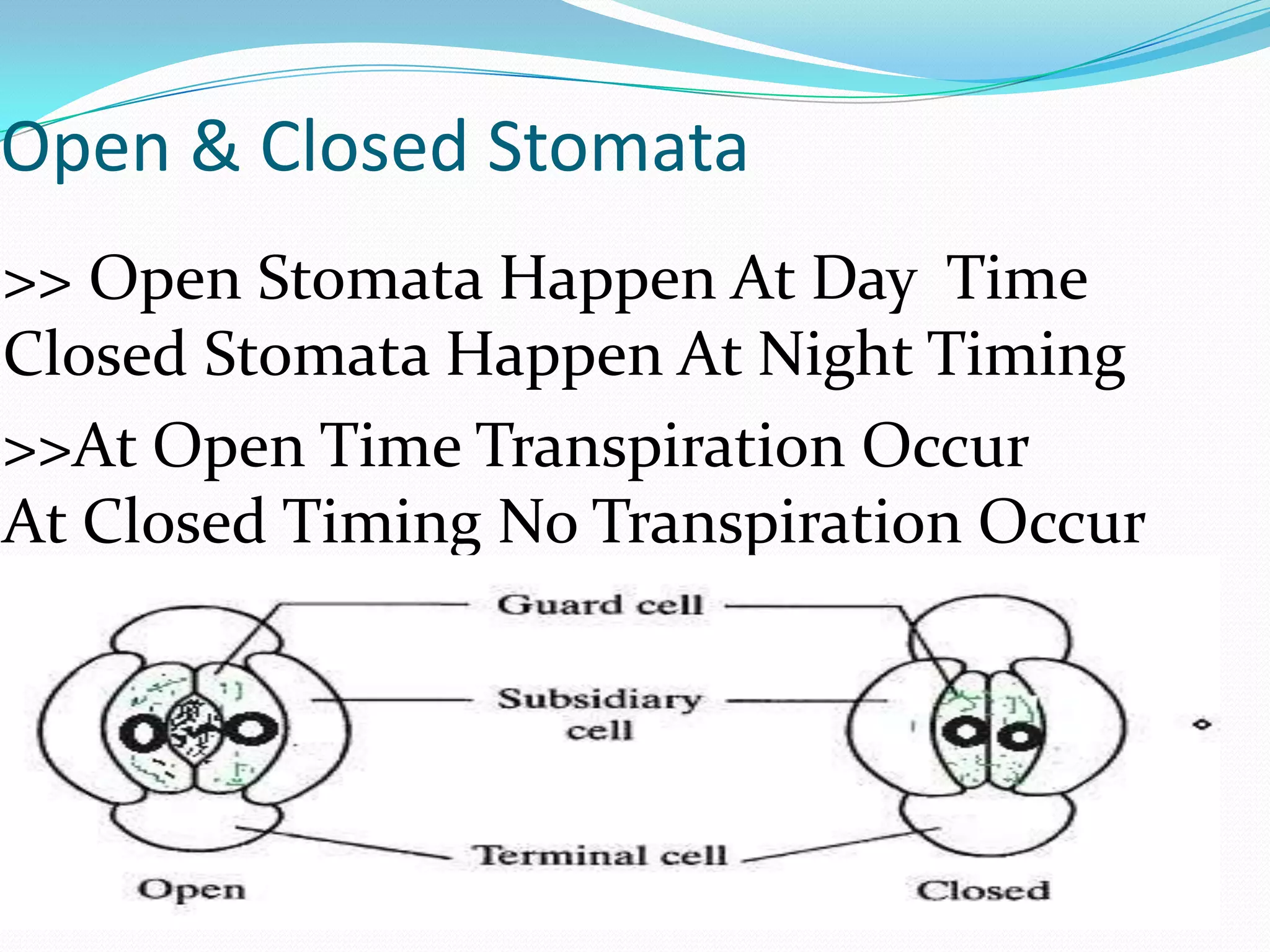
Open & Closed Stomata
>> Open Stomata Happen At Day Time
Closed Stomata Happen At Night Timing
>>At Open Time Transpiration Occur
At Closed Timing No Transpiration Occur
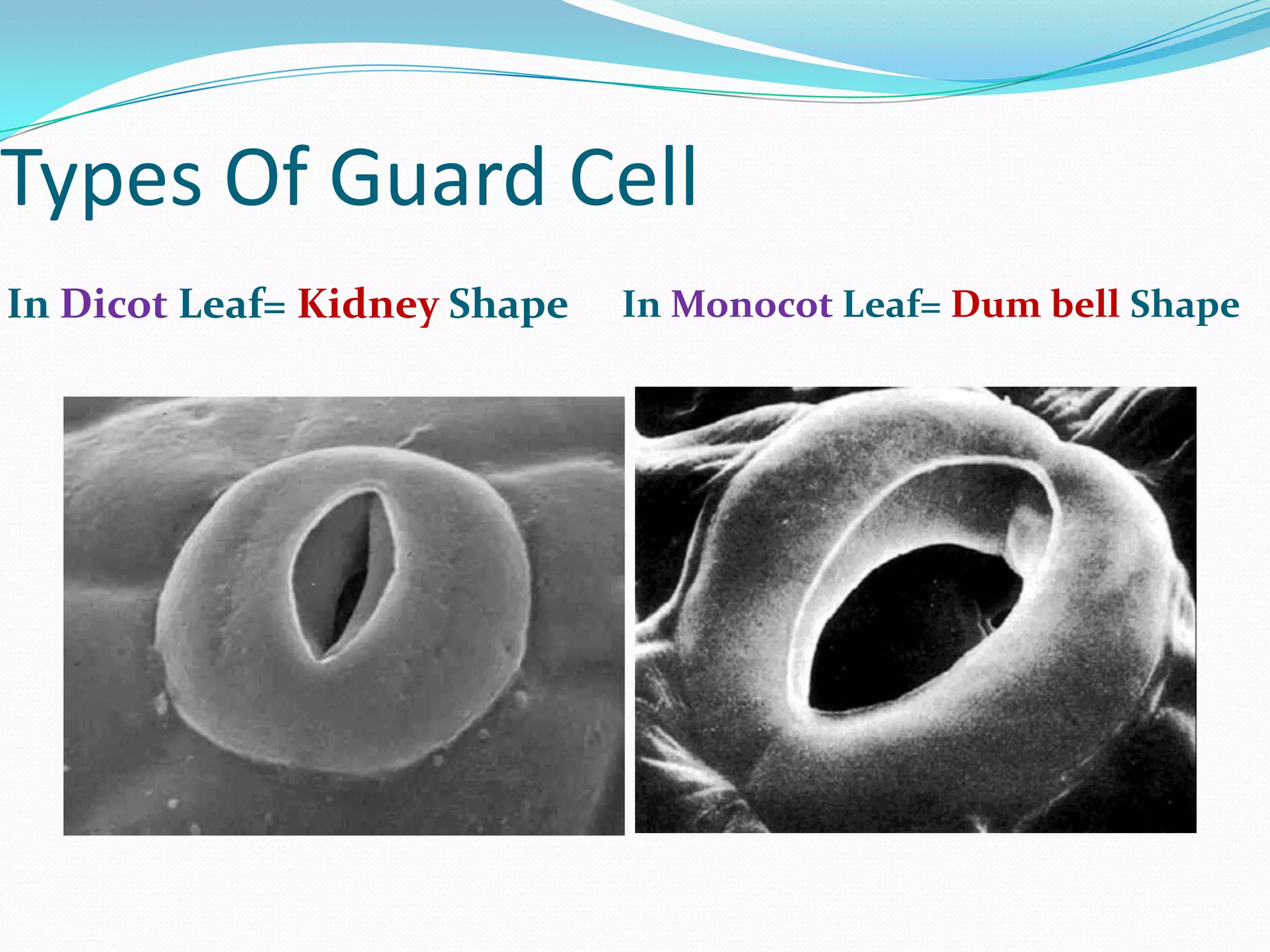
Types Of Guard Cell
In Dicot Leaf= Kidney Shape

In Monocot Leaf= Dum bell Shape
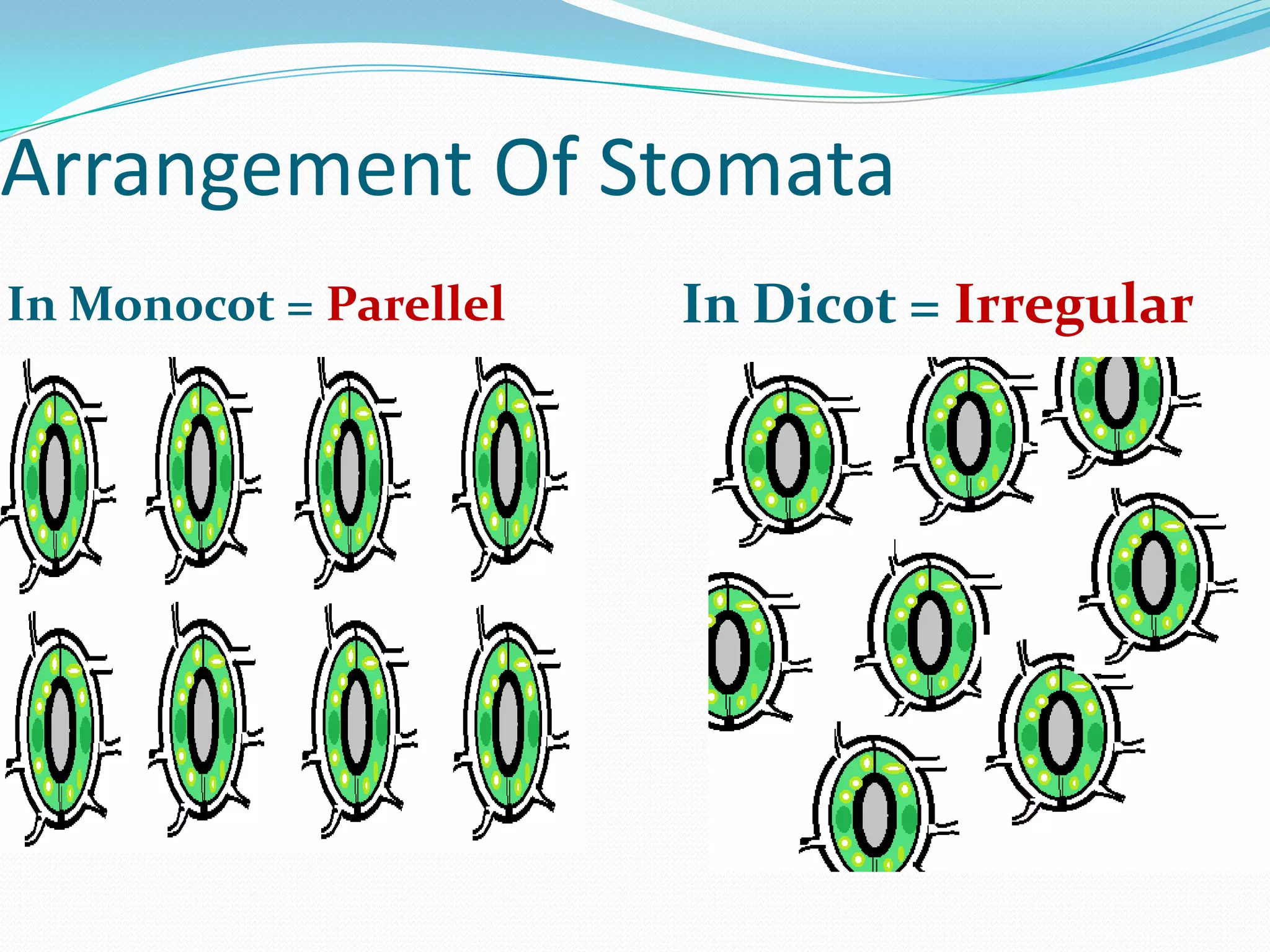
Arrangement Of Stomata
In Monocot = Parellel

In Dicot = Irregular
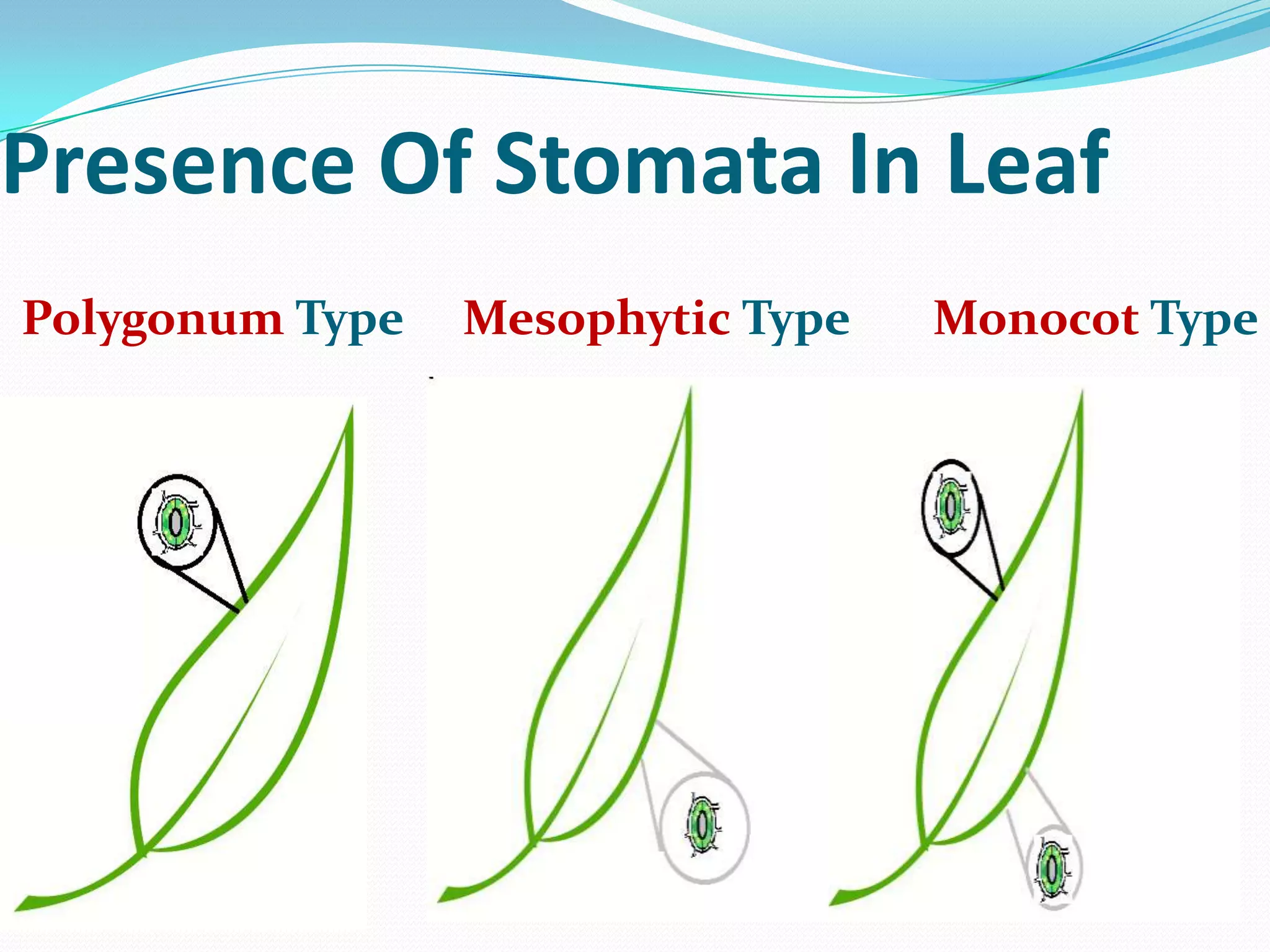
Presence Of Stomata In Leaf
Polygonum Type

Mesophytic Type

Monocot Type
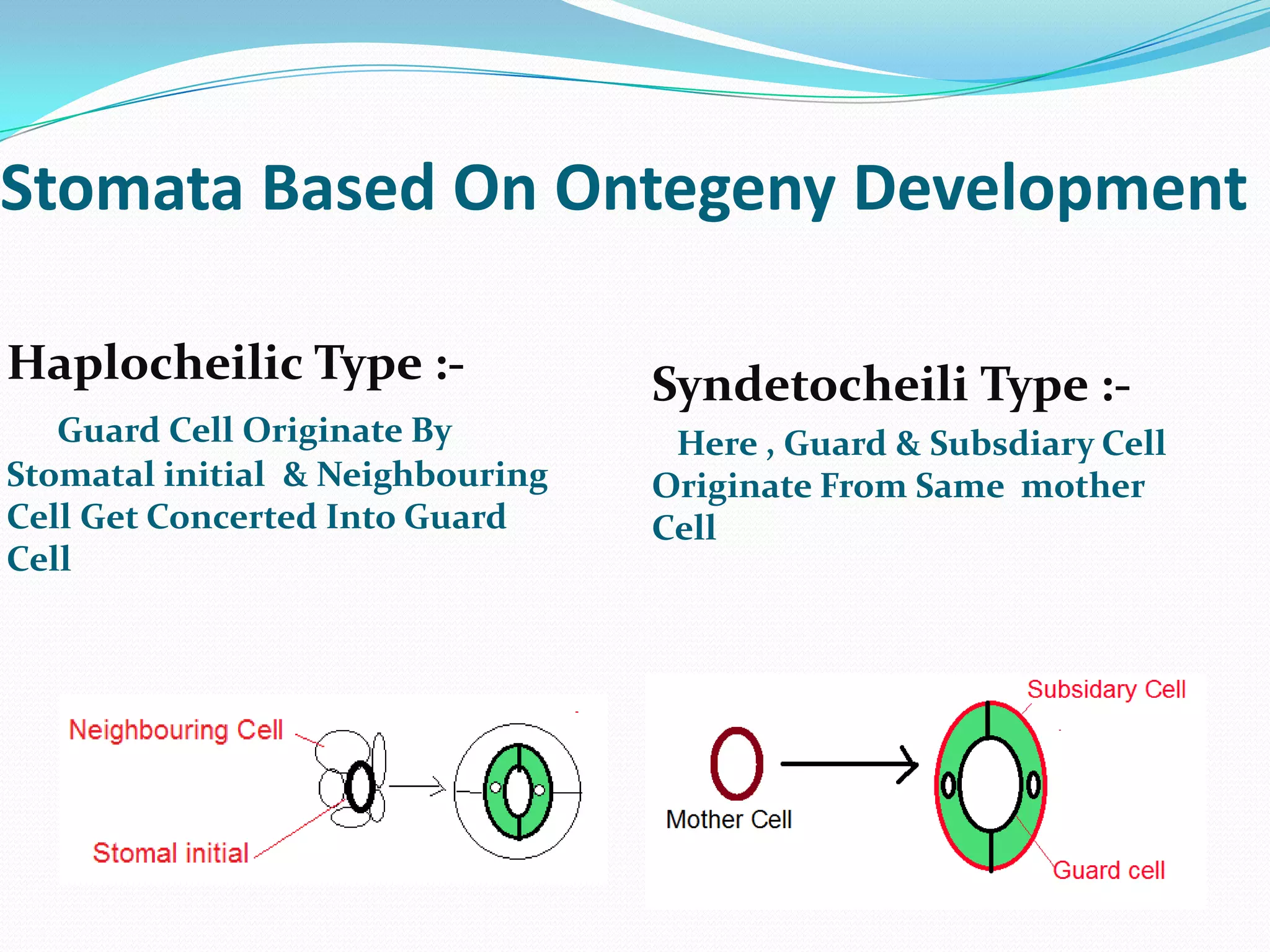
Stomata Based On Ontegeny Development
Haplocheilic Type :Guard Cell Originate By
Stomatal initial & Neighbouring
Cell Get Concerted Into Guard
Cell

Syndetocheili Type :Here , Guard & Subsdiary Cell
Originate From Same mother
Cell
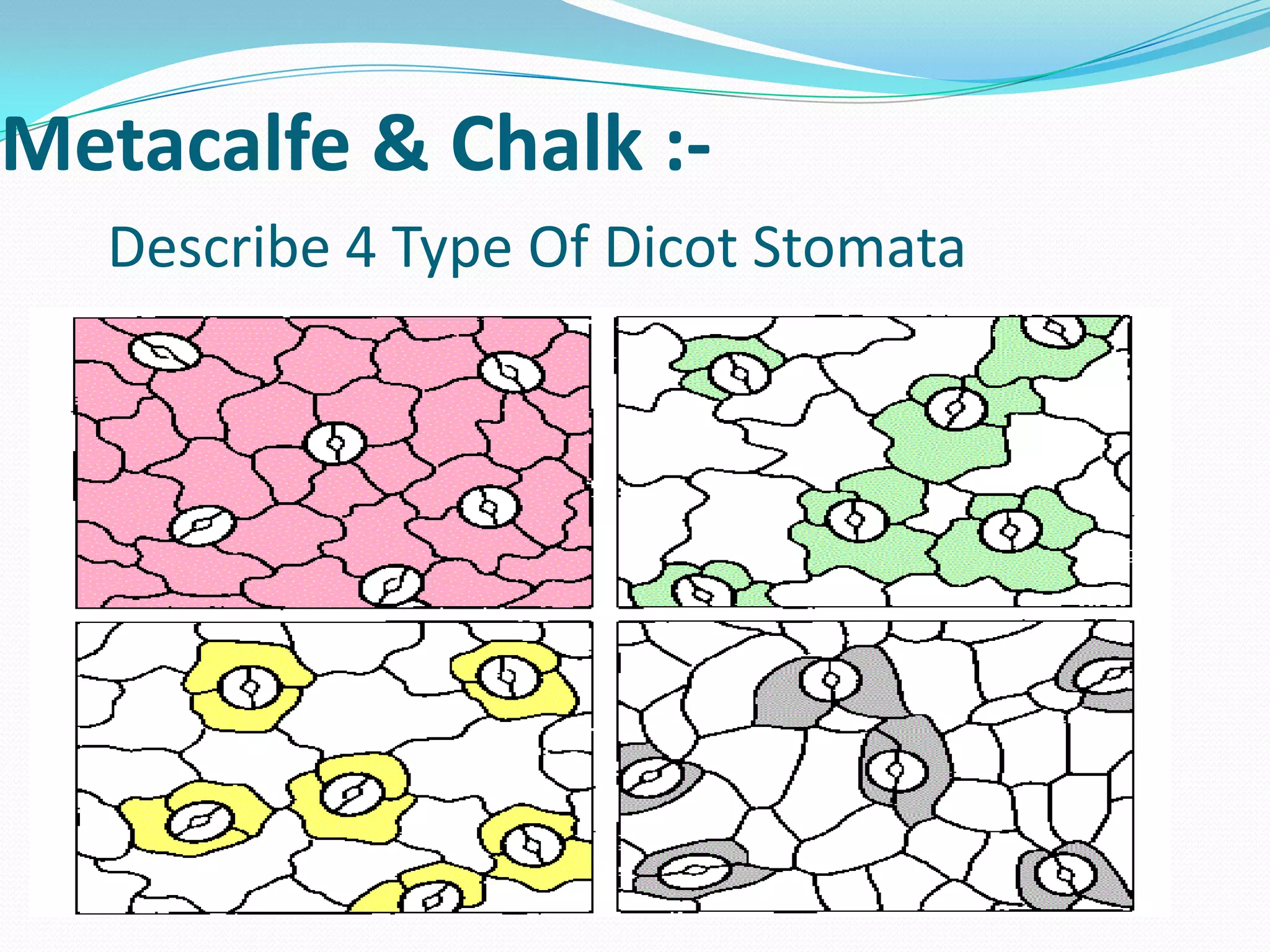
Metacalfe & Chalk :Describe 4 Type Of Dicot Stomata
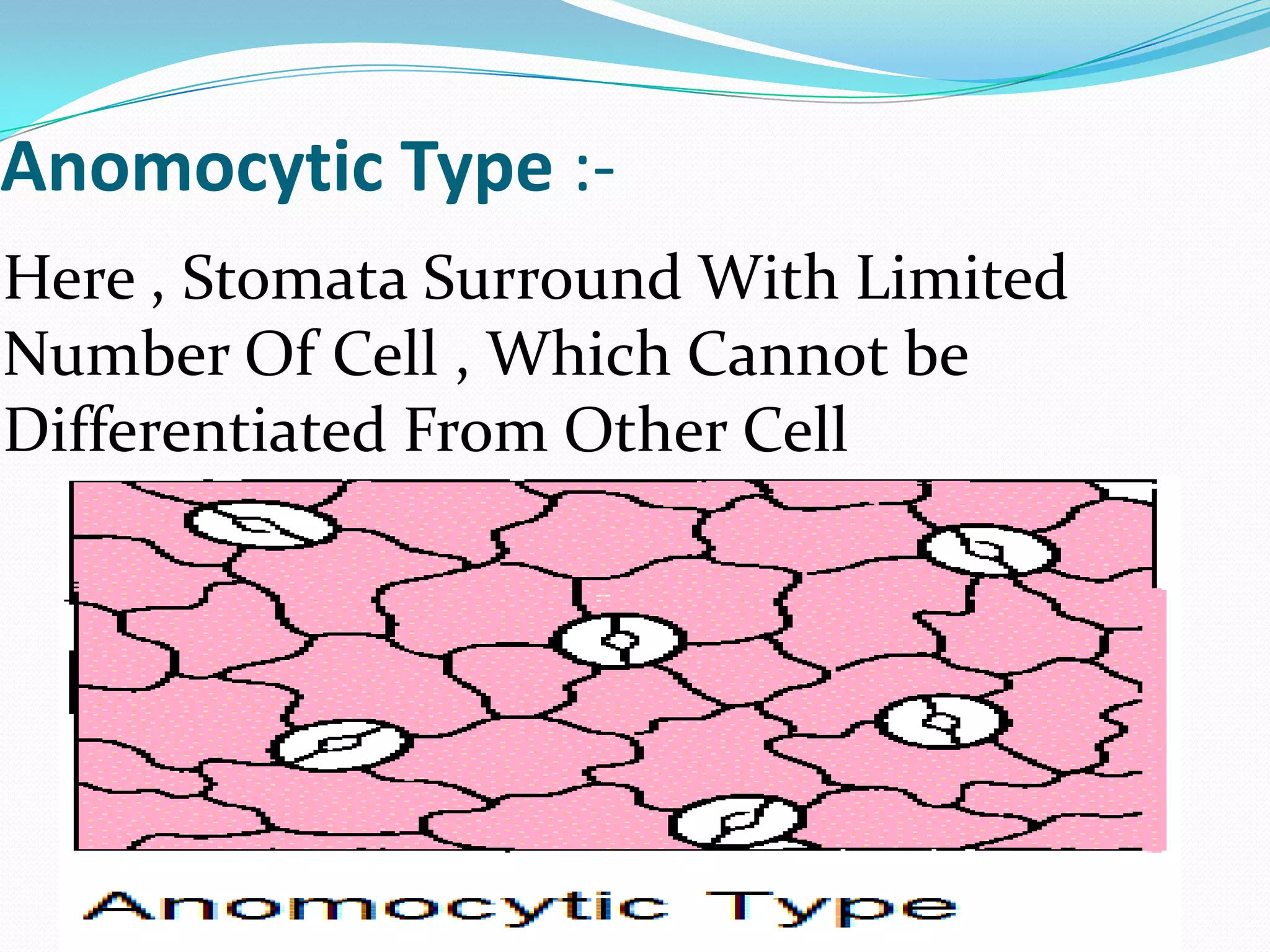
Anomocytic Type :Here , Stomata Surround With Limited
Number Of Cell , Which Cannot be
Differentiated From Other Cell
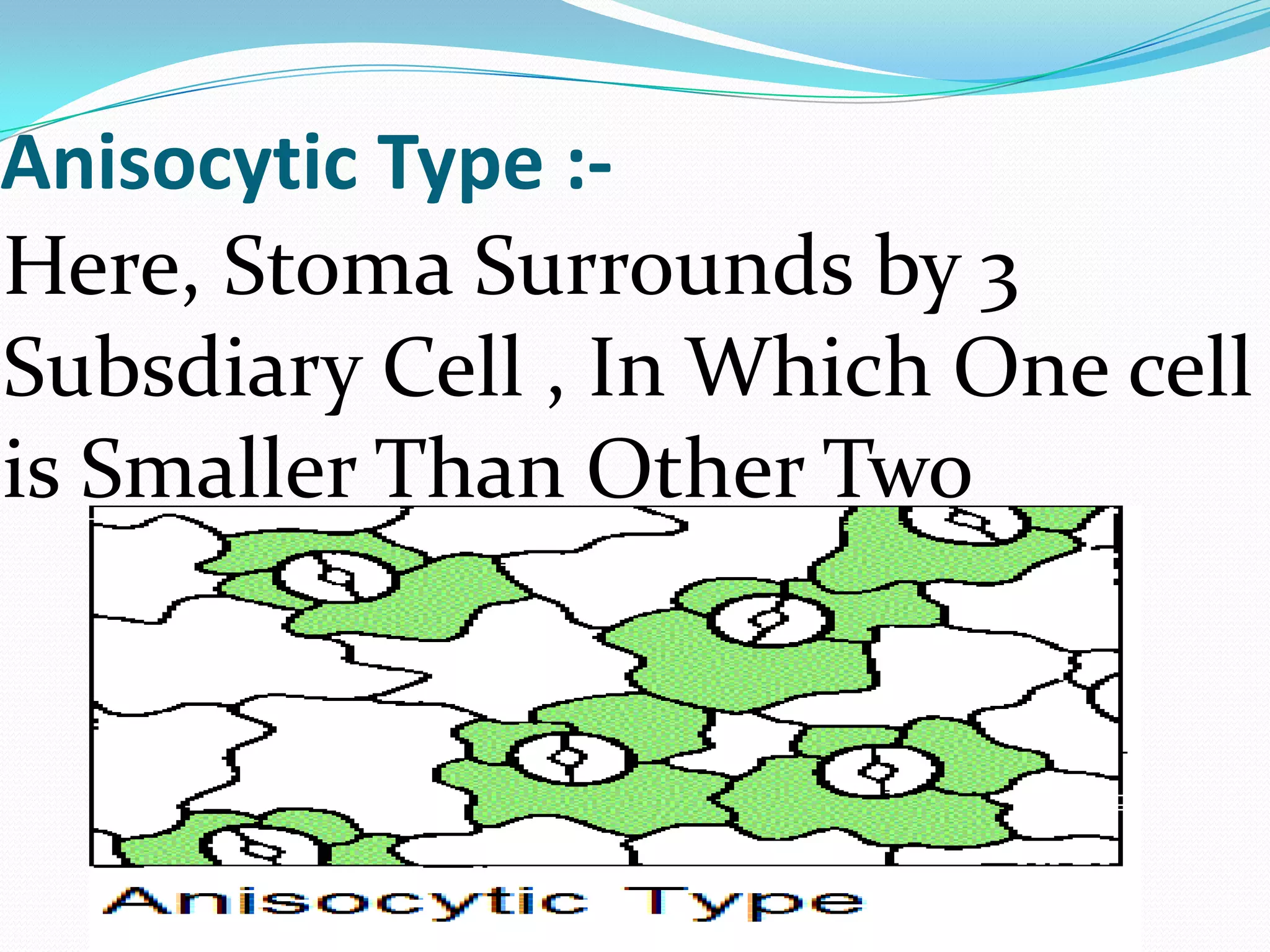
Anisocytic Type :Here, Stoma Surrounds by 3
Subsdiary Cell , In Which One cell
is Smaller Than Other Two
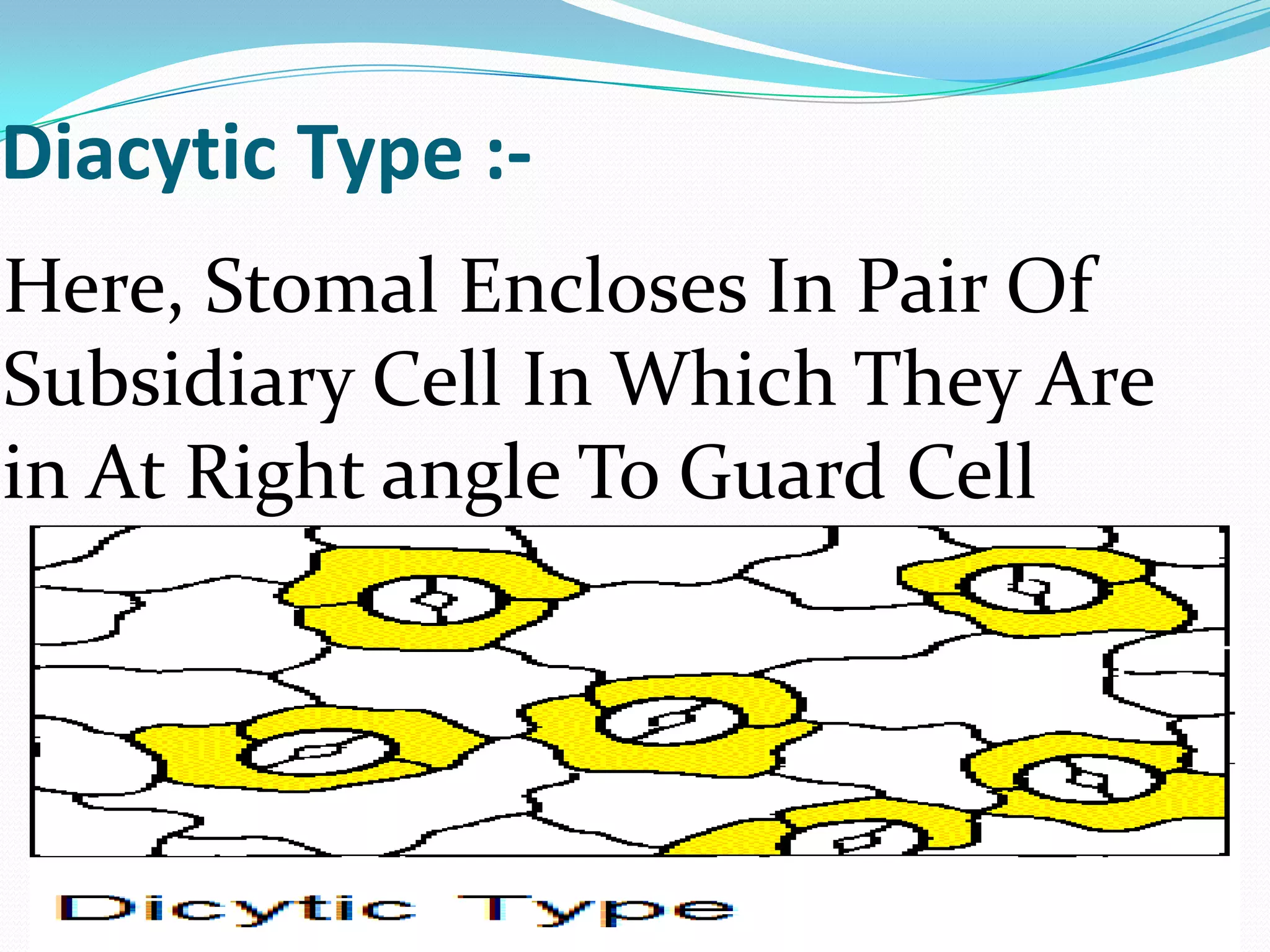
Diacytic Type :Here, Stomal Encloses In Pair Of
Subsidiary Cell In Which They Are
in At Right angle To Guard Cell
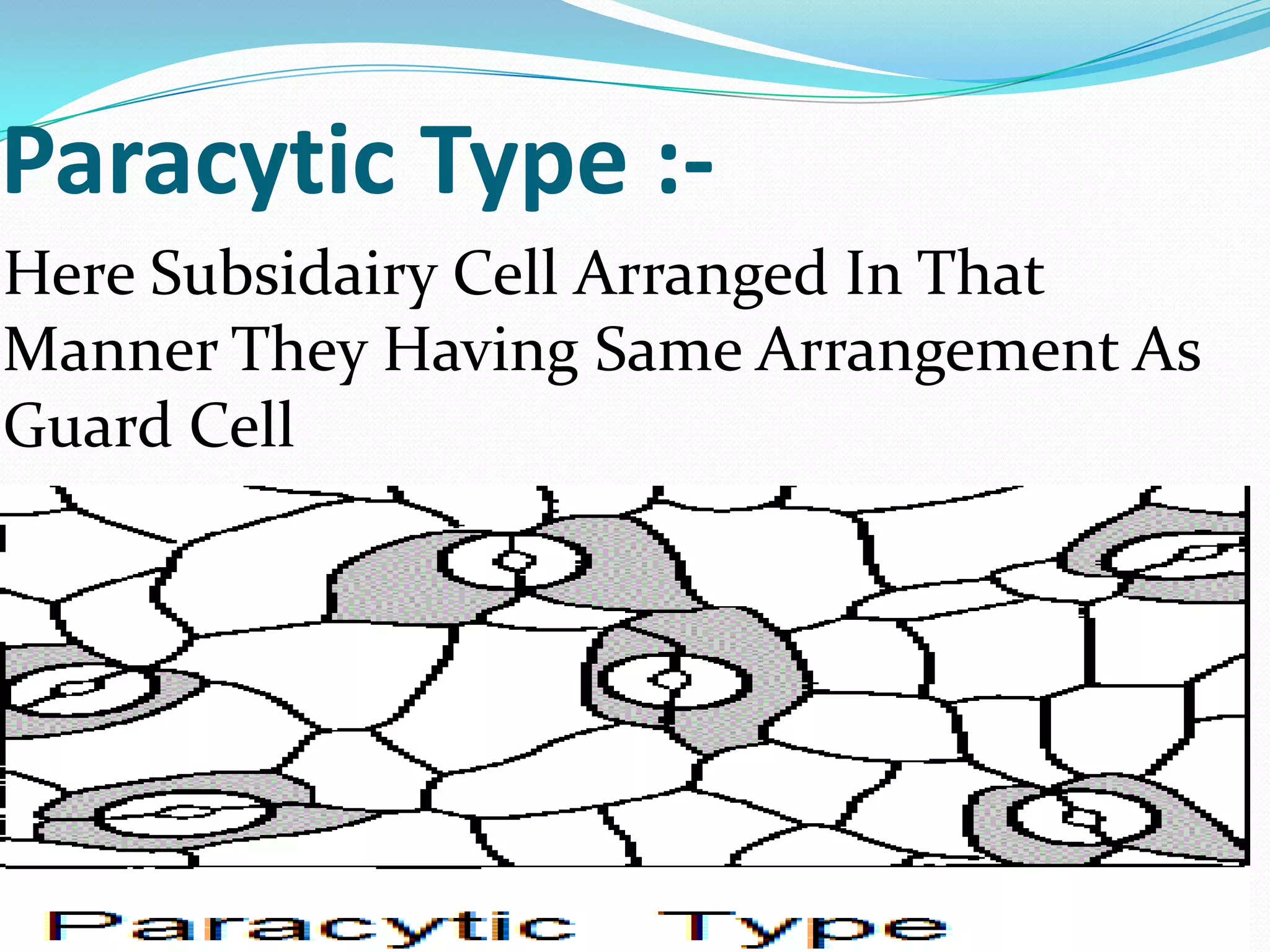
Paracytic Type :Here Subsidairy Cell Arranged In That
Manner They Having Same Arrangement As
Guard Cell

Stomata & Their Type

  • 1.
    & Their type ByPankaj Kukreti
  • 2.
    Stomata :Stomata DenotedTo Small Pore Present On Leaf , Which Are For Mean Of Gasseous Exchange & Transpiration They Constituent Three Part -Cell Pore - Guard Cell - Subsidiary Cell
  • 3.
    Cell Pore :-Pore Present On Leaf - Help In Gasseous Exchange - Transpiration Occur By This
  • 4.
    Guard Cell Specialized Cellsurrounds Stromatal Pore -Always Present In Pair - Helping Stomata In Opening & Closing -
  • 5.
    Subsidiary Cell These AreType Of Epidermal Cell Which Are Associated With Guard Cell They Are Morphologically Different From Guard Cell also Called Accessory Cell
  • 6.
    Stomatal Apparatus Stomatal Pore, Guard Cell & Subsidiary Cell Together Called Stomatal Apparatus
  • 7.
    Open & ClosedStomata >> Open Stomata Happen At Day Time Closed Stomata Happen At Night Timing >>At Open Time Transpiration Occur At Closed Timing No Transpiration Occur
  • 8.
    Types Of GuardCell In Dicot Leaf= Kidney Shape In Monocot Leaf= Dum bell Shape
  • 9.
    Arrangement Of Stomata InMonocot = Parellel In Dicot = Irregular
  • 10.
    Presence Of StomataIn Leaf Polygonum Type Mesophytic Type Monocot Type
  • 11.
    Stomata Based OnOntegeny Development Haplocheilic Type :Guard Cell Originate By Stomatal initial & Neighbouring Cell Get Concerted Into Guard Cell Syndetocheili Type :Here , Guard & Subsdiary Cell Originate From Same mother Cell
  • 12.
    Metacalfe & Chalk:Describe 4 Type Of Dicot Stomata
  • 13.
    Anomocytic Type :Here, Stomata Surround With Limited Number Of Cell , Which Cannot be Differentiated From Other Cell
  • 14.
    Anisocytic Type :Here,Stoma Surrounds by 3 Subsdiary Cell , In Which One cell is Smaller Than Other Two
  • 15.
    Diacytic Type :Here,Stomal Encloses In Pair Of Subsidiary Cell In Which They Are in At Right angle To Guard Cell
  • 16.
    Paracytic Type :HereSubsidairy Cell Arranged In That Manner They Having Same Arrangement As Guard Cell