Dr. Prashant L. Pingale
Associate Professor-Pharmaceutics
GES’s Sir Dr. M. S. Gosavi College of Pharmaceutical Education and Research,
Nashik
STERILE FORMULATIONS
Content as per Syllabus
 Introduction to parenteral products,
 Routes of administration,
 Pre-formulation of sterile products & Physicochemical properties of drug substances,
 General requirements,
 Significance of tonicity adjustment and
 Sterility testing of Parenterals.
2
Learning outcomes
 On successful completion of this unit learners shall able to:
 Know about pre-formulation of sterile products,
 Discuss a physicochemical properties of drug substances,
 Explain a general requirements of sterile products,
 Describe various routes of administration of drugs given through parenteral,
 Recognize about significance of tonicity adjustment and sterility.
3
Introduction
 Parenteral preparation are the preparation that are given by other than orally.
 Greek word: para (beside) + enteron (intestine)
 Parenterals administration should include the administration of drug by any route other
than intestine.
 Parenteral products are considered to be those sterile drugs, solutions, emulsions,
suspensions.
 Injections and transfusion fluids are come under the parental preparation.
 Injections should be sterile, isotonic, and free from the foreign particles, such as dust,
fibers etc.
 Injections are the sterile solution and suspension of drug in aqueous or oily vehicle
meant for introduction in to the body by means of an injectable needle under or through
one or more layer of skin or mucous membrane.
4
Definition of Parenteral Products
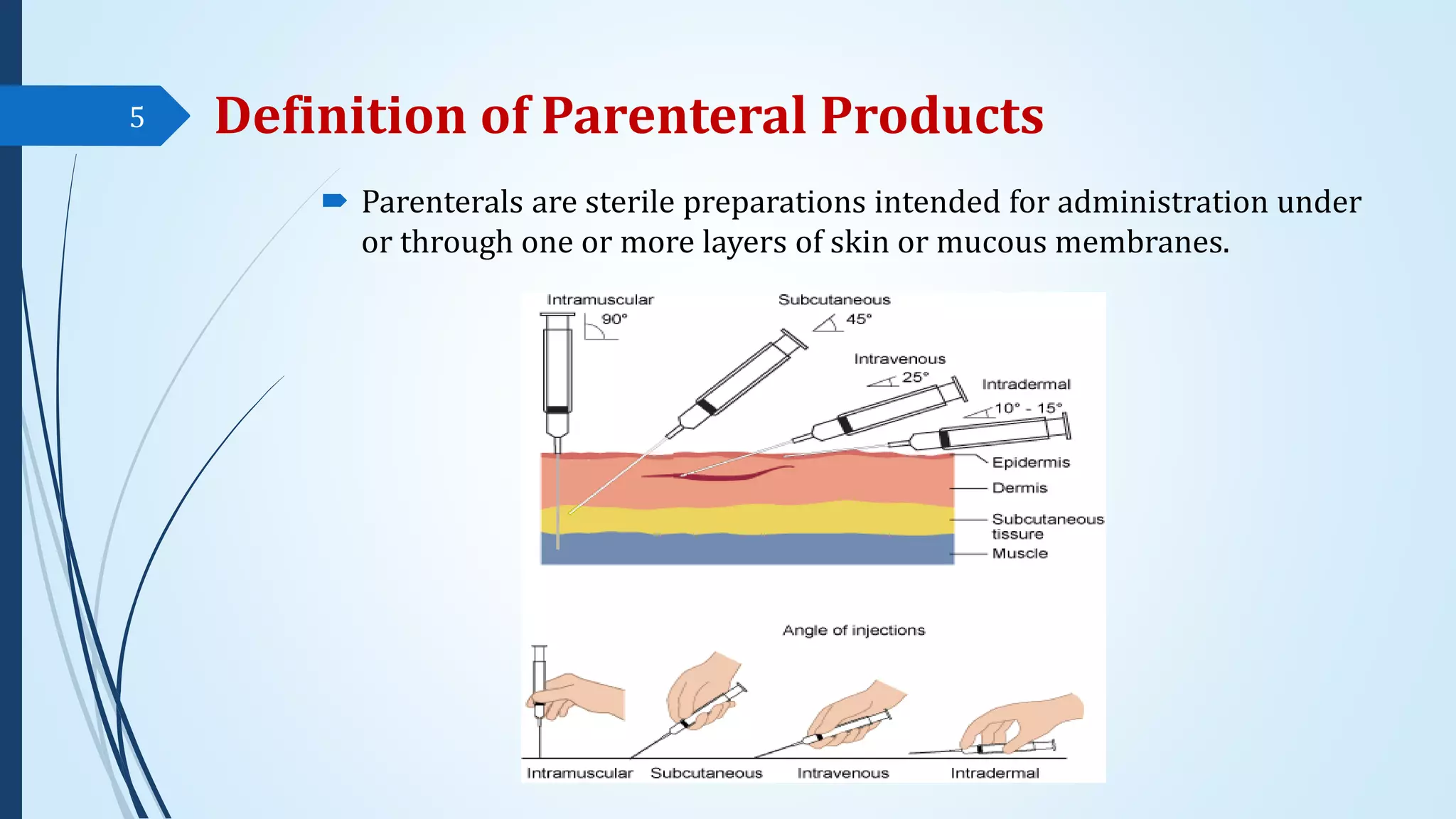
 Parenterals are sterile preparations intended for administration under
or through one or more layers of skin or mucous membranes.
5
6
The Parenterals are administration of unconscious patients.
Who can not take oral administration.
They are free from pyrogen.
Low toxicity as compared to solid dosage forms.
100% bioavailability.
No chance of missing dose.
7
Requirement of aseptic technique.
Requirement of trained personnel for administration.
Highly risky if any mistake at happens any point.
High cost as compared to solid dosage forms.
Can be painful.
May require additional equipment (programmable infusion devices).
Unique Characteristics of Parenterals
 Sterile
 Particulate-free
 Pyrogen free
 Stable for intended use
 pH – not vary significantly
 Osmotic pressure similar to blood
8
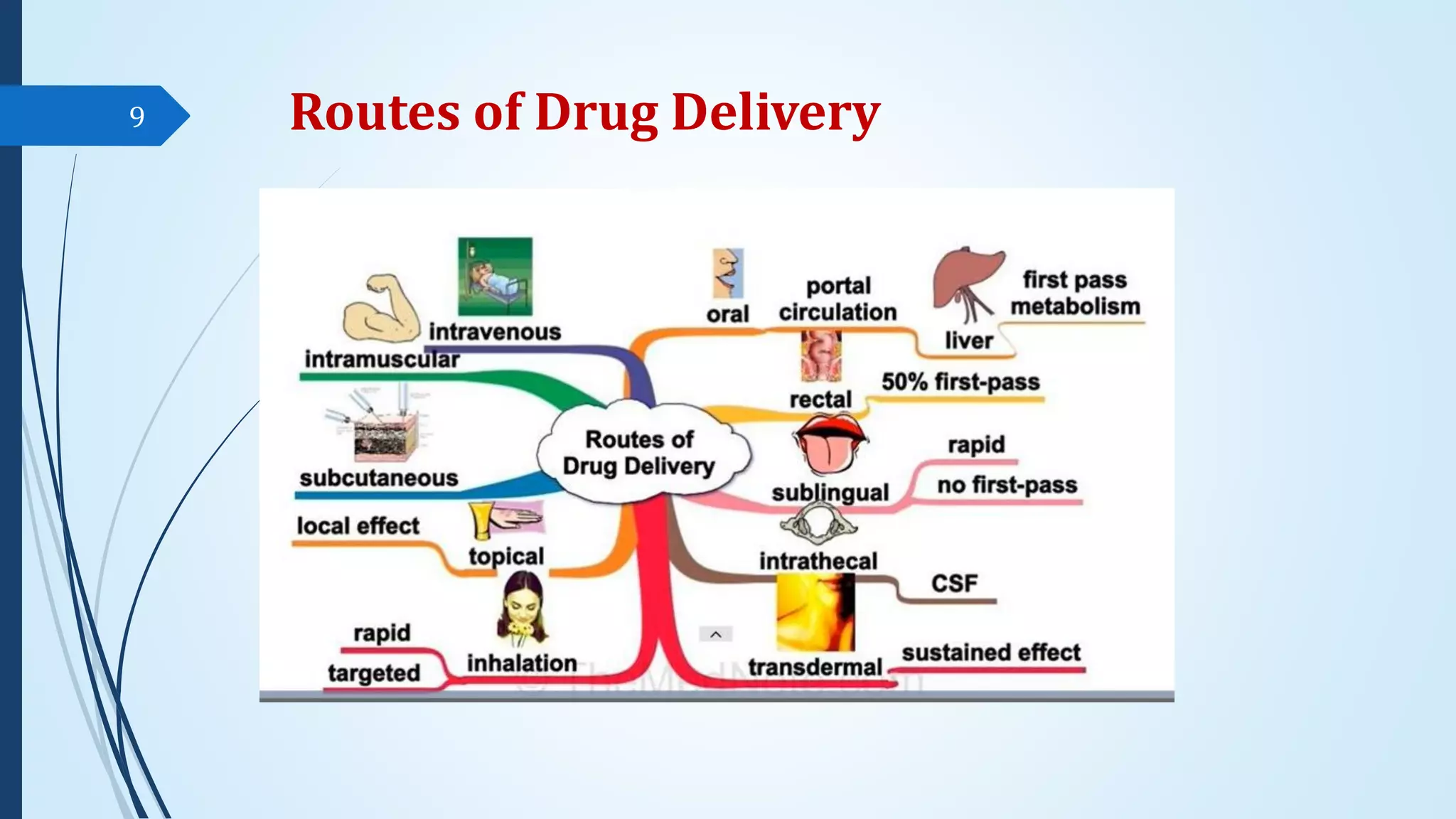
Routes of Drug Delivery9
Routes of Administration
Parenteral route includes (based on Site of release):
 Subcutaneous route (Hypodermic),
 Intra muscular,
 Intra venous,
 Intradermal (Intracutaneous),
 Intra-arterial,
 Intra-cardiac,
 Intra-thecal,
 Intraosseous- into bone marrow,
 Intrapleural,
 Intraperitoneal,
 Intra-articular.
10
Routes of Administration11
Parts of syringe
Various lengths and Gauges of Needles.
Gauge from left to right- 18,20,22,25.
The gauge refers to the inner measurement or opening of the needle.
Routes of Administration
 Subcutaneous:
 Subcutaneous route might be used for the arm, forearm, thigh and subscapular space.
 The volume used is 2 ml.
 Insoluble suspensions like insulin and solids might be applied by this route.
 Advantages:
 Absorption is slow and constant,
 It is hygienic.
 Disadvantages:
 It might lead to abscess formation,
 Absorption is limited by blood flow.
 Examples of drugs given by subcutaneous route:
 Insulin, adrenaline
12
Routes of Administration
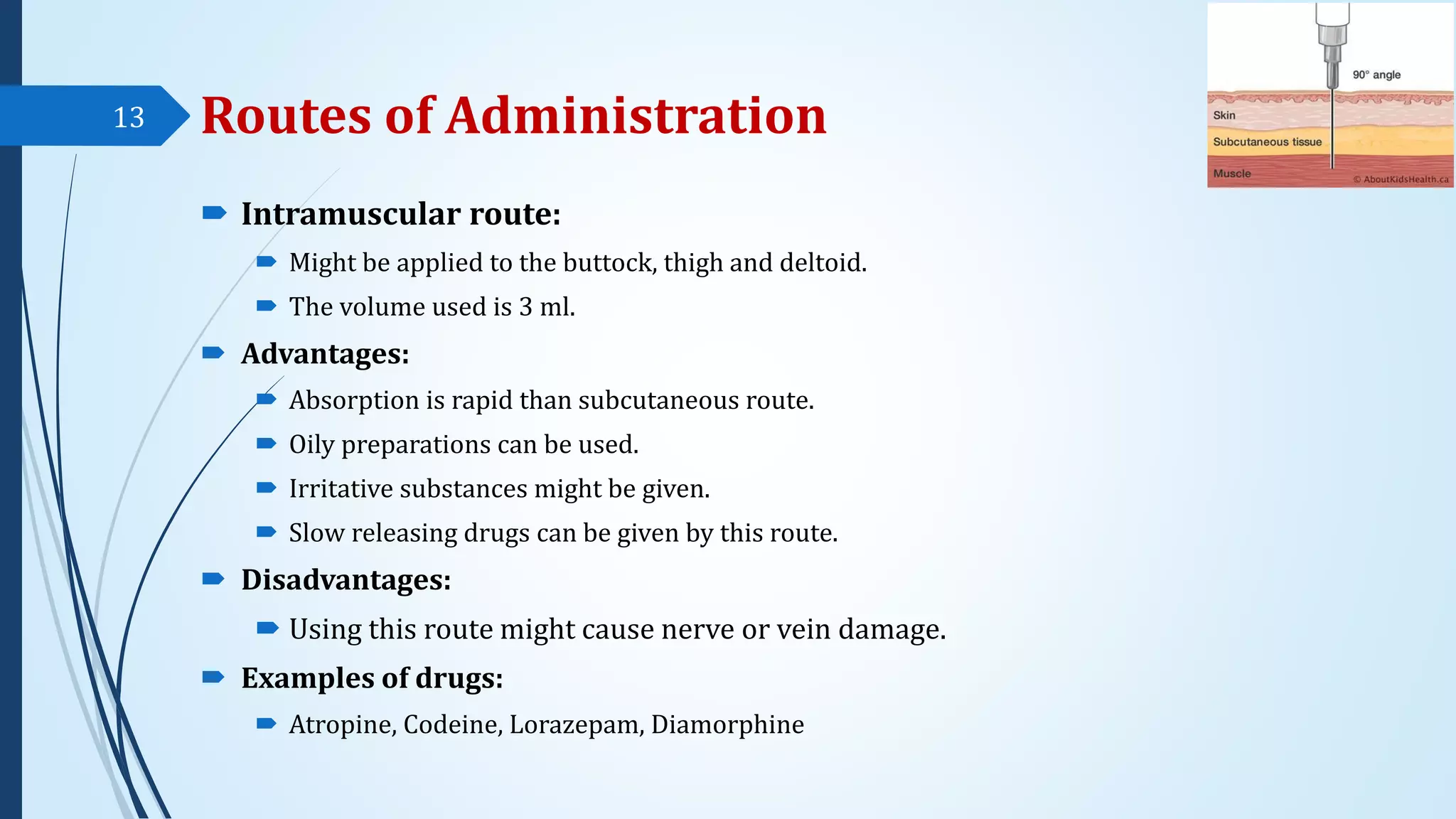
 Intramuscular route:
 Might be applied to the buttock, thigh and deltoid.
 The volume used is 3 ml.
 Advantages:
 Absorption is rapid than subcutaneous route.
 Oily preparations can be used.
 Irritative substances might be given.
 Slow releasing drugs can be given by this route.
 Disadvantages:
 Using this route might cause nerve or vein damage.
 Examples of drugs:
 Atropine, Codeine, Lorazepam, Diamorphine
13
Routes of Administration
Intravenous injections:
 Intravenous injections might be applied to the cubital, basilic and cephalic veins.
 Advantages:
 Immediate action takes place.
 This route is preferred in emergency situations.
 This route is preferred for unconscious patients.
 Titration of dose is possible.
 Large volume of fluids might be injected by this route.
 Diluted irritant might be injected.
 Absorption is not required.
 No first pass effect takes place.
 Blood plasma or fluids might be injected.
14
 Disadvantages:
 There is no retreat.
 This method is more risky.
 Sepsis-Infection might occur.
 Phlebitis (Inflammation of the blood vessel)
might occur.
 Infiltration of surrounding tissues might
result.
 This method is not suitable for oily
preparations.
 This method is not suitable for insoluble
preparations.
Routes of Administration
 Intradermal route:
 This route is mostly used for diagnostic purposes and is involved in:
 Schick test for Diphtheria,
 Dick test for Scarlet fever,
 Vaccines include DPT, BCG and polio,
 Sensitivity is to penicillin
15
Routes of Administration
 Intra-arterial route:
 Administration into the artery.
 This method is used for chemotherapy in cases of malignant
tumors and in angiography.
 Vasodilator drugs in the treatment of vasospasm.
 Thrombolytic drugs in the treatment of embolism.
16
Routes of Administration
 Intra-articular route:
 Drugs administered into the joint-space.
 Used in treatment of osteoporosis.
 Corticosteroids or hyaluronic acid may be given.
17
Routes of Administration
 Intracardiac route:
 Injection can be applied to the left ventricle in case of cardiac arrest.
 Adrenaline in cardiopulmonary attack.
18
Routes of Administration
 Injection into bone marrow: This route may be used for diagnostic or therapeutic
purposes. Occasionally used in emergency medicine and in pediatrics when IV
route is not possible.
19
Routes of Administration
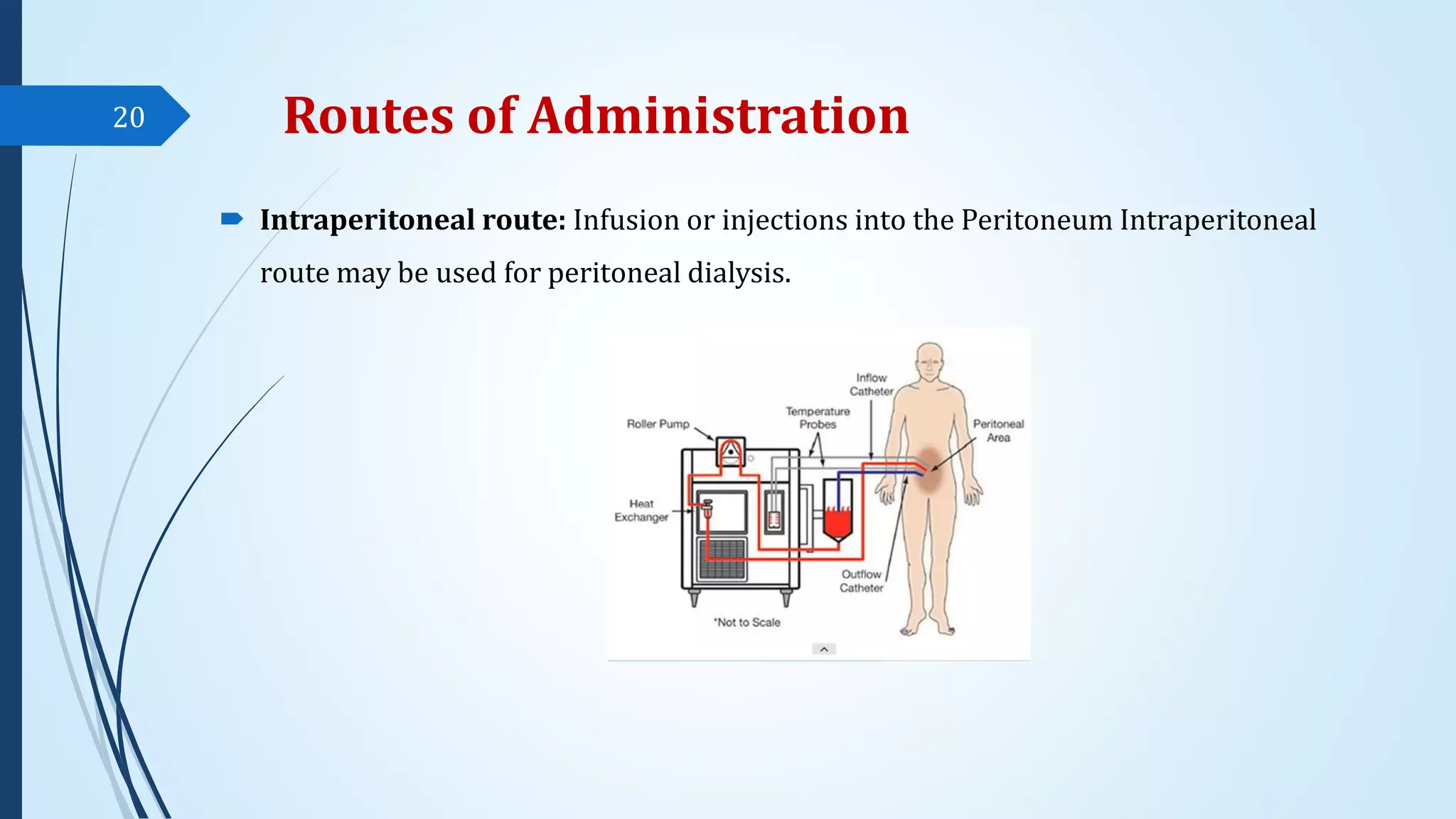
 Intraperitoneal route: Infusion or injections into the Peritoneum Intraperitoneal
route may be used for peritoneal dialysis.
20
Routes of Administration
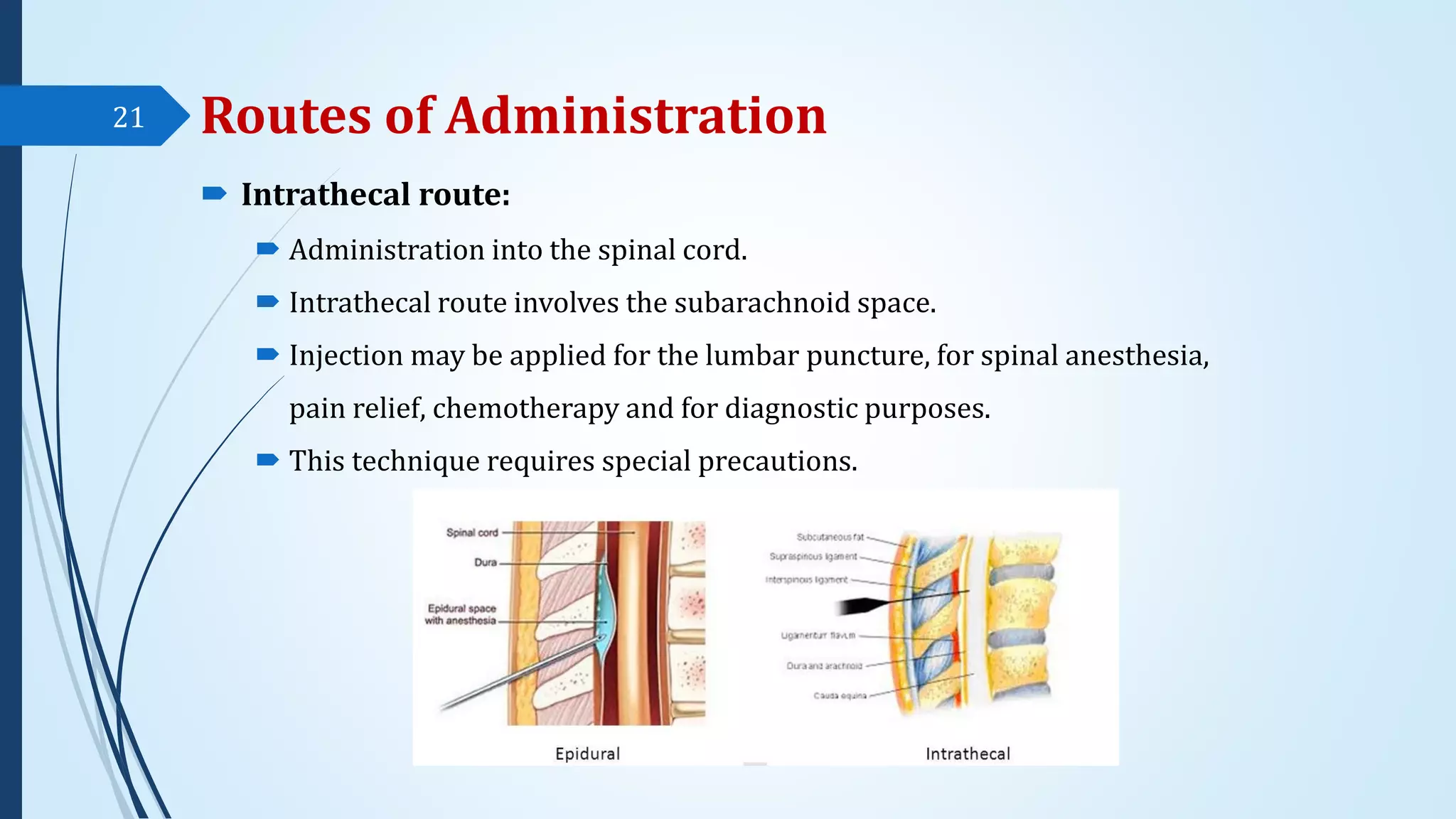
 Intrathecal route:
 Administration into the spinal cord.
 Intrathecal route involves the subarachnoid space.
 Injection may be applied for the lumbar puncture, for spinal anesthesia,
pain relief, chemotherapy and for diagnostic purposes.
 This technique requires special precautions.
21
Routes of Administration
 Intrapleural route: Penicillin may be injected in cases of lung empyma by
intrapleural route.
22
Preformulation
 Preformulation is a stage of development during which the physicochemical
properties of drug substance are characterized and established.
 The knowledge of relevant physicochemical and biopharmaceutical
properties determines the appropriate formulation and delivery method for
preclinical and Phase-I studies.
23
Preformulation and Need
 To establish the necessary physicochemical parameters of drug ubstances
 To determine kinetic rate profile
 To establish physical characteristics
 To establish compatibility with common excipients.
24
25
Bulk characterization Solubility Analysis Stability Analysis
Principle areas of Preformulation
Bulk Characterization
 Crystallinity
 Polymorphism
 Particle size
 Powder flow property
 Hygroscopicity
26
Crystallinity
 Crystal habit and internal structure of a drug can affect bulk and physicochemical
properties, which range form flow ability to chemical stability.
 The crystal habit describes the outer appearance of crystals( plate, equate, needle,
bladed, etc.) and internal structure arrangement.
27
Polymorphism
 Polymorphism is the ability of the compound to
crystallize as more than one distinct crystalline species
with different internal structure.
 Formation of different polymorphs depends on solvents,
temperature, pressure, rate of cooling, etc.
 Polymorphic transitions can also occur during milling,
granulating, drying and compressing operations.
 Different polymorphs vary in physical properties such as
dissolution, solid-state stability, compatibility, etc.
28
Particle size
 Study of particle size give an information about solubility, dissolution rate, absorption, etc.
 Fine particle characterization very important property and here smallest particle should be
tested to facilitate homogeneous sample preparation.
 Counter current Technique-To check particle size and particle volume
 BET (Brunauer, Emmet, Teller) Nitrogen Adsorption Apparatus-Measurement of surface area
 SEM( Scanning Electron Microscopy)- to check surface morphology.
29
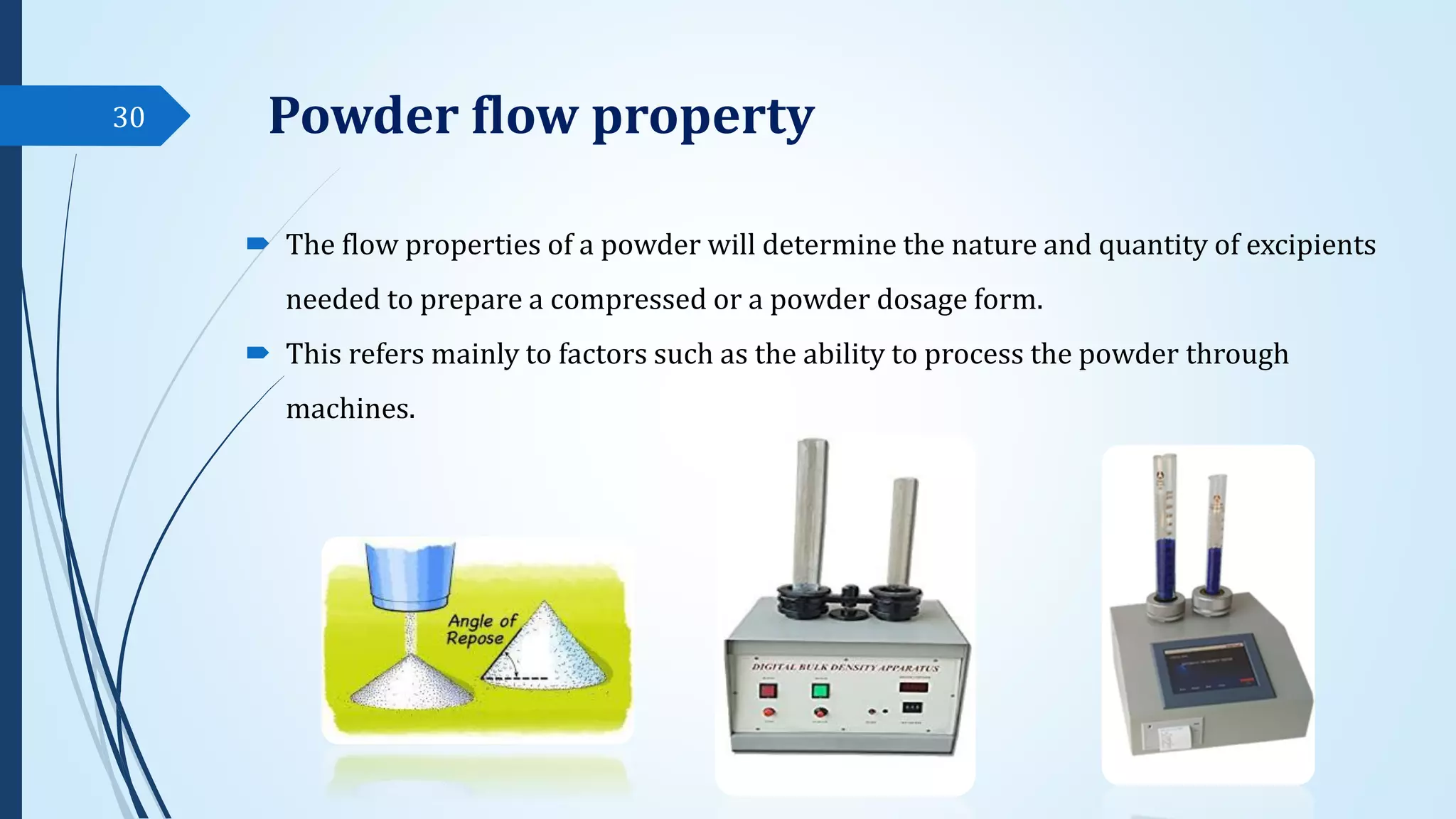
Powder flow property
 The flow properties of a powder will determine the nature and quantity of excipients
needed to prepare a compressed or a powder dosage form.
 This refers mainly to factors such as the ability to process the powder through
machines.
30
Hygroscopicity
 The tendency of a solid to take up water from the atmosphere, as it is subjected to a
controlled RH program under isothermal condition i.e. hygroscopicity.
 Classified based on the amount of rate of water uptake when a solid is exposed to
controlled RH value at a specified temperature.
31
Solubility Analysis
 Aqueous Solubility
 Drug pKa / Ionization at Physiological pH
 Partition Coefficient
 Thermal effect
32
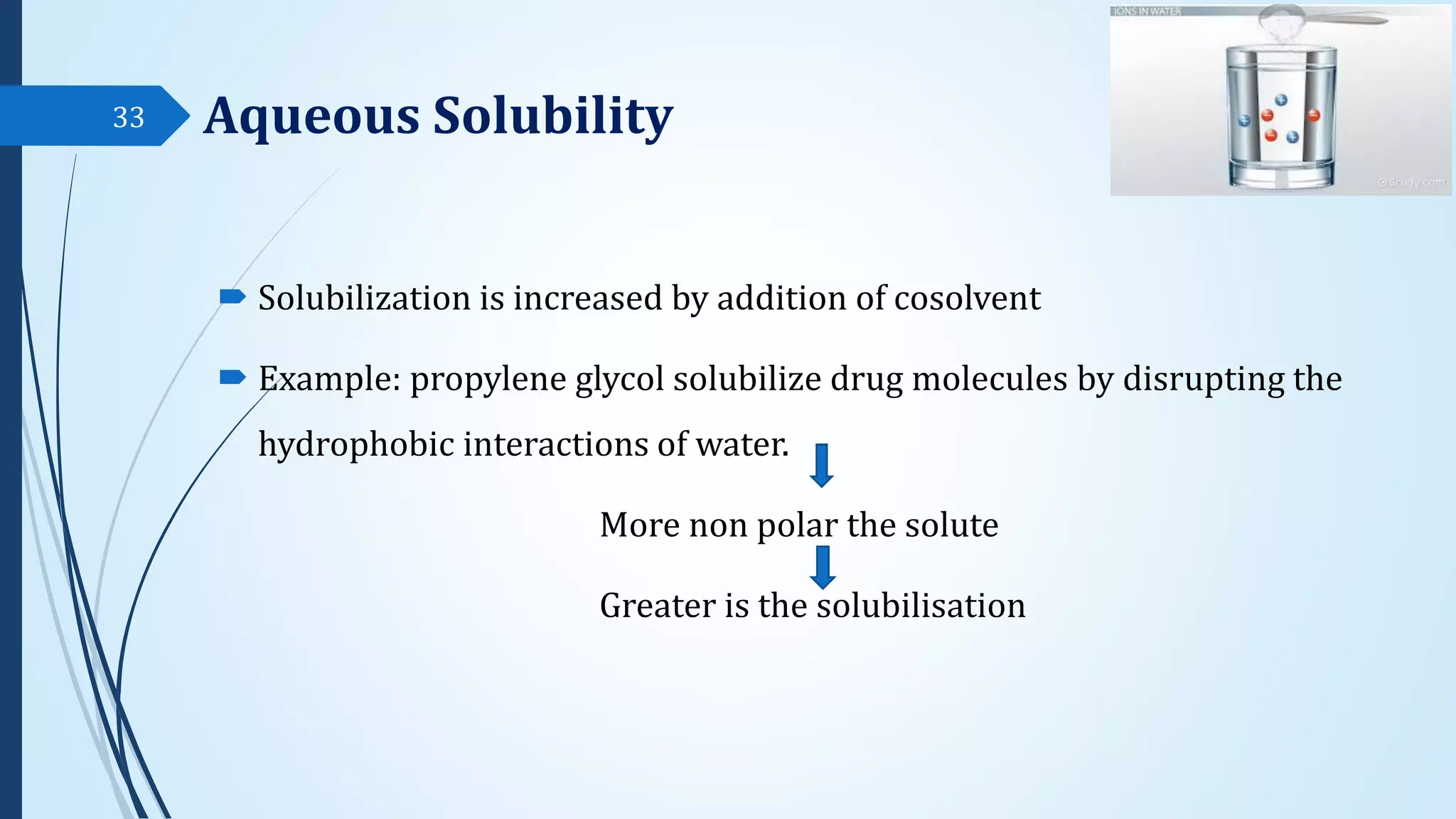
Aqueous Solubility
 Solubilization is increased by addition of cosolvent
 Example: propylene glycol solubilize drug molecules by disrupting the
hydrophobic interactions of water.
More non polar the solute
Greater is the solubilisation
33
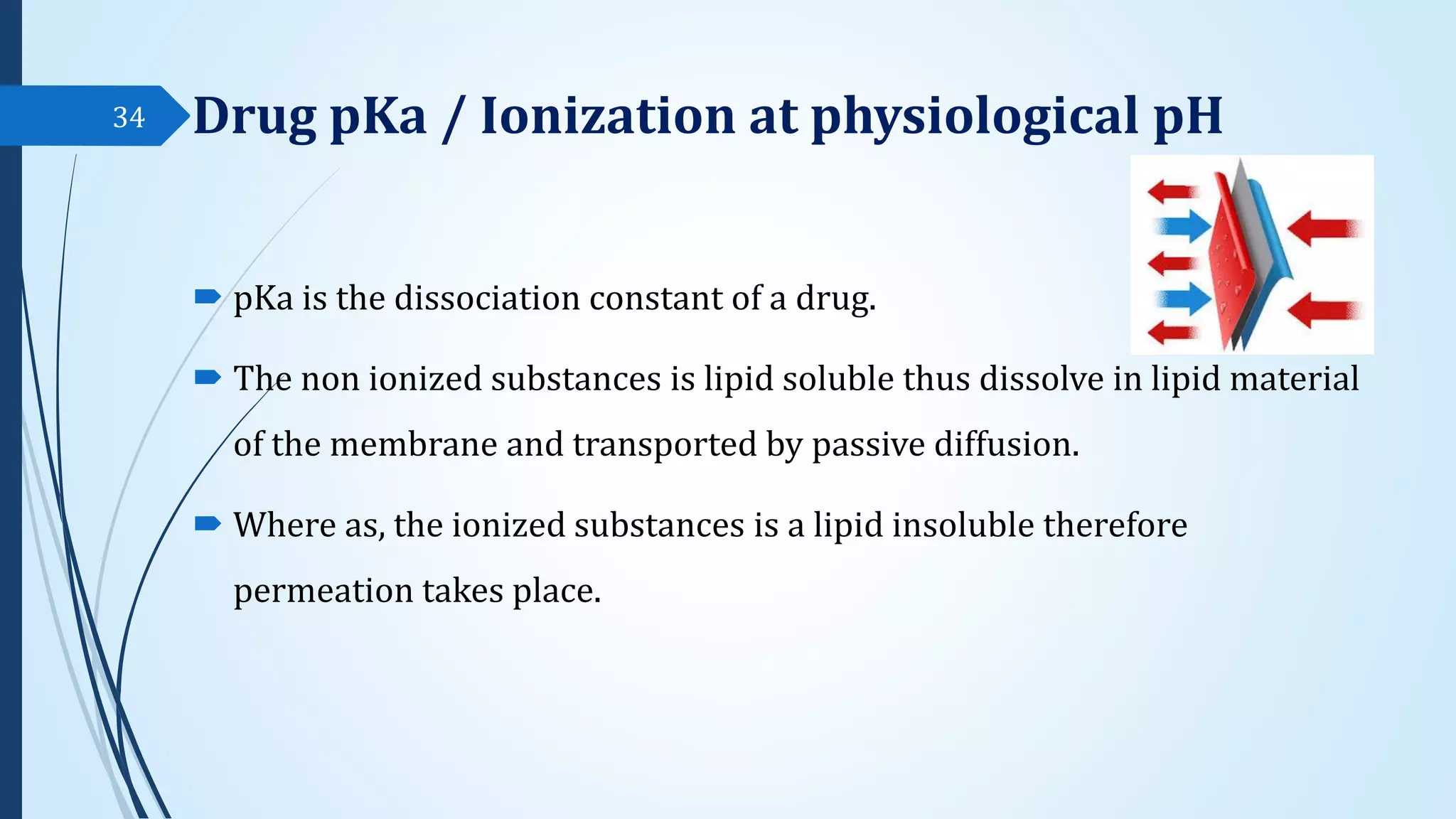
Drug pKa / Ionization at physiological pH
 pKa is the dissociation constant of a drug.
 The non ionized substances is lipid soluble thus dissolve in lipid material
of the membrane and transported by passive diffusion.
 Where as, the ionized substances is a lipid insoluble therefore
permeation takes place.
34
Drug pKa / Ionization at physiological pH
 The percentage of ionization can be calculated as:
 For Acidic compounds:
% ionized = 100/ 1+ antilog (pKa – pH)
 For Basic compounds:
% ionized = 100/ 1+ antilog (pH – pKa)
 Degree of ionization depends up on the pH.
 For acidic drugs pKa ranges from 3-7.5.
 For basic drugs pKa ranges from 7-11
35
Partition Coefficient
 Partition coefficient influence permeation of a drug across biological
membrane.
 Partition coefficient is a ratio of equilibrium concentration of drug in
oil phase to equilibrium concentration of drug in aqueous phase.
K=Co/Cw
 where, Co is organic phase concentration and Cw is aqueous phase
concentration
36
Thermal/Heat Effects
 Drugs which are unstable to heat requires refrigerate storage or lyophilization
(these products must be used within short periods)
 If it is endothermic ---> ΔH is +ve, increase in temp ---> increase in drug solubility
 If it is exothermic ---> ΔH is –ve increase in temp ---> decrease in drug solubility
 For determining ΔH
ln S= - ΔH /RT + C
where S is molar solubility at temperature, T is temperature in Kelvin, R is gas constant, C is constant.
37
van 't Hoff equation
Stability analysis
 Stability in toxicology formulation
 Solution stability
 Solid state stability
38
Stability in toxicology formulation
 Toxicology studies typically commence early in development, it is often
advisable to evaluate samples of the toxicology preparation for stability
and potential homogeneity problems.
39
Solution stability
 The primary objective of this phase of pre-formulation research
is identification of condition necessary to form a stable solution.
 This study include-effect of pH, ionic strength, light, temperature
and oxygen.
40
Solid state stability
 Solid phase stability depends on several factors like temperature, pH,
humidity, hydrolysis, oxidation, etc
 For a new drug compound
Weighed sample are place in open screw cap vials and are exposed directly
to light, temperature, humidity for 12 weeks.
41
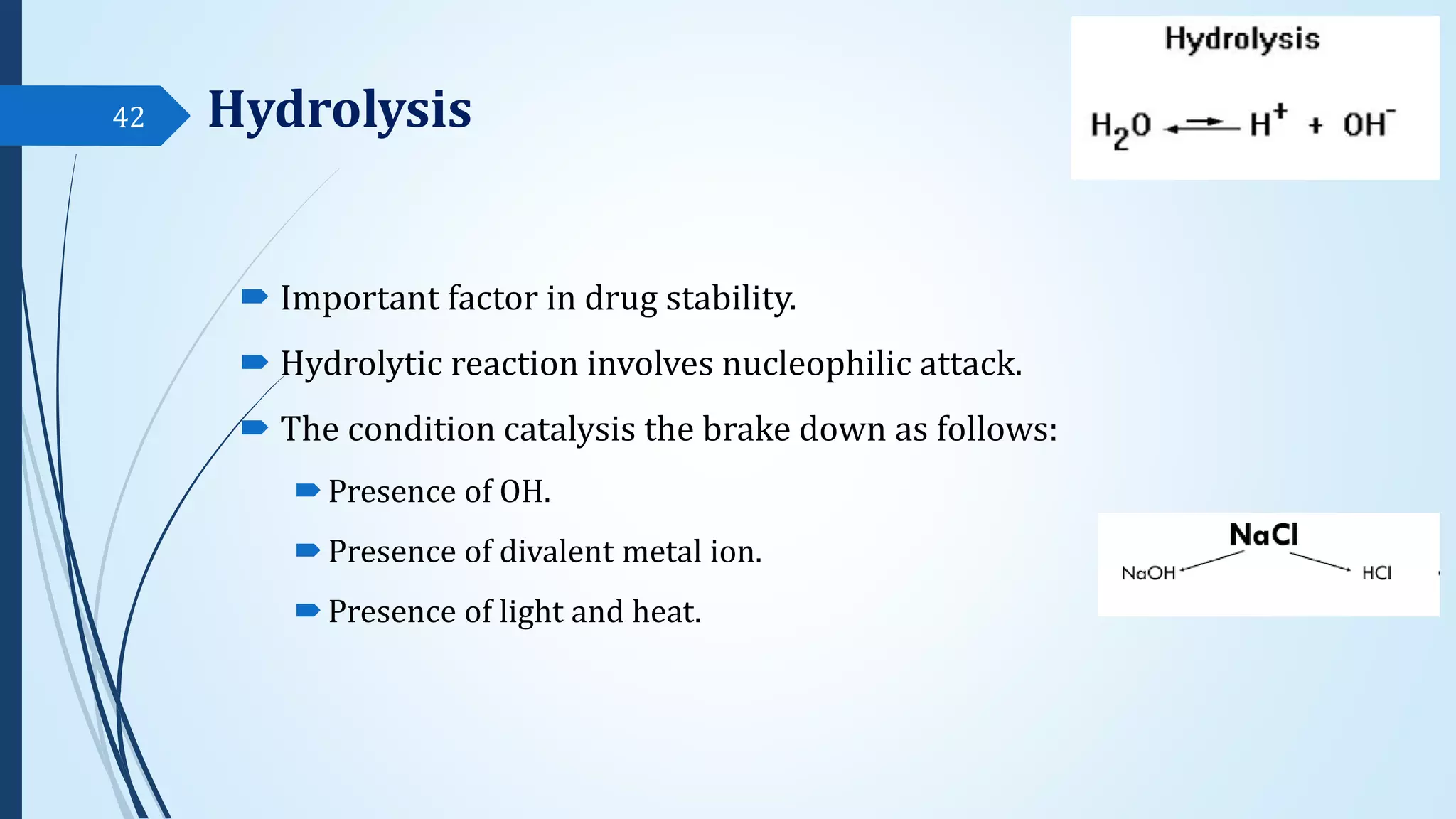
Hydrolysis
 Important factor in drug stability.
 Hydrolytic reaction involves nucleophilic attack.
 The condition catalysis the brake down as follows:
Presence of OH.
Presence of divalent metal ion.
Presence of light and heat.
42
Oxidation and Reduction
 Oxidation is controlled by environment (i.e.) light, oxygen & oxidizing
agent.
 Reduction is based on redox reaction where there is mutual change in
electrons.
43
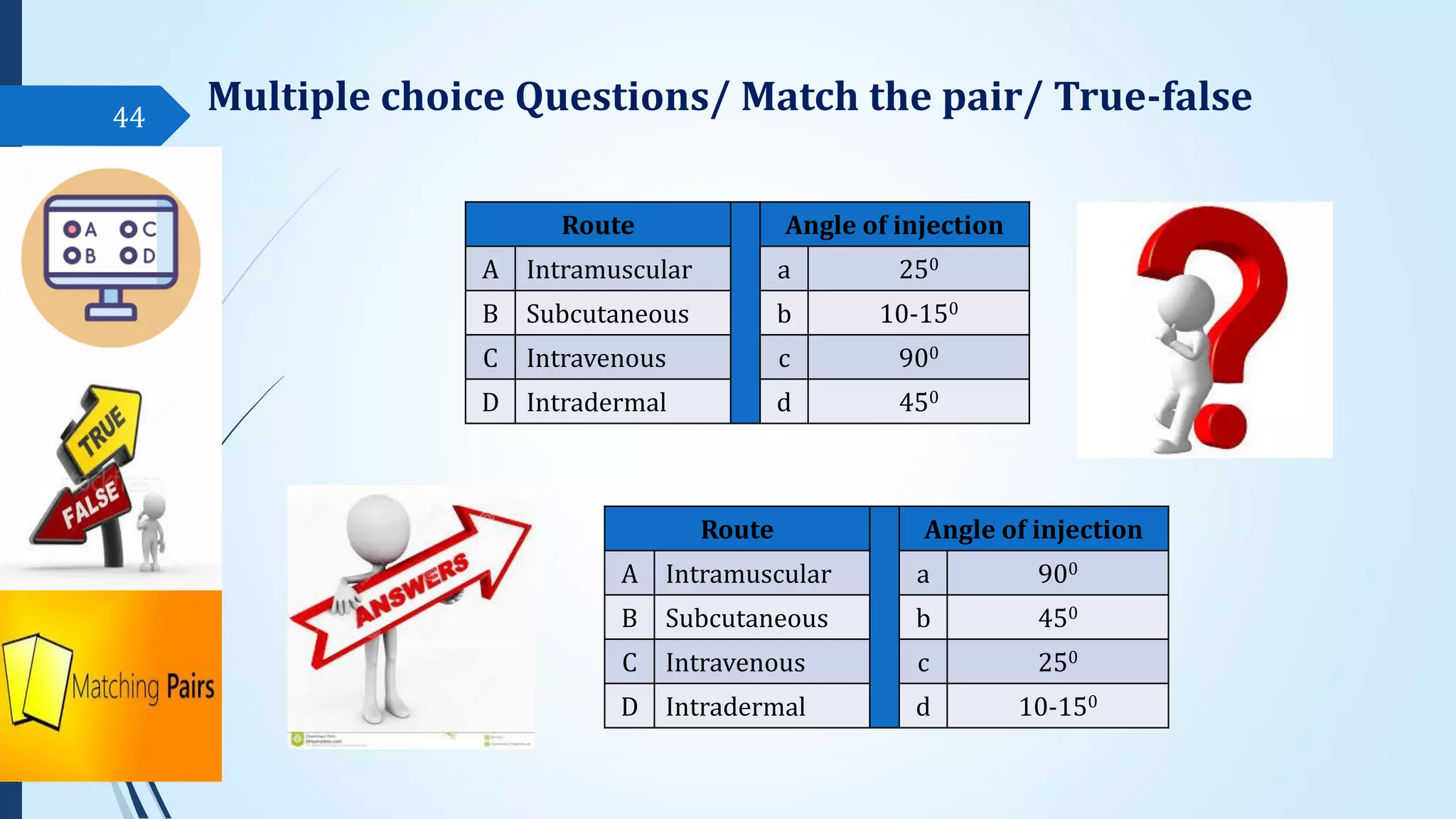
Multiple choice Questions/ Match the pair/ True-false44
Route Angle of injection
A Intramuscular a 250
B Subcutaneous b 10-150
C Intravenous c 900
D Intradermal d 450
Route Angle of injection
A Intramuscular a 900
B Subcutaneous b 450
C Intravenous c 250
D Intradermal d 10-150
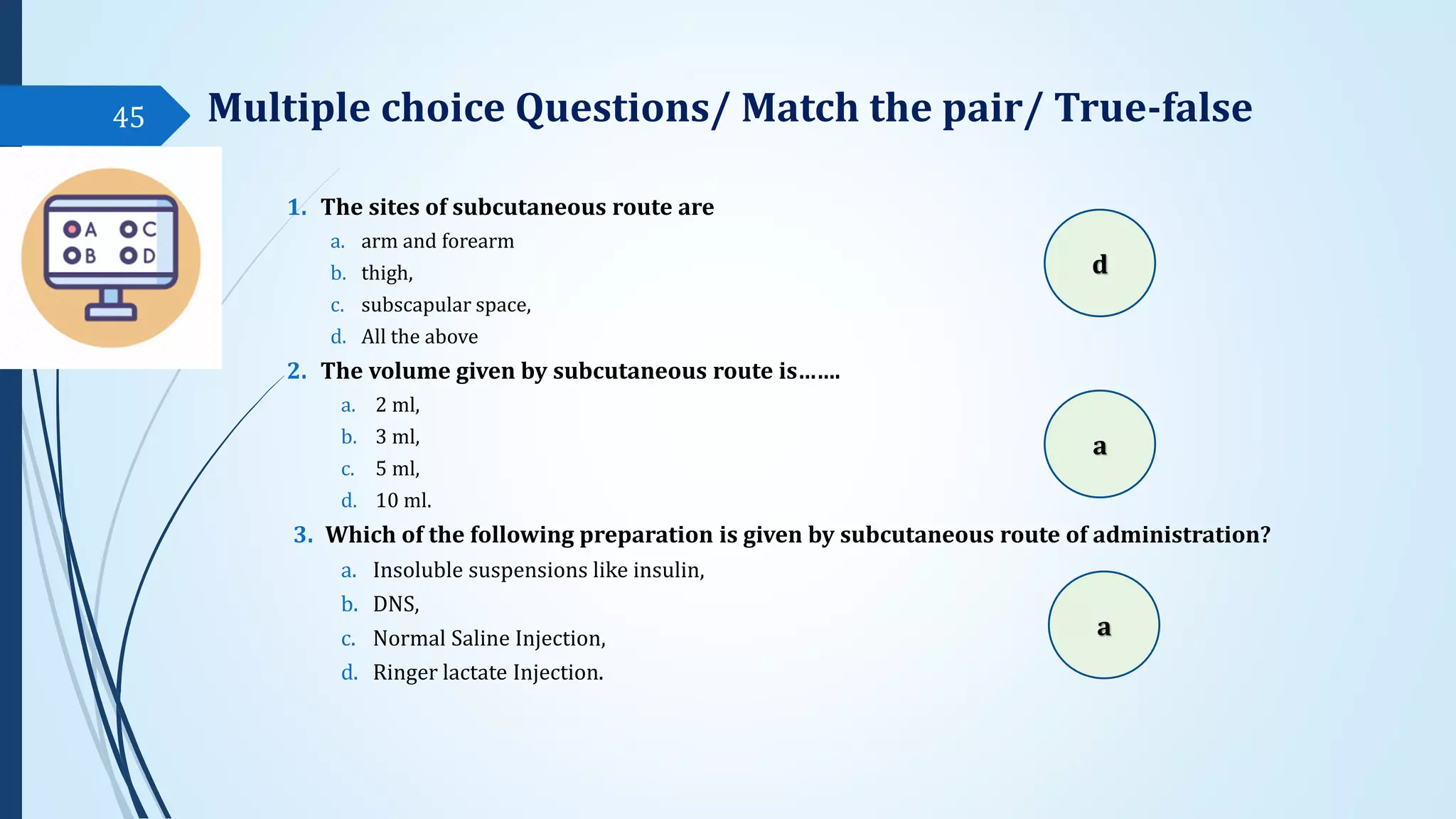
Multiple choice Questions/ Match the pair/ True-false
1. The sites of subcutaneous route are
a. arm and forearm
b. thigh,
c. subscapular space,
d. All the above
2. The volume given by subcutaneous route is…….
a. 2 ml,
b. 3 ml,
c. 5 ml,
d. 10 ml.
3. Which of the following preparation is given by subcutaneous route of administration?
a. Insoluble suspensions like insulin,
b. DNS,
c. Normal Saline Injection,
d. Ringer lactate Injection.
45
d
a
a
Multiple choice Questions/ Match the pair/ True-false
4. The sites of intramuscular route are
a. Buttock,
b. thigh,
c. deltoid,
d. All the above
5. The volume given by intramuscular route is…….
a. 2 ml,
b. 3 ml,
c. 5 ml,
d. 10 ml.
6. Which of the following preparations are given by intradermal route except…
a. DBT vaccine,
b. BCG vaccine,
c. DNS injection,
d. Polio vaccine
46
d
b
c
 Vehicle
 Types of parenteral additives:
 Antimicrobials
 Antioxidants
 Buffers
 Bulking agents
 Chelating agents
 Protectants
47
 Solubilizing agents
 Surfactants
 Tonicity adjusting agents
 Antifungal agents
 Hydrolysis inhibitors
 Antifoaming agents
Ideal properties of sterile dosage forms
 Sterility:
 Sterile preparations should be free from all types of microorganisms.
 Ophthalmic formulations must be especially free from Pseudomonas aeruginosa, gram negative
bacteria which is commonly found in ophthalmic formulations and can cause serious infections
to cornea.
 Isotonicity:
 Parenteral preparations should be isotonic with blood plasma and body fluids.
 Ophthalmic formulations must be isotonic with lachrymal secretions.
 Free from pyrogens:
 Sterile formulations must be free from pyrogens and toxins.
 These products must pass pyrogen test as pyrogens are responsible for rise in body temperature.
48
Ideal properties of sterile dosage forms
 Free from foreign particles:
These products must be free from foreign particles, dust, fibres and must pass clarity
test.
 pH of ophthalmic formulations:
pH of tears is about 7.4. pH plays crucial role in therapeutic activity, solubility, stability
and comfort to the patient.
 Stability:
Physical and chemical stability of sterile formulations should be maintained during
storage.
49
Types of Parenteral Products50
Small Volume Parenterals
(SVP)
Large Volume Parenterals
(LVP)
Difference in SVP and LVP51
Categories of parenteral preparations
 The different categories of parenteral preparations include:
Injections;
Intravenous infusions;
Powders for injections or intravenous infusions;
Concentrates for injections or intravenous infusions;
Implants
52
Vehicles for Injection
 Aqueous vehicles:
 Frequently, isotonic (to blood) to which drug may be added at time of use.
 Water-miscible vehicles:
 Portion of the vehicle in the formulation,
 used primarily to effect solubility of drugs and/or reduce hydrolysis
 ethyl alcohol; polyethylene glycol (liquid) and propylene glycol
 Nonaqueous vehicles:
 Fixed oils (vegetable origin, and rancid resistance) used in hormone preparations
53
Aqueous vehicles
 Water for Injection (WFI) USP
 Sterile Water for Injection (SWFI)
 Bacteriostatic Water for Injection USP
 Sterile Water for Irrigation USP
 Sterile Water for Inhalation USP
54
Water for Injection (WFI) USP
 Highly purified water used as a vehicle for injectable
preparations which will be subsequently sterilized.
 USP requirement: NMT 10 ppm (1 mg/100 ml) of total
solids.
 pH of 5.0 – 7.0 .
 WFI may be prepared by either distillation or reverse
osmosis.
 Stored in chemically resistant tank.
 Used as solvent for preparation of parenteral solutions.
 It is not required to be sterilized and pyrogen free.
 It is intended to be used within 24 hours after collection.
 The water should be collected in sterile and pyrogen free
containers.
55
Specifications for WFI as per USP
Sterile Water for Injection (SWFI)
 Sterile Water for Injection is Water for Injection packaged and rendered sterile.
 Is water for injection that is sterilized and packaged in single dose container of type1 and 2 glass.
 It is used for extemporaneous prescription compounding and as a sterile diluent for parenteral
products.
 It may also be used for other applications when
Access to a validated water system is not practical, or
Where only a relatively small quantity is needed.
 Sterile Water for Injection is packaged in single-dose containers not larger than 1 L.
 Multiple- dose containers not exceeding 30 ml.
 They are permitted to contain higher levels of solid than WFI because of possible leaching.
 Used for washing wounds, surgical incisions or body tissues.
56
Why TDS in SWFI
is more than
WFI?
Bacteriostatic Water for Injection USP
 Water for Injection, packaged and rendered sterile, to which one or more suitable
antimicrobial preservatives are added or Is sterile water for injection that contains one
or more suitable antimicrobial agents.
 Sterile water containing 0.9% benzyl alcohol that is used to dilute or dissolve
medications.
 It is intended to be used as a diluent in the preparation of parenteral products.
 These are typically for multi-dose products that require repeated content withdrawals.
 It also packaged in single or multiple dose container of type 1 and 2 glass.
 It may be packaged in single-dose or multiple-dose containers not larger than 30 mL.
57
Sterile Water for Irrigation USP
 Water for Injection packaged and sterilized in single-dose containers which may be
larger than 1 L.
 Is water for injection that is sterilized and suitably packaged.
 They allow rapid delivery of their contents.
 Due to its usage, Sterile Water for Irrigation is not required to meet Particulate Matter
in Injections.
 It contains no antimicrobial agents or other added substances.
58
Sterile Water for Inhalation USP
 Is Water for Injection that is packaged and rendered sterile.
 It is intended for use in inhalators and in the preparation of inhalation solutions.
 This monograph has no requirement to meet.
 It carries a less stringent specification for bacterial endotoxins than Sterile Water for
Injection.
 Therefore is not suitable for parenteral applications.
59
Water-miscible vehicles
 A number of solvents that are miscible with water have been used as a portion of the
vehicle in the formulation of parenterals.
 These solvents are used to solubilize certain drugs in an aqueous vehicle and to
reduce hydrolysis.
 The most important solvents in this group are ethyl alcohol, liquid polyethylene glycol
and propylene glycol.
 Ethyl alcohol is used in the preparation of solutions of cardiac glycosides and the
glycols in solutions of barbiturates, certain alkaloids, and certain antibiotics.
 Such preparations are given intramuscularly.
 There are limitations with the amount of these co-solvents that can be administered,
due to toxicity concerns, greater potential for hemolysis, and potential for drug
precipitation at the site of injection.
 Formulation scientists needing to use one or more of these solvents must consult the
literature and toxicologists to ascertain the maximum amount of co-solvents allowed
for their particular product.
60
Non-Aqueous Vehicles
 The most important group of non-aqueous vehicles is the fixed oils.
 The USP provides specifications for such vehicles, indicating that the fixed oils must
be of vegetable origin so they will metabolize, will be liquid at room temperature,
and will not become rancid readily.
 The USP also specifies limits for the free fatty acid content, iodine value, and
saponification value (oil heated with alkali to produce soap, i.e., alcohol plus acid
salt).
 The oils most commonly used are corn oil, cottonseed oil, peanut oil, and sesame oil.
 Fixed oils are used as vehicles for certain hormone (e.g., progesterone, testosterone,
deoxycorticosterone) and vitamin (e.g., Vitamin K, Vitamin E) preparations.
 The label must state the name of the vehicle, so the user may beware in case of
known sensitivity or other reactions to it.
61
Antimicrobials
 Added for fungistatic or bacteriostat action or concentration.
 Used to prevent the multiplication of micro-organisms.
 Examples:
 Benzyl alcohol -- 0.5 – 10 %
 Benzethonium chloride -- 0.01 %
 Methyl paraben -- 0.01 – 0.18 %
 Propyl paraben -- 0.005 – 0.035 %
 Phenol -- 0.065 – 0.5 %
62
Preservatives
 Multidose containers must have preservatives unless prohibited by monograph.
 Large volume parenteral must not contain preservative b’coz it may be dangerous
to human body if it contain in high doses.
Antioxidants
 Used to protect product from oxidation.
 Acts as reducing agent or prevents oxidation.
63
A) Reducing agent:
 Ascorbic acid -- 0.02 – 0.1 %
 Sodium bisulphate -- 0.1 – 0.15 %
 Sod. Metabisulphite -- 0.1 – 0.15 %
 Thiourea -- 0.005 %
C) Synergistic:
 Ascorbic acid ,
 Citric acid ,
 Tartaric acid.
B) Blocking agents:
 Ascorbic acid esters -- 0.01 – 0.015%
 BHT -- 0.005 – 0.02 %
D) Chelating agent:
 EDTA -- 0.01- 0.075 %
Example
Buffers
 Added to maintain pH,
 Change in pH may causes degradation of the products
 Acetates, citrates, phosphates are generally used.
Factors affecting selection of buffers:
 Effective range,
 Concentration
 Chemical effect on the total product
Examples:
 Acetic acid, adipic acid, benzoic acid, citric acid, lactic acid
 Used in the conc. of 0.1 to 5.0 %
64
Stabilizers
 As parenterals are available in solution form they are most prone to unstabilize.
 Used to stabilize the formulation
 Maintain stable
Examples:
 Creatinine – 0.5- 0.8 %
 Glycerin – 1.5 – 2.25 %
 Niacinamide – 1.25 -2.5 %
 Sodium saccharin – 0.03 %
 Sodium caprylate – 0.4 %
65
Chelating agents
 Used to form the complex with the metallic ions present in the formulation so that the
ions will not interfere during mfg. of formulation.
 They form a complex which gets dissolved in the solvents.
Examples:
 Disodium edetate – 0.00368 - 0.05 %
 Disodium calcium edetate - 0.04 %
66
Solubilizing agents
 Used to increase solubility of slightly soluble drugs
 They acts by any one of the following:
 Solubilizers,
 Emulsifiers or
 Wetting agents.
Examples:
 Dimethylacetamide, Ethyl alcohol, Glycerine, Lecithin, PEG – 40 + Castor oil, PEG – 300,
Polysorbate 20, 40, 80
67
Inert gases
 Another means of enhancing the product integrity of oxygen sensitive medicaments is
by displacing the air the solution with nitrogen or argon.
 This technique may be made more effective by first purging with nitrogen or boiling
the water to reduce dissolved oxygen.
 The container is also purged with nitrogen or argon before filling and may also be
topped off with gas before sealing.
68
Tonicity adjusting agents
 Used to reduce the pain of injection.
 Buffers may acts as tonicity contributor as well as stabilizers for the pH.
 Isotonicity depends on permeability of a living semipermeable membrane
 Hypotonic : swelling of cells (enlargement)
 Hypertonic: shrinking of cells (reduction)
Examples:
 Glycerin, Lactose, Mannitol, Dextrose, Sodium chloride, Sorbitol
69
Surfactants
 Used:
 to dispose a water-insoluble drug as a colloidal dispersion.
 for wetting powder.
 to prevent crystal growth in a suspension.
 to provide acceptable syringability.
 for Solubilizing steroids and fat-soluble vitamins.
 Example:
 Polyethylene 0.1 to 0.5%
 Sorbitan monooleate 0.05 to 0.25%
70
Protectants
 Used to protect against loss of activity caused by some stress
 Used to prevent loss of active ingredients by adsorption to process equipment
or to primary packaging materials
 Protectants primarily used in protein formulations.
Examples:
 Sucrose, glucose, lactose, maltose, trehalose (2 to 5%)
 Human serum albumin (0.1 to 1%)
71
Significance of Tonicity Adjustment
Isotonic or Iso–osmotic solutions
 A solution containing 0.9% of sodium chloride is practically isotonic with blood plasma
and is regarded as standard.
 A solution containing more than 0.9% sodium chloride is called ‘hypertonic’.
 A solution containing less than 0.9% sodium chloride is called ‘hypotonic’.
 Two solutions of different substances having same osmotic pressure at same
temperature are called isotonic solutions.
 When isotonic solutions are separated by Semipermeable membrane, no osmosis takes
place. Isotonic solutions have equal molar concentrations.
73
Isotonic solutions
 An isotonic solution is when two solutions, separated by a semipermeable membrane, have
equal concentrations of solutes and water.
74
Hypertonic Solution
 A hypertonic solution is a solution that contains more solute than the cell which is placed in it.
 If a cell with a NaCl concentration of 0.9% is placed in a solution of water with a 10% concentration
of NaCl, the solution is said to be hypertonic.
 Hyper means more, meaning that the solution that the cell is placed in contains more solute than the
solution inside of the cell.
 When the solution contains more solute, this means that it contains less water.
 The solution outside of the cell is 10% NaCl, which means that it is 90% water. The solution inside of
the cell is 0.9% NaCl, which means it is 99.1% water.
 Solution flows from a higher concentration of water to a lower concentration of water, as to achieve
equilibrium.
 Being that the outside solution is 90% water while the inside contains 99.1% water, water flows
from the inside of the cell to the outside solution to dilute the high areas of solute concentration,
results in loss of water from cell and cell shrinks.
75
Hypotonic Solution
 A hypotonic solution is a solution that contains less solute than the cell which is placed in it.
 If a cell with a NaCl concentration is placed in a solution of distilled water, which is pure
water with no dissolved substances it, the solution on the outside of the cell is 100% water
and 0% NaCl. Inside of the cell, the solution is 99.1% water and 0.9% NaCl.
 Water, again, goes from a higher concentration to a lower concentration.
 So water goes from the distilled water solution to the inside of the cell.
 As a consequence, the cell swells up and possibly bursts.
 Thus, putting a cell with solute in a distilled water solution will cause swelling and possible
bursting of the cell.
76
Tonicity adjusting agents
 Tonicity Agents are used in many parenteral and ophthalmic products
to adjust the tonicity of the solution.
 The goal for every injectable product to be isotonic with physiologic
fluids, this is not an essential requirement for small volume injectables
administered intravenously.
 The products administered by all other routes, especially into the eye
or spinal fluid, must be isotonic.
 Injections into the subcutaneous tissue and muscles should also be
isotonic to minimize pain and tissue irritation.
 The agents most commonly used are electrolytes and mono- or
disaccharides.
 Some solutions are iso-osmotic but not isotonic. This is because the
cell membrane of the red blood cell is not semipermeable to all drugs.
77
Why only 0.9%w/v of NaCl is
isotonic with blood serum?
 The statement that 0.9%w/v NaCl is isotonic is incomplete. The fact that it is isotonic with
blood serum.
 This means they have the same osmotic pressure as each other which controls how they
pass through the semi permeable membrane of blood vessels.
 0.9%w/v NaCl is isotonic with blood serum and that means that it will diffuse out of the
blood vessel after IV injection in a similar fashion to the components of the blood serum
itself.
 0.9%w/v NaCl contains about 154 mOsm/L of Na+ and 154 mOsm/L of Cl- giving the
solution an osmolarity of 308 mOsm/L.
 The osmolarity of blood is about 300-310 mOsm/L so the two are very close and that's why
0.9%w/v NaCl is considered isotonic for IV solution.
78
How this 154 does appears?
 The molecular weight of sodium chloride is approximately 58.5 grams per mole, so
58.5 grams of sodium chloride equals 1 mole.
 Normal saline contains 9 grams of NaCl, the concentration is 9 grams per liter divided
by 58.5 grams per mole, or 0.154 mole per liter.
 As NaCl dissociates into two ions – sodium and chloride – 1 molar NaCl is 2 osmolar.
 Thus, NS contains 154 mEq/L of Na+ and Cl-
 One litre of 0.9% Saline contains:
 154 mEq of sodium ion = 154 mmol/L
 154 mEq of chloride ion = 154 mmol/L
79
Why using isotonic solutions80
Methods to adjust the tonicity81
Tonicity
Methods
NaCl
Equivalent
Method
White-
Vincent
Methods
Molecular
Concentration
Method
Cryscopic
Method
Sterility Testing for
Parenteral Products
Sterility testing-Purpose
 Sterility testing attempts to reveal the presence or absence of viable
micro-organisms in a sample number of containers taken from batch
of product.
 Based on results obtained from testing the sample a decision is made
as to the sterility of the batch.
83
Sterility testing
 Is made after the product exposition to the one of the possible
sterilization procedures.
 Can only provide partial answers to the state of sterility of the
product batch under test.
 Is inadequate as an assurance of sterility for a terminally sterilized
product.
84
Major factors of importance
in sterility testing
 The environment in which the test is conducted
 The quality of the culture conditions provided
 The test method
 The sample size
 The sampling procedure
85
Environmental conditions
 avoid accidental contamination of the product during the test
 the test is carried out under aseptic conditions
 regular microbiological monitoring should be carried out
86
Culture conditions
 Appropriate conditions for the growth of any surviving
organism should be provided by the culture media selection.
Culture conditions
 Factors affecting growth of bacteria
 Phases of bacterial growth
 Culture media for sterility testing
87
Factors affecting growth of bacteria
 Nutrition
 Moisture
 Air
 Temperature
 pH
 Light
 Osmotic pressure
 Growth inhibitors
Phases of bacterial growth
 Lag phase (A)
 Log (logarithmic or exponential) phase (B)
 Stationary phase (C)
 Decline (death) phase (D)
88
Culture media for sterility testing
 Capable of initiating and maintaining the vigorous growth of a small
number of organisms
 Sterile
 Types of media:
 Fluid thioglycollate medium
 Soya-bean casein digest medium
 other media
89
Fluid Thioglycollate Medium
 specific role of some ingredients
 primarily intended for the culture of anaerobic bacteria
 incubation of the media:
 14 days at 30 -35°C
90
FTM (Thioglycollate Medium)
 Supports the growth of a large variety of fastidious microorganisms having a wide range of growth requirements.
 The nitrogen, vitamin and carbon sources are provided by Enzymatic Digest of Casein and Yeast Extract.
 Sodium Thioglycollate & L-Cystine- lower the oxidation-reduction potential of the medium by removing oxygen to
maintain a low Eh. By creating an environment with a low Eh, the reducing agents prevent the accumulation of
peroxides that can be toxic to some organisms.
 The sulfhydryl groups (-SH) of these compounds also neutralize the antibacterial effect of mercurial preservatives,
making thioglycollate media useful in testing material containing heavy metals.
 Resazurin is the oxidation indicator. In the oxidized state, resazurin turns pink. In the reduced state resazurin is
colorless.
 Dextrose is included in this formula to enhance organism growth.
 Sodium Chloride maintains the osmotic balance of the medium.
 The requirement for a sealed environment is eliminated with the addition of Agar, which retards dispersion of
CO2, diffusion of oxygen, and reducing substances.
91
Soya-bean casein digest medium
 primarily intended for the culture of both fungi and aerobic bacteria
 specific role of some ingredients
 incubation of the media:
 14 days at 20 -25°C
92
Soya-bean casein digest medium
 The combination of pancreatic digest of casein and papaic digest of soybean
meal makes this medium nutritious by providing amino acids and long chain
peptides for the growth of microorganisms.
 Natural sugars in soybean promote growth of fastidious organism.
 Dextrose is the fermentable source of carbon and dipotassium hydrogen
phosphate serves as the buffer in the medium.
 Sodium chloride maintains the osmotic balance of the medium.
93
Fertility control of the media
 are they suitable for growth of each micro-organism?
 'Growth promotion test for aerobes, anaerobes and fungi' ;
 inoculation of media tubes with a MO
 incubation (T, t)
 the media are suitable if a clearly visible growth of the micro-
organisms occurs
94
Effectiveness of the media
under test conditions
 are culture conditions satisfactory in the presence of the product being
examined?
 comparing the rate of onset and the density of growth of inoculated MO
in the presence and absence of the material being examined
 growth control;
95
The test method for sterility
of the product
 Membrane filtration
 Direct inoculation of the culture medium
96
Membrane filtration
 Appropriate for:
 filterable aqueous preparations
 alcoholic preparations
 oily preparations
 preparations miscible with or soluble in aqueous or oily (solvents with
no antimicrobial effect)
 solutions to be examined must be introduced and filtered under
aseptic conditions
 All steps of this procedure are performed aseptically in a Class 100
Laminar Flow Hood
97
Selection of filters for
membrane filtration
 pore size of 0.45 m
 effectiveness established in the retention of micro-organisms
 appropriate composition
 the size of filter discs is about 50 mm in diameter
98
The procedure of membrane filtration
 sterilization of filtration system and membrane
 filtration of examined solution under aseptic conditions (suitable volume,
dissolution of solid particles with suitable solvents, dilution if necessary…)
 one of two possible following procedures:
 the membrane is removed, aseptically transferred to container of appropriate
culture medium
 passing the culture media through closed system to the membrane, incubation
in situ in the filtration apparatus (Sartorius, Millipore).
99
Direct inoculation of the
culture medium
 suitable quantity of the
preparation to be examined is
transferred directly into the
appropriate culture medium
 volume of the product is not more
than 10% of the volume of the
medium
 suitable method for aqueous
solutions, oily liquids, ointments
an creams
100
101
Advantages of the filtration method
 wide applications
 a large volume can be tested with one filter
 smaller volume of culture media is required
 applicable to substances for which no satisfactory
inactivators are known
 neutralization is possible on the filter
 subculturing is often eliminated
 shorter time of incubation compared with direct
inoculation
102
Observation and
interpretation of the results
 Examination at time intervals during the incubation period and at
its conclusion
 When the sample passes the test and when fails?
 When the test may be considered as invalid?
 There is low incidence of accidental contamination or false
positive results
103
Sampling
 Selection of the samples
 Sample size
104
Minimum number of
items to be tested105
Instead of the conclusion - Guidelines
for using the test for sterility
 Precautions against microbial contamination
 The level of assurance provided by a satisfactory
result of a test for sterility as applied to the quality of
the batch is a function of:
 The homogeneity of the batch
 The conditions of manufacture
 Efficiency of the adopted sampling plan
106
Guidelines …
 In the case of terminally sterilized products: physical proofs,
biologically based and automatically documented, showing
correct treatment through the batch during sterilization are of
greater assurance than the sterility test.
 Products prepared under aseptic conditions: sterility test is the
only available analytical method.
 Only analytical method available to the authorities who have to
examine a specimen of a product for sterility.
107
Sterile formulations

Sterile formulations

  • 1.
    Dr. Prashant L.Pingale Associate Professor-Pharmaceutics GES’s Sir Dr. M. S. Gosavi College of Pharmaceutical Education and Research, Nashik STERILE FORMULATIONS
  • 2.
    Content as perSyllabus  Introduction to parenteral products,  Routes of administration,  Pre-formulation of sterile products & Physicochemical properties of drug substances,  General requirements,  Significance of tonicity adjustment and  Sterility testing of Parenterals. 2
  • 3.
    Learning outcomes  Onsuccessful completion of this unit learners shall able to:  Know about pre-formulation of sterile products,  Discuss a physicochemical properties of drug substances,  Explain a general requirements of sterile products,  Describe various routes of administration of drugs given through parenteral,  Recognize about significance of tonicity adjustment and sterility. 3
  • 4.
    Introduction  Parenteral preparationare the preparation that are given by other than orally.  Greek word: para (beside) + enteron (intestine)  Parenterals administration should include the administration of drug by any route other than intestine.  Parenteral products are considered to be those sterile drugs, solutions, emulsions, suspensions.  Injections and transfusion fluids are come under the parental preparation.  Injections should be sterile, isotonic, and free from the foreign particles, such as dust, fibers etc.  Injections are the sterile solution and suspension of drug in aqueous or oily vehicle meant for introduction in to the body by means of an injectable needle under or through one or more layer of skin or mucous membrane. 4
  • 5.
    Definition of ParenteralProducts  Parenterals are sterile preparations intended for administration under or through one or more layers of skin or mucous membranes. 5
  • 6.
    6 The Parenterals areadministration of unconscious patients. Who can not take oral administration. They are free from pyrogen. Low toxicity as compared to solid dosage forms. 100% bioavailability. No chance of missing dose.
  • 7.
    7 Requirement of aseptictechnique. Requirement of trained personnel for administration. Highly risky if any mistake at happens any point. High cost as compared to solid dosage forms. Can be painful. May require additional equipment (programmable infusion devices).
  • 8.
    Unique Characteristics ofParenterals  Sterile  Particulate-free  Pyrogen free  Stable for intended use  pH – not vary significantly  Osmotic pressure similar to blood 8
  • 9.
    Routes of DrugDelivery9
  • 10.
    Routes of Administration Parenteralroute includes (based on Site of release):  Subcutaneous route (Hypodermic),  Intra muscular,  Intra venous,  Intradermal (Intracutaneous),  Intra-arterial,  Intra-cardiac,  Intra-thecal,  Intraosseous- into bone marrow,  Intrapleural,  Intraperitoneal,  Intra-articular. 10
  • 11.
    Routes of Administration11 Partsof syringe Various lengths and Gauges of Needles. Gauge from left to right- 18,20,22,25. The gauge refers to the inner measurement or opening of the needle.
  • 12.
    Routes of Administration Subcutaneous:  Subcutaneous route might be used for the arm, forearm, thigh and subscapular space.  The volume used is 2 ml.  Insoluble suspensions like insulin and solids might be applied by this route.  Advantages:  Absorption is slow and constant,  It is hygienic.  Disadvantages:  It might lead to abscess formation,  Absorption is limited by blood flow.  Examples of drugs given by subcutaneous route:  Insulin, adrenaline 12
  • 13.
    Routes of Administration Intramuscular route:  Might be applied to the buttock, thigh and deltoid.  The volume used is 3 ml.  Advantages:  Absorption is rapid than subcutaneous route.  Oily preparations can be used.  Irritative substances might be given.  Slow releasing drugs can be given by this route.  Disadvantages:  Using this route might cause nerve or vein damage.  Examples of drugs:  Atropine, Codeine, Lorazepam, Diamorphine 13
  • 14.
    Routes of Administration Intravenousinjections:  Intravenous injections might be applied to the cubital, basilic and cephalic veins.  Advantages:  Immediate action takes place.  This route is preferred in emergency situations.  This route is preferred for unconscious patients.  Titration of dose is possible.  Large volume of fluids might be injected by this route.  Diluted irritant might be injected.  Absorption is not required.  No first pass effect takes place.  Blood plasma or fluids might be injected. 14  Disadvantages:  There is no retreat.  This method is more risky.  Sepsis-Infection might occur.  Phlebitis (Inflammation of the blood vessel) might occur.  Infiltration of surrounding tissues might result.  This method is not suitable for oily preparations.  This method is not suitable for insoluble preparations.
  • 15.
    Routes of Administration Intradermal route:  This route is mostly used for diagnostic purposes and is involved in:  Schick test for Diphtheria,  Dick test for Scarlet fever,  Vaccines include DPT, BCG and polio,  Sensitivity is to penicillin 15
  • 16.
    Routes of Administration Intra-arterial route:  Administration into the artery.  This method is used for chemotherapy in cases of malignant tumors and in angiography.  Vasodilator drugs in the treatment of vasospasm.  Thrombolytic drugs in the treatment of embolism. 16
  • 17.
    Routes of Administration Intra-articular route:  Drugs administered into the joint-space.  Used in treatment of osteoporosis.  Corticosteroids or hyaluronic acid may be given. 17
  • 18.
    Routes of Administration Intracardiac route:  Injection can be applied to the left ventricle in case of cardiac arrest.  Adrenaline in cardiopulmonary attack. 18
  • 19.
    Routes of Administration Injection into bone marrow: This route may be used for diagnostic or therapeutic purposes. Occasionally used in emergency medicine and in pediatrics when IV route is not possible. 19
  • 20.
    Routes of Administration Intraperitoneal route: Infusion or injections into the Peritoneum Intraperitoneal route may be used for peritoneal dialysis. 20
  • 21.
    Routes of Administration Intrathecal route:  Administration into the spinal cord.  Intrathecal route involves the subarachnoid space.  Injection may be applied for the lumbar puncture, for spinal anesthesia, pain relief, chemotherapy and for diagnostic purposes.  This technique requires special precautions. 21
  • 22.
    Routes of Administration Intrapleural route: Penicillin may be injected in cases of lung empyma by intrapleural route. 22
  • 23.
    Preformulation  Preformulation isa stage of development during which the physicochemical properties of drug substance are characterized and established.  The knowledge of relevant physicochemical and biopharmaceutical properties determines the appropriate formulation and delivery method for preclinical and Phase-I studies. 23
  • 24.
    Preformulation and Need To establish the necessary physicochemical parameters of drug ubstances  To determine kinetic rate profile  To establish physical characteristics  To establish compatibility with common excipients. 24
  • 25.
    25 Bulk characterization SolubilityAnalysis Stability Analysis Principle areas of Preformulation
  • 26.
    Bulk Characterization  Crystallinity Polymorphism  Particle size  Powder flow property  Hygroscopicity 26
  • 27.
    Crystallinity  Crystal habitand internal structure of a drug can affect bulk and physicochemical properties, which range form flow ability to chemical stability.  The crystal habit describes the outer appearance of crystals( plate, equate, needle, bladed, etc.) and internal structure arrangement. 27
  • 28.
    Polymorphism  Polymorphism isthe ability of the compound to crystallize as more than one distinct crystalline species with different internal structure.  Formation of different polymorphs depends on solvents, temperature, pressure, rate of cooling, etc.  Polymorphic transitions can also occur during milling, granulating, drying and compressing operations.  Different polymorphs vary in physical properties such as dissolution, solid-state stability, compatibility, etc. 28
  • 29.
    Particle size  Studyof particle size give an information about solubility, dissolution rate, absorption, etc.  Fine particle characterization very important property and here smallest particle should be tested to facilitate homogeneous sample preparation.  Counter current Technique-To check particle size and particle volume  BET (Brunauer, Emmet, Teller) Nitrogen Adsorption Apparatus-Measurement of surface area  SEM( Scanning Electron Microscopy)- to check surface morphology. 29
  • 30.
    Powder flow property The flow properties of a powder will determine the nature and quantity of excipients needed to prepare a compressed or a powder dosage form.  This refers mainly to factors such as the ability to process the powder through machines. 30
  • 31.
    Hygroscopicity  The tendencyof a solid to take up water from the atmosphere, as it is subjected to a controlled RH program under isothermal condition i.e. hygroscopicity.  Classified based on the amount of rate of water uptake when a solid is exposed to controlled RH value at a specified temperature. 31
  • 32.
    Solubility Analysis  AqueousSolubility  Drug pKa / Ionization at Physiological pH  Partition Coefficient  Thermal effect 32
  • 33.
    Aqueous Solubility  Solubilizationis increased by addition of cosolvent  Example: propylene glycol solubilize drug molecules by disrupting the hydrophobic interactions of water. More non polar the solute Greater is the solubilisation 33
  • 34.
    Drug pKa /Ionization at physiological pH  pKa is the dissociation constant of a drug.  The non ionized substances is lipid soluble thus dissolve in lipid material of the membrane and transported by passive diffusion.  Where as, the ionized substances is a lipid insoluble therefore permeation takes place. 34
  • 35.
    Drug pKa /Ionization at physiological pH  The percentage of ionization can be calculated as:  For Acidic compounds: % ionized = 100/ 1+ antilog (pKa – pH)  For Basic compounds: % ionized = 100/ 1+ antilog (pH – pKa)  Degree of ionization depends up on the pH.  For acidic drugs pKa ranges from 3-7.5.  For basic drugs pKa ranges from 7-11 35
  • 36.
    Partition Coefficient  Partitioncoefficient influence permeation of a drug across biological membrane.  Partition coefficient is a ratio of equilibrium concentration of drug in oil phase to equilibrium concentration of drug in aqueous phase. K=Co/Cw  where, Co is organic phase concentration and Cw is aqueous phase concentration 36
  • 37.
    Thermal/Heat Effects  Drugswhich are unstable to heat requires refrigerate storage or lyophilization (these products must be used within short periods)  If it is endothermic ---> ΔH is +ve, increase in temp ---> increase in drug solubility  If it is exothermic ---> ΔH is –ve increase in temp ---> decrease in drug solubility  For determining ΔH ln S= - ΔH /RT + C where S is molar solubility at temperature, T is temperature in Kelvin, R is gas constant, C is constant. 37 van 't Hoff equation
  • 38.
    Stability analysis  Stabilityin toxicology formulation  Solution stability  Solid state stability 38
  • 39.
    Stability in toxicologyformulation  Toxicology studies typically commence early in development, it is often advisable to evaluate samples of the toxicology preparation for stability and potential homogeneity problems. 39
  • 40.
    Solution stability  Theprimary objective of this phase of pre-formulation research is identification of condition necessary to form a stable solution.  This study include-effect of pH, ionic strength, light, temperature and oxygen. 40
  • 41.
    Solid state stability Solid phase stability depends on several factors like temperature, pH, humidity, hydrolysis, oxidation, etc  For a new drug compound Weighed sample are place in open screw cap vials and are exposed directly to light, temperature, humidity for 12 weeks. 41
  • 42.
    Hydrolysis  Important factorin drug stability.  Hydrolytic reaction involves nucleophilic attack.  The condition catalysis the brake down as follows: Presence of OH. Presence of divalent metal ion. Presence of light and heat. 42
  • 43.
    Oxidation and Reduction Oxidation is controlled by environment (i.e.) light, oxygen & oxidizing agent.  Reduction is based on redox reaction where there is mutual change in electrons. 43
  • 44.
    Multiple choice Questions/Match the pair/ True-false44 Route Angle of injection A Intramuscular a 250 B Subcutaneous b 10-150 C Intravenous c 900 D Intradermal d 450 Route Angle of injection A Intramuscular a 900 B Subcutaneous b 450 C Intravenous c 250 D Intradermal d 10-150
  • 45.
    Multiple choice Questions/Match the pair/ True-false 1. The sites of subcutaneous route are a. arm and forearm b. thigh, c. subscapular space, d. All the above 2. The volume given by subcutaneous route is……. a. 2 ml, b. 3 ml, c. 5 ml, d. 10 ml. 3. Which of the following preparation is given by subcutaneous route of administration? a. Insoluble suspensions like insulin, b. DNS, c. Normal Saline Injection, d. Ringer lactate Injection. 45 d a a
  • 46.
    Multiple choice Questions/Match the pair/ True-false 4. The sites of intramuscular route are a. Buttock, b. thigh, c. deltoid, d. All the above 5. The volume given by intramuscular route is……. a. 2 ml, b. 3 ml, c. 5 ml, d. 10 ml. 6. Which of the following preparations are given by intradermal route except… a. DBT vaccine, b. BCG vaccine, c. DNS injection, d. Polio vaccine 46 d b c
  • 47.
     Vehicle  Typesof parenteral additives:  Antimicrobials  Antioxidants  Buffers  Bulking agents  Chelating agents  Protectants 47  Solubilizing agents  Surfactants  Tonicity adjusting agents  Antifungal agents  Hydrolysis inhibitors  Antifoaming agents
  • 48.
    Ideal properties ofsterile dosage forms  Sterility:  Sterile preparations should be free from all types of microorganisms.  Ophthalmic formulations must be especially free from Pseudomonas aeruginosa, gram negative bacteria which is commonly found in ophthalmic formulations and can cause serious infections to cornea.  Isotonicity:  Parenteral preparations should be isotonic with blood plasma and body fluids.  Ophthalmic formulations must be isotonic with lachrymal secretions.  Free from pyrogens:  Sterile formulations must be free from pyrogens and toxins.  These products must pass pyrogen test as pyrogens are responsible for rise in body temperature. 48
  • 49.
    Ideal properties ofsterile dosage forms  Free from foreign particles: These products must be free from foreign particles, dust, fibres and must pass clarity test.  pH of ophthalmic formulations: pH of tears is about 7.4. pH plays crucial role in therapeutic activity, solubility, stability and comfort to the patient.  Stability: Physical and chemical stability of sterile formulations should be maintained during storage. 49
  • 50.
    Types of ParenteralProducts50 Small Volume Parenterals (SVP) Large Volume Parenterals (LVP)
  • 51.
  • 52.
    Categories of parenteralpreparations  The different categories of parenteral preparations include: Injections; Intravenous infusions; Powders for injections or intravenous infusions; Concentrates for injections or intravenous infusions; Implants 52
  • 53.
    Vehicles for Injection Aqueous vehicles:  Frequently, isotonic (to blood) to which drug may be added at time of use.  Water-miscible vehicles:  Portion of the vehicle in the formulation,  used primarily to effect solubility of drugs and/or reduce hydrolysis  ethyl alcohol; polyethylene glycol (liquid) and propylene glycol  Nonaqueous vehicles:  Fixed oils (vegetable origin, and rancid resistance) used in hormone preparations 53
  • 54.
    Aqueous vehicles  Waterfor Injection (WFI) USP  Sterile Water for Injection (SWFI)  Bacteriostatic Water for Injection USP  Sterile Water for Irrigation USP  Sterile Water for Inhalation USP 54
  • 55.
    Water for Injection(WFI) USP  Highly purified water used as a vehicle for injectable preparations which will be subsequently sterilized.  USP requirement: NMT 10 ppm (1 mg/100 ml) of total solids.  pH of 5.0 – 7.0 .  WFI may be prepared by either distillation or reverse osmosis.  Stored in chemically resistant tank.  Used as solvent for preparation of parenteral solutions.  It is not required to be sterilized and pyrogen free.  It is intended to be used within 24 hours after collection.  The water should be collected in sterile and pyrogen free containers. 55 Specifications for WFI as per USP
  • 56.
    Sterile Water forInjection (SWFI)  Sterile Water for Injection is Water for Injection packaged and rendered sterile.  Is water for injection that is sterilized and packaged in single dose container of type1 and 2 glass.  It is used for extemporaneous prescription compounding and as a sterile diluent for parenteral products.  It may also be used for other applications when Access to a validated water system is not practical, or Where only a relatively small quantity is needed.  Sterile Water for Injection is packaged in single-dose containers not larger than 1 L.  Multiple- dose containers not exceeding 30 ml.  They are permitted to contain higher levels of solid than WFI because of possible leaching.  Used for washing wounds, surgical incisions or body tissues. 56 Why TDS in SWFI is more than WFI?
  • 57.
    Bacteriostatic Water forInjection USP  Water for Injection, packaged and rendered sterile, to which one or more suitable antimicrobial preservatives are added or Is sterile water for injection that contains one or more suitable antimicrobial agents.  Sterile water containing 0.9% benzyl alcohol that is used to dilute or dissolve medications.  It is intended to be used as a diluent in the preparation of parenteral products.  These are typically for multi-dose products that require repeated content withdrawals.  It also packaged in single or multiple dose container of type 1 and 2 glass.  It may be packaged in single-dose or multiple-dose containers not larger than 30 mL. 57
  • 58.
    Sterile Water forIrrigation USP  Water for Injection packaged and sterilized in single-dose containers which may be larger than 1 L.  Is water for injection that is sterilized and suitably packaged.  They allow rapid delivery of their contents.  Due to its usage, Sterile Water for Irrigation is not required to meet Particulate Matter in Injections.  It contains no antimicrobial agents or other added substances. 58
  • 59.
    Sterile Water forInhalation USP  Is Water for Injection that is packaged and rendered sterile.  It is intended for use in inhalators and in the preparation of inhalation solutions.  This monograph has no requirement to meet.  It carries a less stringent specification for bacterial endotoxins than Sterile Water for Injection.  Therefore is not suitable for parenteral applications. 59
  • 60.
    Water-miscible vehicles  Anumber of solvents that are miscible with water have been used as a portion of the vehicle in the formulation of parenterals.  These solvents are used to solubilize certain drugs in an aqueous vehicle and to reduce hydrolysis.  The most important solvents in this group are ethyl alcohol, liquid polyethylene glycol and propylene glycol.  Ethyl alcohol is used in the preparation of solutions of cardiac glycosides and the glycols in solutions of barbiturates, certain alkaloids, and certain antibiotics.  Such preparations are given intramuscularly.  There are limitations with the amount of these co-solvents that can be administered, due to toxicity concerns, greater potential for hemolysis, and potential for drug precipitation at the site of injection.  Formulation scientists needing to use one or more of these solvents must consult the literature and toxicologists to ascertain the maximum amount of co-solvents allowed for their particular product. 60
  • 61.
    Non-Aqueous Vehicles  Themost important group of non-aqueous vehicles is the fixed oils.  The USP provides specifications for such vehicles, indicating that the fixed oils must be of vegetable origin so they will metabolize, will be liquid at room temperature, and will not become rancid readily.  The USP also specifies limits for the free fatty acid content, iodine value, and saponification value (oil heated with alkali to produce soap, i.e., alcohol plus acid salt).  The oils most commonly used are corn oil, cottonseed oil, peanut oil, and sesame oil.  Fixed oils are used as vehicles for certain hormone (e.g., progesterone, testosterone, deoxycorticosterone) and vitamin (e.g., Vitamin K, Vitamin E) preparations.  The label must state the name of the vehicle, so the user may beware in case of known sensitivity or other reactions to it. 61
  • 62.
    Antimicrobials  Added forfungistatic or bacteriostat action or concentration.  Used to prevent the multiplication of micro-organisms.  Examples:  Benzyl alcohol -- 0.5 – 10 %  Benzethonium chloride -- 0.01 %  Methyl paraben -- 0.01 – 0.18 %  Propyl paraben -- 0.005 – 0.035 %  Phenol -- 0.065 – 0.5 % 62 Preservatives  Multidose containers must have preservatives unless prohibited by monograph.  Large volume parenteral must not contain preservative b’coz it may be dangerous to human body if it contain in high doses.
  • 63.
    Antioxidants  Used toprotect product from oxidation.  Acts as reducing agent or prevents oxidation. 63 A) Reducing agent:  Ascorbic acid -- 0.02 – 0.1 %  Sodium bisulphate -- 0.1 – 0.15 %  Sod. Metabisulphite -- 0.1 – 0.15 %  Thiourea -- 0.005 % C) Synergistic:  Ascorbic acid ,  Citric acid ,  Tartaric acid. B) Blocking agents:  Ascorbic acid esters -- 0.01 – 0.015%  BHT -- 0.005 – 0.02 % D) Chelating agent:  EDTA -- 0.01- 0.075 % Example
  • 64.
    Buffers  Added tomaintain pH,  Change in pH may causes degradation of the products  Acetates, citrates, phosphates are generally used. Factors affecting selection of buffers:  Effective range,  Concentration  Chemical effect on the total product Examples:  Acetic acid, adipic acid, benzoic acid, citric acid, lactic acid  Used in the conc. of 0.1 to 5.0 % 64
  • 65.
    Stabilizers  As parenteralsare available in solution form they are most prone to unstabilize.  Used to stabilize the formulation  Maintain stable Examples:  Creatinine – 0.5- 0.8 %  Glycerin – 1.5 – 2.25 %  Niacinamide – 1.25 -2.5 %  Sodium saccharin – 0.03 %  Sodium caprylate – 0.4 % 65
  • 66.
    Chelating agents  Usedto form the complex with the metallic ions present in the formulation so that the ions will not interfere during mfg. of formulation.  They form a complex which gets dissolved in the solvents. Examples:  Disodium edetate – 0.00368 - 0.05 %  Disodium calcium edetate - 0.04 % 66
  • 67.
    Solubilizing agents  Usedto increase solubility of slightly soluble drugs  They acts by any one of the following:  Solubilizers,  Emulsifiers or  Wetting agents. Examples:  Dimethylacetamide, Ethyl alcohol, Glycerine, Lecithin, PEG – 40 + Castor oil, PEG – 300, Polysorbate 20, 40, 80 67
  • 68.
    Inert gases  Anothermeans of enhancing the product integrity of oxygen sensitive medicaments is by displacing the air the solution with nitrogen or argon.  This technique may be made more effective by first purging with nitrogen or boiling the water to reduce dissolved oxygen.  The container is also purged with nitrogen or argon before filling and may also be topped off with gas before sealing. 68
  • 69.
    Tonicity adjusting agents Used to reduce the pain of injection.  Buffers may acts as tonicity contributor as well as stabilizers for the pH.  Isotonicity depends on permeability of a living semipermeable membrane  Hypotonic : swelling of cells (enlargement)  Hypertonic: shrinking of cells (reduction) Examples:  Glycerin, Lactose, Mannitol, Dextrose, Sodium chloride, Sorbitol 69
  • 70.
    Surfactants  Used:  todispose a water-insoluble drug as a colloidal dispersion.  for wetting powder.  to prevent crystal growth in a suspension.  to provide acceptable syringability.  for Solubilizing steroids and fat-soluble vitamins.  Example:  Polyethylene 0.1 to 0.5%  Sorbitan monooleate 0.05 to 0.25% 70
  • 71.
    Protectants  Used toprotect against loss of activity caused by some stress  Used to prevent loss of active ingredients by adsorption to process equipment or to primary packaging materials  Protectants primarily used in protein formulations. Examples:  Sucrose, glucose, lactose, maltose, trehalose (2 to 5%)  Human serum albumin (0.1 to 1%) 71
  • 72.
  • 73.
    Isotonic or Iso–osmoticsolutions  A solution containing 0.9% of sodium chloride is practically isotonic with blood plasma and is regarded as standard.  A solution containing more than 0.9% sodium chloride is called ‘hypertonic’.  A solution containing less than 0.9% sodium chloride is called ‘hypotonic’.  Two solutions of different substances having same osmotic pressure at same temperature are called isotonic solutions.  When isotonic solutions are separated by Semipermeable membrane, no osmosis takes place. Isotonic solutions have equal molar concentrations. 73
  • 74.
    Isotonic solutions  Anisotonic solution is when two solutions, separated by a semipermeable membrane, have equal concentrations of solutes and water. 74
  • 75.
    Hypertonic Solution  Ahypertonic solution is a solution that contains more solute than the cell which is placed in it.  If a cell with a NaCl concentration of 0.9% is placed in a solution of water with a 10% concentration of NaCl, the solution is said to be hypertonic.  Hyper means more, meaning that the solution that the cell is placed in contains more solute than the solution inside of the cell.  When the solution contains more solute, this means that it contains less water.  The solution outside of the cell is 10% NaCl, which means that it is 90% water. The solution inside of the cell is 0.9% NaCl, which means it is 99.1% water.  Solution flows from a higher concentration of water to a lower concentration of water, as to achieve equilibrium.  Being that the outside solution is 90% water while the inside contains 99.1% water, water flows from the inside of the cell to the outside solution to dilute the high areas of solute concentration, results in loss of water from cell and cell shrinks. 75
  • 76.
    Hypotonic Solution  Ahypotonic solution is a solution that contains less solute than the cell which is placed in it.  If a cell with a NaCl concentration is placed in a solution of distilled water, which is pure water with no dissolved substances it, the solution on the outside of the cell is 100% water and 0% NaCl. Inside of the cell, the solution is 99.1% water and 0.9% NaCl.  Water, again, goes from a higher concentration to a lower concentration.  So water goes from the distilled water solution to the inside of the cell.  As a consequence, the cell swells up and possibly bursts.  Thus, putting a cell with solute in a distilled water solution will cause swelling and possible bursting of the cell. 76
  • 77.
    Tonicity adjusting agents Tonicity Agents are used in many parenteral and ophthalmic products to adjust the tonicity of the solution.  The goal for every injectable product to be isotonic with physiologic fluids, this is not an essential requirement for small volume injectables administered intravenously.  The products administered by all other routes, especially into the eye or spinal fluid, must be isotonic.  Injections into the subcutaneous tissue and muscles should also be isotonic to minimize pain and tissue irritation.  The agents most commonly used are electrolytes and mono- or disaccharides.  Some solutions are iso-osmotic but not isotonic. This is because the cell membrane of the red blood cell is not semipermeable to all drugs. 77
  • 78.
    Why only 0.9%w/vof NaCl is isotonic with blood serum?  The statement that 0.9%w/v NaCl is isotonic is incomplete. The fact that it is isotonic with blood serum.  This means they have the same osmotic pressure as each other which controls how they pass through the semi permeable membrane of blood vessels.  0.9%w/v NaCl is isotonic with blood serum and that means that it will diffuse out of the blood vessel after IV injection in a similar fashion to the components of the blood serum itself.  0.9%w/v NaCl contains about 154 mOsm/L of Na+ and 154 mOsm/L of Cl- giving the solution an osmolarity of 308 mOsm/L.  The osmolarity of blood is about 300-310 mOsm/L so the two are very close and that's why 0.9%w/v NaCl is considered isotonic for IV solution. 78
  • 79.
    How this 154does appears?  The molecular weight of sodium chloride is approximately 58.5 grams per mole, so 58.5 grams of sodium chloride equals 1 mole.  Normal saline contains 9 grams of NaCl, the concentration is 9 grams per liter divided by 58.5 grams per mole, or 0.154 mole per liter.  As NaCl dissociates into two ions – sodium and chloride – 1 molar NaCl is 2 osmolar.  Thus, NS contains 154 mEq/L of Na+ and Cl-  One litre of 0.9% Saline contains:  154 mEq of sodium ion = 154 mmol/L  154 mEq of chloride ion = 154 mmol/L 79
  • 80.
    Why using isotonicsolutions80
  • 81.
    Methods to adjustthe tonicity81 Tonicity Methods NaCl Equivalent Method White- Vincent Methods Molecular Concentration Method Cryscopic Method
  • 82.
  • 83.
    Sterility testing-Purpose  Sterilitytesting attempts to reveal the presence or absence of viable micro-organisms in a sample number of containers taken from batch of product.  Based on results obtained from testing the sample a decision is made as to the sterility of the batch. 83
  • 84.
    Sterility testing  Ismade after the product exposition to the one of the possible sterilization procedures.  Can only provide partial answers to the state of sterility of the product batch under test.  Is inadequate as an assurance of sterility for a terminally sterilized product. 84
  • 85.
    Major factors ofimportance in sterility testing  The environment in which the test is conducted  The quality of the culture conditions provided  The test method  The sample size  The sampling procedure 85
  • 86.
    Environmental conditions  avoidaccidental contamination of the product during the test  the test is carried out under aseptic conditions  regular microbiological monitoring should be carried out 86 Culture conditions  Appropriate conditions for the growth of any surviving organism should be provided by the culture media selection.
  • 87.
    Culture conditions  Factorsaffecting growth of bacteria  Phases of bacterial growth  Culture media for sterility testing 87 Factors affecting growth of bacteria  Nutrition  Moisture  Air  Temperature  pH  Light  Osmotic pressure  Growth inhibitors
  • 88.
    Phases of bacterialgrowth  Lag phase (A)  Log (logarithmic or exponential) phase (B)  Stationary phase (C)  Decline (death) phase (D) 88
  • 89.
    Culture media forsterility testing  Capable of initiating and maintaining the vigorous growth of a small number of organisms  Sterile  Types of media:  Fluid thioglycollate medium  Soya-bean casein digest medium  other media 89
  • 90.
    Fluid Thioglycollate Medium specific role of some ingredients  primarily intended for the culture of anaerobic bacteria  incubation of the media:  14 days at 30 -35°C 90
  • 91.
    FTM (Thioglycollate Medium) Supports the growth of a large variety of fastidious microorganisms having a wide range of growth requirements.  The nitrogen, vitamin and carbon sources are provided by Enzymatic Digest of Casein and Yeast Extract.  Sodium Thioglycollate & L-Cystine- lower the oxidation-reduction potential of the medium by removing oxygen to maintain a low Eh. By creating an environment with a low Eh, the reducing agents prevent the accumulation of peroxides that can be toxic to some organisms.  The sulfhydryl groups (-SH) of these compounds also neutralize the antibacterial effect of mercurial preservatives, making thioglycollate media useful in testing material containing heavy metals.  Resazurin is the oxidation indicator. In the oxidized state, resazurin turns pink. In the reduced state resazurin is colorless.  Dextrose is included in this formula to enhance organism growth.  Sodium Chloride maintains the osmotic balance of the medium.  The requirement for a sealed environment is eliminated with the addition of Agar, which retards dispersion of CO2, diffusion of oxygen, and reducing substances. 91
  • 92.
    Soya-bean casein digestmedium  primarily intended for the culture of both fungi and aerobic bacteria  specific role of some ingredients  incubation of the media:  14 days at 20 -25°C 92
  • 93.
    Soya-bean casein digestmedium  The combination of pancreatic digest of casein and papaic digest of soybean meal makes this medium nutritious by providing amino acids and long chain peptides for the growth of microorganisms.  Natural sugars in soybean promote growth of fastidious organism.  Dextrose is the fermentable source of carbon and dipotassium hydrogen phosphate serves as the buffer in the medium.  Sodium chloride maintains the osmotic balance of the medium. 93
  • 94.
    Fertility control ofthe media  are they suitable for growth of each micro-organism?  'Growth promotion test for aerobes, anaerobes and fungi' ;  inoculation of media tubes with a MO  incubation (T, t)  the media are suitable if a clearly visible growth of the micro- organisms occurs 94
  • 95.
    Effectiveness of themedia under test conditions  are culture conditions satisfactory in the presence of the product being examined?  comparing the rate of onset and the density of growth of inoculated MO in the presence and absence of the material being examined  growth control; 95
  • 96.
    The test methodfor sterility of the product  Membrane filtration  Direct inoculation of the culture medium 96
  • 97.
    Membrane filtration  Appropriatefor:  filterable aqueous preparations  alcoholic preparations  oily preparations  preparations miscible with or soluble in aqueous or oily (solvents with no antimicrobial effect)  solutions to be examined must be introduced and filtered under aseptic conditions  All steps of this procedure are performed aseptically in a Class 100 Laminar Flow Hood 97
  • 98.
    Selection of filtersfor membrane filtration  pore size of 0.45 m  effectiveness established in the retention of micro-organisms  appropriate composition  the size of filter discs is about 50 mm in diameter 98
  • 99.
    The procedure ofmembrane filtration  sterilization of filtration system and membrane  filtration of examined solution under aseptic conditions (suitable volume, dissolution of solid particles with suitable solvents, dilution if necessary…)  one of two possible following procedures:  the membrane is removed, aseptically transferred to container of appropriate culture medium  passing the culture media through closed system to the membrane, incubation in situ in the filtration apparatus (Sartorius, Millipore). 99
  • 100.
    Direct inoculation ofthe culture medium  suitable quantity of the preparation to be examined is transferred directly into the appropriate culture medium  volume of the product is not more than 10% of the volume of the medium  suitable method for aqueous solutions, oily liquids, ointments an creams 100
  • 101.
  • 102.
    Advantages of thefiltration method  wide applications  a large volume can be tested with one filter  smaller volume of culture media is required  applicable to substances for which no satisfactory inactivators are known  neutralization is possible on the filter  subculturing is often eliminated  shorter time of incubation compared with direct inoculation 102
  • 103.
    Observation and interpretation ofthe results  Examination at time intervals during the incubation period and at its conclusion  When the sample passes the test and when fails?  When the test may be considered as invalid?  There is low incidence of accidental contamination or false positive results 103
  • 104.
    Sampling  Selection ofthe samples  Sample size 104
  • 105.
    Minimum number of itemsto be tested105
  • 106.
    Instead of theconclusion - Guidelines for using the test for sterility  Precautions against microbial contamination  The level of assurance provided by a satisfactory result of a test for sterility as applied to the quality of the batch is a function of:  The homogeneity of the batch  The conditions of manufacture  Efficiency of the adopted sampling plan 106
  • 107.
    Guidelines …  Inthe case of terminally sterilized products: physical proofs, biologically based and automatically documented, showing correct treatment through the batch during sterilization are of greater assurance than the sterility test.  Products prepared under aseptic conditions: sterility test is the only available analytical method.  Only analytical method available to the authorities who have to examine a specimen of a product for sterility. 107