TABLET COATING
Prof.Vedanshu R. Malviya
M.Pharm , PhD (Pursuing)
Assistant Professor
Dr. Rajendra Gode Institute of
Pharmacy, Amravati-444901
Contents
• Definition
• Principles
• Advantages
• Disadvantages
• Types of tablet coating
• Equipment used in tablet coating
• Defects of tablet coating
• Advances in tablet coating
• Applications
• References
Tablet coating:
It is the application of a coating composition to a
moving bed of tablets with the concurrent use of heated air to
facilitate evaporation of the solvent.
The distribution of the coating is accomplished by the
movement of tablets either perpendicular or vertical to the
application of the coating composition.
Principles of tablet coating:
1. To mask the taste, odour, or colour of the drug.
2. To provide physical and chemical protection for the drug.
3. To control the release of the drug from the tablet.
4. To protect the drug from the gastric environment of the
stomach with an acid-resistant enteric coating.
5. To incorporate another drug or formula adjuvant in the
coating to avoid chemical incompatibilities or to provide
sequential drug release.
6. To improve the pharmaceutical elegance by use of special
colours and contrasting printing.
Advantages of tablet coating:
odour and
 Enhance permeability, mask unpleasant taste,
colour of theAPI.
 Increase the stability.
 Increase the mechanical integrity.
 Enhance the elegance.
 Modify the drug release profile.
 Avoid the side effects.
 Reduces friction and increases packaging rate.
Disadvantages of tablet coating:
 Relatively high cost.
 Time consuming process.
 Requires the expertise of highly skilled technician.
Types of tablet coating:
1. Sugar coating
2. Film coating
3. Enteric coating
4. Press coating
5. Specialized coatings
a) Compressed coating
b) Electrostatic coating
c) Dip coating
d) Vacuum film coating
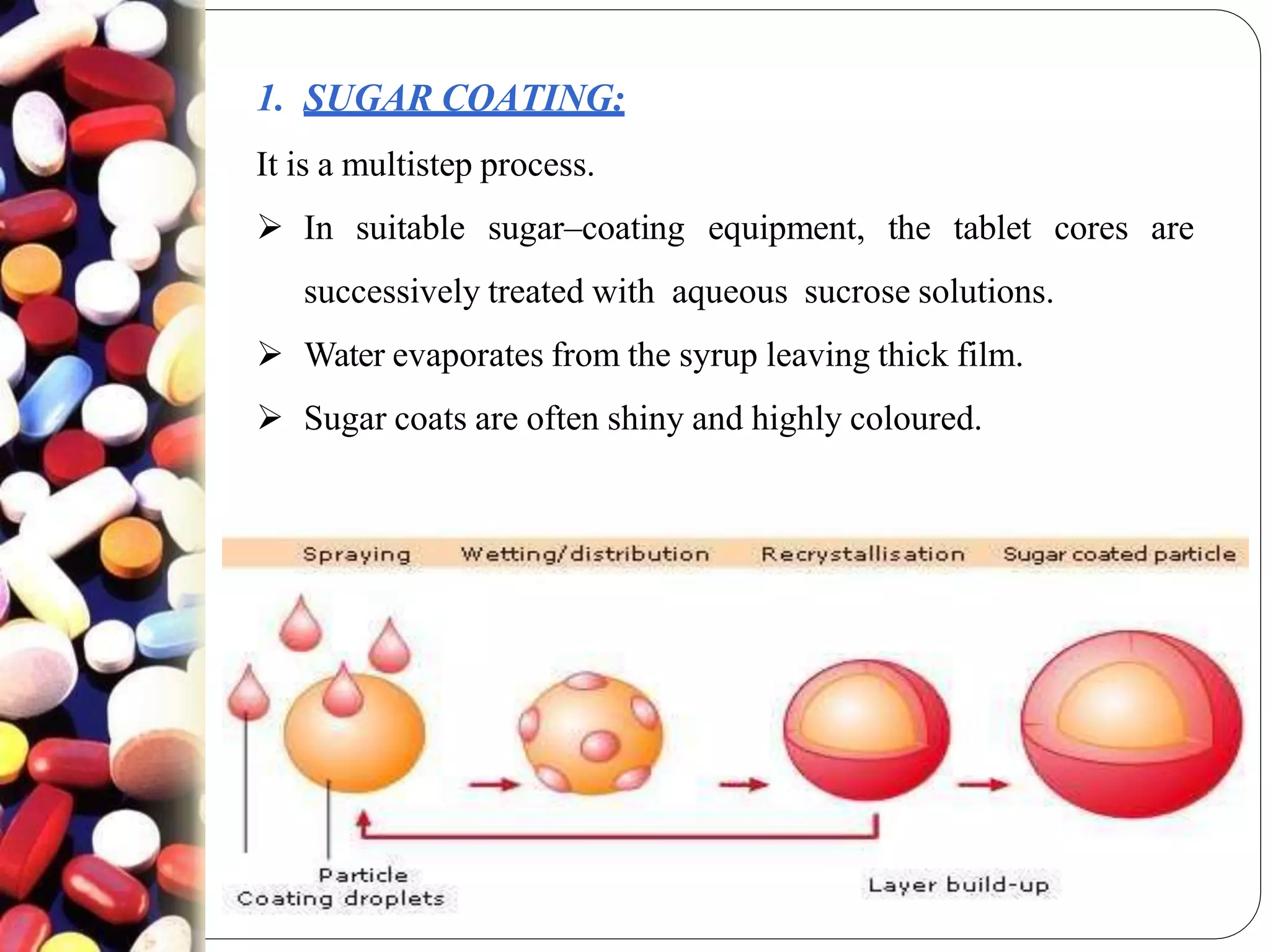
1. SUGAR COATING:
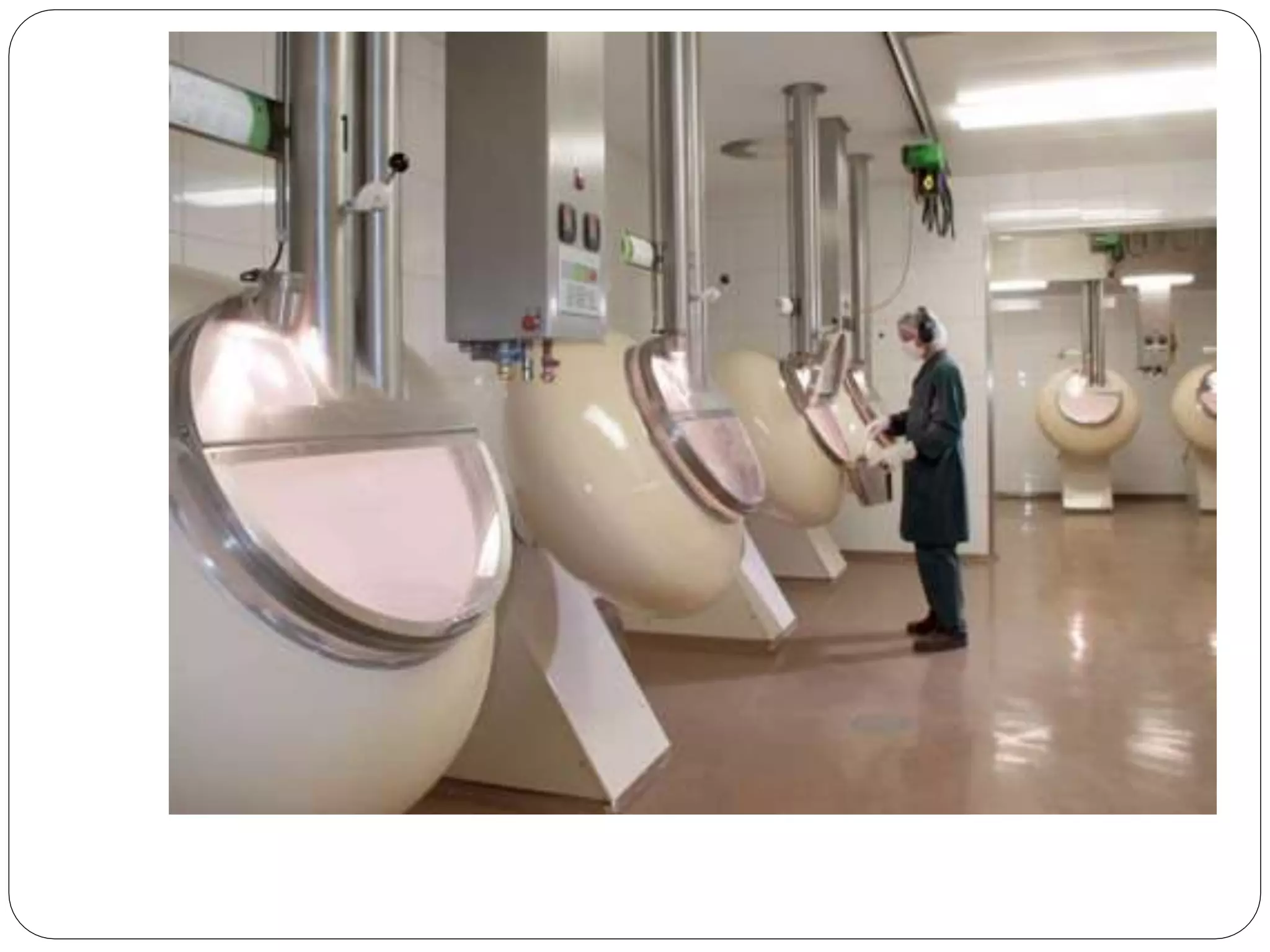
It is a multistep process.
 In suitable sugar–coating equipment, the tablet cores are
successively treated with aqueous sucrose solutions.
 Water evaporates from the syrup leaving thick film.
 Sugar coats are often shiny and highly coloured.
Advantages:
 Constituent raw materials are widely accepted.
 No complex equipment are required.
 For high humidity climates, it offers stability advantage over film
coated tablets.
Disadvantages:
 Time consuming process.
 Logo or break lines not possible.
 30-50% weight increase due to coating material.
Sugar coating process involves following steps:
 Sealing
 Subcoating
 Smoothing
 Colouring
 Polishing
 Printing
Sealing:
Application of one or more coats of water impermeable polymer
such as shellac, cellulose acetate phthalate and polyvinyl acetate
phthalate.
The main purpose of sealing is to prevent the penetration of moisture
in to the tablet core.
The lengthening of tablet disintegration and dissolution times may
occur with the usage of shellac as a sealant due to polymerization of
shellac.
Subcoating:
or talc in
By adding bulking agents such calcium carbonate
combination with sucrose solution.
Used in order to round of the tablet edges.
Smoothing:
By the application of the thick sucrose syrup, it removes the rough
surfaces formed during the sub coating.
 It increases the tablet weight by 30%
Colouring:
It usually consists of thin sucrose syrup containing the requisite
coloring material (water soluble dyes or water insoluble pigments)
Water insoluble pigments along with the opacifier such as titanium
dioxide develop desired colour more rapidly, thus resulting in thinner
color coat.
Polishing:
After coloring step, the tablet surfaces are smooth but with
dull appearance, to achieve glossy finish, waxes are used.
Ex: Bees wax, Carnauba wax.
Printing:
For sugar coated tablets, edible ink is used for printing
different identification marks such as manufacturer logo, product
name, dosage strength etc.
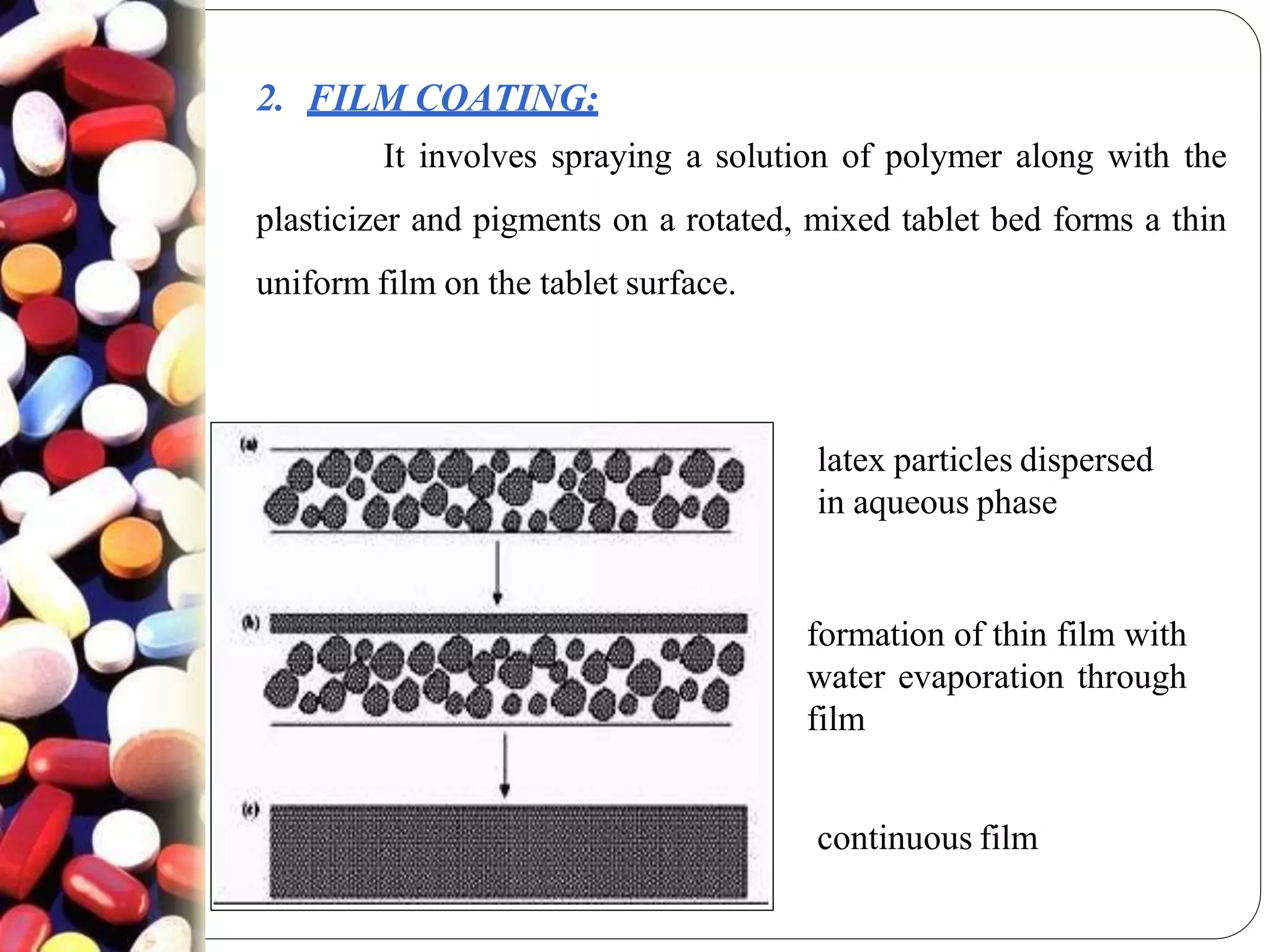
2. FILM COATING:
It involves spraying a solution of polymer along with the
plasticizer and pigments on a rotated, mixed tablet bed forms a thin
uniform film on the tablet surface.
latex particles dispersed
in aqueous phase
formation of thin film with
water evaporation through
film
continuous film
Mechanism of film formation:
In the wet state, the polymer is present as a no. of discrete particles,
and these have to come together in close contact, deform, coalesce
and ultimately fuse together to form a discrete film. During
processing, the substrate surface will be wetted with the diluted
dispersion. Under the prevailing processing conditions, water will
be lost as water vapour and the polymer particles will increase in
proximity to each other, a process which is greatly assisted by the
capillary action of the film of water surrounding the particles.
Complete coalescence occurs when the adjacent particles are able to
mutually diffuse into one another.
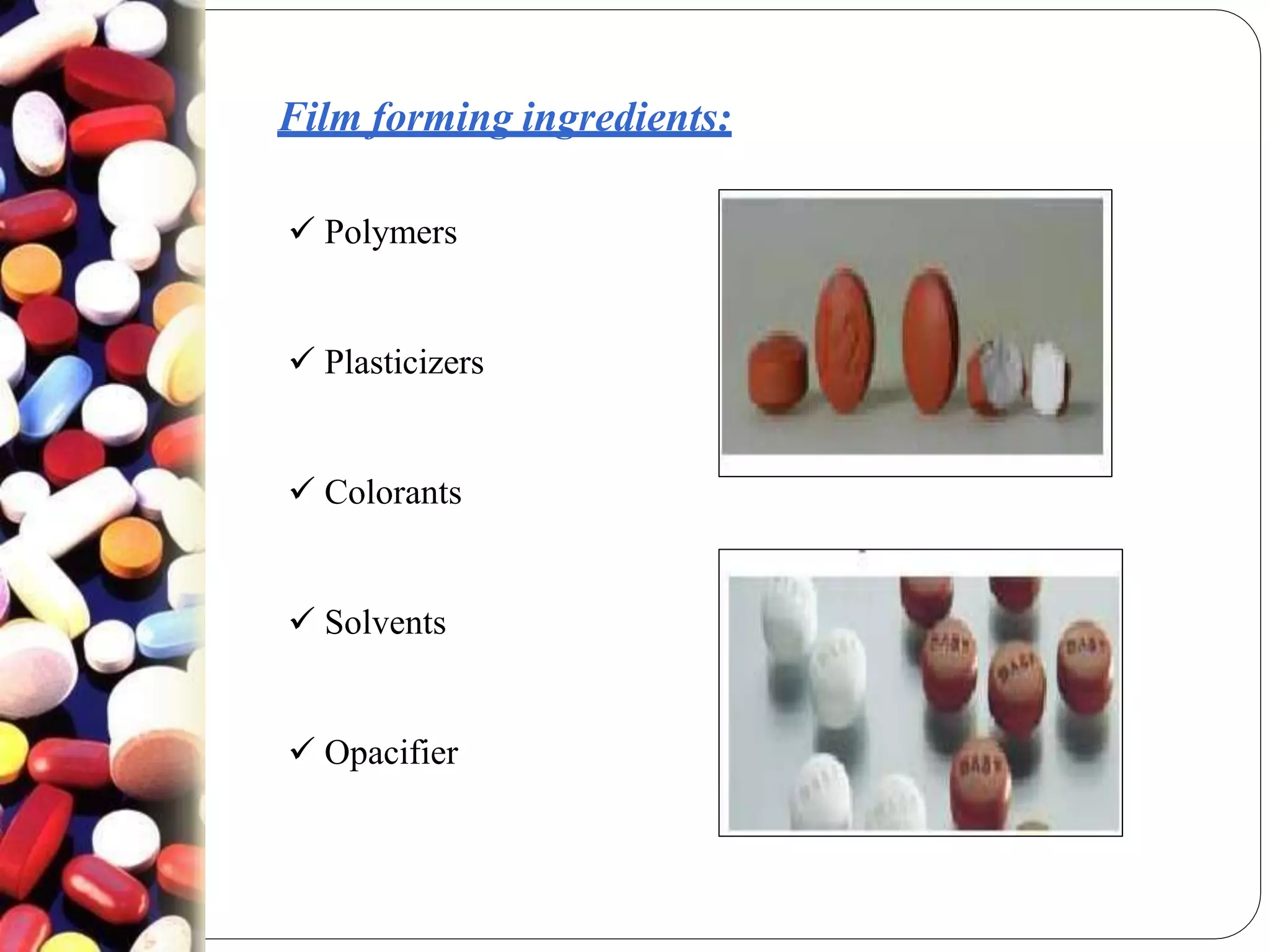
Film forming ingredients:
 Polymers
 Plasticizers
 Colorants
 Solvents
 Opacifier
Polymers:
A film former is capable of producing smooth thin films
reproducible under the prescribed coating conditions.
Ex : Cellulose derivatives - HPMC, MC, HPC
Vinyl derivatives - PVP
Phthalate esters - CAP
Plasticizers:
Affords flexibility and elasticity to the coat and thus
provide durability.
Ex: PEG, Diethyl phthalate, Coconut oil
Plasticizers are of two types:
Internal plasticizer:
Chemical modification of the polymer alters;
Degree of substitution
Type of substitution
which when
External plasticizer:
They are non-volatile or other polymers,
combine with the primary polymeric film former alters;
Flexibility
Tensile strength
Adhesion properties of resulting film
Colorants:
These provide an elegant appearance. They may be soluble
in the solvent systems or suspended as insoluble powders.
Ex: Iron oxide pigment, Titanium dioxide.
Opaquant –extenders:
These are fine inorganic powders used in coating solution
formulation to increase film coverage.
Ex: Silicates-Aluminium silicate
Carbonates - Magnesium carbonate
Sulfates - Calcium sulfate
Oxides - Magnesium oxide
Solvents:
Volatile organic solvents may be used to allow spreadability
of the coat components over the tablets and allow rapid evaporation.
But they are expensive, show environmental hazards and solvent
residues in the formulation so limited use.
Aqueous vehicles are safer, but slower evaporation which
may effect drug stability.
Ex: Water, Methanol, Ethanol, Isopropyl alcohol, Chloroform,
Acetone, Methyl ethyl ketone and Methylene chloride.
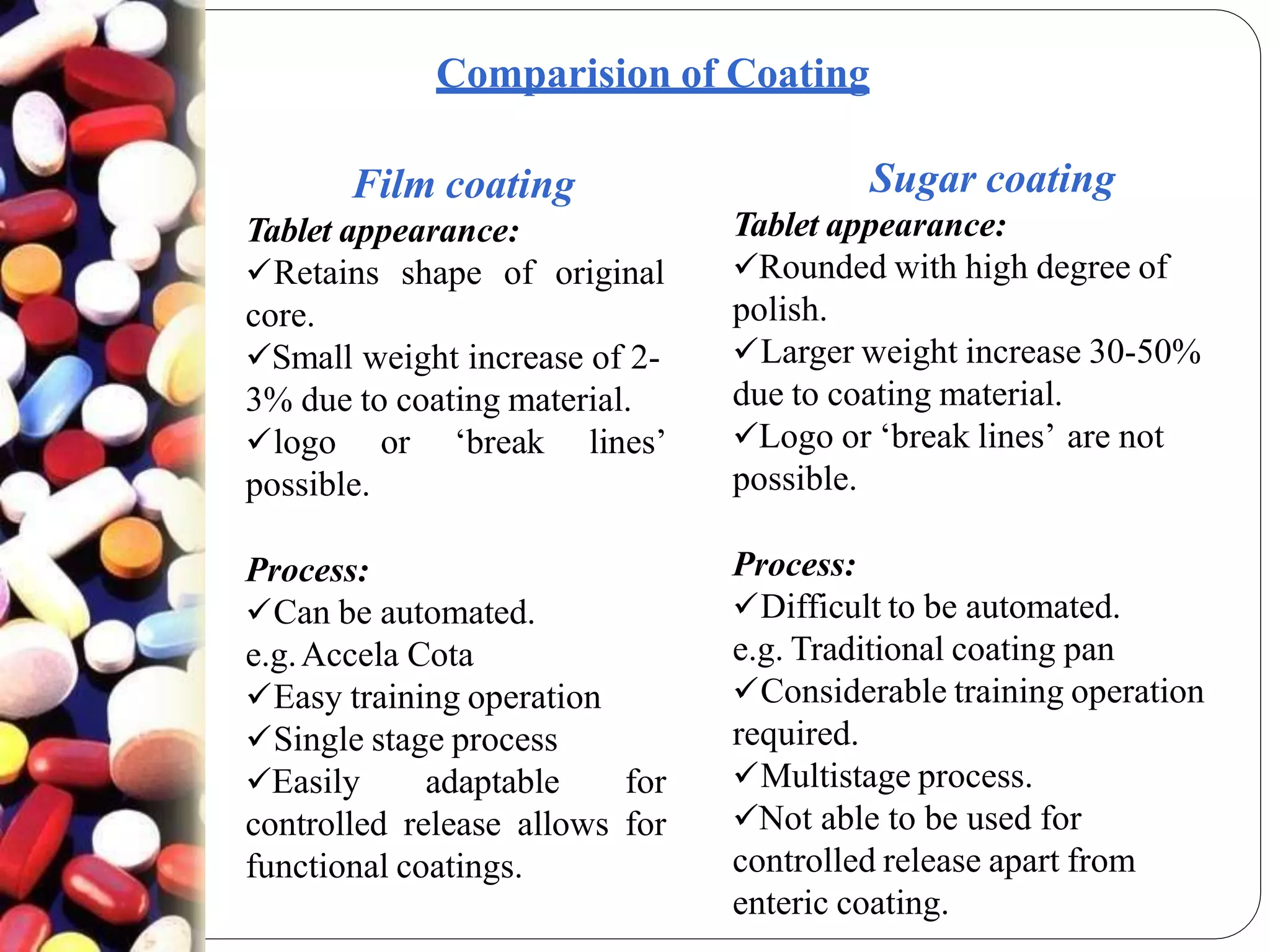
Film coating
Tablet appearance:
Retains shape of original
core.
Small weight increase of 2-
3% due to coating material.
logo or ‘break lines’
possible.
Process:
Can be automated.
e.g.Accela Cota
Easy training operation
Single stage process
Easily adaptable for
controlled release allows for
functional coatings.
Sugar coating
Tablet appearance:
Rounded with high degree of
polish.
Larger weight increase 30-50%
due to coating material.
Logo or ‘break lines’ are not
possible.
Process:
Difficult to be automated.
e.g. Traditional coating pan
Considerable training operation
required.
Multistage process.
Not able to be used for
controlled release apart from
enteric coating.
Comparision of Coating
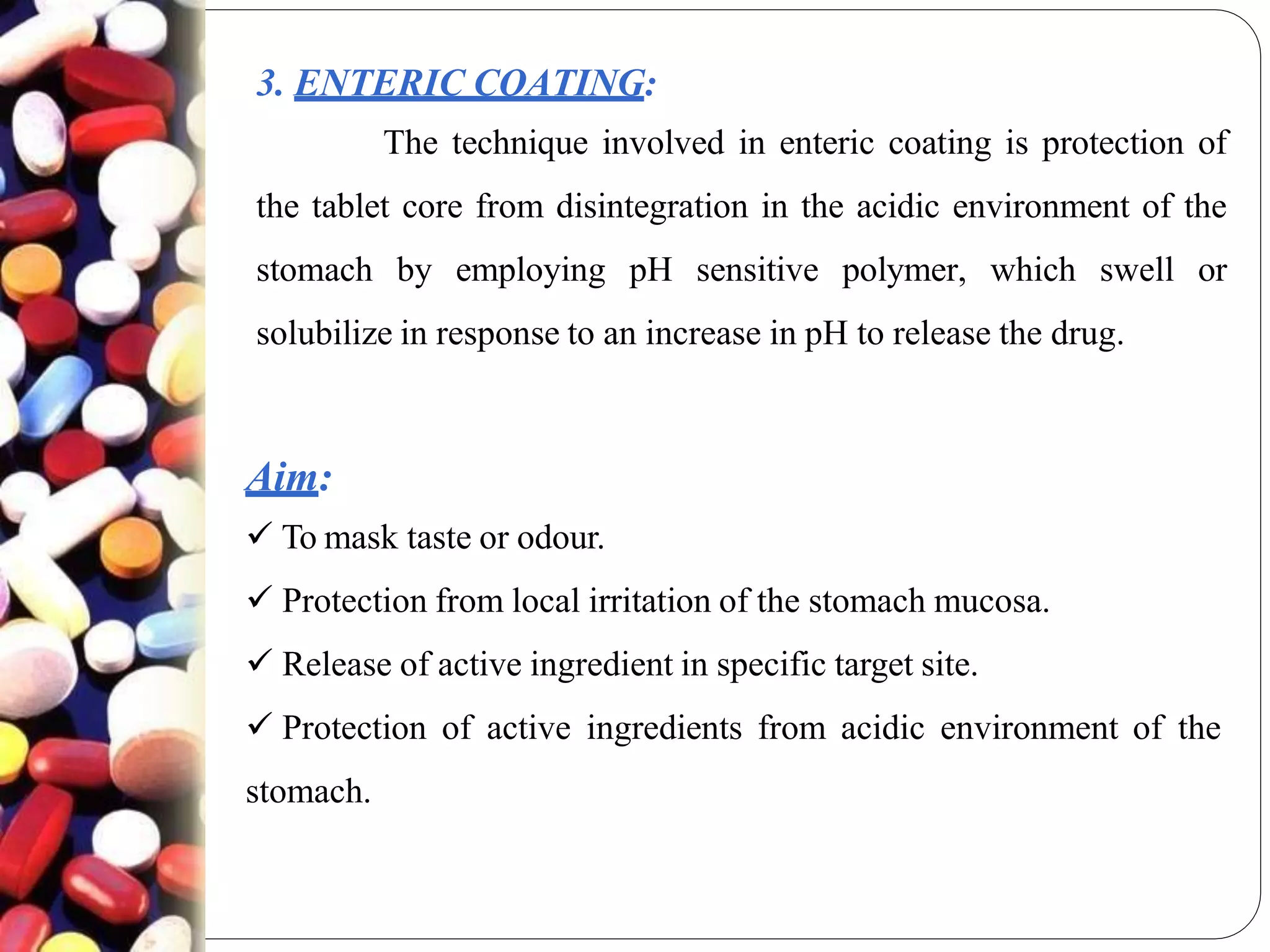
3. ENTERIC COATING:
The technique involved in enteric coating is protection of
the tablet core from disintegration in the acidic environment of the
stomach by employing pH sensitive polymer, which swell or
solubilize in response to an increase in pH to release the drug.
Aim:
 To mask taste or odour.
 Protection from local irritation of the stomach mucosa.
 Release of active ingredient in specific target site.
 Protection of active ingredients from acidic environment of the
stomach.
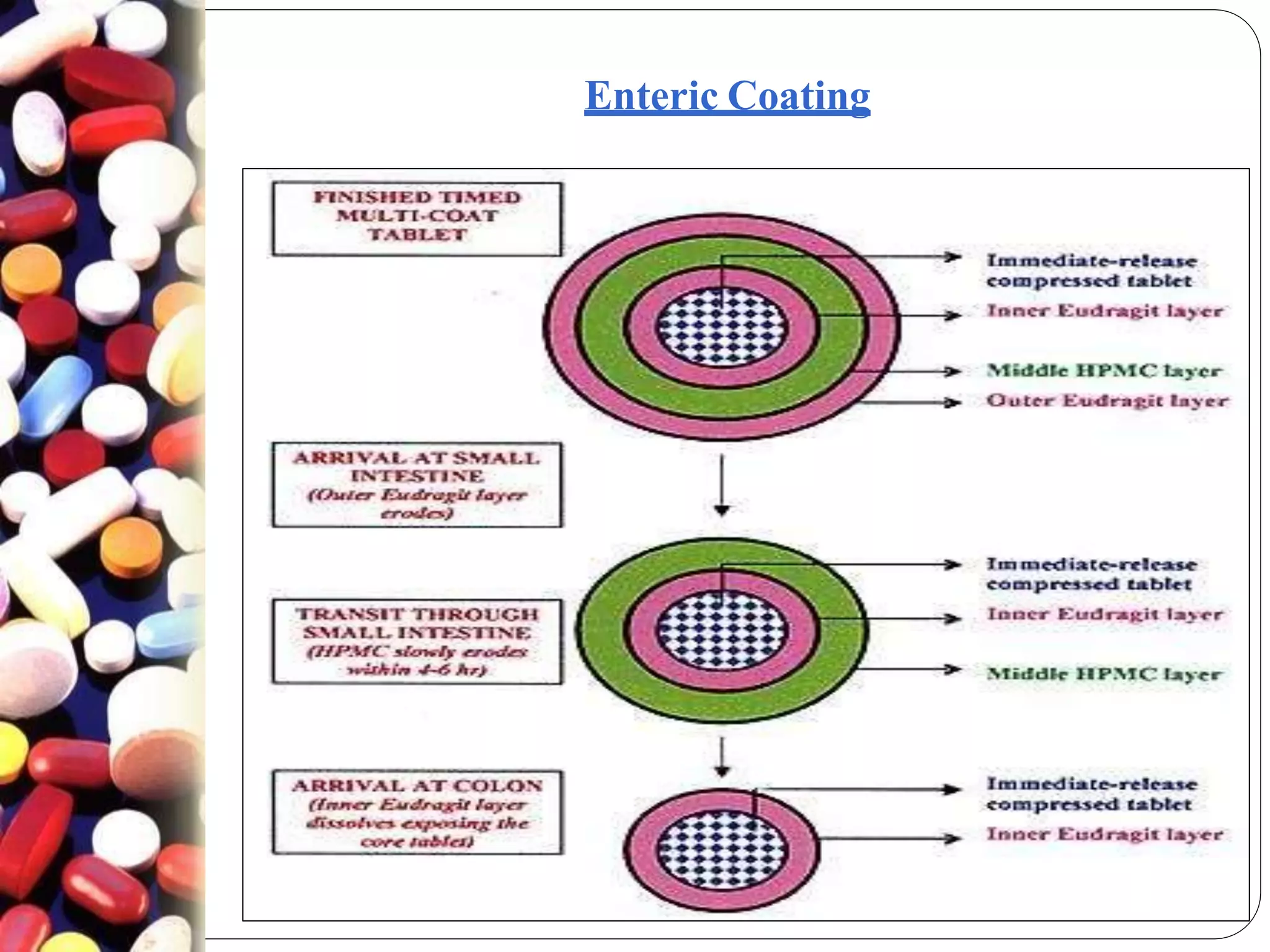
Enteric Coating
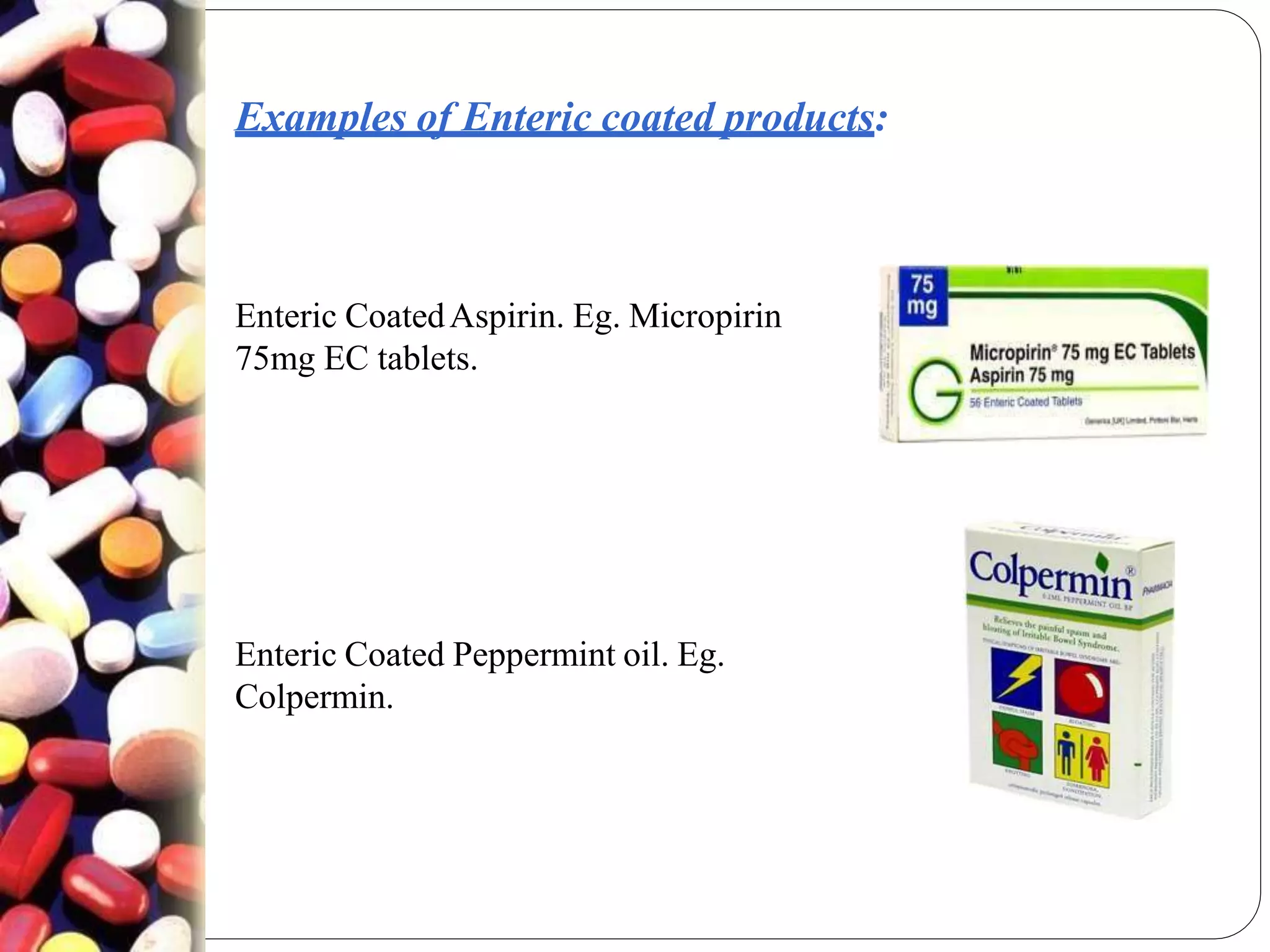
Examples of Enteric coated products:
Enteric CoatedAspirin. Eg. Micropirin
75mg EC tablets.
Enteric Coated Peppermint oil. Eg.
Colpermin.
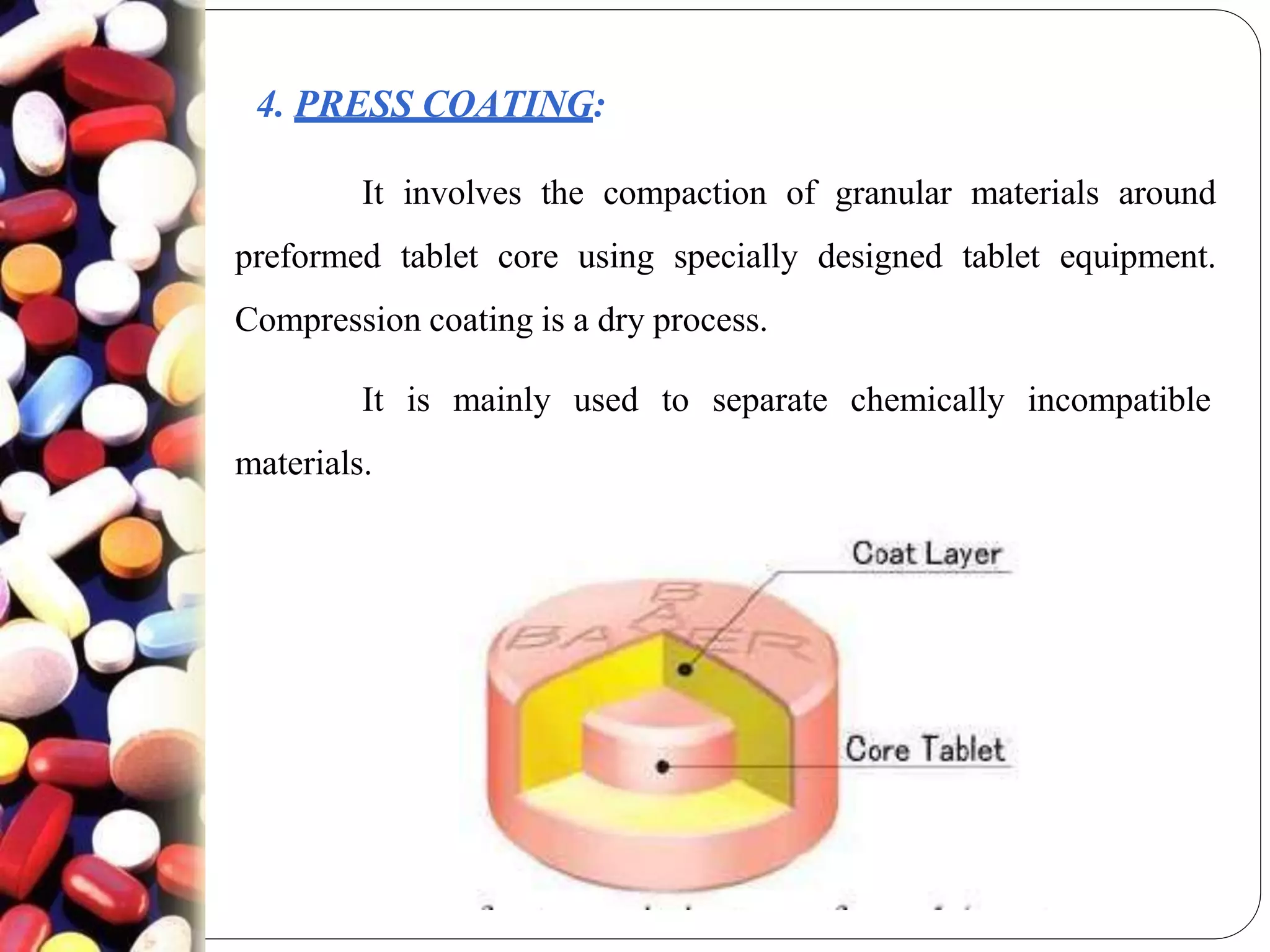
4. PRESS COATING:
It involves the compaction of granular materials around
preformed tablet core using specially designed tablet equipment.
Compression coating is a dry process.
It is mainly used to separate chemically incompatible
materials.
Equipment:
Most coating processes use one of the 3 general types of
equipment.
1. The Standard coating pan
2. The Perforated coating pan
3. The Fluidized bed coater
1. STANDARD COATING PAN:
It consists of a circular metal pan mounted somewhat
angularly on a stand. The pan is 8 to 60 inches in diameter and is
rotated on its horizontal axis by a motor. The heated air is directed
into the pan and onto the tablet bed surface, and is exhausted by
means of ducts positioned through the front of the pan.
A significant improvement in the particle movement & drying
efficiency of the standard coating pan is achieved by the;
Pellegrini pan
Immersion sword systems
Immersion tube systems
Immersion-
tube system
Immersion
sword system
Pellegrini
pan system
Conventional pans
Pellegrini pan:
The side walls of this pan are shaped with a pronounced
taper, which increases the efficiency of particle movement by
forcing the cores into an additional lateral movement. This results
in a composite core movement yielding improved exposure of the
core to the coating material.
Immersion Sword System:
• With the immersion sword system, drying air is introduced
through a perforated metal sword device that is immersed in the
tablet bed.
• The drying air flows upward from the sword through the bed.
Since the air is more intimately mixed with the wetted tablets, a
more efficient drying environment is provided.
.
• In this type of system, the immersed tube delivers the heated air
and a spray nozzle is built in the tip of the tube. During this
operation , the coating solution is applied simultaneously with the
heated air from the immersed tube.
• The drying air flows upward through the tablet bed and is
exhausted by a conventional duct.
Immersion Tube System
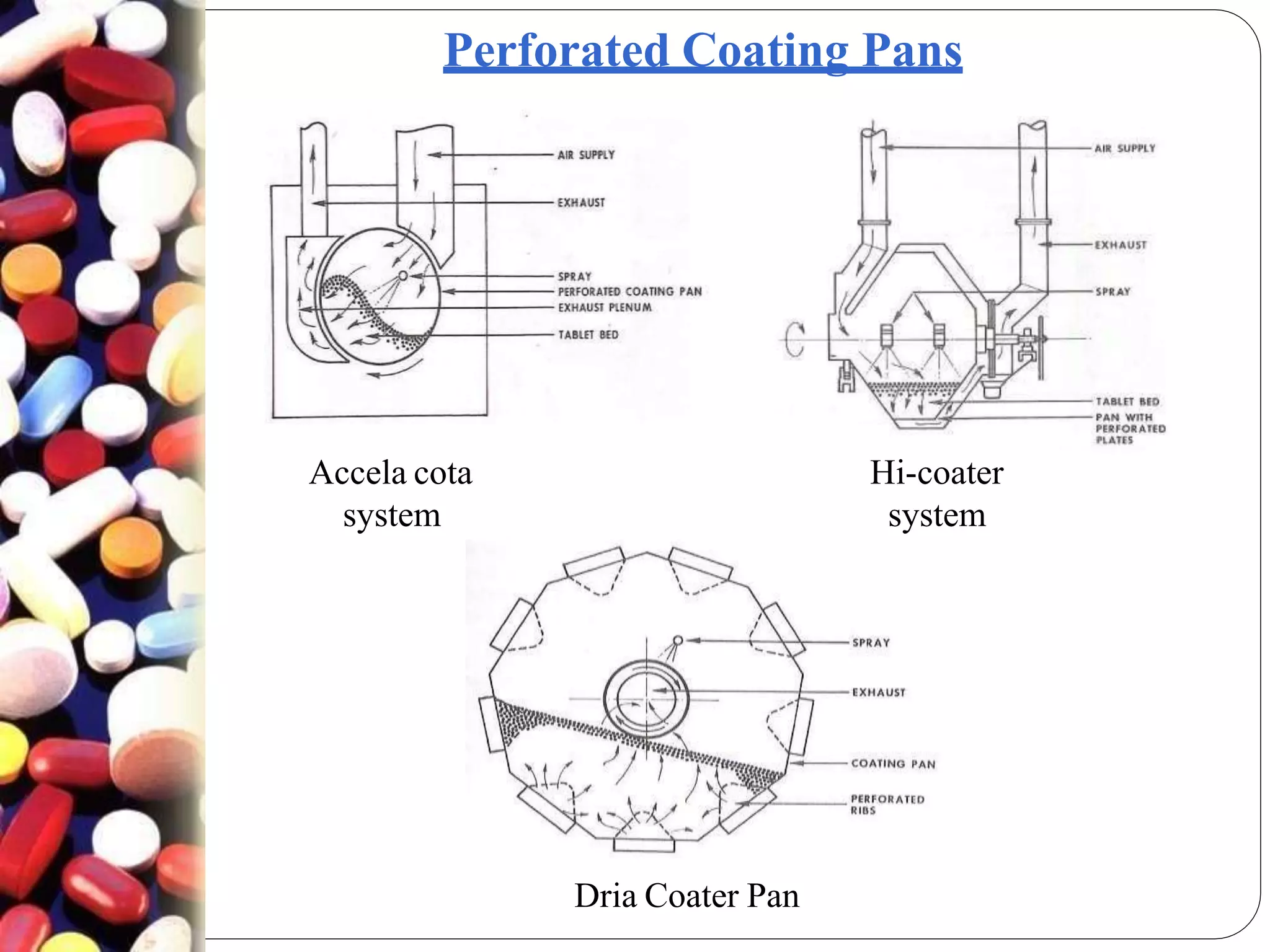
2. PERFORATED PAN COATING:
It consists of a perforated drum that is rotated on its
horizontal axis in an enclosed housing.
In Accela-Cota and Hi-Coater systems, drying air is directed
into the drum, is passed through the tablet bed, and is exhausted
through perforations in the drum.
The Driacoater introduces drying air through hollow
perforated ribs located on the inside periphery of the drum. As the
coating pan rotates, the ribs dip into the tablet bed, and drying air
passes up through and fluidizes the tablet bed. Exhaust is from the
back of the pan.
In Glatt coater, drying air can be directed from inside the
drum through the tablet bed and out an exhaust duct. Drying air can
be directed in the reverse manner up through the drum perforations
for partial fluidization of the tablet bed. Several airflow
configurations are possible.
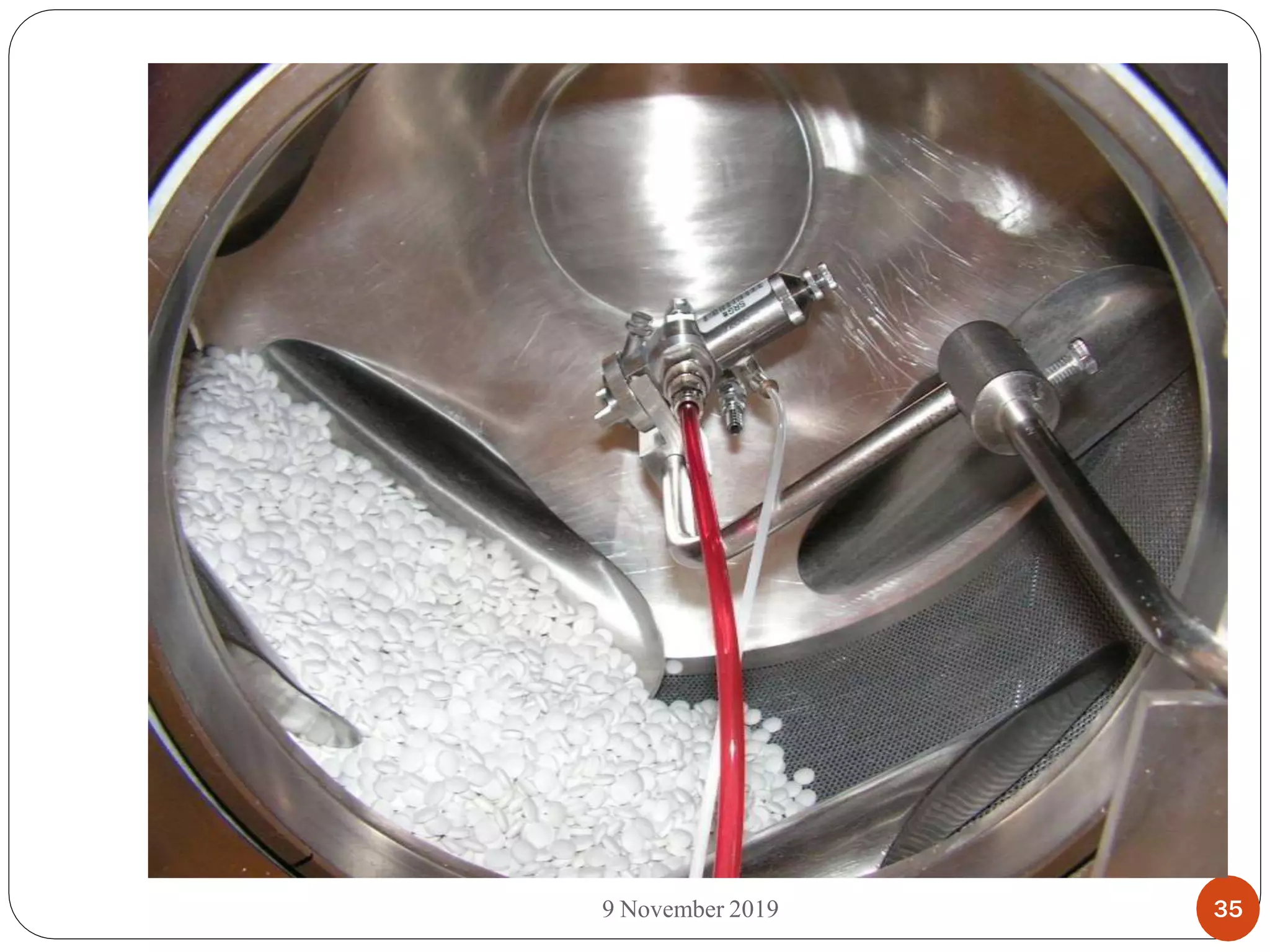
In all four of these perforated pan systems, the coating
solution is applied to the surface of the rotating bed of tablets
through spraying nozzles that are positioned inside the drum.
Perforated pan coaters are the efficient drying systems with
high coating capacity, and can be completely automated for both
sugar coating and film coating processes.
9 November 2019 35
Perforated Coating Pans
Accela cota
system
Hi-coater
system
Dria Coater Pan
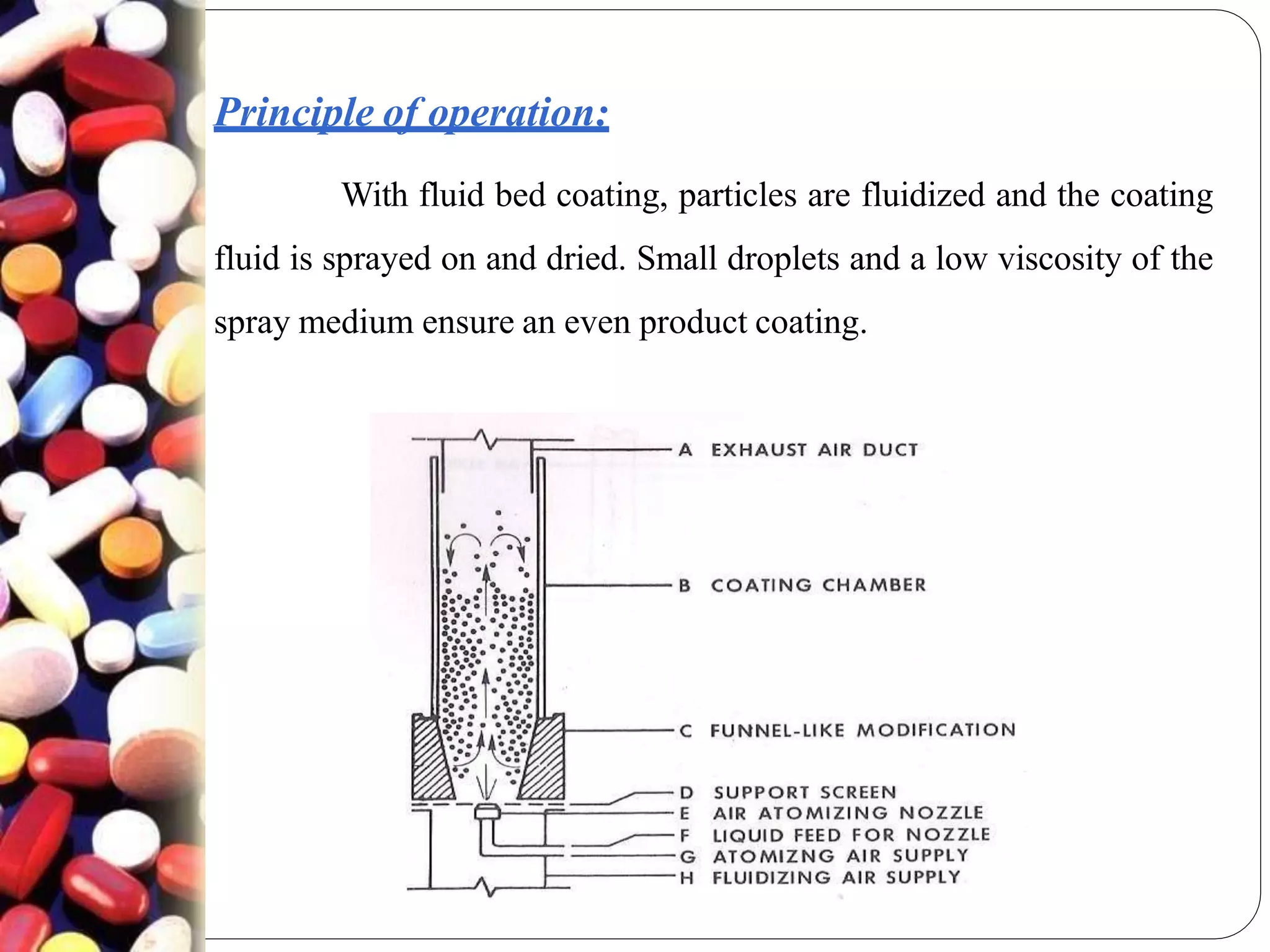
3. FLUIDIZED BED COATER:
These are high efficient drying systems. Fluidization of the
tablet mass is achieved in a columnar chamber by the upward flow of
drying air. The airflow is controlled so that more air enters the center
of the column, causing the tablets to rise in the center. The movement
of tablets is upward through the center of the chamber. They then fall
towards the chamber wall and move downward to re-enter the air
stream at the bottom of the chamber. In some units, a smaller column
is used to direct tablet movement within the main column. Coating
solutions are continuously applied from a spray nozzle located at the
bottom of the chamber or are sprayed onto the top of the cascading
tablet bed by nozzles located in the upper region of the chamber.
Principle of operation:
With fluid bed coating, particles are fluidized and the coating
fluid is sprayed on and dried. Small droplets and a low viscosity of the
spray medium ensure an even product coating.
Process advantages:
 Uniform, continuous product coating.
Aqueous or organic coatings can be applied. Coating and drying
takes place in one machine.
In terms of Total Containment, the coating process and the filling
and emptying of the machine can be carried out in complete isolation
and without product spreading into the environment.
When using organic solvents, the process machines can also be
made inert and used with a solvent recovery system.
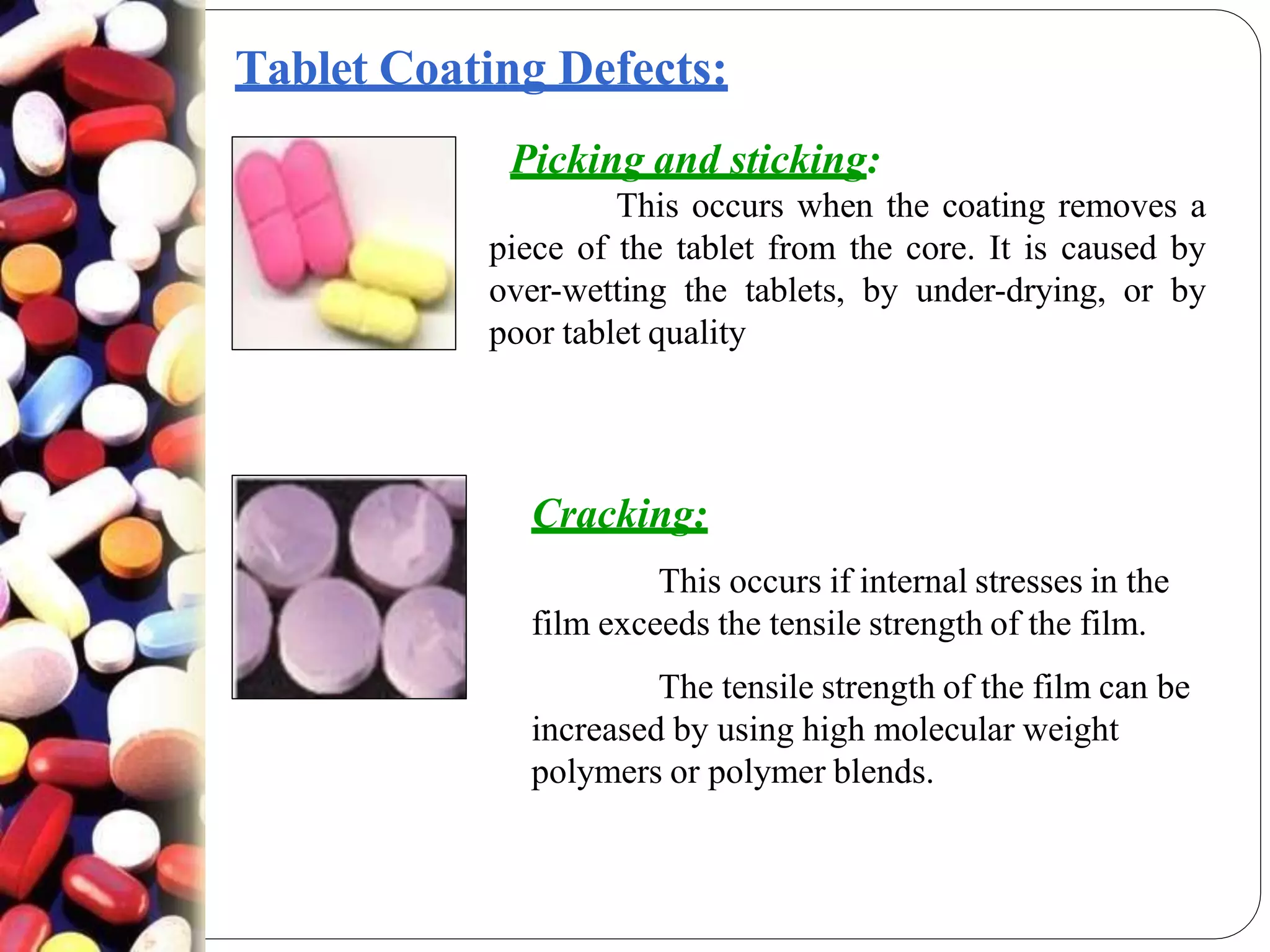
Tablet Coating Defects:
Picking and sticking:
This occurs when the coating removes a
piece of the tablet from the core. It is caused by
over-wetting the tablets, by under-drying, or by
poor tablet quality
Cracking:
This occurs if internal stresses in the
film exceeds the tensile strength of the film.
The tensile strength of the film can be
increased by using high molecular weight
polymers or polymer blends.
Roughness:
This is observed when coating is applied by
spray. Some of the tablets may dry too rapidly
before reaching the tablet bed and deposits on tablet
surface.
Surface roughness also increases with
pigment concentration and polymer concentration in
the coating solution.
Orange peel effect:
Inadequate spreading of coating
solution before drying causes a bumpy or
orange peel effect on the tablet.
Specialized coatings
1. Dip coating
2. Laminated coating
3. Vaccum film coating
4. Electrostatic coating
1. Dip coating:
 In this, cores to be coated are held in a suitable device. eg:
Baskets.
 Dipped into coating solution and then dried taking care to
prevent adherence to one another.
 For obtaining more perfect or heavier coats the dipping and
drying steps may be repeated several times one after another.
 The sophisticated devices comprise tiny suction tubes, which
hold the individual tablets apart until drying is accomplished.
2. Laminated coating:
 Laminated coating provides multiple layers for incorporation
of medicament; for example
 Repeat-action tablet, here a portion of the drug is kept in
outer lamella or coating.
 Enteric tablet, here one drug could be made available for
gastric absorption while another for release in intestine.
 Buccal-swallow tablet, this could first be administered
sublingually, and upon a signal, such as release of flavour from
the inner core, the same may be swallowed as a normal peroral
tablet.
3. Vaccum film coating:
This employs a specially designed baffled pan, which is water-
jacketed and could be sealed to achieve vacuum.
Tablets are placed in the sealed pan, the vacuum is applied and the
coating material is introduced through airless hydraulic spray system,
since the pan is completely sealed.
 Organic solvents could be effectively used with minimal
environmental or safety concern
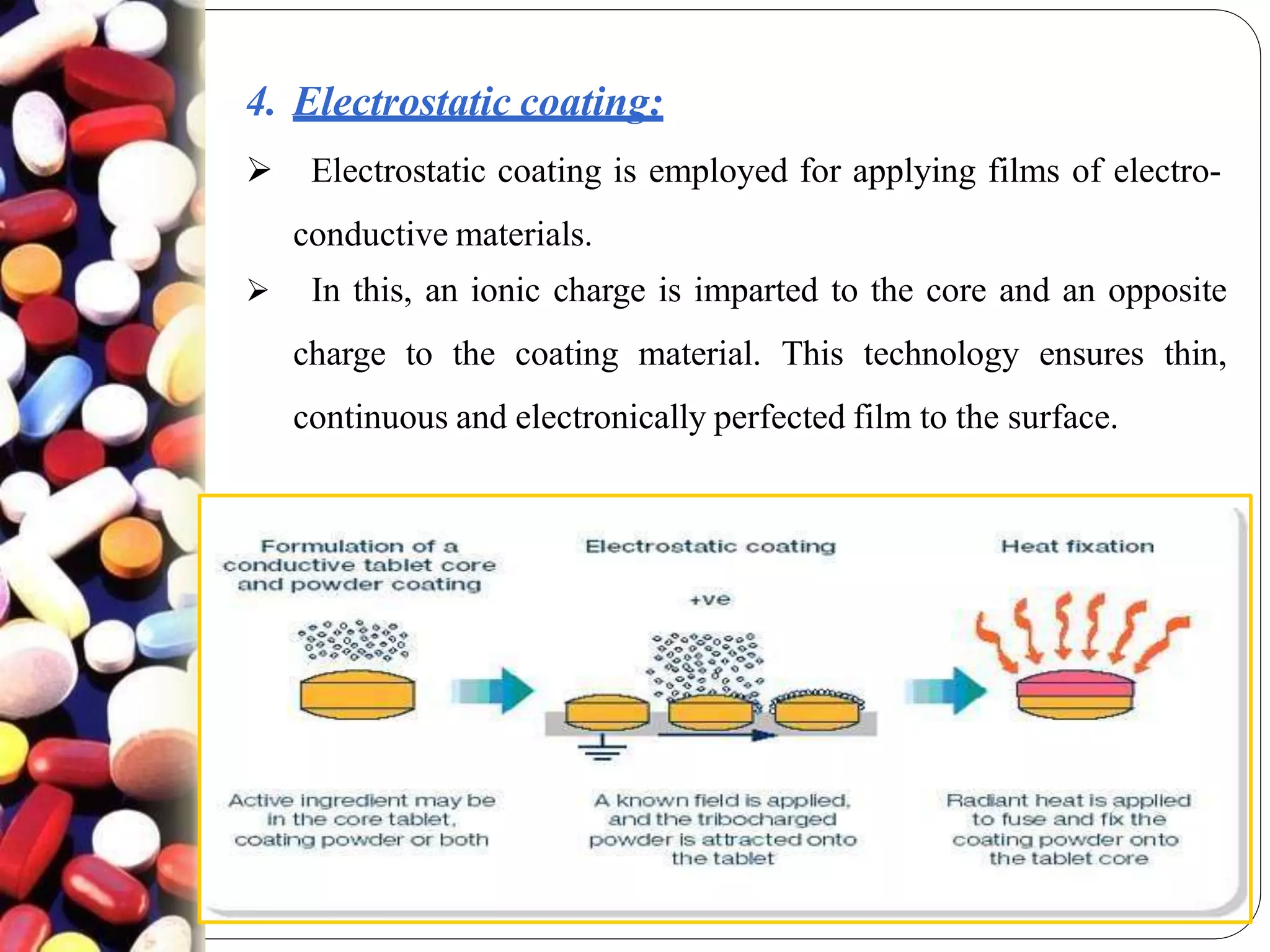
4. Electrostatic coating:
 Electrostatic coating is employed for applying films of electro-
conductive materials.
 In this, an ionic charge is imparted to the core and an opposite
charge to the coating material. This technology ensures thin,
continuous and electronically perfected film to the surface.
Applications of tablet coating:
In Therapy:
 Avoid activation of drug in stomach.
 Avoid irritation of oesophagus and stomach.
 Avoid bad taste.
 Improve drug effectiveness.
 Prolong dosing interval.
 Improve patient compliance.
In Technology:
 To reduce the influence of moisture.
 To avoid dust formation.
 To improve drug stability.
 To prolong shelf-life.
To reduce friction and increase the production rate in high speed
packaging systems.
In Marketing:
 Improve product identity.
 Improve appearance and acceptability.
CONCLUSION
 Coating is done to give not only for esthetic appeal and to
control bioavailability of the drug but also for various other
reasons.
 There are various techniques for applying coating and depend
on the need of formulator.
 Film coating is mostly used and has now shifted to aqueous
based systems due to environmental and economical reasons.
 An extensive array of equipment is used in modern
pharmaceutical coating operations.
References:
1. The Theory and Practice of Industrial Pharmacy- Lachman &
Lieberman.
2. Pharmaceutical coating Technology- John Hogen.
3. The science and Practice of Pharmacy- Remington, Volume 1.
4. Pharmaceutical Dosage Forms- Liberman, Volume 3.
Tablet coating.pptx

Tablet coating.pptx

  • 1.
    TABLET COATING Prof.Vedanshu R.Malviya M.Pharm , PhD (Pursuing) Assistant Professor Dr. Rajendra Gode Institute of Pharmacy, Amravati-444901
  • 2.
    Contents • Definition • Principles •Advantages • Disadvantages • Types of tablet coating • Equipment used in tablet coating • Defects of tablet coating • Advances in tablet coating • Applications • References
  • 3.
    Tablet coating: It isthe application of a coating composition to a moving bed of tablets with the concurrent use of heated air to facilitate evaporation of the solvent. The distribution of the coating is accomplished by the movement of tablets either perpendicular or vertical to the application of the coating composition.
  • 4.
    Principles of tabletcoating: 1. To mask the taste, odour, or colour of the drug. 2. To provide physical and chemical protection for the drug. 3. To control the release of the drug from the tablet. 4. To protect the drug from the gastric environment of the stomach with an acid-resistant enteric coating. 5. To incorporate another drug or formula adjuvant in the coating to avoid chemical incompatibilities or to provide sequential drug release. 6. To improve the pharmaceutical elegance by use of special colours and contrasting printing.
  • 5.
    Advantages of tabletcoating: odour and  Enhance permeability, mask unpleasant taste, colour of theAPI.  Increase the stability.  Increase the mechanical integrity.  Enhance the elegance.  Modify the drug release profile.  Avoid the side effects.  Reduces friction and increases packaging rate.
  • 6.
    Disadvantages of tabletcoating:  Relatively high cost.  Time consuming process.  Requires the expertise of highly skilled technician.
  • 7.
    Types of tabletcoating: 1. Sugar coating 2. Film coating 3. Enteric coating 4. Press coating 5. Specialized coatings a) Compressed coating b) Electrostatic coating c) Dip coating d) Vacuum film coating
  • 8.
    1. SUGAR COATING: Itis a multistep process.  In suitable sugar–coating equipment, the tablet cores are successively treated with aqueous sucrose solutions.  Water evaporates from the syrup leaving thick film.  Sugar coats are often shiny and highly coloured.
  • 9.
    Advantages:  Constituent rawmaterials are widely accepted.  No complex equipment are required.  For high humidity climates, it offers stability advantage over film coated tablets. Disadvantages:  Time consuming process.  Logo or break lines not possible.  30-50% weight increase due to coating material.
  • 10.
    Sugar coating processinvolves following steps:  Sealing  Subcoating  Smoothing  Colouring  Polishing  Printing
  • 12.
    Sealing: Application of oneor more coats of water impermeable polymer such as shellac, cellulose acetate phthalate and polyvinyl acetate phthalate. The main purpose of sealing is to prevent the penetration of moisture in to the tablet core. The lengthening of tablet disintegration and dissolution times may occur with the usage of shellac as a sealant due to polymerization of shellac. Subcoating: or talc in By adding bulking agents such calcium carbonate combination with sucrose solution. Used in order to round of the tablet edges.
  • 13.
    Smoothing: By the applicationof the thick sucrose syrup, it removes the rough surfaces formed during the sub coating.  It increases the tablet weight by 30% Colouring: It usually consists of thin sucrose syrup containing the requisite coloring material (water soluble dyes or water insoluble pigments) Water insoluble pigments along with the opacifier such as titanium dioxide develop desired colour more rapidly, thus resulting in thinner color coat.
  • 14.
    Polishing: After coloring step,the tablet surfaces are smooth but with dull appearance, to achieve glossy finish, waxes are used. Ex: Bees wax, Carnauba wax. Printing: For sugar coated tablets, edible ink is used for printing different identification marks such as manufacturer logo, product name, dosage strength etc.
  • 15.
    2. FILM COATING: Itinvolves spraying a solution of polymer along with the plasticizer and pigments on a rotated, mixed tablet bed forms a thin uniform film on the tablet surface. latex particles dispersed in aqueous phase formation of thin film with water evaporation through film continuous film
  • 16.
    Mechanism of filmformation: In the wet state, the polymer is present as a no. of discrete particles, and these have to come together in close contact, deform, coalesce and ultimately fuse together to form a discrete film. During processing, the substrate surface will be wetted with the diluted dispersion. Under the prevailing processing conditions, water will be lost as water vapour and the polymer particles will increase in proximity to each other, a process which is greatly assisted by the capillary action of the film of water surrounding the particles. Complete coalescence occurs when the adjacent particles are able to mutually diffuse into one another.
  • 17.
    Film forming ingredients: Polymers  Plasticizers  Colorants  Solvents  Opacifier
  • 18.
    Polymers: A film formeris capable of producing smooth thin films reproducible under the prescribed coating conditions. Ex : Cellulose derivatives - HPMC, MC, HPC Vinyl derivatives - PVP Phthalate esters - CAP Plasticizers: Affords flexibility and elasticity to the coat and thus provide durability. Ex: PEG, Diethyl phthalate, Coconut oil
  • 19.
    Plasticizers are oftwo types: Internal plasticizer: Chemical modification of the polymer alters; Degree of substitution Type of substitution which when External plasticizer: They are non-volatile or other polymers, combine with the primary polymeric film former alters; Flexibility Tensile strength Adhesion properties of resulting film
  • 20.
    Colorants: These provide anelegant appearance. They may be soluble in the solvent systems or suspended as insoluble powders. Ex: Iron oxide pigment, Titanium dioxide. Opaquant –extenders: These are fine inorganic powders used in coating solution formulation to increase film coverage. Ex: Silicates-Aluminium silicate Carbonates - Magnesium carbonate Sulfates - Calcium sulfate Oxides - Magnesium oxide
  • 21.
    Solvents: Volatile organic solventsmay be used to allow spreadability of the coat components over the tablets and allow rapid evaporation. But they are expensive, show environmental hazards and solvent residues in the formulation so limited use. Aqueous vehicles are safer, but slower evaporation which may effect drug stability. Ex: Water, Methanol, Ethanol, Isopropyl alcohol, Chloroform, Acetone, Methyl ethyl ketone and Methylene chloride.
  • 22.
    Film coating Tablet appearance: Retainsshape of original core. Small weight increase of 2- 3% due to coating material. logo or ‘break lines’ possible. Process: Can be automated. e.g.Accela Cota Easy training operation Single stage process Easily adaptable for controlled release allows for functional coatings. Sugar coating Tablet appearance: Rounded with high degree of polish. Larger weight increase 30-50% due to coating material. Logo or ‘break lines’ are not possible. Process: Difficult to be automated. e.g. Traditional coating pan Considerable training operation required. Multistage process. Not able to be used for controlled release apart from enteric coating. Comparision of Coating
  • 23.
    3. ENTERIC COATING: Thetechnique involved in enteric coating is protection of the tablet core from disintegration in the acidic environment of the stomach by employing pH sensitive polymer, which swell or solubilize in response to an increase in pH to release the drug. Aim:  To mask taste or odour.  Protection from local irritation of the stomach mucosa.  Release of active ingredient in specific target site.  Protection of active ingredients from acidic environment of the stomach.
  • 24.
  • 25.
    Examples of Entericcoated products: Enteric CoatedAspirin. Eg. Micropirin 75mg EC tablets. Enteric Coated Peppermint oil. Eg. Colpermin.
  • 26.
    4. PRESS COATING: Itinvolves the compaction of granular materials around preformed tablet core using specially designed tablet equipment. Compression coating is a dry process. It is mainly used to separate chemically incompatible materials.
  • 27.
    Equipment: Most coating processesuse one of the 3 general types of equipment. 1. The Standard coating pan 2. The Perforated coating pan 3. The Fluidized bed coater 1. STANDARD COATING PAN: It consists of a circular metal pan mounted somewhat angularly on a stand. The pan is 8 to 60 inches in diameter and is rotated on its horizontal axis by a motor. The heated air is directed into the pan and onto the tablet bed surface, and is exhausted by means of ducts positioned through the front of the pan.
  • 28.
    A significant improvementin the particle movement & drying efficiency of the standard coating pan is achieved by the; Pellegrini pan Immersion sword systems Immersion tube systems
  • 29.
  • 30.
    Pellegrini pan: The sidewalls of this pan are shaped with a pronounced taper, which increases the efficiency of particle movement by forcing the cores into an additional lateral movement. This results in a composite core movement yielding improved exposure of the core to the coating material.
  • 31.
    Immersion Sword System: •With the immersion sword system, drying air is introduced through a perforated metal sword device that is immersed in the tablet bed. • The drying air flows upward from the sword through the bed. Since the air is more intimately mixed with the wetted tablets, a more efficient drying environment is provided. .
  • 32.
    • In thistype of system, the immersed tube delivers the heated air and a spray nozzle is built in the tip of the tube. During this operation , the coating solution is applied simultaneously with the heated air from the immersed tube. • The drying air flows upward through the tablet bed and is exhausted by a conventional duct. Immersion Tube System
  • 33.
    2. PERFORATED PANCOATING: It consists of a perforated drum that is rotated on its horizontal axis in an enclosed housing. In Accela-Cota and Hi-Coater systems, drying air is directed into the drum, is passed through the tablet bed, and is exhausted through perforations in the drum. The Driacoater introduces drying air through hollow perforated ribs located on the inside periphery of the drum. As the coating pan rotates, the ribs dip into the tablet bed, and drying air passes up through and fluidizes the tablet bed. Exhaust is from the back of the pan.
  • 34.
    In Glatt coater,drying air can be directed from inside the drum through the tablet bed and out an exhaust duct. Drying air can be directed in the reverse manner up through the drum perforations for partial fluidization of the tablet bed. Several airflow configurations are possible. In all four of these perforated pan systems, the coating solution is applied to the surface of the rotating bed of tablets through spraying nozzles that are positioned inside the drum. Perforated pan coaters are the efficient drying systems with high coating capacity, and can be completely automated for both sugar coating and film coating processes.
  • 35.
  • 36.
    Perforated Coating Pans Accelacota system Hi-coater system Dria Coater Pan
  • 37.
    3. FLUIDIZED BEDCOATER: These are high efficient drying systems. Fluidization of the tablet mass is achieved in a columnar chamber by the upward flow of drying air. The airflow is controlled so that more air enters the center of the column, causing the tablets to rise in the center. The movement of tablets is upward through the center of the chamber. They then fall towards the chamber wall and move downward to re-enter the air stream at the bottom of the chamber. In some units, a smaller column is used to direct tablet movement within the main column. Coating solutions are continuously applied from a spray nozzle located at the bottom of the chamber or are sprayed onto the top of the cascading tablet bed by nozzles located in the upper region of the chamber.
  • 38.
    Principle of operation: Withfluid bed coating, particles are fluidized and the coating fluid is sprayed on and dried. Small droplets and a low viscosity of the spray medium ensure an even product coating.
  • 39.
    Process advantages:  Uniform,continuous product coating. Aqueous or organic coatings can be applied. Coating and drying takes place in one machine. In terms of Total Containment, the coating process and the filling and emptying of the machine can be carried out in complete isolation and without product spreading into the environment. When using organic solvents, the process machines can also be made inert and used with a solvent recovery system.
  • 40.
    Tablet Coating Defects: Pickingand sticking: This occurs when the coating removes a piece of the tablet from the core. It is caused by over-wetting the tablets, by under-drying, or by poor tablet quality Cracking: This occurs if internal stresses in the film exceeds the tensile strength of the film. The tensile strength of the film can be increased by using high molecular weight polymers or polymer blends.
  • 41.
    Roughness: This is observedwhen coating is applied by spray. Some of the tablets may dry too rapidly before reaching the tablet bed and deposits on tablet surface. Surface roughness also increases with pigment concentration and polymer concentration in the coating solution. Orange peel effect: Inadequate spreading of coating solution before drying causes a bumpy or orange peel effect on the tablet.
  • 42.
    Specialized coatings 1. Dipcoating 2. Laminated coating 3. Vaccum film coating 4. Electrostatic coating
  • 43.
    1. Dip coating: In this, cores to be coated are held in a suitable device. eg: Baskets.  Dipped into coating solution and then dried taking care to prevent adherence to one another.  For obtaining more perfect or heavier coats the dipping and drying steps may be repeated several times one after another.  The sophisticated devices comprise tiny suction tubes, which hold the individual tablets apart until drying is accomplished.
  • 44.
    2. Laminated coating: Laminated coating provides multiple layers for incorporation of medicament; for example  Repeat-action tablet, here a portion of the drug is kept in outer lamella or coating.  Enteric tablet, here one drug could be made available for gastric absorption while another for release in intestine.  Buccal-swallow tablet, this could first be administered sublingually, and upon a signal, such as release of flavour from the inner core, the same may be swallowed as a normal peroral tablet.
  • 45.
    3. Vaccum filmcoating: This employs a specially designed baffled pan, which is water- jacketed and could be sealed to achieve vacuum. Tablets are placed in the sealed pan, the vacuum is applied and the coating material is introduced through airless hydraulic spray system, since the pan is completely sealed.  Organic solvents could be effectively used with minimal environmental or safety concern
  • 46.
    4. Electrostatic coating: Electrostatic coating is employed for applying films of electro- conductive materials.  In this, an ionic charge is imparted to the core and an opposite charge to the coating material. This technology ensures thin, continuous and electronically perfected film to the surface.
  • 47.
    Applications of tabletcoating: In Therapy:  Avoid activation of drug in stomach.  Avoid irritation of oesophagus and stomach.  Avoid bad taste.  Improve drug effectiveness.  Prolong dosing interval.  Improve patient compliance. In Technology:  To reduce the influence of moisture.  To avoid dust formation.  To improve drug stability.
  • 48.
     To prolongshelf-life. To reduce friction and increase the production rate in high speed packaging systems. In Marketing:  Improve product identity.  Improve appearance and acceptability.
  • 49.
    CONCLUSION  Coating isdone to give not only for esthetic appeal and to control bioavailability of the drug but also for various other reasons.  There are various techniques for applying coating and depend on the need of formulator.  Film coating is mostly used and has now shifted to aqueous based systems due to environmental and economical reasons.  An extensive array of equipment is used in modern pharmaceutical coating operations.
  • 50.
    References: 1. The Theoryand Practice of Industrial Pharmacy- Lachman & Lieberman. 2. Pharmaceutical coating Technology- John Hogen. 3. The science and Practice of Pharmacy- Remington, Volume 1. 4. Pharmaceutical Dosage Forms- Liberman, Volume 3.