
ASSEMBLY PROJECT DEMO
Review
 Introduction
 Scope
 Circuit Diagram
 Schematic
 Layout
 Board File
 PCBA
 Operating Modes & Features
 Problems Faced & Solutions
Introduction
   A stepper motor's shaft has permanent
    magnets attached to it. Around the body of
    the motor is a series of coils that create a
    magnetic field that interacts with the
    permanent magnets. When these coils are
    turned on and off the magnetic field causes
    the rotor to move. As the coils are turned on
    and off in sequence called ‘phase pattern’
    the motor will rotate forward or reverse.
Scope
 High Speed Pick and Place Equipment
 Multi axis CNC machines
 Floppy disk drives
 Computer printers
 Plotters
 Optical scanners
 Conveyers
 Positioning Systems
CIRCUIT DIAGRAM
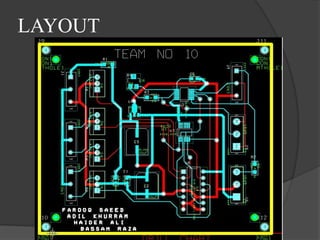
LAYOUT
BOARD FILE
PCB ASSEMBLY
 PCB assembly was carried out at SPOT
  industries.
 Process
     Printing
     Pick and Place (SMTs)
     Manual Placement (SMTs)
     Reflow Soldering (SMTs)
     Placement (THTs)
     Manual Soldering (THTs)
Operating Modes
   We can control the operation mode of the
    motor using SPDT. The operating modes
    are:

     Manual Control
     Computer Controlled
Features
   Direction Control
     With appropriate combination of switches we can
      control the direction of Stepper Motor in both
      clockwise and anticlockwise direction.


   Speed Control
     Speed of the motor can be varied by changing the
      resistance control knob of the variable resistor.
Problems Faced
   Bridging of IC pins during Reflow due to
    greater pad width in Layout footprint.

   Mismatching of Schematic and Layout
    footprint pin number.
     Variable Resistor
     SPDT
Solution
   Manual detachment of IC pin.

   Removed the faulted tracks and added
    jumpers manually.

Stepper Motor Control

  • 1.
  • 3.
    Review  Introduction  Scope Circuit Diagram  Schematic  Layout  Board File  PCBA  Operating Modes & Features  Problems Faced & Solutions
  • 4.
    Introduction  A stepper motor's shaft has permanent magnets attached to it. Around the body of the motor is a series of coils that create a magnetic field that interacts with the permanent magnets. When these coils are turned on and off the magnetic field causes the rotor to move. As the coils are turned on and off in sequence called ‘phase pattern’ the motor will rotate forward or reverse.
  • 5.
    Scope  High SpeedPick and Place Equipment  Multi axis CNC machines  Floppy disk drives  Computer printers  Plotters  Optical scanners  Conveyers  Positioning Systems
  • 6.
  • 7.
  • 8.
  • 9.
    PCB ASSEMBLY  PCBassembly was carried out at SPOT industries.  Process  Printing  Pick and Place (SMTs)  Manual Placement (SMTs)  Reflow Soldering (SMTs)  Placement (THTs)  Manual Soldering (THTs)
  • 10.
    Operating Modes  We can control the operation mode of the motor using SPDT. The operating modes are:  Manual Control  Computer Controlled
  • 11.
    Features  Direction Control  With appropriate combination of switches we can control the direction of Stepper Motor in both clockwise and anticlockwise direction.  Speed Control  Speed of the motor can be varied by changing the resistance control knob of the variable resistor.
  • 12.
    Problems Faced  Bridging of IC pins during Reflow due to greater pad width in Layout footprint.  Mismatching of Schematic and Layout footprint pin number.  Variable Resistor  SPDT
  • 13.
    Solution  Manual detachment of IC pin.  Removed the faulted tracks and added jumpers manually.