Downloaded 50 times

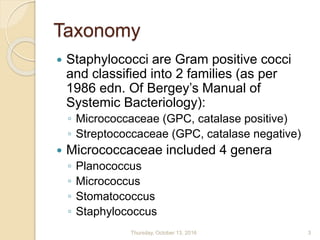
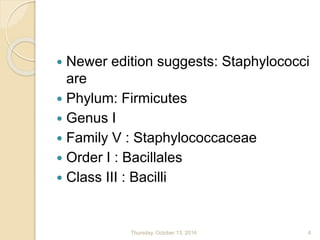
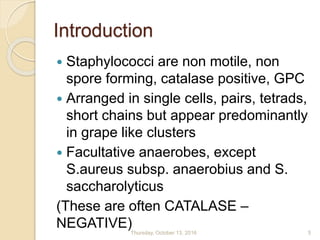


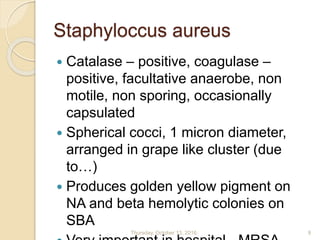
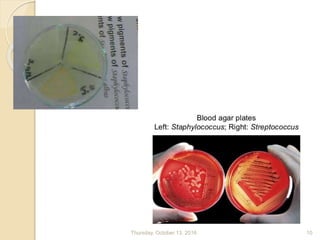





This document provides information about Staphylococcus including its taxonomy, history, virulence factors, pathogenesis, and clinical manifestations. Staphylococcus is a genus of bacteria that can be found commonly on the skin and nose of humans. Staphylococcus aureus is an important human pathogen able to cause a variety of infections through factors such as its capsule, toxins, and ability to evade the immune system. Common infections include skin and soft tissue infections, bone and joint infections, and pneumonia. Laboratory diagnosis involves culturing samples on nutrient agar to identify characteristic golden yellow colonies of staphylococci.


