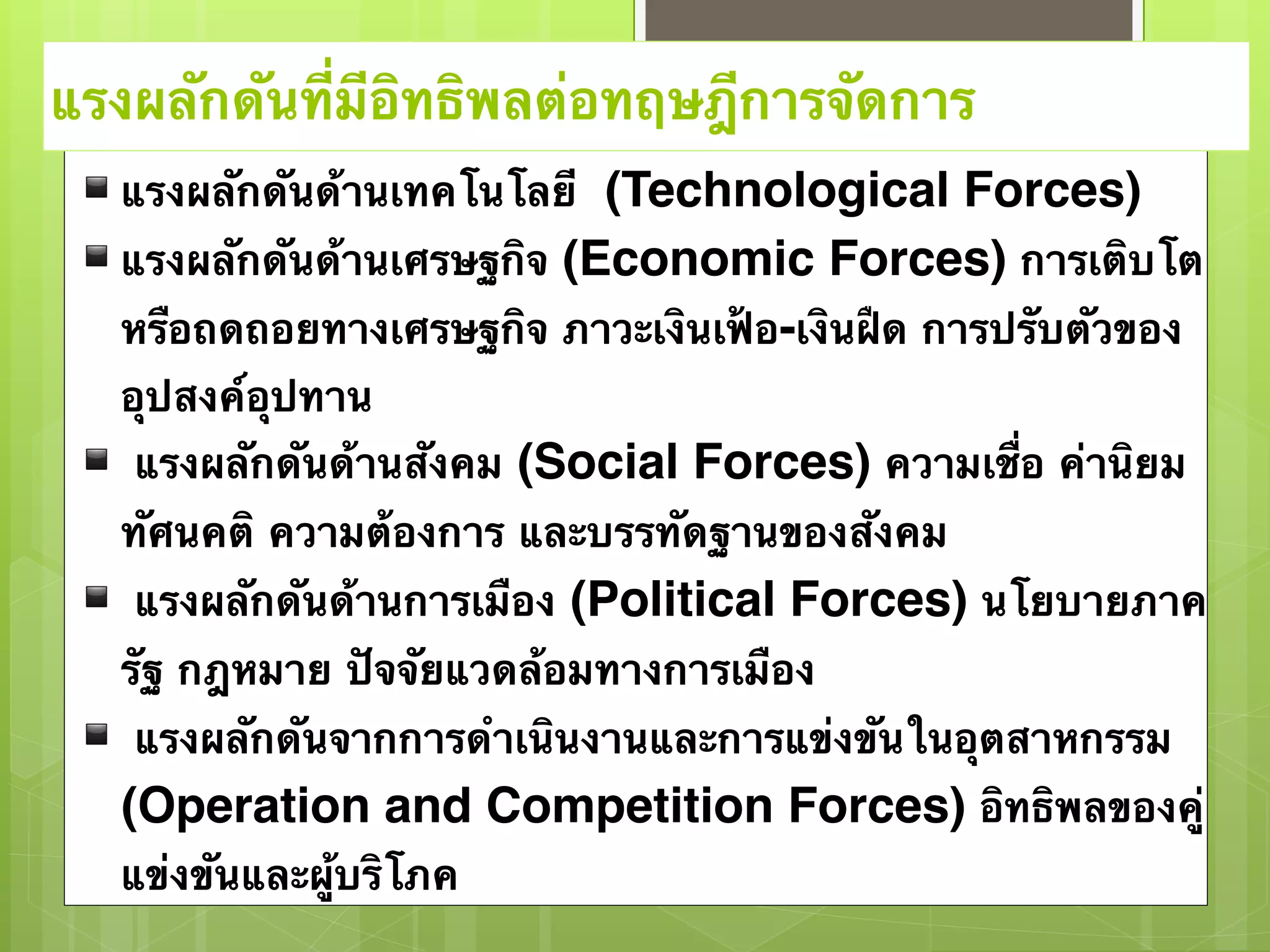
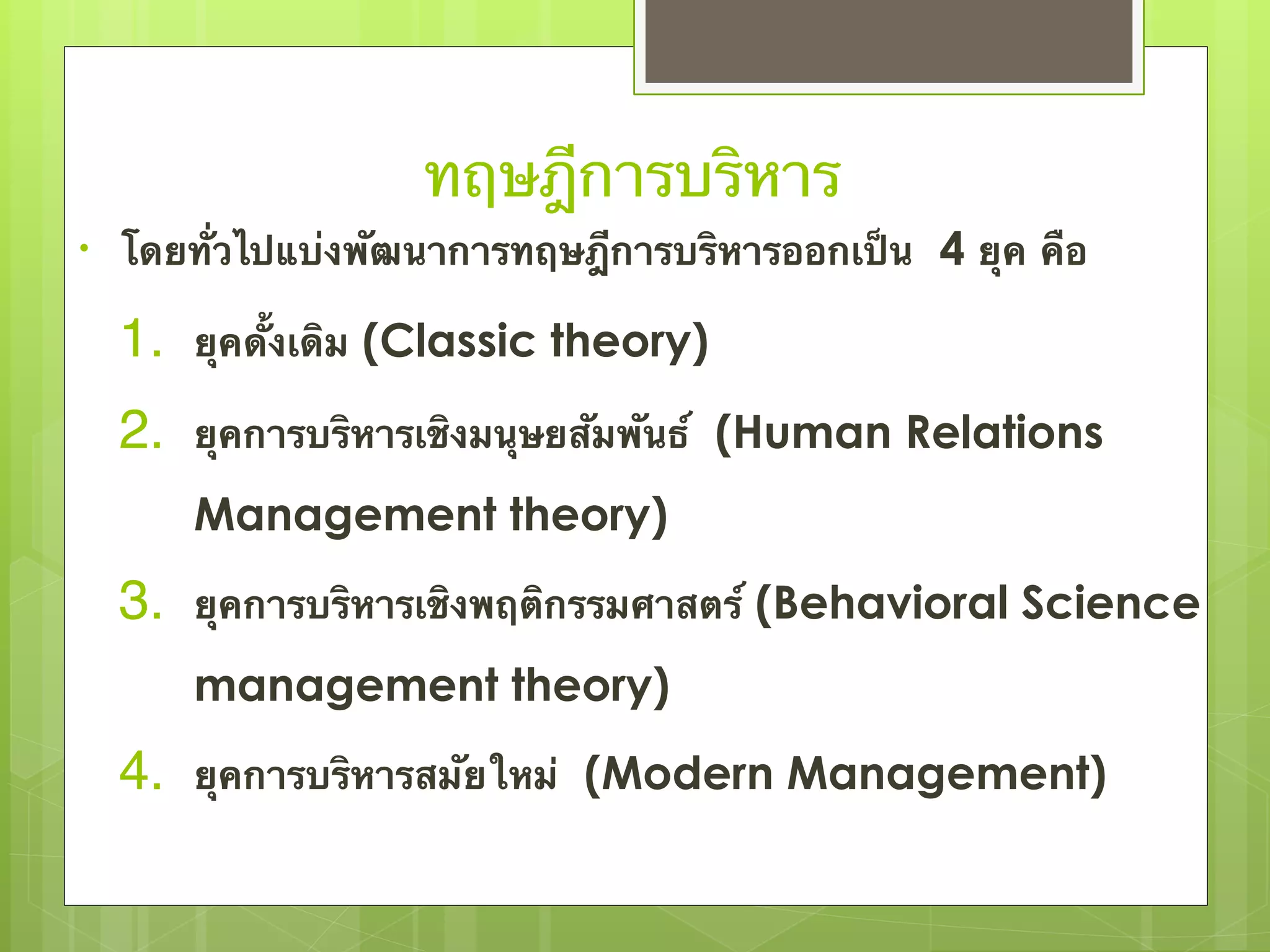
• Frederick Taylor’sScientific Management (1911)
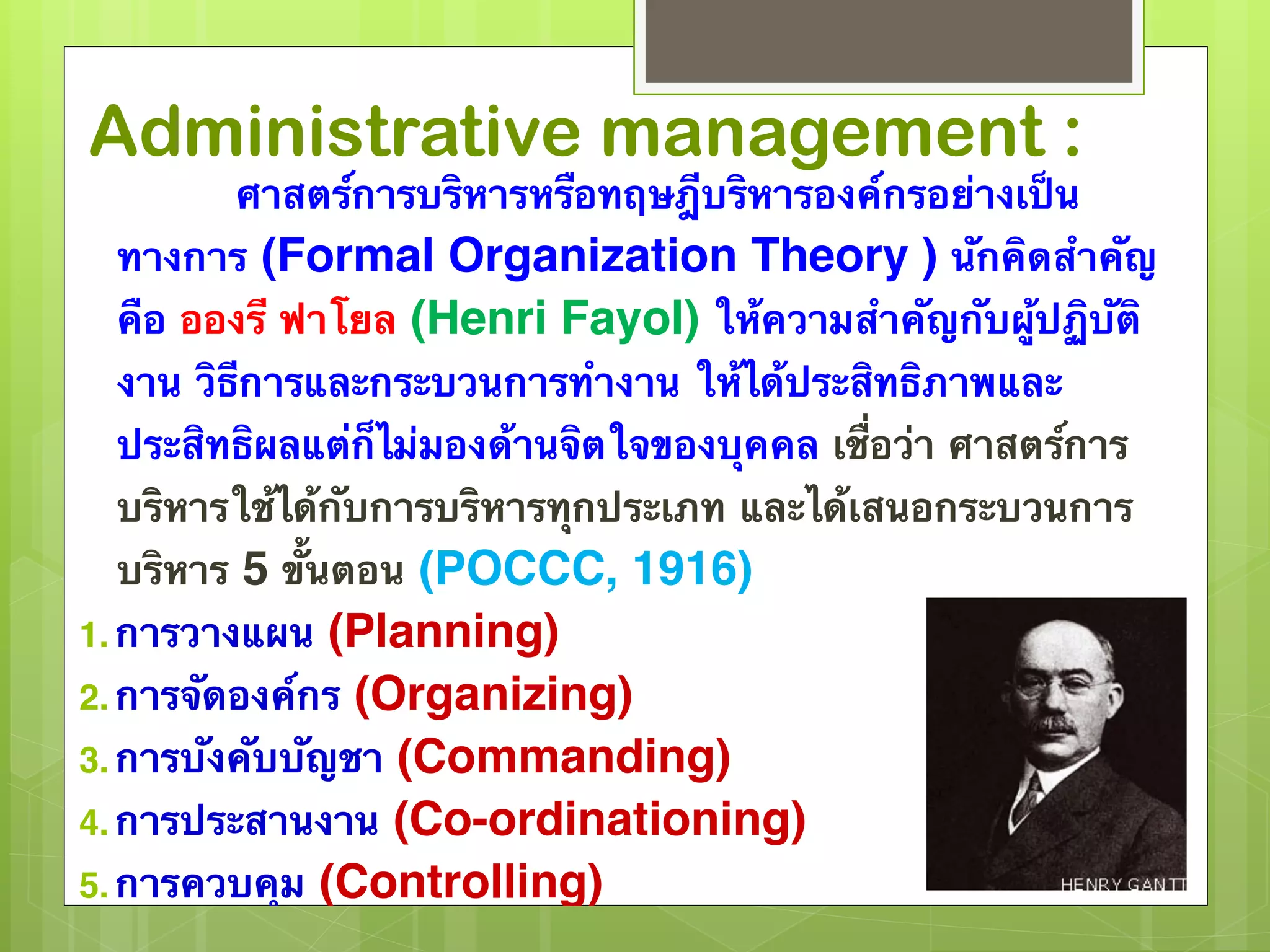
• Henri Fayol’s Administrative theory (1916)
• Henry L. Gantt (Gantt Chart)
• Max Weber’s Bureaucracy management
• Frank & Lillian Gilbreth’s Motion Study
• Mary Parker Follett (1868 - 1933)
• Luther Gulick & Lyndal Urwick (1937)
• Chester I. Barnard, 1938 (Functions of the
Executive )
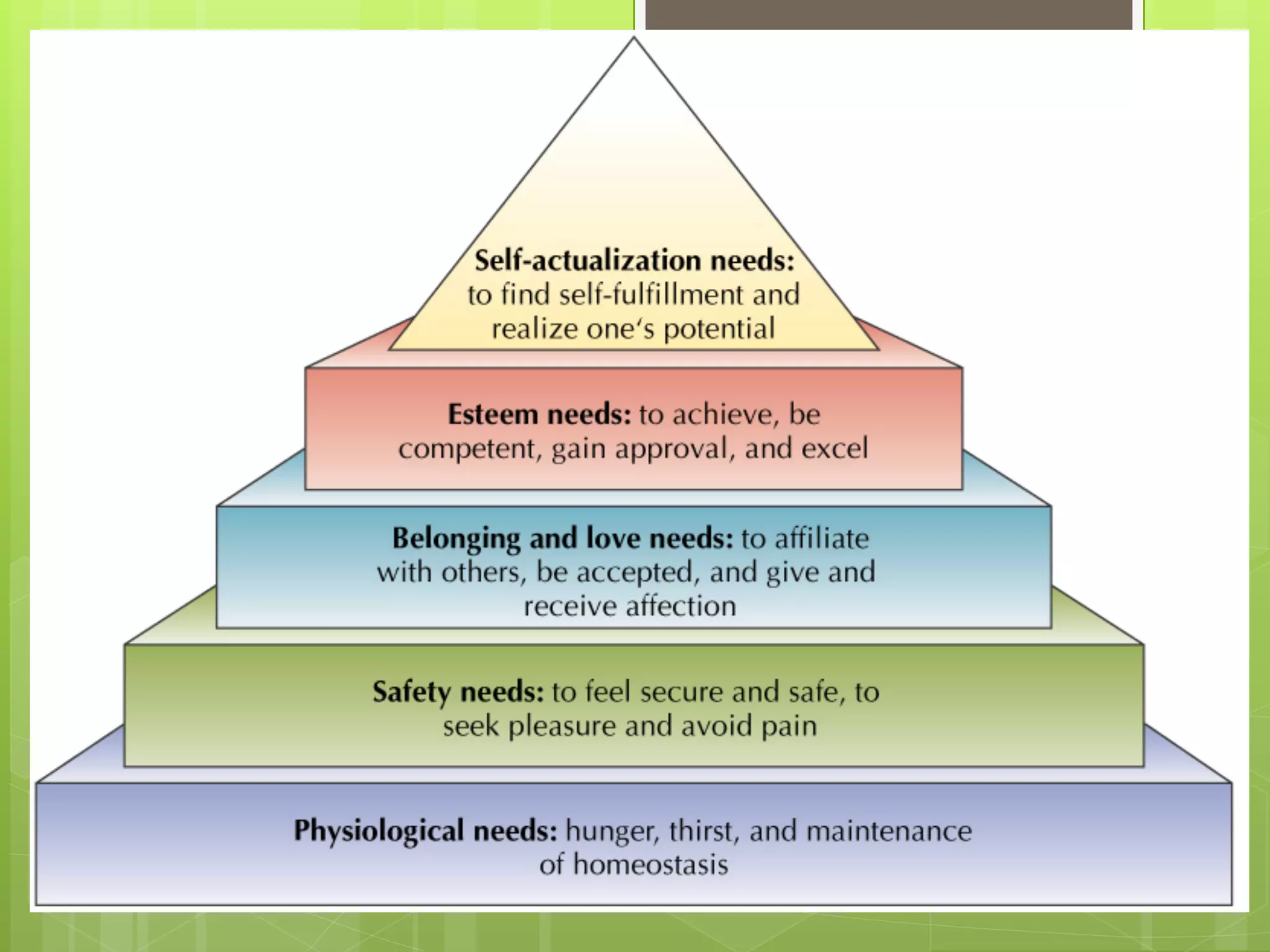
• Abraham Maslow (Hierarchy of Needs Theory,
1943)
• Chester Irving Barnard (1947)
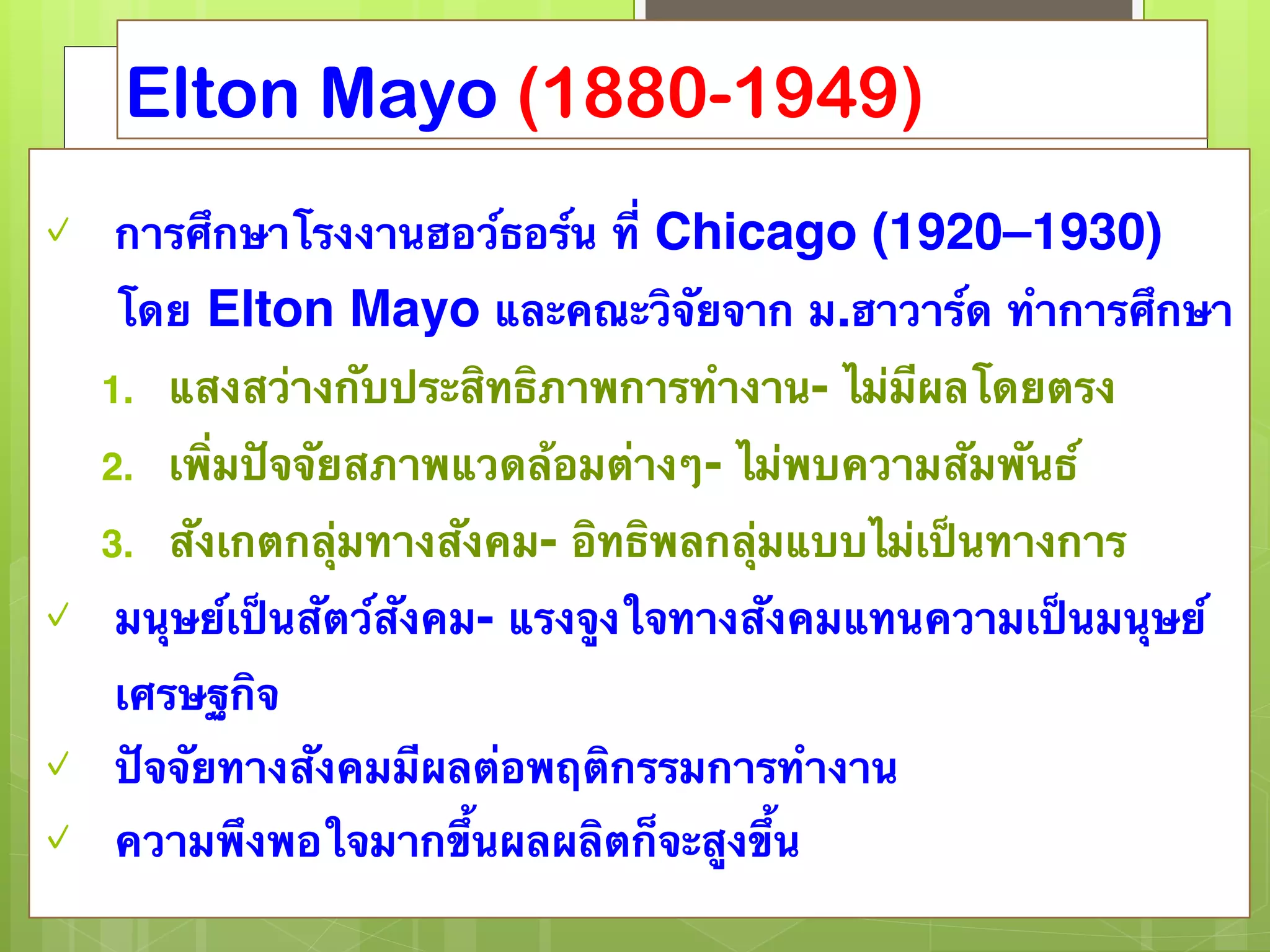
• Elton Mayo (Hawthorne Studies & Hawthorn Effect)
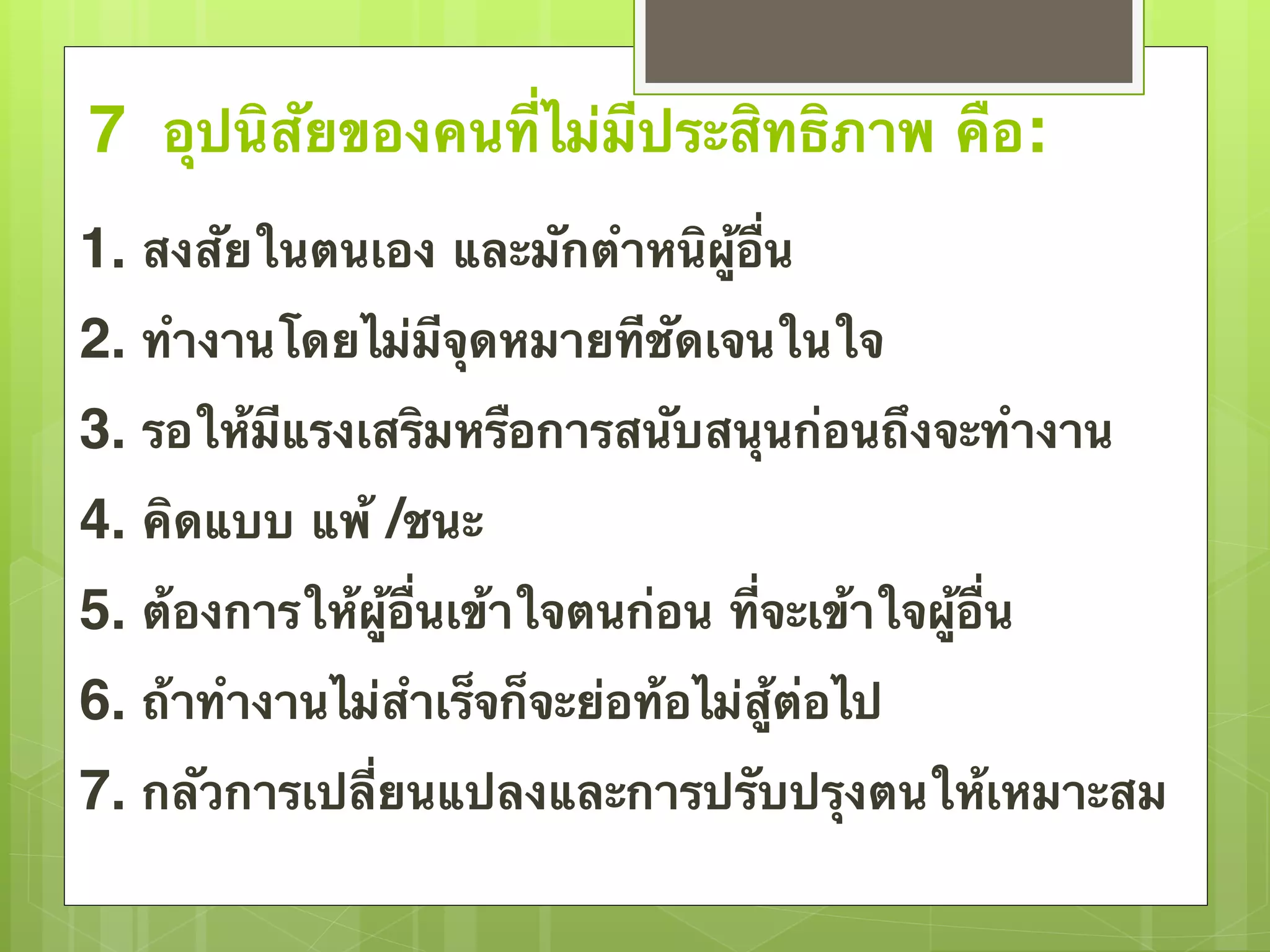
4.
• Robert Owen,Charles Babbage, Adam Smith
• Henry Ford
• Chris Argyris (1960)
• David McClelland (1961)
• Frederick Herzberg (The Two-Factor Theory,1966)
• Henry Mintzberg (Managerial Role, 1979)
• Kenneth Blanchard (1981)
• Peter M. Senge (Learning Organization, 1990)
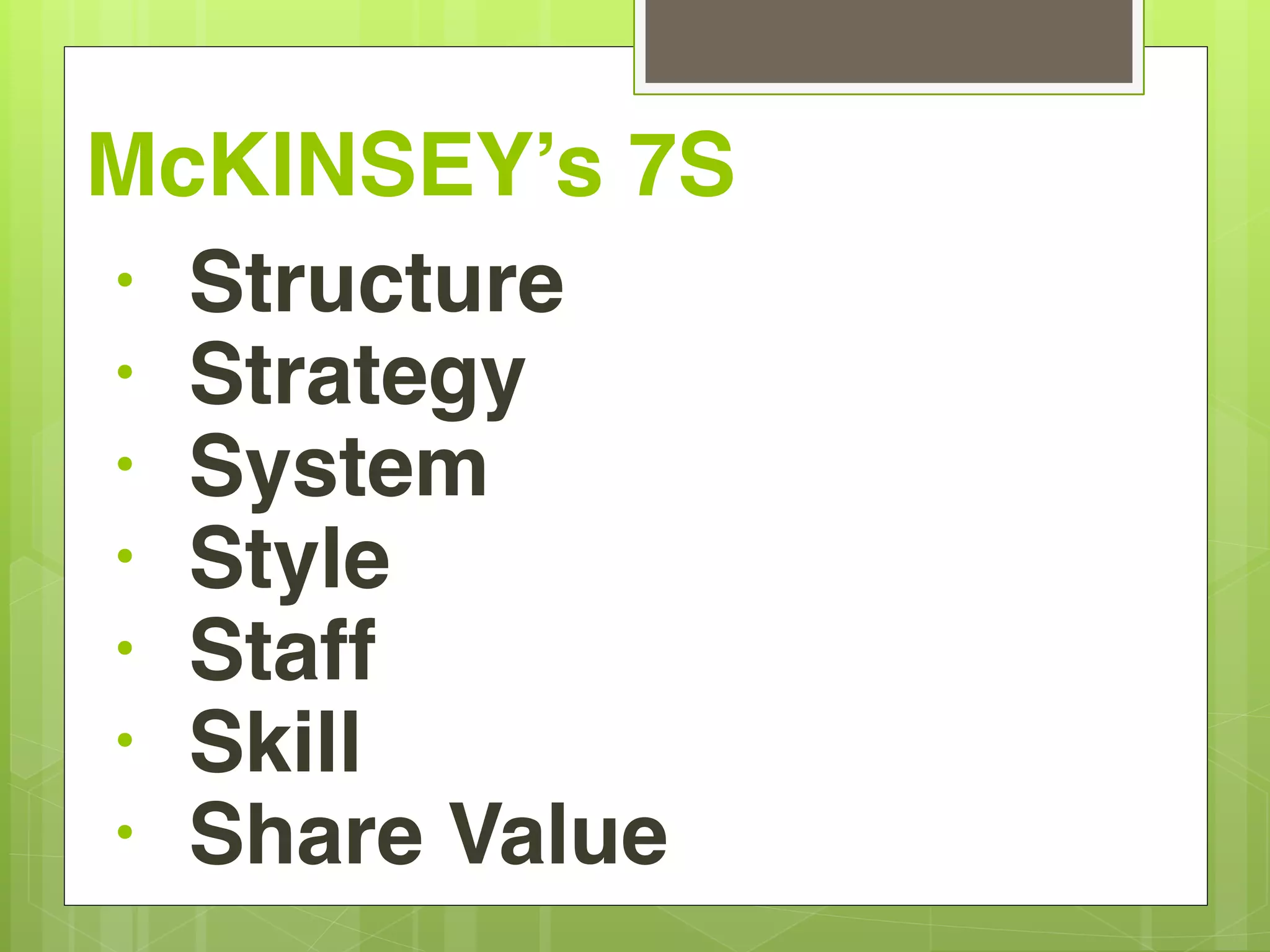
• Tom Peters & Robert Waterman (Mckinsey’s 7-S )
• John Adair
• Robert Kaplan & David Norton (Balanced Scorecard)
• Michael Hammer (Reengineering, 1990s)
5.
• C.K. Prahalad(Core Competency)
• Booms and Bitner (Marketing Mix 7 Ps)
• Kurt Lewin (Force Field analysis)
• Ishikawa’s quality circles / fishbone diagram
• Rensis Likert (Linking Pin Model, 1950)
• Warren Bennis – Leadership
• Peter F. Drucker (Management by Objective, 1954)
• William Ouchi’s Theory Z (1981)
• Edwards W. Deming (and Deming cycle)
• Kenichi Ohmae (3 C’s Model)
• 80-20 rule or Pareto principles (1906, 1940)
• Armand V. Feigenbaum (Total Quality Control)
• John P. Kotter (Change management)
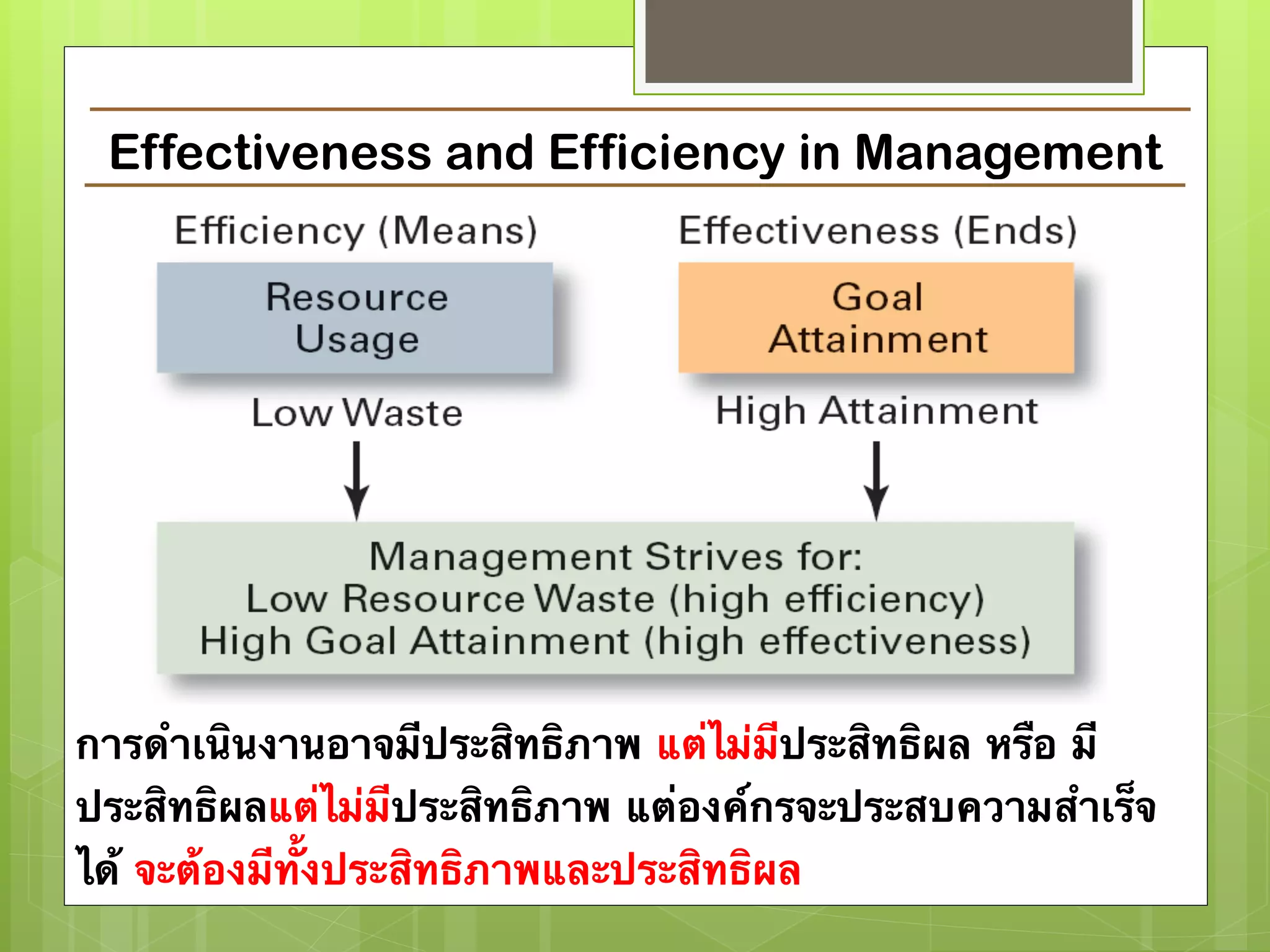
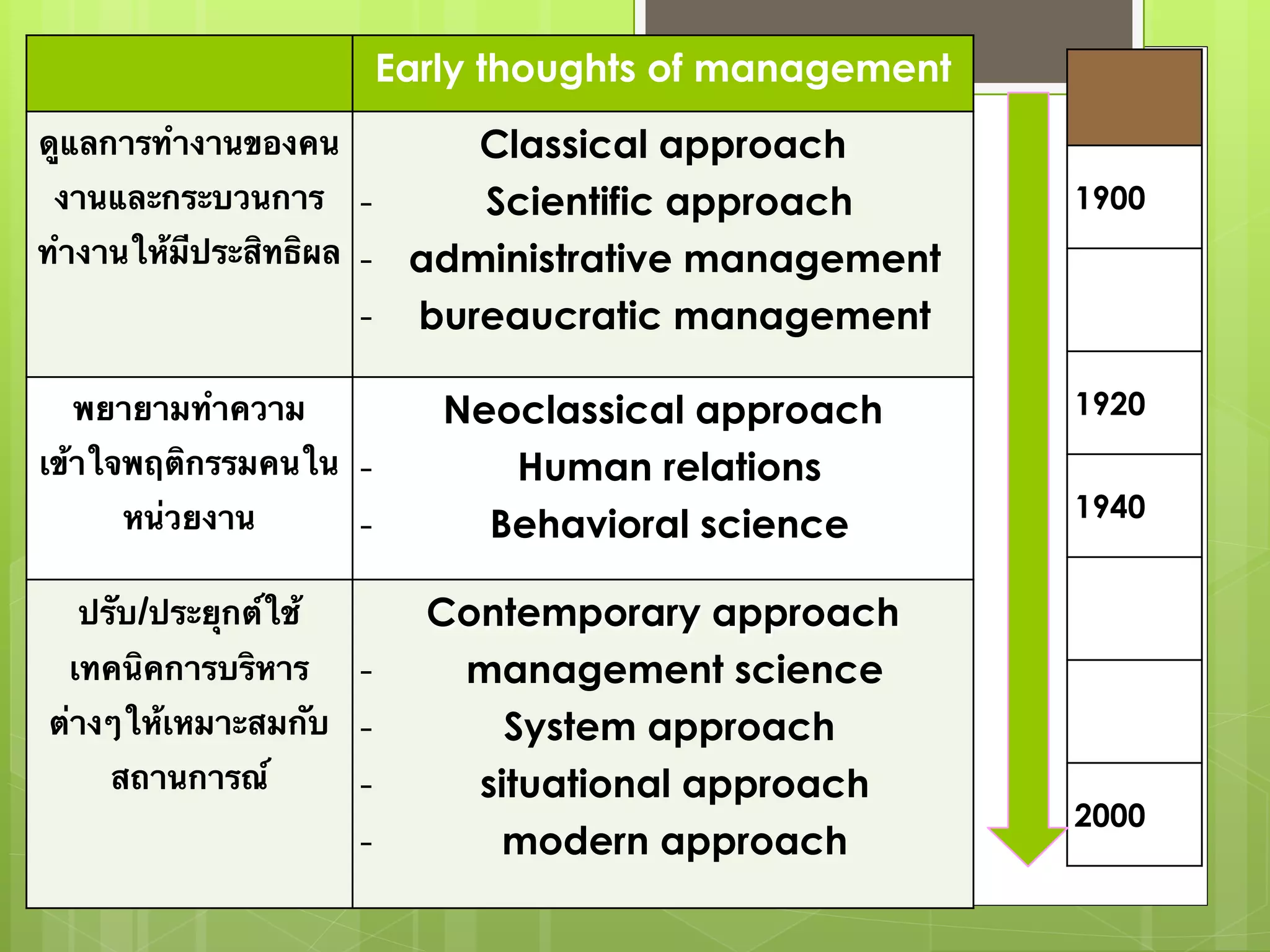
การบริหารยุคคลาสสิค
1. Scientificmanagement
• Frederick Taylor
• Frank & Lillian Gilbreth
2. Administrative Management
• Henri Fayol
• Luther Gulick and Lyndall Urwick
3. Bureaucratic management : Max Weber
31.
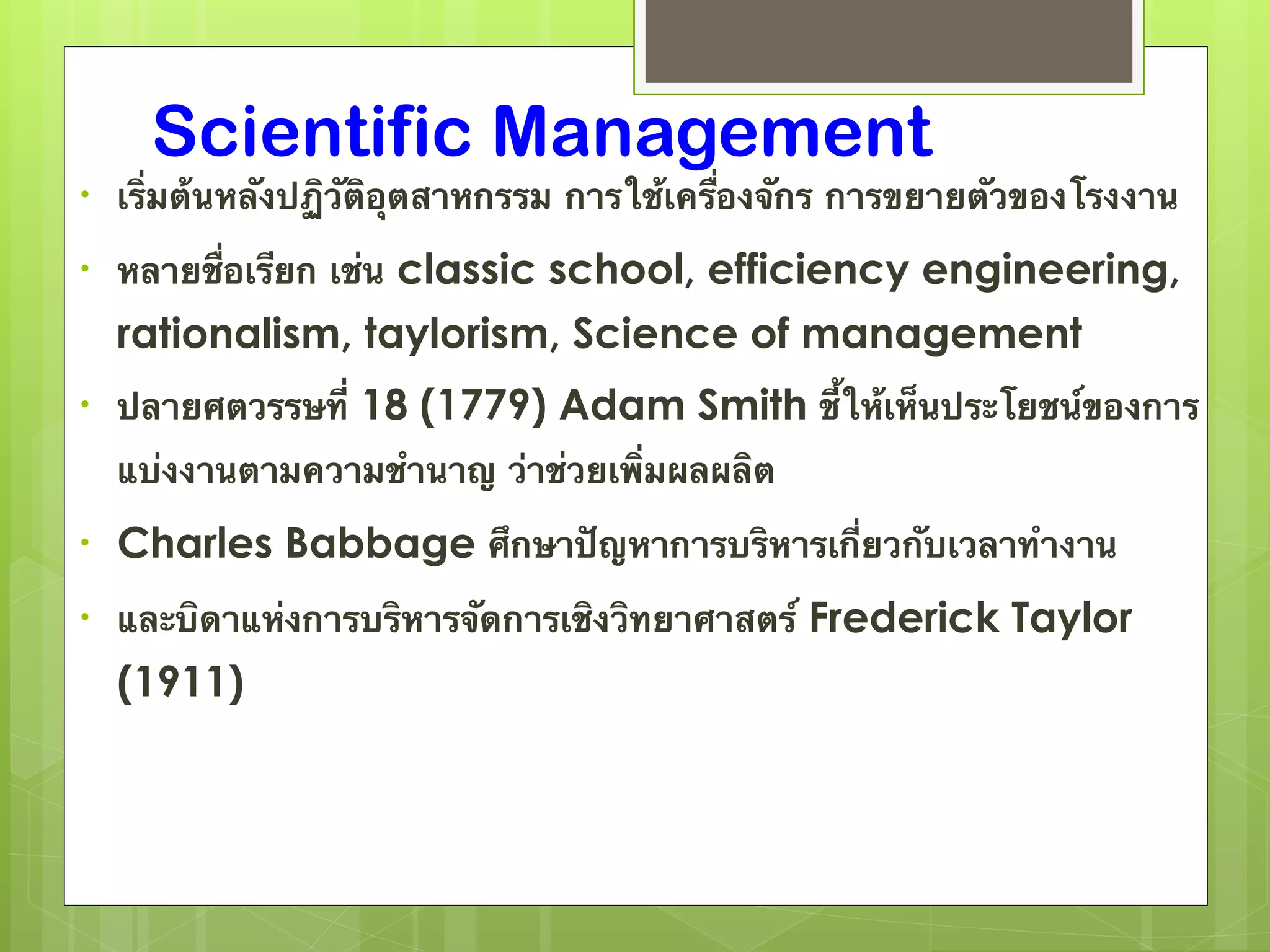
Scientific Management
•เริ่มต้นหลังปฏิวัติอุตสาหกรรม การใช้เครื่องจักร การขยายตัวของโรงงาน
• หลายชื่อเรียก เช่น classic school, efficiency engineering,
rationalism, taylorism, Science of management
• ปลายศตวรรษที่ 18 (1779) Adam Smith ชี้ให้เห็นประโยชน์ของการ
แบ่งงานตามความชำนาญ ว่าช่วยเพิ่มผลผลิต
• Charles Babbage ศึกษาปัญหาการบริหารเกี่ยวกับเวลาทำงาน
• และบิดาแห่งการบริหารจัดการเชิงวิทยาศาสตร์ Frederick Taylor
(1911)
ข้อเสนอของ Follett
“Authorityshould go with knowledge…” อำนาจของ
บุคคลควรมาจากความรู้ความชำนาญในการทำงานมากกว่ามาจาก
ตำแหน่งหน้าที่ ผู้บริหารควรเป็นผู้ให้ความช่วยเหลือแนะนำหรืออำนวย
ความสะดวกในการทำงาน และ Follett ให้ความสำคัญกับแนวคิด
☑ self-managed teams
☑ empowerment = horizontal view of power and
authority
☑ communication
☑ cross-functioning
☑ Power should flow to the person who can best help
the org. achieve its goals.
Behavioral Approach
•ชี้ให้เห็นความสำคัญของคนงาน และให้ความสำคัญเรื่องผลกระทบ
ของความสัมพันธ์เชิงสังคมและสังคมอย่างเป็นทางการ (formal
organization)
• นักคิดที่สำคัญ
• Chester I. Barnard
• Herbert A. Simon
• Abraham H. Maslow
• Douglas McGregor
46.
Chester I. Barnard
เขียนหนังสือชื่อ The Functions of The Executive
(1938) ที่กล่าวถึงหน้าที่ของผู้บริหารโดยให้ความสำคัญต่อ
บุคคล ความสัมพันธ์แบบไม่เป็นทางการ การสร้างความพึงพอใจ
ระบบความร่วมมือ (cooperative system)และเป้าหมายของ
องค์การกับความต้องการของบุคคลในองค์การต้องสมดุลกัน
โดยบาร์นาร์ดระบุหน้าที่ของผู้บริหารดังนี้
• Establishing and maintaining a system of
communication;
• Securing essential services from other
members;
• Formulating organizational purposes and
objectives.
Herbert Simon
•บิดาแห่งการตัดสินใจ
• ได้ขยายแนวคิดของบาร์นาร์ด มองการทำงานเป็นระบบการแลกเปลี่ยน
เพื่อสร้างแรงจูงใจในการทำงาน ดังนั้นจึงต้องบูรณาการความรู้ทาง
เศรษฐศาสตร์ จิตวิทยา สังคม
• การบริหารจำเป็นต้องมีกระบวนการตัดสินใจอย่างมีเหตุผล เนื่องจากมี
อิทธิพลต่อพฤติกรรมของสมาชิกในองค์กร และพบว่า ปัญหาจะไม่มีคำ
ตอบที่ดีที่สุด แต่จะทางออกที่ให้ความพอใจมากกว่าทางเลือกอื่นๆ
50.
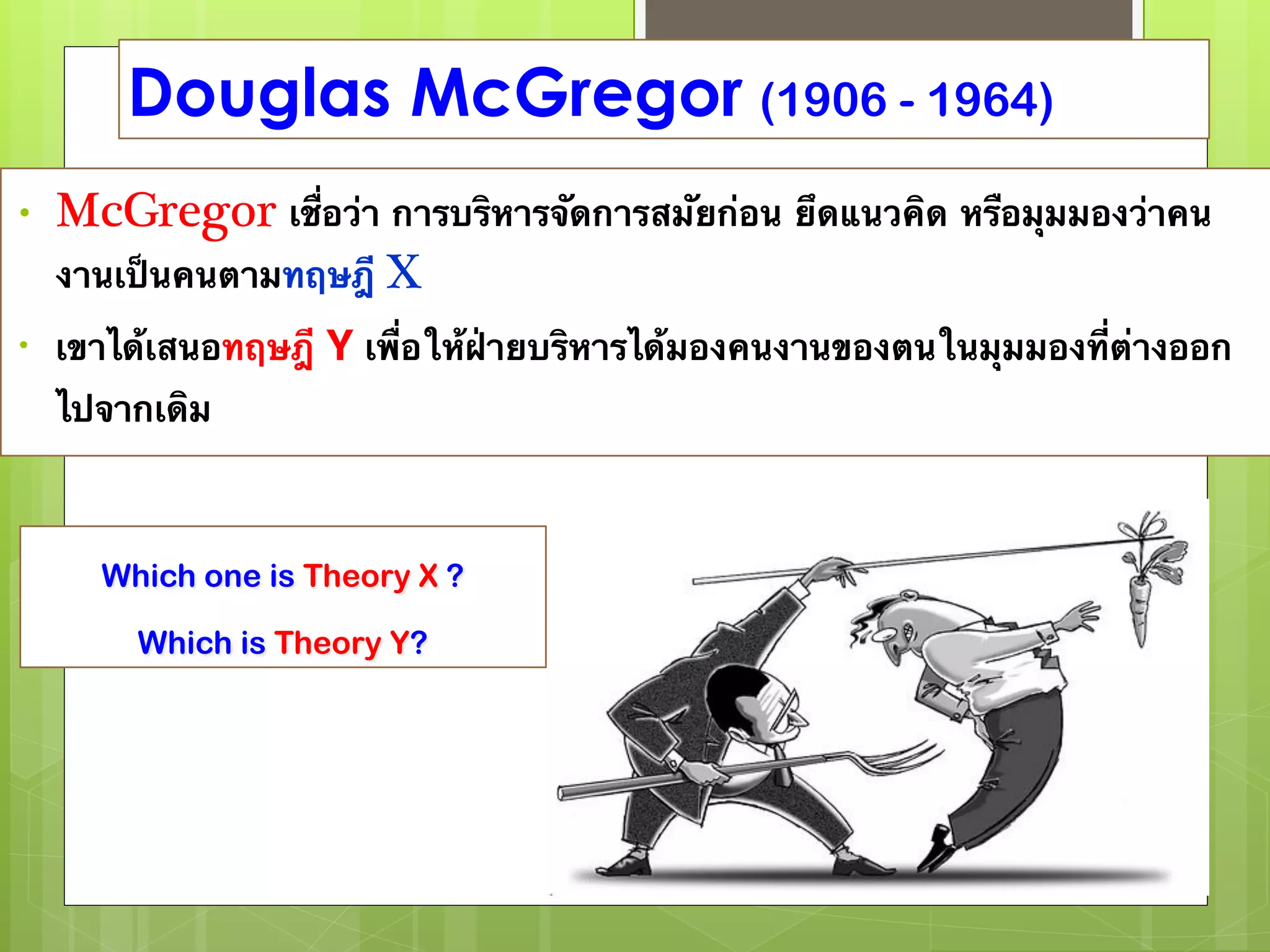
Douglas McGregor (1906- 1964)
• McGregor เชื่อว่า การบริหารจัดการสมัยก่อน ยึดแนวคิด หรือมุมมองว่าคน
งานเป็นคนตามทฤษฎี X
• เขาได้เสนอทฤษฎี Y เพื่อให้ฝ่ายบริหารได้มองคนงานของตนในมุมมองที่ต่างออก
ไปจากเดิม
Which one is Theory X ?
Which is Theory Y?
51.
Theory X
•มองคนงานในด้านลบ
• คนงานขี้เกียจ ไม่รับผิด
ชอบงาน
• ต่อต้านการเปลี่ยนแปลง
• ไม่ชอบและหลีกเลี่ยงงาน
• ขากความตื่นตัวในการ
ทำงาน
• ต้องได้รับคำสั่ง ข่มขู่จึงจะ
ยอมทำงาน
Theory Y
• มองคนงานในด้านดี
• คนงานมีความรับผิดชอบ
งาน
• คนงานแสวงหาความรับผิด
ชอบ
• มีความสามารถ และชี้นำ
หรือควบคุมตัวเองได้
• คนงานมีความกระตือรือร้น
และความคิดสร้างสรรค์
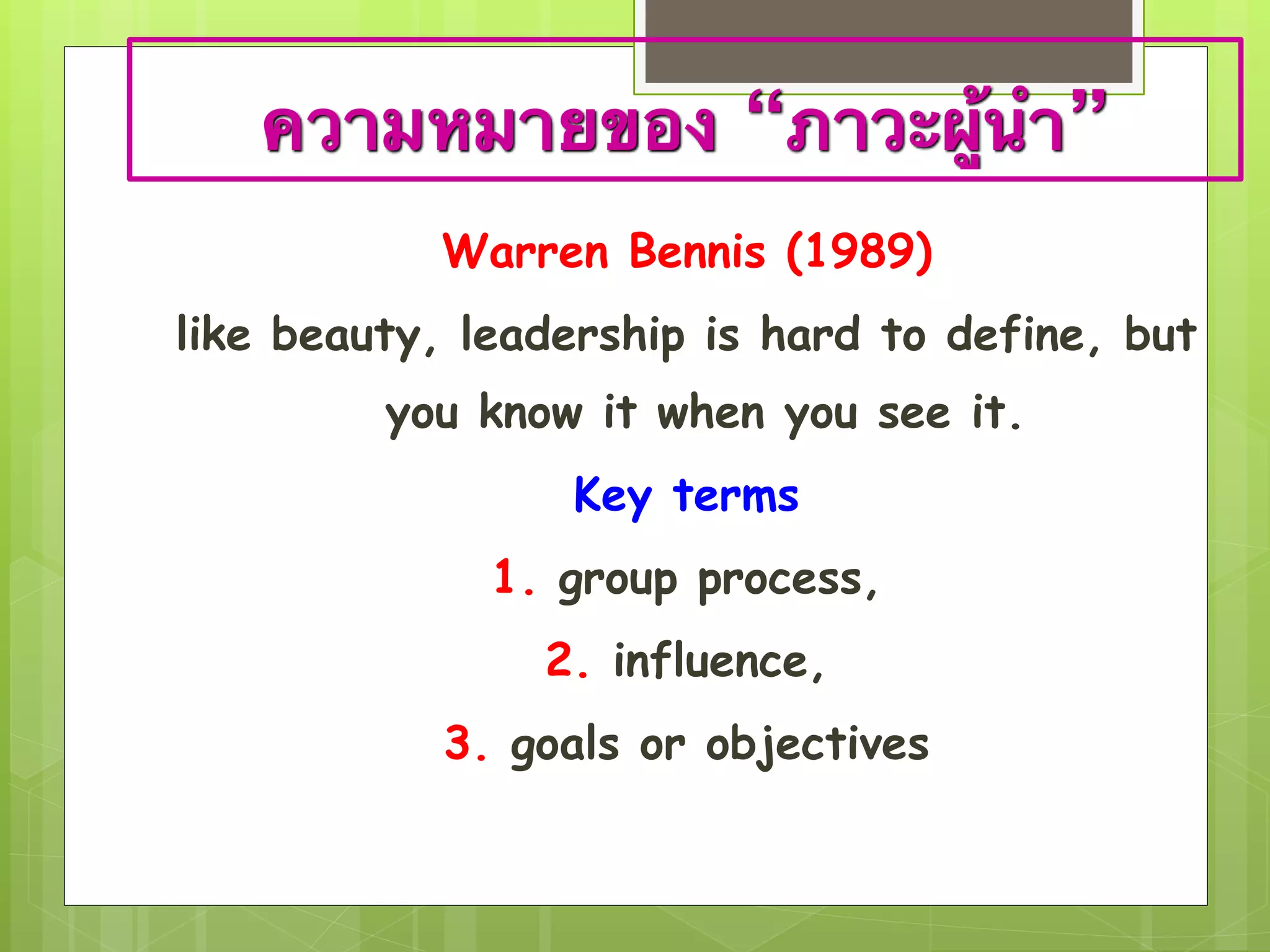
ความหมายของ “ภาวะผู้นำ”
WarrenBennis (1989)
like beauty, leadership is hard to define, but
you know it when you see it.
Key terms
1. group process,
2. influence,
3. goals or objectives
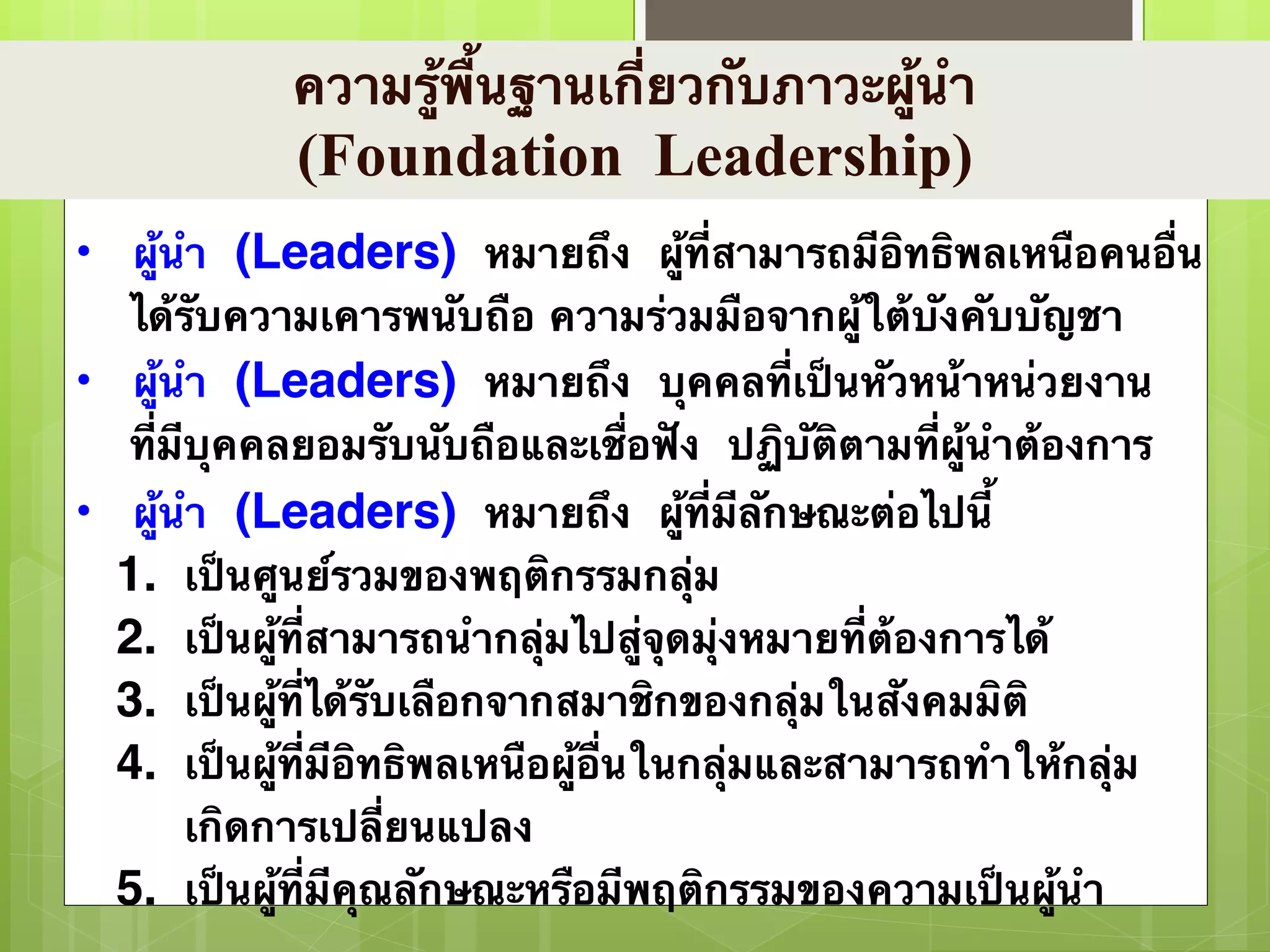
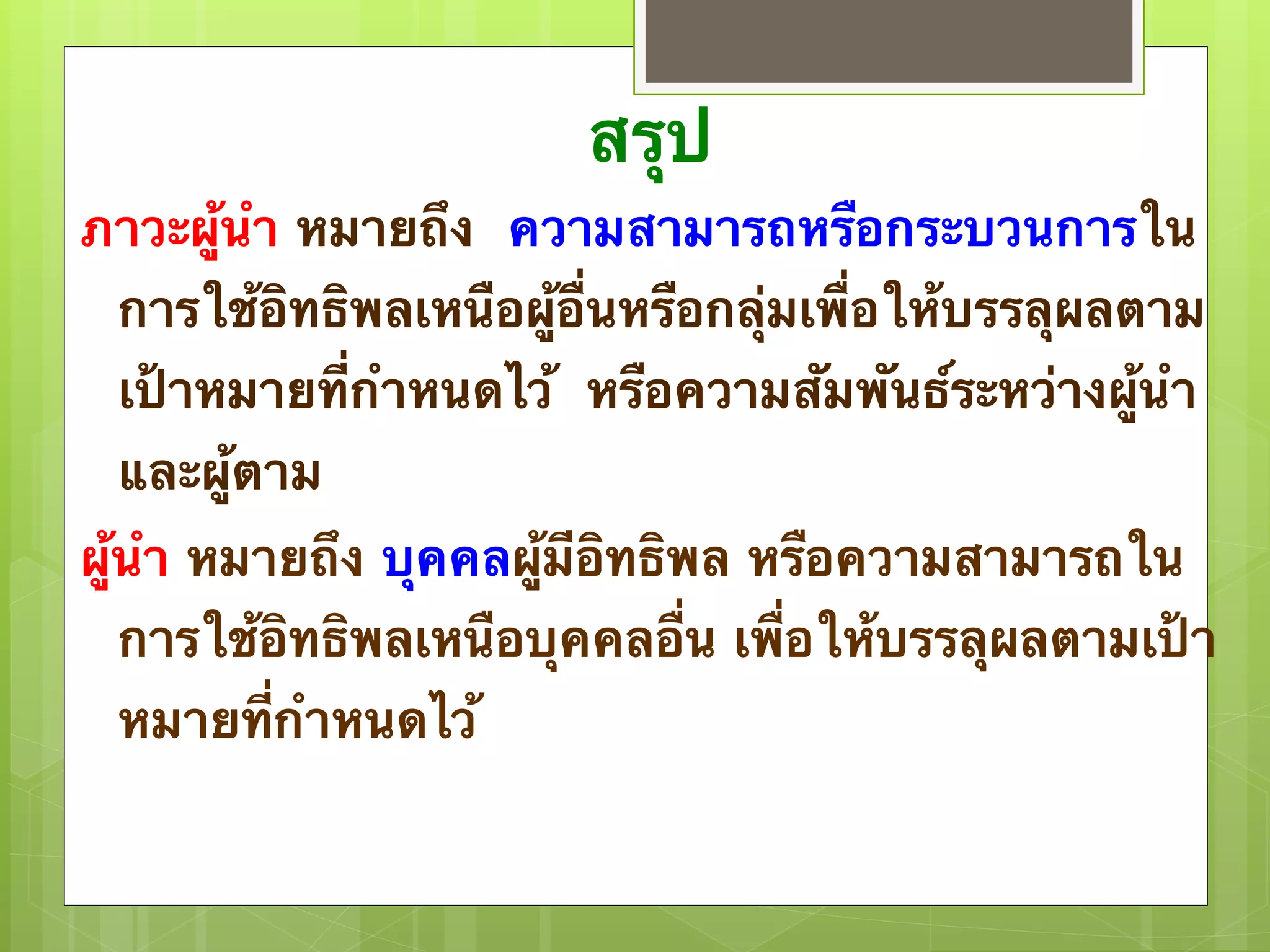
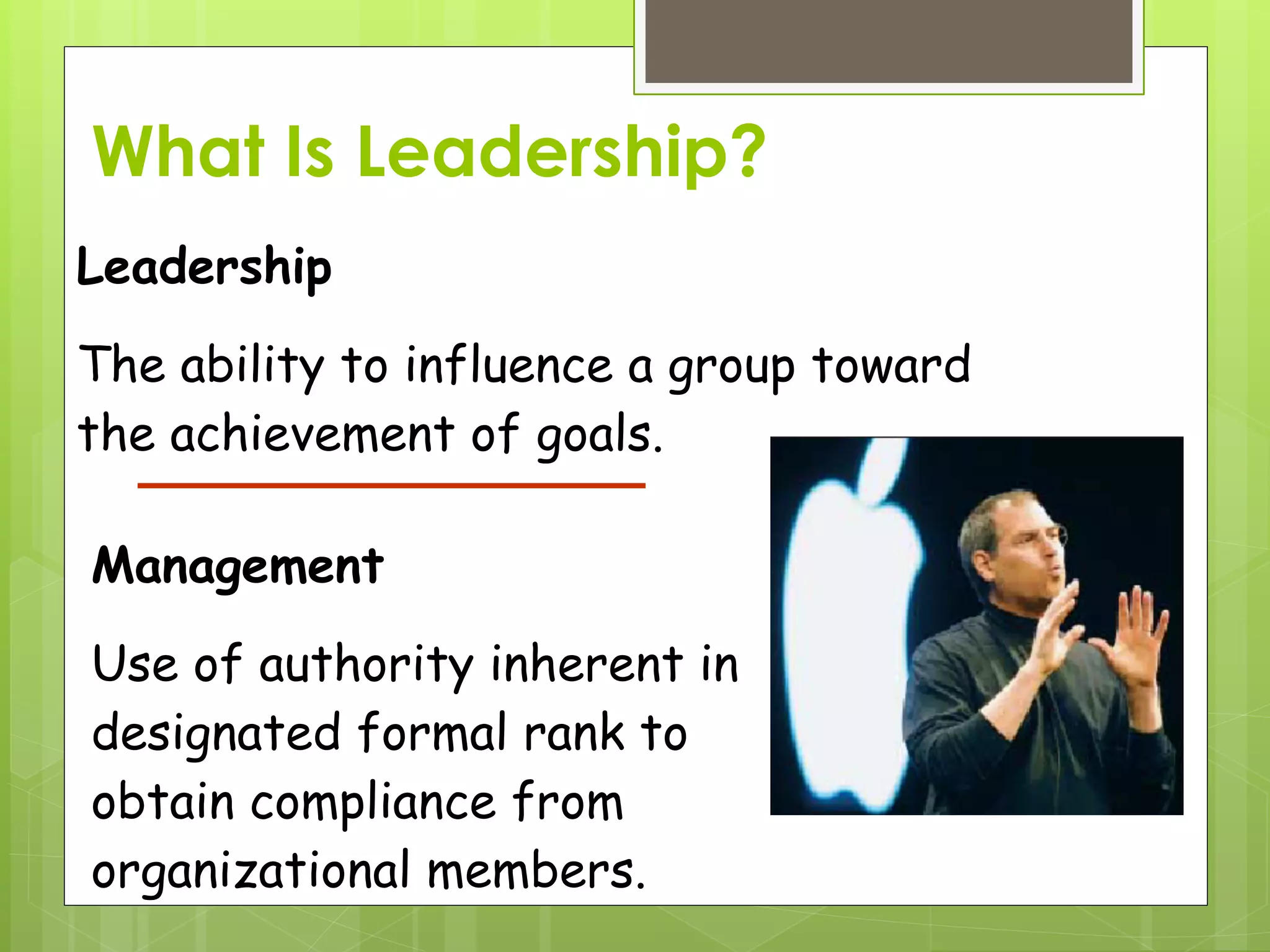
What Is Leadership?
Leadership
The ability to influence a group toward
the achievement of goals.
Management
Use of authority inherent in
designated formal rank to
obtain compliance from
organizational members.
80.
ภาวะผู้ตาม (followership)
•ก่อนเป็นผู้นำ ต้องเคยเป็นผู้ตามมาก่อน
• ผู้นำที่ดีต้องตามเป็น (you can’t lead until you know how to
follow)
• ภาวะผู้ตามมีความสำคัญและมีผลต่อความสำเร็จ หรือล้มเหลวของ
องค์การไม่น้อยไปกว่าภาวะผู้นำ
• จะไม่มีผู้นำที่ดี หากไม่มีผู้ตาม
• ผู้ตามที่ดี คือ ผู้ที่ทำให้ผู้นำทำหน้าที่ได้ และบรรลุเป้าหมายขององค์การได้
อย่างมีประสิทธิผล
• ผู้ตามที่มีประสิทธิผล เป็นที่ปรารถนาของผู้นำ
ทฤษฎีภาวะผู้นำ
• Greatman Theory
• Trait theory
• Skill approach
• Style or Behavioral theory
• Situational theory
• Contingency theory
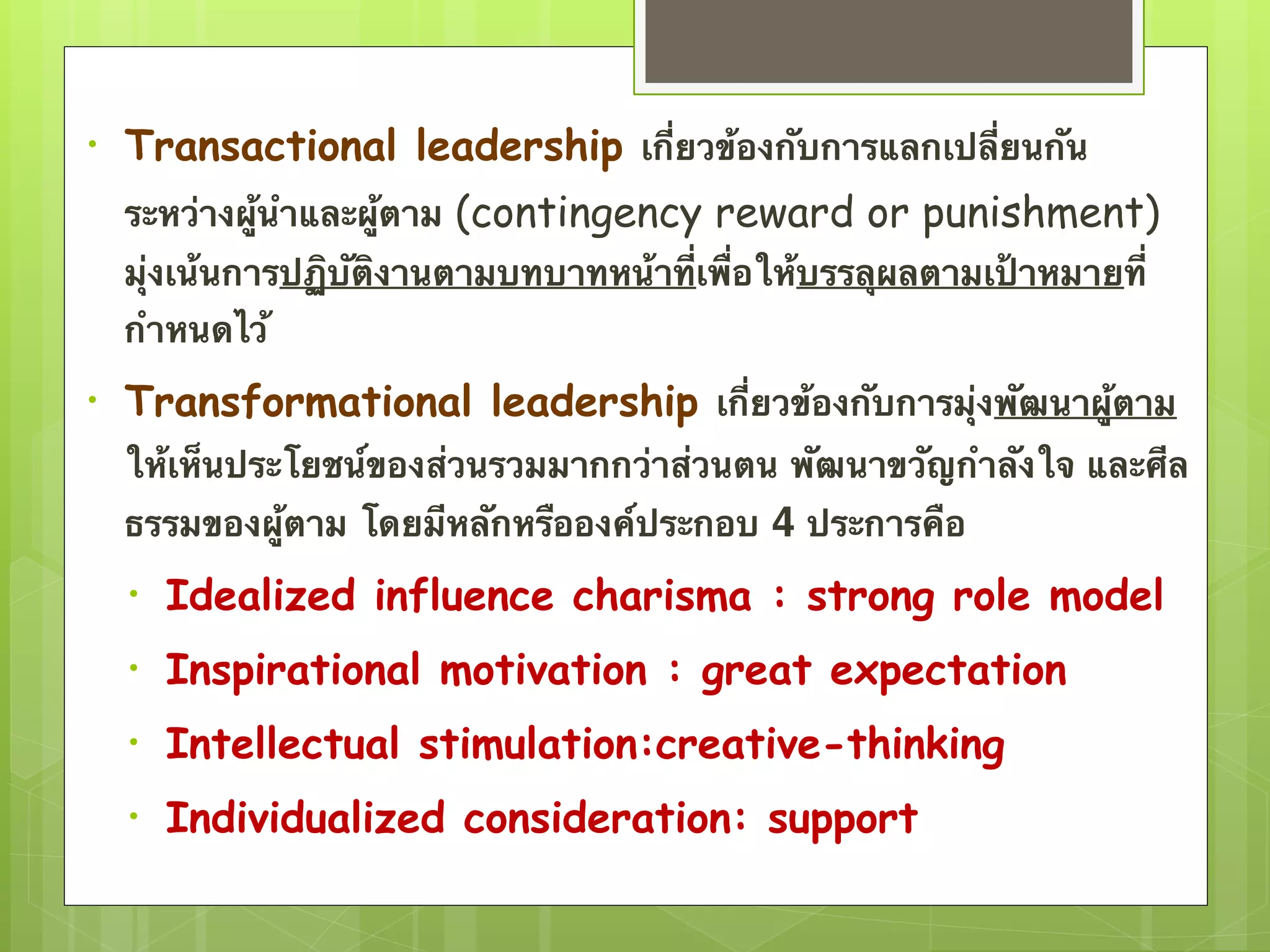
• Transactional leadership
• Transformational leadership
• Stogdill ศึกษาครั้งที่2 ในช่วงปี 1948-1970 และได้เสนอ
คุณลักษณะของผู้นำเพิ่มเติม
• Drive for responsibility and task completion
• Persistent pursuit of goals
• Originality in problem-solving
• Initiative in social situations
• Self-confidence, sense of personal identity
• Willingness to accept consequences of decision
and action
• Readiness to absorb stress and tolerate frustration
• Ability to influence behaviors of others
• Capacity to structure social interaction for a
purpose
แนวคิดที่สำคัญ
• TheOhio State University Studies (Initiating
structure, Consideration)
• The University of Michigan Studies (Production
Orientation, Employee Orientation)
• Blake and Mouton’s Managerial Grid
The University ofMichigan Studies
By Daniel Katz & Rensis Likert เสนอ 2 พฤติกรรม คือ
✿ Production Orientation
✿ ผู้นำให้ความสำคัญด้านการปฏิบัติงานเป็นหลัก
✿ ใช้ประโยชน์จากผู้ตามในการทำงานให้เสร็จ
✿Employee Orientation
✿ผู้นำให้ความสำคัญกับตัวบุคคล ความสัมพันธ์
ของคน
✿มองเห็นผู้ตามเป็นปัจเจกบุคคลและดูแลความ
ต้องการส่วนบุคคลของพวกเขา
101.
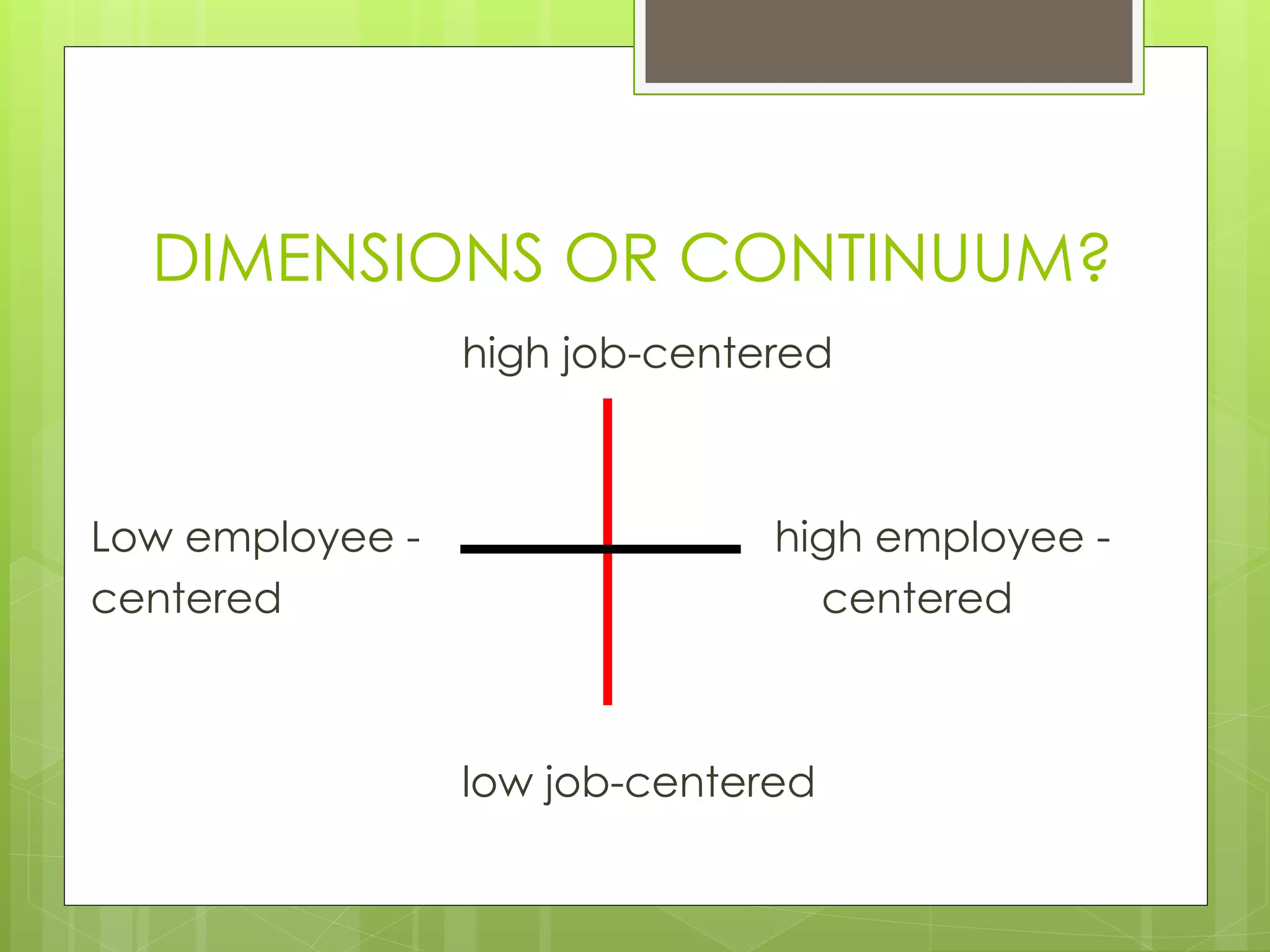
Blake and Mouton’sManagerial Grid
• Appraises leadership styles using two dimensions:
• Concern for people
• Concern for production
• Places managerial styles in five categories:
• Impoverished management เรื่อยเฉื่อย ไม่สนใจงาน
ไม่สนใจลูกน้อง
• Task management เน้นงานเป็นหลัก ไม่สนใจคน
• Middle-of-the-road management เดินสายกลาง
• Country club management ดูแลลูกน้อง ให้ความ
สำคัญกับความรู้สึกพอใจ
• Team management การมีส่วนร่วมในการบริหารงาน
DIMENSIONS OR CONTINUUM?
high job-centered
Low employee - high employee -
centered centered
low job-centered
114.
Leadership That GetsResults
• Coercive
• Demands immediate compliance
• “Do what I tell you”
• Negative affect on climate
• Authoritative
• Mobilizes people toward a vision
• “Come with me”
• Strongest positive affect on climate
• Democratic
• Forges consensus through participation
• “What do you think?”
• Positive affect on climate
115.
Leadership That GetsResults
• Pace Setting
• Sets high standards for performance
• “Do as I do, now”
• Negative affect on climate
• Affiliative
• Creates harmony and builds emotional bonds
• “People come first”
• Positive affect on climate
• Coaching
• Develops people for the future
• “Try this”
• Positive affect on climate
116.
Coercive
• Ina crisis or genuine
emergency
Authoritative
• Changes require a new vision;
Clear direction is needed
• Not good if followers are
more experienced than
leader
Democratic
• To build buy-in or consensus;
get input from valuable/
committed employees
• Leader is uncertain
Pace Setting
• Get quick results from
highly skilled and self
motivated professionals
Affiliative
• Heal rifts in a team or
motivate during
stressful circumstances
Coaching
• Help an employee
improve performance or
develop strengths
• Must want to improve
117.
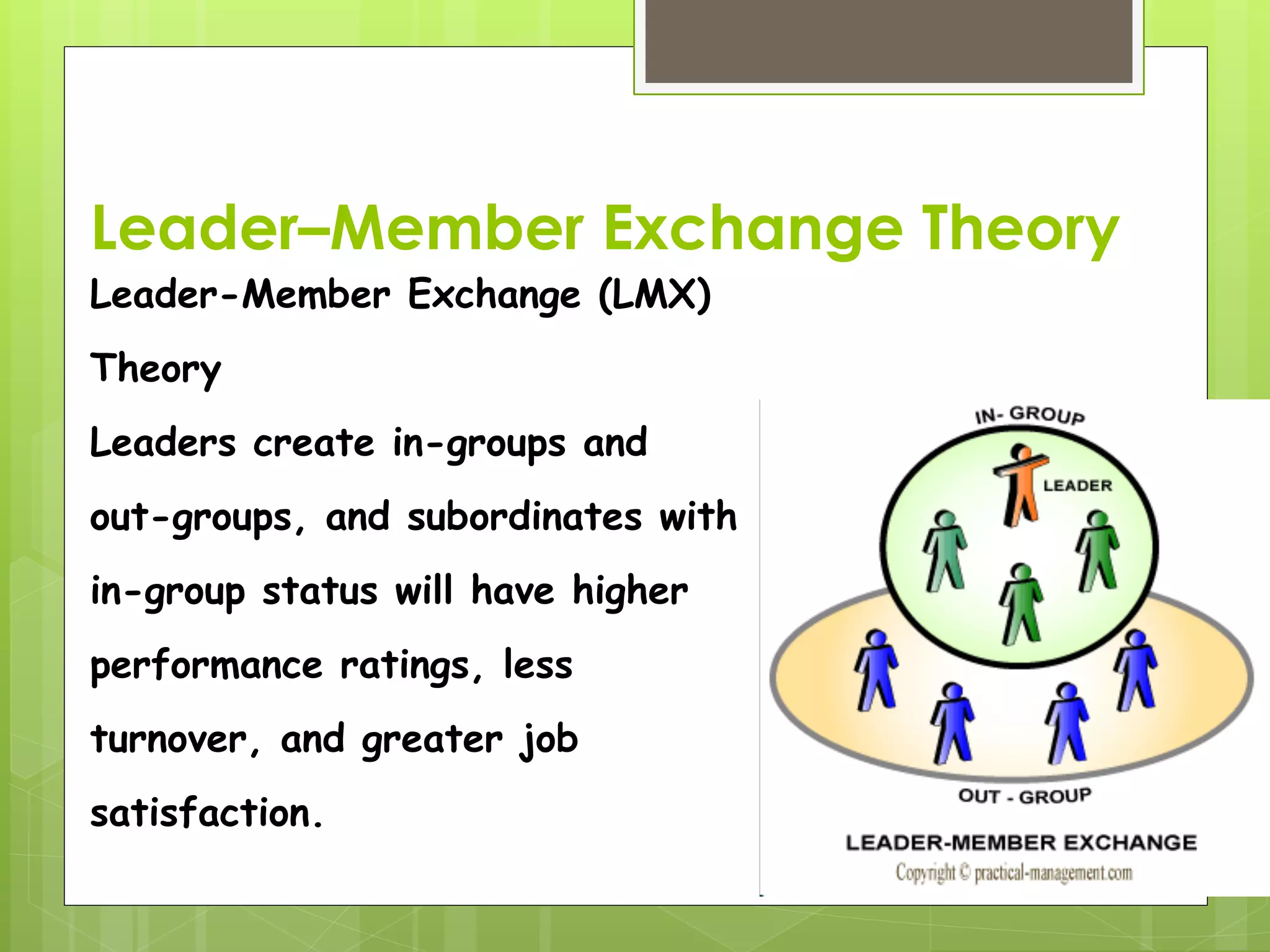
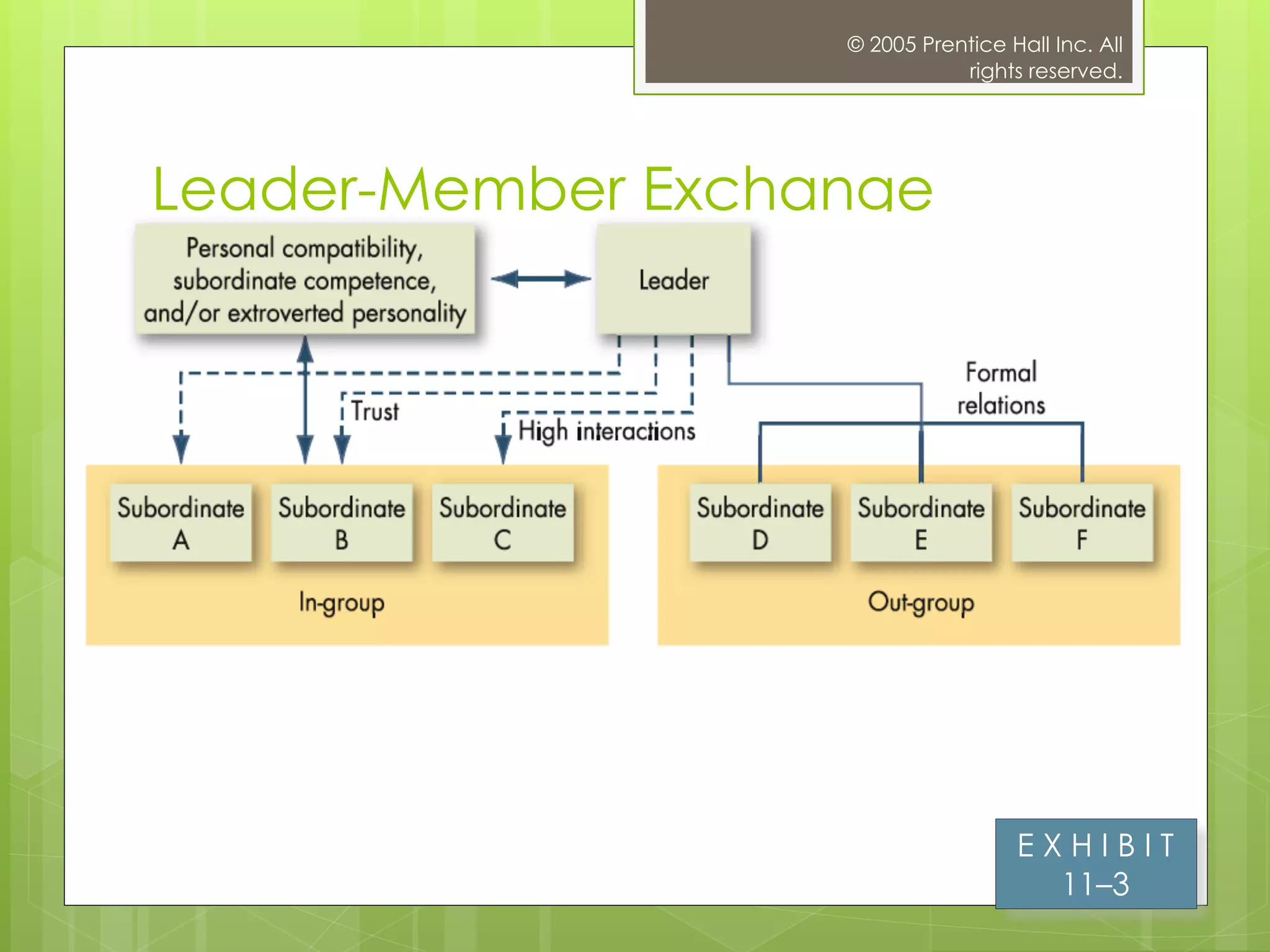
Leader–Member Exchange Theory
Leader-Member Exchange (LMX)
Theory
Leaders create in-groups and
out-groups, and subordinates with
in-group status will have higher
performance ratings, less
turnover, and greater job
satisfaction.
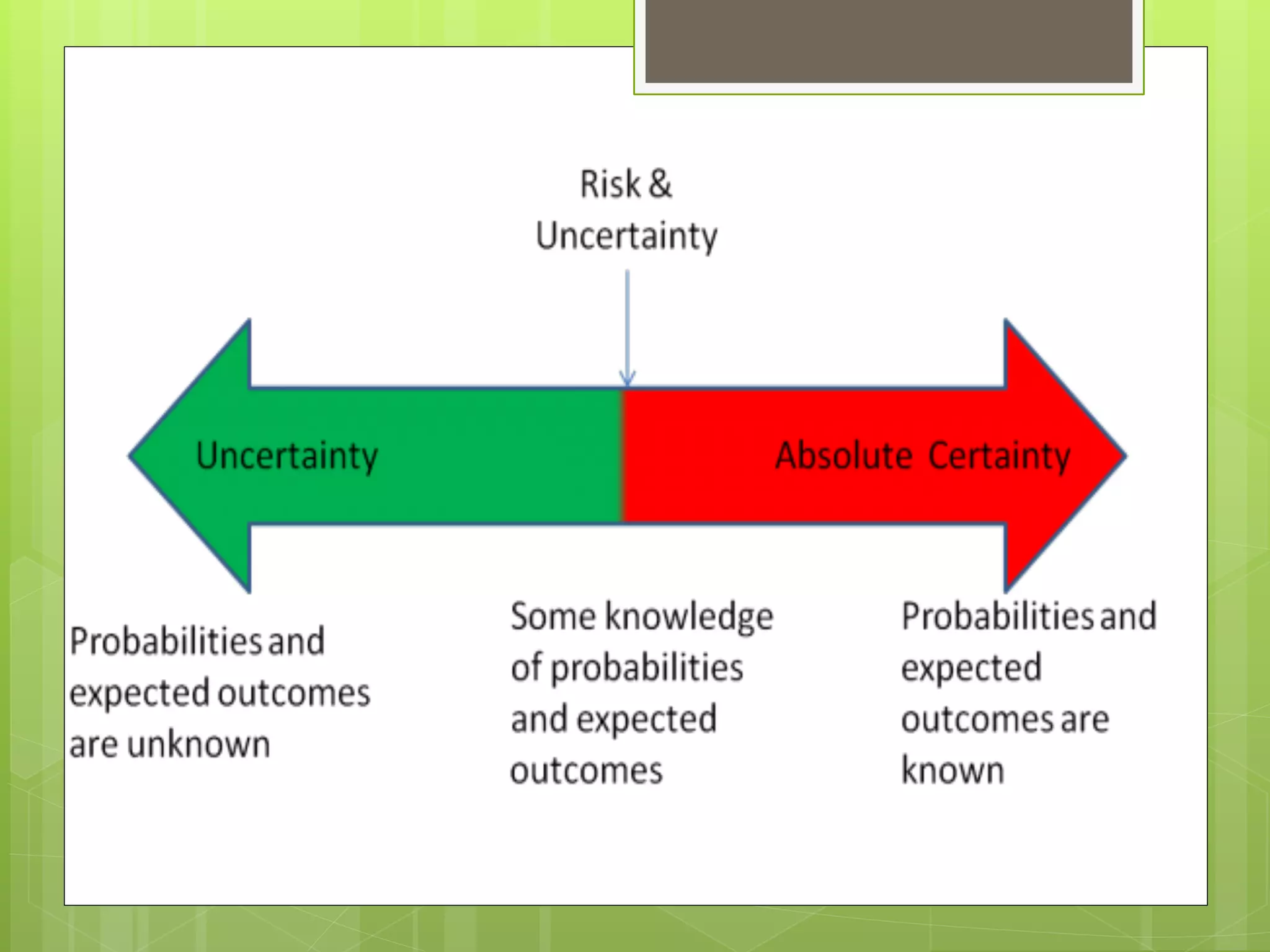
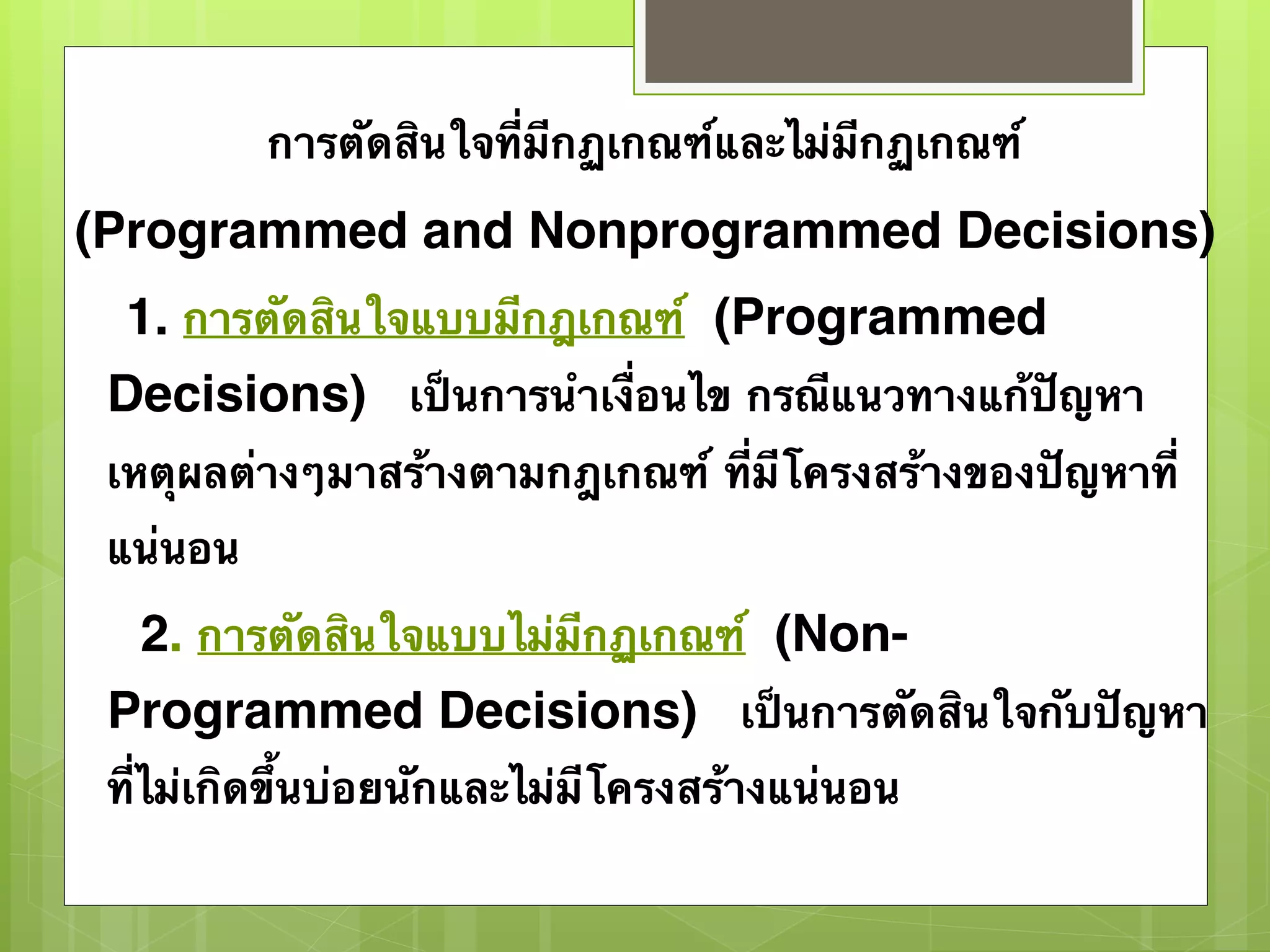
สภาวะการณ์การตัดสินใจ
• การตดัสินใจภายใต้ความแน่นอน
(Decision making under condition of certainty)
• การตดัสินใจภายใต้ความเสย7ีง
(Decision making under condition risk)
• การตดัสินใจภายใต้ความไม่แน่นอน
(Decision making under uncertainty)