Solutions and Suspensions
Volume A Chapter 7
Lesson Objectives
By the end of the lessons students sbat
•distinguish among solute solvent, solution
•deduce the nature of solutions and
suspensions by simple laboratory tests
•state the factors affecting solubility
•state the factors affecting rate of dissolving
•distinguish between a solution and a
suspension
Quick Recap
• Matter can be
classified as
elements, compounds
and mixtures.
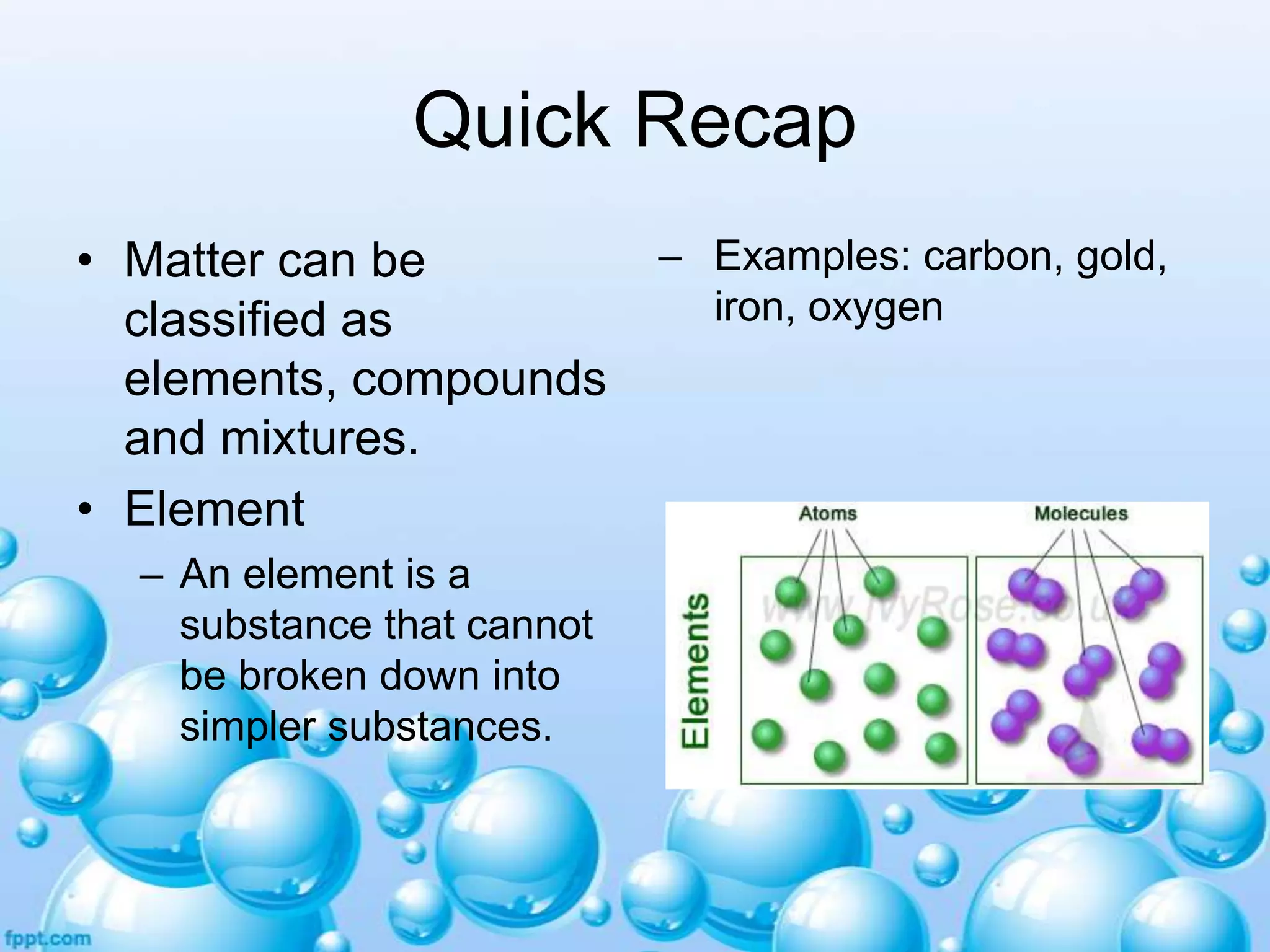
• Element
– An element is a
substance that cannot
be broken down into
simpler substances.

– Examples: carbon, gold,
iron, oxygen
Quick Recap
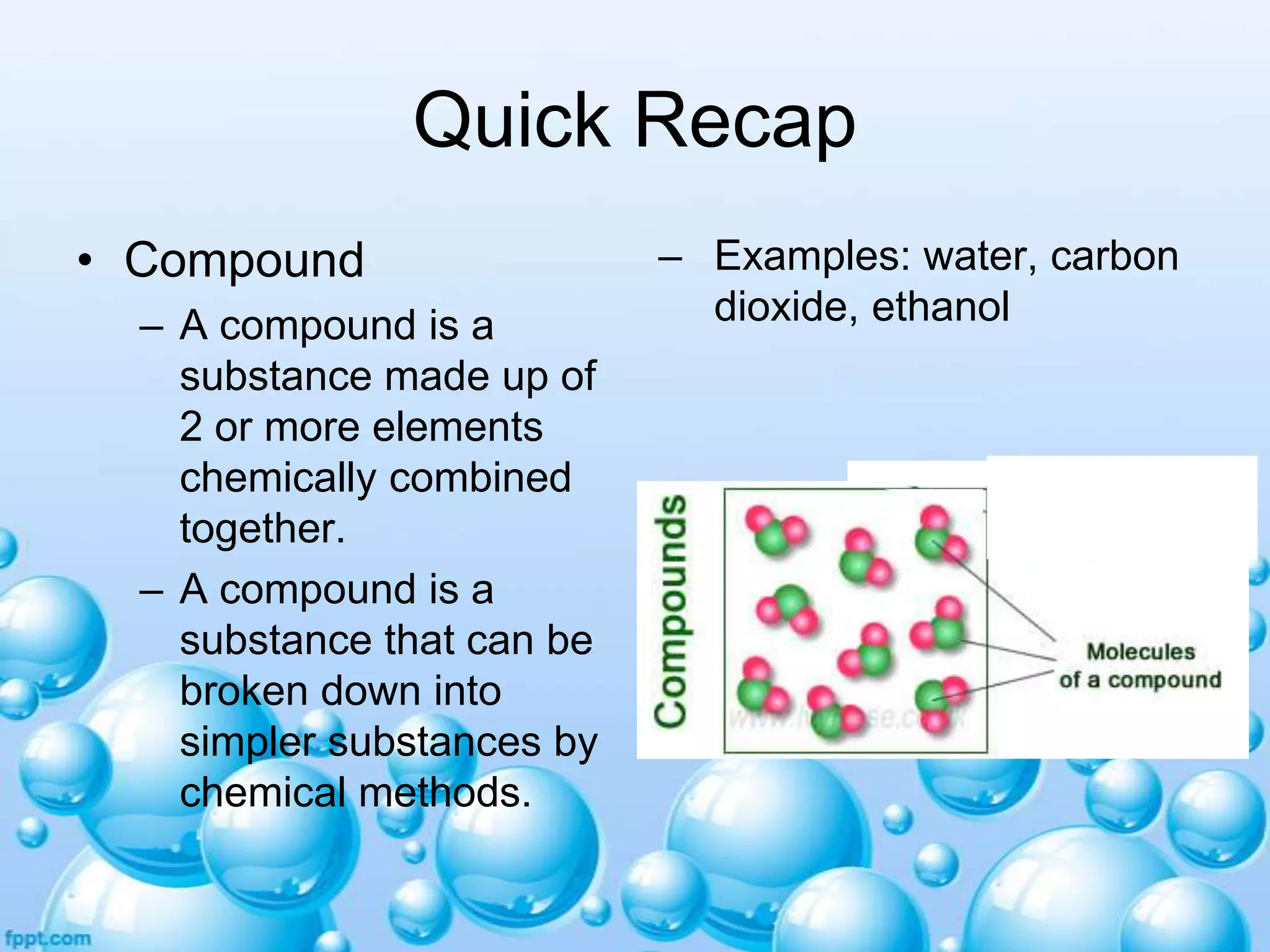
• Compound
– A compound is a
substance made up of
2 or more elements
chemically combined
together.
– A compound is a
substance that can be
broken down into
simpler substances by
chemical methods.

– Examples: water, carbon
dioxide, ethanol
Quick Recap
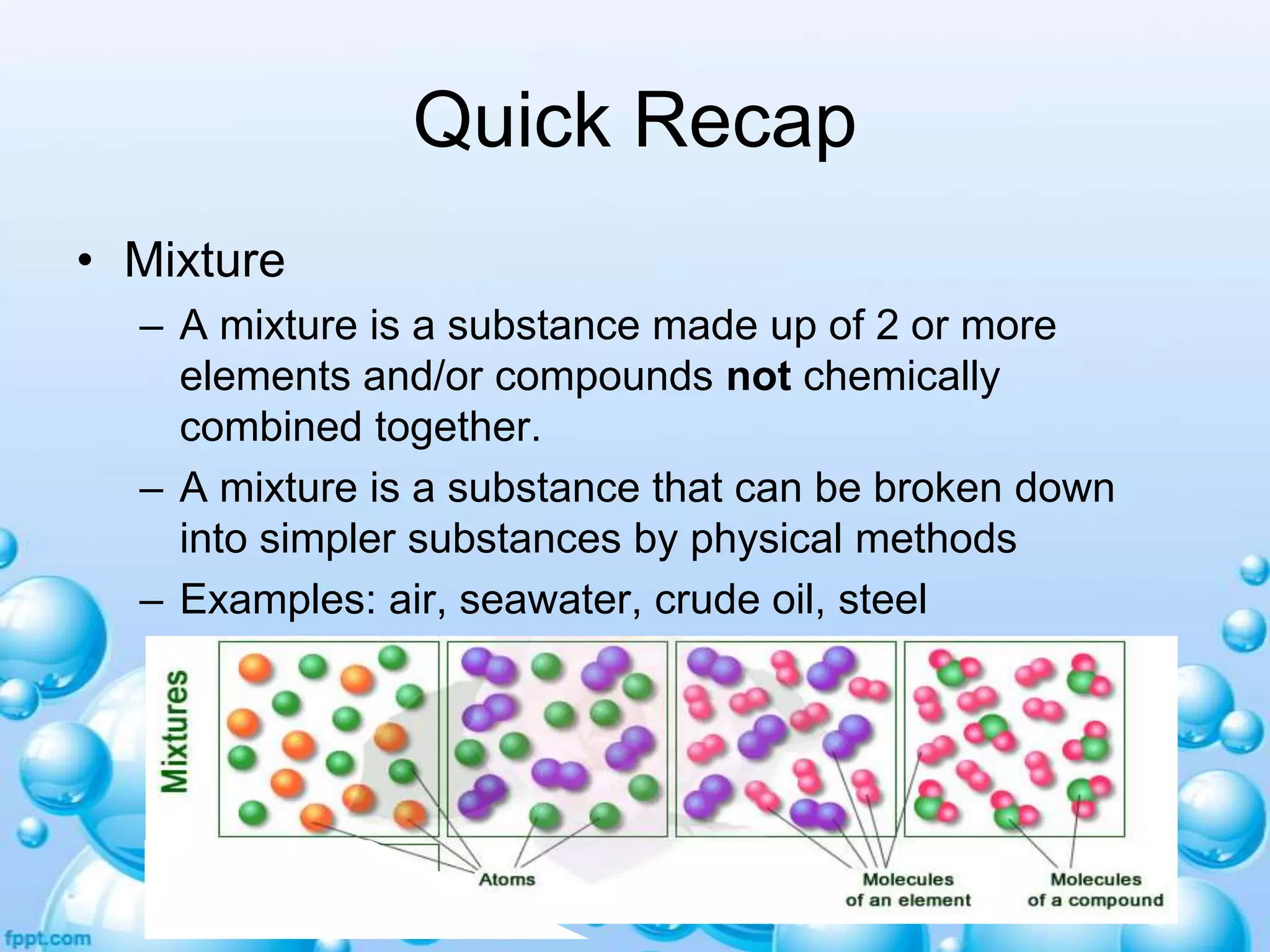
• Mixture
– A mixture is a substance made up of 2 or more
elements and/or compounds not chemically
combined together.
– A mixture is a substance that can be broken down
into simpler substances by physical methods
– Examples: air, seawater, crude oil, steel
Quick Recap
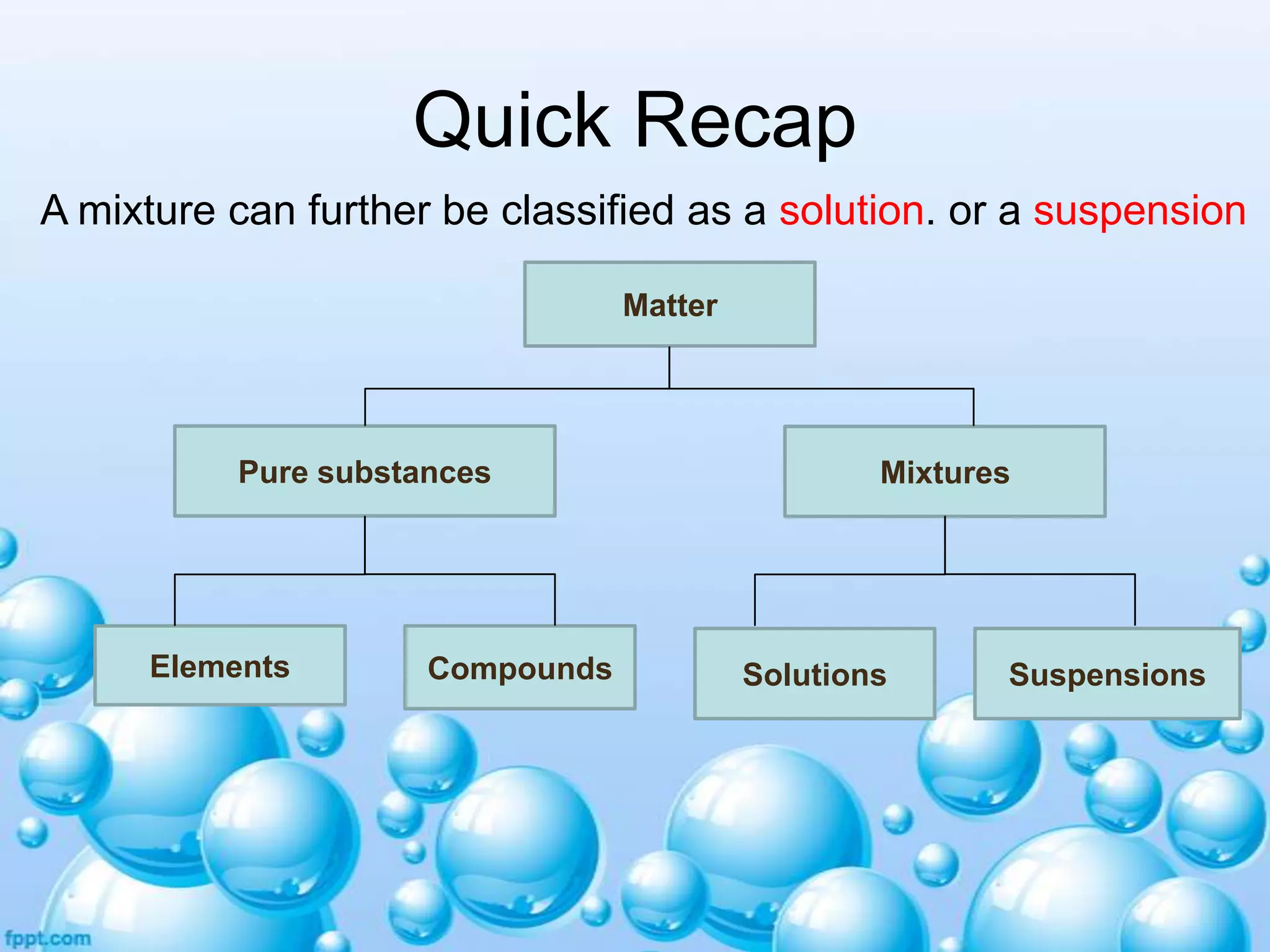
A mixture can further be classified as a solution. or a suspension
Matter

Pure substances

Elements

Compounds

Mixtures

Solutions

Suspensions
Solutions
• When salt is added into water, salt
dissolves in water.
– Salt is known as the solute (substance that
dissolves in the solvent).
– Water is known as the solvent (substance that
dissolves the solute).
– The final mixture is known as the solution.
Solutions
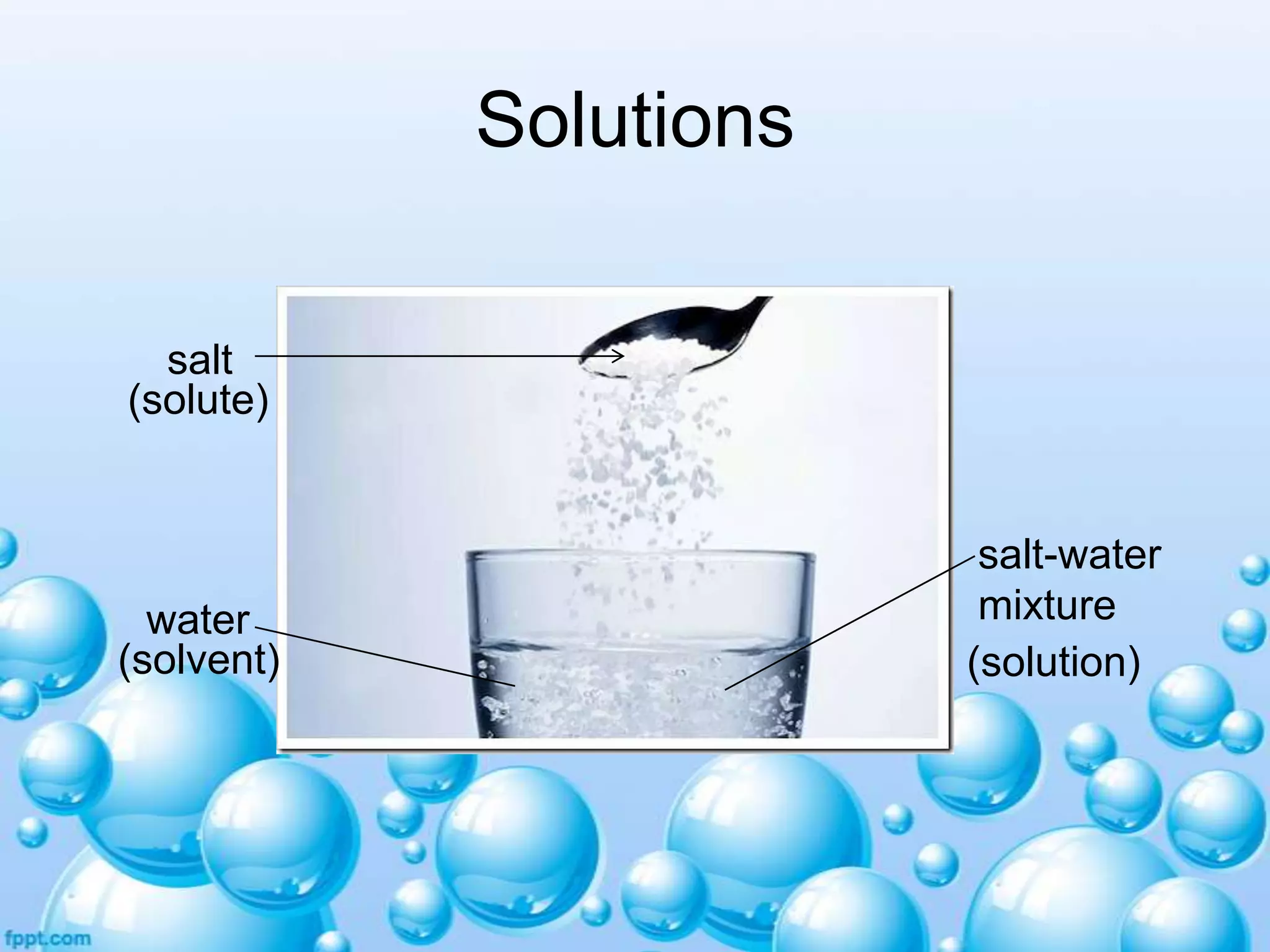
salt
(solute)

water
(solvent)

salt-water
mixture
(solution)
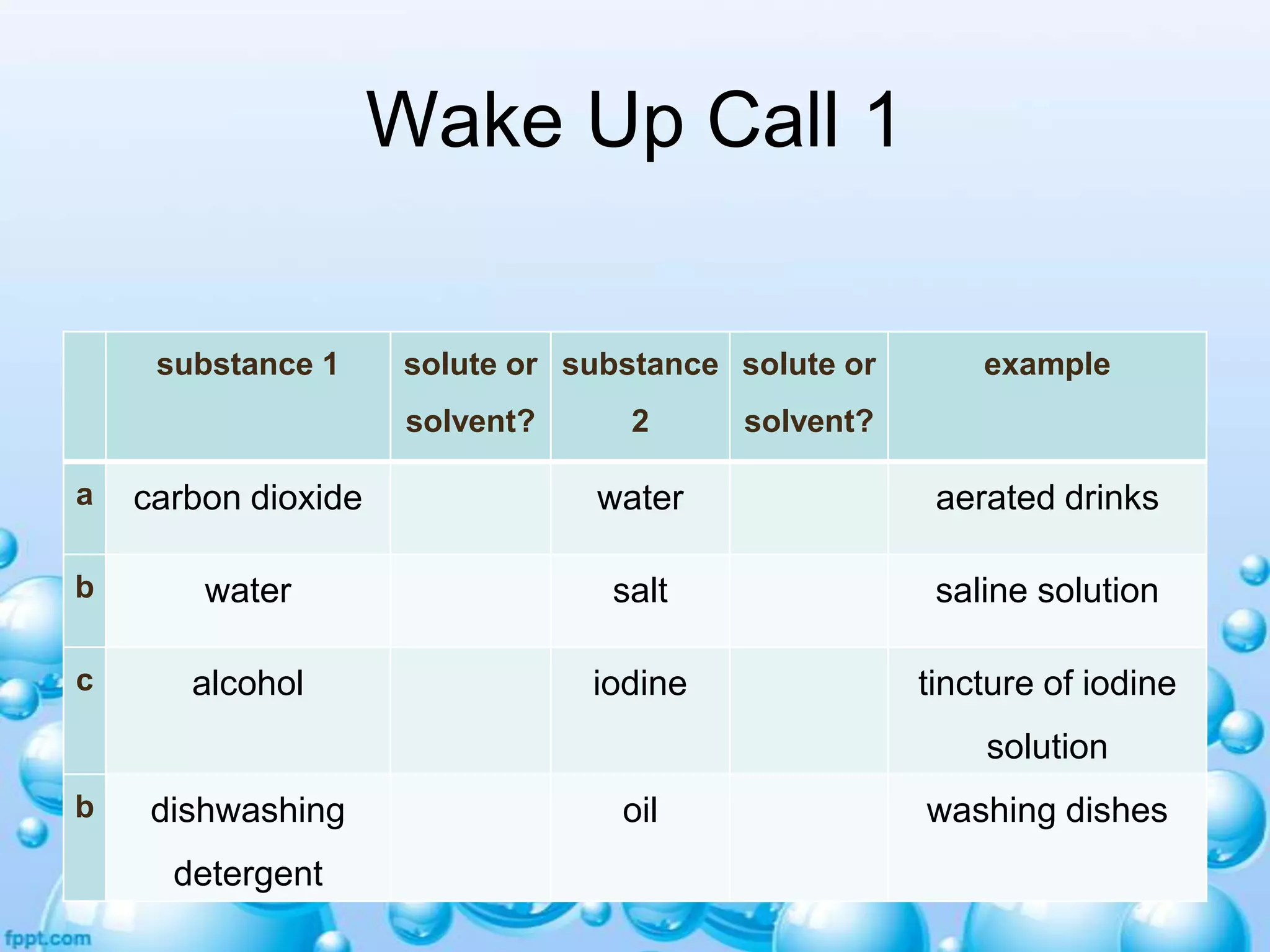
Wake Up Call 1
substance 1

solute or substance solute or

solvent?

2

example

solvent?

a

carbon dioxide

water

aerated drinks

b

water

salt

saline solution

c

alcohol

iodine

tincture of iodine
solution

b

dishwashing
detergent

oil

washing dishes
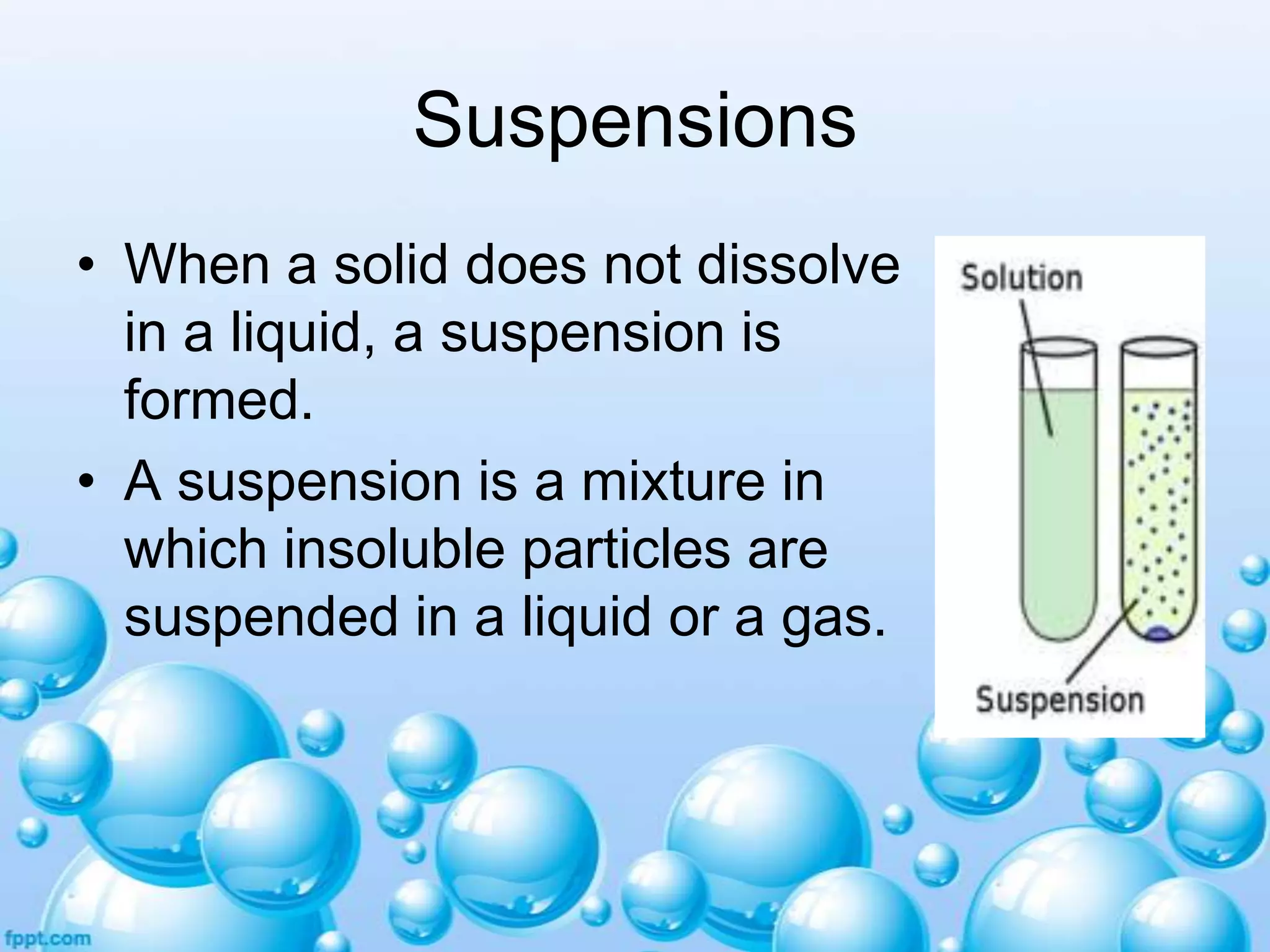
Suspensions
• When a solid does not dissolve
in a liquid, a suspension is
formed.
• A suspension is a mixture in
which insoluble particles are
suspended in a liquid or a gas.
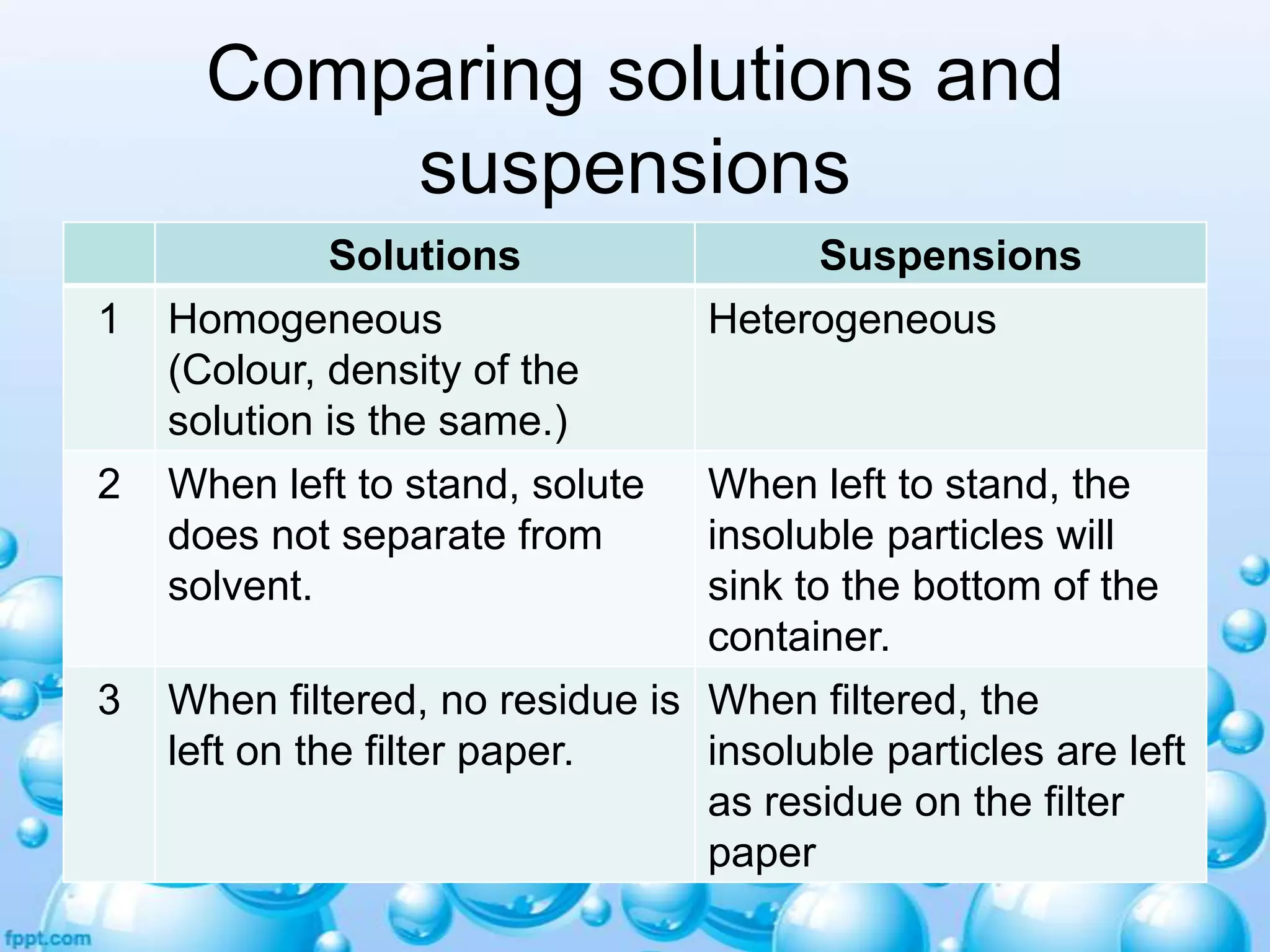
Comparing solutions and
suspensions
1

2

3

Solutions
Homogeneous
(Colour, density of the
solution is the same.)
When left to stand, solute
does not separate from
solvent.

Suspensions
Heterogeneous

When left to stand, the
insoluble particles will
sink to the bottom of the
container.
When filtered, no residue is When filtered, the
left on the filter paper.
insoluble particles are left
as residue on the filter
paper
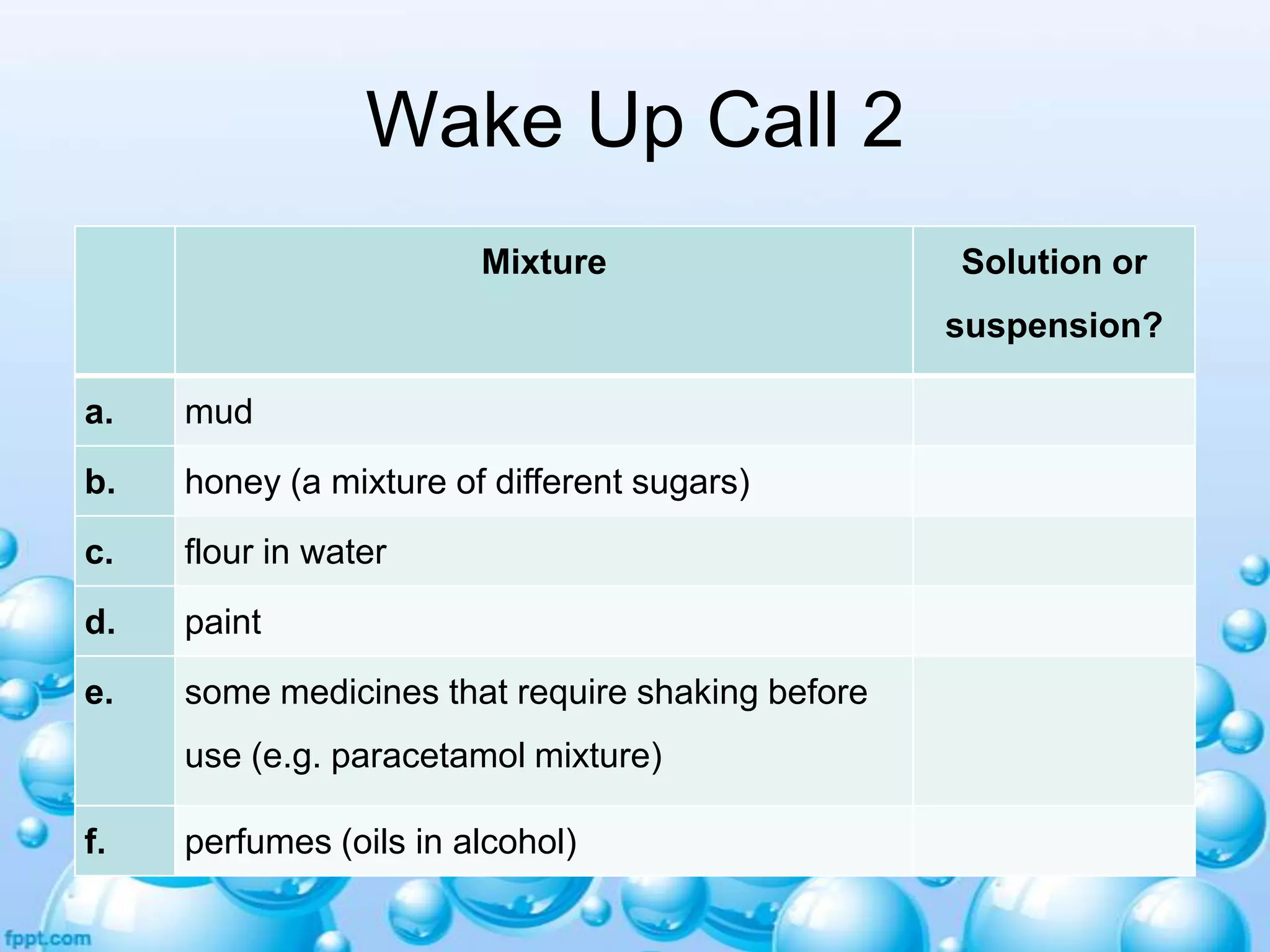
Wake Up Call 2
Mixture

Solution or
suspension?

a.

mud

b.

honey (a mixture of different sugars)

c.

flour in water

d.

paint

e.

some medicines that require shaking before
use (e.g. paracetamol mixture)

f.

perfumes (oils in alcohol)
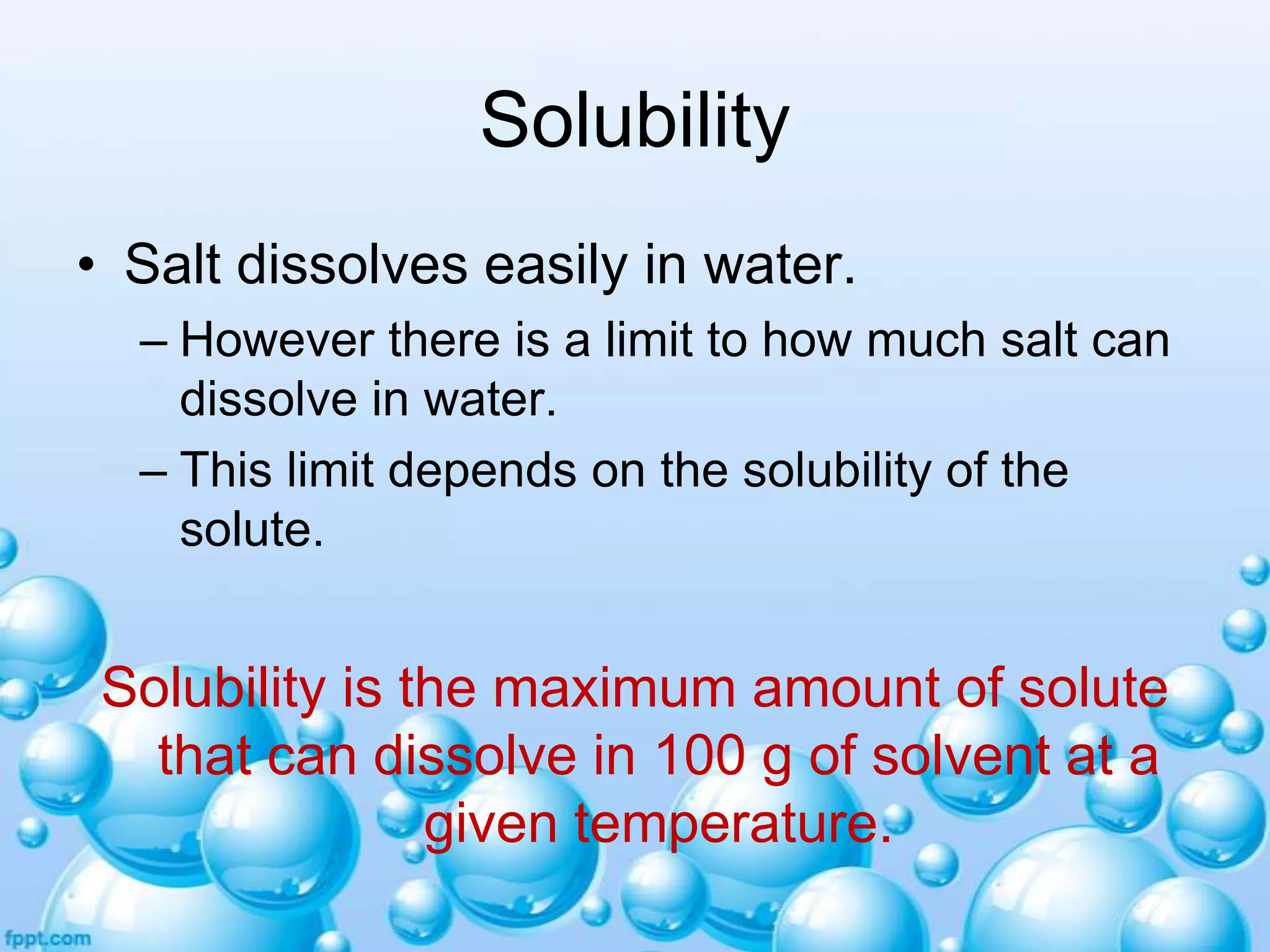
Solubility
• Salt dissolves easily in water.
– However there is a limit to how much salt can
dissolve in water.
– This limit depends on the solubility of the
solute.

Solubility is the maximum amount of solute
that can dissolve in 100 g of solvent at a
given temperature.
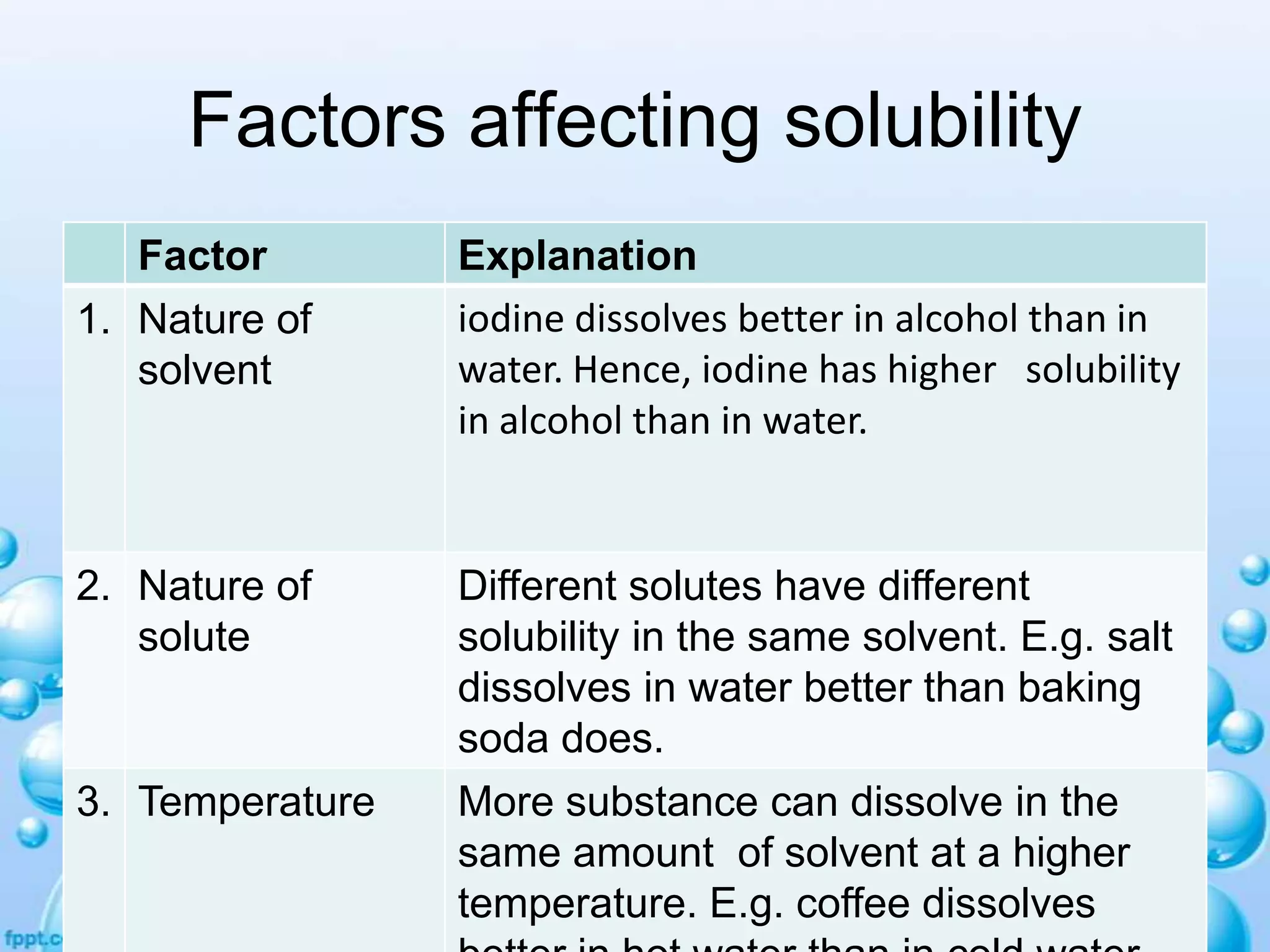
Factors affecting solubility
Factor

1. Nature of
solvent

2. Nature of
solute

3. Temperature

Explanation
iodine dissolves better in alcohol than in
water. Hence, iodine has higher solubility
in alcohol than in water.

Different solutes have different
solubility in the same solvent. E.g. salt
dissolves in water better than baking
soda does.
More substance can dissolve in the
same amount of solvent at a higher
temperature. E.g. coffee dissolves
Rate of dissolving
Think!
•To make a cup of tea, a teabag is placed in
a cup of water. Sugar is then added. How
can sugar be made to dissolve faster?
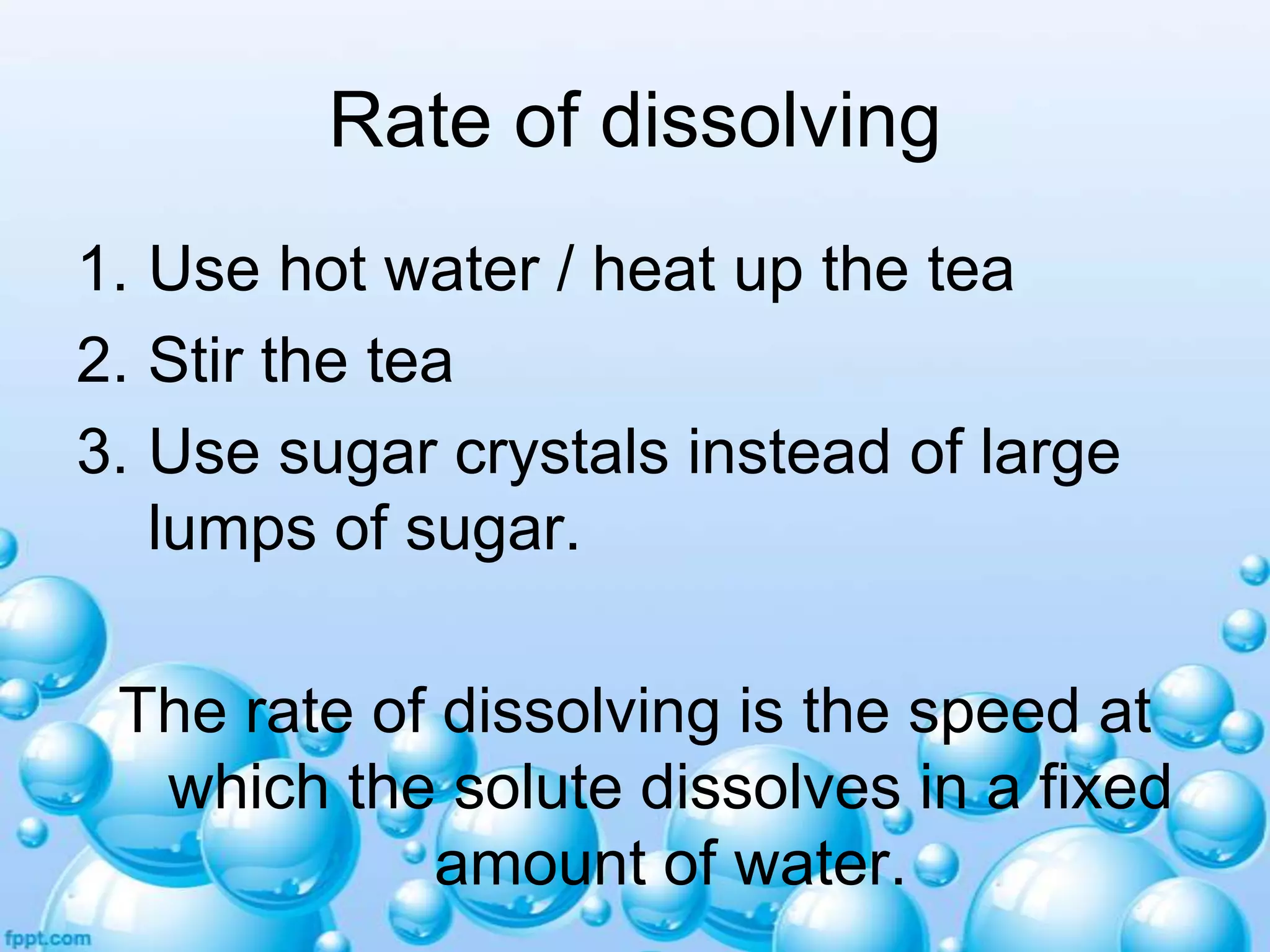
Rate of dissolving
1. Use hot water / heat up the tea
2. Stir the tea
3. Use sugar crystals instead of large
lumps of sugar.
The rate of dissolving is the speed at
which the solute dissolves in a fixed
amount of water.
Rate of dissolving
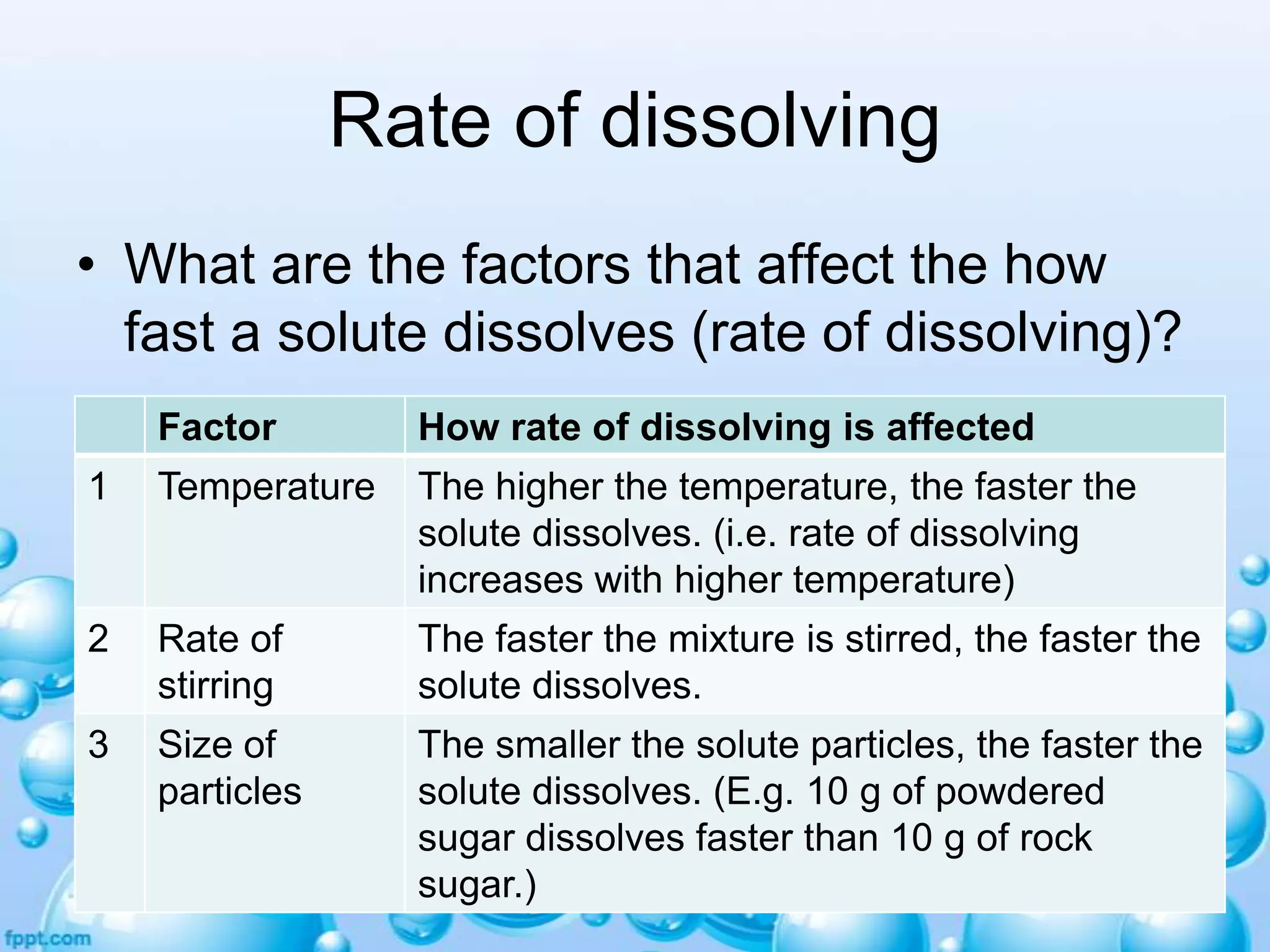
• What are the factors that affect the how
fast a solute dissolves (rate of dissolving)?
Factor

How rate of dissolving is affected

1

Temperature

The higher the temperature, the faster the
solute dissolves. (i.e. rate of dissolving
increases with higher temperature)

2

Rate of
stirring

The faster the mixture is stirred, the faster the
solute dissolves.

3

Size of
particles

The smaller the solute particles, the faster the
solute dissolves. (E.g. 10 g of powdered
sugar dissolves faster than 10 g of rock
sugar.)
Particle size
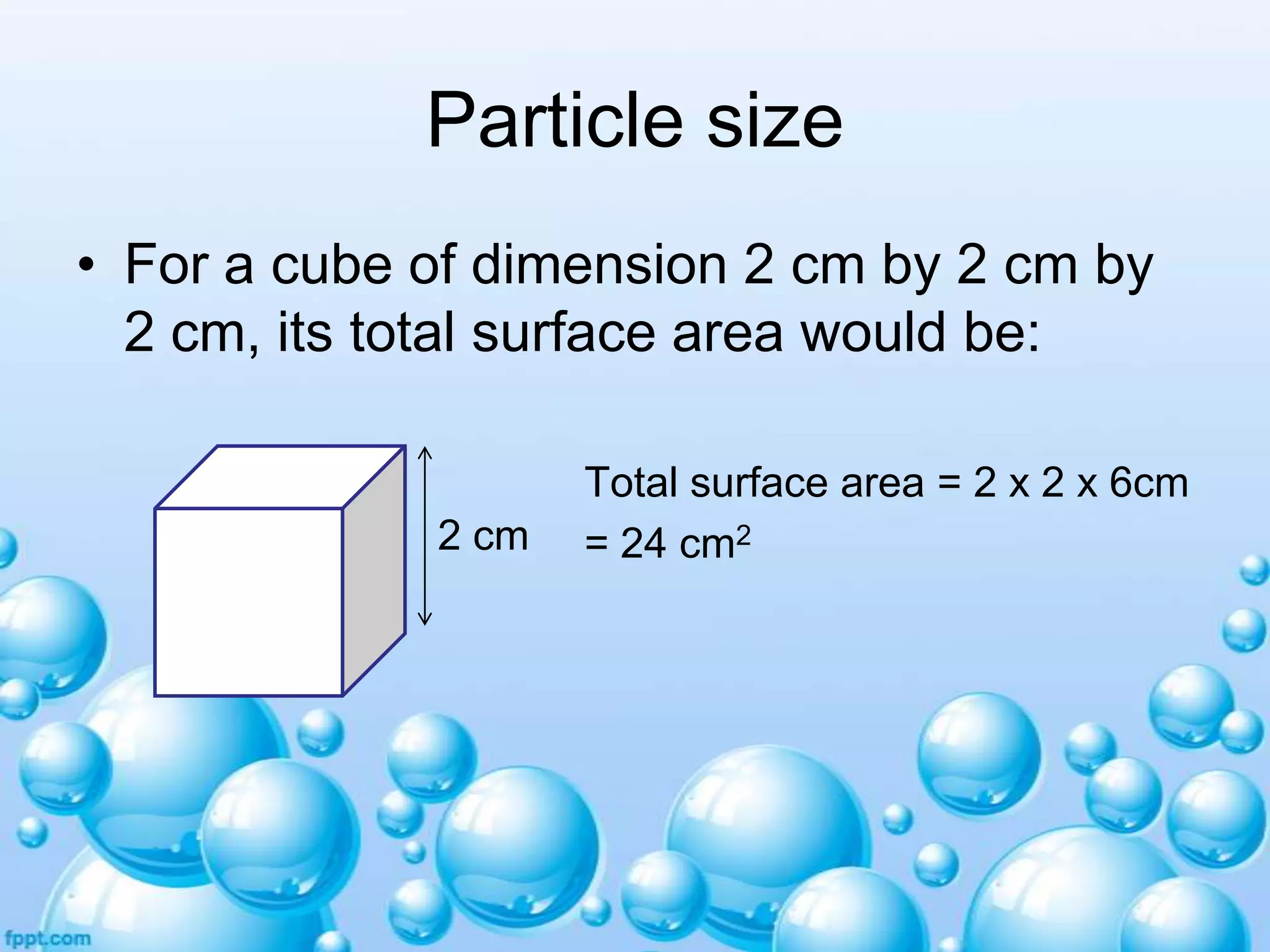
• For a cube of dimension 2 cm by 2 cm by
2 cm, its total surface area would be:

2 cm

Total surface area = 2 x 2 x 6cm
= 24 cm2
Particle size
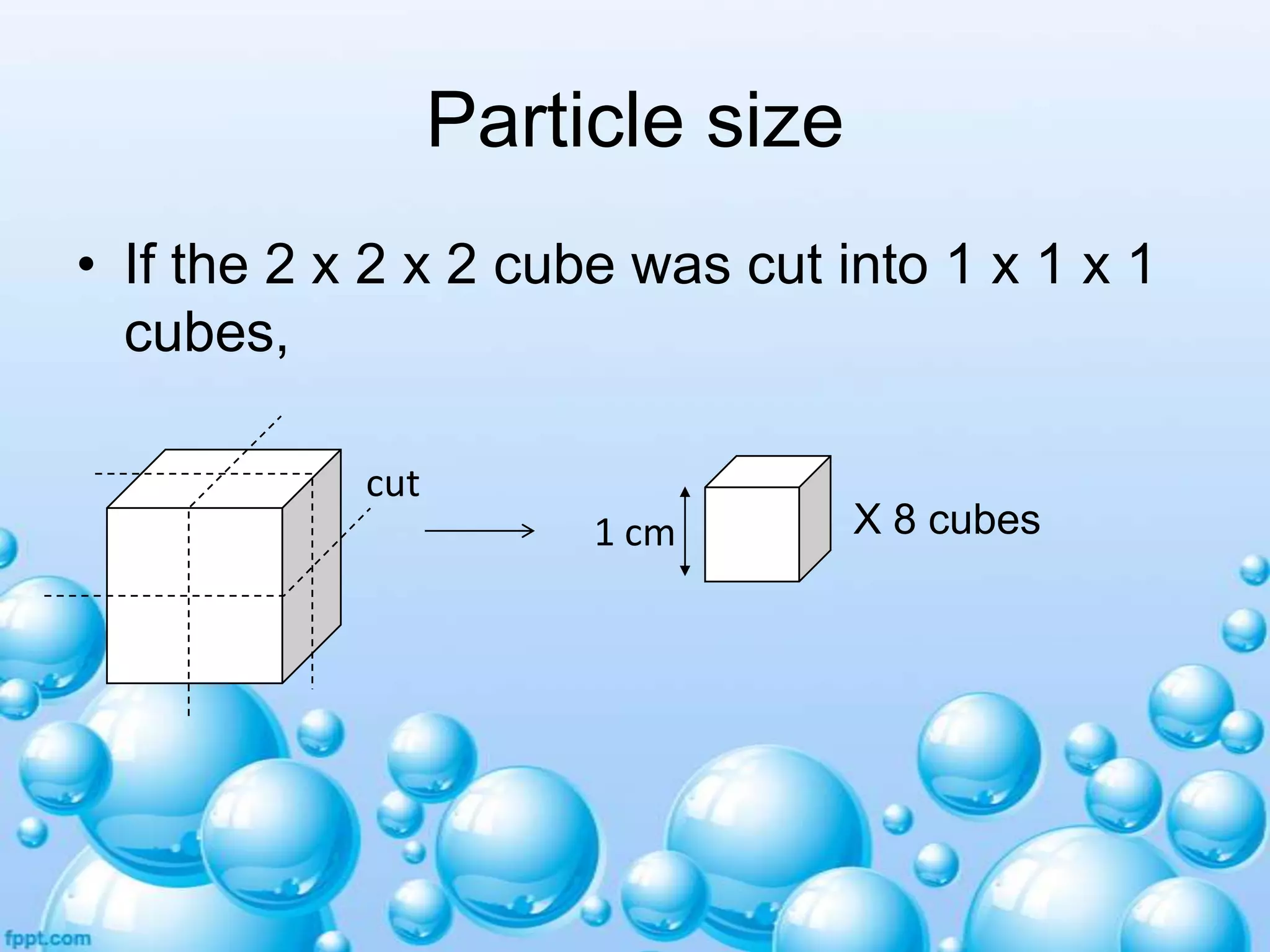
• If the 2 x 2 x 2 cube was cut into 1 x 1 x 1
cubes,
cut
1 cm

X 8 cubes
Particle size
1 cm

X 8 cubes

Total surface area = [1 x 1 x 6] x 8
= 48 cm2

What can you conclude from this?
•When the particles are smaller,
for the same mass of substance,
there is higher total surface area
coming into contact with the
solvent, therefore smaller particles
dissolve faster.
Wake Up Call 2
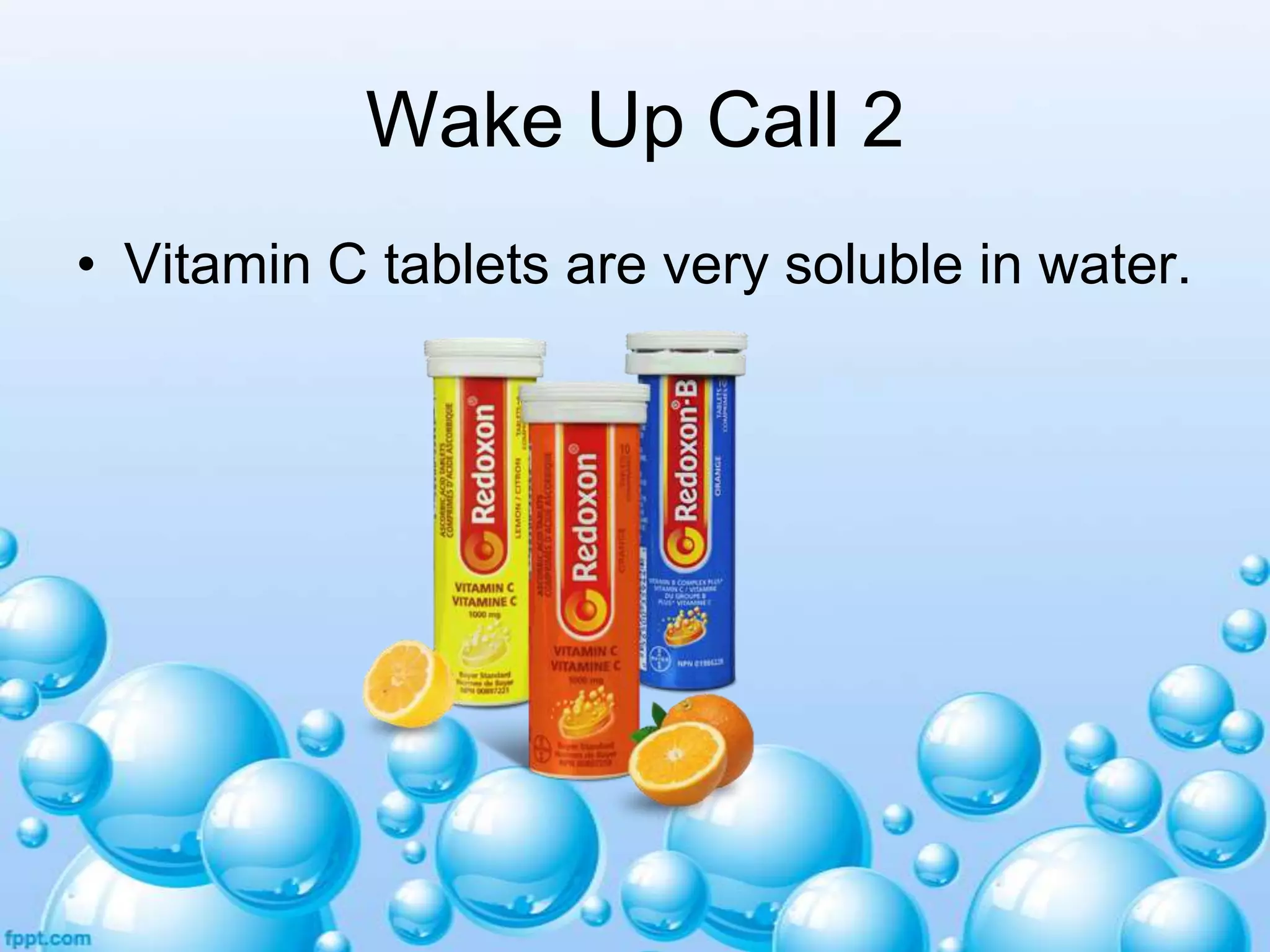
• Vitamin C tablets are very soluble in water.
Wake Up Call 2
• An experiment was conducted to find out how
ONE factor affects the rate of dissolving.
• Procedure:
– Place some distilled water into a beaker. Label the
beaker A.
– Place some warm distilled water into another beaker.
Label the beaker B.
– To each beaker, add one Vit C tablet.
– Measure & record the time taken for the table to
completely dissolve.
Wake Up Call 2
1. What is this experiment investigating?
2. Other than the time taken for the tablet to completely
dissolve, state another reading that should be taken.

3. What factors in this experiment should be kept
constant? What is the variable factor?
4. State two other factors that affect the rate of dissolving.

Solutions and suspensions

  • 1.
  • 2.
    Lesson Objectives By theend of the lessons students sbat •distinguish among solute solvent, solution •deduce the nature of solutions and suspensions by simple laboratory tests •state the factors affecting solubility •state the factors affecting rate of dissolving •distinguish between a solution and a suspension
  • 3.
    Quick Recap • Mattercan be classified as elements, compounds and mixtures. • Element – An element is a substance that cannot be broken down into simpler substances. – Examples: carbon, gold, iron, oxygen
  • 4.
    Quick Recap • Compound –A compound is a substance made up of 2 or more elements chemically combined together. – A compound is a substance that can be broken down into simpler substances by chemical methods. – Examples: water, carbon dioxide, ethanol
  • 5.
    Quick Recap • Mixture –A mixture is a substance made up of 2 or more elements and/or compounds not chemically combined together. – A mixture is a substance that can be broken down into simpler substances by physical methods – Examples: air, seawater, crude oil, steel
  • 6.
    Quick Recap A mixturecan further be classified as a solution. or a suspension Matter Pure substances Elements Compounds Mixtures Solutions Suspensions
  • 7.
    Solutions • When saltis added into water, salt dissolves in water. – Salt is known as the solute (substance that dissolves in the solvent). – Water is known as the solvent (substance that dissolves the solute). – The final mixture is known as the solution.
  • 8.
  • 9.
    Wake Up Call1 substance 1 solute or substance solute or solvent? 2 example solvent? a carbon dioxide water aerated drinks b water salt saline solution c alcohol iodine tincture of iodine solution b dishwashing detergent oil washing dishes
  • 10.
    Suspensions • When asolid does not dissolve in a liquid, a suspension is formed. • A suspension is a mixture in which insoluble particles are suspended in a liquid or a gas.
  • 11.
    Comparing solutions and suspensions 1 2 3 Solutions Homogeneous (Colour,density of the solution is the same.) When left to stand, solute does not separate from solvent. Suspensions Heterogeneous When left to stand, the insoluble particles will sink to the bottom of the container. When filtered, no residue is When filtered, the left on the filter paper. insoluble particles are left as residue on the filter paper
  • 12.
    Wake Up Call2 Mixture Solution or suspension? a. mud b. honey (a mixture of different sugars) c. flour in water d. paint e. some medicines that require shaking before use (e.g. paracetamol mixture) f. perfumes (oils in alcohol)
  • 13.
    Solubility • Salt dissolveseasily in water. – However there is a limit to how much salt can dissolve in water. – This limit depends on the solubility of the solute. Solubility is the maximum amount of solute that can dissolve in 100 g of solvent at a given temperature.
  • 14.
    Factors affecting solubility Factor 1.Nature of solvent 2. Nature of solute 3. Temperature Explanation iodine dissolves better in alcohol than in water. Hence, iodine has higher solubility in alcohol than in water. Different solutes have different solubility in the same solvent. E.g. salt dissolves in water better than baking soda does. More substance can dissolve in the same amount of solvent at a higher temperature. E.g. coffee dissolves
  • 15.
    Rate of dissolving Think! •Tomake a cup of tea, a teabag is placed in a cup of water. Sugar is then added. How can sugar be made to dissolve faster?
  • 16.
    Rate of dissolving 1.Use hot water / heat up the tea 2. Stir the tea 3. Use sugar crystals instead of large lumps of sugar. The rate of dissolving is the speed at which the solute dissolves in a fixed amount of water.
  • 17.
    Rate of dissolving •What are the factors that affect the how fast a solute dissolves (rate of dissolving)? Factor How rate of dissolving is affected 1 Temperature The higher the temperature, the faster the solute dissolves. (i.e. rate of dissolving increases with higher temperature) 2 Rate of stirring The faster the mixture is stirred, the faster the solute dissolves. 3 Size of particles The smaller the solute particles, the faster the solute dissolves. (E.g. 10 g of powdered sugar dissolves faster than 10 g of rock sugar.)
  • 18.
    Particle size • Fora cube of dimension 2 cm by 2 cm by 2 cm, its total surface area would be: 2 cm Total surface area = 2 x 2 x 6cm = 24 cm2
  • 19.
    Particle size • Ifthe 2 x 2 x 2 cube was cut into 1 x 1 x 1 cubes, cut 1 cm X 8 cubes
  • 20.
    Particle size 1 cm X8 cubes Total surface area = [1 x 1 x 6] x 8 = 48 cm2 What can you conclude from this? •When the particles are smaller, for the same mass of substance, there is higher total surface area coming into contact with the solvent, therefore smaller particles dissolve faster.
  • 21.
    Wake Up Call2 • Vitamin C tablets are very soluble in water.
  • 22.
    Wake Up Call2 • An experiment was conducted to find out how ONE factor affects the rate of dissolving. • Procedure: – Place some distilled water into a beaker. Label the beaker A. – Place some warm distilled water into another beaker. Label the beaker B. – To each beaker, add one Vit C tablet. – Measure & record the time taken for the table to completely dissolve.
  • 23.
    Wake Up Call2 1. What is this experiment investigating? 2. Other than the time taken for the tablet to completely dissolve, state another reading that should be taken. 3. What factors in this experiment should be kept constant? What is the variable factor? 4. State two other factors that affect the rate of dissolving.