Factors affecting Solubility
Activity 1
 Solutions are found at home and in
the environment.
 Solutions are made up of solutes and
solvents.
 Solutions can be solid, liquid or gas.
 Solutions can be naturally occurring or
manufactured.
Activity 2
 Solutions have only one phase, thus,
a uniform appearance.
 The components of a solution cannot
be separated through filtration
because their particles are very small
that they can pass through the holes
of the filter paper.
Activity 3
 A saturated solution is a solution that
contains the maximum amount of
solute that the solvent can dissolve.
 The presence of excess solute that
can no longer dissolve is the evidence
that a solution is saturated.
 An unsaturated solution is a solution
that contains less solute than the
maximum amount that the solvent can
dissolve.
Concentrations of solutions
 percent by volume – amount of solute
in a given volume of solution (g/100
mL)
 percent by mass – amount of solute in
a given mass of solvent (g/100g)
What could affect the solubility of
solutes in solutions?
Add a teaspoon of
salt
Add a teaspoon of
salt
Stirre
d
Not stirred
Why would the solute dissolve
faster when the solution is
stirred?
Why would the solute dissolve
faster when the solution is
stirred?
Why would the solute dissolve
faster when the solution is
stirred?
Why would the solute dissolve
faster when the solution is
stirred?
Why would the solute dissolve
faster when the solution is
stirred?
Why would the solute dissolve
faster when the solution is
stirred?
Stirring causes the
particles of solute
and solvent to move
faster increasing
the chances of
contact.
Activity 4
 Which will dissolve faster – crystals of
table salt or the same amount of
crushed table salt?
Procedures
Add 50 mL of water into 2
identical containers.
Add 5 grams of rock salt
to one container and 5
grams iodized salt to the
other container.
Record the time it takes
the salt to dissolve in each
of the containers.
Independent
variable
Dependent
variable
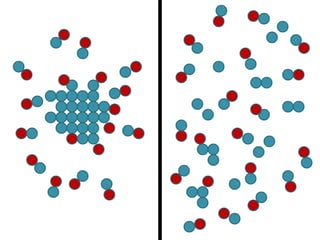
What makes the crushed salt
dissolve faster than the crystals
of salt?
crystal of
table salt
crushed
table salt
Smaller particles have more edges
and corners where the
solvent can be in contact.
Thus, the smaller the particle of
salt, the easier it
mixes with water.
The Coffee Problem
 Why do people stir coffee in water
after they have added sugar?
Parallel Investigations
 Activity 5: How fast does coffee
dissolve in hot water? In cold water?
[G1-G5]
 Activity 6: Which dissolves faster in
hot and cold water: sugar or salt? [G6-
G10]
 Prepare a lab sheet that will answer
the problem assigned to your group.
 Do not forget to formulate a
hypothesis for your problem.
 Bring the materials that you will need
for the investigation next session.

factors-affecting-solubility.ppt

  • 1.
  • 2.
    Activity 1  Solutionsare found at home and in the environment.  Solutions are made up of solutes and solvents.  Solutions can be solid, liquid or gas.  Solutions can be naturally occurring or manufactured.
  • 3.
    Activity 2  Solutionshave only one phase, thus, a uniform appearance.  The components of a solution cannot be separated through filtration because their particles are very small that they can pass through the holes of the filter paper.
  • 4.
    Activity 3  Asaturated solution is a solution that contains the maximum amount of solute that the solvent can dissolve.  The presence of excess solute that can no longer dissolve is the evidence that a solution is saturated.  An unsaturated solution is a solution that contains less solute than the maximum amount that the solvent can dissolve.
  • 5.
    Concentrations of solutions percent by volume – amount of solute in a given volume of solution (g/100 mL)  percent by mass – amount of solute in a given mass of solvent (g/100g)
  • 6.
    What could affectthe solubility of solutes in solutions? Add a teaspoon of salt Add a teaspoon of salt Stirre d Not stirred
  • 7.
    Why would thesolute dissolve faster when the solution is stirred?
  • 8.
    Why would thesolute dissolve faster when the solution is stirred?
  • 9.
    Why would thesolute dissolve faster when the solution is stirred?
  • 10.
    Why would thesolute dissolve faster when the solution is stirred?
  • 11.
    Why would thesolute dissolve faster when the solution is stirred?
  • 12.
    Why would thesolute dissolve faster when the solution is stirred?
  • 13.
    Stirring causes the particlesof solute and solvent to move faster increasing the chances of contact.
  • 14.
    Activity 4  Whichwill dissolve faster – crystals of table salt or the same amount of crushed table salt?
  • 15.
    Procedures Add 50 mLof water into 2 identical containers. Add 5 grams of rock salt to one container and 5 grams iodized salt to the other container. Record the time it takes the salt to dissolve in each of the containers. Independent variable Dependent variable
  • 16.
    What makes thecrushed salt dissolve faster than the crystals of salt? crystal of table salt crushed table salt
  • 22.
    Smaller particles havemore edges and corners where the solvent can be in contact. Thus, the smaller the particle of salt, the easier it mixes with water.
  • 23.
    The Coffee Problem Why do people stir coffee in water after they have added sugar?
  • 24.
    Parallel Investigations  Activity5: How fast does coffee dissolve in hot water? In cold water? [G1-G5]  Activity 6: Which dissolves faster in hot and cold water: sugar or salt? [G6- G10]
  • 25.
     Prepare alab sheet that will answer the problem assigned to your group.  Do not forget to formulate a hypothesis for your problem.  Bring the materials that you will need for the investigation next session.