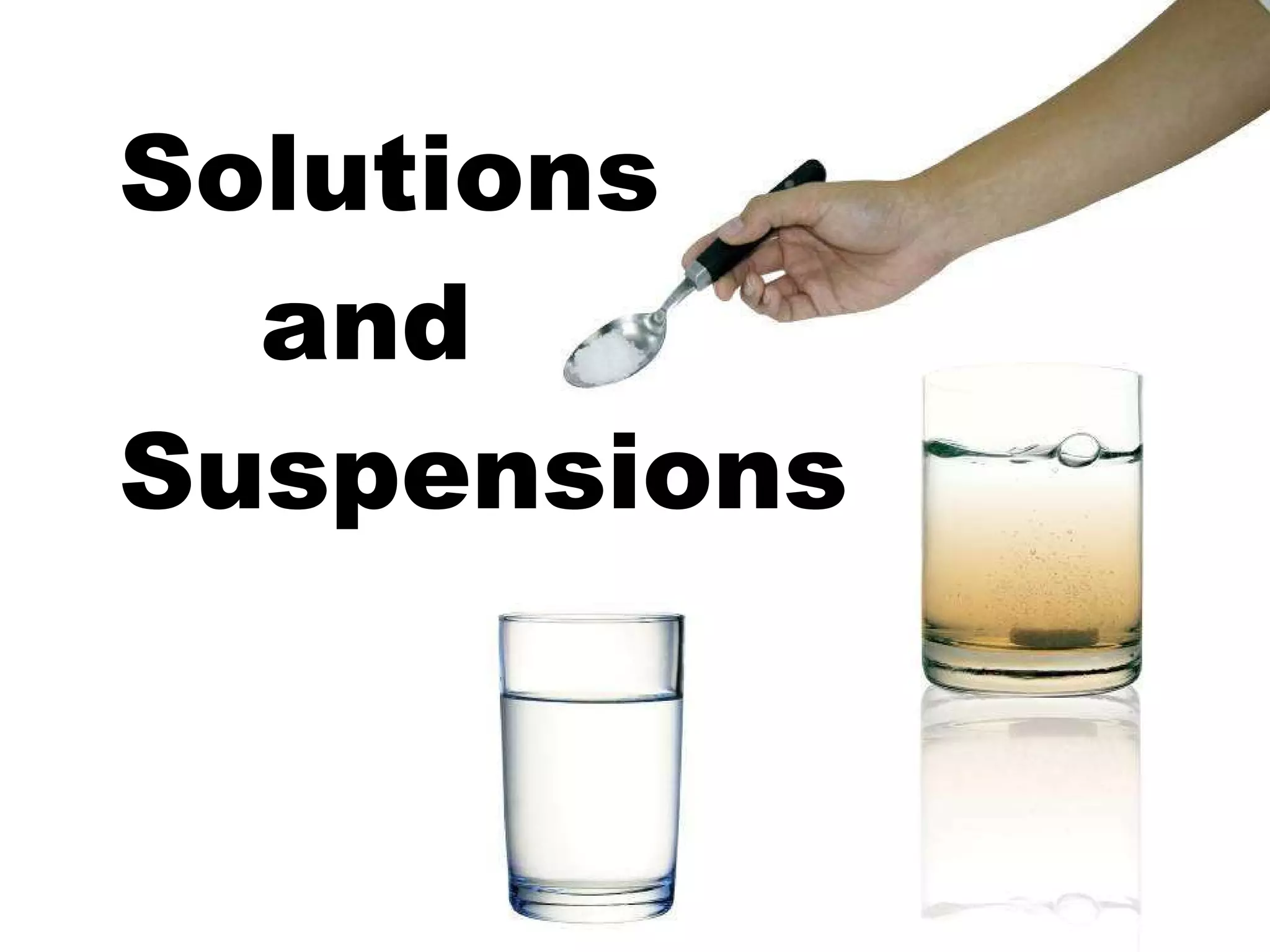
Solutions    and  Suspensions
Solutions are mixtures in which soluble particles are  completely  dissolved in a liquid or gas. What are Solutions?
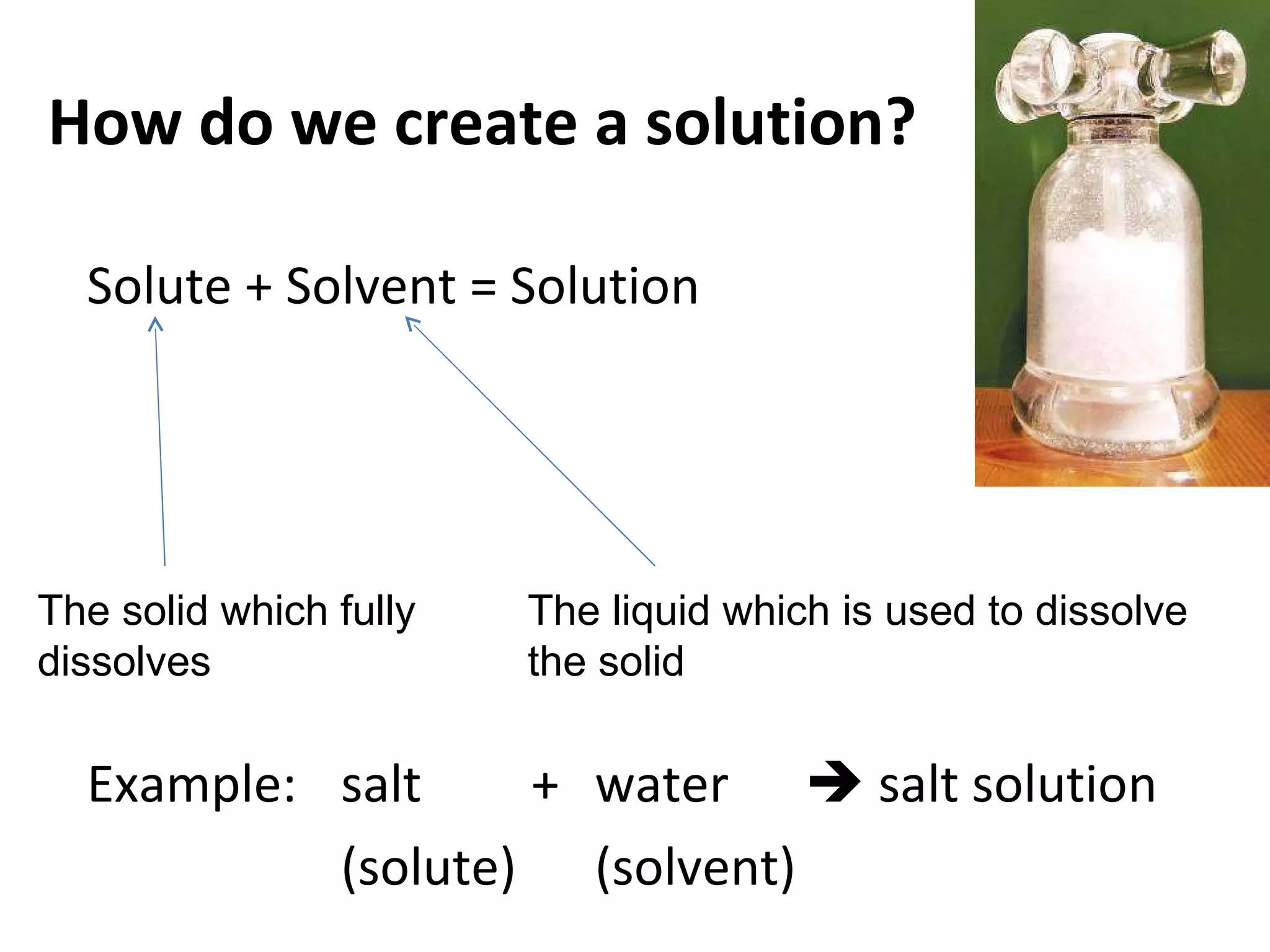
How do we create a solution? Solute + Solvent = Solution Example:  salt   +  water    salt solution (solute) (solvent) The solid which fully dissolves The liquid which is used to dissolve the solid
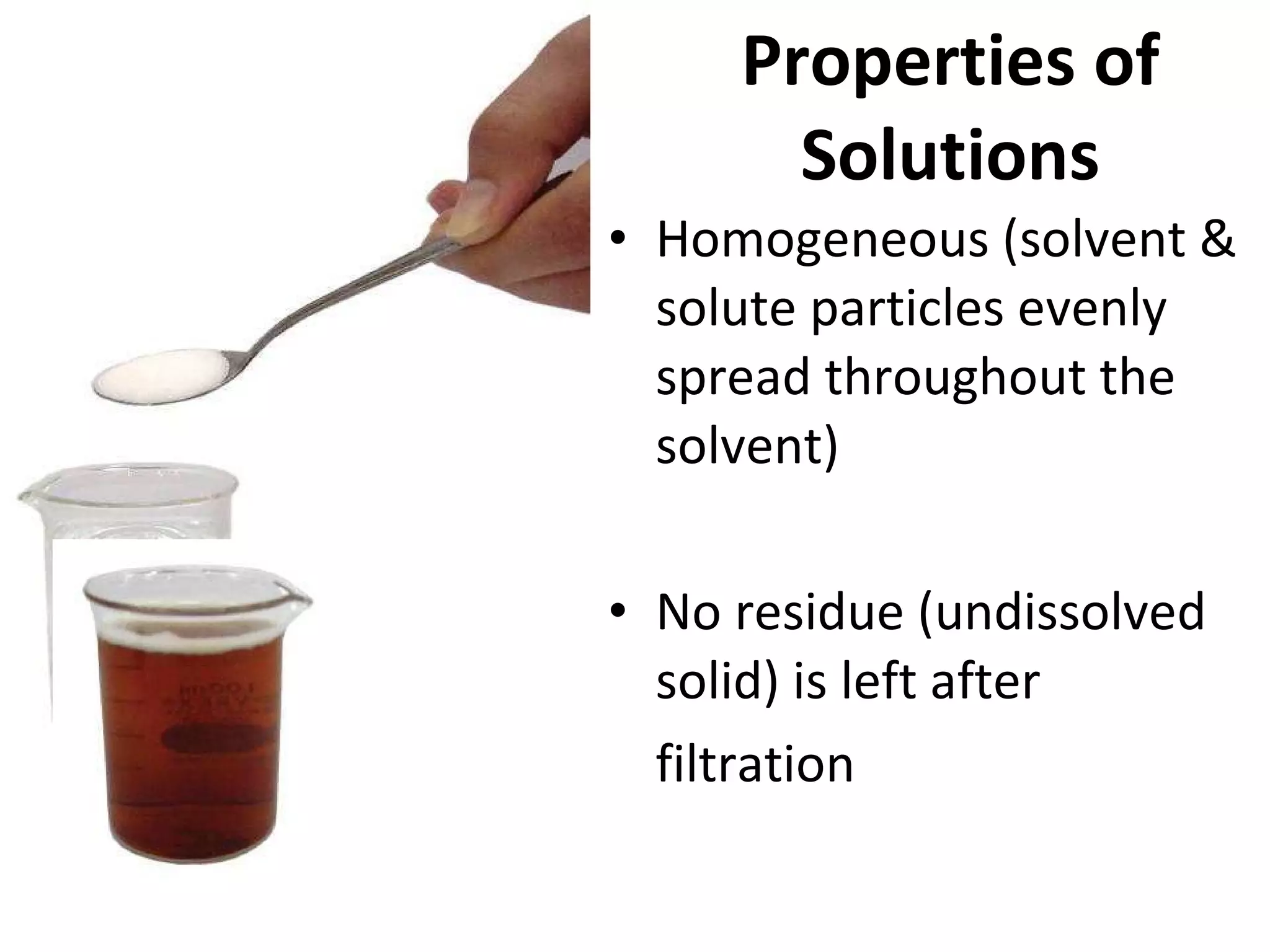
Properties of Solutions Homogeneous (solvent & solute particles evenly spread throughout the solvent) No residue (undissolved solid) is left after  filtration
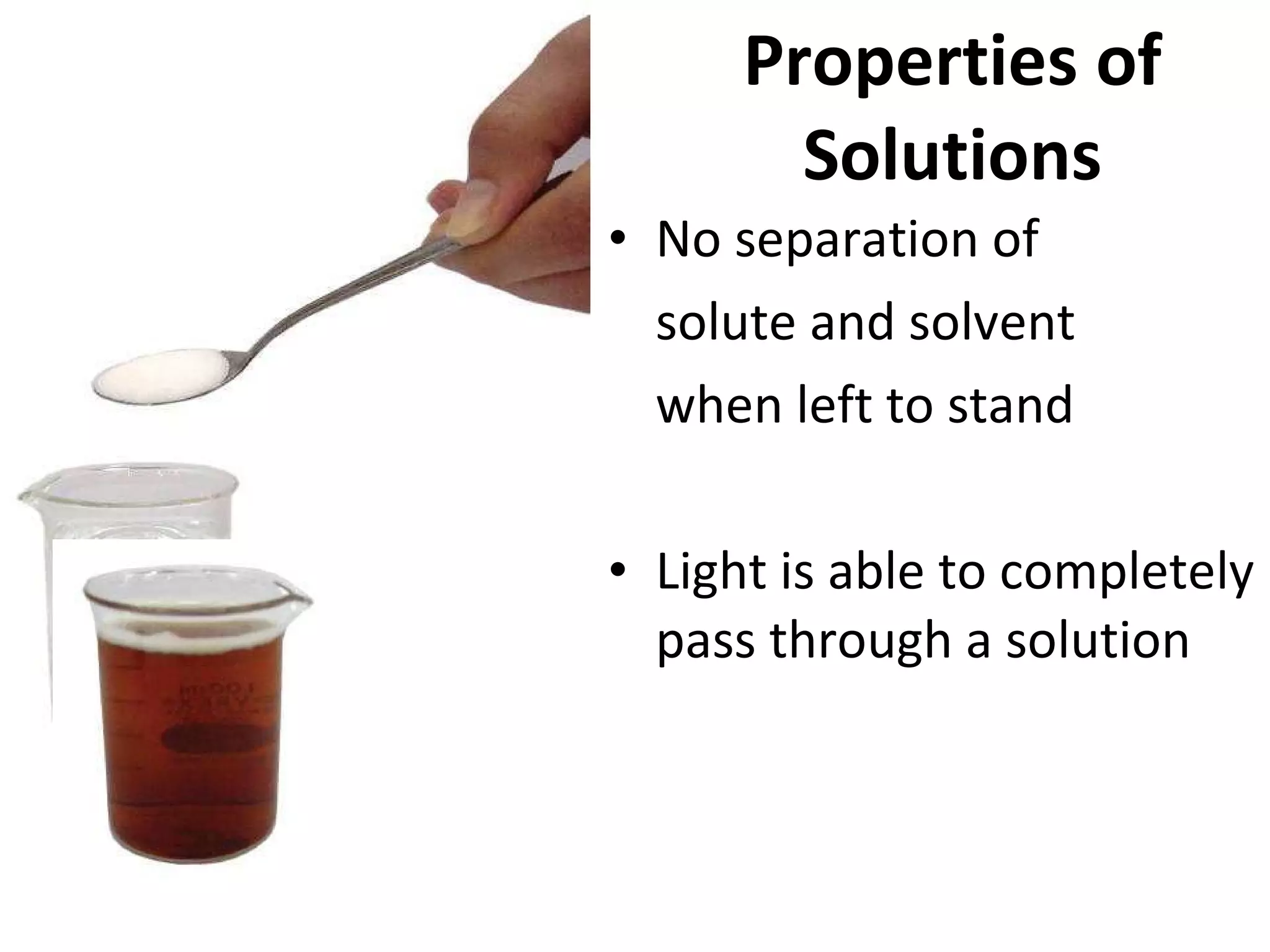
Properties of Solutions No separation of  solute and solvent  when left to stand Light is able to completely pass through a solution
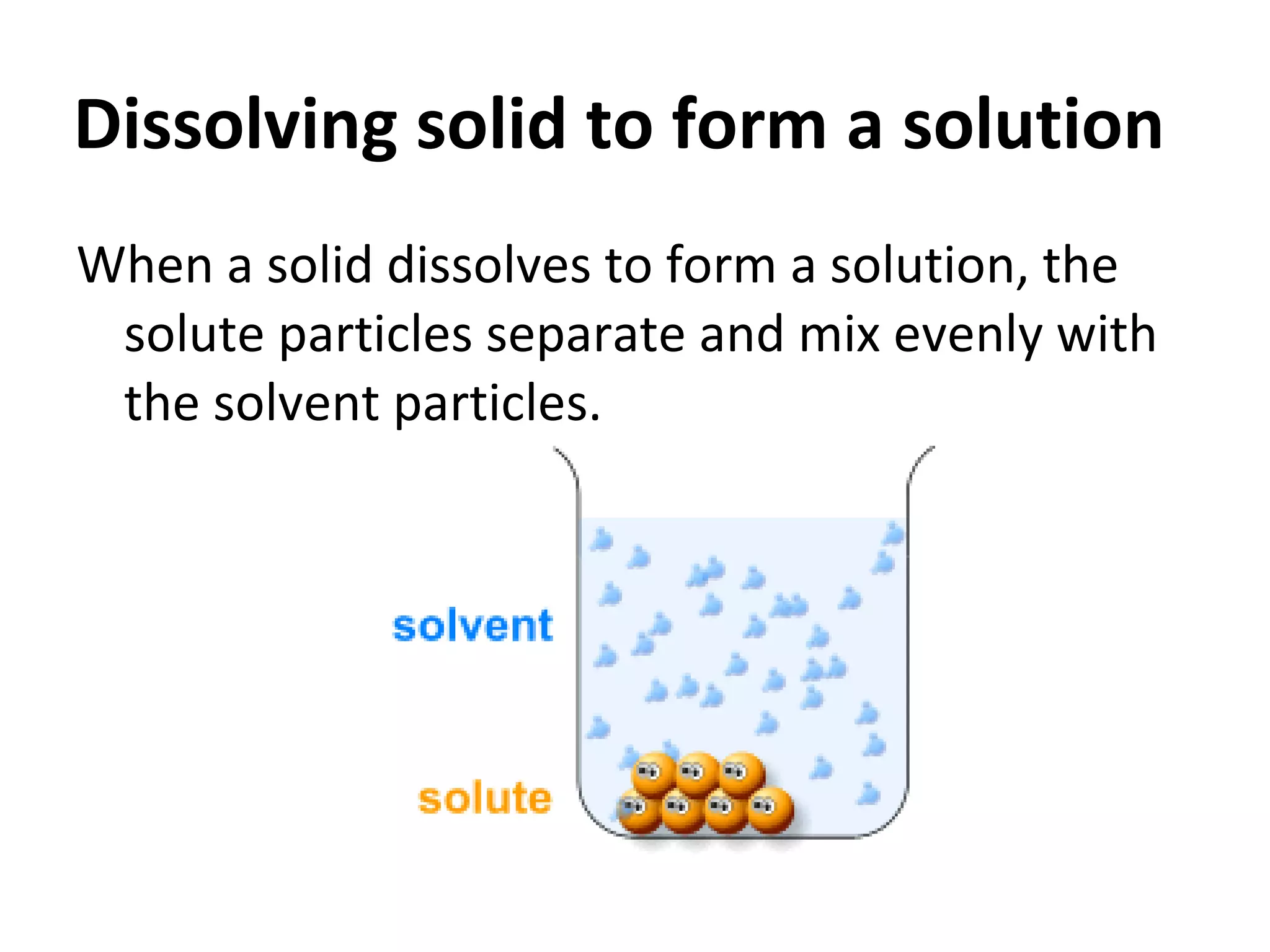
Dissolving solid to form a solution When a solid dissolves to form a solution, the solute particles separate and mix evenly with the solvent particles.
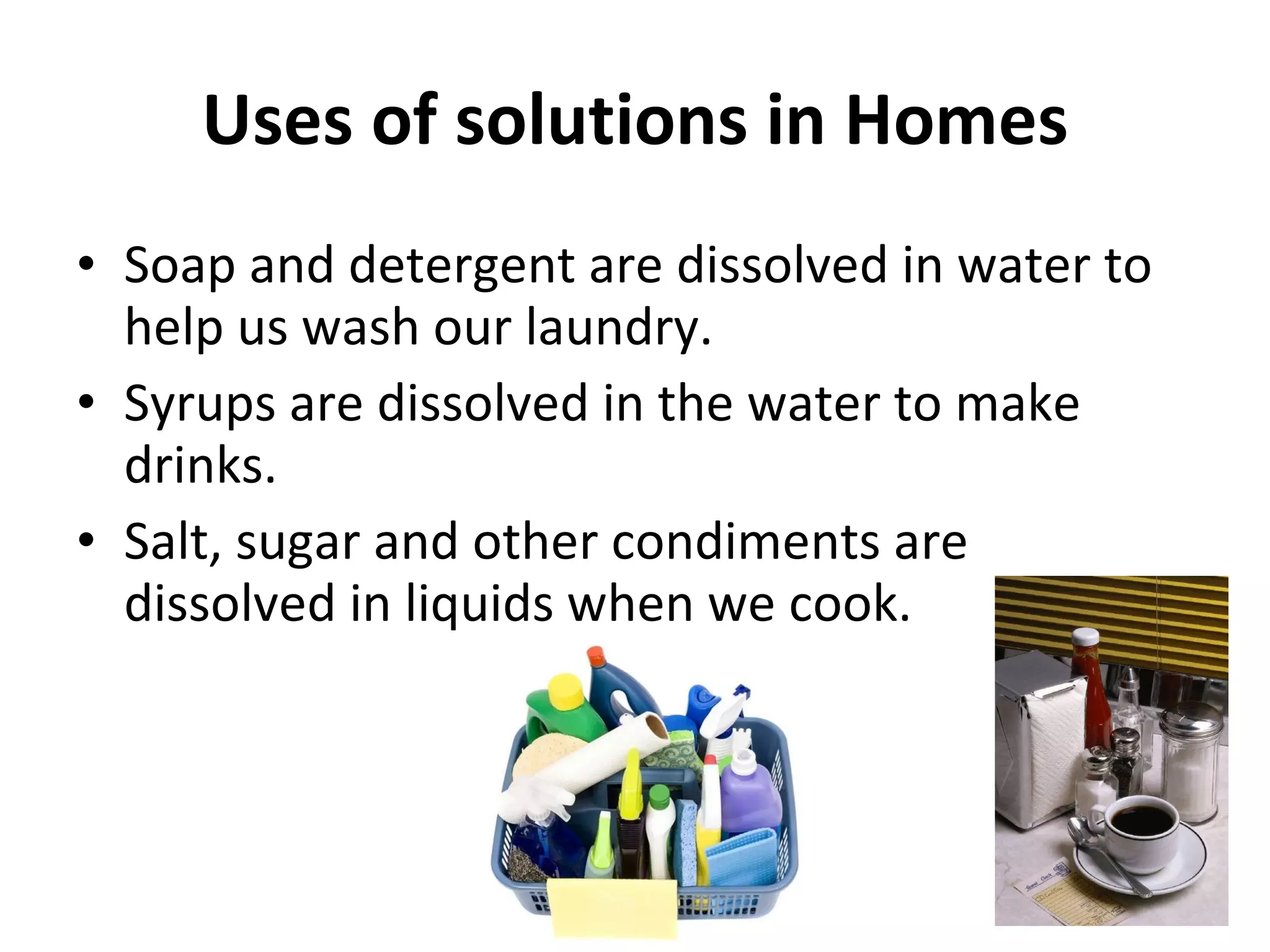
Uses of solutions in Homes Soap and detergent are dissolved in water to help us wash our laundry. Syrups are dissolved in the water to make drinks. Salt, sugar and other condiments are dissolved in liquids when we cook.
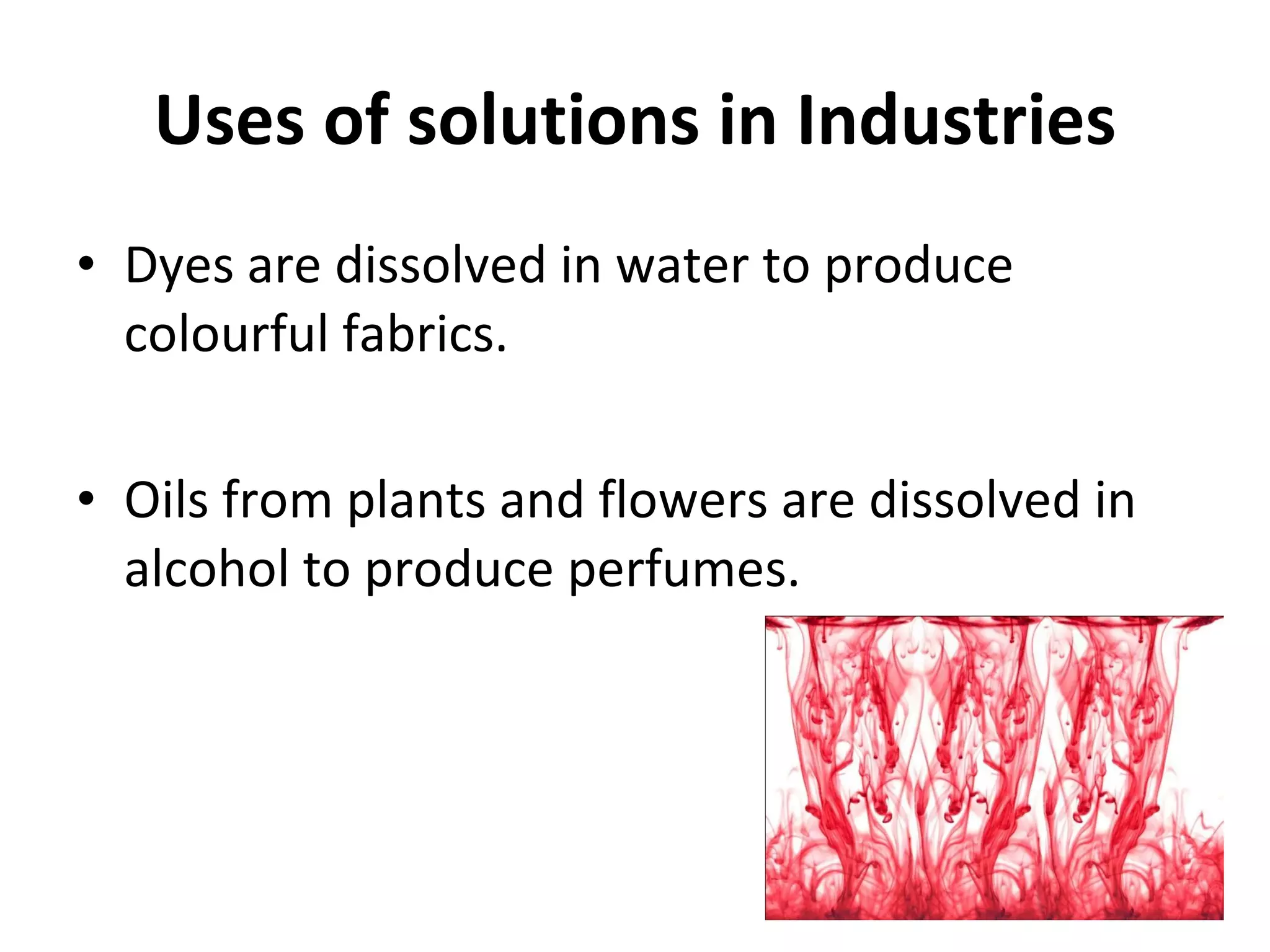
Uses of solutions in Industries Dyes are dissolved in water to produce colourful fabrics. Oils from plants and flowers are dissolved in alcohol to produce perfumes.
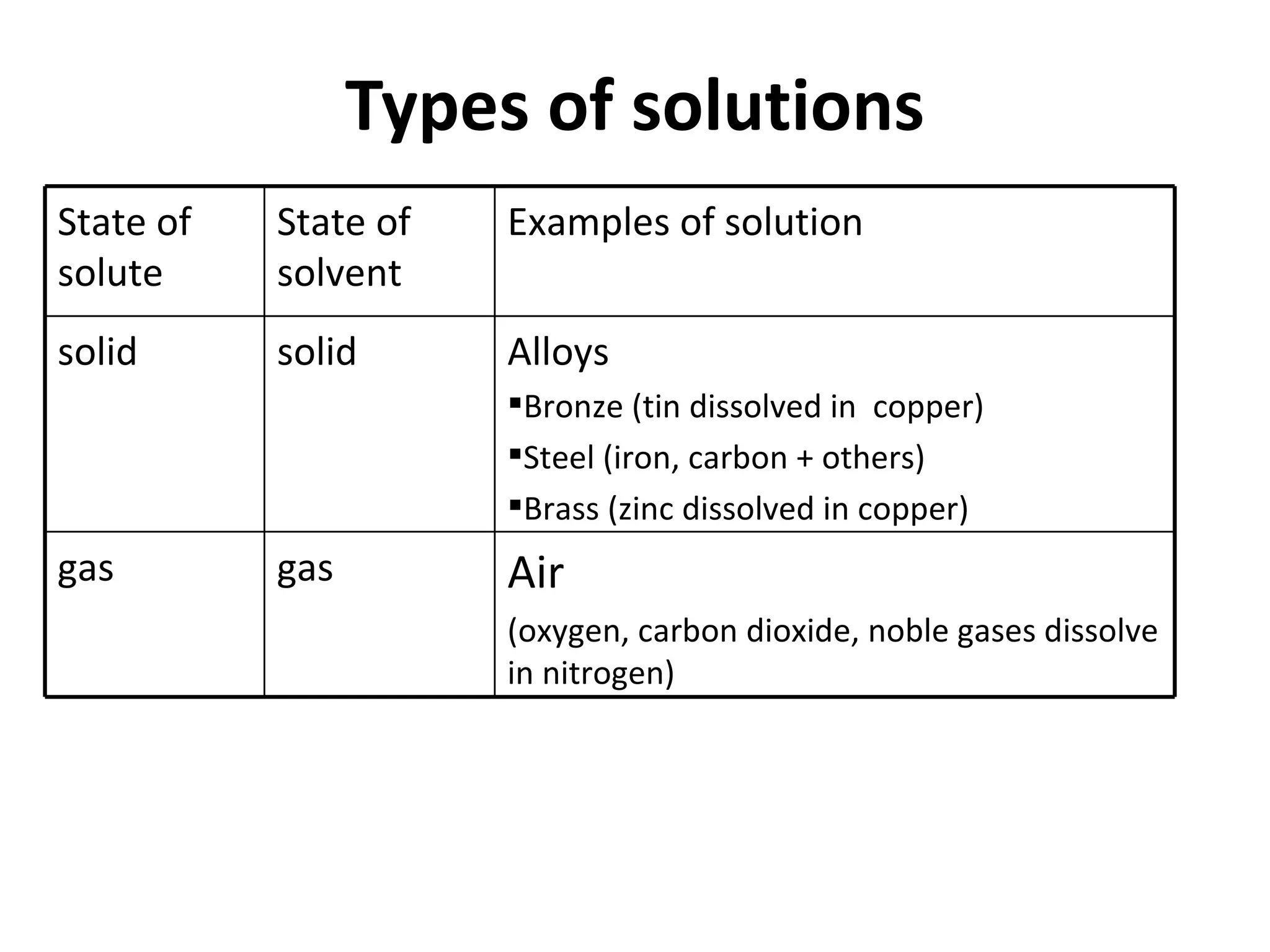
Types of solutions State of solute State of solvent Examples of solution solid solid Alloys Bronze (tin dissolved in  copper) Steel (iron, carbon + others) Brass (zinc dissolved in copper) gas  gas Air  (oxygen, carbon dioxide, noble gases dissolve in nitrogen)
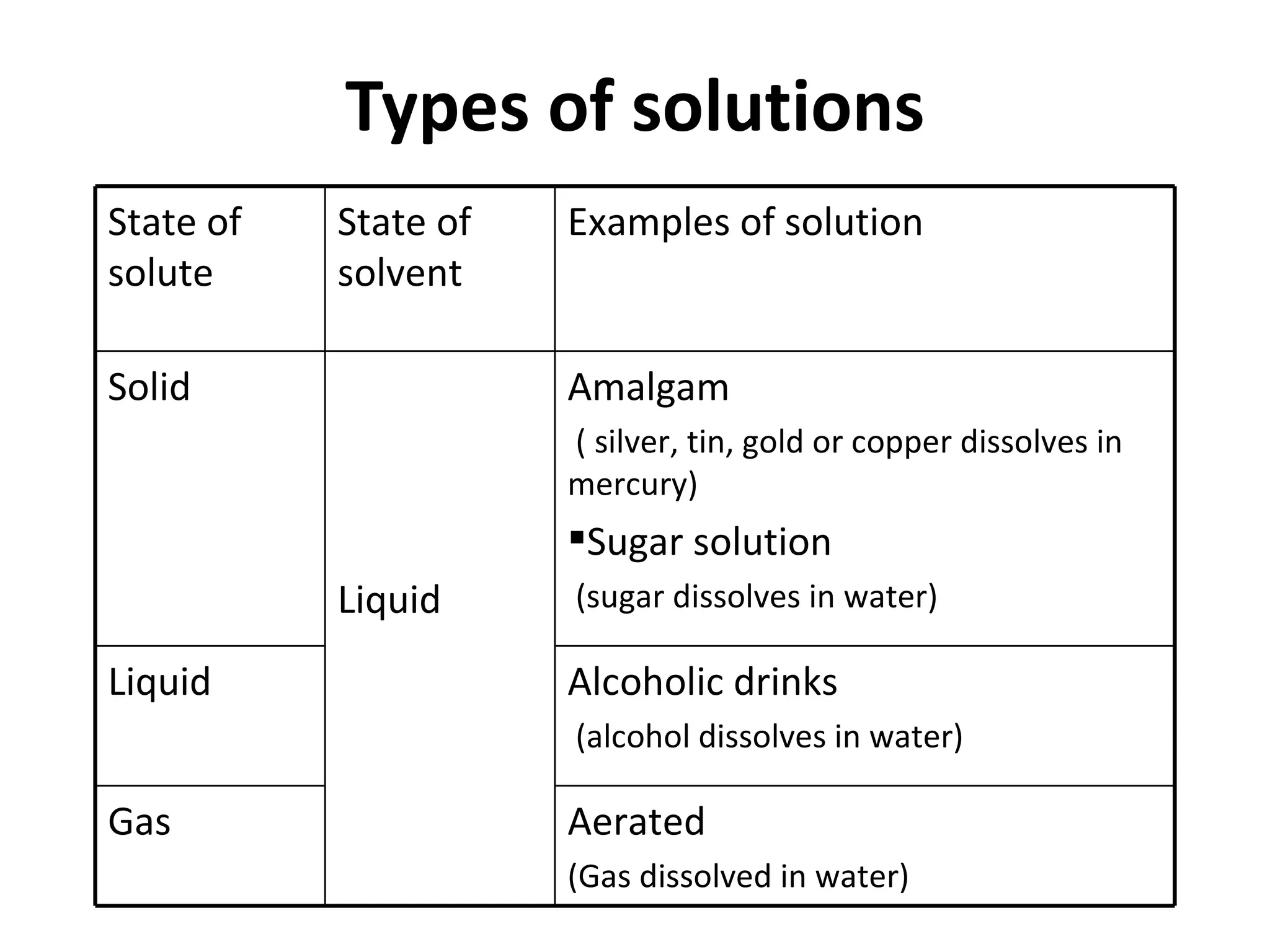
Types of solutions State of solute State of solvent Examples of solution Solid Liquid Amalgam   ( silver, tin, gold or copper dissolves in mercury) Sugar solution (sugar dissolves in water) Liquid  Alcoholic drinks   (alcohol dissolves in water) Gas Aerated (Gas dissolved in water)

Properties of Solutions

  • 1.
    Solutions and Suspensions
  • 2.
    Solutions are mixturesin which soluble particles are completely dissolved in a liquid or gas. What are Solutions?
  • 3.
    How do wecreate a solution? Solute + Solvent = Solution Example: salt + water  salt solution (solute) (solvent) The solid which fully dissolves The liquid which is used to dissolve the solid
  • 4.
    Properties of SolutionsHomogeneous (solvent & solute particles evenly spread throughout the solvent) No residue (undissolved solid) is left after filtration
  • 5.
    Properties of SolutionsNo separation of solute and solvent when left to stand Light is able to completely pass through a solution
  • 6.
    Dissolving solid toform a solution When a solid dissolves to form a solution, the solute particles separate and mix evenly with the solvent particles.
  • 7.
    Uses of solutionsin Homes Soap and detergent are dissolved in water to help us wash our laundry. Syrups are dissolved in the water to make drinks. Salt, sugar and other condiments are dissolved in liquids when we cook.
  • 8.
    Uses of solutionsin Industries Dyes are dissolved in water to produce colourful fabrics. Oils from plants and flowers are dissolved in alcohol to produce perfumes.
  • 9.
    Types of solutionsState of solute State of solvent Examples of solution solid solid Alloys Bronze (tin dissolved in copper) Steel (iron, carbon + others) Brass (zinc dissolved in copper) gas gas Air (oxygen, carbon dioxide, noble gases dissolve in nitrogen)
  • 10.
    Types of solutionsState of solute State of solvent Examples of solution Solid Liquid Amalgam ( silver, tin, gold or copper dissolves in mercury) Sugar solution (sugar dissolves in water) Liquid Alcoholic drinks (alcohol dissolves in water) Gas Aerated (Gas dissolved in water)