Factors Affecting Solubility Joan Santos Elena Villanueva
Solubility whether or not a solute will dissolve in a solvent and the extent in which it will dissolve  the amount of a solute that will dissolve in a specific solvent given condition
Factors that affect solubility  The nature of the solute and solvent  Temperature  Pressure (only applicable to gases)
Nature of Solute and Solvent Remember Covalent and Ionic?  Polar Solvent- a liquid made up of polar molecules  Non-polar Solvent- a liquid made up of non-polar molecules
Nature of Solute and Solvent When two substances are similar they can dissolve in each other  polar solutes dissolve in polar solvents  non-polar solutes tend to dissolve in non-polar solvents  “ like dissolves like”  two liquids dissolve in each other because their molecules are alike in polarity
Nature of Solute and Solvent Ionic compounds are made up of charged ions similar to polar compounds  Ionic compounds are more soluble in a polar solvent than in a non-polar solvent
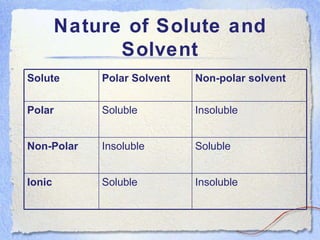
Nature of Solute and Solvent Insoluble Soluble Ionic Soluble Insoluble Non-Polar Insoluble Soluble Polar Non-polar solvent Polar Solvent Solute
Temperature Solutions of gases in liquids are affected by temperature as temperature increases, the solubility of a GAS in a liquid decreases WHY? As temperature increases, the kinetic energy of the solute gas increases and the gas can escape Solubility of SOLIDS in liquids: total opposite the solubility of a solid increases as the temperature increases (there are a few exceptions)
Temperature Temperatures Affecting the Solubility as the Solution is Formed When the temperature drops while you mix the solute and solvent, raising the temperature will increase solubility If the temperature stays neutral, the temperature will have minimal or insignificant effect either way If the temperature is increased when the solute and solvent are mixed, raising the temperature will decrease solubility
Pressure When the pressure is increased over the SOLVENT, the solubility of the gas is increased. Why? pressure increases as gas molecules strike the surface to enter solution is increased Henry’s Law: solubility of gas is directly proportional to the partial pressure of the gas above the liquid
Factors Affecting Solubility p=k h c p= partial pressure k h = gas constant (dimensions: pressure divided by concentration, depends on the solute, solvent and temperature) c= concentration of the solute
Factors of Dissolving rate of which a solid solute dissolves in a solution depends on three factors: surface area, stirring, and temperature the rate of dissolving is unrelated to the solubility if the solutes dissolves quickly or slowly does not alter or depend on its solubility
Surface Area dissolving solutes happen in the surface area of the solvent speed up the process by increasing the surface area The greater the surface area per unit mass, the quicker it will dissolve
Stirring dissolving happens at the surface of the solvent contact between the solvent and the solute is increased
Temperature raising the temperature increases the rate at which a solute dissolves solvent particles move faster as they come in contact more with the solute

Factors Affecting Solubility

  • 1.
    Factors Affecting SolubilityJoan Santos Elena Villanueva
  • 2.
    Solubility whether ornot a solute will dissolve in a solvent and the extent in which it will dissolve the amount of a solute that will dissolve in a specific solvent given condition
  • 3.
    Factors that affectsolubility The nature of the solute and solvent Temperature Pressure (only applicable to gases)
  • 4.
    Nature of Soluteand Solvent Remember Covalent and Ionic? Polar Solvent- a liquid made up of polar molecules Non-polar Solvent- a liquid made up of non-polar molecules
  • 5.
    Nature of Soluteand Solvent When two substances are similar they can dissolve in each other polar solutes dissolve in polar solvents non-polar solutes tend to dissolve in non-polar solvents “ like dissolves like” two liquids dissolve in each other because their molecules are alike in polarity
  • 6.
    Nature of Soluteand Solvent Ionic compounds are made up of charged ions similar to polar compounds Ionic compounds are more soluble in a polar solvent than in a non-polar solvent
  • 7.
    Nature of Soluteand Solvent Insoluble Soluble Ionic Soluble Insoluble Non-Polar Insoluble Soluble Polar Non-polar solvent Polar Solvent Solute
  • 8.
    Temperature Solutions ofgases in liquids are affected by temperature as temperature increases, the solubility of a GAS in a liquid decreases WHY? As temperature increases, the kinetic energy of the solute gas increases and the gas can escape Solubility of SOLIDS in liquids: total opposite the solubility of a solid increases as the temperature increases (there are a few exceptions)
  • 9.
    Temperature Temperatures Affectingthe Solubility as the Solution is Formed When the temperature drops while you mix the solute and solvent, raising the temperature will increase solubility If the temperature stays neutral, the temperature will have minimal or insignificant effect either way If the temperature is increased when the solute and solvent are mixed, raising the temperature will decrease solubility
  • 10.
    Pressure When thepressure is increased over the SOLVENT, the solubility of the gas is increased. Why? pressure increases as gas molecules strike the surface to enter solution is increased Henry’s Law: solubility of gas is directly proportional to the partial pressure of the gas above the liquid
  • 11.
    Factors Affecting Solubilityp=k h c p= partial pressure k h = gas constant (dimensions: pressure divided by concentration, depends on the solute, solvent and temperature) c= concentration of the solute
  • 12.
    Factors of Dissolvingrate of which a solid solute dissolves in a solution depends on three factors: surface area, stirring, and temperature the rate of dissolving is unrelated to the solubility if the solutes dissolves quickly or slowly does not alter or depend on its solubility
  • 13.
    Surface Area dissolvingsolutes happen in the surface area of the solvent speed up the process by increasing the surface area The greater the surface area per unit mass, the quicker it will dissolve
  • 14.
    Stirring dissolving happensat the surface of the solvent contact between the solvent and the solute is increased
  • 15.
    Temperature raising thetemperature increases the rate at which a solute dissolves solvent particles move faster as they come in contact more with the solute