Submitted by
Sonia Hassan
Samreen Mehmood
Irum Shaheen
*
*
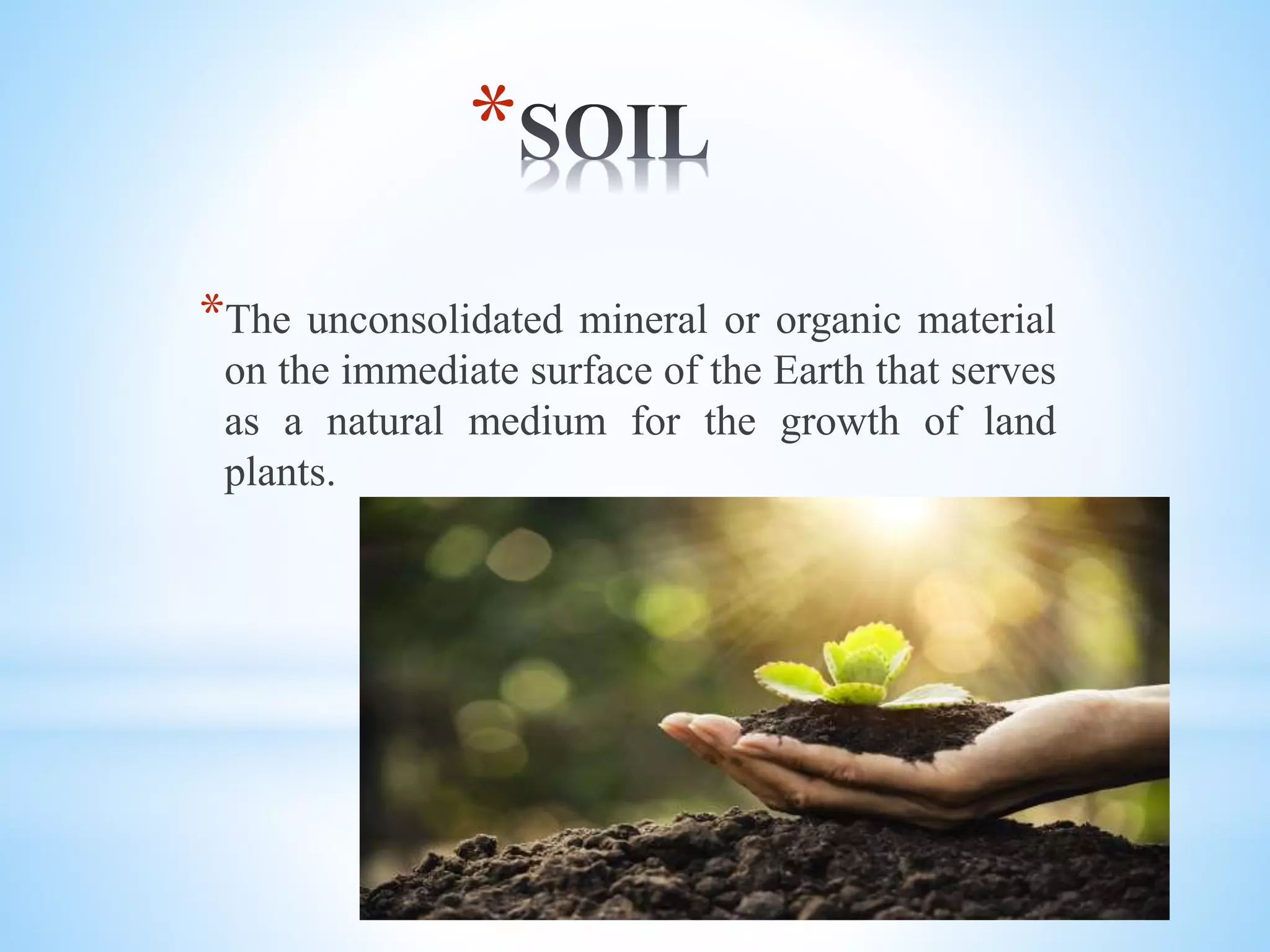
*The unconsolidated mineral or organic material
on the immediate surface of the Earth that serves
as a natural medium for the growth of land
plants.
*
The organic component of soil, formed by
the decomposition of leaves and other plant
material by soil microorganisms.
Formation of Humus:.
Residue left when bacteria & fungi
biodegrade plant material.
*
*Holds nutrients and prevents them from leaching.
*Acts like a sponge, absorbing moisture. This helps the soil during dry
spells.
*Traps oxygen, which is essential for root development.
*Feeds and protects microbes in the soil.
*Prevents erosion by holding soil particles together.
*Helps root structures to grow by contributing to improved vigour.
*Protects the soil from extremes in temperature.
*Maintains soil pH, helping to correct soil pH problems.
*
*Non Living
*Humus ranges in color from Brown to
Black.
*Finely divided organic matter in soil,
derived from microbial decomposition
of plant and animal substances.
*
*Carbon 60%.
*Nitrogen 6%.
*Smaller amount of Phosphorus and
sulphur.
*
*Source of N,P & Sulfur
*Improve soil structure.
*Increase water holding capacity.
*
*Muck humus:.
Highly decomposed organic matter in which
the original plant parts are not recognizable.
*Peat Humus:.
Peat humus is the dead, highly decomposed
organic material that accumulates in the lower levels
of peat bogs. It is an excellent soil conditioner.
*
Muck Humus PEAT HUMUS
*
*Nutrient supply.
*Water holding capacity.
*Cause soil aggregation.
*Improves soil structure.
*Prevention of erosion.
*Prevents leaching.
*Increases the oxidation of complex
organic substances.
*
*Its results take time and are visible only over
the long term.
*Another possible drawback to humus is
that it may be difficult to know exactly what
went into making it.
*This leads to the possibility of pathogens or
weed seeds coming into your garden with the
humus.
*
*The global organic fertilizer market is expected to reach
an estimated $15.8 billion by 2026.
*The major drivers for this market are increasing
consumption of organic food, favorable government
regulations, and ease in availability of organic waste.
*World leaving the artificial Fertilizer due to decreasing
of fertility of soil and coming towards organic Fertilizer
in which humus is preferable.
*

Soil humus

  • 1.
    Submitted by Sonia Hassan SamreenMehmood Irum Shaheen *
  • 2.
    * *The unconsolidated mineralor organic material on the immediate surface of the Earth that serves as a natural medium for the growth of land plants.
  • 3.
    * The organic componentof soil, formed by the decomposition of leaves and other plant material by soil microorganisms. Formation of Humus:. Residue left when bacteria & fungi biodegrade plant material.
  • 4.
    * *Holds nutrients andprevents them from leaching. *Acts like a sponge, absorbing moisture. This helps the soil during dry spells. *Traps oxygen, which is essential for root development. *Feeds and protects microbes in the soil. *Prevents erosion by holding soil particles together. *Helps root structures to grow by contributing to improved vigour. *Protects the soil from extremes in temperature. *Maintains soil pH, helping to correct soil pH problems.
  • 5.
    * *Non Living *Humus rangesin color from Brown to Black. *Finely divided organic matter in soil, derived from microbial decomposition of plant and animal substances.
  • 6.
    * *Carbon 60%. *Nitrogen 6%. *Smalleramount of Phosphorus and sulphur.
  • 7.
    * *Source of N,P& Sulfur *Improve soil structure. *Increase water holding capacity.
  • 9.
    * *Muck humus:. Highly decomposedorganic matter in which the original plant parts are not recognizable. *Peat Humus:. Peat humus is the dead, highly decomposed organic material that accumulates in the lower levels of peat bogs. It is an excellent soil conditioner.
  • 10.
  • 12.
    * *Nutrient supply. *Water holdingcapacity. *Cause soil aggregation. *Improves soil structure. *Prevention of erosion. *Prevents leaching. *Increases the oxidation of complex organic substances.
  • 13.
    * *Its results taketime and are visible only over the long term. *Another possible drawback to humus is that it may be difficult to know exactly what went into making it. *This leads to the possibility of pathogens or weed seeds coming into your garden with the humus.
  • 14.
    * *The global organicfertilizer market is expected to reach an estimated $15.8 billion by 2026. *The major drivers for this market are increasing consumption of organic food, favorable government regulations, and ease in availability of organic waste. *World leaving the artificial Fertilizer due to decreasing of fertility of soil and coming towards organic Fertilizer in which humus is preferable.
  • 15.