WELCOME
TO
MICROBIOLOGY
Azospirillum: isolation and mass
multiplication – carrier-based
inoculants, associative effect of
different microorganisms..
MICROBIOLOGY
Presented by
Dr. N.Sannigrahi, Associate
Professor,
Department of Botany,
Nistarini College, Purulia (
W.B) 723101, India
SUSTAINABLE DEVELOPMENT & BIOFERTILIZERS
• Biofertilizers are gaining importance in sustainable agriculture. Various
complementing combinations of microbial inoculants for management of
major nutrients such as nitrogen and phosphorus are necessary for
sustainability. A broad canvas of bio-fertilizers that enhance nitrogen and
specific to legumes and non legumes along with inoculants that enhance
phosphorus nutrition are discussed from several perspectives. The mode of
action of these microorganisms within and the transformation of nutrients is
elucidated. In the Indian scenario, use of bio-fertilizers faces various
constraints, such as longevity, etc, need to be overcome to achieve
substantial fertilizer savings. The most promising agents to ensure
sustainability are as follows:
• 1. Low cost technology with high cost benefit ratio,
• 2.Sustained improvement of soil fertility,
• 3.Incresed crop yield through the increase of nutrients availability & soil
fertility,
• 4.Reduce the soil salinity issues due to inorganic fertilizers,
• 5.Protecxts plants against soil borne pathogens
INTRODUCTION
• There are different types of biological agents that can promise to offer a
good number of ecological benefits with a promise to ensure crop
productivity like Azospirillum. The following features ensure the bacteria
as good agent of biofertlizer.
• 1. It is a Gram(-) , microaerophilic nitrogen fixing bacterium,
• Belongs to Rhodospirillaceae first described by Beijernick, 1925,
• Beside Nitrogen fixation, it also promotes plant growth by enhancing plant
growth hormone, hence it is called Plant Growth Promoting Rhizobacteria (
PGPR) or PGPB.
• It has been isolated from the roots of rice, sugarcane and other cereals,
• It can promote IAA synthesis,
• Solubilize phosphate and enhance absorption,
• By promoting siderophore secretion, it enables plant to absorb Fe,
• It offers a lot of ecological benefits for the sake of soil sustainability
Azospirillum - Introduction
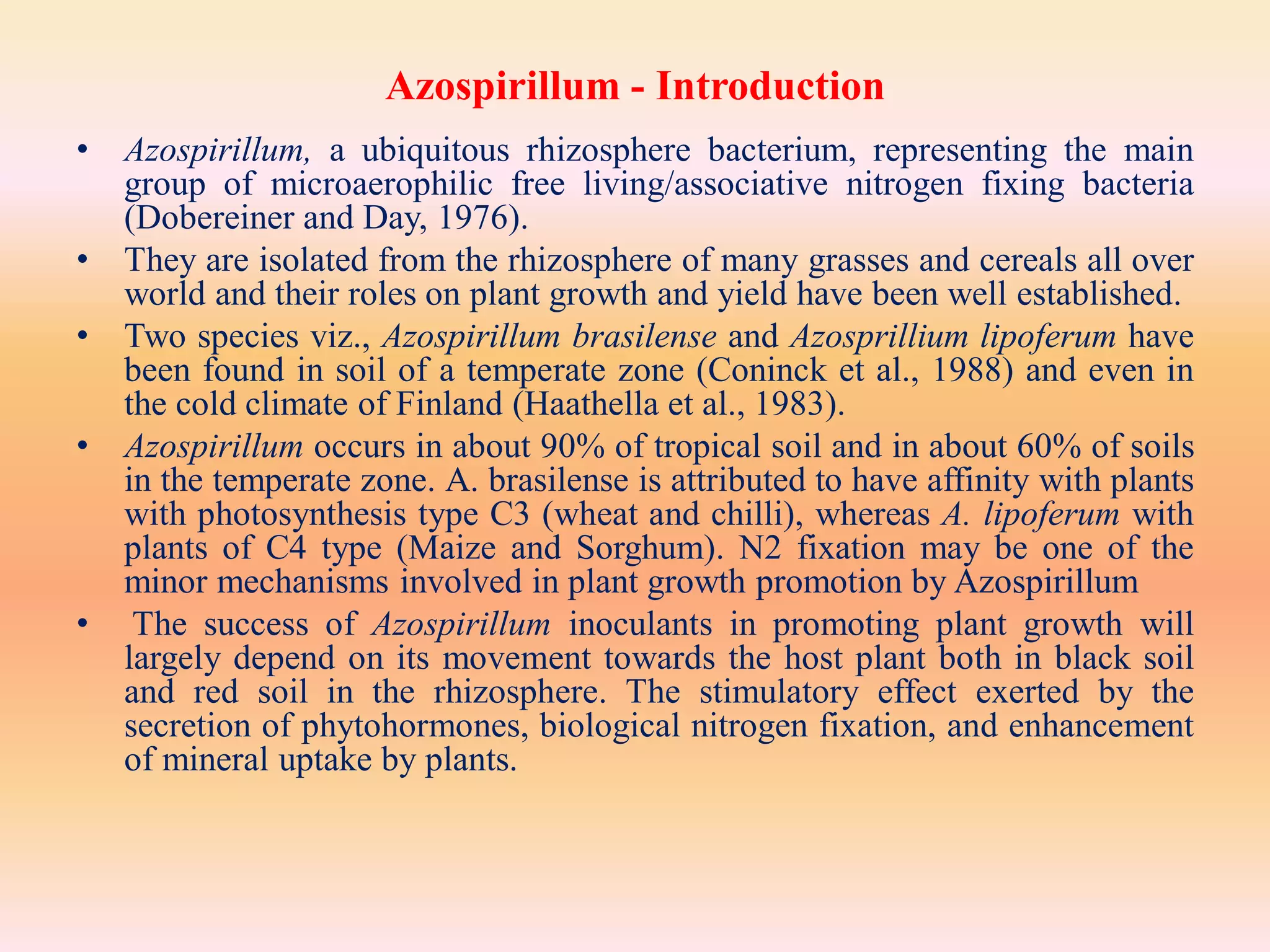
• Azospirillum, a ubiquitous rhizosphere bacterium, representing the main
group of microaerophilic free living/associative nitrogen fixing bacteria
(Dobereiner and Day, 1976).
• They are isolated from the rhizosphere of many grasses and cereals all over
world and their roles on plant growth and yield have been well established.
• Two species viz., Azospirillum brasilense and Azosprillium lipoferum have
been found in soil of a temperate zone (Coninck et al., 1988) and even in
the cold climate of Finland (Haathella et al., 1983).
• Azospirillum occurs in about 90% of tropical soil and in about 60% of soils
in the temperate zone. A. brasilense is attributed to have affinity with plants
with photosynthesis type C3 (wheat and chilli), whereas A. lipoferum with
plants of C4 type (Maize and Sorghum). N2 fixation may be one of the
minor mechanisms involved in plant growth promotion by Azospirillum
• The success of Azospirillum inoculants in promoting plant growth will
largely depend on its movement towards the host plant both in black soil
and red soil in the rhizosphere. The stimulatory effect exerted by the
secretion of phytohormones, biological nitrogen fixation, and enhancement
of mineral uptake by plants.
• Azospirrilum being gram(-) bacteria play a significant role in the ecological
sustainability by providing a number of ecological benefits in this regard
provided it is being used large scale in the domain of agricultural practices.
The isolation of this bacteria along with the mass production needs the
following stages for the same as stated below:
• 1. Isolation & mass multiplication of bacteria,
• 2. Supply of proper nutrient media and growth factor enriched with suitable
microbiological ambience,
• 3. Carrier based inoculants supply,
• Associate effect of the different microorganism.
• All the above procedures to be followed and exercised for the large scale
production along with its packaging and transportation to reach to the
desired groups to ensure maximum productivity in this regard.
• The steps are followed as stated below.
Azospirrilum ISOLATION
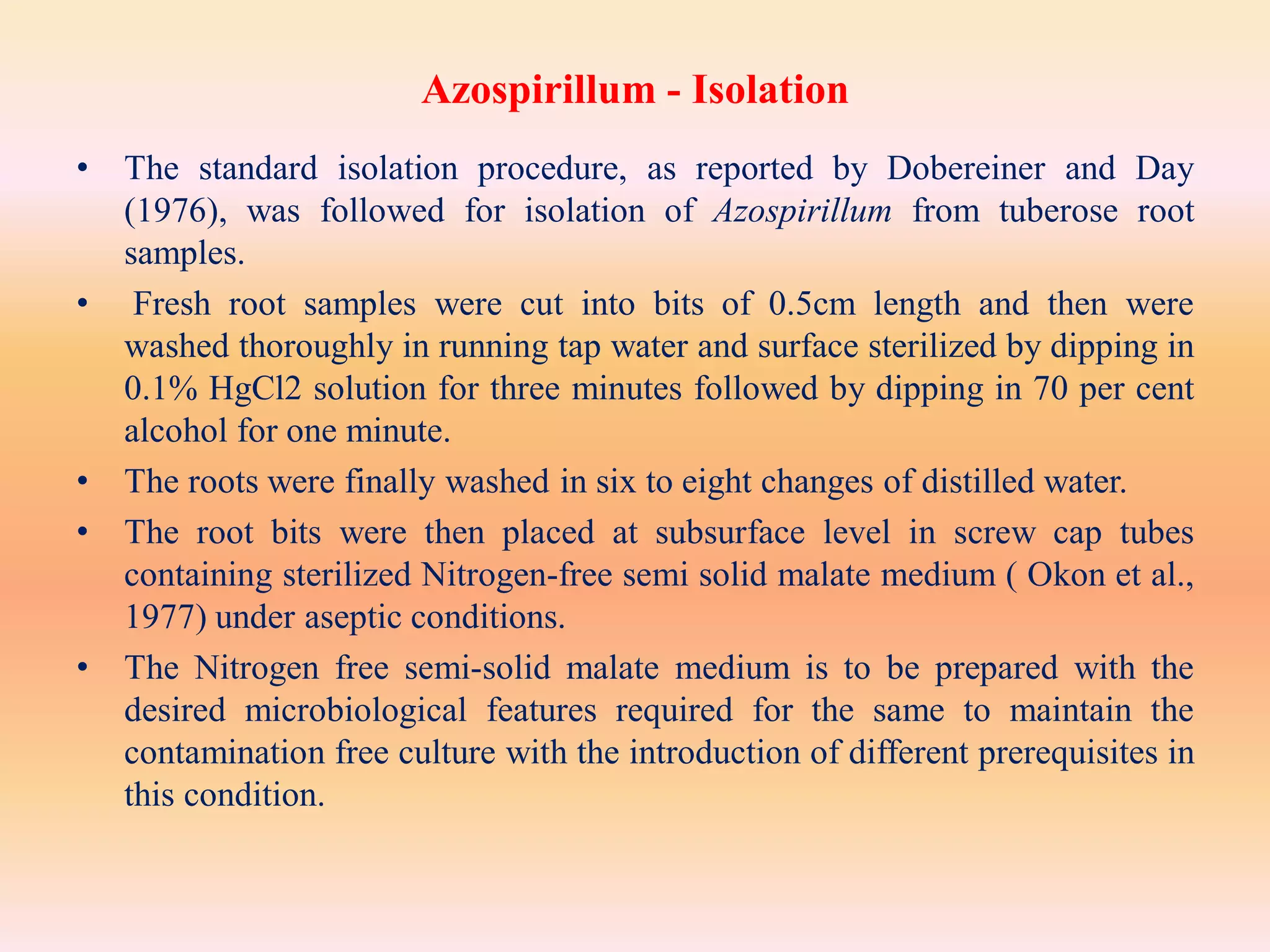
Azospirillum - Isolation
• The standard isolation procedure, as reported by Dobereiner and Day
(1976), was followed for isolation of Azospirillum from tuberose root
samples.
• Fresh root samples were cut into bits of 0.5cm length and then were
washed thoroughly in running tap water and surface sterilized by dipping in
0.1% HgCl2 solution for three minutes followed by dipping in 70 per cent
alcohol for one minute.
• The roots were finally washed in six to eight changes of distilled water.
• The root bits were then placed at subsurface level in screw cap tubes
containing sterilized Nitrogen-free semi solid malate medium ( Okon et al.,
1977) under aseptic conditions.
• The Nitrogen free semi-solid malate medium is to be prepared with the
desired microbiological features required for the same to maintain the
contamination free culture with the introduction of different prerequisites in
this condition.
Azospirillum - Isolation
• The tubes were incubated at 37oC for a period of 4-5 days and observed for
growth of Azospirillum as subsurface white undulating pellicles. The
isolates were purified by repeated sub culturing.
• A loopful of culture was streaked on malate agar plates containing 1 per
cent NH4Cl. After a week of incubation, typical small, white dense single
colonies were picked and transferred to semisolid Nfree malate medium in
culture tubes.
• The isolates that formed characteristic subsurface white undulating pellicle
in this medium were tentatively considered as Azospirillum
• Biochemical characterization
• The biochemical tests viz., utilization of glucose, biotin requirement, acid
production in glucose peptone broth and denitrification tests were carried
out for identification of the Azospirillum isolates.
• The isolates of Azospirillum were grown in nitrogen free malate medium
(nfb) for 48 hrs at 28°C (±2) over an environmental shaker (100 rpm).
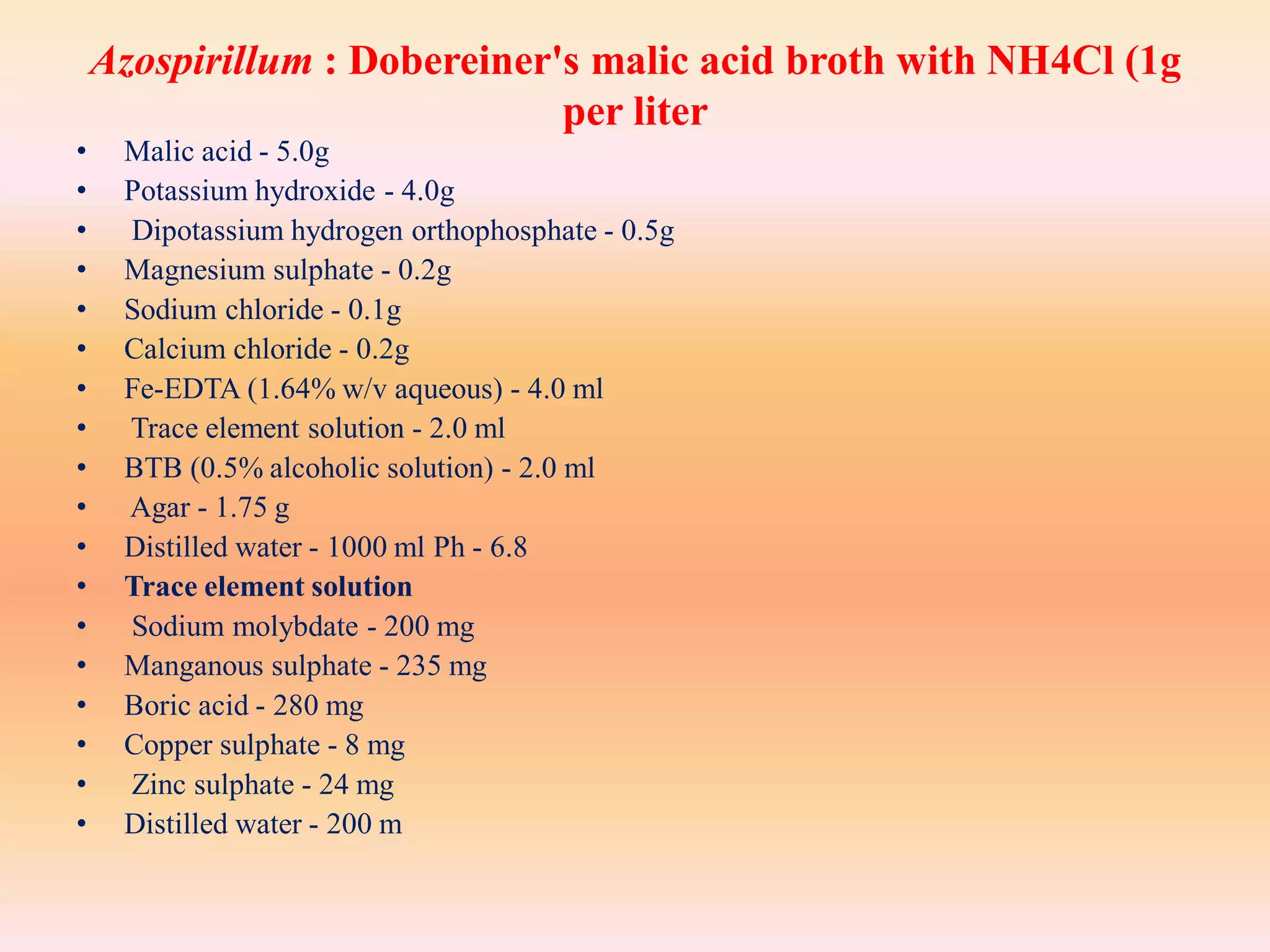
Azospirillum : Dobereiner's malic acid broth with NH4Cl (1g
per liter
• Malic acid - 5.0g
• Potassium hydroxide - 4.0g
• Dipotassium hydrogen orthophosphate - 0.5g
• Magnesium sulphate - 0.2g
• Sodium chloride - 0.1g
• Calcium chloride - 0.2g
• Fe-EDTA (1.64% w/v aqueous) - 4.0 ml
• Trace element solution - 2.0 ml
• BTB (0.5% alcoholic solution) - 2.0 ml
• Agar - 1.75 g
• Distilled water - 1000 ml Ph - 6.8
• Trace element solution
• Sodium molybdate - 200 mg
• Manganous sulphate - 235 mg
• Boric acid - 280 mg
• Copper sulphate - 8 mg
• Zinc sulphate - 24 mg
• Distilled water - 200 m
Mass Multiplication of Azospirilum Sp.
 Prepare appropriate media for specific to the bacterial inoculants in 250
ml, 500 ml, 3 liter and 5 liter conical flasks and sterilize.
 The media in 250 ml flask is inoculated with efficient bacterial strain
under aseptic condition
 Keep the flask under room temperature in rotary shaker (200 rpm) for 5-
7 days.
 Observe the flask for growth of the culture and estimate the population,
which serves as the starter culture.
 Using the starter culture (at log phase) inoculate the larger flasks (500 ml,
3 litre and 5 litre) containing the media, after obtaining growth in each
flask.
 The media preparation is done with follow up of all sorts of desired
protocols in this regard to maintain the aseptic and contamination free
culture for the further analysis and exploration.
Mass Multiplication of Azospirilum Sp.
 The above media is prepared in large quantities in fermentor, sterilized
well, cooled and kept it ready.
 The media in the fermentor is inoculated with the log phase culture grown
in 5 litre flask. Usually 1 -2 % inoculum is sufficient, however inoculation
is done up to 5% depending on the growth of the culture in the larger
flasks.
 The cells are grown in fermentor by providing aeration (passing sterile air
through compressor and sterilizing agents like glass wool, cotton wool, acid
etc.) and given continuous stirring.
 The broth is checked for the population of inoculated organism and
contamination if any at the growth period.
 The cells are harvested with the population load of
Mass Multiplication of Azospirilum Sp.
 109 cells ml-1 after incubation period.
 There should not be any fungal or any other bacterial contamination at 10-
6 dilution level
 It is not advisable to store the broth after fermentation for periods longer
than 24 hours. Even at 4o C number of viable cells begins to decrease.
 Processing of carrier material The use of ideal carrier material is necessary
in the production of good quality biofertilizer. Peat soil, lignite, vermiculite,
charcoal, press mud, farmyard manure and soil mixture can be used as
carrier materials. The neutralized peat soil/lignite are found to be better
carrier materials for biofertilizer production.
 The following points are to be considered in the selection of ideal carrier
material.
 Cheaper in cost
 Should be locally available
 High organic matter content
 No toxic chemicals • Water holding capacity of more than 50% • Easy to
process, friability and vulnerability
Mass Multiplication of Azospirilum Sp.
 The carrier material (peat or lignite) is powdered to a fine powder so as to
pass through 212 micron IS sieve. • The pH of the carrier material is
neutralized with the help of calcium carbonate (1:10 ratio) , since the peat
soil / lignite are acidic in nature ( pH of 4 - 5) • The neutralized carrier
material is sterilized in an autoclave to eliminate the contaminants.
 Preparation of Inoculants packet •
 The neutralized, sterilized carrier material is spread in a clean, dry, sterile
metallic or plastic tray.
 The bacterial culture drawn from the fermentor is added to the sterilized
carrier and mixed well by manual (by wearing sterile gloves) or by
mechanical mixer. The culture suspension is to be added to a level of 40 –
50% water holding capacity depending upon the population.
 The inoculants packet of 200 g quantities in polythene bags, sealed with
electric sealer and allowed for curing for 2 -3 days at room temperature (
curing can be done by spreading the inoculants on a clean floor/polythene
sheet/ by keeping in open shallow tubs/ trays with polythene covering for 2
-3 days at room temperature before packaging.
Marketing of Azospirilum Sp.
 Schematic representation of mass production of bacterial biofertilizers
Specification of the polythene bags
 The polythene bags should be of low density grade.
 The thickness of the bag should be around 50 – 75 micron.
 Each packet should be marked with the name of the manufacturer, name of
the product, strain number, the crop to which recommended, method of
inoculation, date of manufacture, batch number, date of expiry, price, full
address of the manufacturer and storage instructions etc., Storage of
biofertilizer packet
 The packet should be stored in a cool place away from the heat or direct
sunlight.
 The packets may be stored at room temperature or in cold storage
conditions in lots in plastic crates or polythene / gunny bags. • The
population of inoculants in the carrier inoculants packet may be determined
at 15 days interval. There should be more than 109 cells / g of inoculants at
the time of preparation and107 cells/ g on dry weight basis before expiry
date.
Effects of Azetobacter in soil fertility & Sustainability
• The best alternative of chemical fertilizer is necessary because of its
adverse effects on the soil health. There are several alternatives available to
enhance the soil fertility one of them is Azotobacter.
• It is a free–living N2– fixer diazotroph that has several beneficial effects on
the crop growth and yield.
• It helps in synthesis of growth regulating substances like auxins, cytokinin
and Giberellic Acid (GA).
• In addition, it stimulates rhizospheric microbes, protects the plants from
phyto–pathogens, improves nutrient uptake and ultimately boost up
biological nitrogen fixation.
• The abundance of these bacteria in soil is related to many factors, mostly
soil pH and fertility.
• Dry matter accumulation increase,
• Increase of leaf area index,
• Biochemical effects due to more uptake of N, P, K, along with protein
content and chlorophyll content in comparsion to non-inoculated plants by
Azotobacter.
Effects of Azetobacter in soil fertility & Sustainability
• Anti-pathogenic Response: Azotobacter spp. are capable to produce
siderophore, they bind to the available form of iron Fe+3 in the
rhizosphere, thus making it unavailable to the phyto-pathogens and
protecting the plant health; similarly Hydro Cyanine (HCN) production was
higher in traits of Azotobacter (77.00 %). Azotobacter secretes an antibiotic
with a structure similar to anisomycin, which is a documented fungicidal
antibiotic. Azotobacter, in sufficient numbers, will out-compete pathogens
for food. Some of the pathogens that have been controlled by Azotobacterin
the soil and on the leaf include: Alternaria, Fusarium, Collectotrichum,
Rhyzoctonia, Microfomina, Diplodia, Batryiodiplodia, Cephalosporium,
Curvularia, Helminthosporiumand Aspergillus.
• Effects of chemical fertilizer in Azotobacter
• Combined application of bio-fertilizer with 50% of chemical fertilizers (N
and P) has significant effect in plant growth, plant height, number of
branches, fresh and dry weight of safflower in comparison with chemical
fertilizers alone. Similarly, application of Azotobacter bio-phosphate and
organic fertilizers, with half dose of chemical fertilizers increase the
economic yield of safflower.
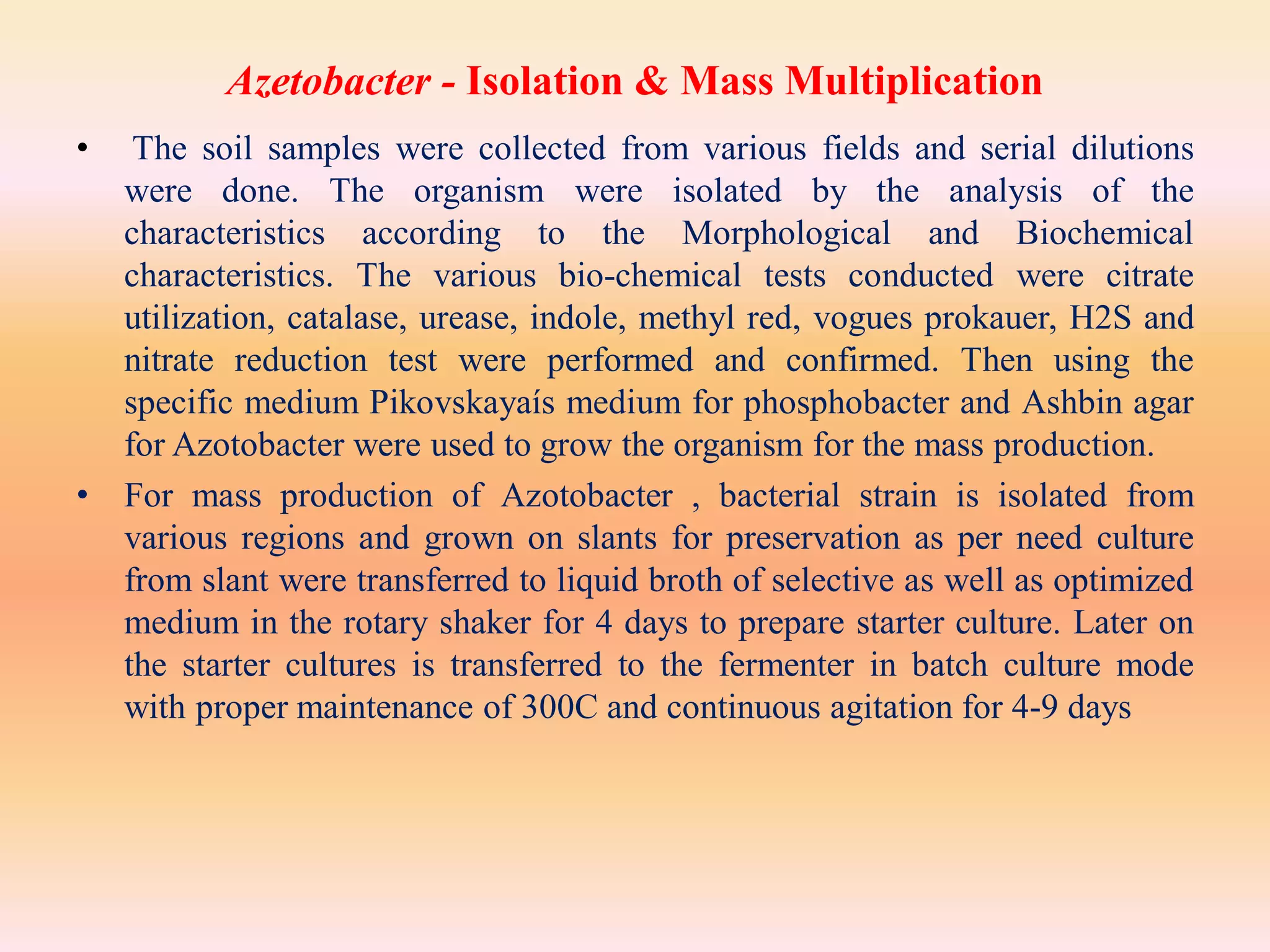
Azetobacter - Isolation & Mass Multiplication
• The soil samples were collected from various fields and serial dilutions
were done. The organism were isolated by the analysis of the
characteristics according to the Morphological and Biochemical
characteristics. The various bio-chemical tests conducted were citrate
utilization, catalase, urease, indole, methyl red, vogues prokauer, H2S and
nitrate reduction test were performed and confirmed. Then using the
specific medium Pikovskayaís medium for phosphobacter and Ashbin agar
for Azotobacter were used to grow the organism for the mass production.
• For mass production of Azotobacter , bacterial strain is isolated from
various regions and grown on slants for preservation as per need culture
from slant were transferred to liquid broth of selective as well as optimized
medium in the rotary shaker for 4 days to prepare starter culture. Later on
the starter cultures is transferred to the fermenter in batch culture mode
with proper maintenance of 300C and continuous agitation for 4-9 days
Azetobacter - Isolation & Mass Multiplication
• when cell count reached to 108- 109 cells/ml, the broth used as inoculants.
For easy handling, packing, storing and transporting broth is mixed with an
inert carrier material which contains sufficient amount of cells. In present
study broth is mixed with unsterile soil: Activated charcoal, A. R. (RM
1332): CaCo3 in a ratio of 1:2:1where as other set prepared by using
unsterile soil: crude coal powder: CaCo3 in same ratio over the carrier in
such a way that 40% moisture is maintained. After proper mixing carrier
containing inoculants was left for 7days and above formulated microbial
inoculants used as biofertilizer.
ASSOCIAED EFFECT OF DIFFERENT MICROORGANISMS
• Azospirillum extends the following benefits in the domain of sustainable
agriculture as well as organic farming:
• 1. It helps act as free living bacteria to fix atmospheric nitrogen,
• 2. A. brasilense reduced nitrate and free nitrogen to facilitate nitrogen fixing,
• 3.It extends the root system elongation and enlargement,
• 4. It facilitates the absorption of mineral salts,
• 5. It increase the tolerance in general and stress tolerance in particular
especially of some cereals like maize, sorghum etc.
• 6. It extends the multiple action with the combination of other microbial
activities as stated below:
• a. Azotobacter diazotrophicus, Herbaspirillum seropedicae and Azocarus along
with Azoteotobacter in combination with Azospirrilum fox more atmospheric
nitrogen in the soil in cumulative amount than the Azotobactor alone.
• b. Aspergillus niger, A awamori along with Azospirillum lipoferum jointly
increases the weight of the wheat grains. The increase of the husk production
and the increase of nitrogen content in the rhizosphere.
THANKS FOR YOUR VISIT
• References:
• 1. Fundamental Botany- Sen & Giri
• 2. A text of Fungi- Vasistha,
• 3. A Textbook of Microbiology- R.P. Singh,
• 4.Textbook of Microbiology- Dubey & Maheswari
• 5. Soil Microbiology- N.S. Subba Rao
• 6. Agricultural Microbiology- G. Rangaswami
• 7. Google for images
• 8. Different WebPages for information.
• Disclaimer: This PPT has been made to enrich free online study
resources without any pleasure of financial interest.

Azospirilum- Isolation & Marketing

  • 1.
  • 2.
    Azospirillum: isolation andmass multiplication – carrier-based inoculants, associative effect of different microorganisms..
  • 4.
    MICROBIOLOGY Presented by Dr. N.Sannigrahi,Associate Professor, Department of Botany, Nistarini College, Purulia ( W.B) 723101, India
  • 5.
    SUSTAINABLE DEVELOPMENT &BIOFERTILIZERS • Biofertilizers are gaining importance in sustainable agriculture. Various complementing combinations of microbial inoculants for management of major nutrients such as nitrogen and phosphorus are necessary for sustainability. A broad canvas of bio-fertilizers that enhance nitrogen and specific to legumes and non legumes along with inoculants that enhance phosphorus nutrition are discussed from several perspectives. The mode of action of these microorganisms within and the transformation of nutrients is elucidated. In the Indian scenario, use of bio-fertilizers faces various constraints, such as longevity, etc, need to be overcome to achieve substantial fertilizer savings. The most promising agents to ensure sustainability are as follows: • 1. Low cost technology with high cost benefit ratio, • 2.Sustained improvement of soil fertility, • 3.Incresed crop yield through the increase of nutrients availability & soil fertility, • 4.Reduce the soil salinity issues due to inorganic fertilizers, • 5.Protecxts plants against soil borne pathogens
  • 6.
    INTRODUCTION • There aredifferent types of biological agents that can promise to offer a good number of ecological benefits with a promise to ensure crop productivity like Azospirillum. The following features ensure the bacteria as good agent of biofertlizer. • 1. It is a Gram(-) , microaerophilic nitrogen fixing bacterium, • Belongs to Rhodospirillaceae first described by Beijernick, 1925, • Beside Nitrogen fixation, it also promotes plant growth by enhancing plant growth hormone, hence it is called Plant Growth Promoting Rhizobacteria ( PGPR) or PGPB. • It has been isolated from the roots of rice, sugarcane and other cereals, • It can promote IAA synthesis, • Solubilize phosphate and enhance absorption, • By promoting siderophore secretion, it enables plant to absorb Fe, • It offers a lot of ecological benefits for the sake of soil sustainability
  • 7.
    Azospirillum - Introduction •Azospirillum, a ubiquitous rhizosphere bacterium, representing the main group of microaerophilic free living/associative nitrogen fixing bacteria (Dobereiner and Day, 1976). • They are isolated from the rhizosphere of many grasses and cereals all over world and their roles on plant growth and yield have been well established. • Two species viz., Azospirillum brasilense and Azosprillium lipoferum have been found in soil of a temperate zone (Coninck et al., 1988) and even in the cold climate of Finland (Haathella et al., 1983). • Azospirillum occurs in about 90% of tropical soil and in about 60% of soils in the temperate zone. A. brasilense is attributed to have affinity with plants with photosynthesis type C3 (wheat and chilli), whereas A. lipoferum with plants of C4 type (Maize and Sorghum). N2 fixation may be one of the minor mechanisms involved in plant growth promotion by Azospirillum • The success of Azospirillum inoculants in promoting plant growth will largely depend on its movement towards the host plant both in black soil and red soil in the rhizosphere. The stimulatory effect exerted by the secretion of phytohormones, biological nitrogen fixation, and enhancement of mineral uptake by plants.
  • 8.
    • Azospirrilum beinggram(-) bacteria play a significant role in the ecological sustainability by providing a number of ecological benefits in this regard provided it is being used large scale in the domain of agricultural practices. The isolation of this bacteria along with the mass production needs the following stages for the same as stated below: • 1. Isolation & mass multiplication of bacteria, • 2. Supply of proper nutrient media and growth factor enriched with suitable microbiological ambience, • 3. Carrier based inoculants supply, • Associate effect of the different microorganism. • All the above procedures to be followed and exercised for the large scale production along with its packaging and transportation to reach to the desired groups to ensure maximum productivity in this regard. • The steps are followed as stated below.
  • 9.
  • 10.
    Azospirillum - Isolation •The standard isolation procedure, as reported by Dobereiner and Day (1976), was followed for isolation of Azospirillum from tuberose root samples. • Fresh root samples were cut into bits of 0.5cm length and then were washed thoroughly in running tap water and surface sterilized by dipping in 0.1% HgCl2 solution for three minutes followed by dipping in 70 per cent alcohol for one minute. • The roots were finally washed in six to eight changes of distilled water. • The root bits were then placed at subsurface level in screw cap tubes containing sterilized Nitrogen-free semi solid malate medium ( Okon et al., 1977) under aseptic conditions. • The Nitrogen free semi-solid malate medium is to be prepared with the desired microbiological features required for the same to maintain the contamination free culture with the introduction of different prerequisites in this condition.
  • 11.
    Azospirillum - Isolation •The tubes were incubated at 37oC for a period of 4-5 days and observed for growth of Azospirillum as subsurface white undulating pellicles. The isolates were purified by repeated sub culturing. • A loopful of culture was streaked on malate agar plates containing 1 per cent NH4Cl. After a week of incubation, typical small, white dense single colonies were picked and transferred to semisolid Nfree malate medium in culture tubes. • The isolates that formed characteristic subsurface white undulating pellicle in this medium were tentatively considered as Azospirillum • Biochemical characterization • The biochemical tests viz., utilization of glucose, biotin requirement, acid production in glucose peptone broth and denitrification tests were carried out for identification of the Azospirillum isolates. • The isolates of Azospirillum were grown in nitrogen free malate medium (nfb) for 48 hrs at 28°C (±2) over an environmental shaker (100 rpm).
  • 12.
    Azospirillum : Dobereiner'smalic acid broth with NH4Cl (1g per liter • Malic acid - 5.0g • Potassium hydroxide - 4.0g • Dipotassium hydrogen orthophosphate - 0.5g • Magnesium sulphate - 0.2g • Sodium chloride - 0.1g • Calcium chloride - 0.2g • Fe-EDTA (1.64% w/v aqueous) - 4.0 ml • Trace element solution - 2.0 ml • BTB (0.5% alcoholic solution) - 2.0 ml • Agar - 1.75 g • Distilled water - 1000 ml Ph - 6.8 • Trace element solution • Sodium molybdate - 200 mg • Manganous sulphate - 235 mg • Boric acid - 280 mg • Copper sulphate - 8 mg • Zinc sulphate - 24 mg • Distilled water - 200 m
  • 13.
    Mass Multiplication ofAzospirilum Sp.  Prepare appropriate media for specific to the bacterial inoculants in 250 ml, 500 ml, 3 liter and 5 liter conical flasks and sterilize.  The media in 250 ml flask is inoculated with efficient bacterial strain under aseptic condition  Keep the flask under room temperature in rotary shaker (200 rpm) for 5- 7 days.  Observe the flask for growth of the culture and estimate the population, which serves as the starter culture.  Using the starter culture (at log phase) inoculate the larger flasks (500 ml, 3 litre and 5 litre) containing the media, after obtaining growth in each flask.  The media preparation is done with follow up of all sorts of desired protocols in this regard to maintain the aseptic and contamination free culture for the further analysis and exploration.
  • 14.
    Mass Multiplication ofAzospirilum Sp.  The above media is prepared in large quantities in fermentor, sterilized well, cooled and kept it ready.  The media in the fermentor is inoculated with the log phase culture grown in 5 litre flask. Usually 1 -2 % inoculum is sufficient, however inoculation is done up to 5% depending on the growth of the culture in the larger flasks.  The cells are grown in fermentor by providing aeration (passing sterile air through compressor and sterilizing agents like glass wool, cotton wool, acid etc.) and given continuous stirring.  The broth is checked for the population of inoculated organism and contamination if any at the growth period.  The cells are harvested with the population load of
  • 15.
    Mass Multiplication ofAzospirilum Sp.  109 cells ml-1 after incubation period.  There should not be any fungal or any other bacterial contamination at 10- 6 dilution level  It is not advisable to store the broth after fermentation for periods longer than 24 hours. Even at 4o C number of viable cells begins to decrease.  Processing of carrier material The use of ideal carrier material is necessary in the production of good quality biofertilizer. Peat soil, lignite, vermiculite, charcoal, press mud, farmyard manure and soil mixture can be used as carrier materials. The neutralized peat soil/lignite are found to be better carrier materials for biofertilizer production.  The following points are to be considered in the selection of ideal carrier material.  Cheaper in cost  Should be locally available  High organic matter content  No toxic chemicals • Water holding capacity of more than 50% • Easy to process, friability and vulnerability
  • 16.
    Mass Multiplication ofAzospirilum Sp.  The carrier material (peat or lignite) is powdered to a fine powder so as to pass through 212 micron IS sieve. • The pH of the carrier material is neutralized with the help of calcium carbonate (1:10 ratio) , since the peat soil / lignite are acidic in nature ( pH of 4 - 5) • The neutralized carrier material is sterilized in an autoclave to eliminate the contaminants.  Preparation of Inoculants packet •  The neutralized, sterilized carrier material is spread in a clean, dry, sterile metallic or plastic tray.  The bacterial culture drawn from the fermentor is added to the sterilized carrier and mixed well by manual (by wearing sterile gloves) or by mechanical mixer. The culture suspension is to be added to a level of 40 – 50% water holding capacity depending upon the population.  The inoculants packet of 200 g quantities in polythene bags, sealed with electric sealer and allowed for curing for 2 -3 days at room temperature ( curing can be done by spreading the inoculants on a clean floor/polythene sheet/ by keeping in open shallow tubs/ trays with polythene covering for 2 -3 days at room temperature before packaging.
  • 17.
    Marketing of AzospirilumSp.  Schematic representation of mass production of bacterial biofertilizers Specification of the polythene bags  The polythene bags should be of low density grade.  The thickness of the bag should be around 50 – 75 micron.  Each packet should be marked with the name of the manufacturer, name of the product, strain number, the crop to which recommended, method of inoculation, date of manufacture, batch number, date of expiry, price, full address of the manufacturer and storage instructions etc., Storage of biofertilizer packet  The packet should be stored in a cool place away from the heat or direct sunlight.  The packets may be stored at room temperature or in cold storage conditions in lots in plastic crates or polythene / gunny bags. • The population of inoculants in the carrier inoculants packet may be determined at 15 days interval. There should be more than 109 cells / g of inoculants at the time of preparation and107 cells/ g on dry weight basis before expiry date.
  • 18.
    Effects of Azetobacterin soil fertility & Sustainability • The best alternative of chemical fertilizer is necessary because of its adverse effects on the soil health. There are several alternatives available to enhance the soil fertility one of them is Azotobacter. • It is a free–living N2– fixer diazotroph that has several beneficial effects on the crop growth and yield. • It helps in synthesis of growth regulating substances like auxins, cytokinin and Giberellic Acid (GA). • In addition, it stimulates rhizospheric microbes, protects the plants from phyto–pathogens, improves nutrient uptake and ultimately boost up biological nitrogen fixation. • The abundance of these bacteria in soil is related to many factors, mostly soil pH and fertility. • Dry matter accumulation increase, • Increase of leaf area index, • Biochemical effects due to more uptake of N, P, K, along with protein content and chlorophyll content in comparsion to non-inoculated plants by Azotobacter.
  • 19.
    Effects of Azetobacterin soil fertility & Sustainability • Anti-pathogenic Response: Azotobacter spp. are capable to produce siderophore, they bind to the available form of iron Fe+3 in the rhizosphere, thus making it unavailable to the phyto-pathogens and protecting the plant health; similarly Hydro Cyanine (HCN) production was higher in traits of Azotobacter (77.00 %). Azotobacter secretes an antibiotic with a structure similar to anisomycin, which is a documented fungicidal antibiotic. Azotobacter, in sufficient numbers, will out-compete pathogens for food. Some of the pathogens that have been controlled by Azotobacterin the soil and on the leaf include: Alternaria, Fusarium, Collectotrichum, Rhyzoctonia, Microfomina, Diplodia, Batryiodiplodia, Cephalosporium, Curvularia, Helminthosporiumand Aspergillus. • Effects of chemical fertilizer in Azotobacter • Combined application of bio-fertilizer with 50% of chemical fertilizers (N and P) has significant effect in plant growth, plant height, number of branches, fresh and dry weight of safflower in comparison with chemical fertilizers alone. Similarly, application of Azotobacter bio-phosphate and organic fertilizers, with half dose of chemical fertilizers increase the economic yield of safflower.
  • 20.
    Azetobacter - Isolation& Mass Multiplication • The soil samples were collected from various fields and serial dilutions were done. The organism were isolated by the analysis of the characteristics according to the Morphological and Biochemical characteristics. The various bio-chemical tests conducted were citrate utilization, catalase, urease, indole, methyl red, vogues prokauer, H2S and nitrate reduction test were performed and confirmed. Then using the specific medium Pikovskayaís medium for phosphobacter and Ashbin agar for Azotobacter were used to grow the organism for the mass production. • For mass production of Azotobacter , bacterial strain is isolated from various regions and grown on slants for preservation as per need culture from slant were transferred to liquid broth of selective as well as optimized medium in the rotary shaker for 4 days to prepare starter culture. Later on the starter cultures is transferred to the fermenter in batch culture mode with proper maintenance of 300C and continuous agitation for 4-9 days
  • 21.
    Azetobacter - Isolation& Mass Multiplication • when cell count reached to 108- 109 cells/ml, the broth used as inoculants. For easy handling, packing, storing and transporting broth is mixed with an inert carrier material which contains sufficient amount of cells. In present study broth is mixed with unsterile soil: Activated charcoal, A. R. (RM 1332): CaCo3 in a ratio of 1:2:1where as other set prepared by using unsterile soil: crude coal powder: CaCo3 in same ratio over the carrier in such a way that 40% moisture is maintained. After proper mixing carrier containing inoculants was left for 7days and above formulated microbial inoculants used as biofertilizer.
  • 22.
    ASSOCIAED EFFECT OFDIFFERENT MICROORGANISMS • Azospirillum extends the following benefits in the domain of sustainable agriculture as well as organic farming: • 1. It helps act as free living bacteria to fix atmospheric nitrogen, • 2. A. brasilense reduced nitrate and free nitrogen to facilitate nitrogen fixing, • 3.It extends the root system elongation and enlargement, • 4. It facilitates the absorption of mineral salts, • 5. It increase the tolerance in general and stress tolerance in particular especially of some cereals like maize, sorghum etc. • 6. It extends the multiple action with the combination of other microbial activities as stated below: • a. Azotobacter diazotrophicus, Herbaspirillum seropedicae and Azocarus along with Azoteotobacter in combination with Azospirrilum fox more atmospheric nitrogen in the soil in cumulative amount than the Azotobactor alone. • b. Aspergillus niger, A awamori along with Azospirillum lipoferum jointly increases the weight of the wheat grains. The increase of the husk production and the increase of nitrogen content in the rhizosphere.
  • 23.
    THANKS FOR YOURVISIT • References: • 1. Fundamental Botany- Sen & Giri • 2. A text of Fungi- Vasistha, • 3. A Textbook of Microbiology- R.P. Singh, • 4.Textbook of Microbiology- Dubey & Maheswari • 5. Soil Microbiology- N.S. Subba Rao • 6. Agricultural Microbiology- G. Rangaswami • 7. Google for images • 8. Different WebPages for information. • Disclaimer: This PPT has been made to enrich free online study resources without any pleasure of financial interest.